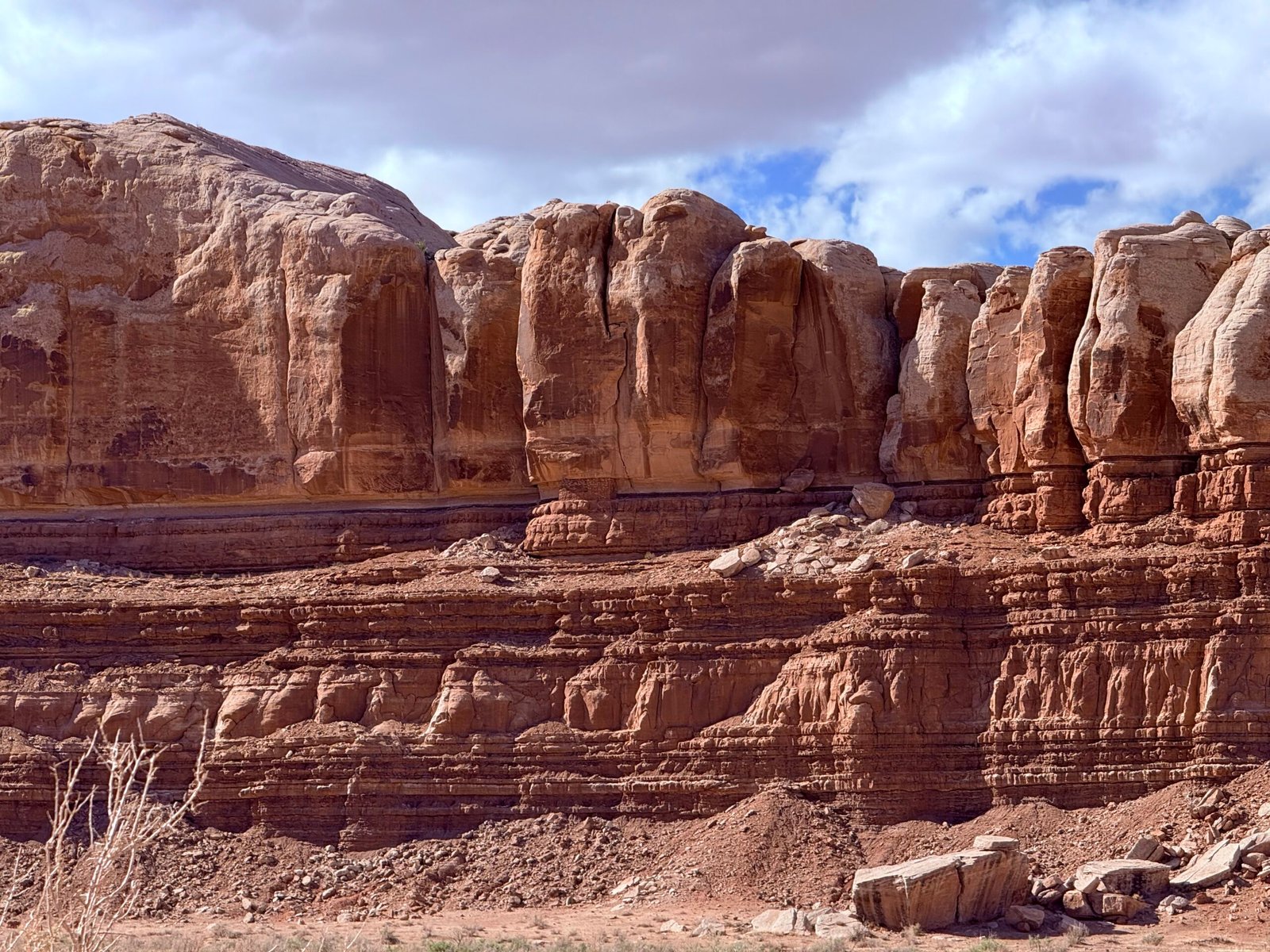
#7 of the series.
She had picked up a BLUFF bumper sticker from the rack at the desk.
“Sooo…why do they call it Bluff?”
“Ummmmm…”
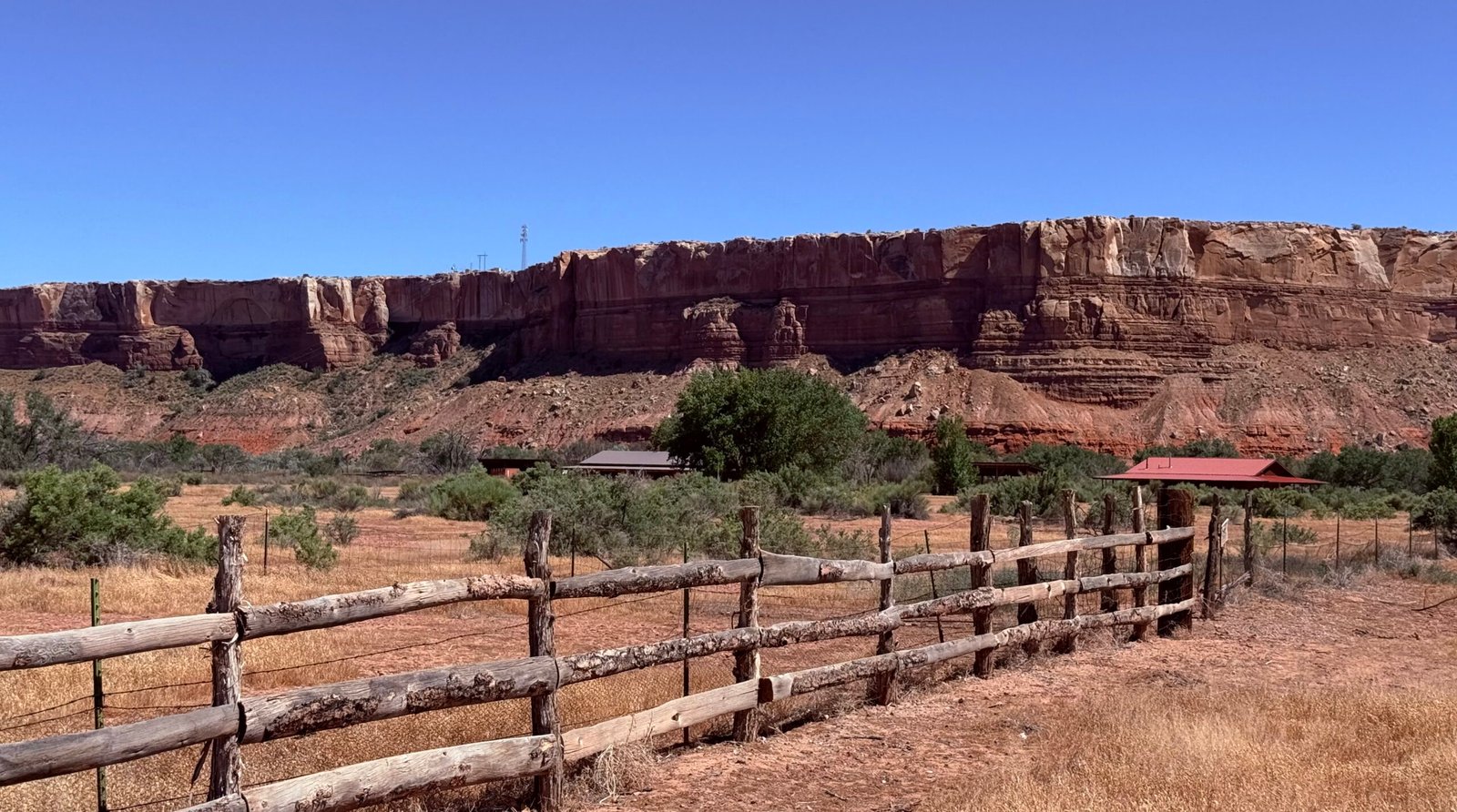
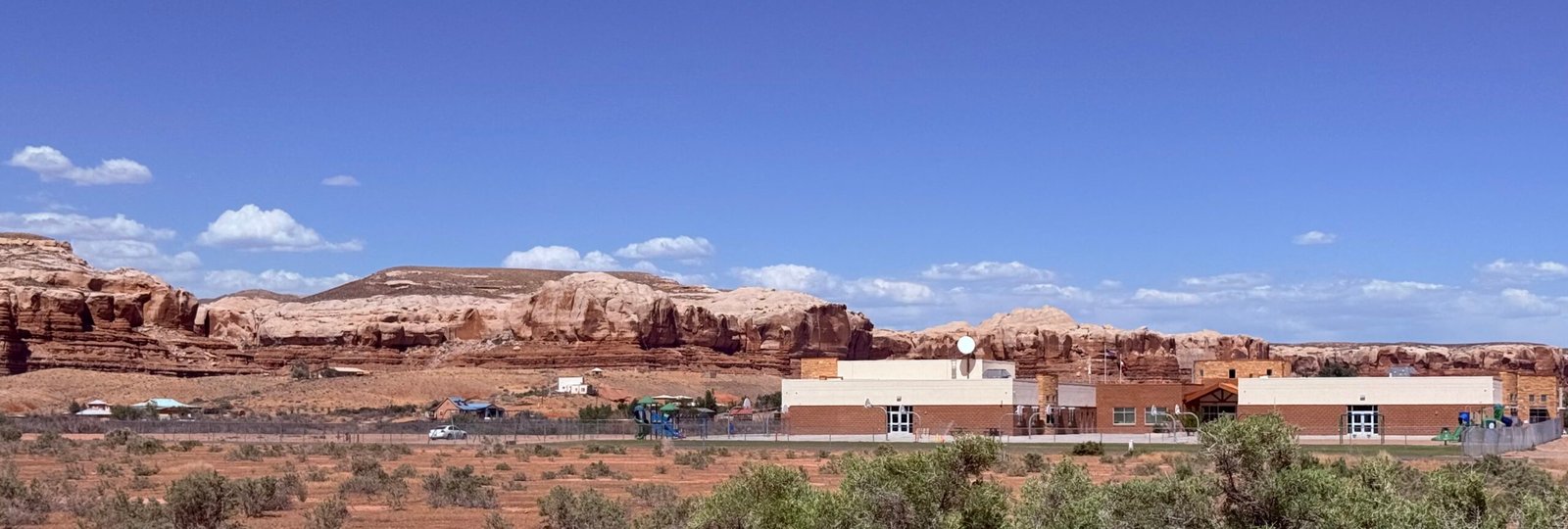
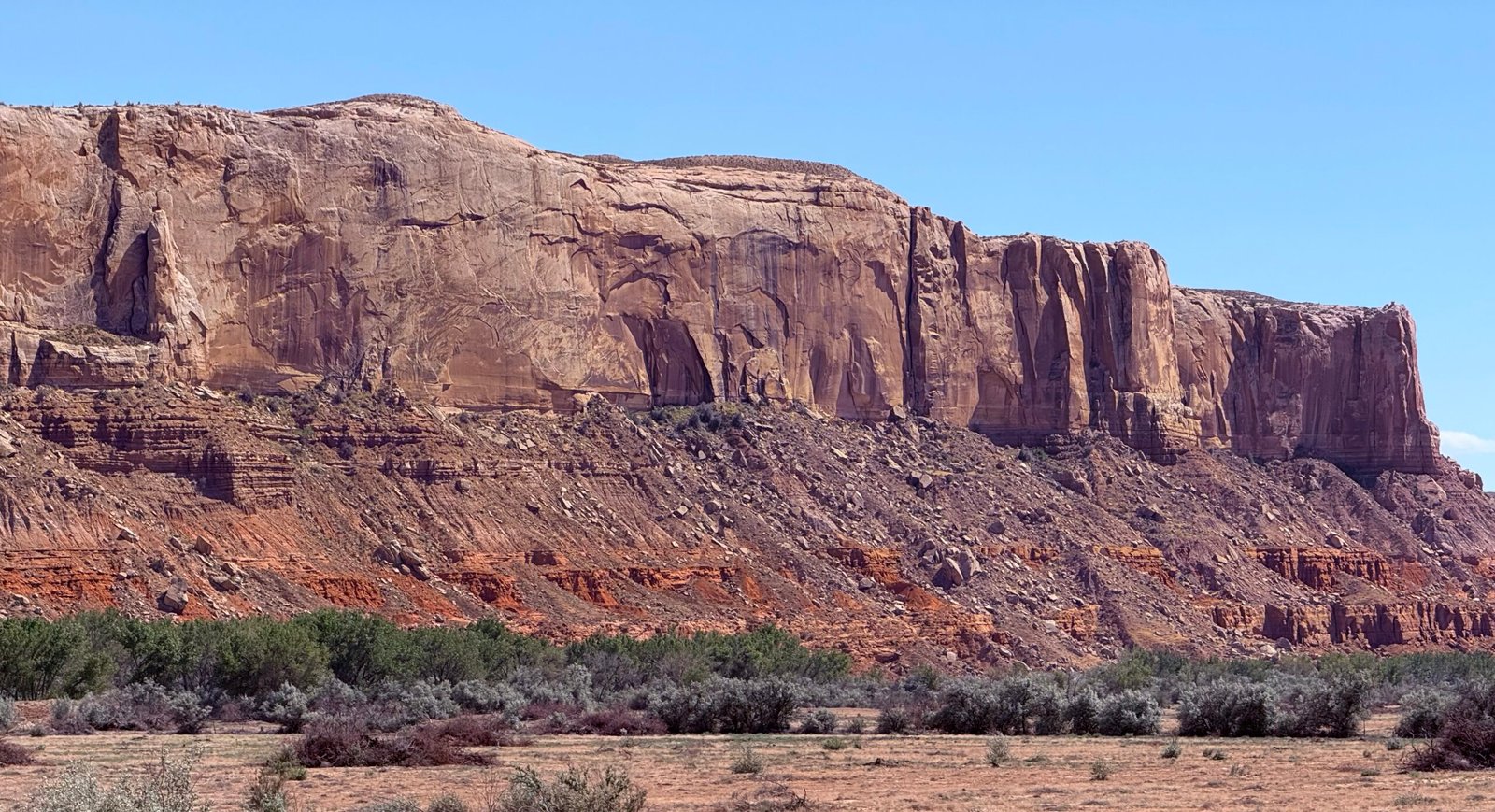
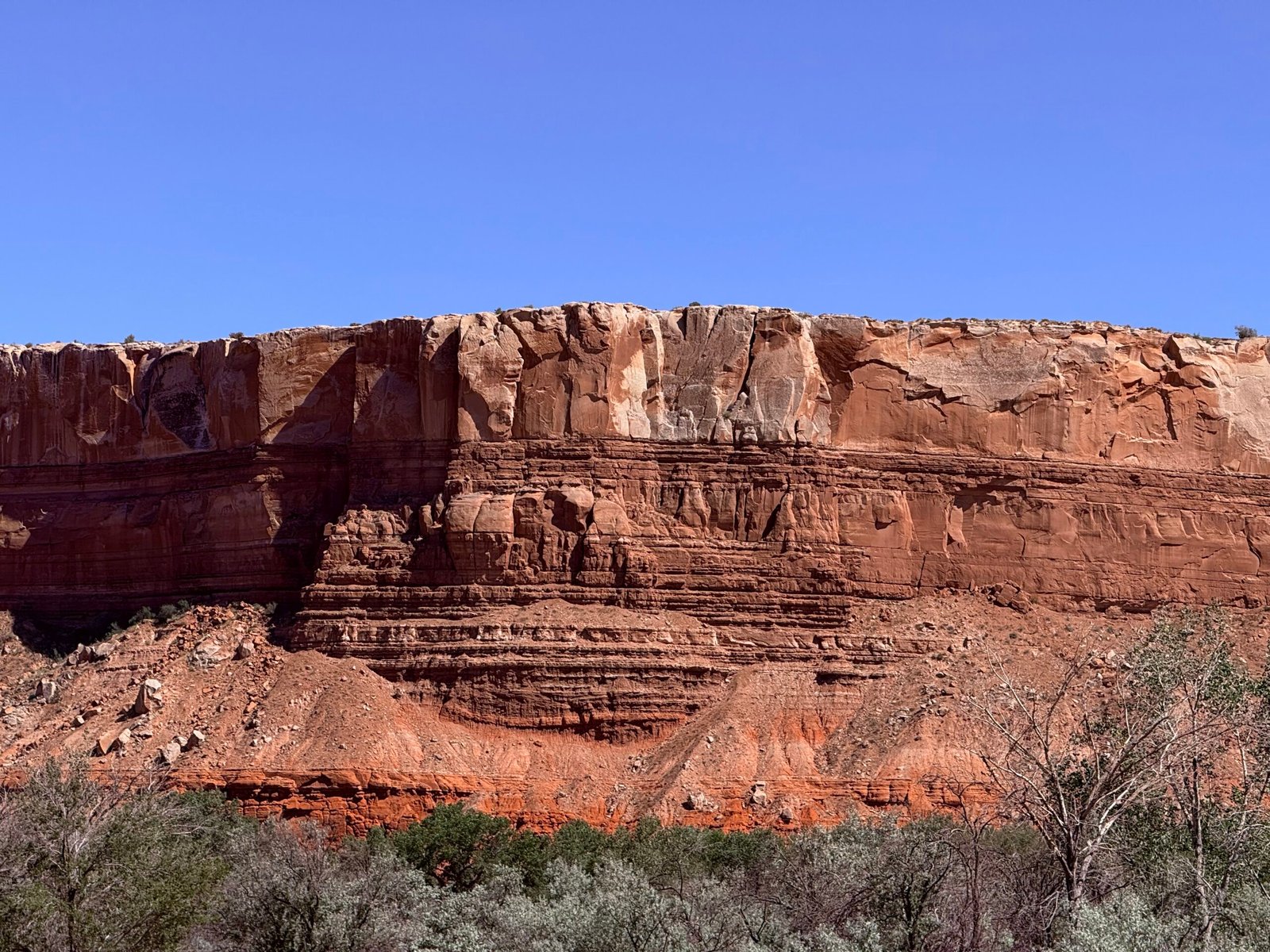
I’m dumbfounded. I got nothin’. I just kinda kept my head down, hoping it was a rhetorical question. The teenager had gotten out of her family’s car first, and I guess she had walked into the BEEC while looking at her phone, not seeing, well, the bluffs.
Eventually the rest of the family trickled in, angling for the restrooms. It’s not uncommon and it’s perfectly fine. I mean, we have a big “VISITOR CENTER” sign by the highway, and the entire strip in front of the BEEC, the Tsé Kooh River Outfitters, and the Mokee Motel is a bit of a landing zone when entering town from the west. Lots of folks stop to check their rigs and such.
But yeah, looking out the car window still has its uses!
This could be my favorite question of the month…
Retrospective – Part Two:
I grew up in an interesting time. I remember when the Cuyahoga River flowing into Lake Erie was so polluted that it actually caught fire. In fact, it caught fire 15 times in a single year! There became a serious interest in trying to clean up our toxic messes and keeping us healthy. Efforts like the Clean Air Act, the Clean Water Act, and the Montreal Protocol (to ban ozone depleting chemicals), all were either enacted or substantially improved through the ’70’s, ’80’s, and ’90’s. And these have been important laws with bipartisan support from Congress for the people.
President Richard M. Nixon, to his credit, strengthened the first, and enacted the second. The Montreal Protocol was endorsed by Ronald Reagan. Staunch conservatives through and through, they also understood the importance of these programs.
It took years for lead, a toxic heavy metal, to be phased out of our gasoline. But as a result, tests have shone that the amount of lead in children’s blood has been reduced from 15 μg/dL in 1970 to 2 μg/dL by 2000. There is no known safe limit of lead in the human body. Interestingly, other than all of the lead shot, bullets, fishing sinkers, and the like, lead is the most recycled metal in the world.
In the 1980’s, the conifers in the Great Smoky Mountains were dying. We saw it ourselves as frequent backpackers in the region. It was determined to be “acid rain,” the result of beautiful, clean coal seeding the air with sulphur (and other toxins, remember Paradise) to create weak sulphuric acid. It was a serious threat to the southern Appalachian forests.
The Clean Air Act forced changes across the country, and as a result we can breathe much healthier today! In addition to lead being removed from our gasoline, air “scrubbers” were installed at coal plants across the country to trap the toxins in the fly ash. Our quality of life increased and our children’s future was a bit brighter.
Fly ash contains all sorts of heavy metals like lead, arsenic, chromium, and mercury. Most of it ends up in landfills, and it is typically collected and stored in containment ponds temporarily. In 2008, massive rains breached a containment pond at the Kingston plant in Tennessee and well over one billion gallons of fly ash slurry spilled onto over 300 acres of land, with some making its way into the Clinch and Tennessee rivers.
TVA spent over one billion dollars on the cleanup, with many of the properties becoming uninhabitable. Many of the employees contracted for cleanup became sick, developing various cancers. Over 30 people died within 10 years of the cleanup, which was deemed complete in 2015. Nothing beautiful or clean about coal.
It seems a crazy connection. Our new neighbor from Kentucky, the Hopi and Navajo here in the southwest, the Kingston plant in middle Tennessee. Or is it?
When we spend billions to create an industry, extract billions of tons of coal with the effluent injected into the air and water, and then spend more billions to try and clean it up, what is it we are trying to do?
Then they wrote it all down as the progress of man.
A long, long time ago around the time of Christ, a people began to thrive in the Four Corners area. Known today as “ancestral Puebloans,” they did not become extinct as first considered. It is estimated that there are well over 60,000 descendants existing today that include Hopi, Zuni, Acoma, Ute, and Laguna cultures.
The primary meaning of the word Hopi is “a behaving one, one who is mannered, civilized, peaceable, polite, who adheres to the Hopi Way.” These people were not warriors, and they were very spiritual. In fact, the Hopi believe they have been given special knowledge by the Creator and are tasked with sharing it with the World.
Did you know that the Hopi have spoken four times at the United Nations?
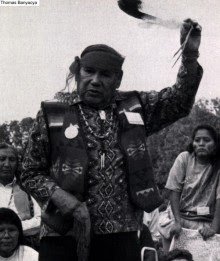
Wha?! Yep, in 1948,1959 ,1976, and lastly by Thomas Banyacya in 1992.
They consider their 1992 speech to be their final message. It fulfills a prophecy where one day world’s leaders would gather in a “Great House of Mica” to solve world problems without war. It’s fascinating that the U.N. building on the east coast has an exterior that is all glass!
This last message has been preserved, and I encourage you to read it, it’s pretty striking. The photo is linked to it. A pdf is available too.
Back in the day when TVs had knobs, you were lucky if you could pick up 5 channels with a motorized antenna. PBS, the Public Broadcasting Service, was a go-to for me. In the 1980’s I remember catching a glimpse of a documentary where a spent rocket stage was tracked through a telescope as it plummeted to Earth. I was so intrigued! But with broadcast TV literally streaming over the air waves, you couldn’t pause and rewind, and it wasn’t easy to find the show’s name unless you had maybe subscribed to TV Guide. You just had to be patient and keep an eye open.
Years later I eventually found out the name of the documentary…but I couldn’t watch it. There were legal issues on who had the rights to it. But finally it was made available.
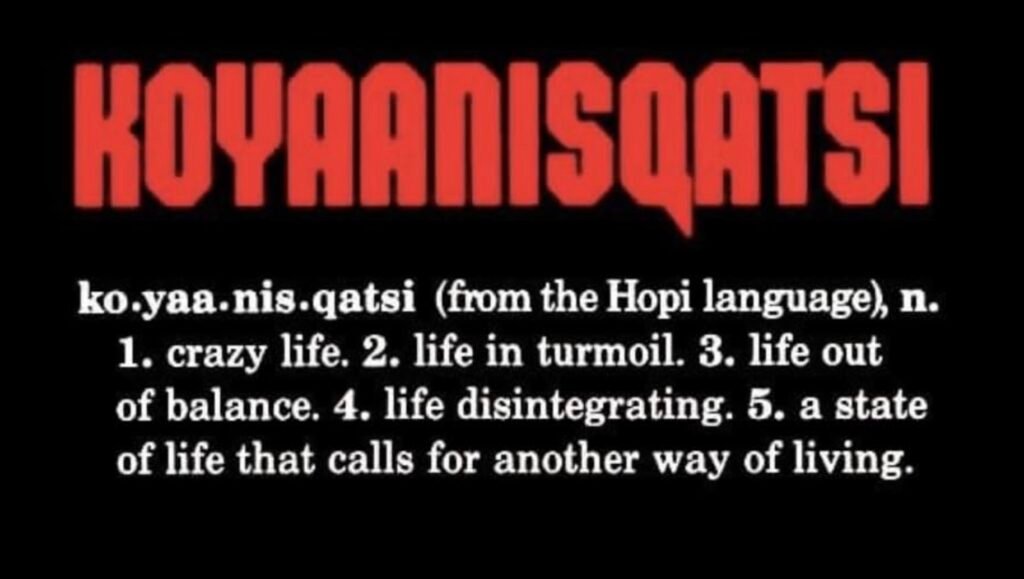
Koyaanisqatsi, from the Hopi language, was released in 1982. Rated 8.2 on IMDB and 92/100 on Rotten Tomatoes, surely you’ve seen it?
Directed by Godfrey Reggio, filmed in 70mm by Ron Fricke, and with a musical score by Philip Glass, it is a mind-bending visual experience on our modern approach to life on earth (I have a DVD-quality copy to loan if you are interested). All I can say is that this wedged itself deeply into my mind. It is a raw look at what we’re about. And it was done over 40 years ago. Many of the things I’ve discussed in my Retrospective are described visually here.
This country has worked hard over the past 50 or 60 years trying to improve the lives of its people. And while contentious at times, it has been a bipartisan effort in Congress. And the three branches of government have seemed to understand, at least to some extent, the importance of the will of the people and the pursuit of happiness.
All of this is being torn down. And the impacts will be far-reaching. A wrecking ball does not know how to rebuild, it only knows how to swing. Its time will pass, but if we want something better for our grandchildren, then things will need to change, and we will need to roll up our sleeves.
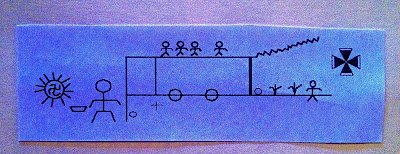
There are two paths. The first with technology but separate from natural and spiritual law leads to these jagged lines representing chaos. The lower path is one that remains in harmony with natural law. Here we see a line that represents a choice like a bridge joining the paths. If we return to spiritual harmony and live from our hearts, we can experience a paradise in this world. If we continue only on this upper path, we will come to destruction. — Thomas Banyacya, from his 1992 U.N. speech.
Patricia and I did a short study on the Gospels a couple of years ago. One thing that has stayed with me is how easily we can lose the true meaning of the translations. Take Matthew 4:17 for example, where Jesus says:
“Repent, for the kingdom of heaven is near.”
He’s echoing what John the Baptist has previously said. And I, for most of my life, have believed this to mean, “Confess your sins, there’s not much time!”
But looking at the original greek meaning of the words repent and near, it’s more like, “Change your heart and mind, for heaven is right here!” Acknowledging (confessing) sin is just a natural result of the change.
Is it that simple? Just change our behavior, how we perceive and feel, and paradise is revealed? Isn’t that what Banyacya is also saying?
Paradise was lost to the small-town people in Kentucky. Paradise may be lost to the Hopi and Navajo of Black Mesa when the water runs dry. The folks in Kingston unknowingly gave the ultimate sacrifice and lost it all.
Then they wrote it all down as the progress of man.
On the San Juan
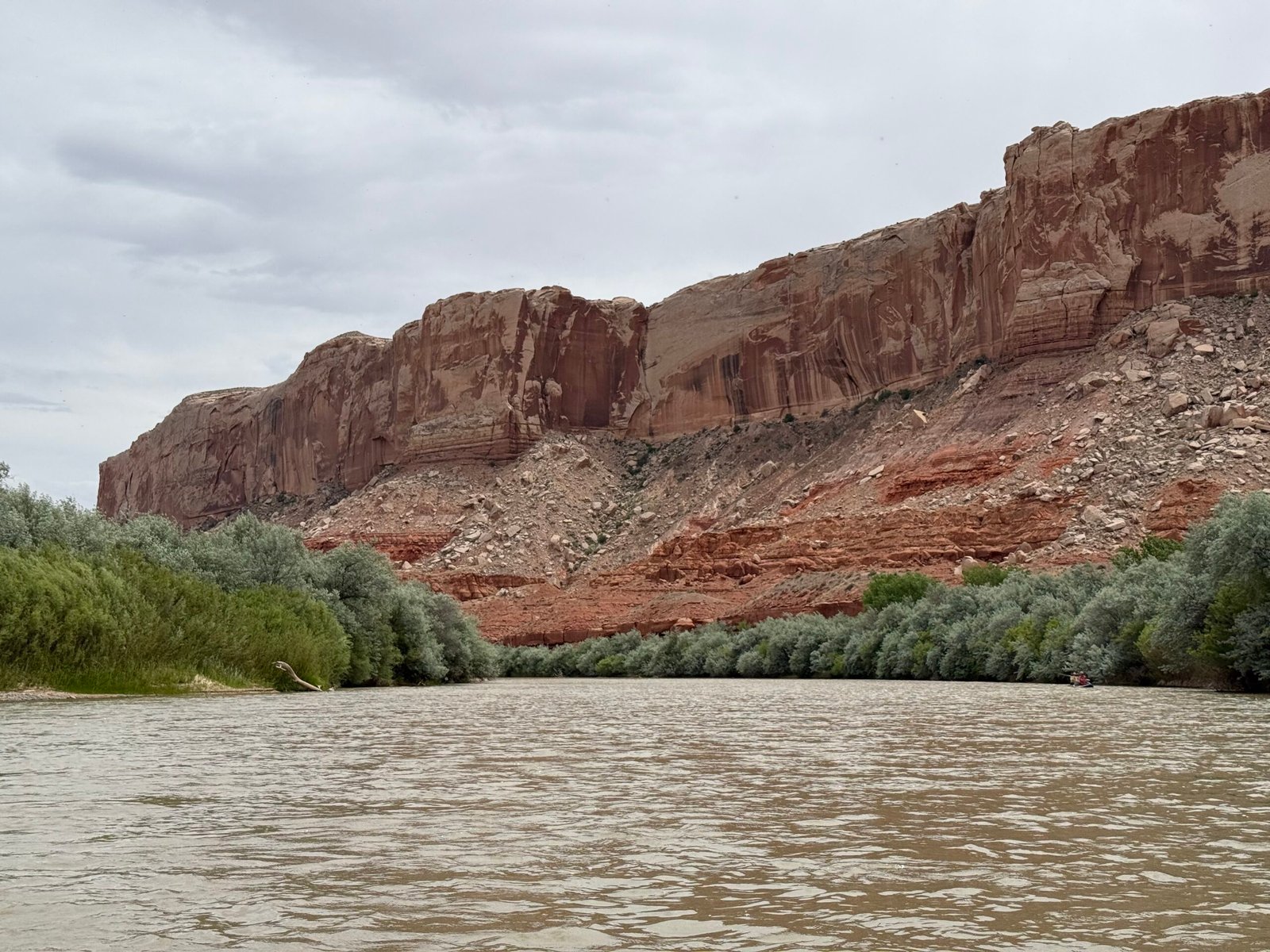
In Utah, the San Juan river is the northern boundary for the Navajo Nation all the way from Montezuma Creek to the Colorado River. It is silty, carrying about half of all the sediment that enters Lake Powell.
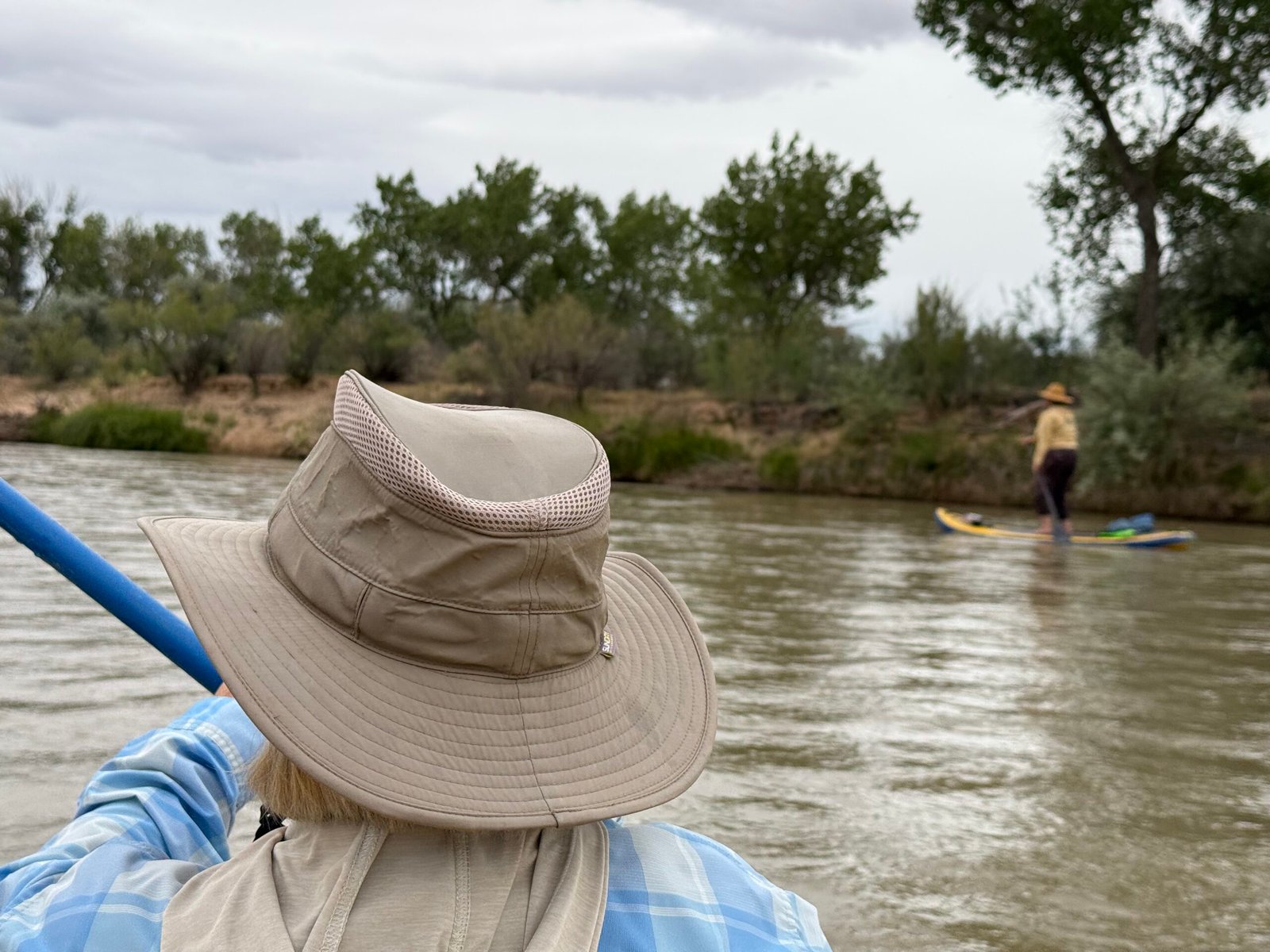
Our host Kirsten and her husband Josh offered up a Memorial Day float on a mild and scenic section of the river. Sarah graciously loaned us a two-person inflatable canoe (known as a “ducky” in these parts) and Spencer ensured it was seaworthy with a little patching and testing. Brandon joined in with his packraft, and we put-in early in an attempt to beat the heat and the wind.
It was cloudy, and at first the wind was pretty stiff, and of course up-river! But it eased after a bit and the morning was cool.
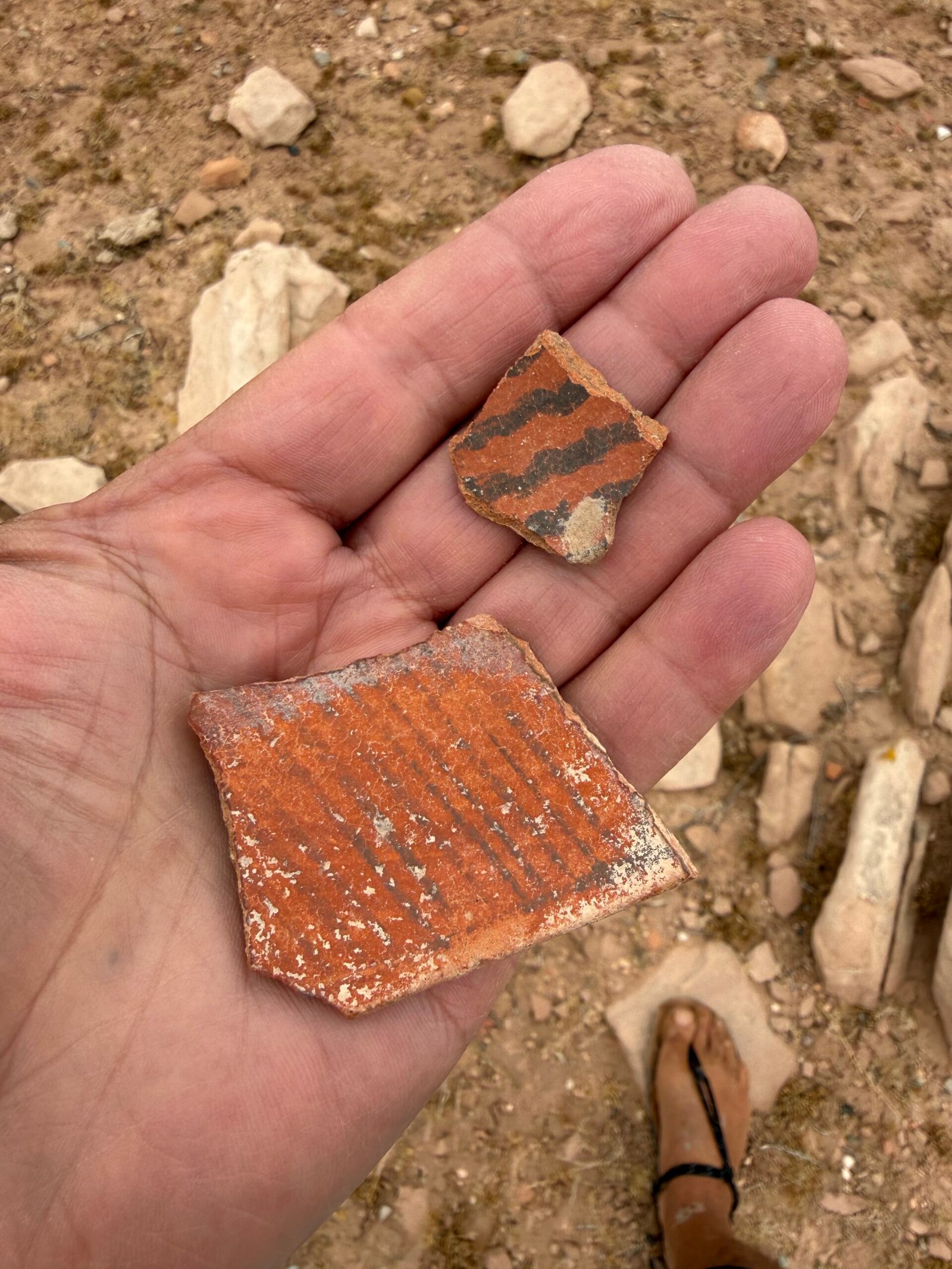
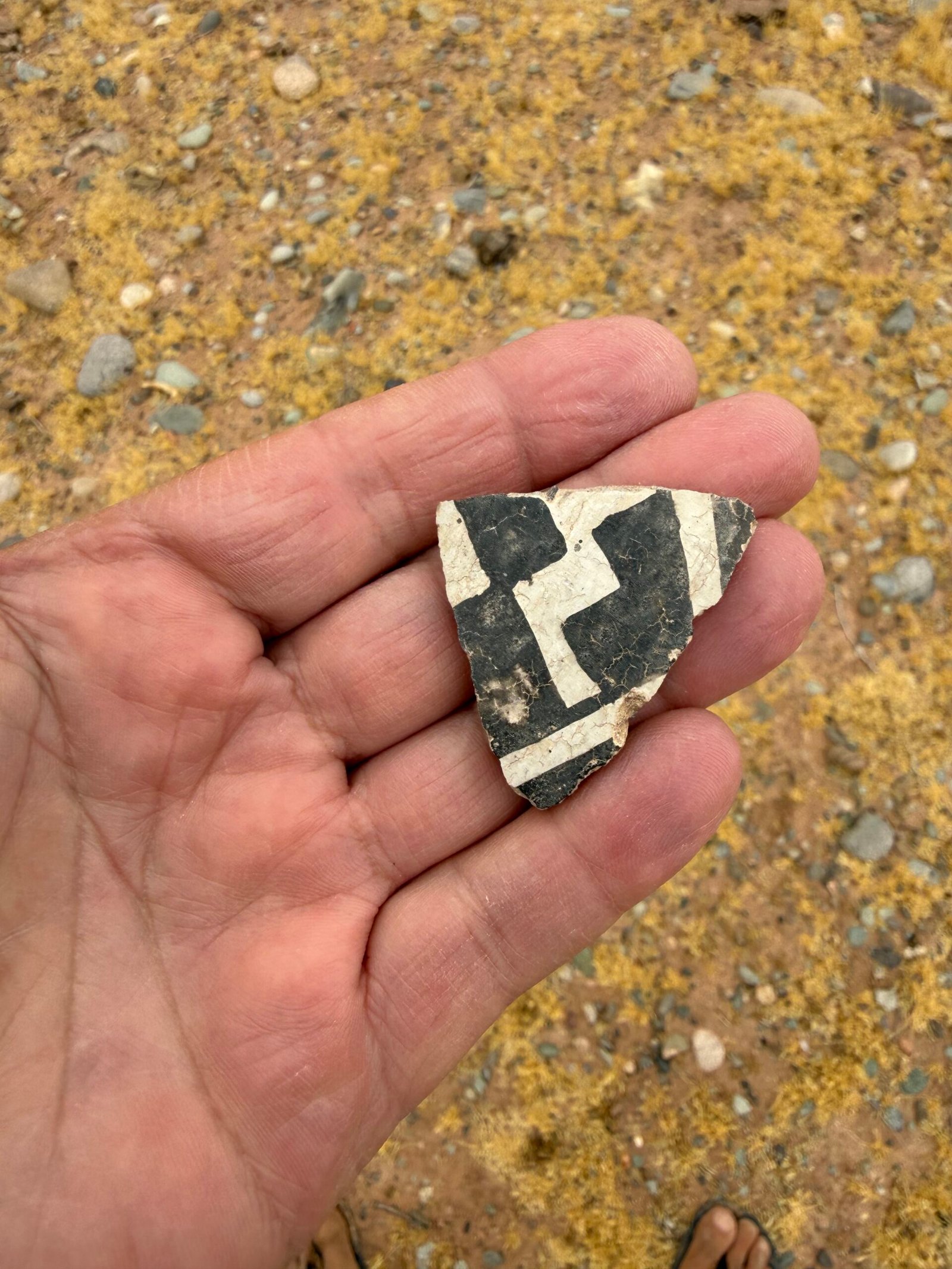
Our first stop revealed some interesting cultural finds. A lot of pottery sherds indicating a very busy location over a long period of time.
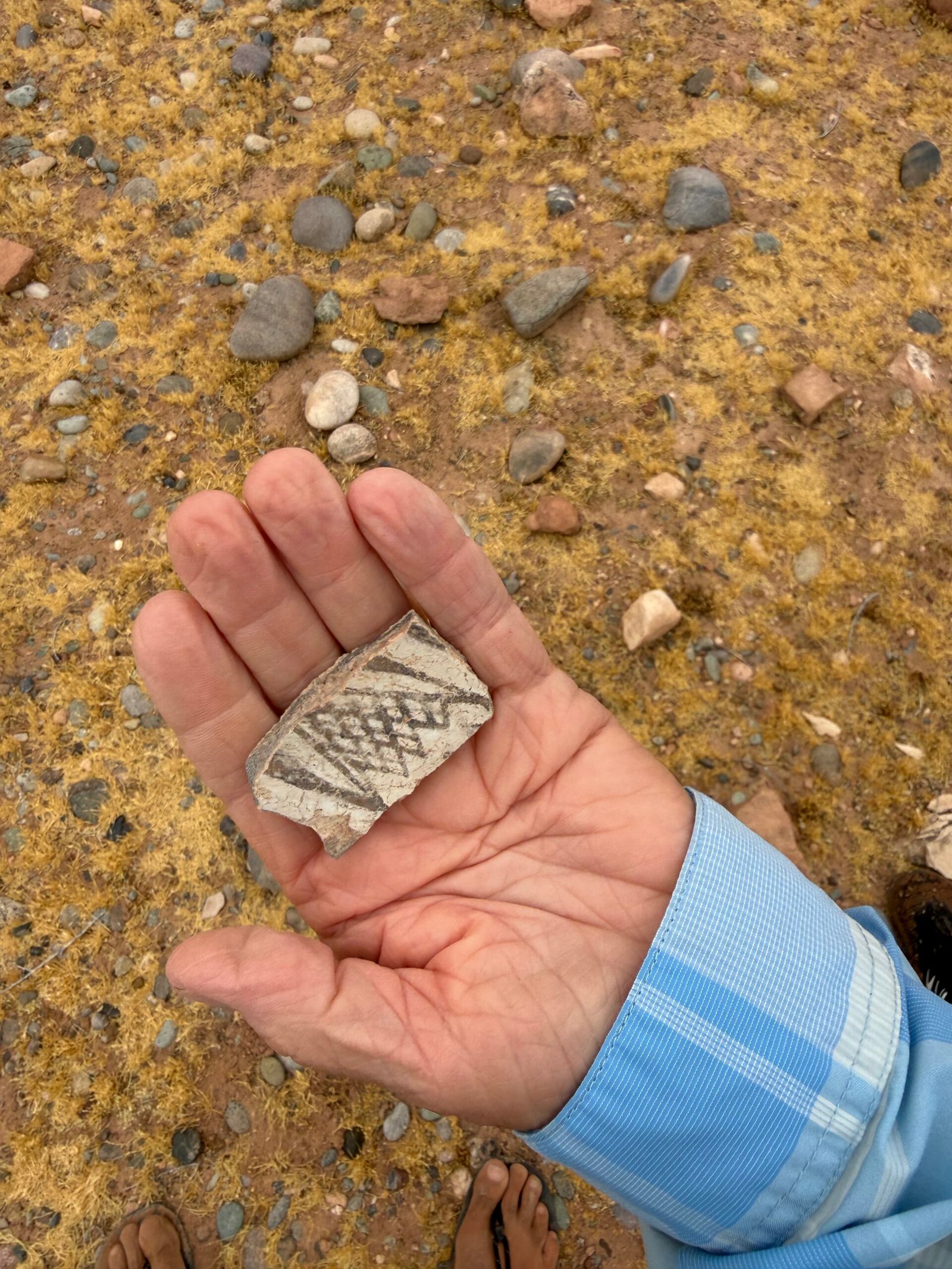
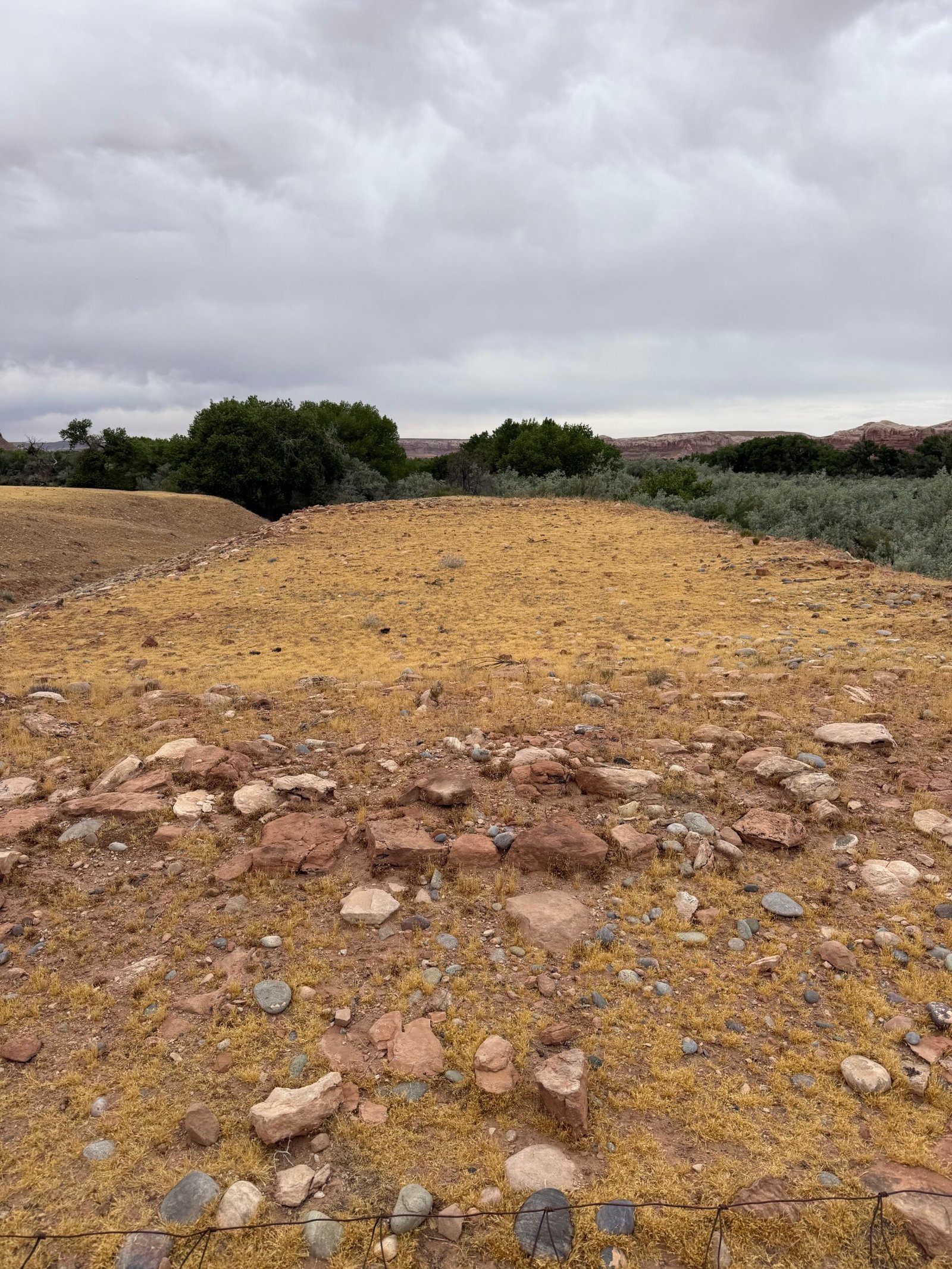
Josh mentioned that this structure is in some sort of celestial alignment. Possibly marking a solstice event that would be seen from Great House in Bluff, a couple of miles away.
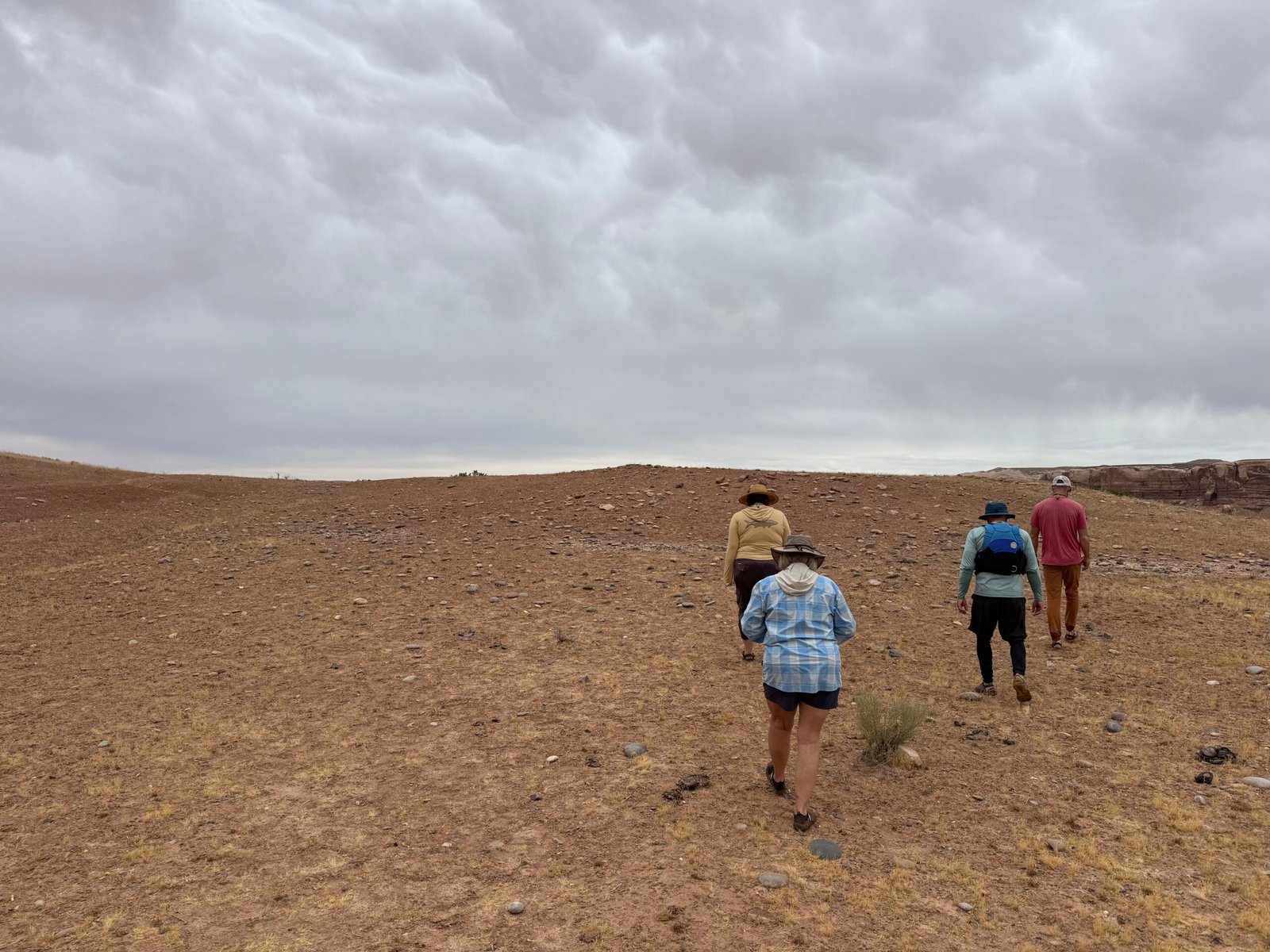
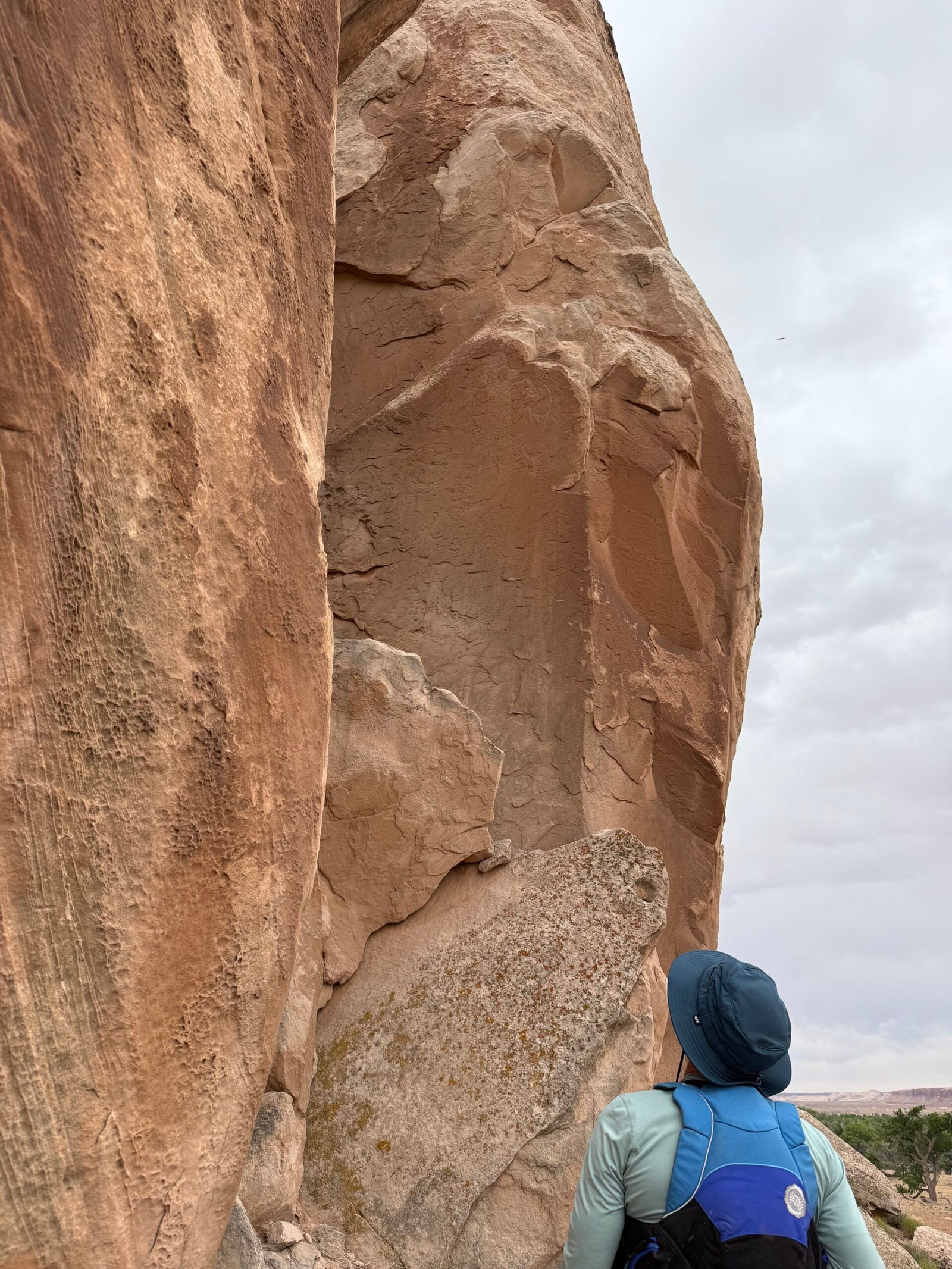
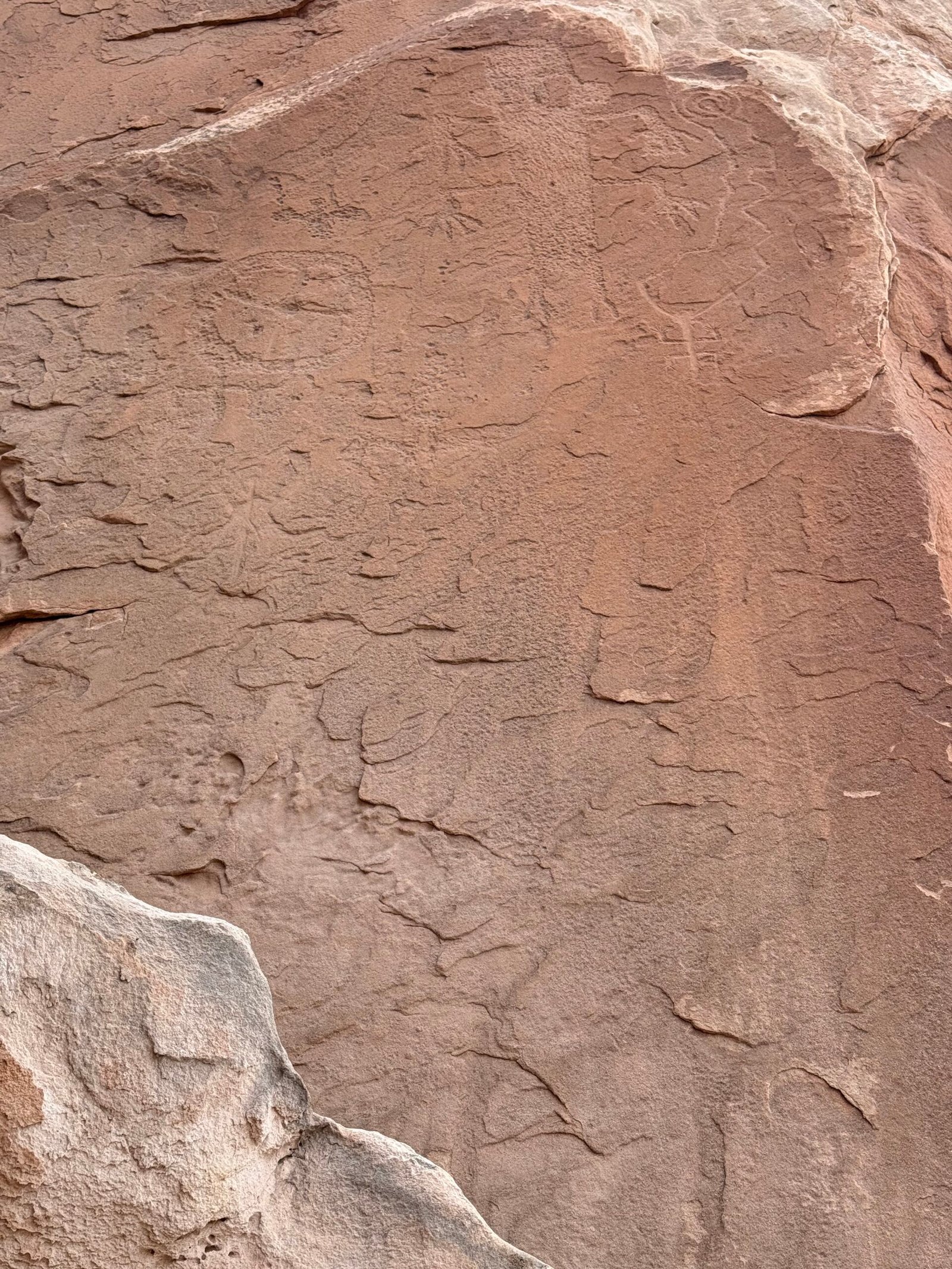
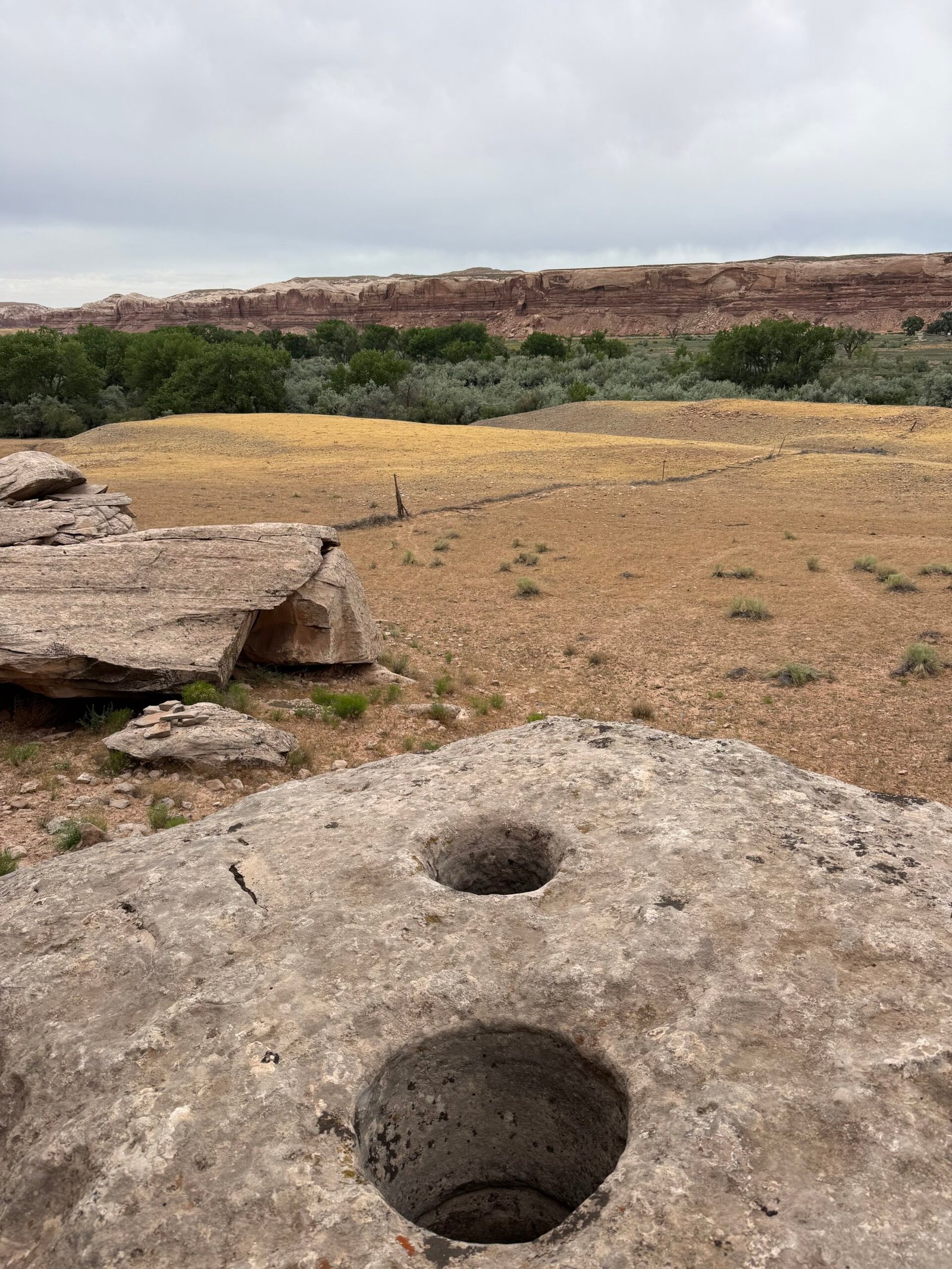
In the same area up above the structure, there are a couple of deep holes seemingly drilled into the stone and large enough to accommodate telephone poles. Intriguingly, if you sight along the holes you will see a boulder all the way on the far side of river just above the greenery. According to Josh, there are two holes over there too!
What were they used for? I’m no archaeologist, but it seems to me it had to be an ancient zipline! And that is probably why I am not an archaeologist.
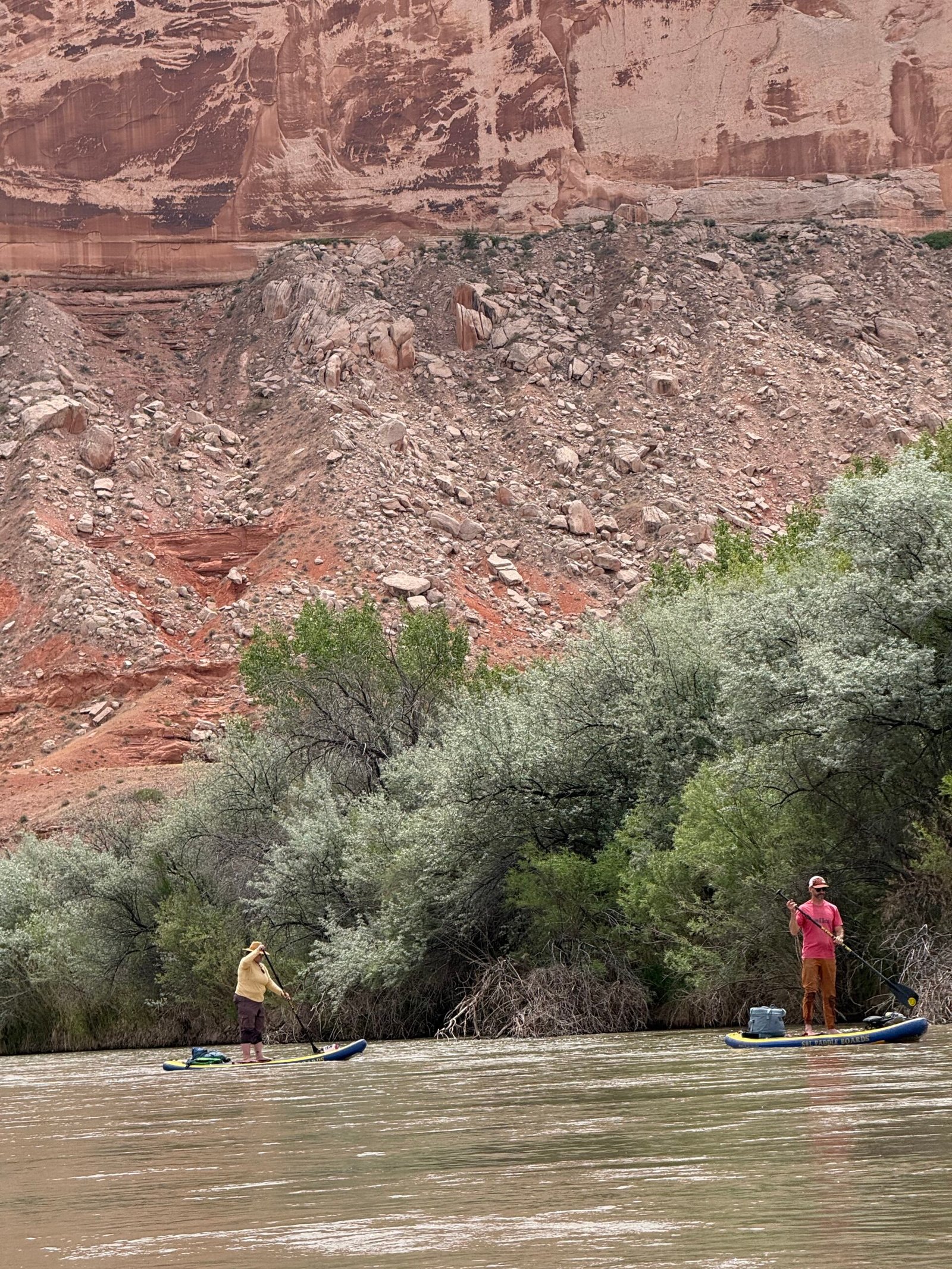
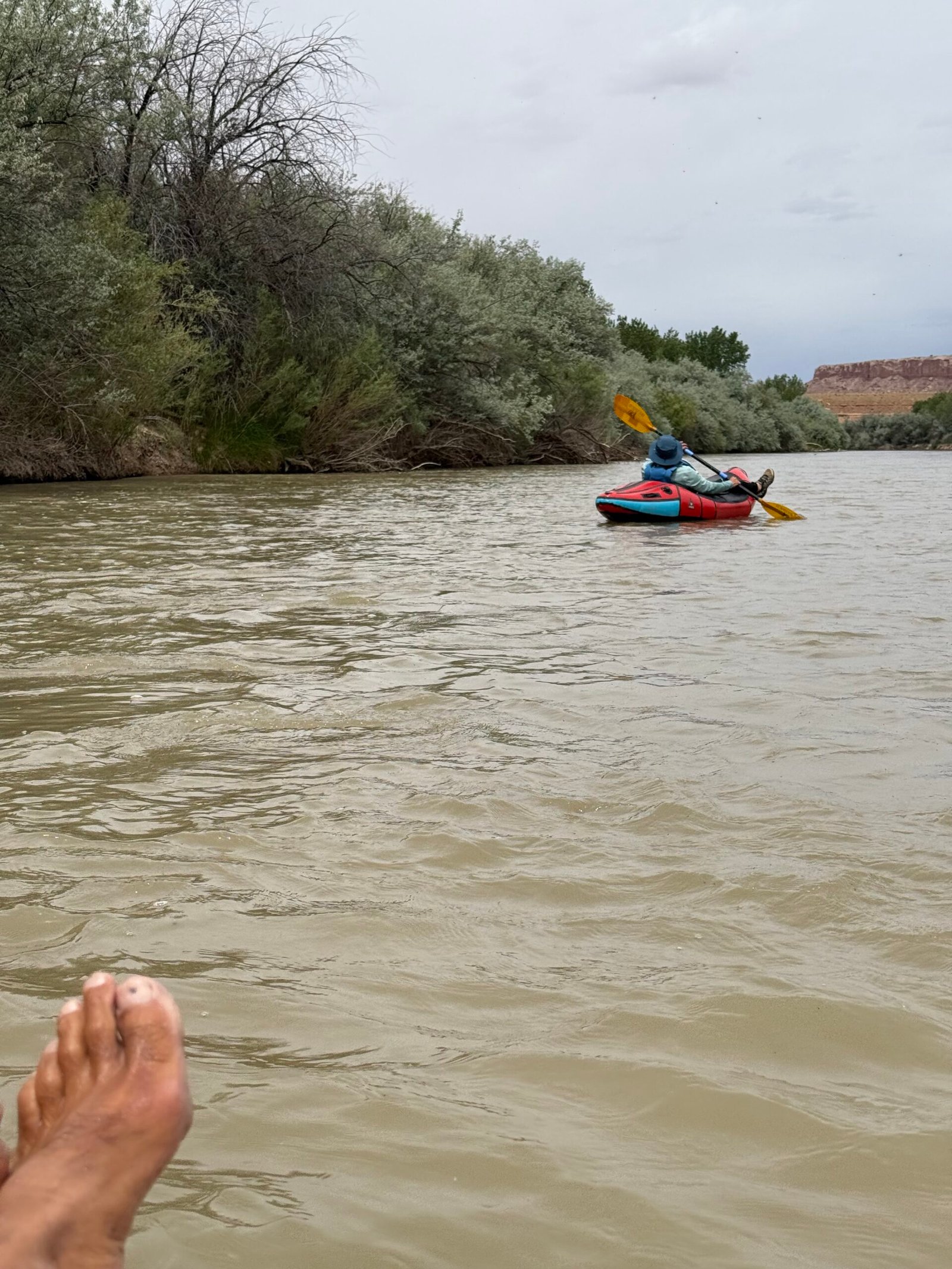
Brandon may be dreaming about whitewater. I think I see his arms twitching…
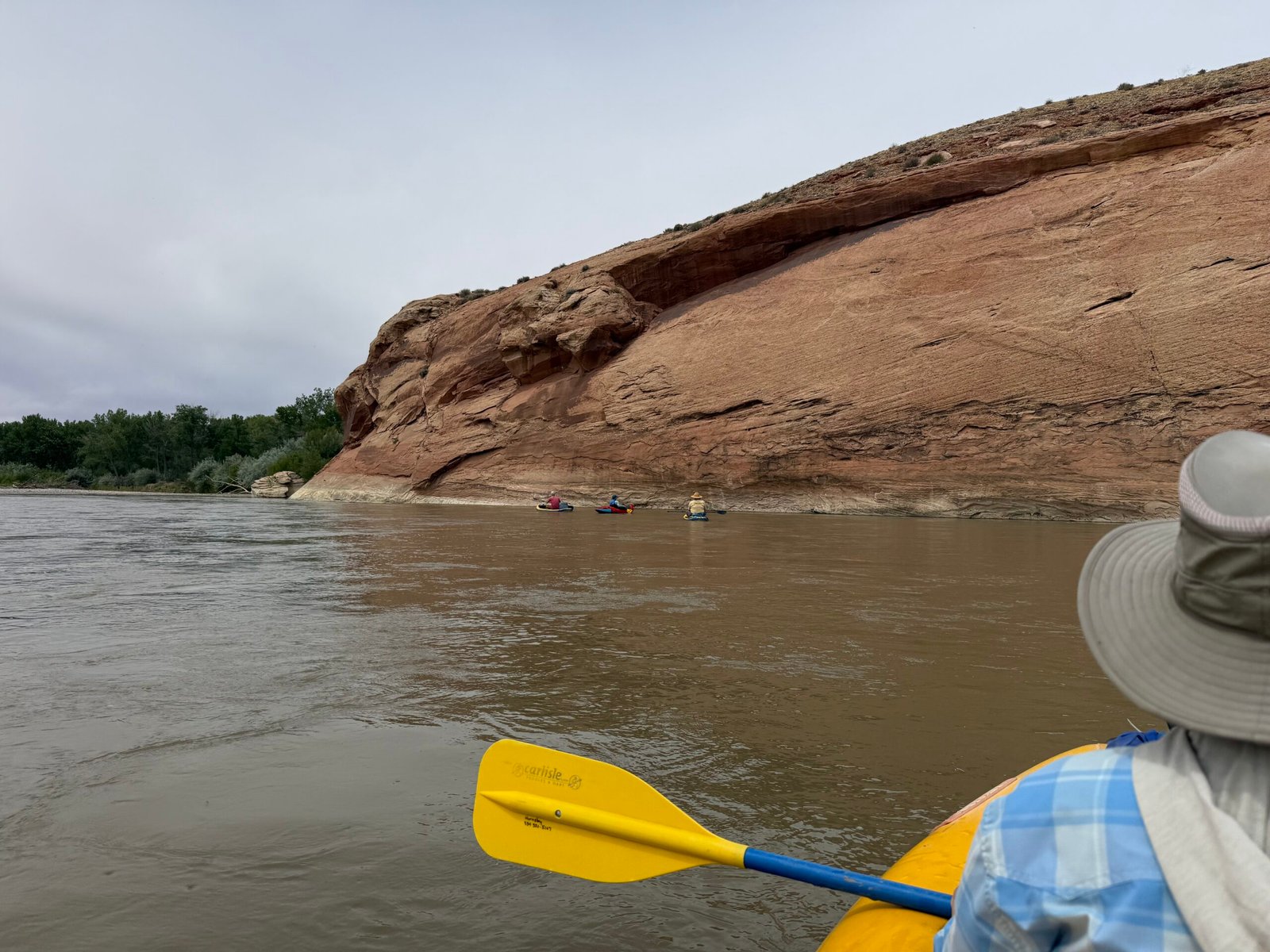
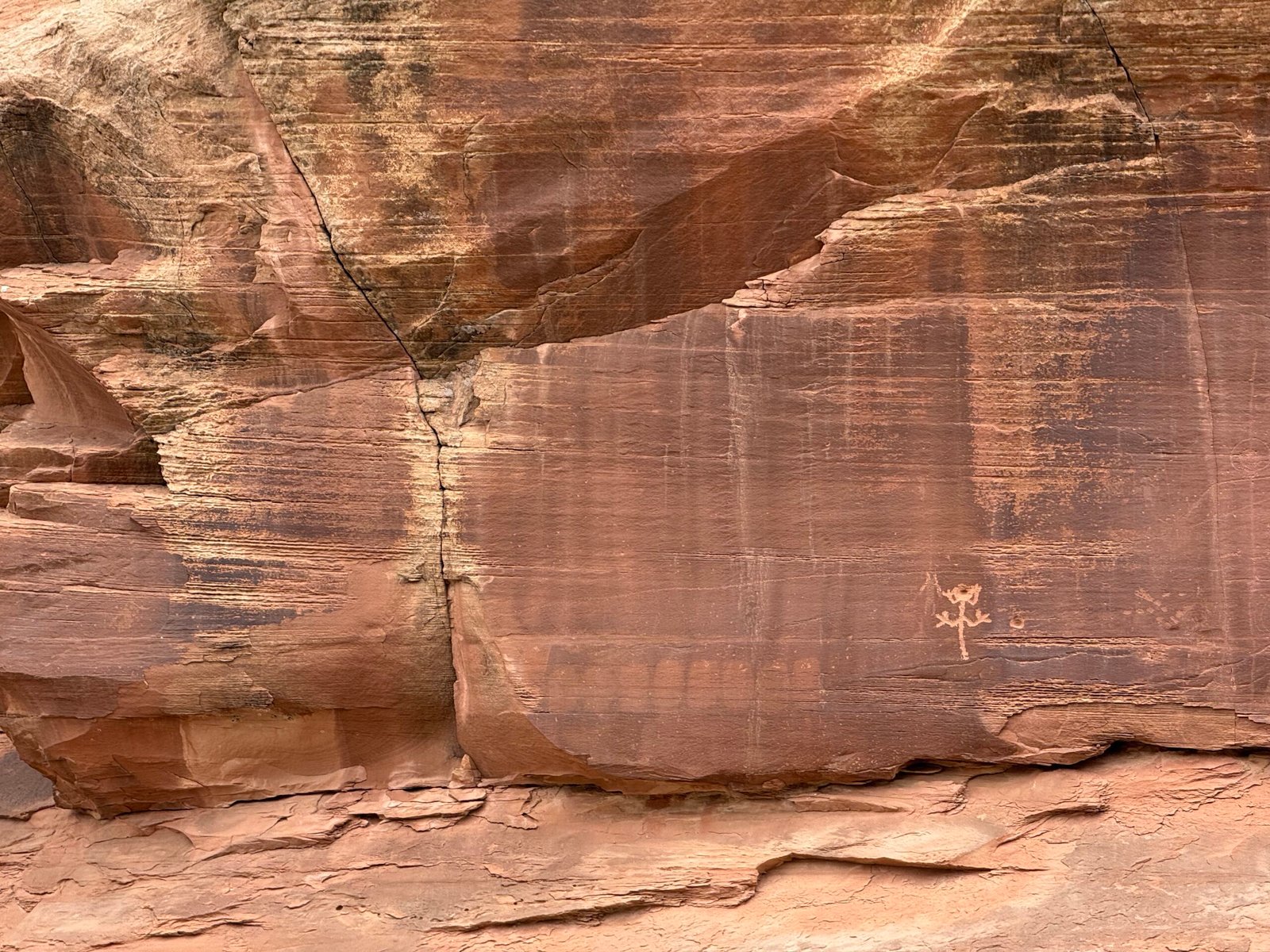
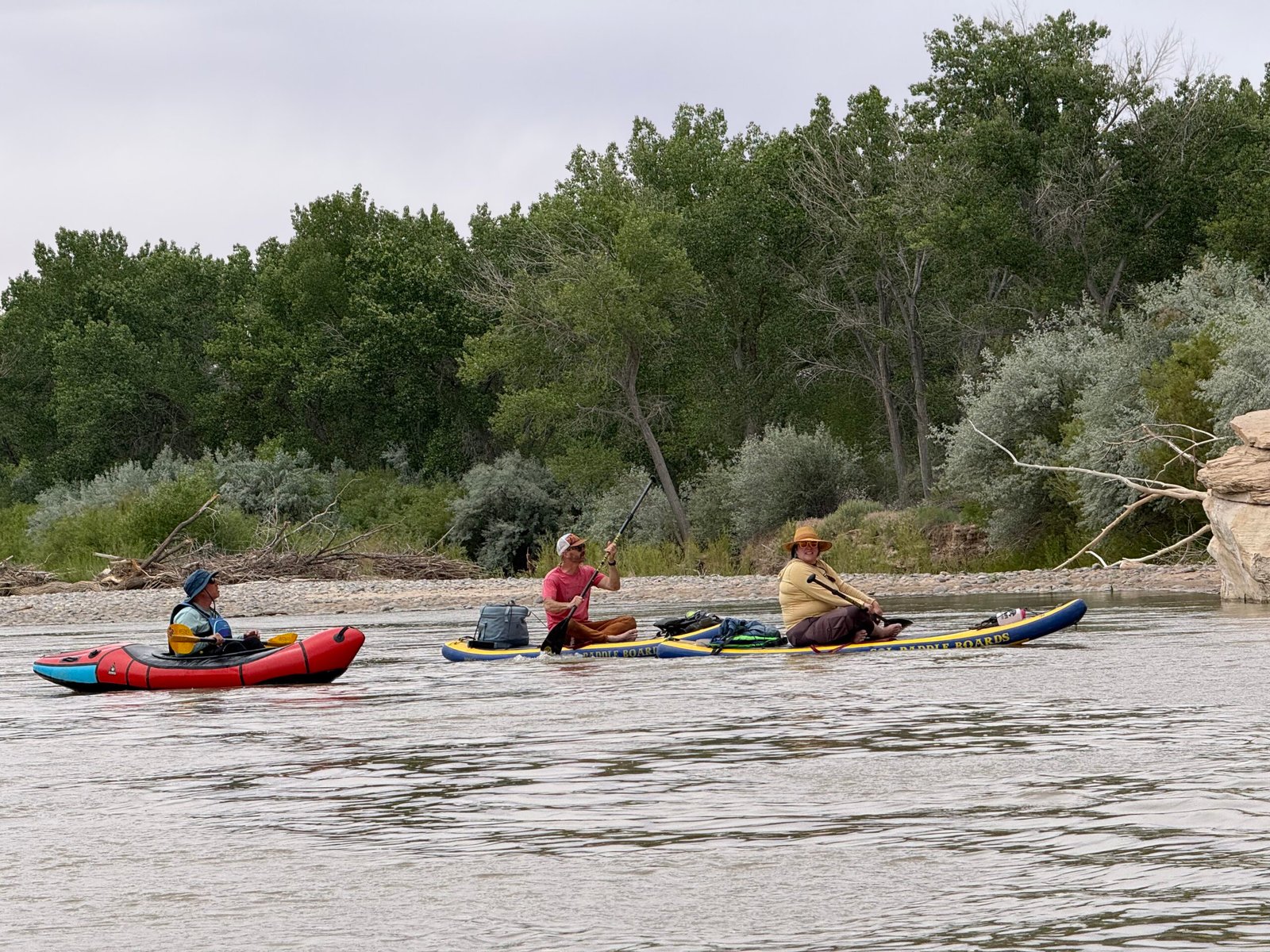
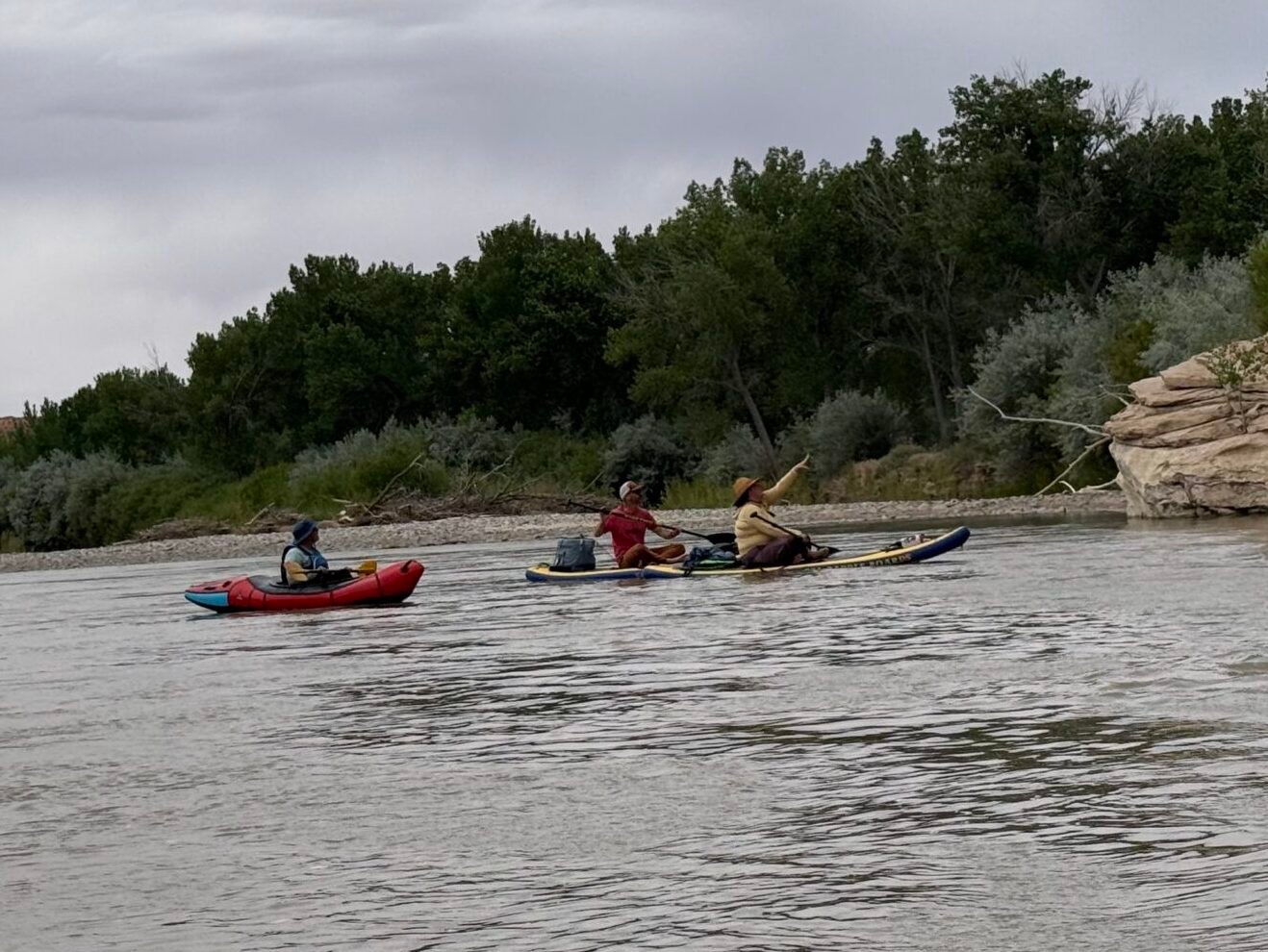
Just before our takeout at Sand Island, we spotted more artwork on a rock face that turns the San Juan south. A few figures, along with seven mysterious panels all neatly lined up.
Off the water by 1pm and, all in all, a pretty fine day.
As our (supposed) last week was coming to a close, we learned that the BEP had been invited to a couple of AstroFest events in the Needles of Canyonlands and at Natural Bridges the first weekend in June. And they could use a little help with their telescopes.
Hmmmm, this sounds like fun….

Leave a Reply