Category: Bears Ears 2026

  • Paradise

    Paradise

    #6 of  the series.

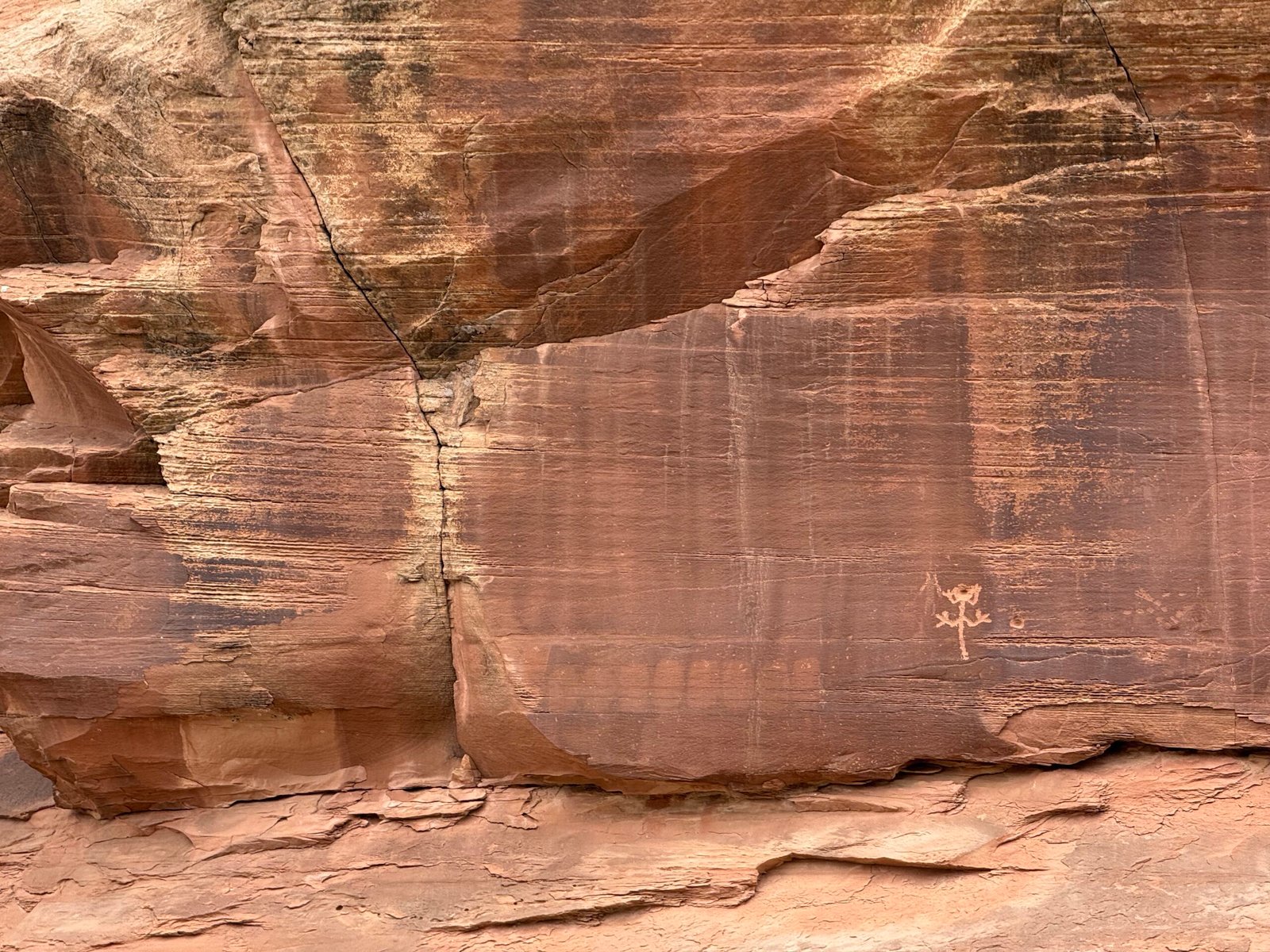
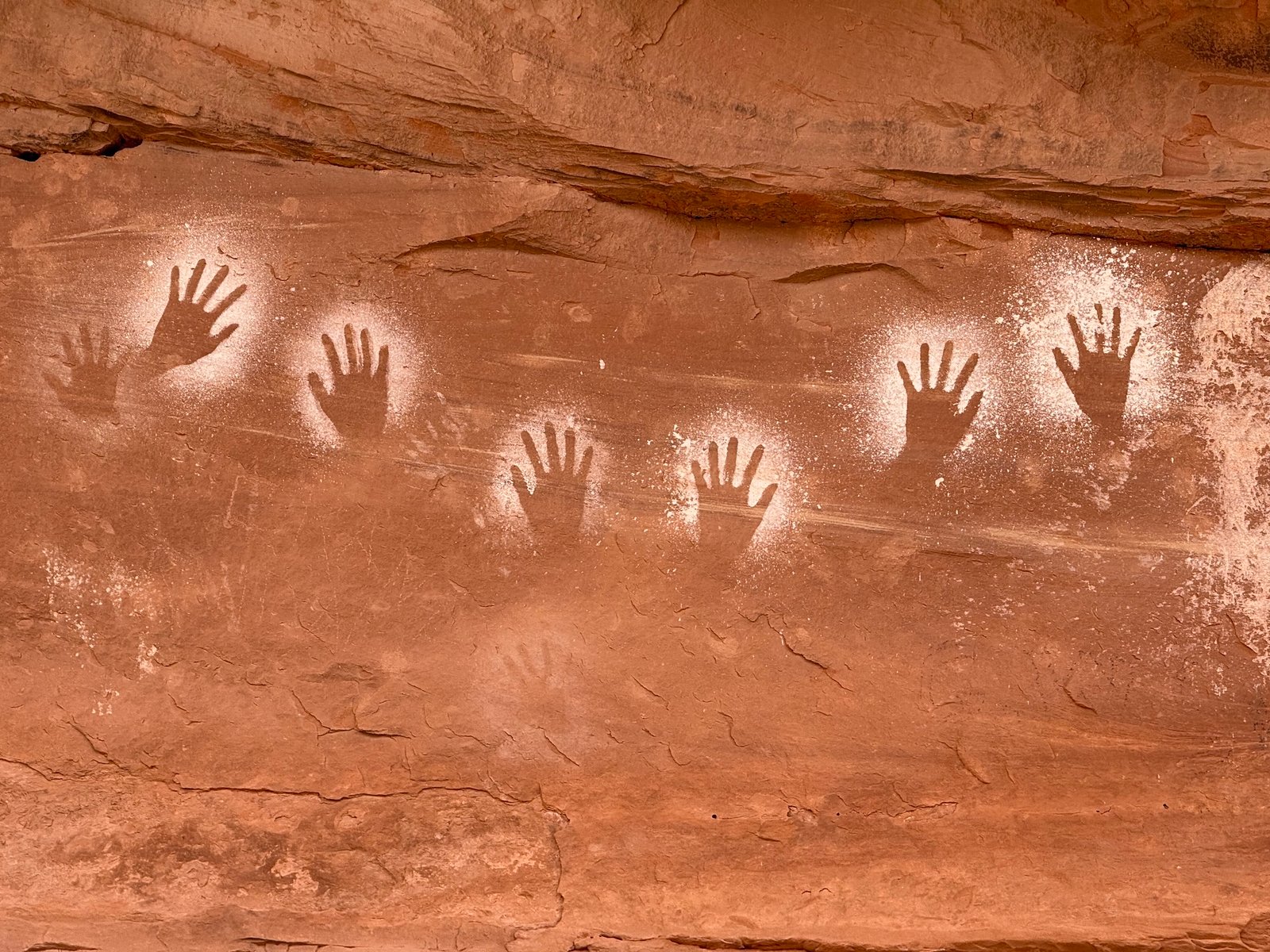
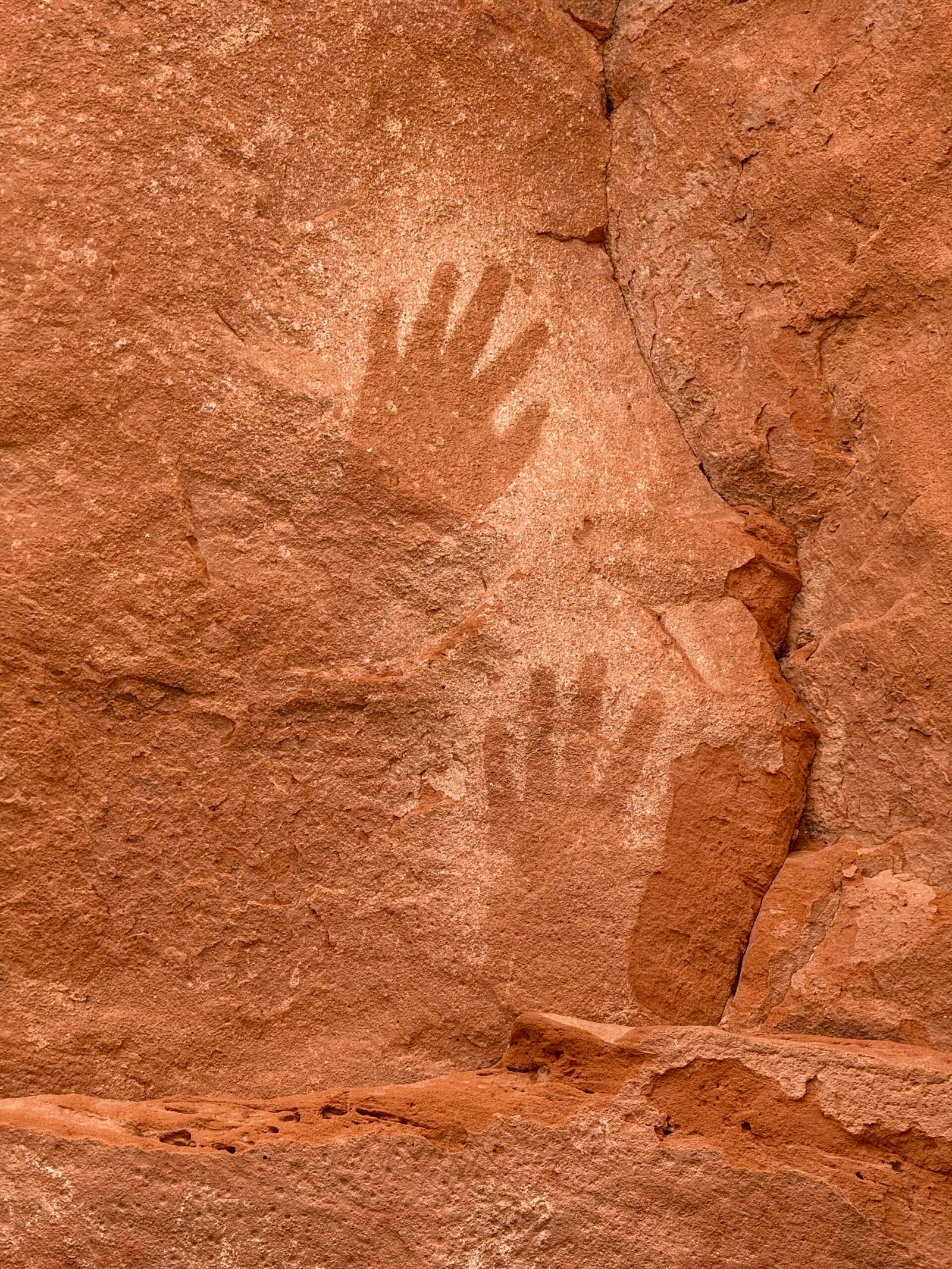
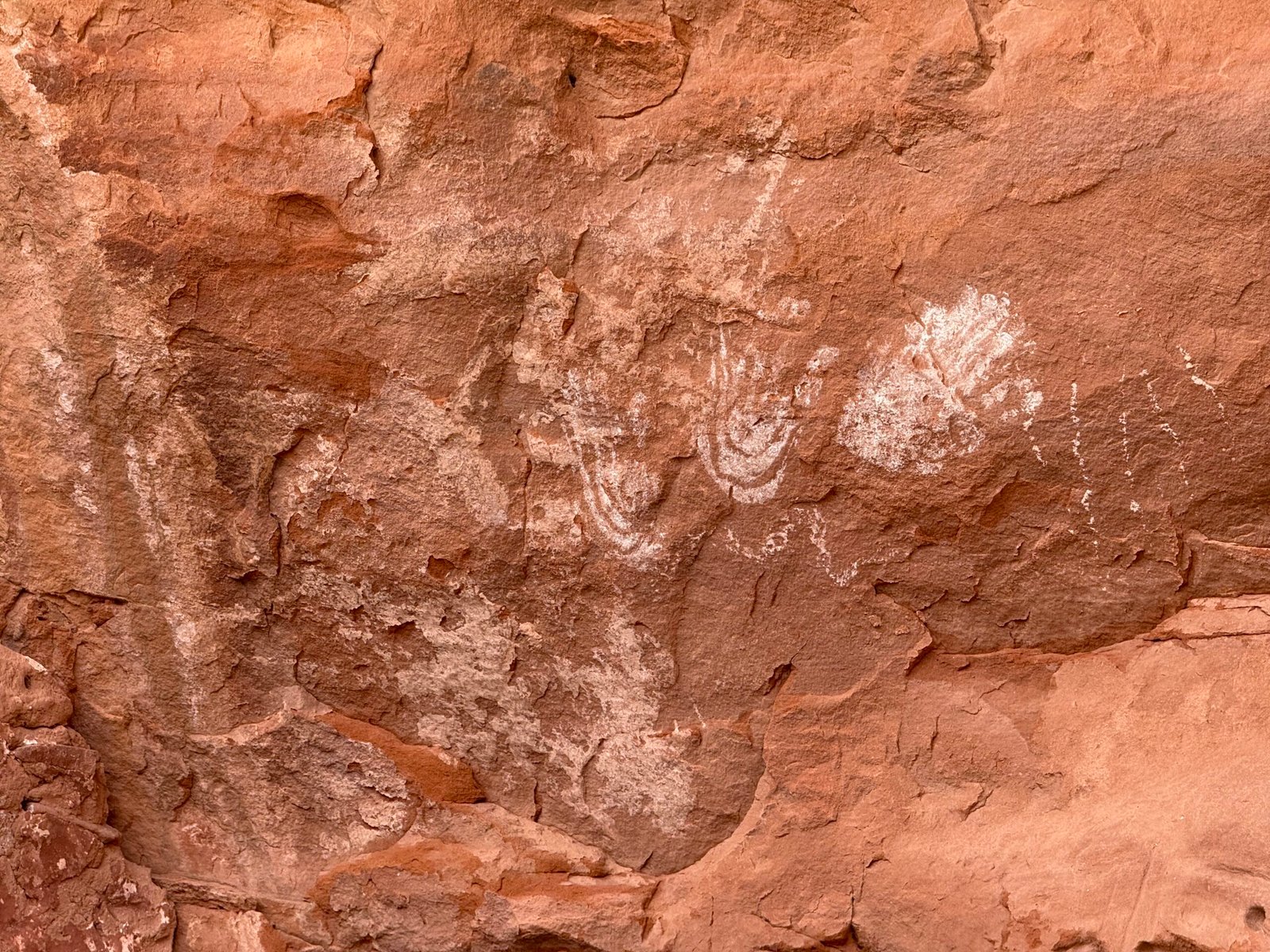
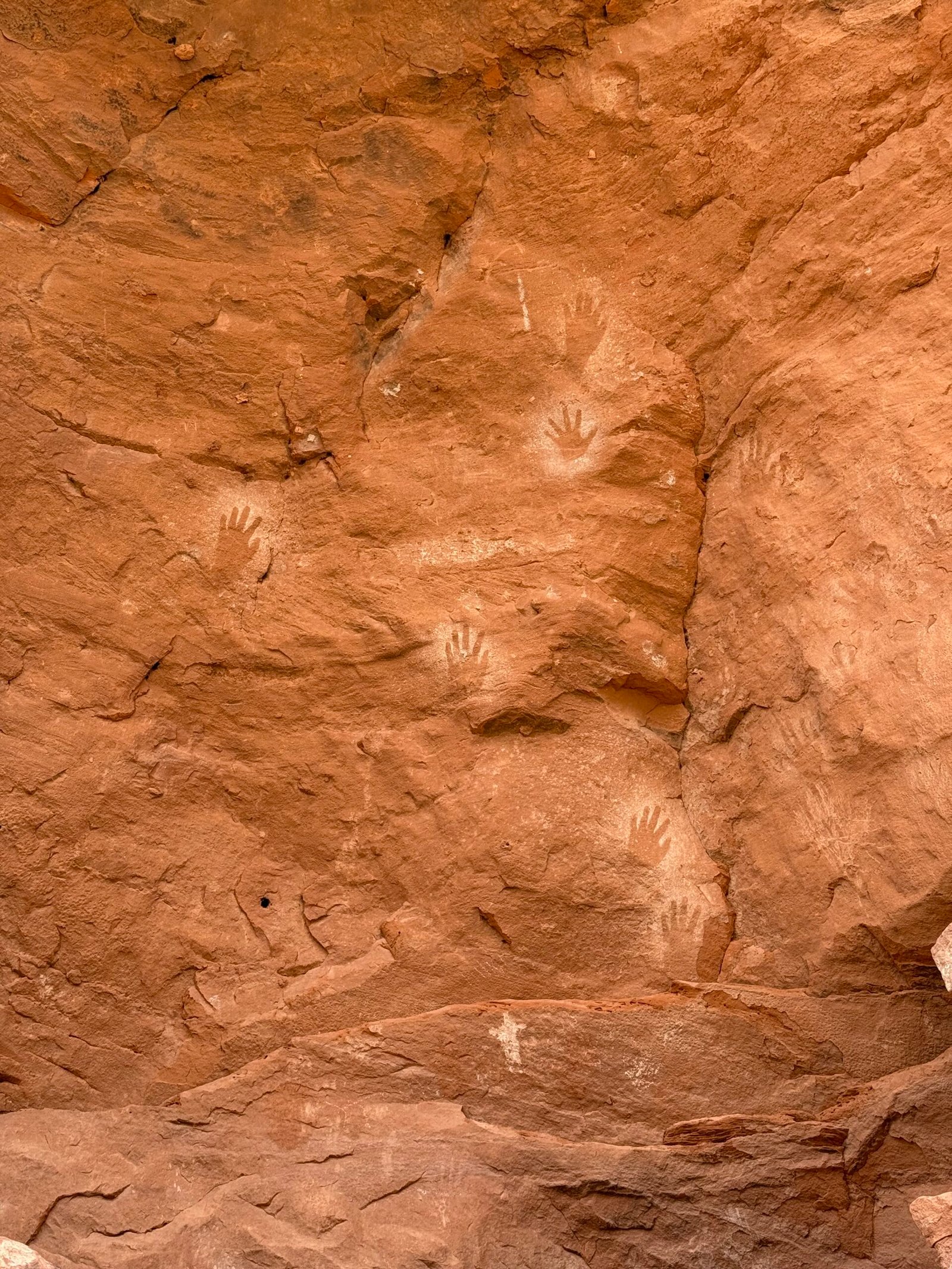
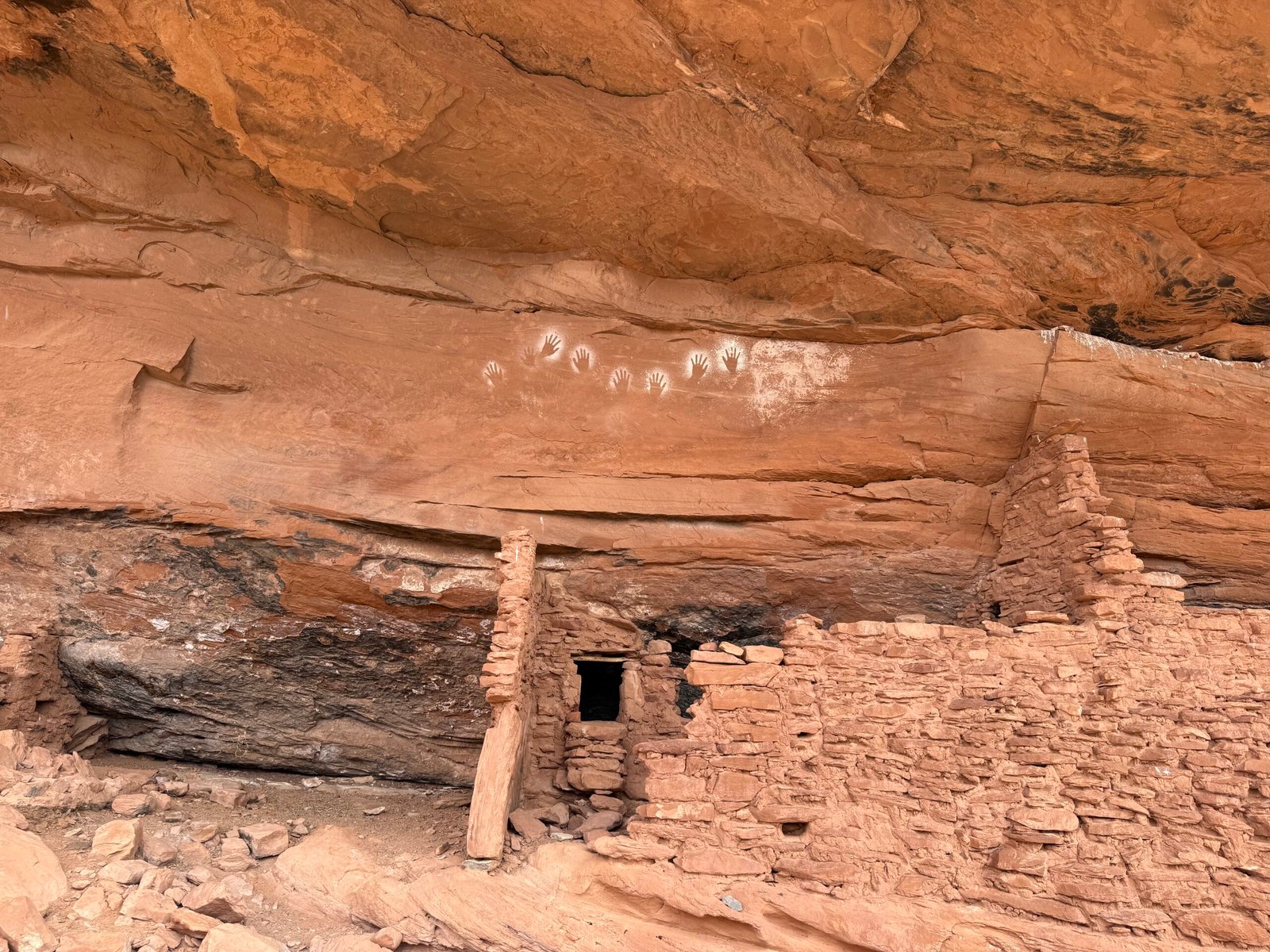
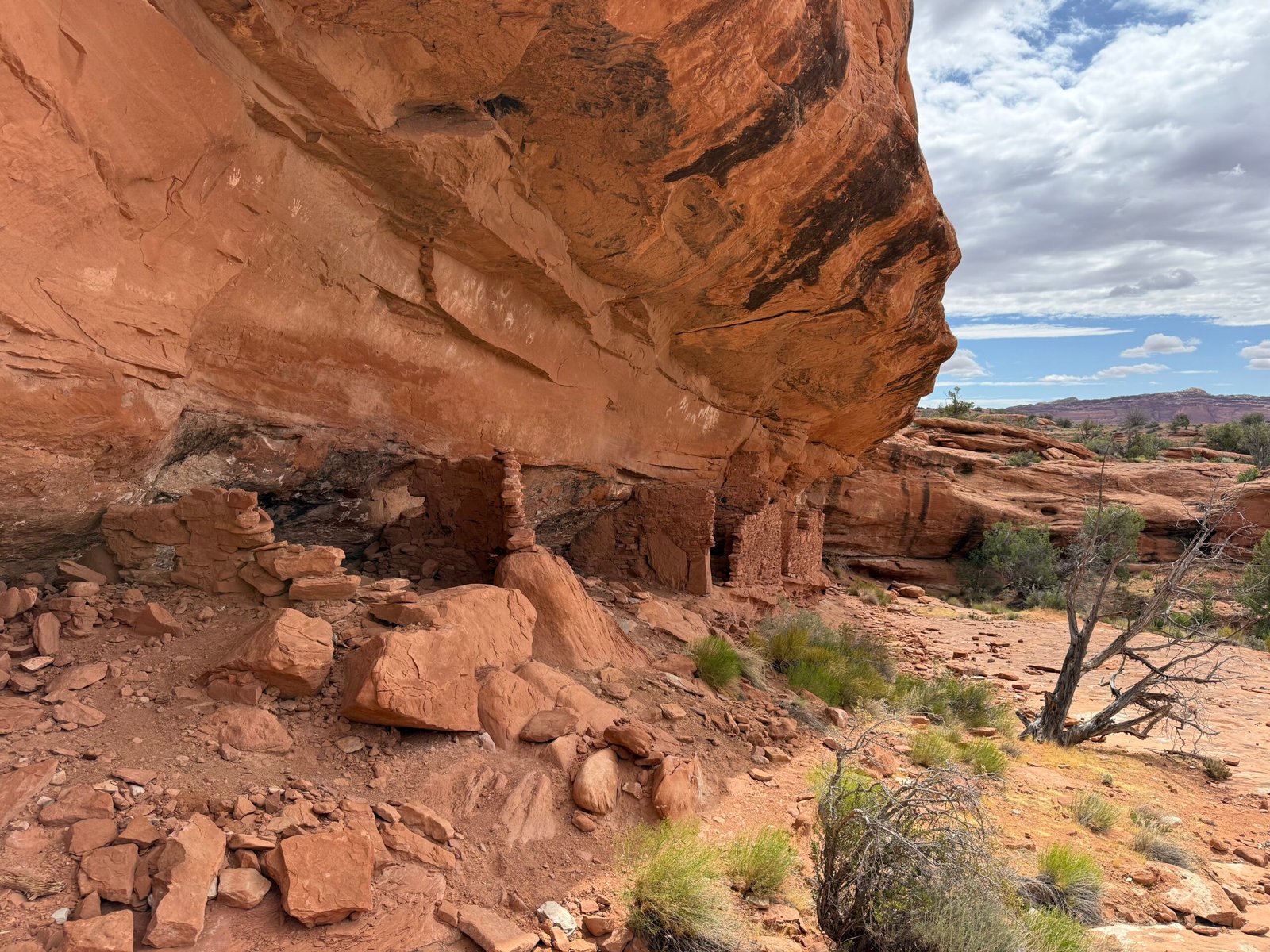
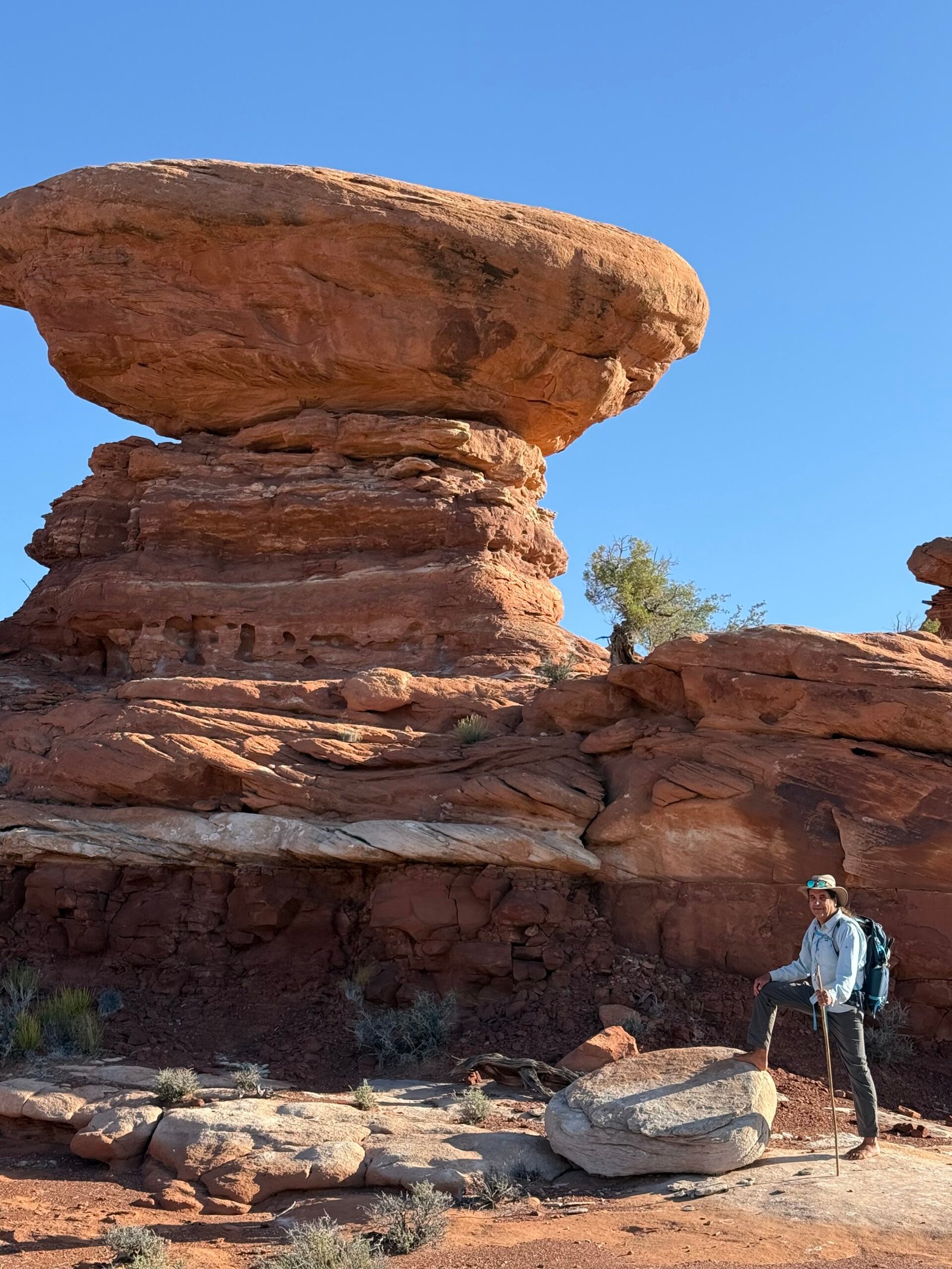
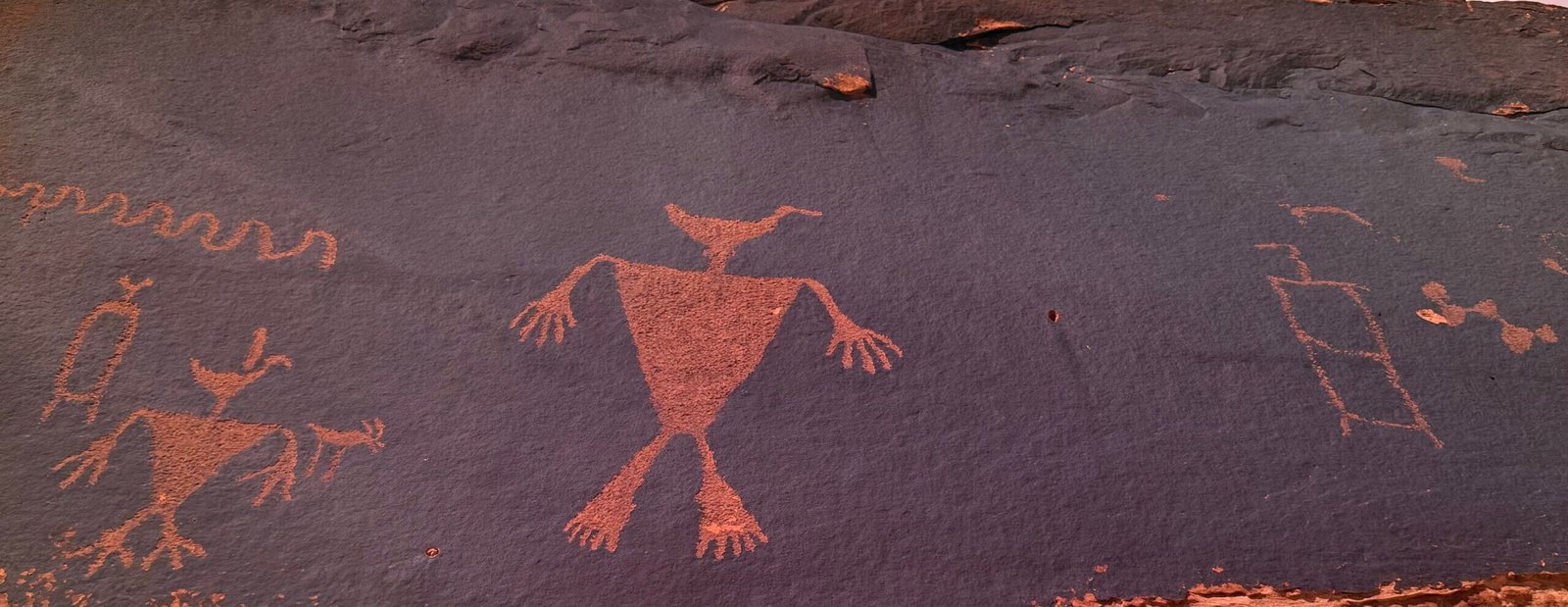
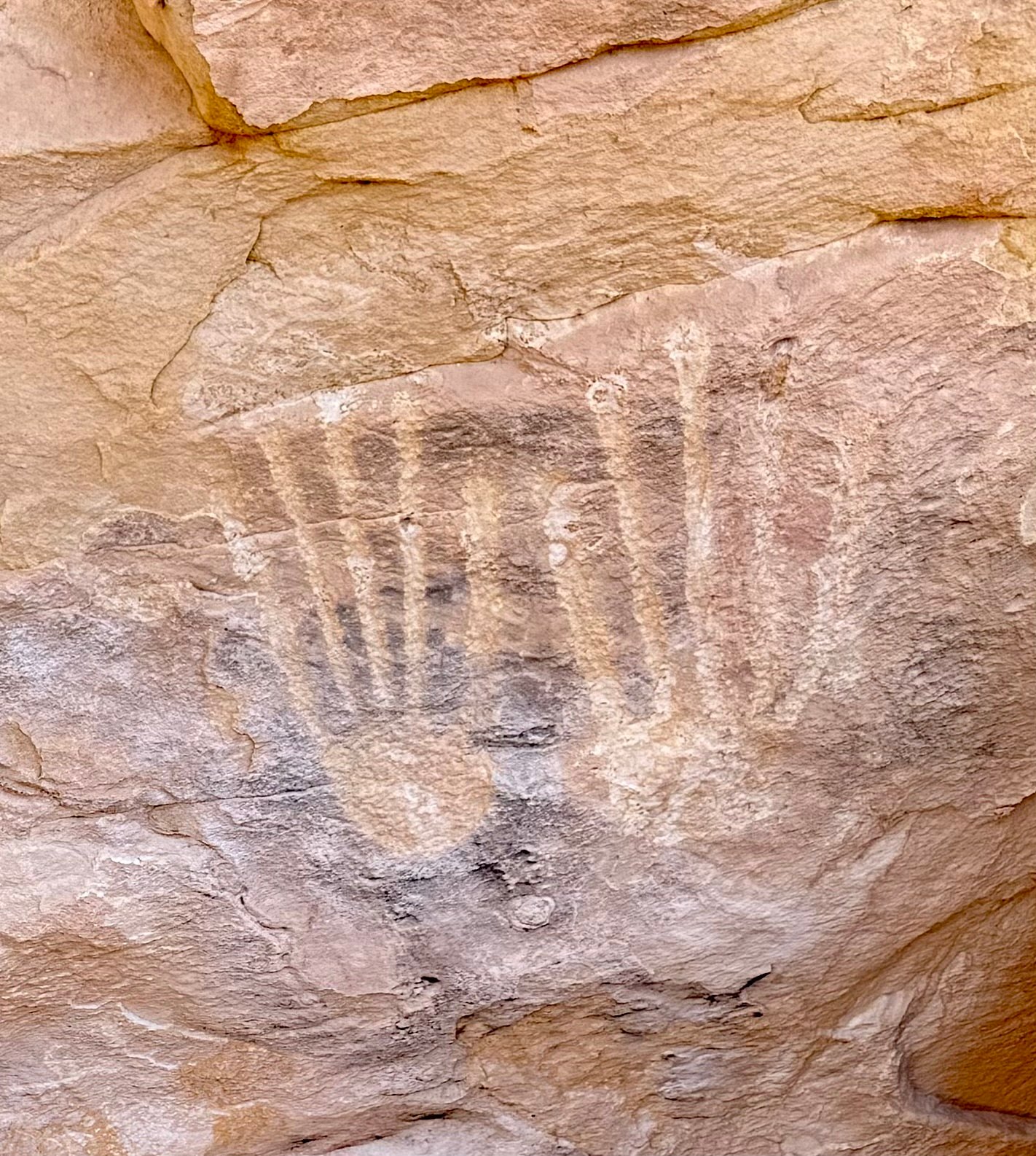
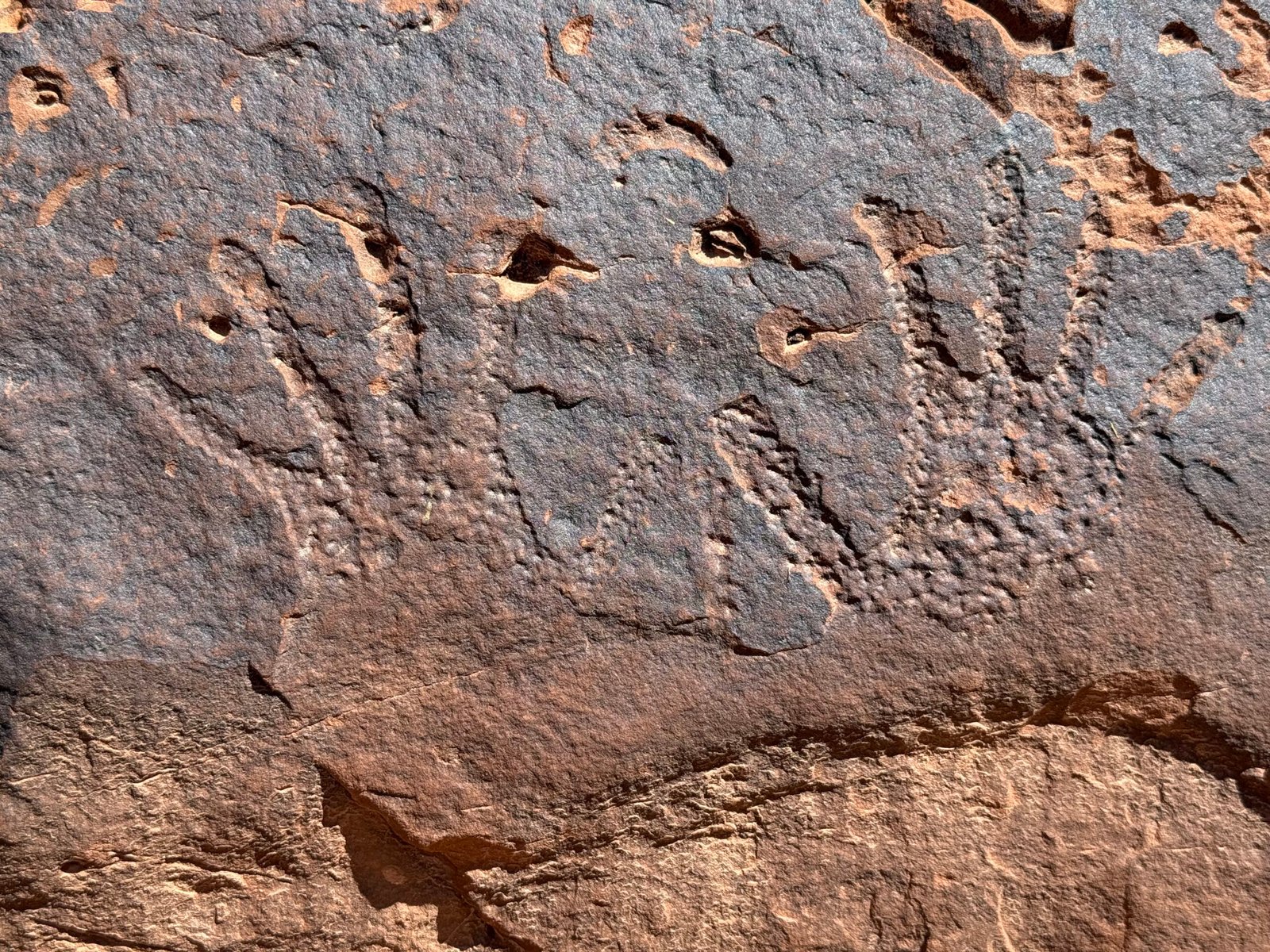
    Three pair of beautiful handprints in featured image. Notice the misfit in the middle? 1,000 years ago that person chose differently. Even 1,000 years ago, there’s always one, right? And, more than we might like to admit, that radical might be saying something we need to hear. But more on that a little later…


    Patricia had me worried. I had installed a fancy roof vent in the camper and when I set it to “automatic” just before bedtime, a super bright green LED indicator illuminated the entire camper!

    “Are you okay with this light? I’m happy to turn it off,” I said.

    “I sleep with my eyes closed so it won’t bother me,” she said facetiously. And then I heard a giggle. Then a chuckle. “Uh oh,” I’m thinking to myself.

    Then a brief cascade of hysterical laughter. Terrified, I refused eye contact and I dared not engage in conversation. I’ve seen how these things go.

    The laughing convulsions ebbed and flowed, subsiding before midnight. And we worked our way through it. For my part, I was as quiet as a church mouse.

    Back around 2016 or so, we took the grandkids to a movie at a fancy venue in Huntsville. While eating at the restaurant, Lainee, the youngest, posed a knock knock joke to Patricia:

    “Knock knock.”

    “Who’s there?”

    “Interrupting cow.”

    “Interup…..”

    MOOOOOOOO!!!

    Grandmommy lost it. Out of control. It was so bad that the other waitresses came over to witness it in wonder.

    Yes folks, joke hysteria is a thang.

    And maybe genetic. I’ve seen the daughters and a granddaughter fall into this miasma, it has been a family team effort to pull them out! I would say there should be a treatment, but then again, it is a treatment. To experience one is to have a light heart for days, grinning to yourself every time you think about it.


    Retrospective – Part One of Two:

    John Prine was one of the great singer/songwriters of our time. By the time I had reached my teenage years, he’d penned and sung a couple of his greatest works in his 1971 debut album. He could transform a volume of prose into a single lyric like no other. Just thinking about Mr. Prine has placed Sam Stone in my mind, and the lyrics have rolled around in my head for at least three weeks now.

    And the gold roared through his veins 
    Like a thousand railroad trains

    And eased his mind in the hours that he chose 
    While the kids ran around wearin’ other peoples’ clothes

    Hmm, hmm, hmm, hmm.

    And then there is the song Paradise.

    John Prine was from Maywood, Illinois but spent many a summer on the Green River in Paradise Kentucky with his family. He had described it as “a real Disney-looking town.” While serving in the Army in West Germany (remember that Germany and its capital city Berlin, were split after WWII until the wall came down in 1989), his dad had written to tell him that the Peabody coal company had ruined the town.

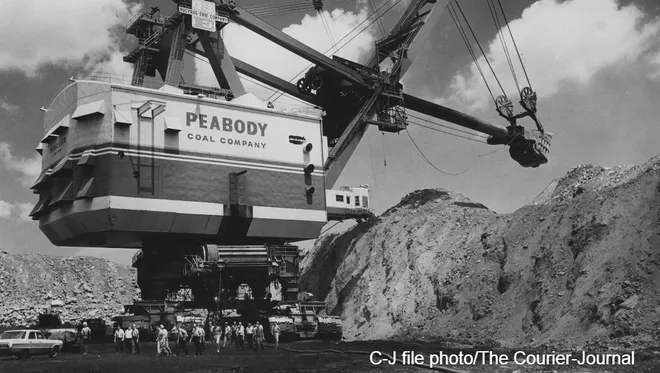
    Peabody Energy got their start in 1883 in the coal business, and in the 1960’s won a contract with the Tennessee Valley Authority (TVA) to strip mine thousands of acres in Muhlenberg County, Kentucky in order to feed a new coal-fired power plant being built in Paradise. It was a small town of about 900 folk, but nearly three times the size that Bluff is today.

    To strip the land, Peabody had the world’s largest coal shovel, “Big Hog,” built to feed the new TVA Paradise Steam-Power Fossil Plant. Patricia remembers seeing it as a child.

    But in just a few years time, the town was abandoned due to the toxic flue gases and fly ash causing sickness. People were relocating, often losing their businesses and value in their homes. TVA finally bought the entire town in 1967 and it is now a ghost town, with only the cemetery remaining. As the master sings:

    Well they dug for their coal till the land was forsaken

    Then they wrote it all down as the progress of man.

    TVA was created in 1933 as a “public corporation.” I’m pretty sure the public paid for the purchase of the town of Paradise, and not the corporation. The coal furnaces were eventually shut down, with two being eventually converted to natural gas. Peabody Energy was unaffected.

    During this same period, around 1964, Peabody’s subsidiary, Peabody Western Coal, signed leases with the Navajo and then two years later, the Hopi, acquiring mineral rights to Black Mesa, located near Four Corners. Both tribes consider the mesa ancestral and sacred lands and there was a tremendous amount of opposition to the leases.

    The real kickers are that not only were mineral rights secured, but water rights as well. And the attorney working on the behalf of the Hopi to negotiate the leases also worked for a firm that represented Peabody in other matters. Hmm.

    I mentioned in my last post how the U.S. government manipulated the Navajo, surrounding and shrinking the Hopi lands because of their resistance. Our government also knew there was coal in Black Mesa and they worked the rules hard to get at it.

    As for their remaining paradise, the Hopi and Navajo were promised all good things. Good paying jobs and of course cheap energy. But also a promise that there would be no impact from the mining.

    But why did Peabody Western Coal want water rights to the aquifer?

    This aquifer, known as the N-aquifer, is the primary water source for over 5,400 square miles in the area. It’s ancient, pristine water tens of thousands of years old. Its recharge from rain in the desert is incredibly slow, making it subject to depletion from over use.

    Absurdly, Peabody wanted the water only to transport their coal. They built a 272-mile slurry pipeline to the Mohave Power Plant in Nevada! When operating, it drew over 3 million gallons of water everyday from the aquifer. How could they do this? Because it was the cheapest way to transport their coal and it was perfectly legal. Free resources are always cheap and desirable to corporations.

    Did it actually harm the aquifer? According to Cultural Survival,

    “The Navajo Aquifer is showing signs of serious decline after decades of pumping by the Peabody Western Coal, according to an October 2000 Natural Resources Defense Council report. Water levels have decreased more than 100 feet each year in some wells on Black Mesa since PWCC started pumping the water for slurry.”

    Then they wrote it all down as the progress of man.

    Stay tuned for Part Two.


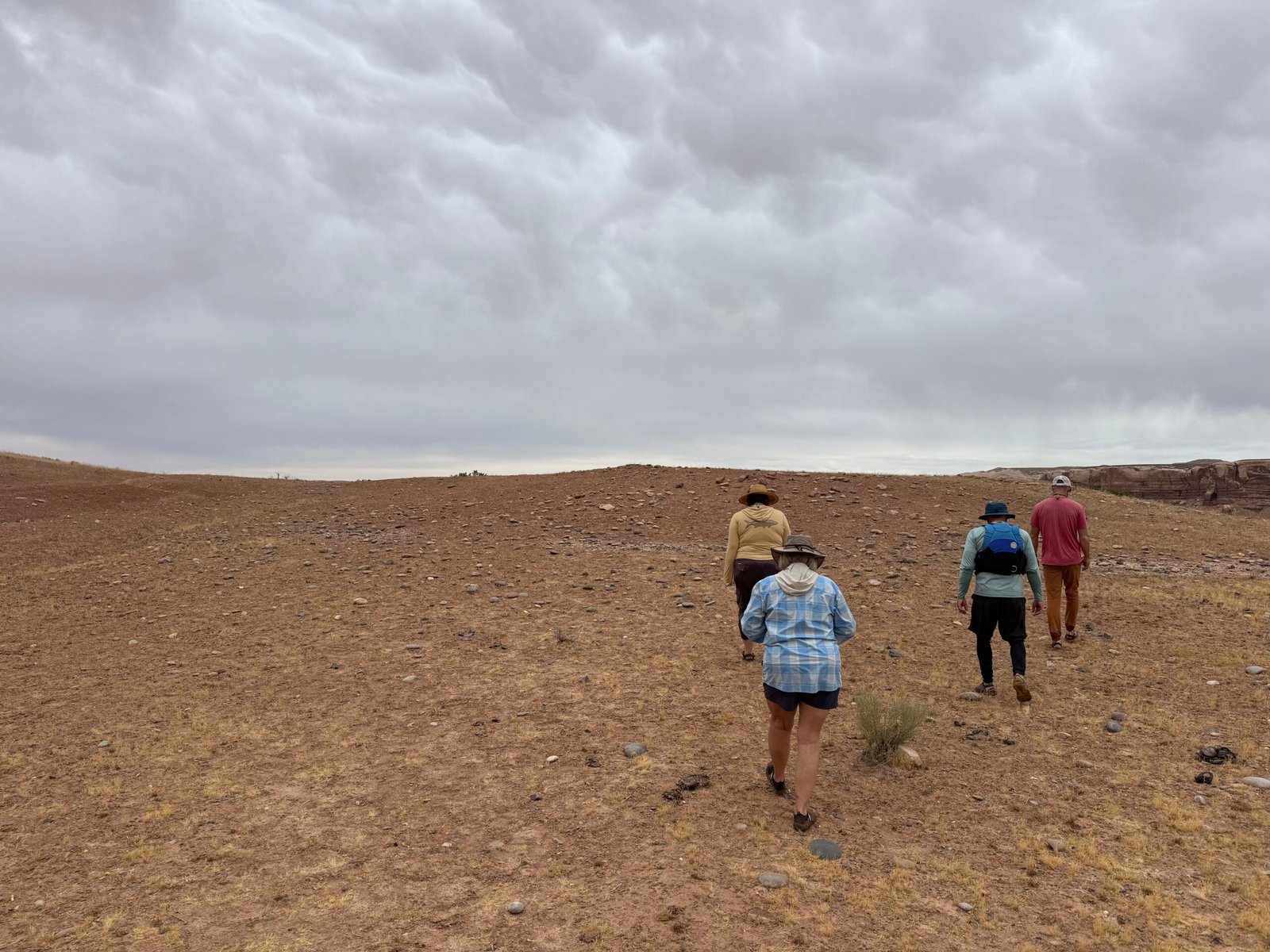
    It’s been a whirlwind, both literally and figuratively! Cool in the mornings but hot and dry during the day, with the humidity hovering at an unheard of 8%! Red flag warnings for wind-whipped fires have been common. It’s best to get out early and be back by 1 or 2 pm before the wind picks up and the sun gets too intense, a real convection oven.

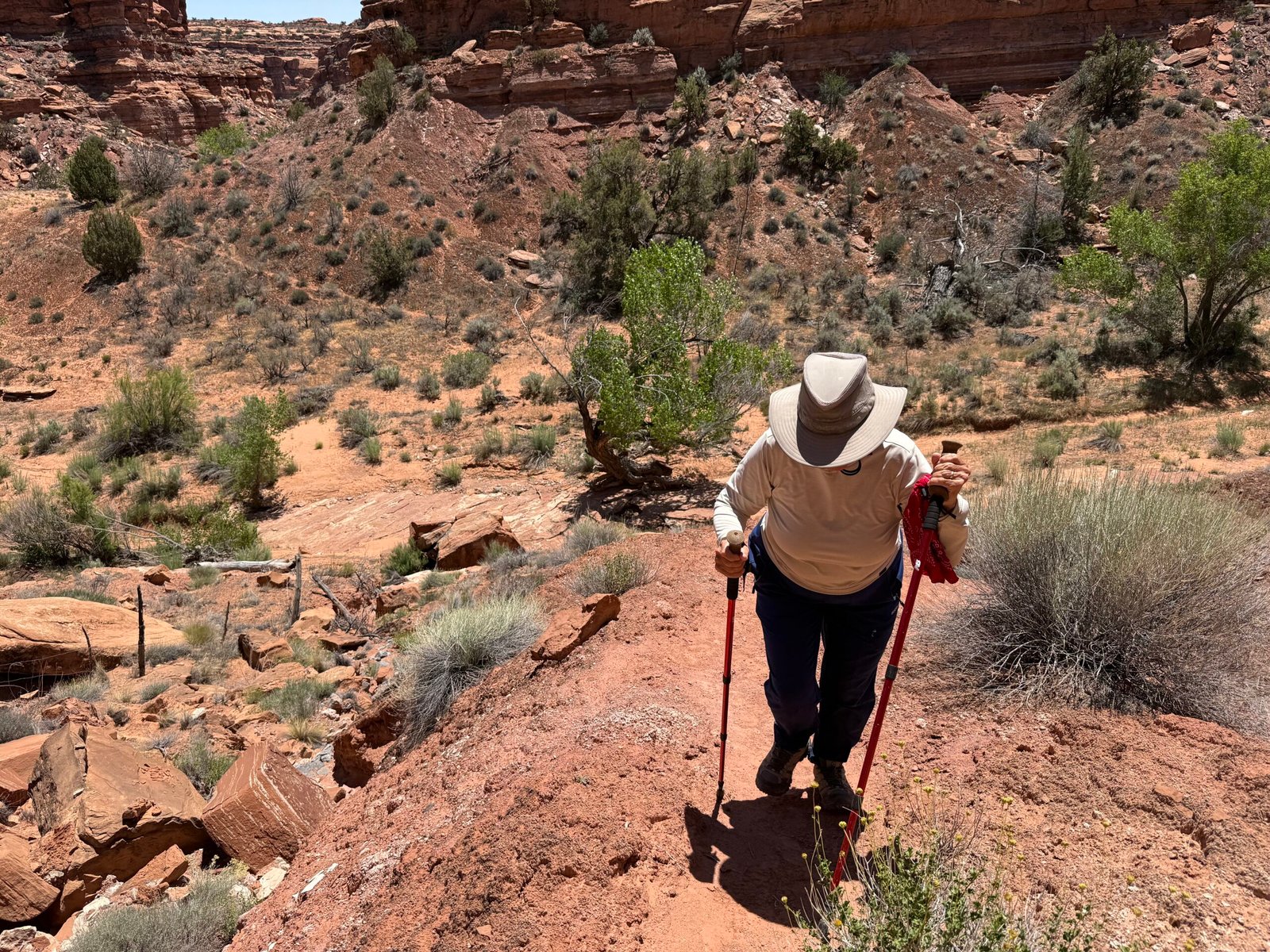
    During our hikes, we usually start by tanking up at the truck and carry around 3 liters each for the hike. It’s rare that there is a need for a “pee break.” Sweat evaporates almost instantly and you really have to work at staying hydrated. While doing a bit of reading on heat stroke, I learned that the stomach can typically process only a liter of water an hour. And under heavy exertion, you can expend one and half times that. In other words, with strenuous activity, you will be in a water deficit no matter how much you drink.

    We have called off or turned around on more than one hike. In fact, as much as we love loop hikes, we have found that out-and-backs give us options and allow us to see things we may have missed in the area.

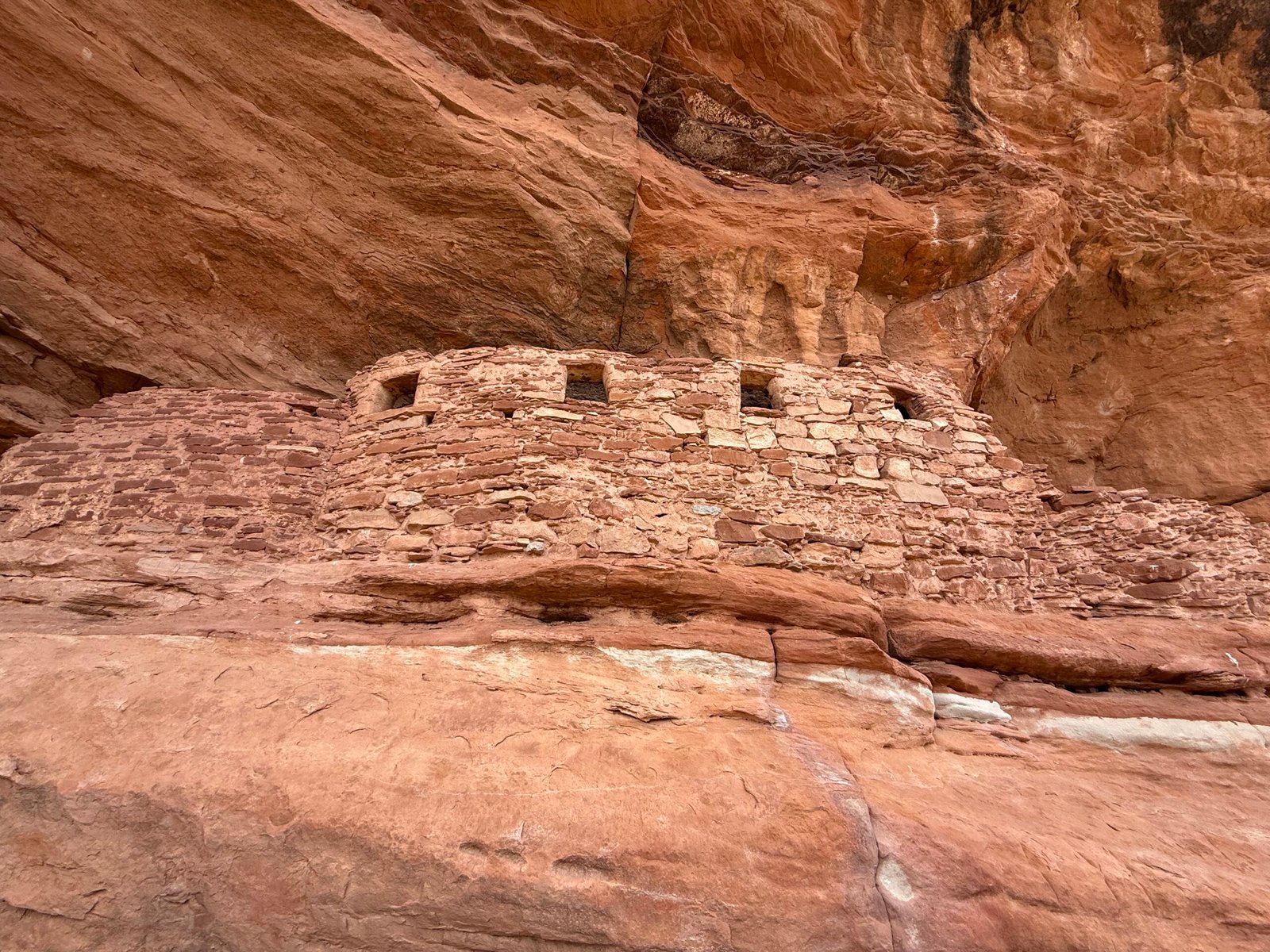
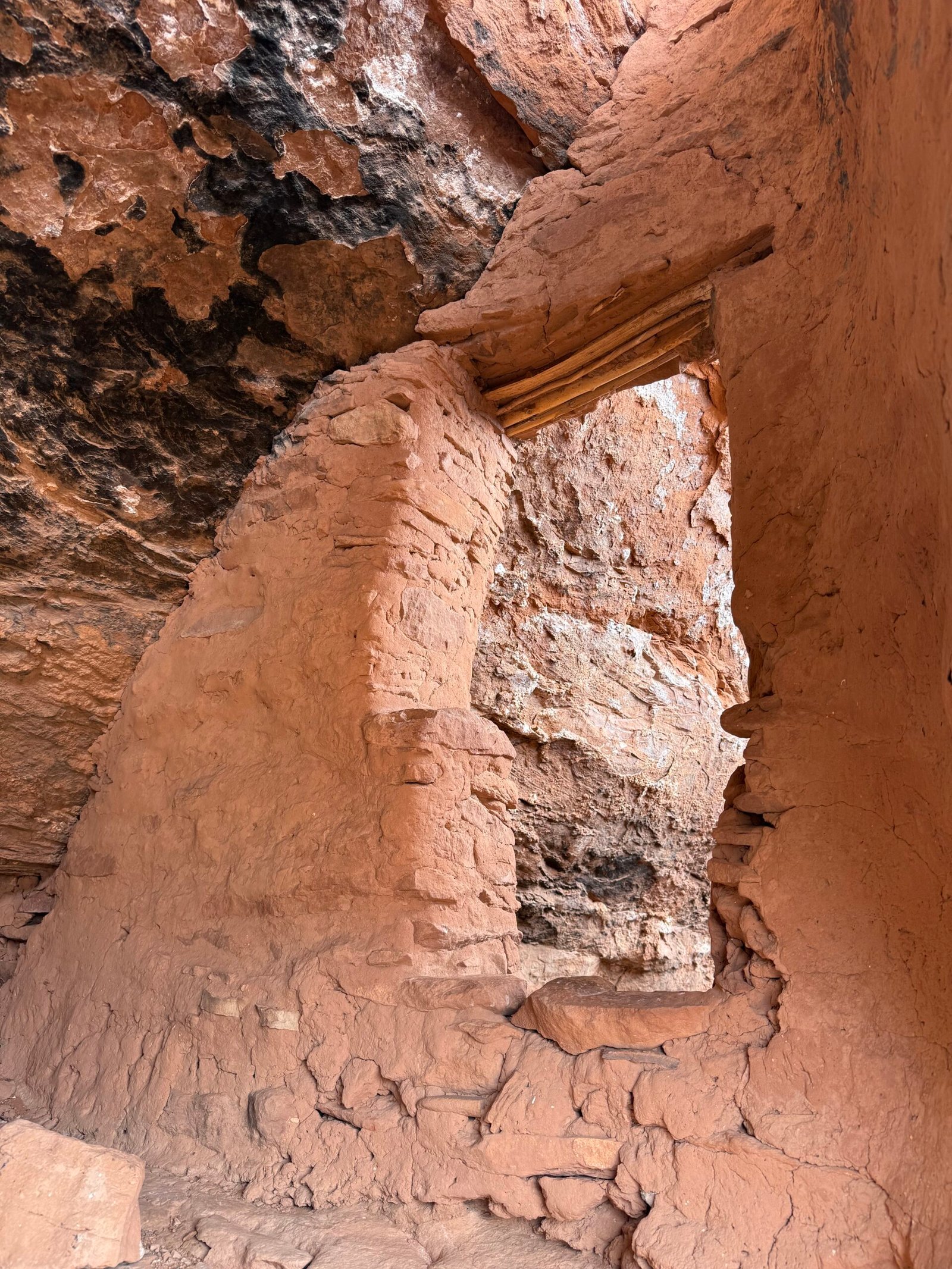
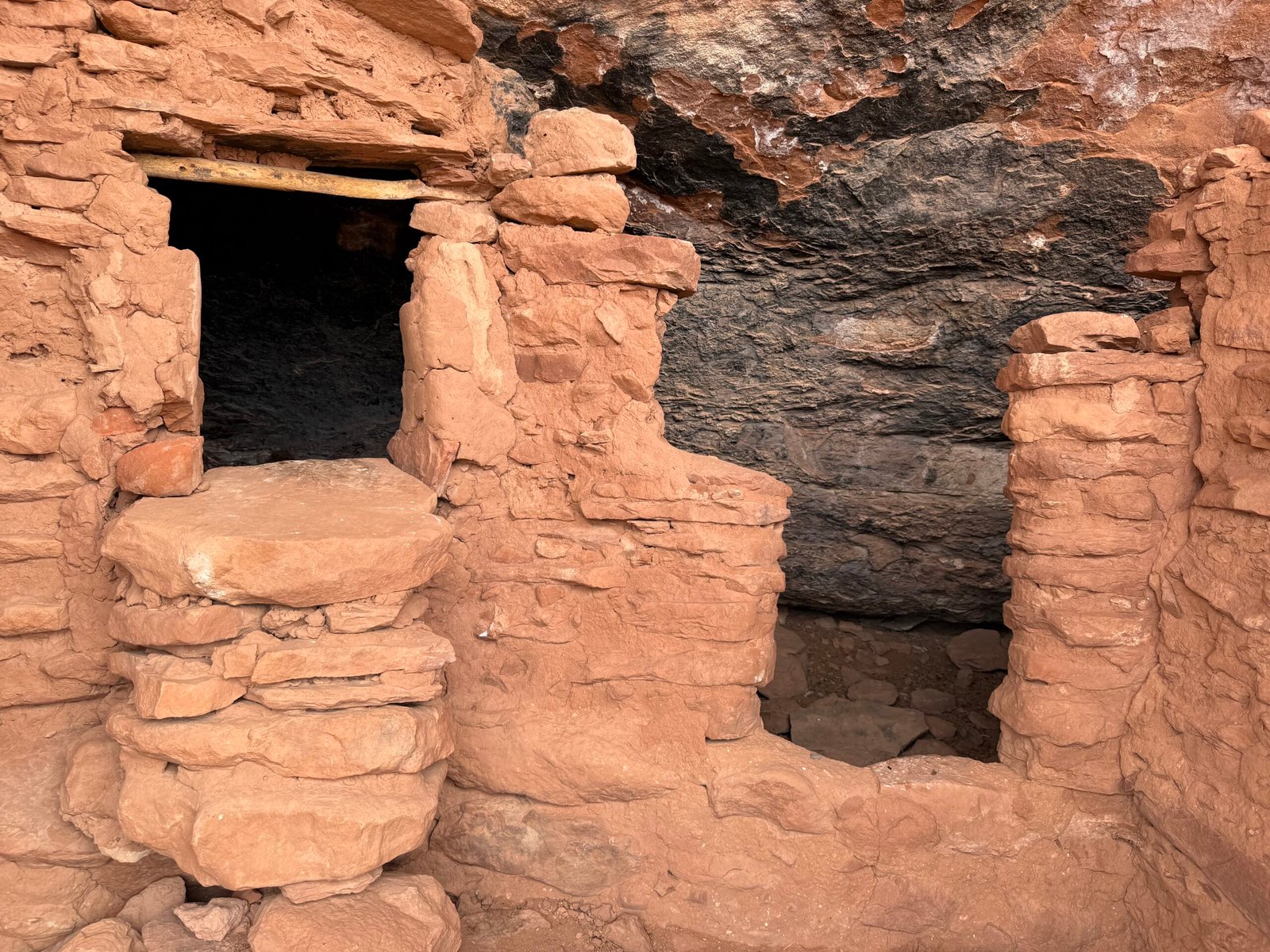
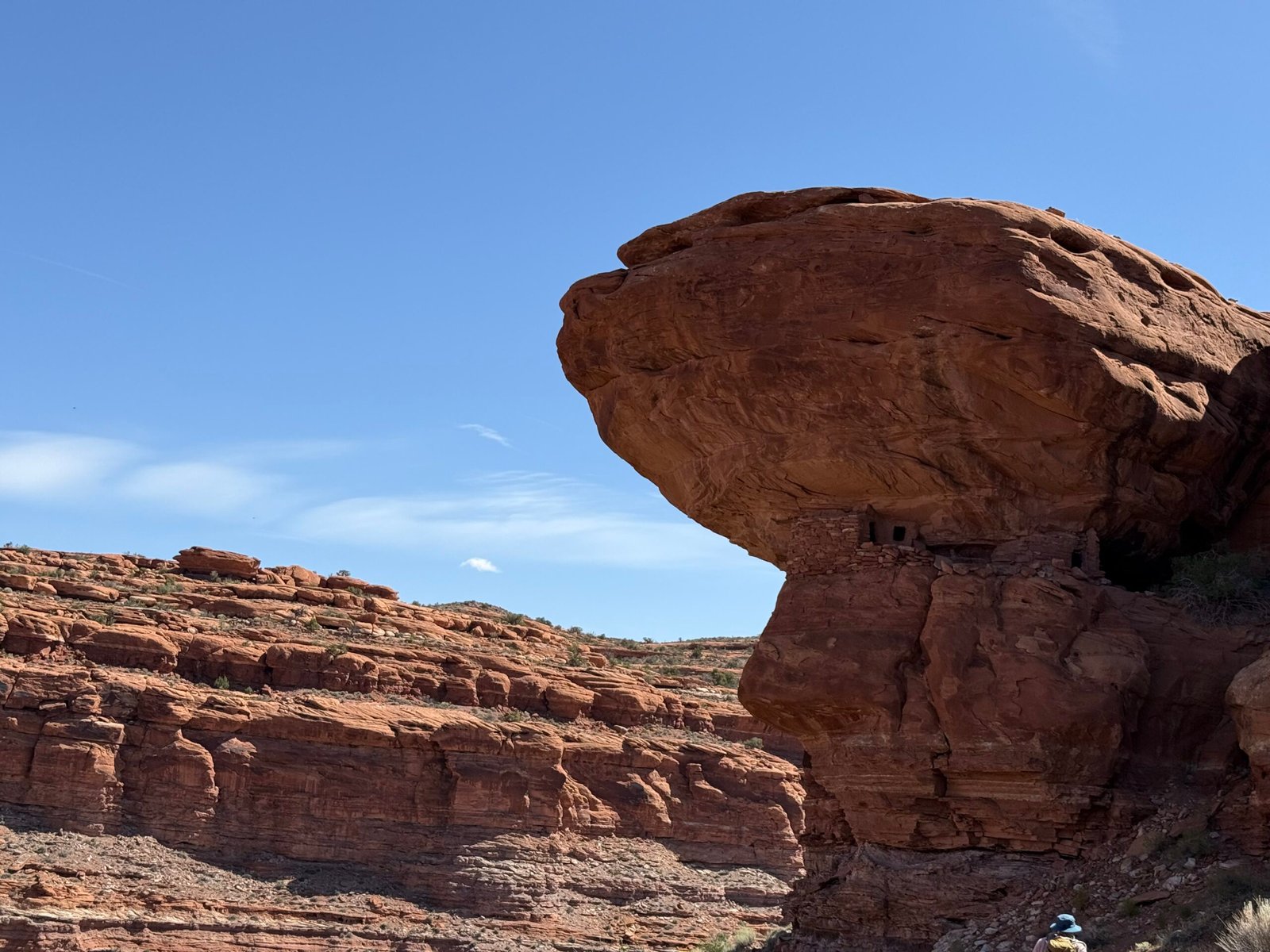
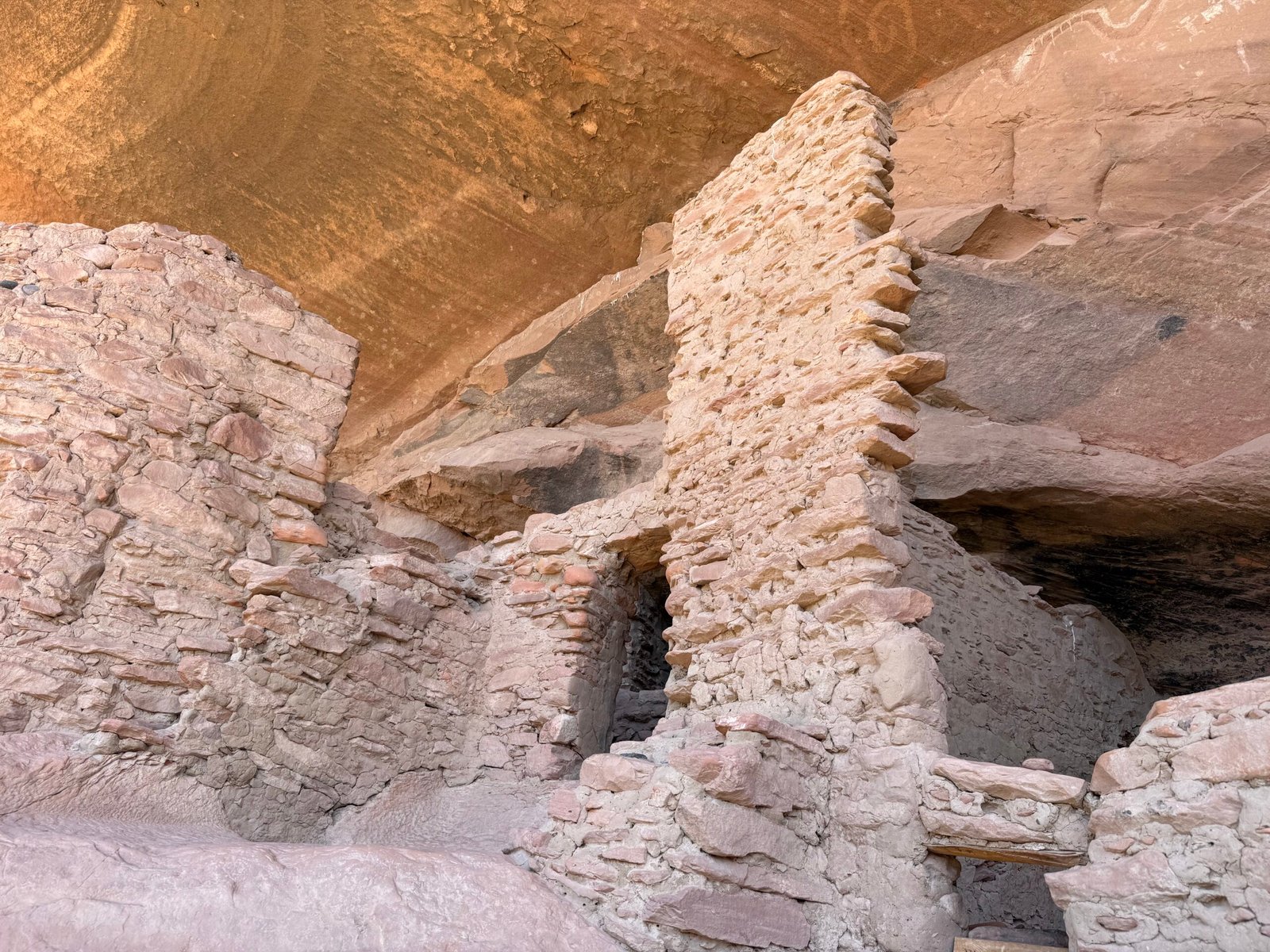
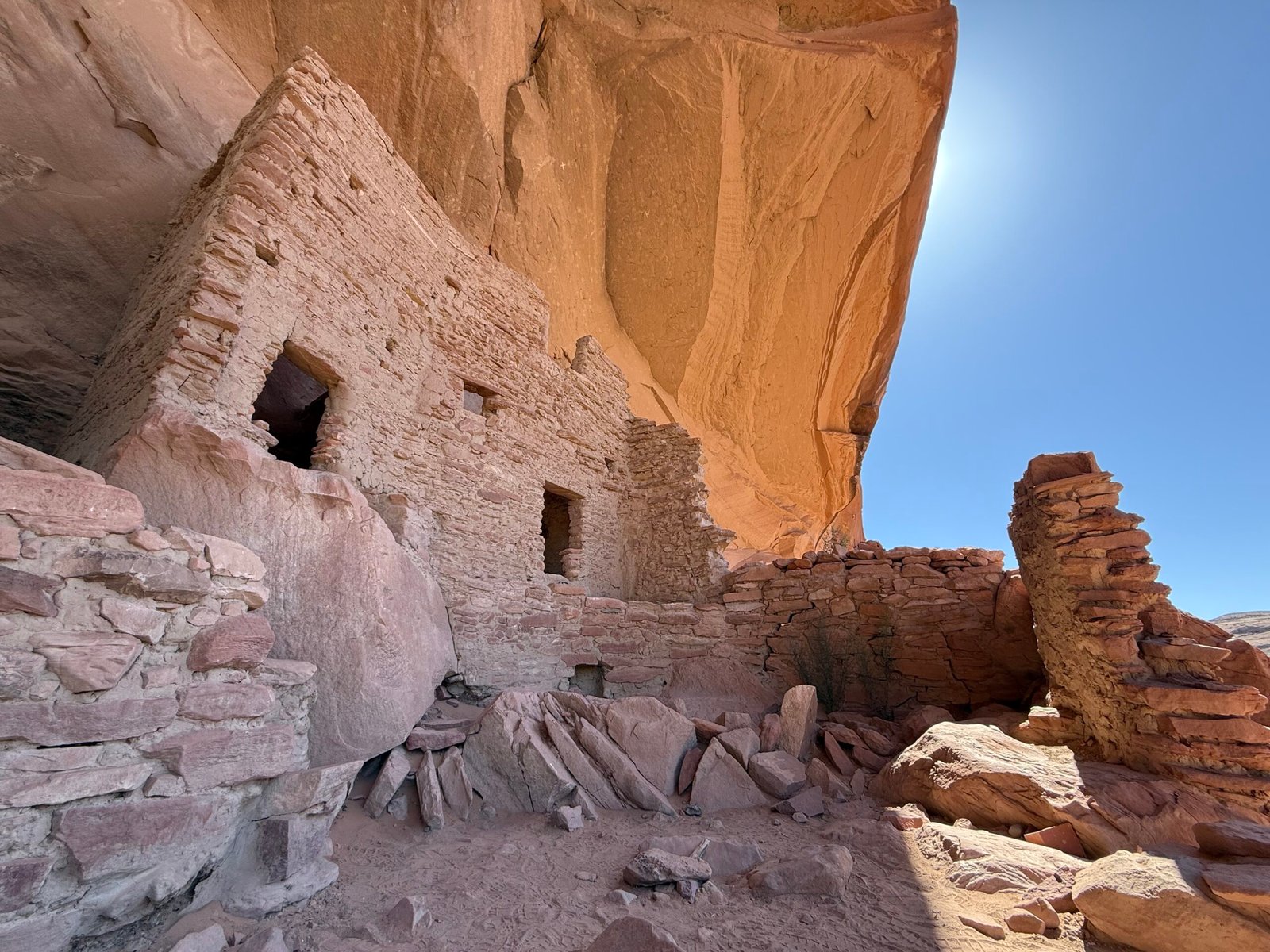
    There were a set of structures in one canyon that were intriguing. A series of four windows in the living space with what appears to be granaries on both sides. Patricia noticed that the granaries have a different style, maybe they were added later?

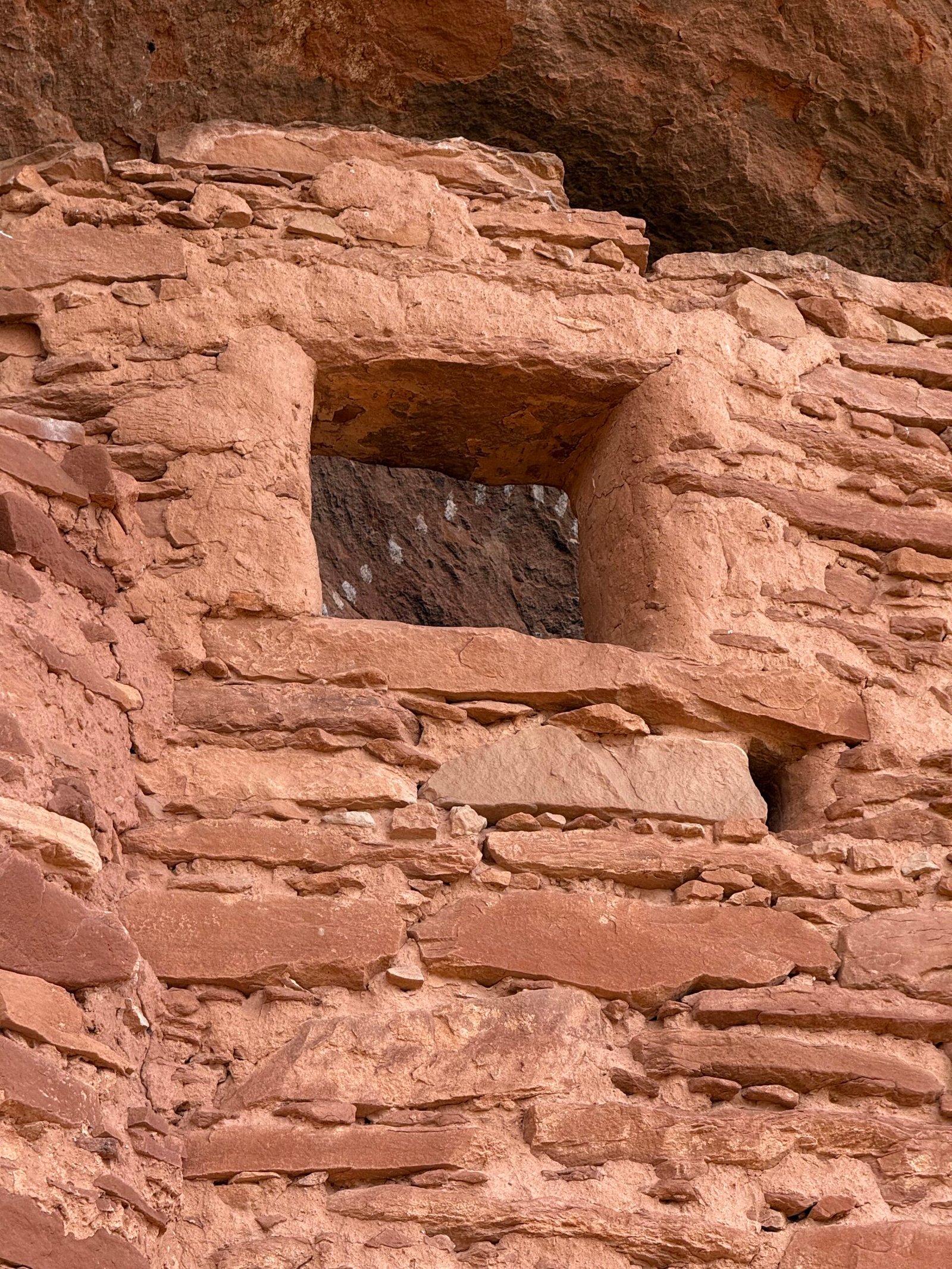
    The structure sits on a ledge of stone under an overhang. Through the window on the left, I spied a series of white dots. Not wanting to touch the structure, I decided to stay off of the ledge. So I backed up and used the telephoto. There is something celestial going on here. An arc of dots, I counted 13, or was it 14?

    With 13 full moons in a year (sometimes), is this what they were counting? There are about 14 meteor showers each year, could that be it?

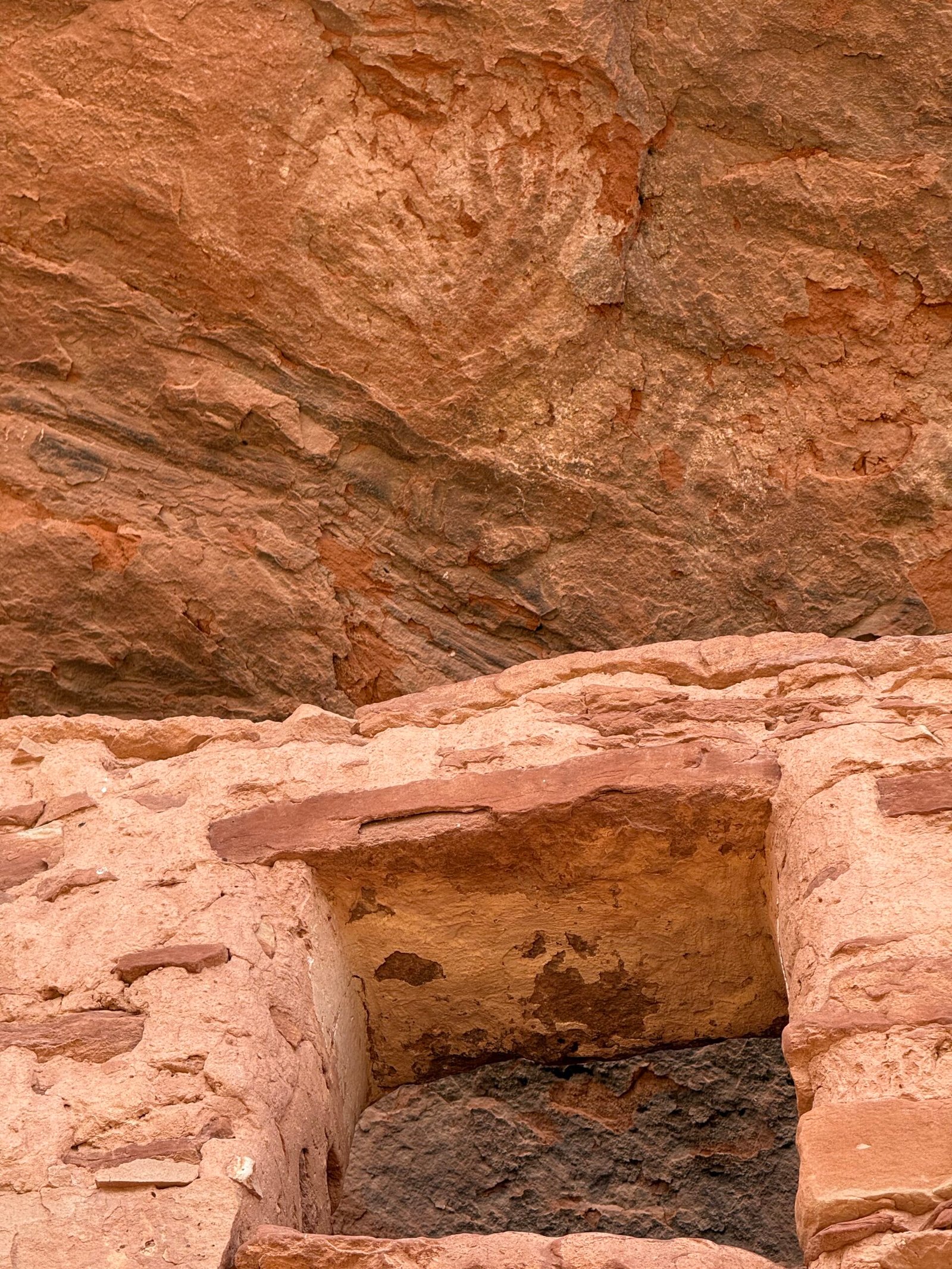
    And what about that arc? Being on the ceiling inside the room, what and how is it tracking?

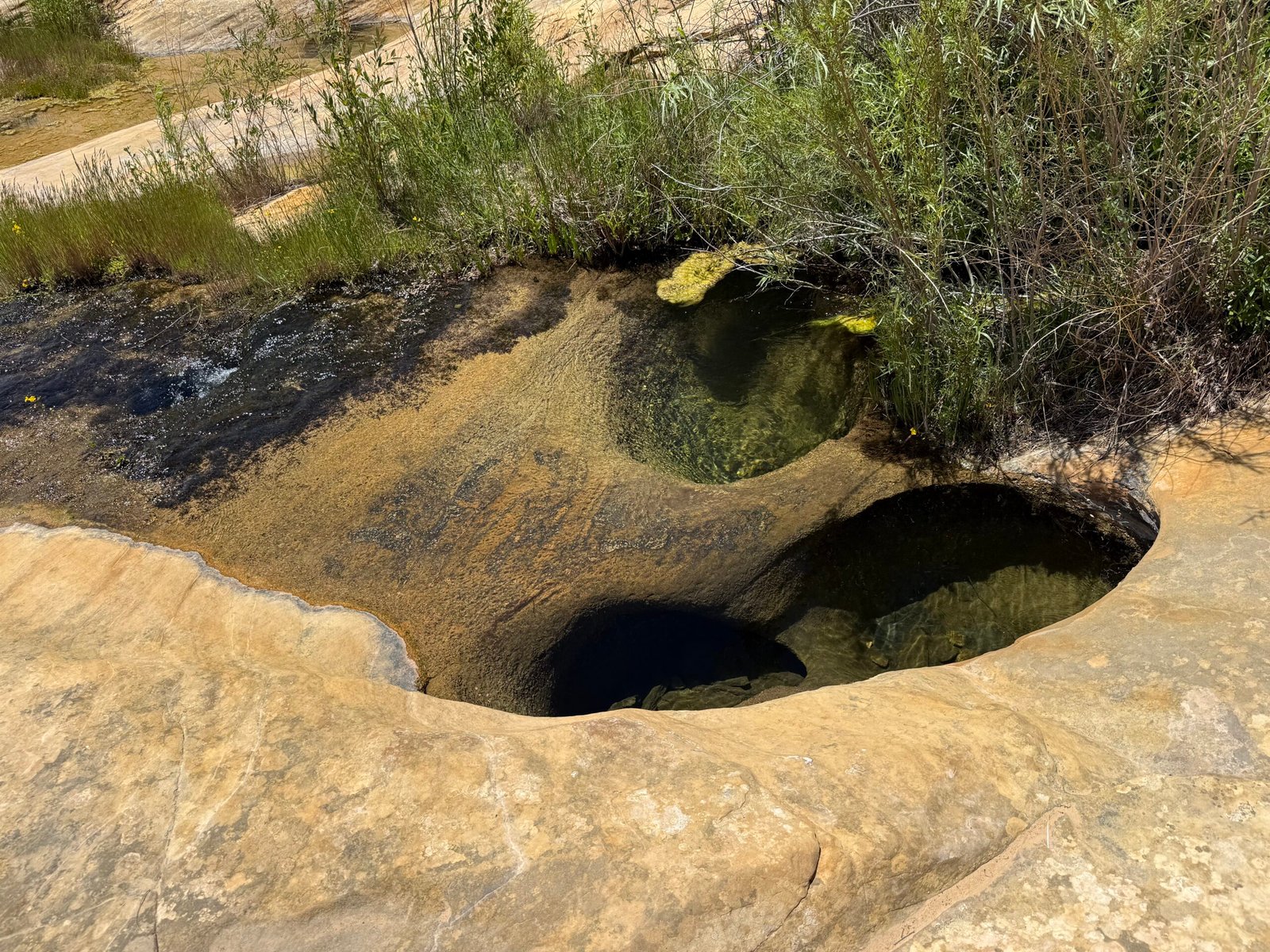
    While in Sacred Valley, Peru, we visited Puca Pucara, one of the many ancient Incan observatories. The observatories have shallow pools that, when filled with water, would reflect the sky.

    The astronomers could observe while comfortably seated. A possibility here?

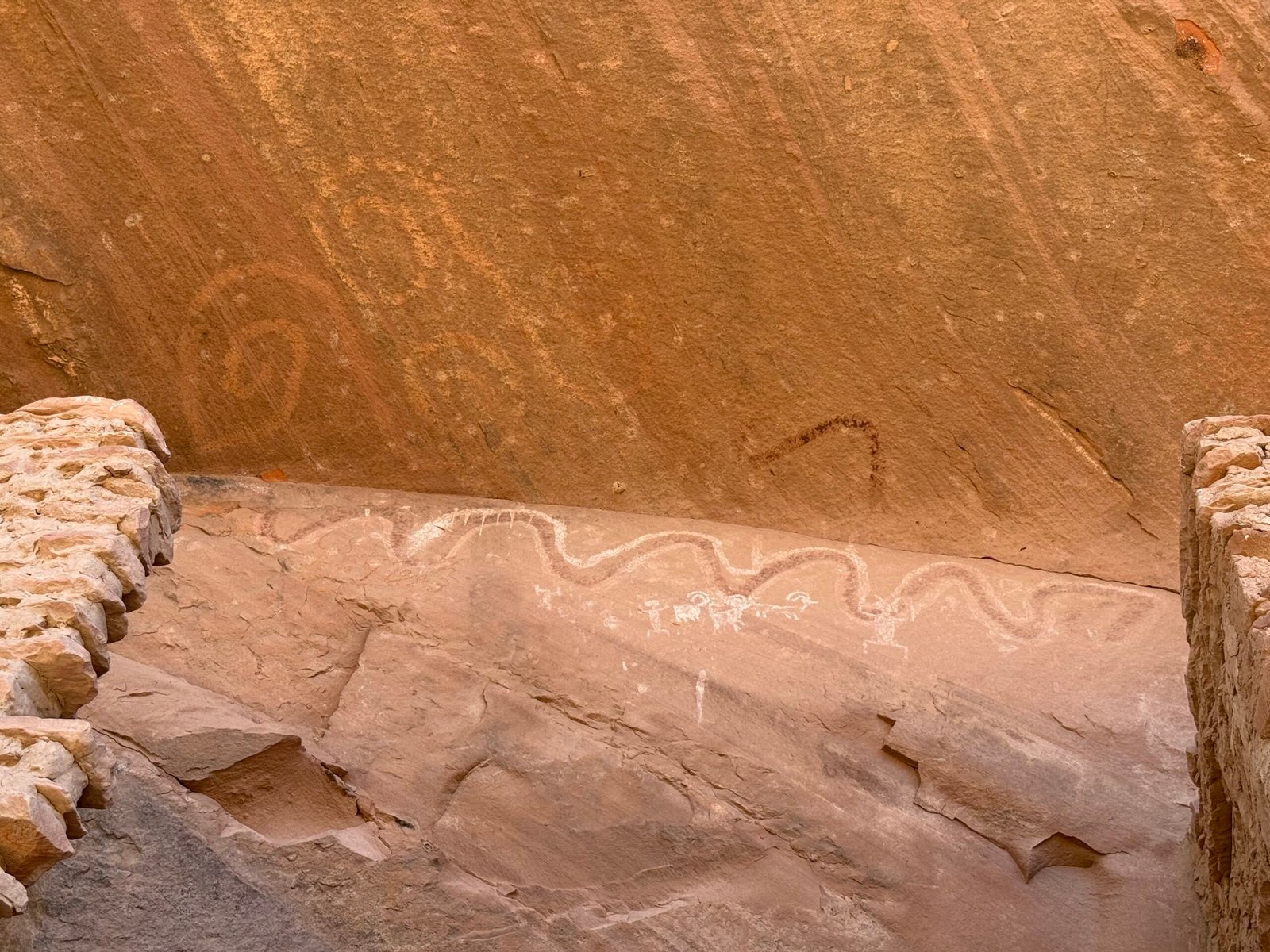
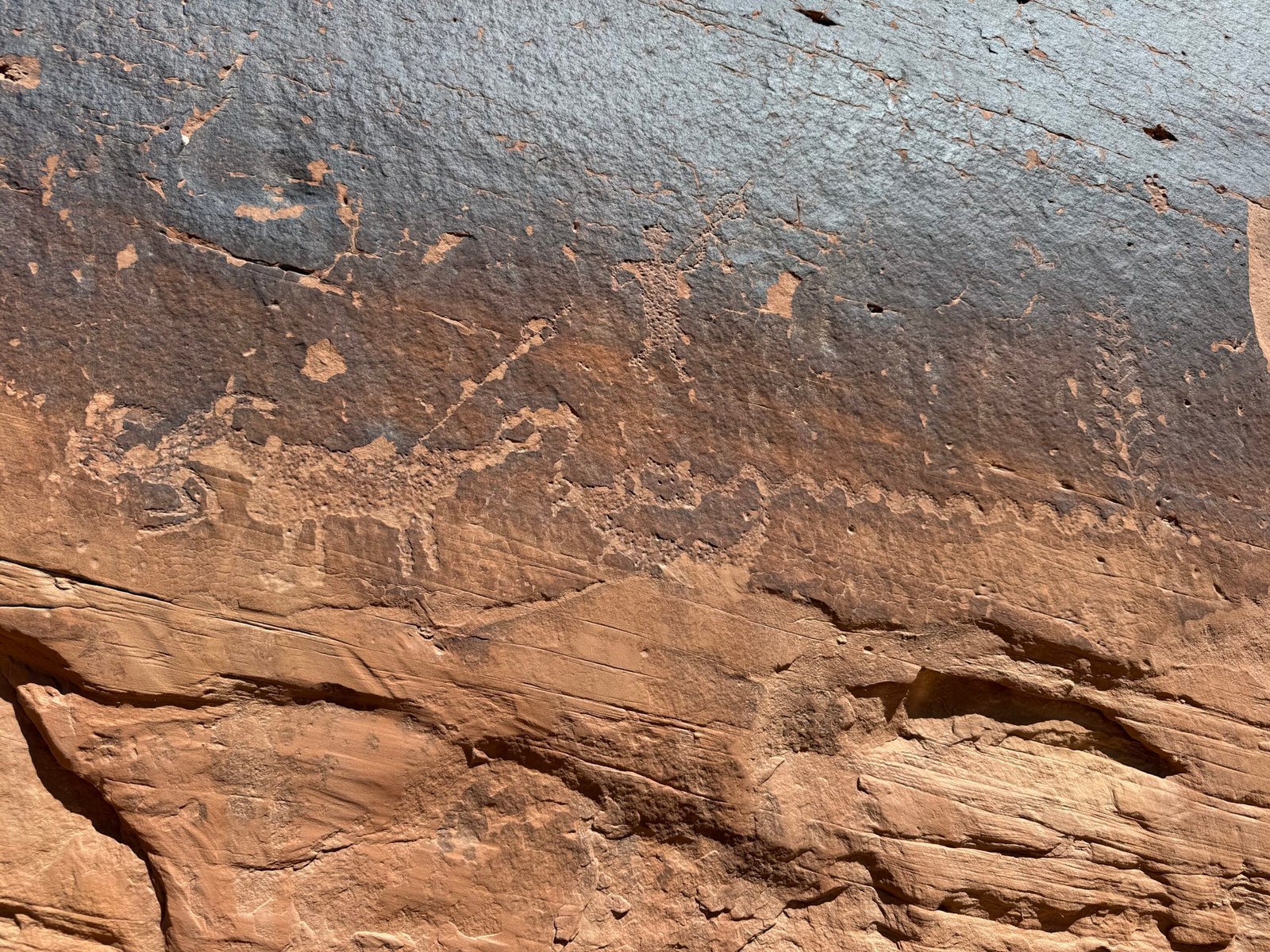
    Three styles of handprints. One is just a painted hand placed on the stone, another is a “negative” of that with maybe the pigment blown from the mouth. The third is stylized with spiraling on the palms.

    A little ways down the canyon, a different structure is seen. Beautiful prints, including our radical friend’s.

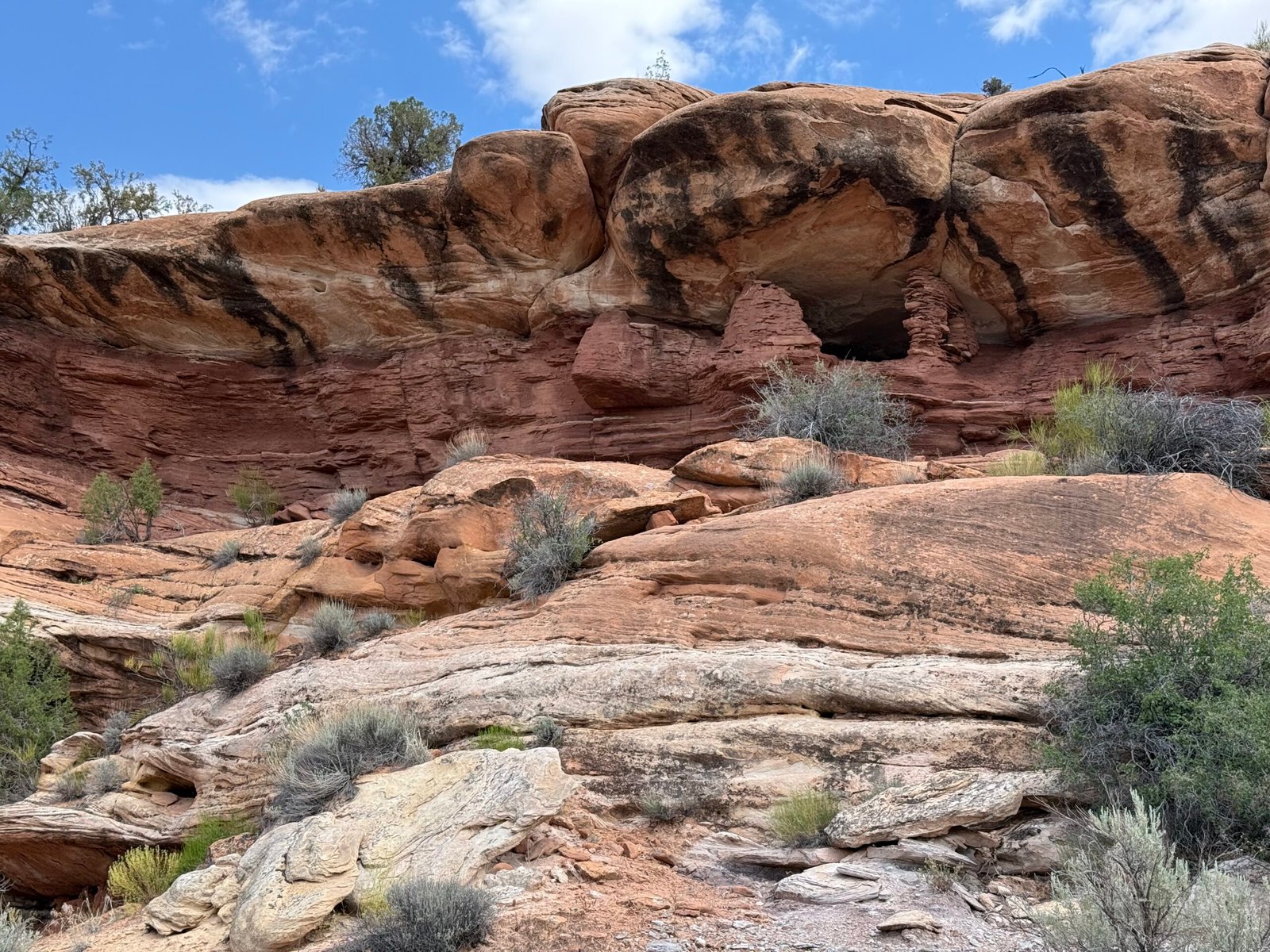
    Once you know what to look for, many of the granaries used for food storage become easier to spot. But the one in the following picture was probably nearly invisible to see! The shape followed the Kayenta mudstone contours closely.

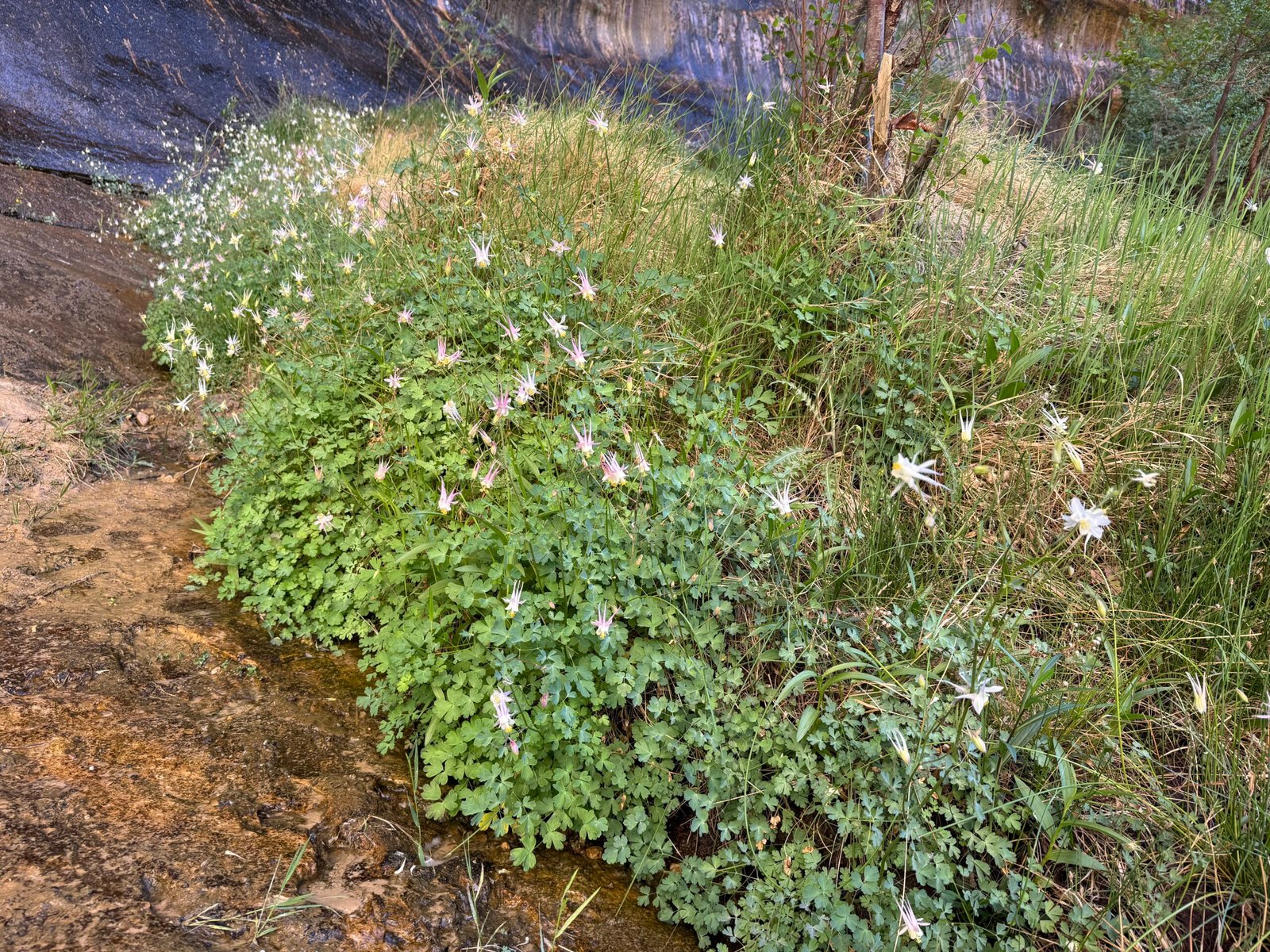
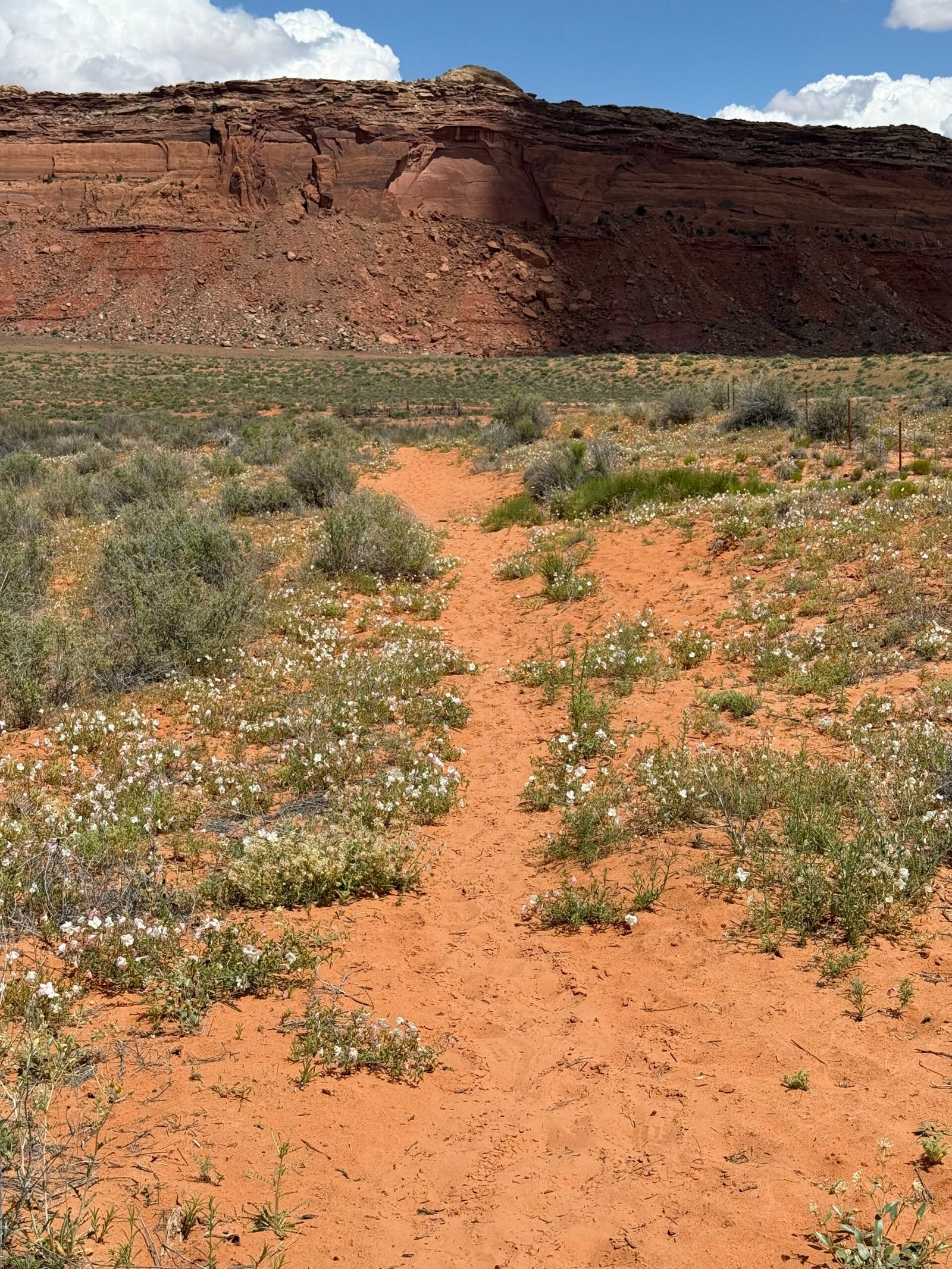
    Heading out, we’re walking the “primrose path,” it was blooming everywhere. Should we be worried? Maybe the pale evening primrose is not the harbinger of destruction inferred in Shakespeare’s Hamlet.

    Yeah, the desert is just a dry wasteland.

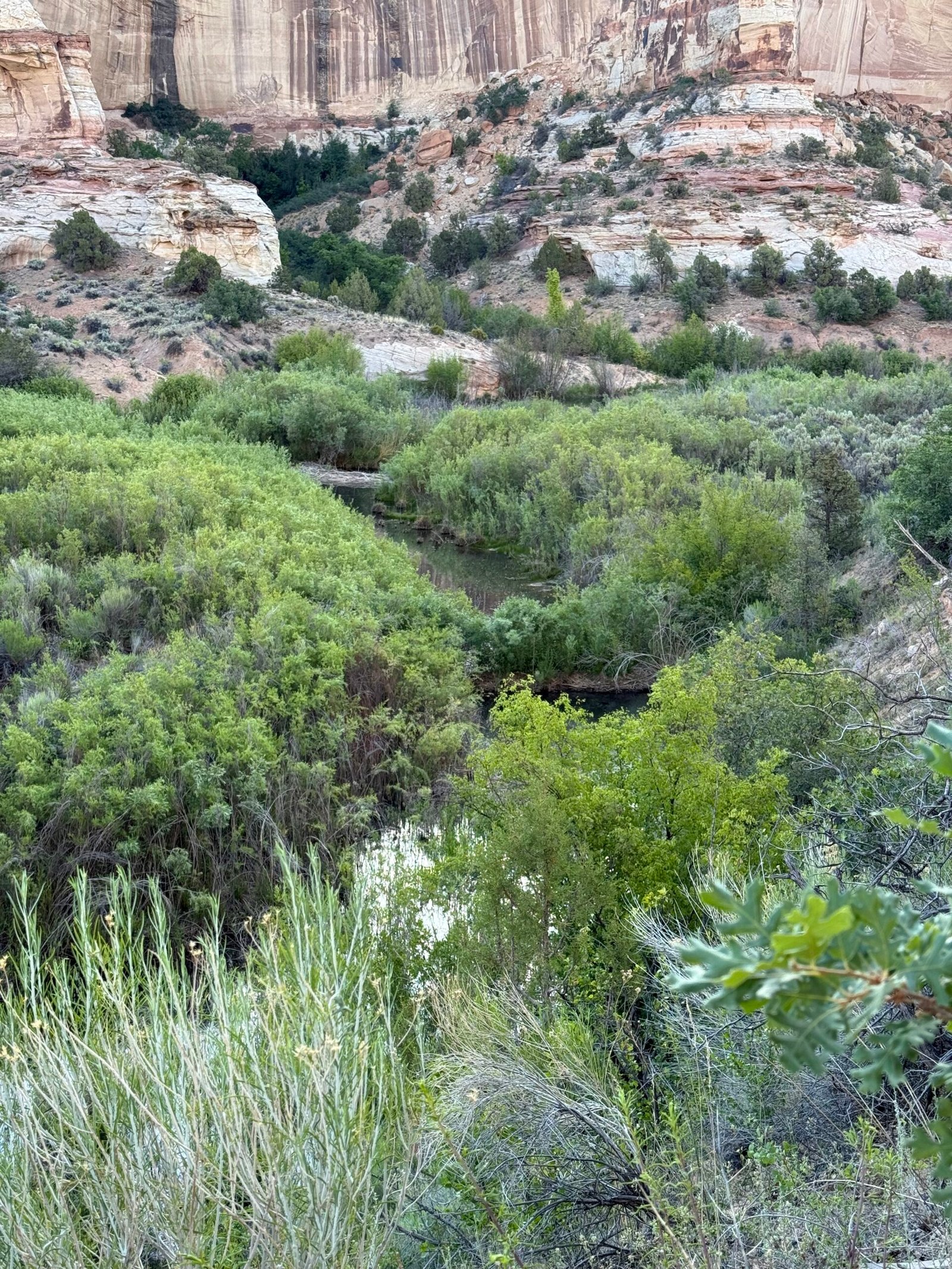
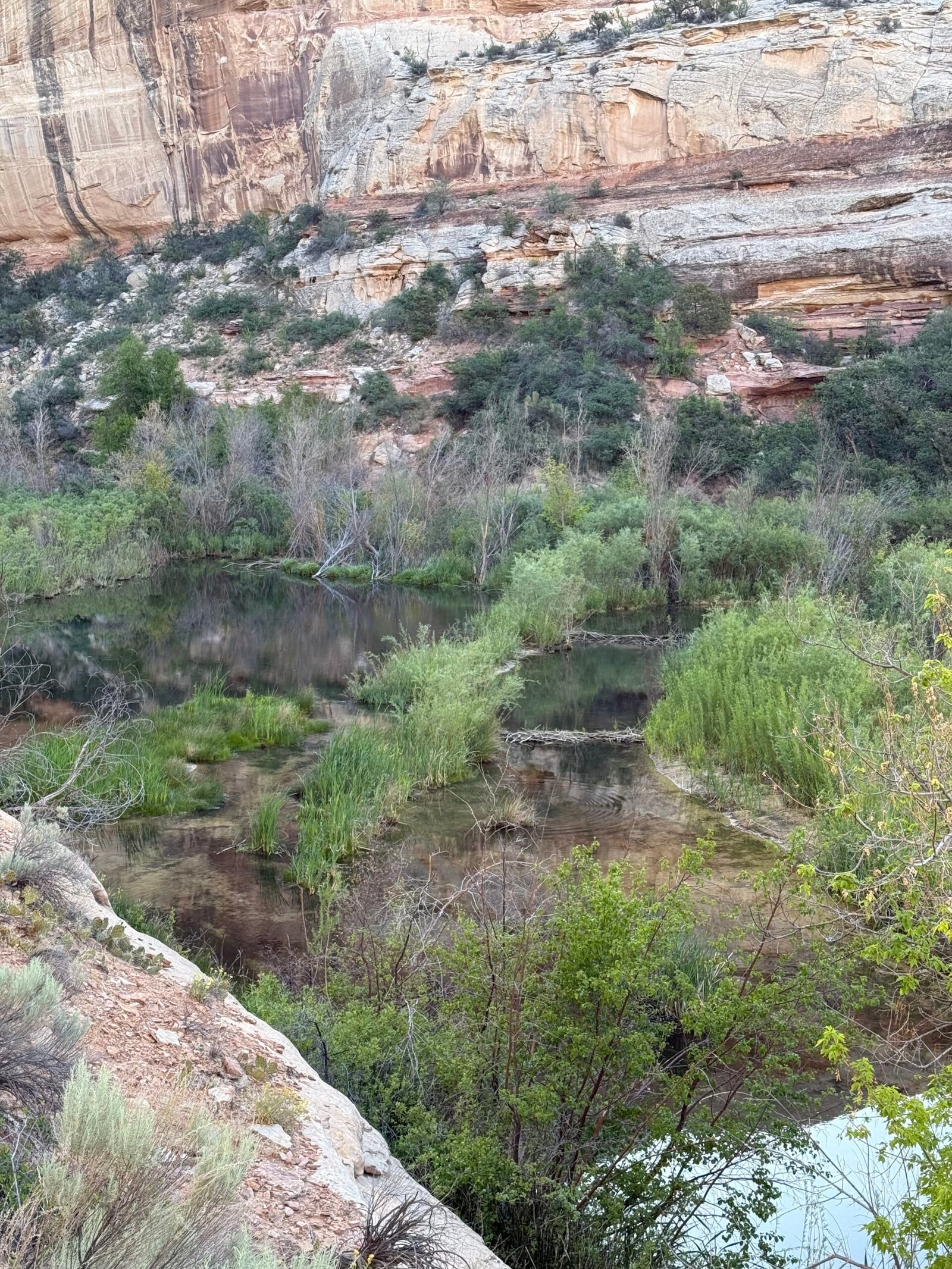
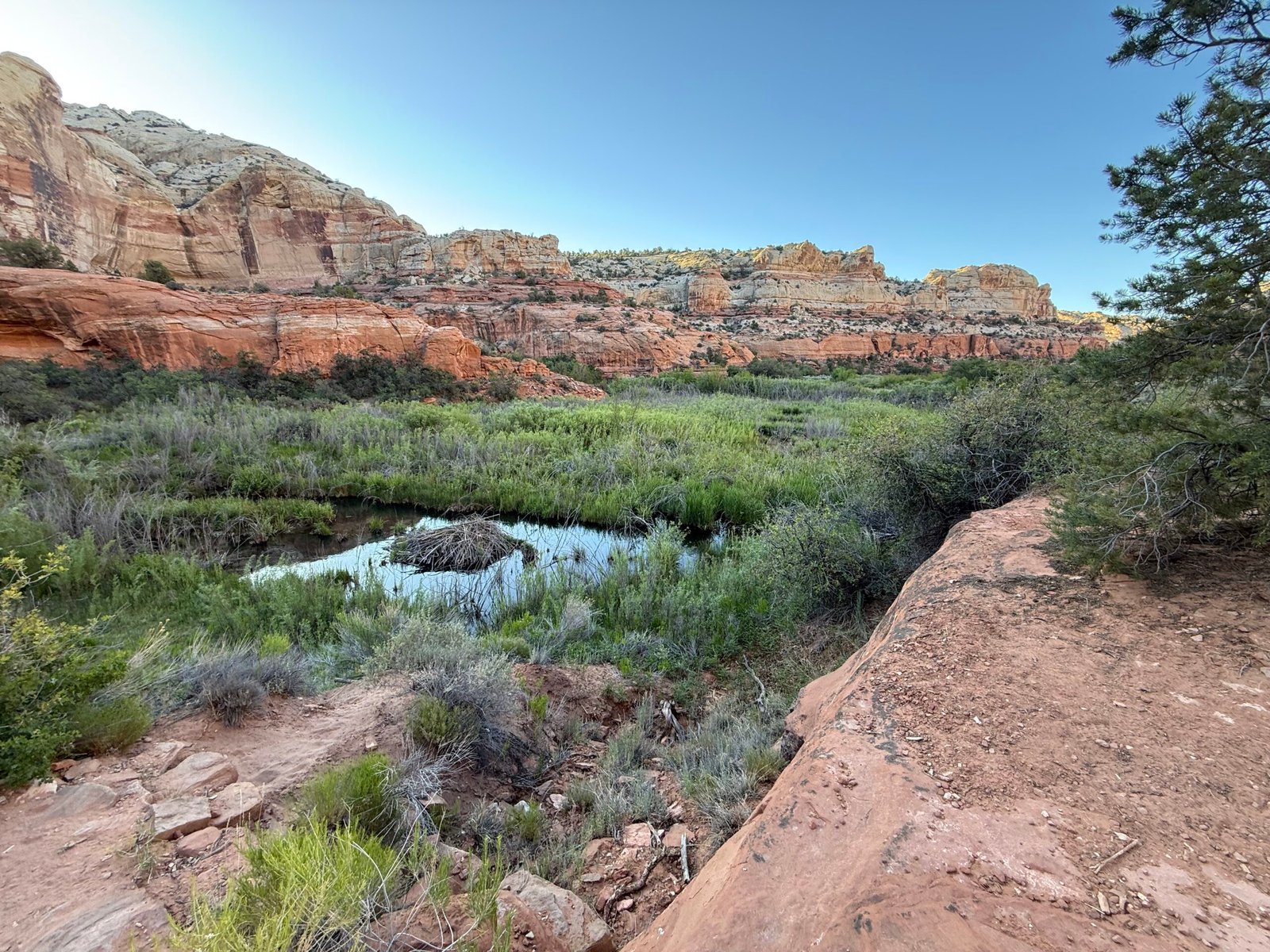
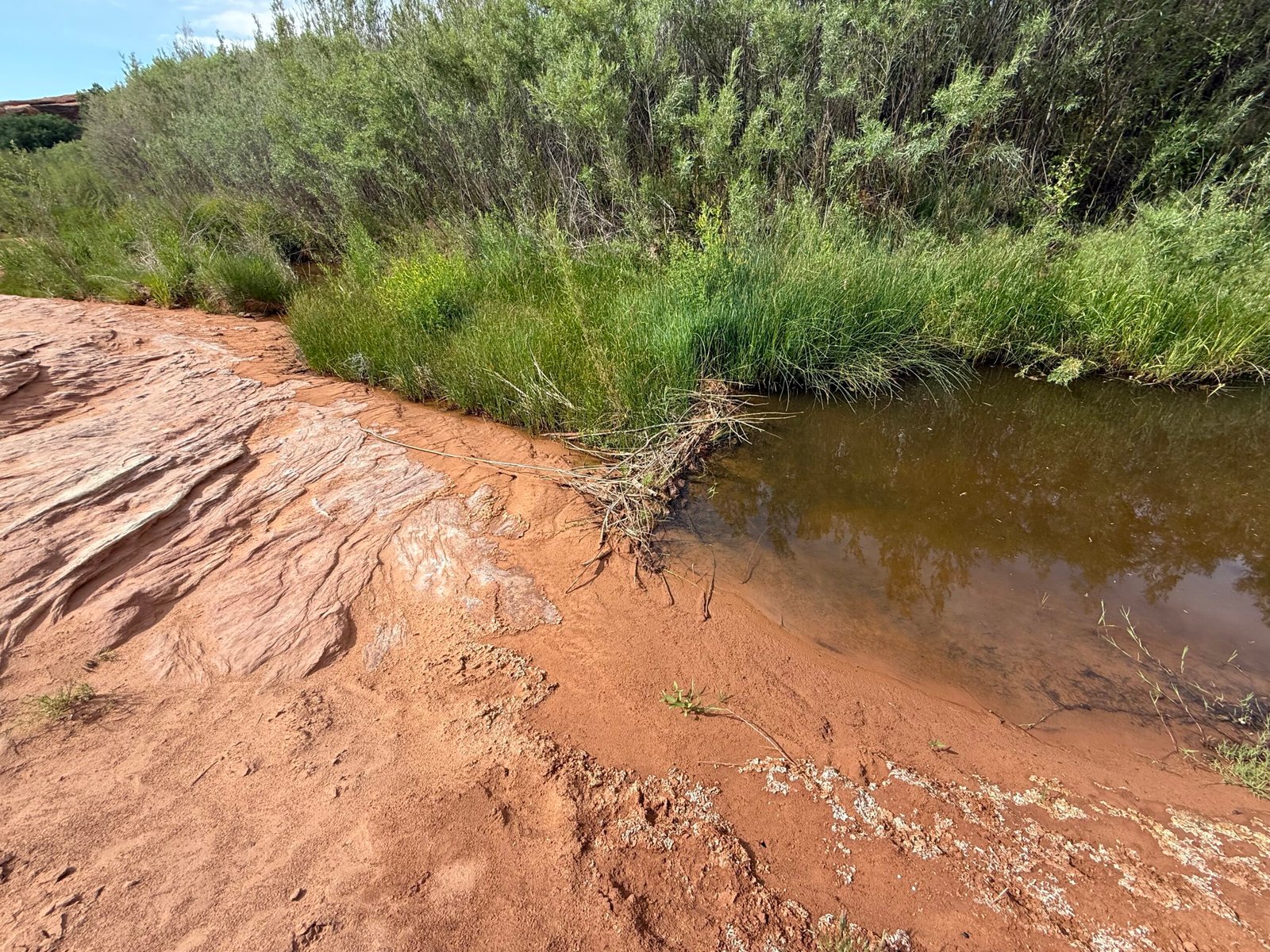
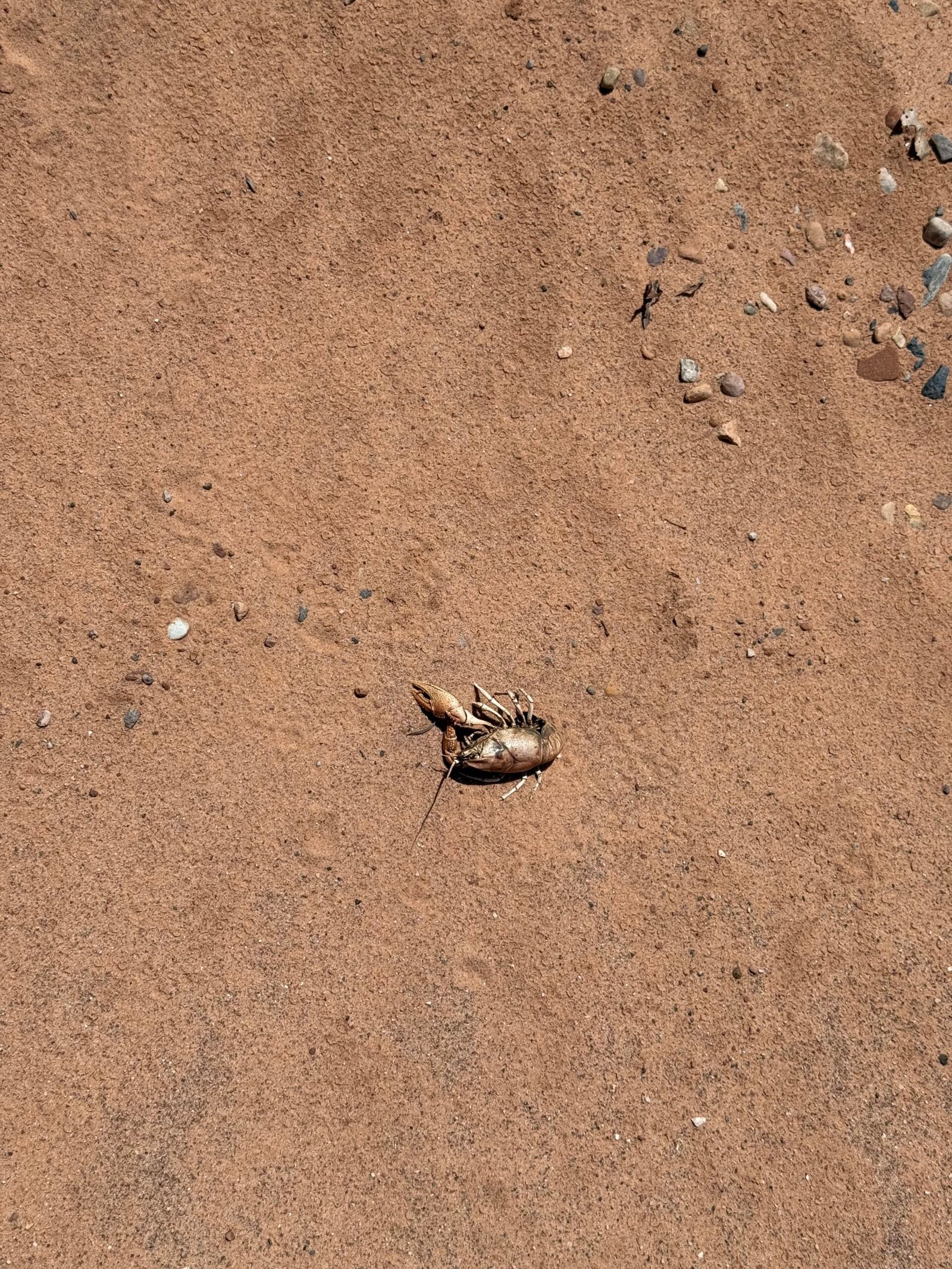
    Wait, is that a beaver dam? And a crayfish?

    There is water in the desert, if you know where to look.

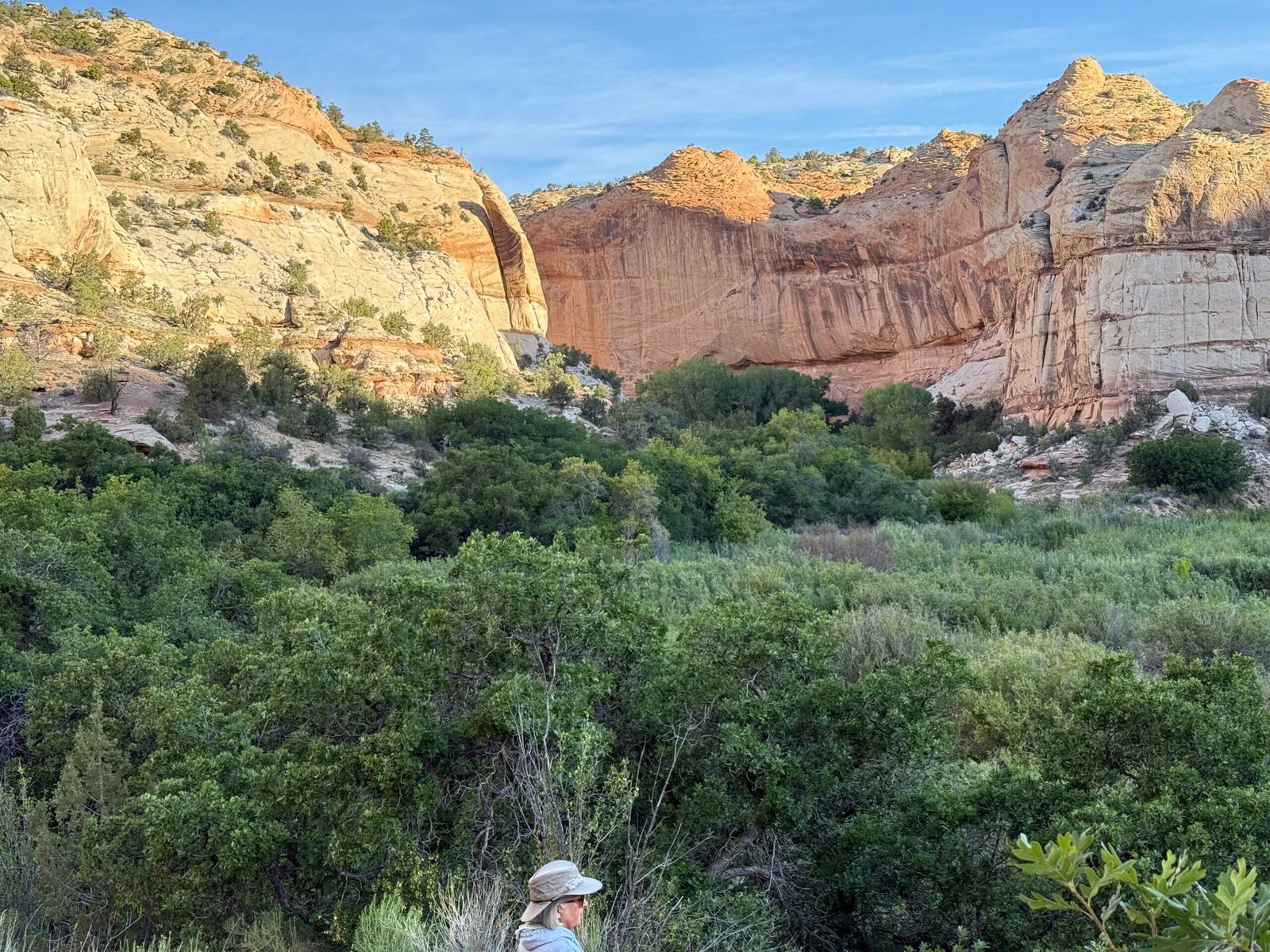
    Craig Childs, in his book The Secret Knowledge of Water, discussed that where mature cottonwood trees are found, water will be within 10 feet of the surface. If you can find cottonwood saplings, expect 3 feet.

    If you are to dig for water, do it around midnight. During the day, the intense transpiration of the plant life will lower the water table. Once the sun is down and it cools off, the water will rise. Sometimes it will even rise above the sand, forming a magical, ephemeral stream in the night. Wild.

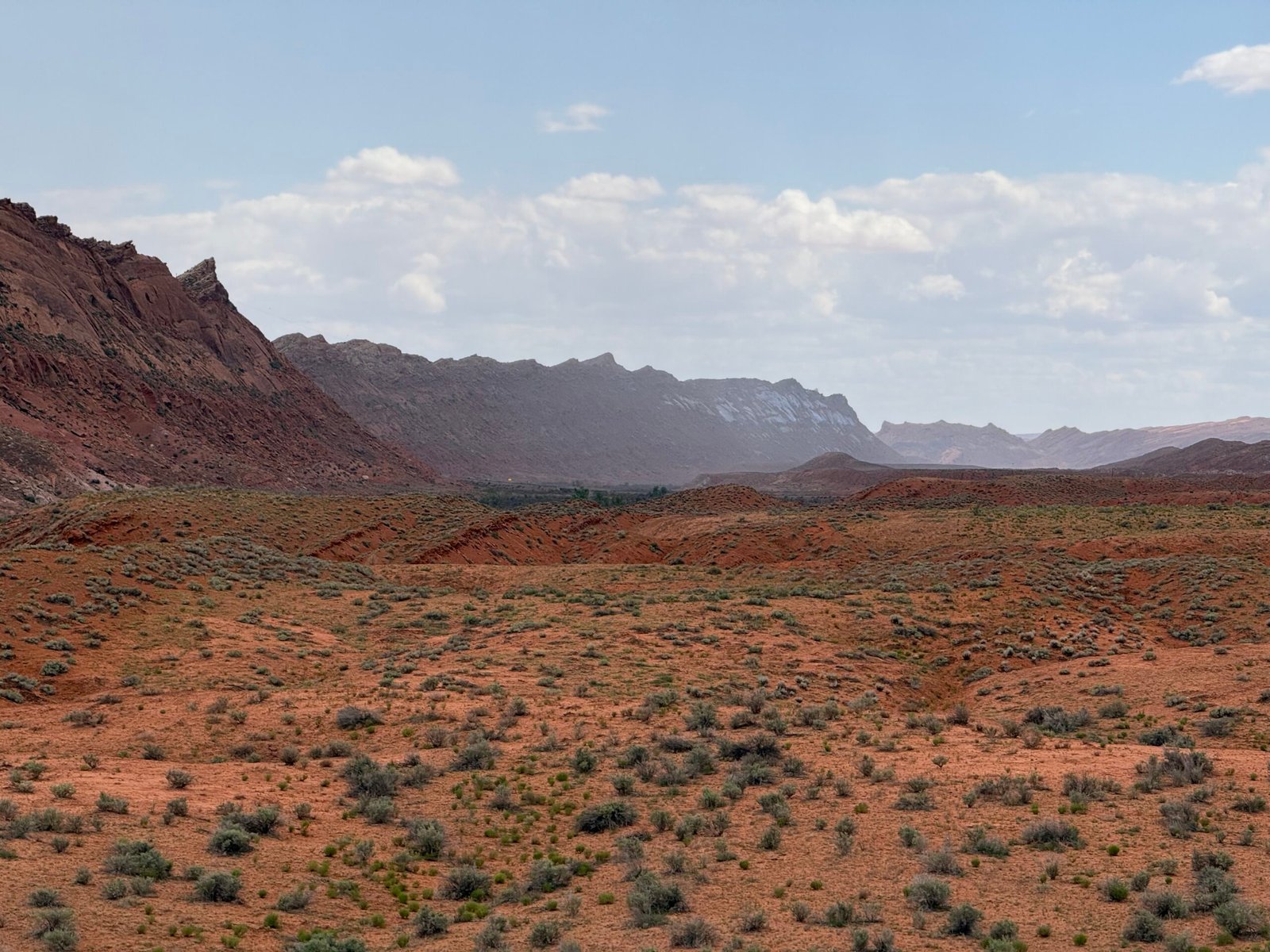
    Driving out of this area, a quick thunderstorm caused some concern, the sandy/silty roads become impassable pretty quickly.

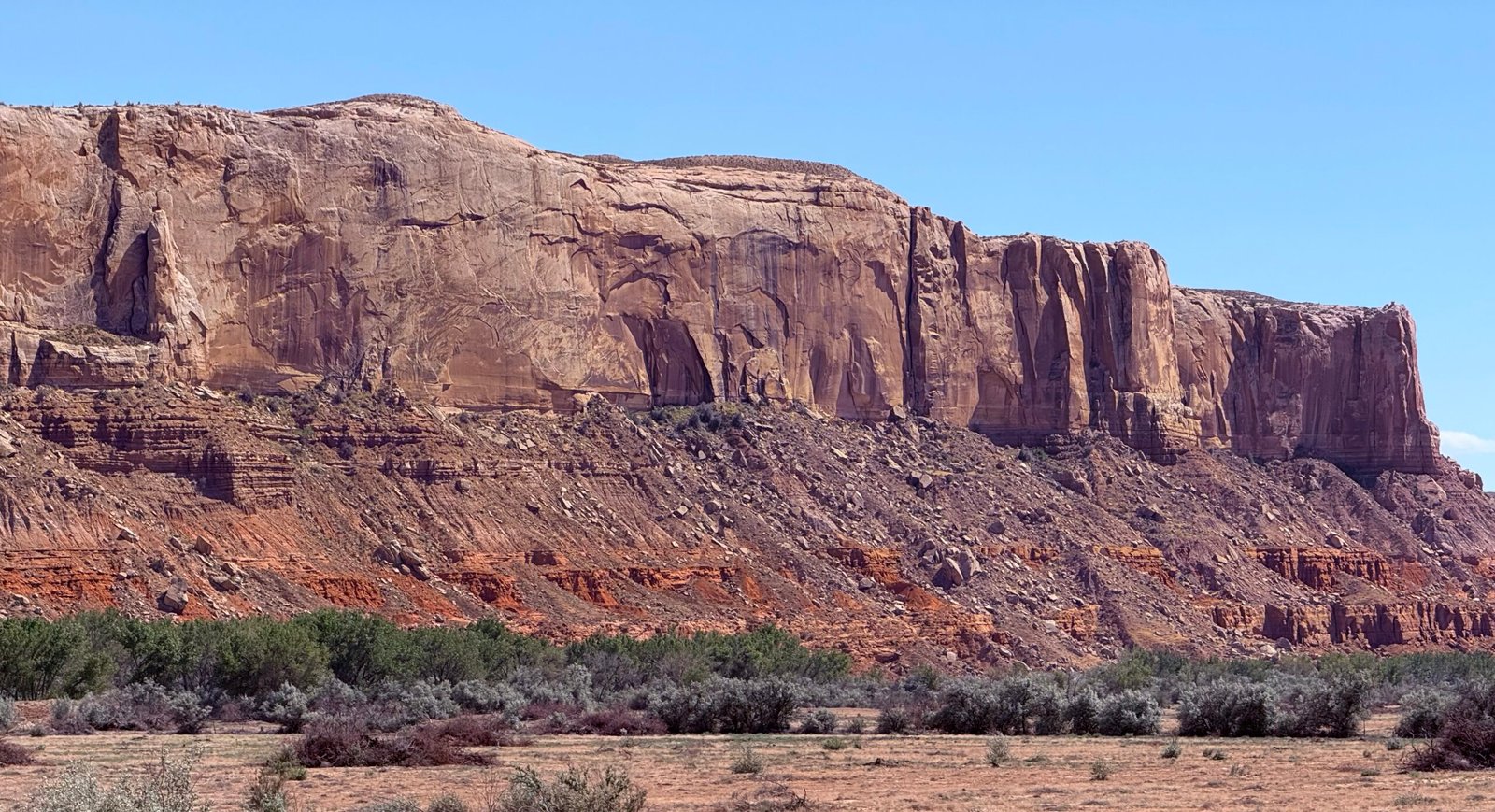
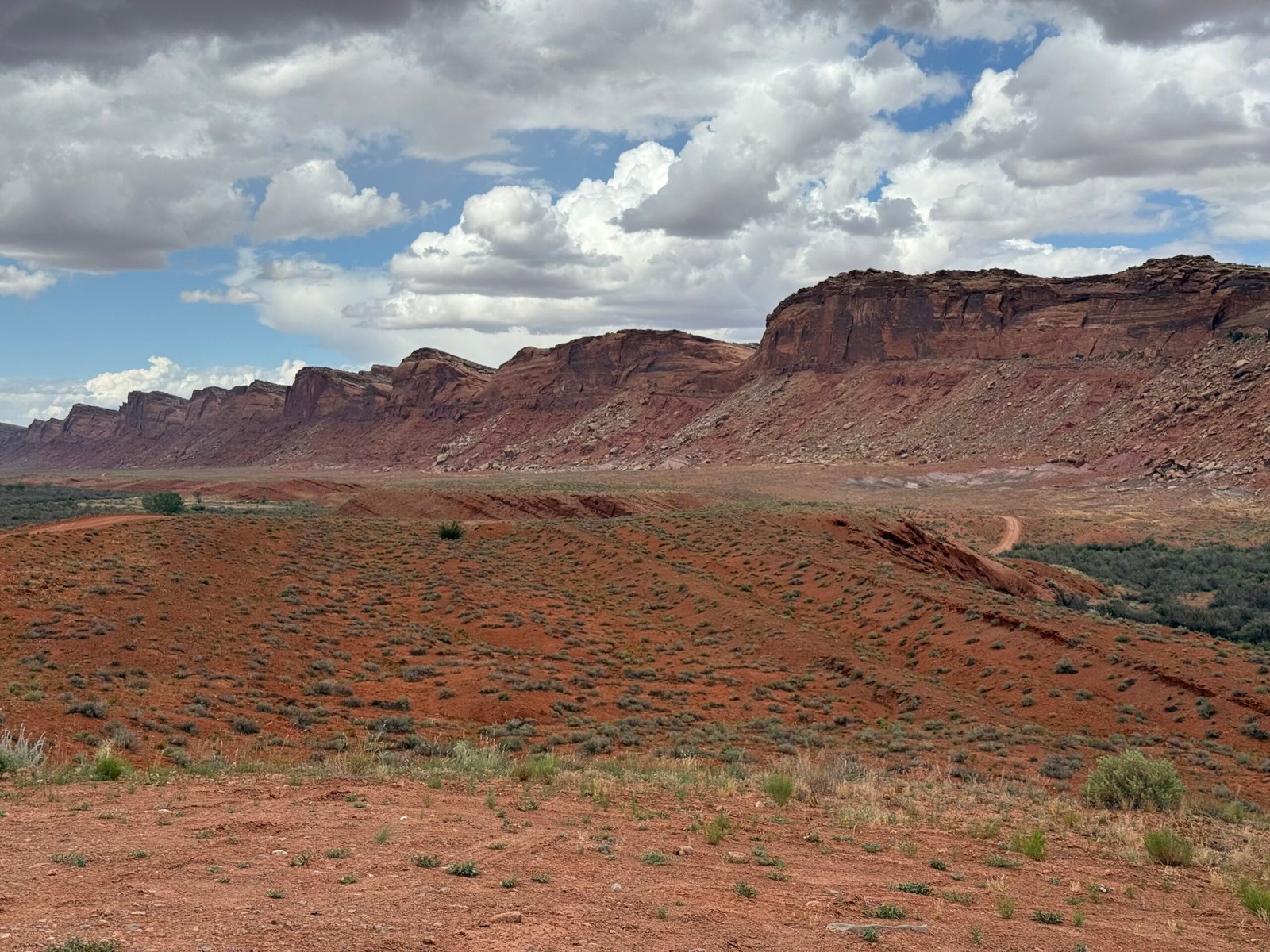
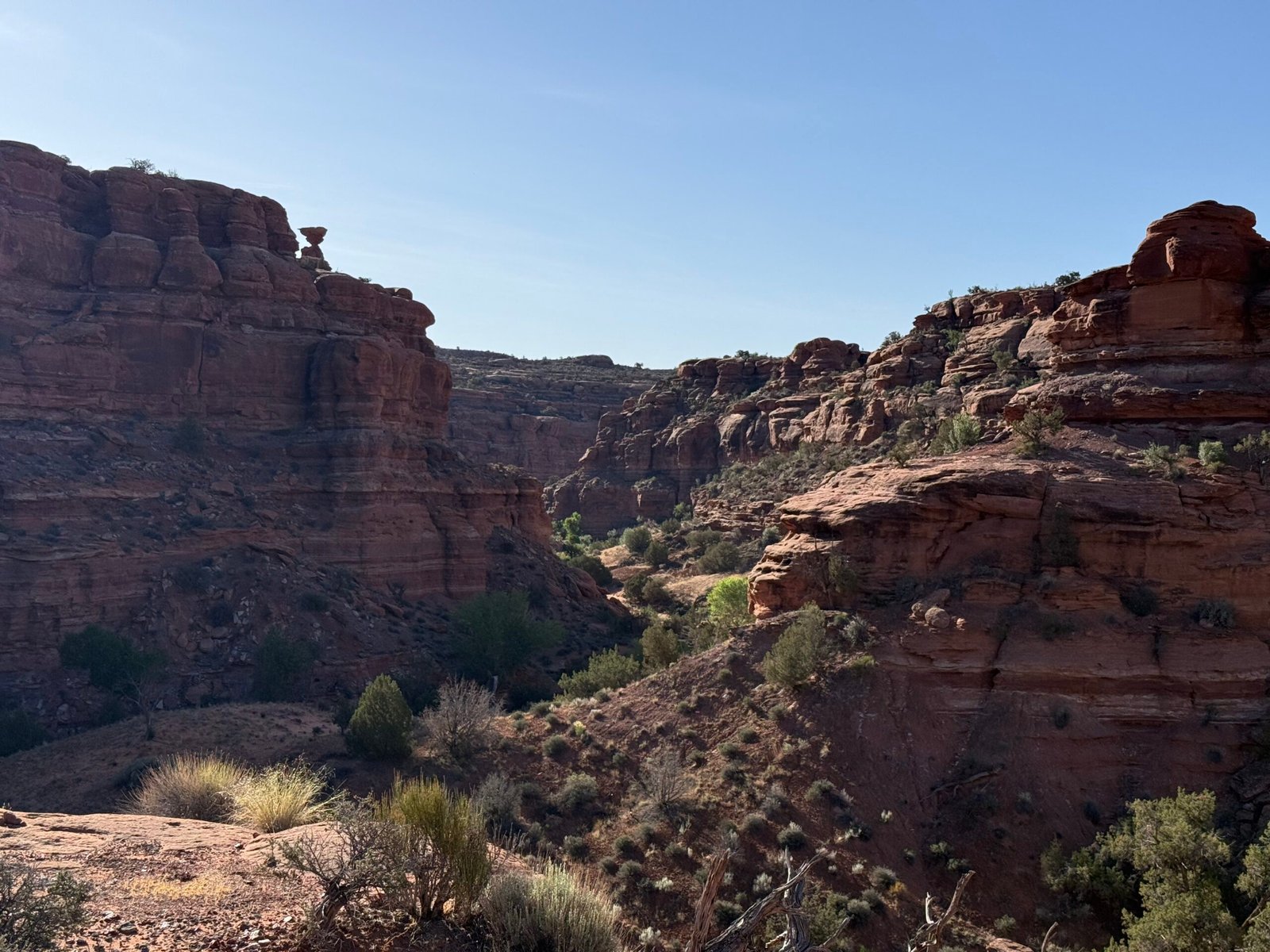
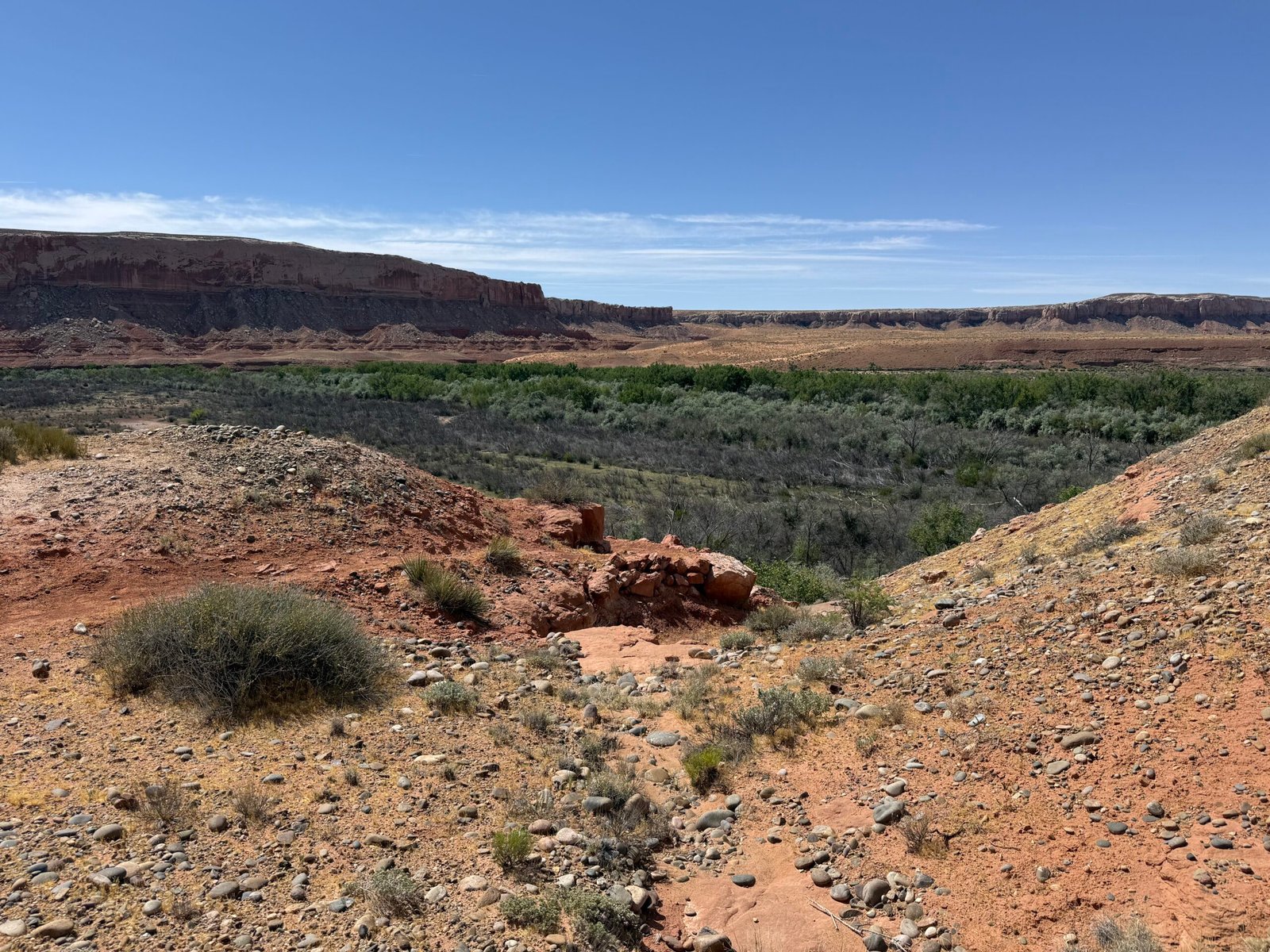
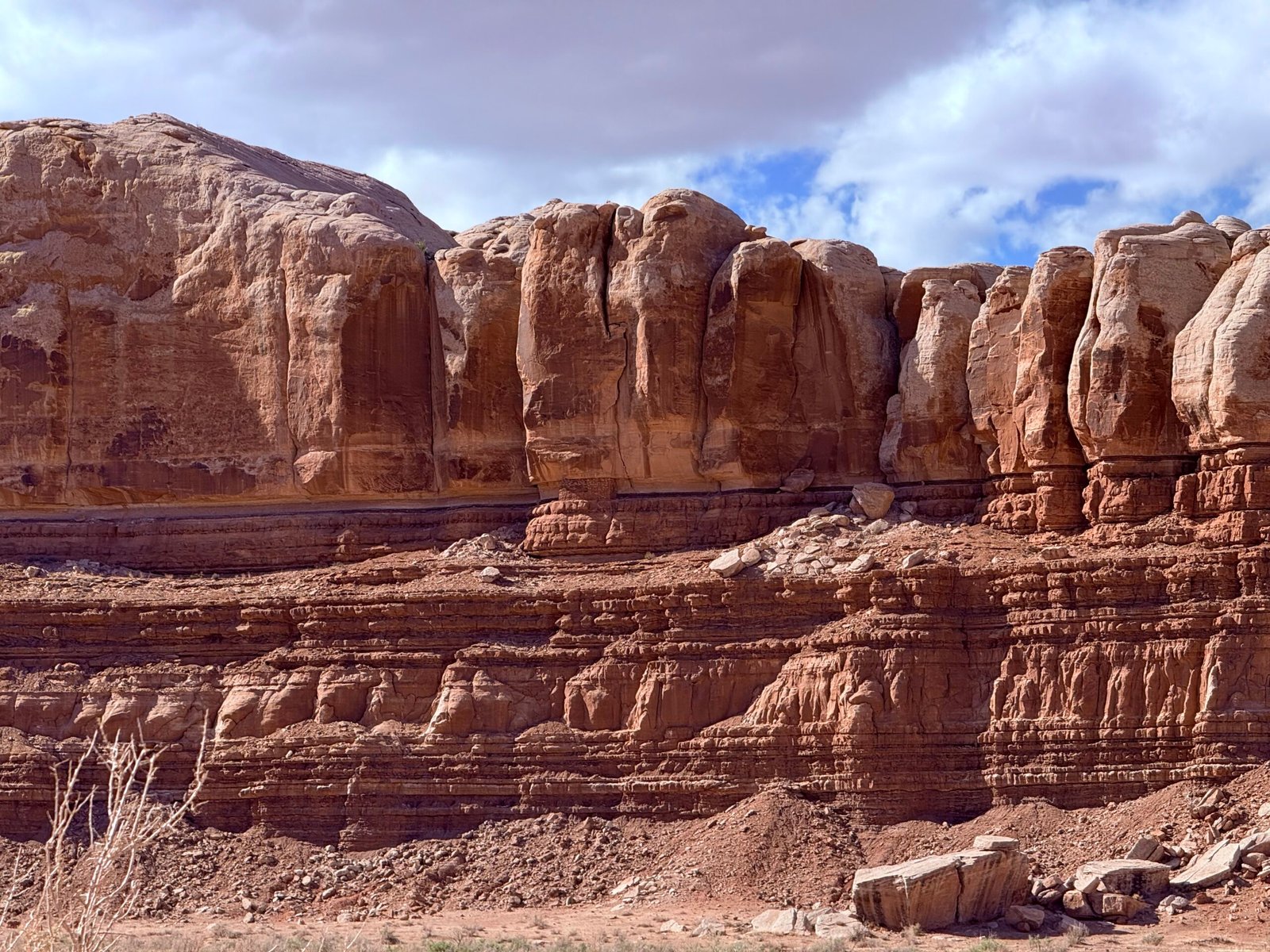
    To the north, the rampart of Comb Ridge always impresses. Looking south, the thunderstorm has wet the face and it is glistening. A reminder that water sheds quickly here and flash floods are far more unpredictable than the desert heat.

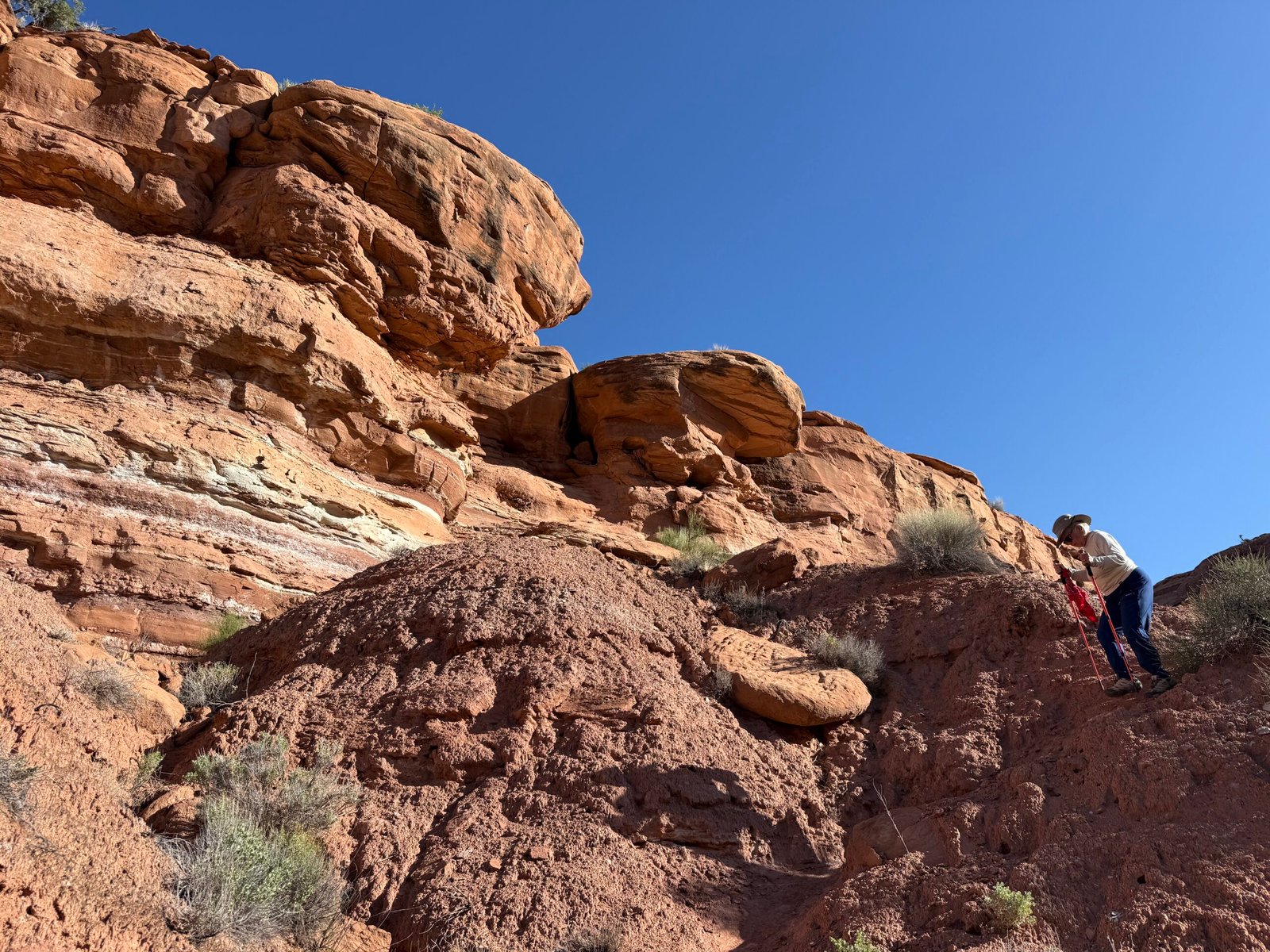
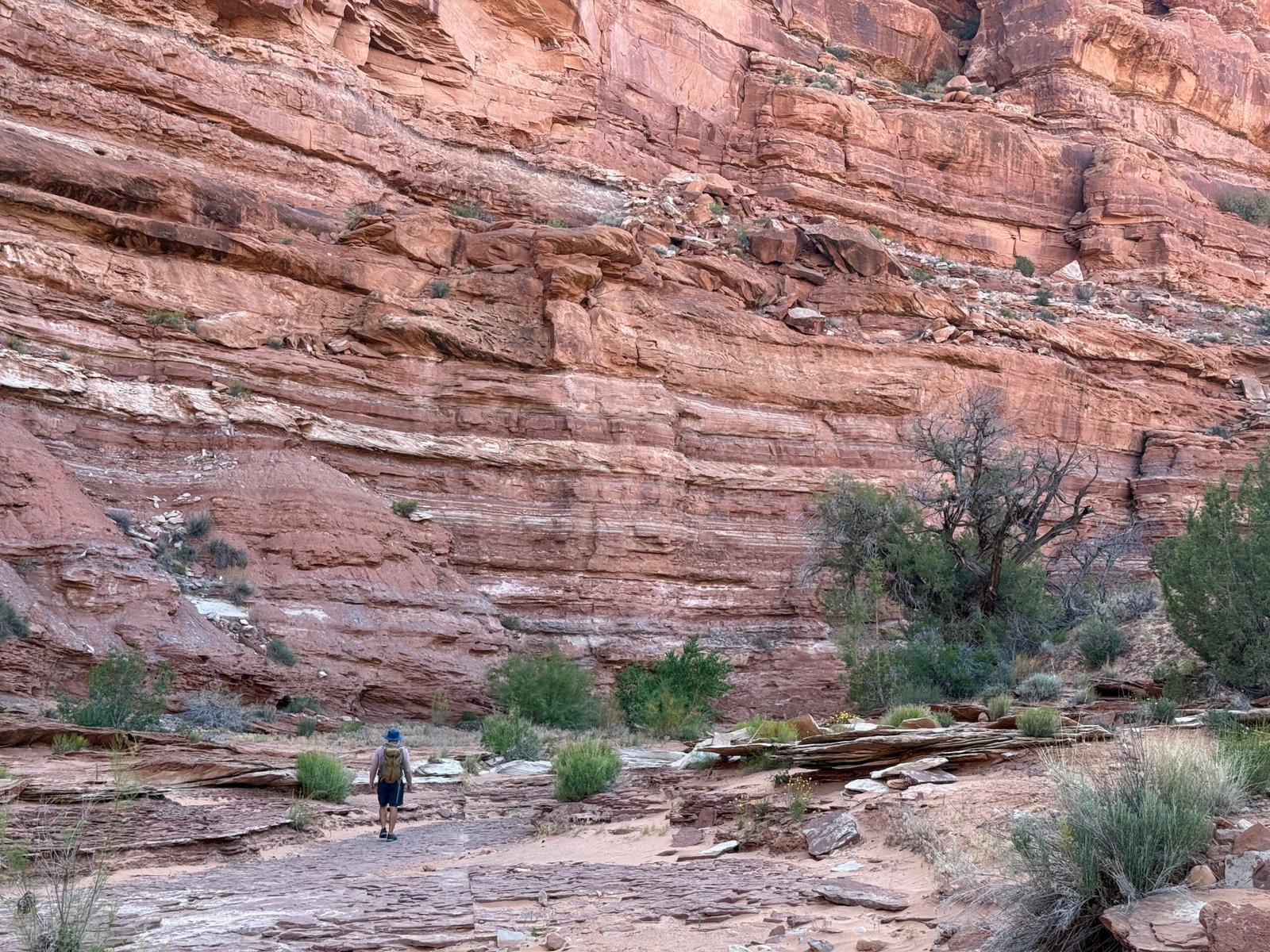
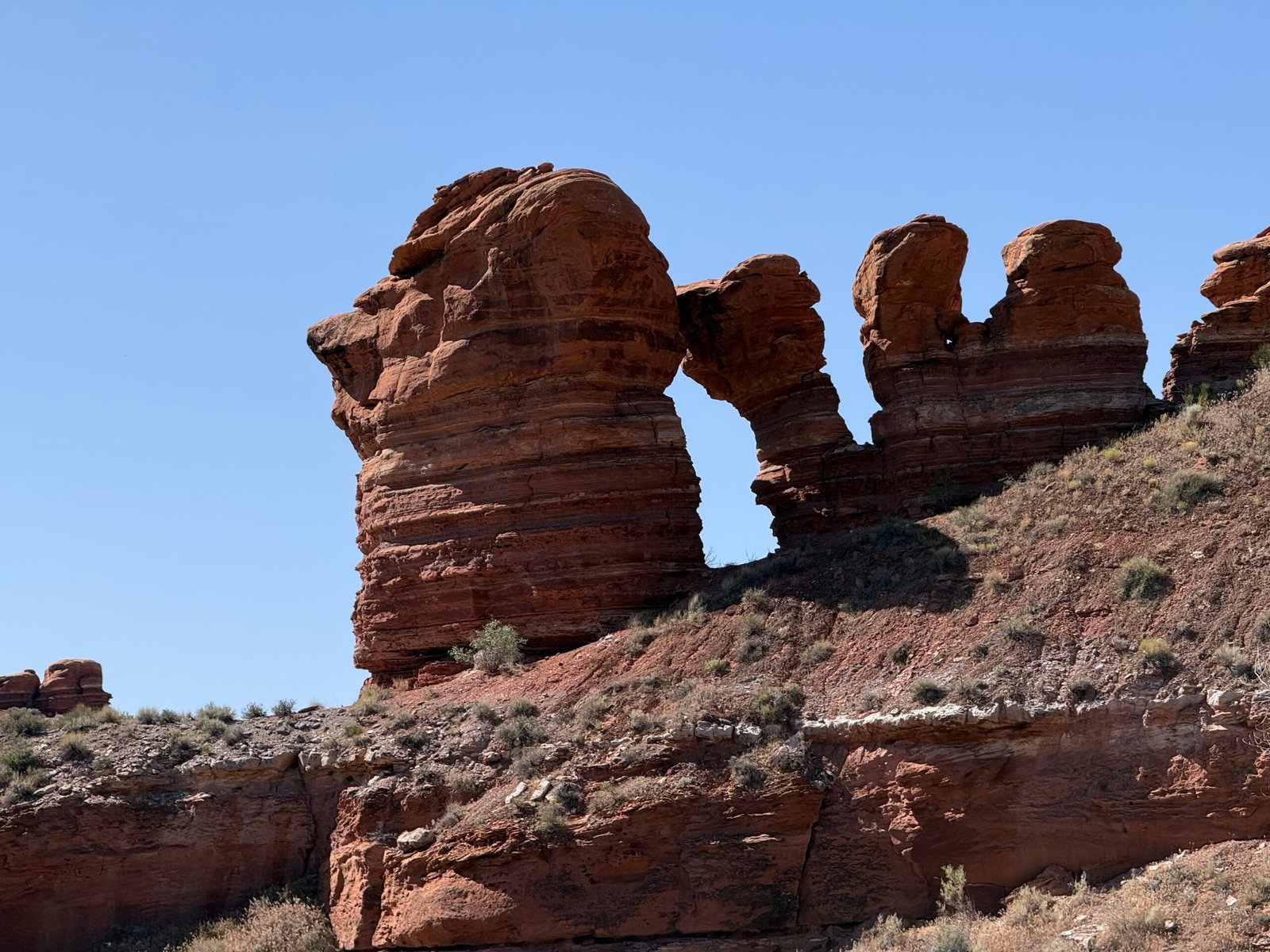
    We got in another great hike with Brandon! On the trail by 7:30am when it was cool, we worked the slick rock into a canyon. Maybe this balanced rock was used as a guide to the top of the dugway leading us in.

    Dugways were cobbled into the bluff in later years to allow the movement of cattle in and out of the canyons. I am still amazed that they can navigate these.

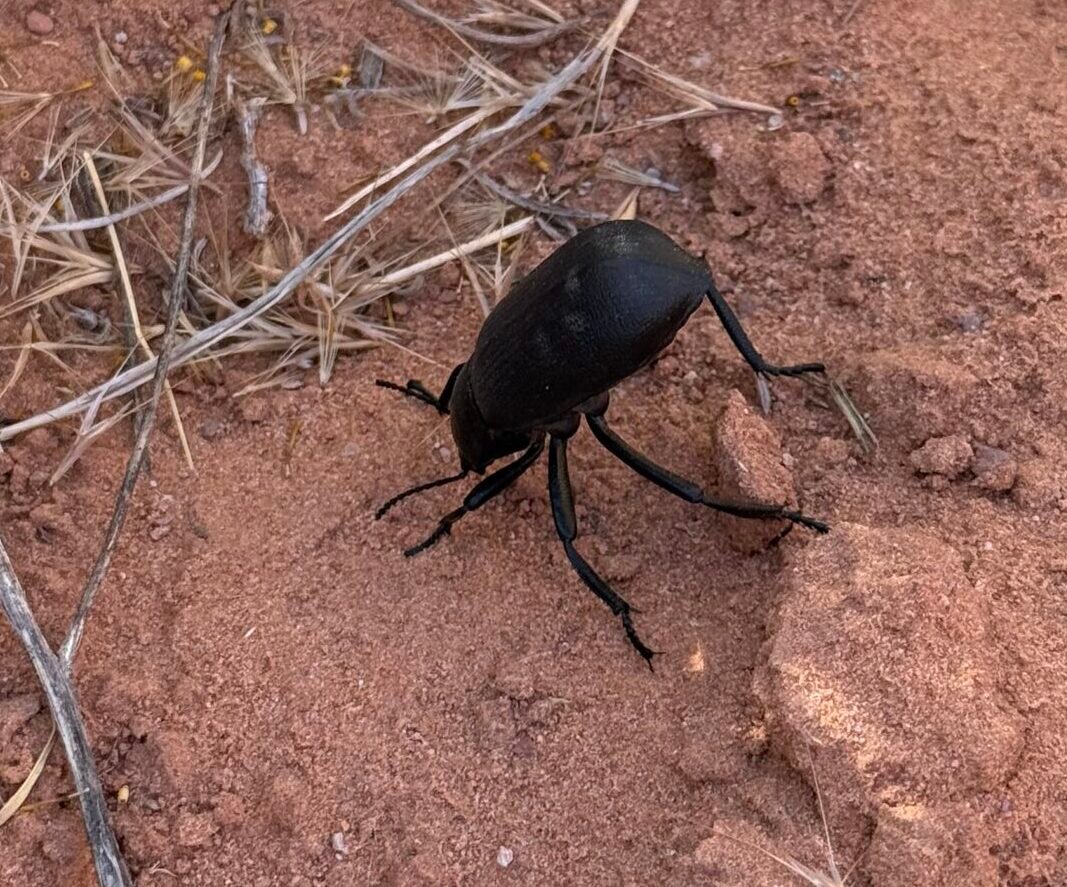
    The black beetle in the following picture (no, not Brandon!) is a bombardier beetle. When threatened, these guys can mix two chemicals (hydrogen peroxide and hydroquinone) together in a special chamber. The exothermic reaction heats the mix to the boiling point and they can fire it quite accurately for quite a distance. So when you see one stand on its head, beware, you are on notice!

    And one last magnificent sight to see. Look tucked underneath the rock…

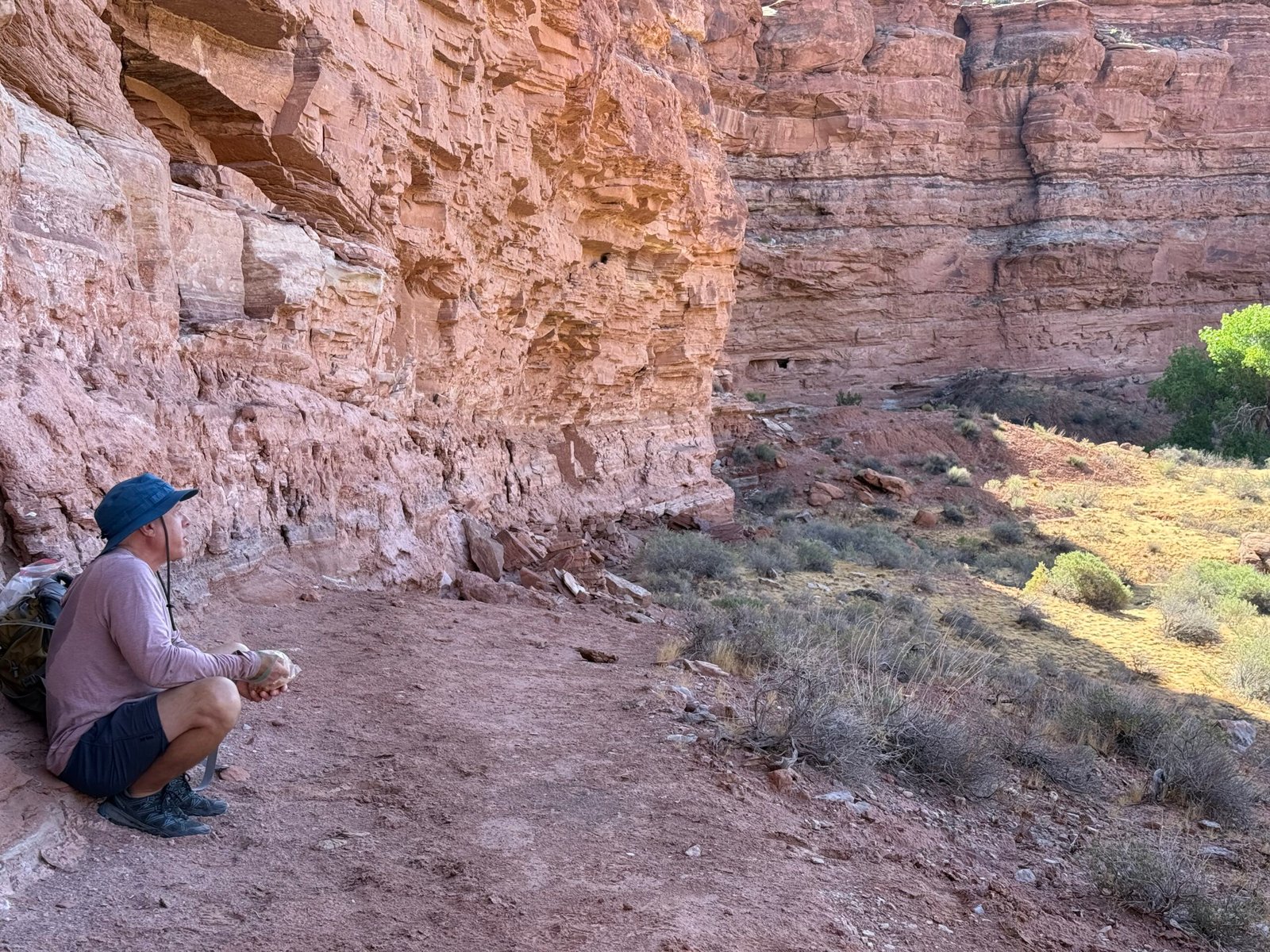
    Just beating the heat, a satisfying climb out of the canyon.

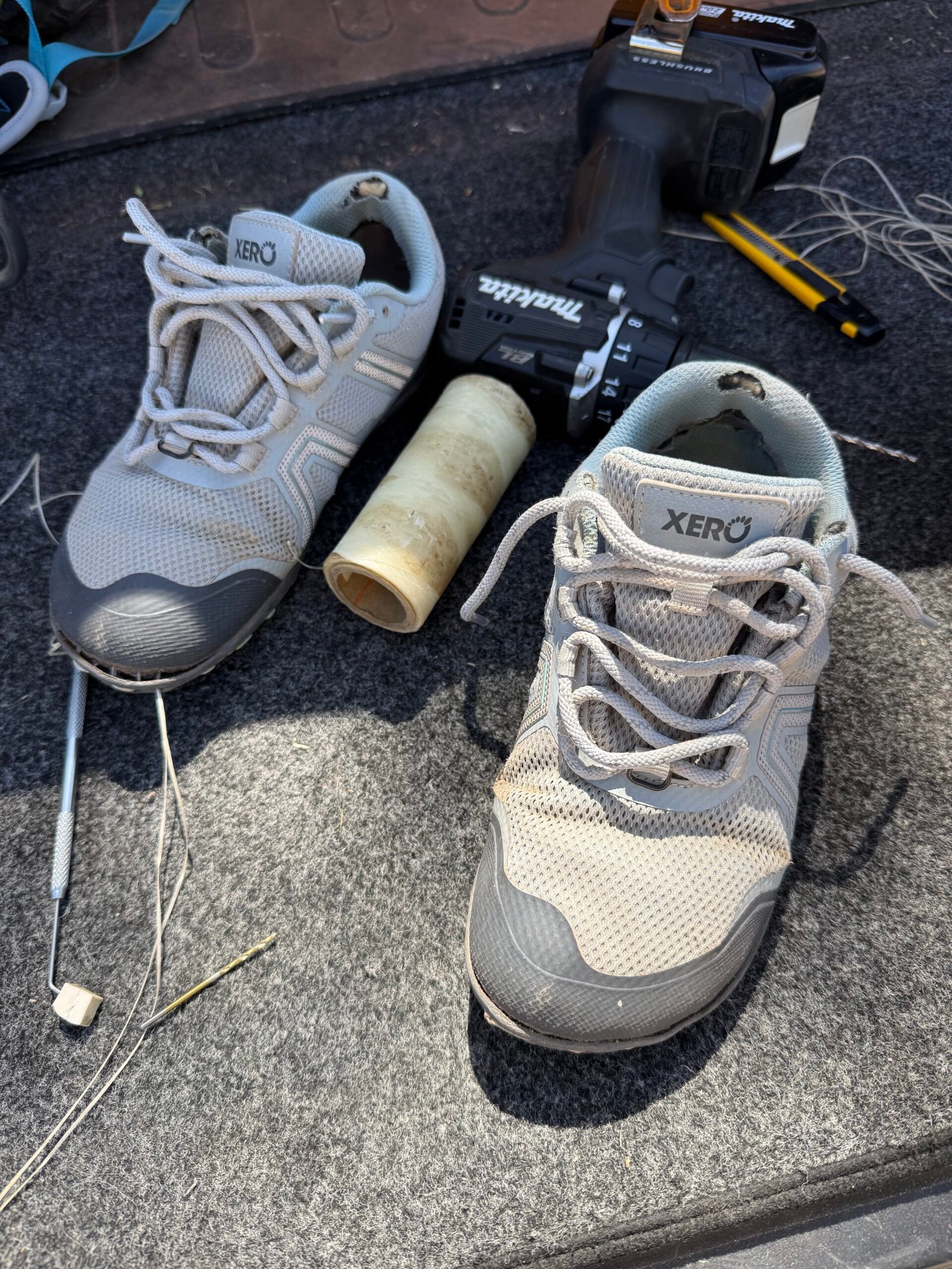
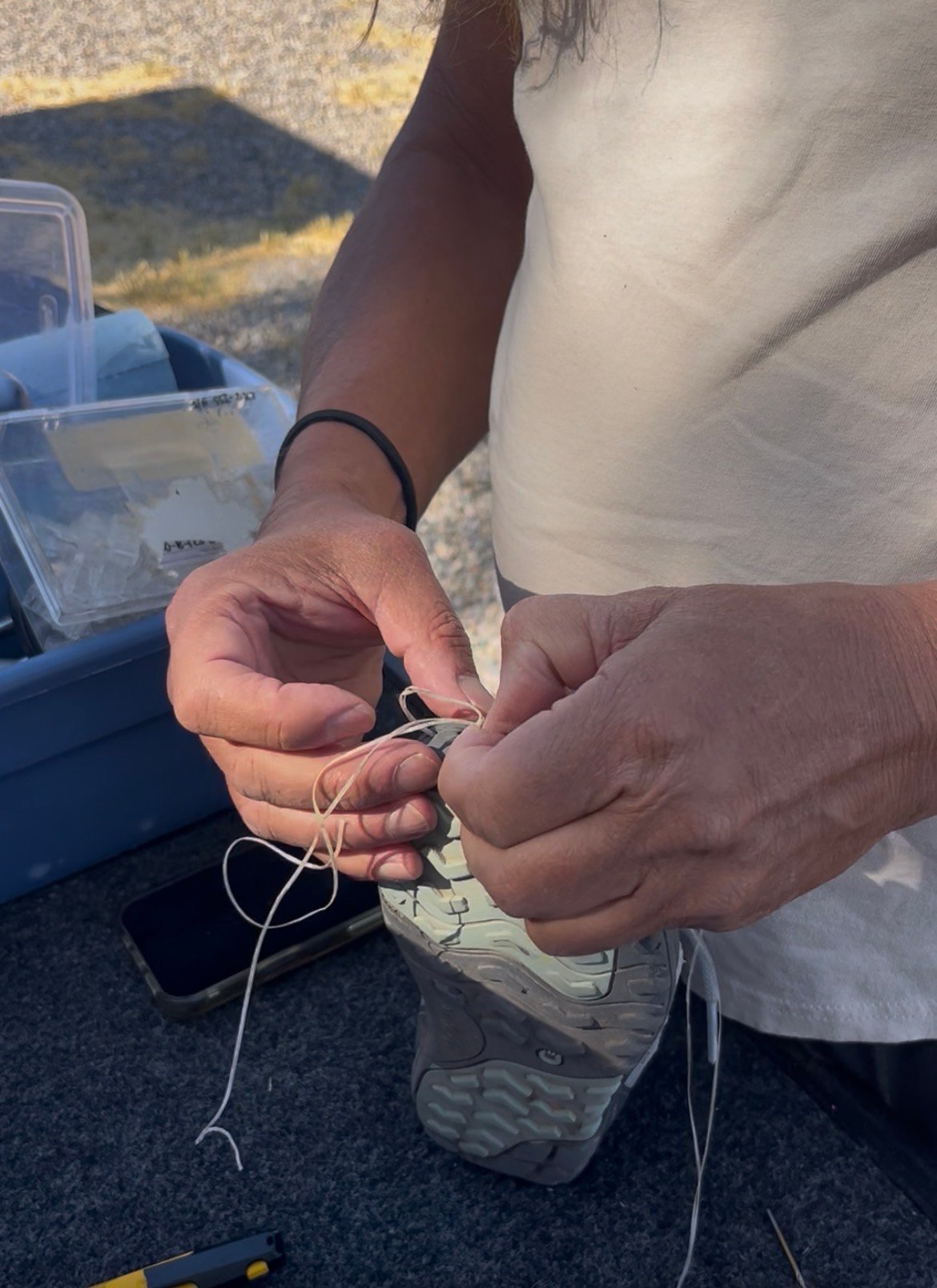
    A little downtime the next morning for some shoe repair. I didn’t have a large enough needle, but running the drill at high-speed in reverse melted nice holes through the synthetic materials. Hopefully the waxed nylon lacing will hold up!

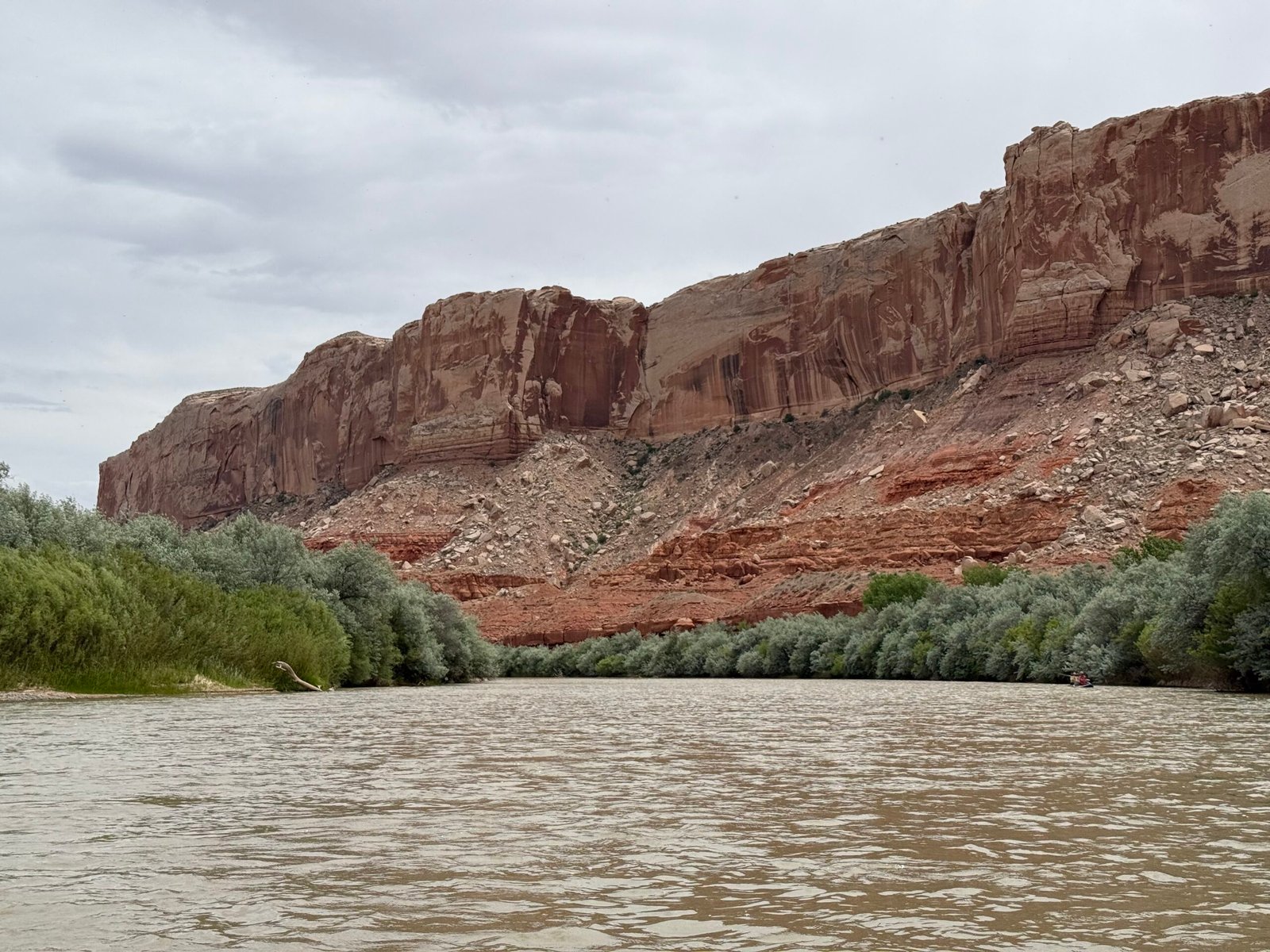
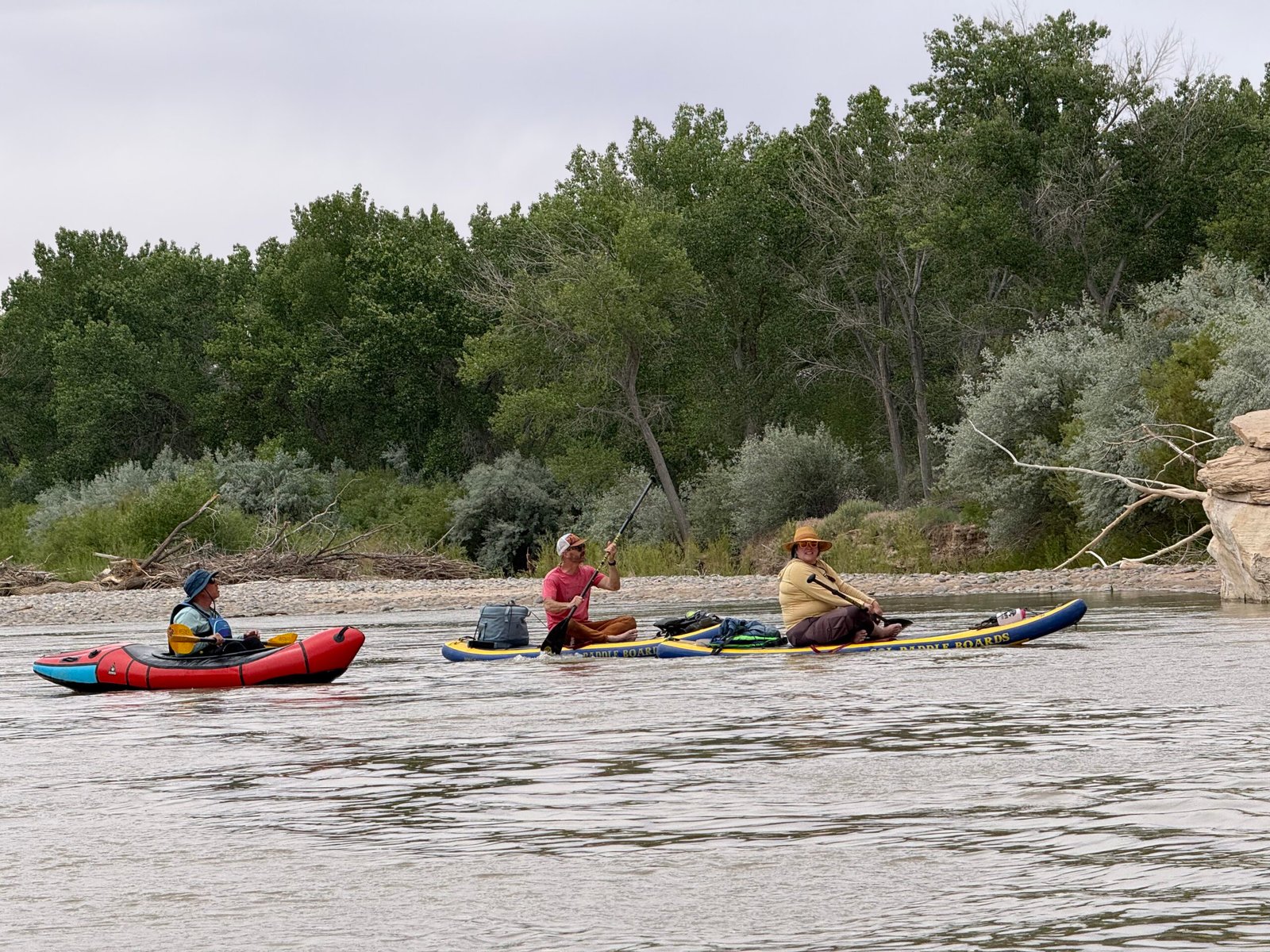
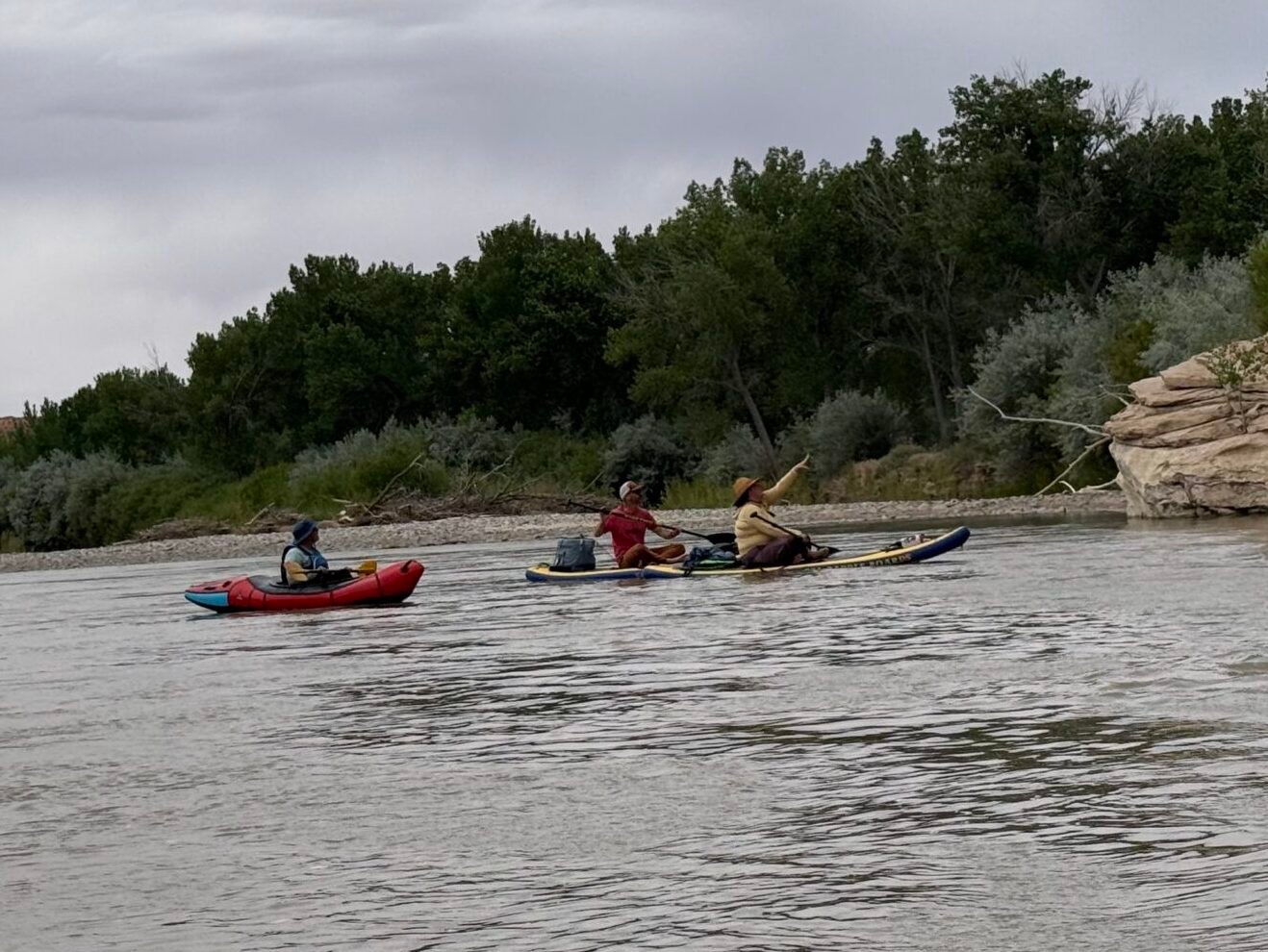
    Time to chill. Next will be a nice float on the San Juan, and Retrospective – Part Two.

  • People(s)

    People(s)

    #5 of  the series.

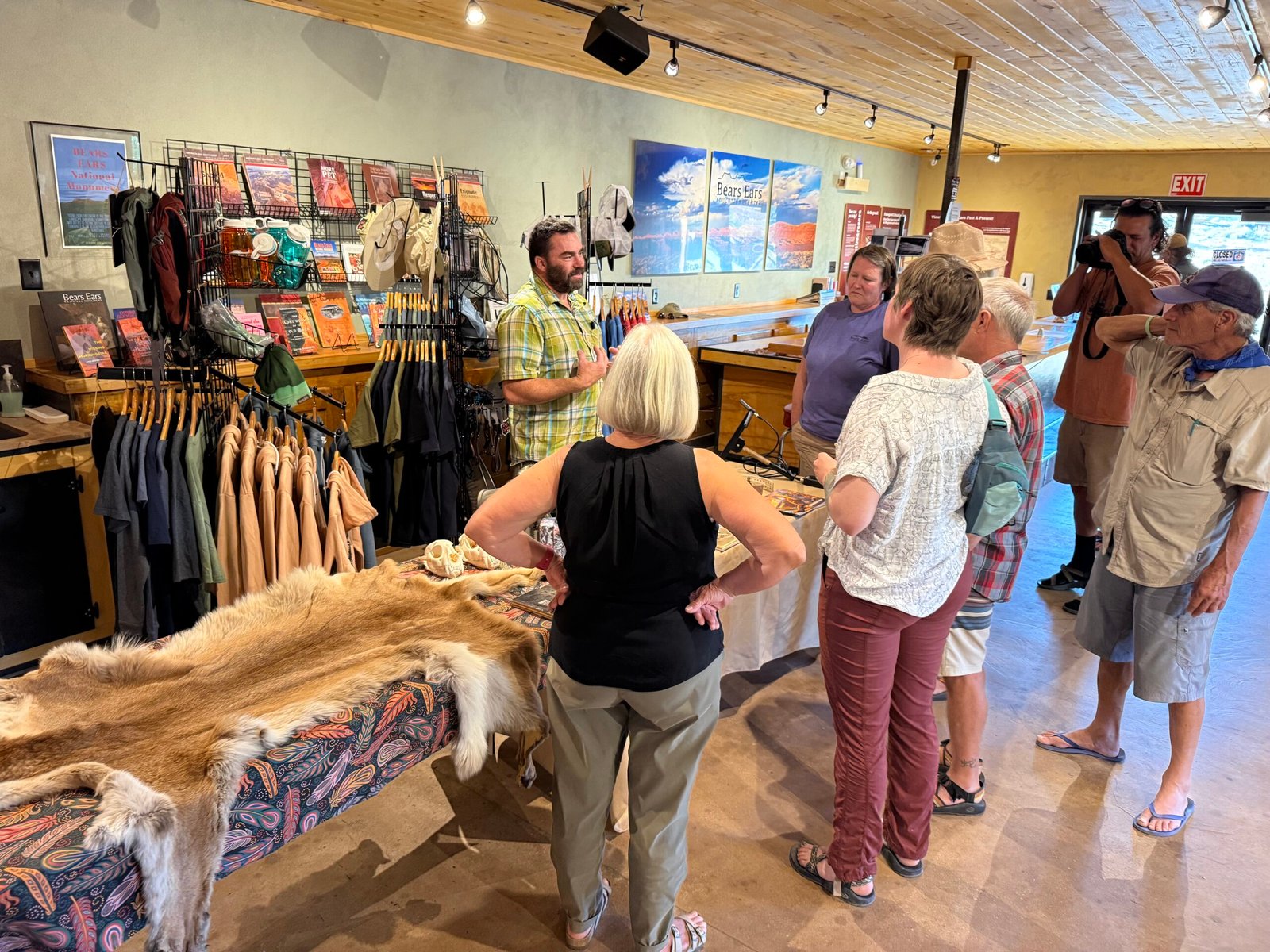
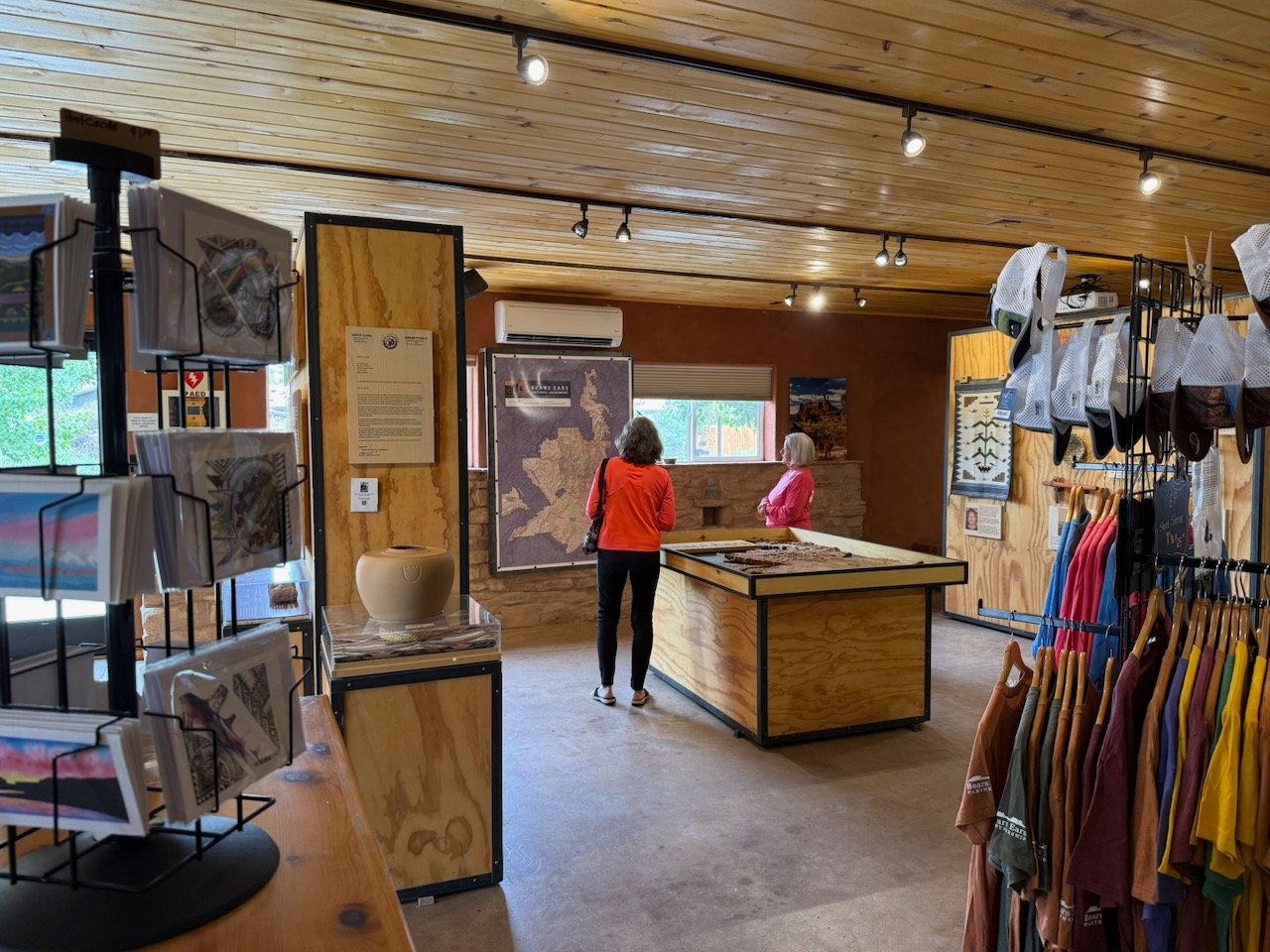
    A BEEC Visitors Center volunteer’s worst nightmare: a long line of people all buying myriad stickers of different sizes. It could happen. It did happen. The Bears Ears Partnership operates the Canyon Country Youth Corps, giving young people opportunities for service projects in the area.

    Remember in my last post where I discussed the open-range cattle? Well, apparently the VWR ambassadors reporting about this area guided a work project to fence off a set of structures, and this work team was gearing up to tackle it. And of course having the youth around the Center’s merchandise resulted in a “feeding frenzy” just before the work van was to leave for the morning! But Patricia sailed through it (no cash transactions with these kids) and no laborers were left behind.

    Patricia is with a visitor discussing the national monument and the importance of durable protection for places like it.

    We always meet interesting people here at the BEEC. Bluff is a nice waypoint between Moab and Monument Valley. As for international travelers, the French seem to be in the lead this year. And of course folks from all over the United States. We’ve even met folks we saw last year, one couple even came by the camper when we were off duty just to say hi.

    “What’s your tribe?” was a question this week. “Oh, a bit of Cherokee,” I replied. “My husband is Assiniboine, we’re from Montana,” she said. And we just had a lovely conversation.

    I have to confess that I kinda maybe broke a rule. I have mentioned that the BEEC is more about how to visit as opposed to where to visit. And we have a short list of places that the Partnership is comfortable sharing, for various reasons. These sites are located on the map that we typically hand out. But the truth is that a simple internet search will bring up a wealth of websites showing lots of other places. And so it is a challenge. Many of the websites are influencer-typical and hype about hidden secrets and such and are more interested in profits than protecting the landscape or respecting the people. But some are much better, revealing more than is liked, but also talking seriously about Visit With Respect and the details of the trail. And trail details are important, it allows people to gauge the difficulty, but it also helps to keep people from getting lost and creating dead-end side trails that encourage others to wander that way and destroys the fragile cryptobiotic soil crust. So in general, if a visitor comes in with a destination in mind, it is considered acceptable to help them get there safely or possibly redirecting to something else, depending on an educated guess of their aptitude and goals. We always want to make sure they understand how to visit. But it is, after all, public land.

    Three elderly ladies came in, attired in the gear you might expect from folks comfortable with desert hiking. Broad-rimmed sun hats, lightweight long sleeves and pants, well-worn shoes. And they were excited. They’d been in the area for a couple of days with a couple more to go and wanted to make the most of it.

    “We’d like to find hiking nearby!” a bright-eyed little lady smiled.

    “My advice is free, and worth every penny.” The smile turned into a big grin, apparently she was the organizer of the three.

    They had been to House on Fire, and even though the walk is pretty easy, one had struggled with the slick rock at the site due to knee pain. So they were looking to do hikes with a little less technical difficulty, even though they really enjoyed the backcountry hiking and seeing the structures and artwork.

    I really wanted them to enjoy the area without having to drive a long way for some of the other sites on the list. And I wanted them to find something they were comfortable with and they could safely do. But we don’t really have good trail information for the area between Bluff and highway 95 to the north. Our guidance is a bit sparse in that region.

    I said, “I did not tell you that you can search for things in this area online. And I did not tell you that there are some nice trail descriptions to help you determine what you can do.” After all, we’d just had a good talk about Visit With Respect. One lady jotted down a couple of notes. “Okay, we really appreciate you not helping us,” again with a grin.

    For Rachel’s visit, we wanted to show her a good smattering of this vast place, but we needed destinations that were close, had some shade, and we could complete before the heat of the day (remember, she is with child). And the best way to do that was to look online for good trail descriptions. We found one up the wash road and set off early in the morning.

    It was pretty sweet, although none of them are necessarily cakewalks. The landscape changes, so there’s usually some navigating and second-guessing involved, brush and bugs can be problems. But we saw a couple of nice places. One was a bit out-of-the-way but had so many carvings into the rock. Turkey feet, corn, and my favorite, sharply-detailed stars. Around the structures we saw areas where implements were sharpened, metates where corn was ground, and extensive and expansive petroglyphs (carvings) and pictographs (paintings), and of course, combinations of the two.

    It was a good walk, and as we approached the sunny last leg of our journey back to the truck, we saw folk coming our way. Gearing up for a nice VWR discussion, I recognized that it was the three ladies we had met a couple days before! Again, they were all smiles.

    They had done their research and picked a trail they were comfortable with. And since I had only given them general information, I found it amazing that in all of Bears Ears we had run into them on the same trail, a long way up a remote dirt road! “You are the most unhelpful volunteer we have ever met,” one said cheerily. I will take that as a compliment.

    As I mentioned in an earlier post, Brandon is volunteering this month too. And he has spent significant time in this entire area, including Bears Ears, Escalante, and Capitol Reef. Now a river rat living in Kentucky, his favorite river runs lie in the Obed and Big South Fork. But he comes to these canyons every year bringing his packraft (something I’d never even heard of), which allows him to do multi-day backpacks where he can more easily maneuver between canyons as he searches for the wonders of the ancients.

    As our new neighbor, we invited him over for a campfire and began to chat about our experiences. Even though he is younger, we found we have a lot in common. Enjoying the remote places, traveling light, and even maybe being guilty of Ffej-ing his wife and friends (maybe that’s Nodnarb-ing?) when exploring new places. And it was remarkable to me how many of the same backcountry places we have explored in the Appalachian mountains. In fact, he was very familiar with the Joyce Kilmer/Slickrock wilderness, a refuge of mine.

    During the conversation, he mentioned how his wife had stuck with him through some “challenges” in the backcountry. So I began to relay our story of the ill-fated backpacking trip to the Hangover in the Slickrock wilderness.

    While dating, I found that Patricia had been on very few adventures, other than the occasional family camping trip. And since she was eager to try new things, I thought I’d impress her with a beautiful mountain wilderness that I seemed to always come back to when I needed a recharge.

    Now, while this sounds idyllic, it was decidely not. And since I have recounted this story before, I can use amazing technology to direct you to the tale here, in our Peruvian Odyssey. It’s a short read, and it will enlighten you on just how silly a young man can be when his alter-ego, Ffej, has taken over the task of trying to woo his future soul mate.

    But back to the campfire. As I was relaying the story to Brandon, no sooner than I had mentioned the Naked Ground trail when he blurted out BALL BUSTER! We all just cracked up about it with a good hearty, “been there, done that, got my butt kicked” laugh. You see, while the sign says “Naked Ground 3.1 miles,” someone had carved the more descriptive term in capital letters underneath. And I have never met anyone that could confirm this tale. Until now. Brandon also has the distinction of being bitten by our mutual pal, the copperhead!

    Here in Bears Ears, the three of us began to use some of our shared time off to explore new places. Brandon has shown us some amazing places and, in turn, we’ve had good luck in taking him to places that we had explored last year.

    Kirsten, our manager, has been awesome in letting us rearrange our time off to better match what we’d like to do. With the hot weather, we’ve shifted schedules so we could each get in early morning hikes, or trade out days for extended adventures. It’s all been another great experience. And even though we’ve been revisiting sites, we just there are just more and more things that we didn’t see the last time.

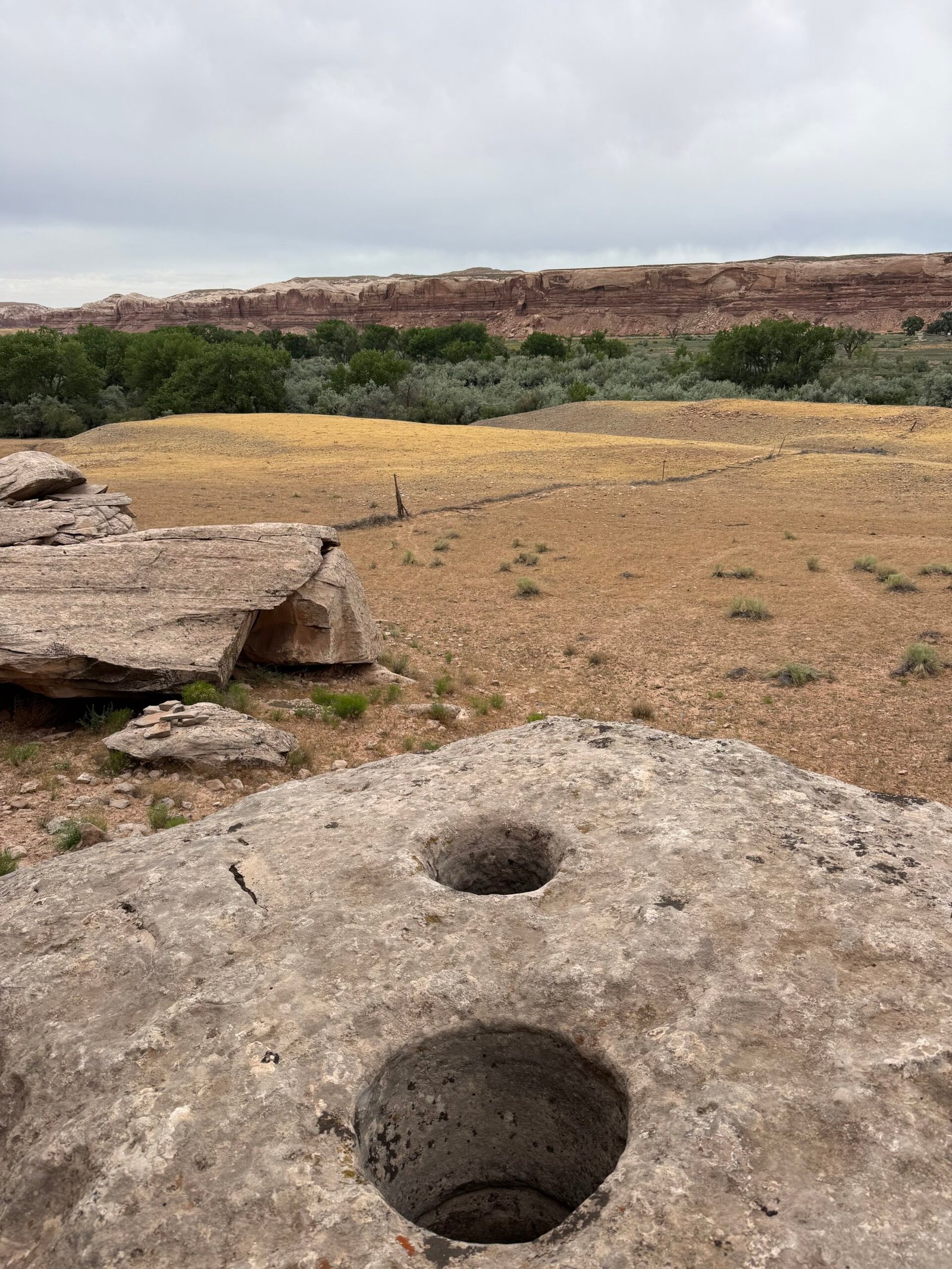
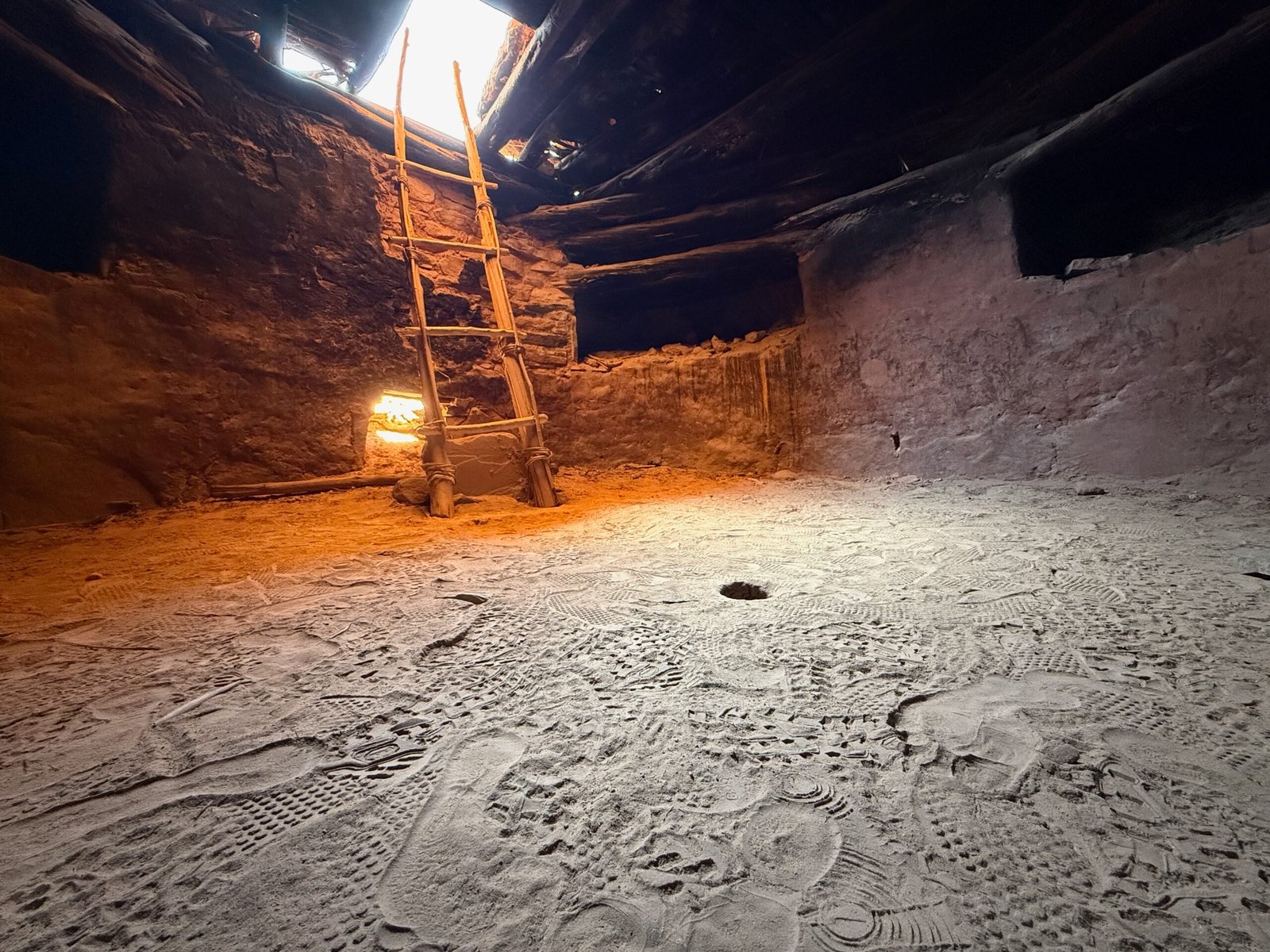
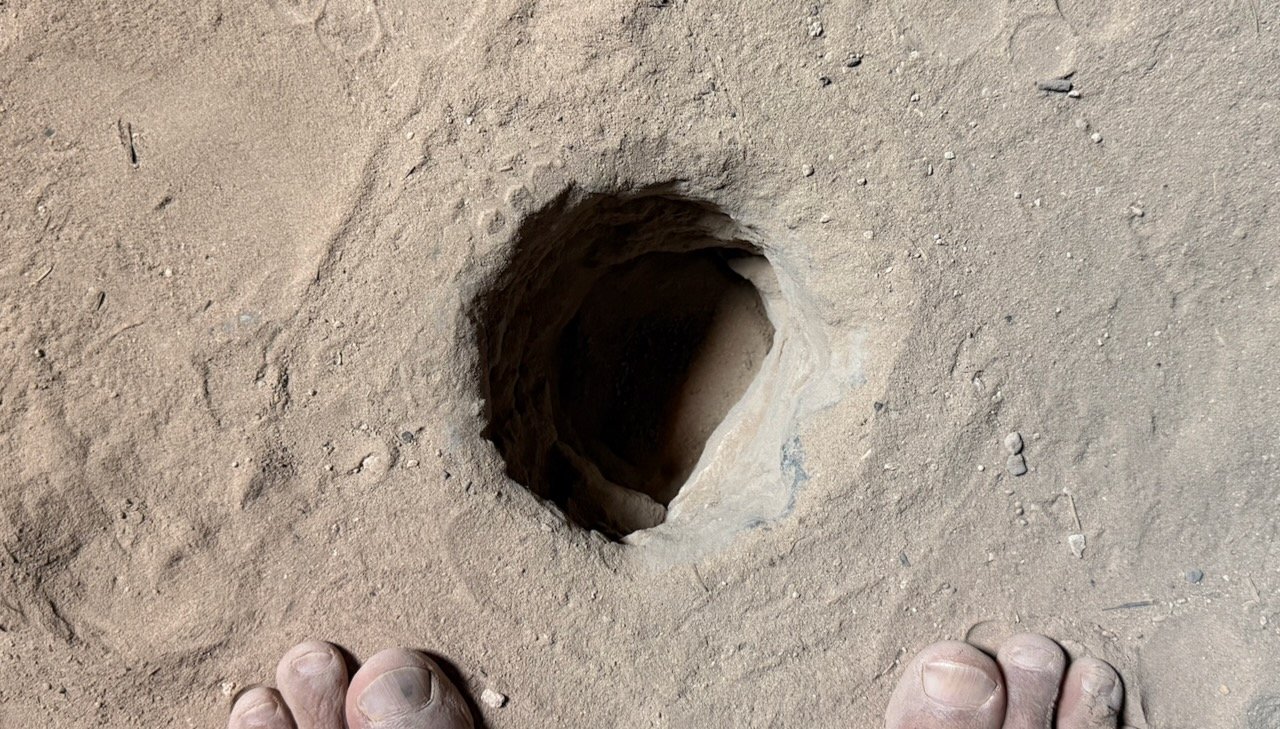
    A remote hike became a visit to a special kiva. The ancient puebloans treated them as sacred spaces, and used them for spiritual ceremonies, meetings, and as a way to pass down traditions. This one is spectacular, with the roof still intact after many, many centuries. In the center of the floor is a small hole called a sipapu. It symbolizes the portal through which their ancient ancestors first emerged to enter the present world.

    Having this at the center of this special meeting space is an incredible way to stay grounded with the past and the traditions. It would be as if every decision made or action taken here would be under the watchful eye of the ancients. Decisions would be made carefully. Traditions would be honored and passed down. Just this one small hole literally transforms this space. What a privilege to experience it.

    In the wonderful book Mayflower: A Story of Courage, Community, and War, Nathanial Philbrick considers the first 60 years of the Pilgrims’ journey to the New World. I feel he does an excellent job of describing the relationships between the Pilgrims and the surrounding tribes like the Wampanoag. The book is rich with the details that are not conveyed in textbooks, which are many times startling.

    One thing I remember from the book is that the tribes moved around as the seasons and food sources changed. And along some of the paths there were simple holes. But these holes were special, and they prompted the indigenous travelers to pause and remember their traditions and ancestors along the way. They continually reinforced their story, as story has been the only way human culture has maintained community for thousands of years. Even the bits of scrolls from 40 authors and 66 “books” were eventually manifested over 1500 years into the written form we call the Bible. It was all story, carefully handed down generation to generation through the ages.

    In The Story of B, the middle book of the Ishmael trilogy by Daniel Quinn, he establishes that it isn’t the “opposable thumb” that sets humans apart, but our ability to tell a story. Well observed, sir.

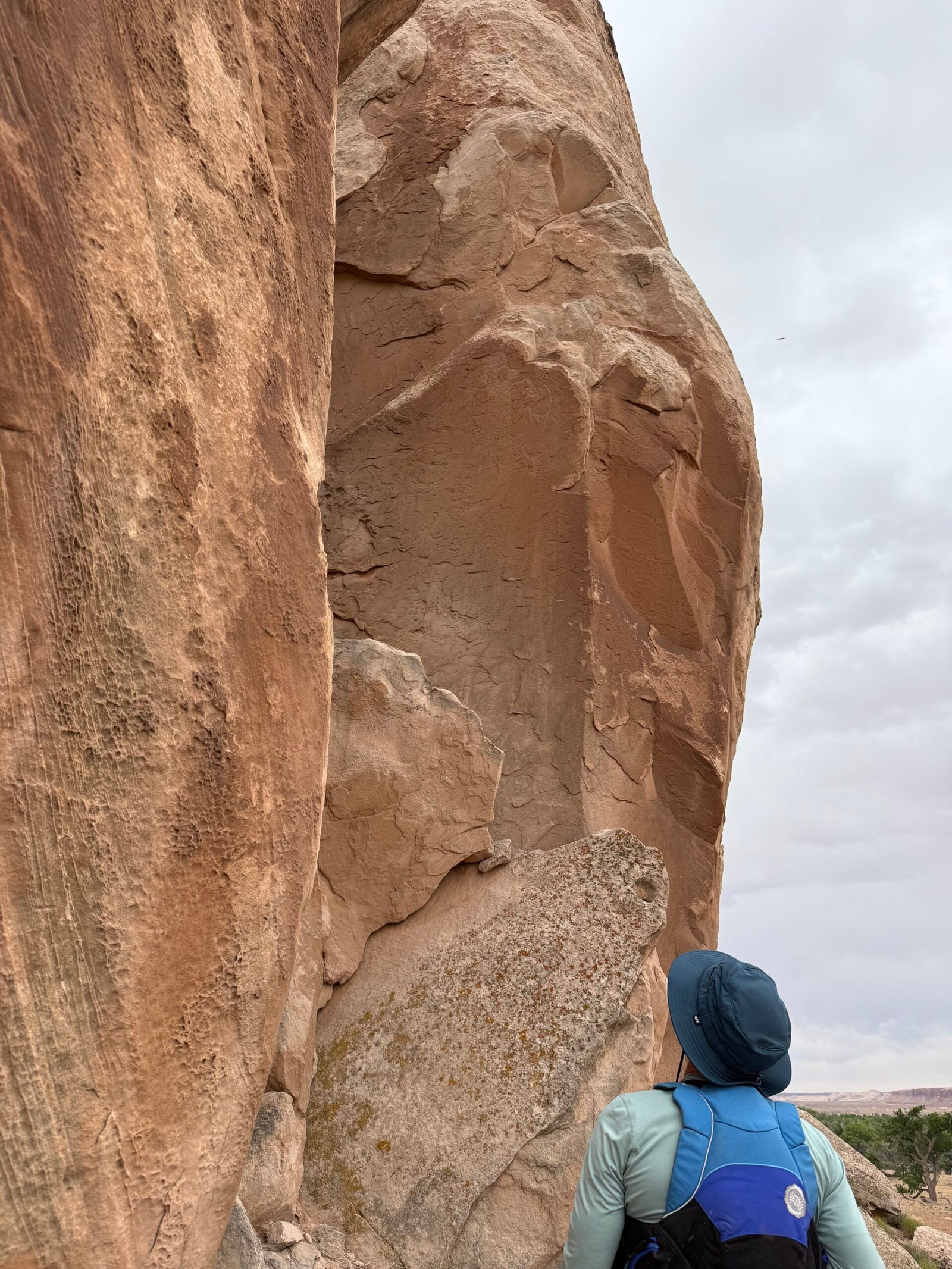
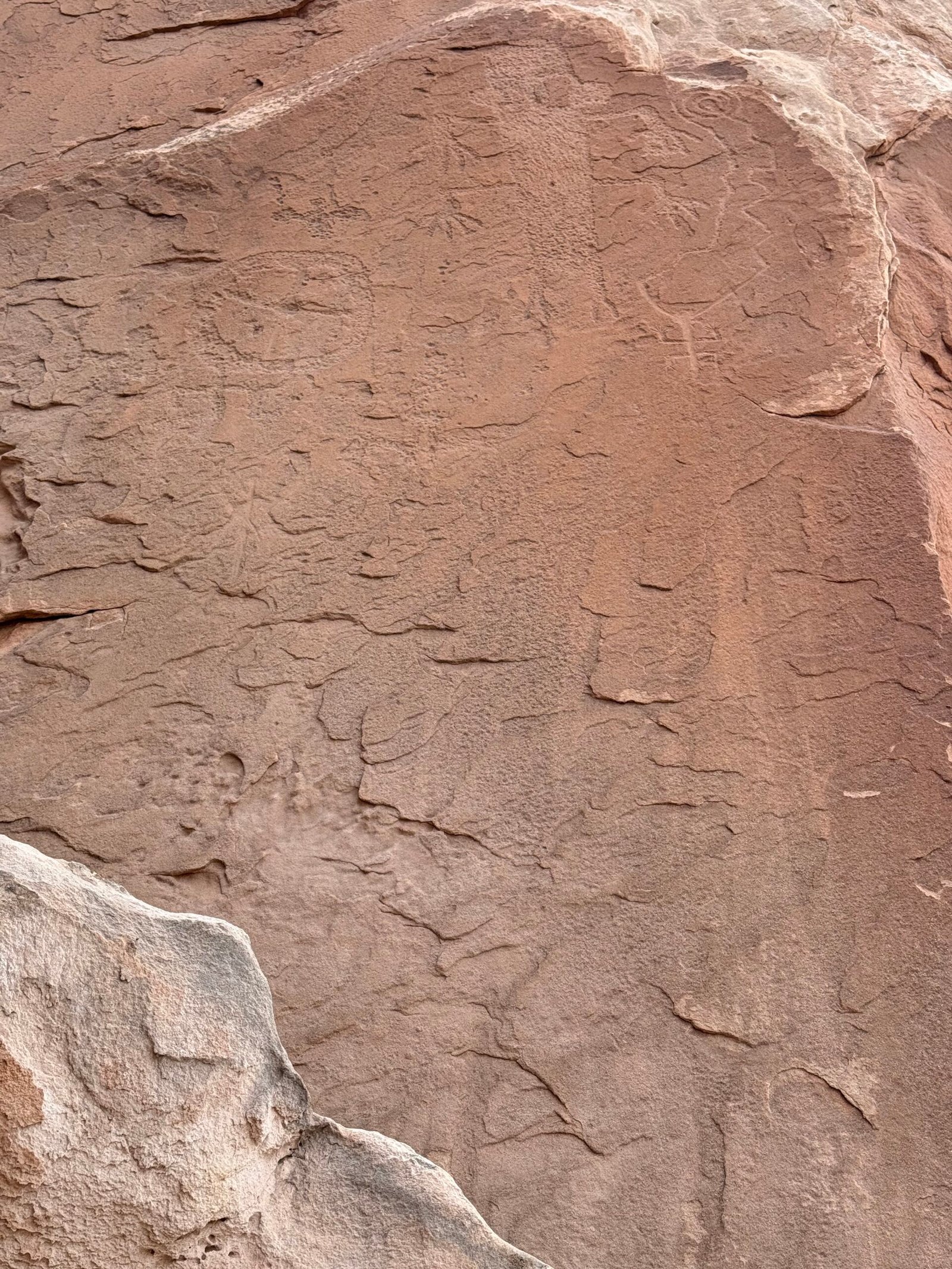
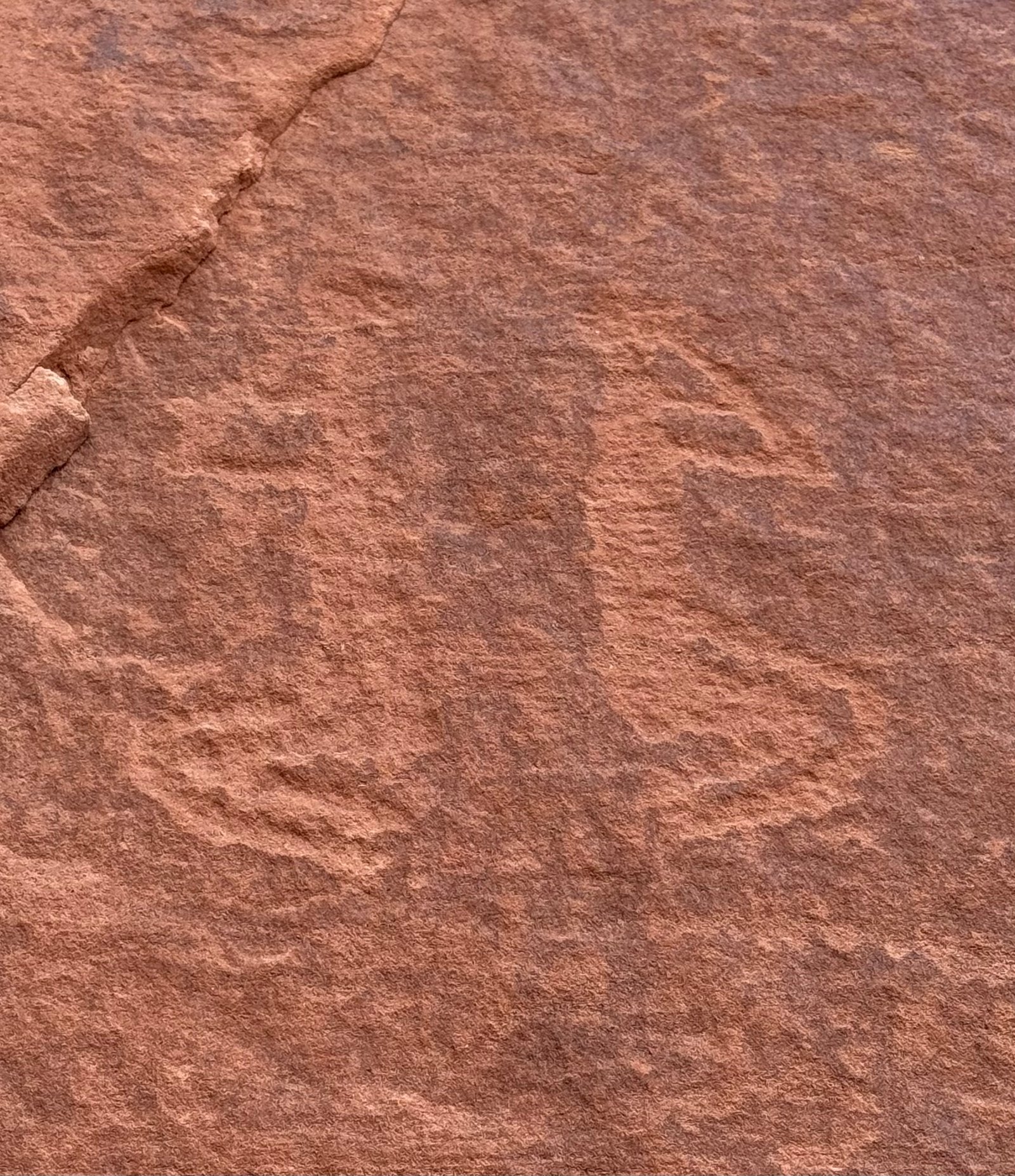
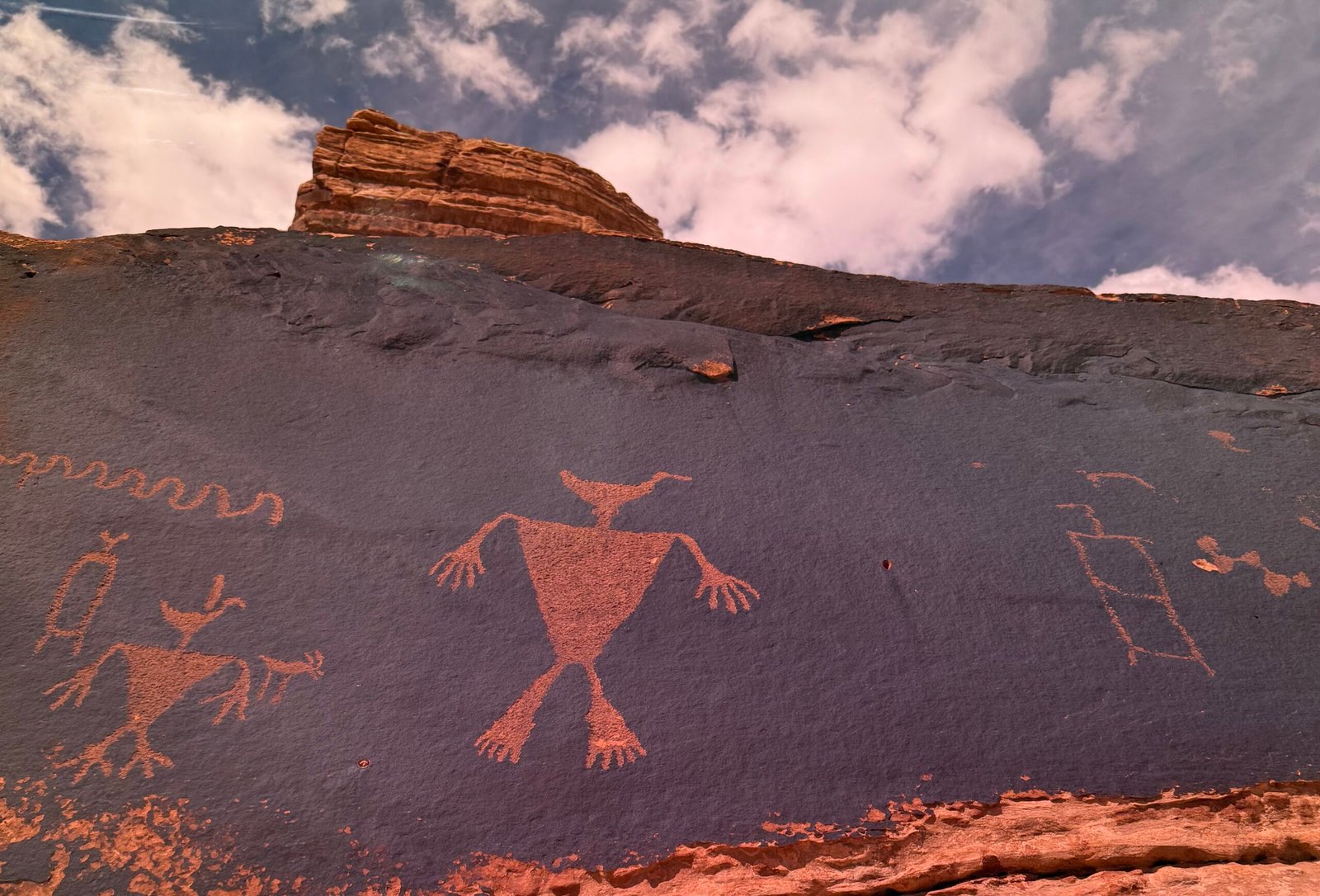
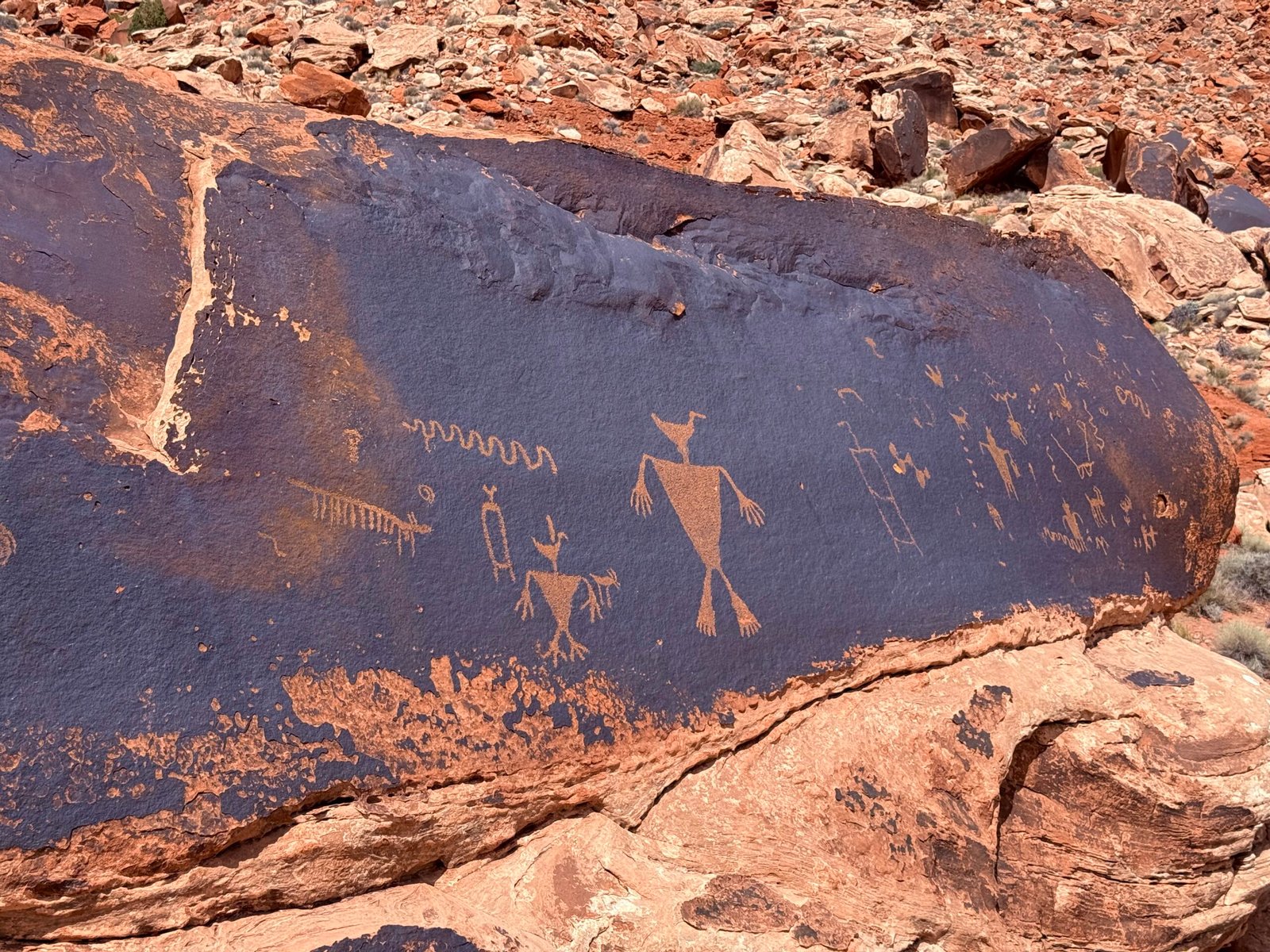
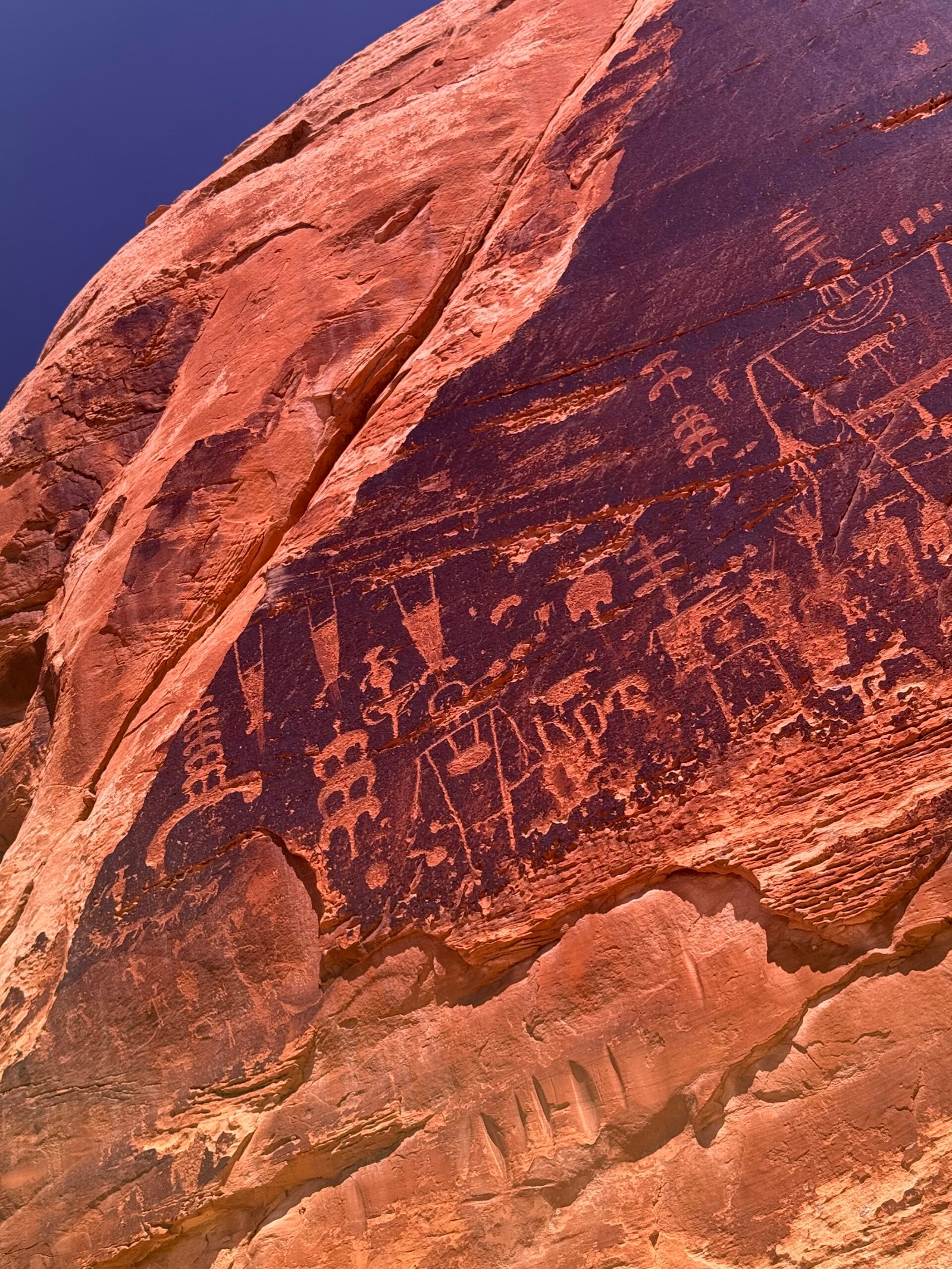
    Exploring a completely different area, we searched out petroglyphs created on large boulders that had tumbled from a high bluff. These stones had a dark patina on one face, created by bacterial interaction with minerals in the rock while still on the bluff wall. Upon breaking free, one boulder in particular came to rest with this face pointed like a modern day billboard in a direction that many could see, and it was alive with some incredible work. As I walked up to it, I noticed that the dark face produced a bright glare from the sun. But when I tilted my sunglasses to one side, the glare was greatly reduced! This surface was reflecting polarized light, something I did not expect. So now I’m walking around with my iPhone lens looking through my tilted sunglasses while I take pictures.

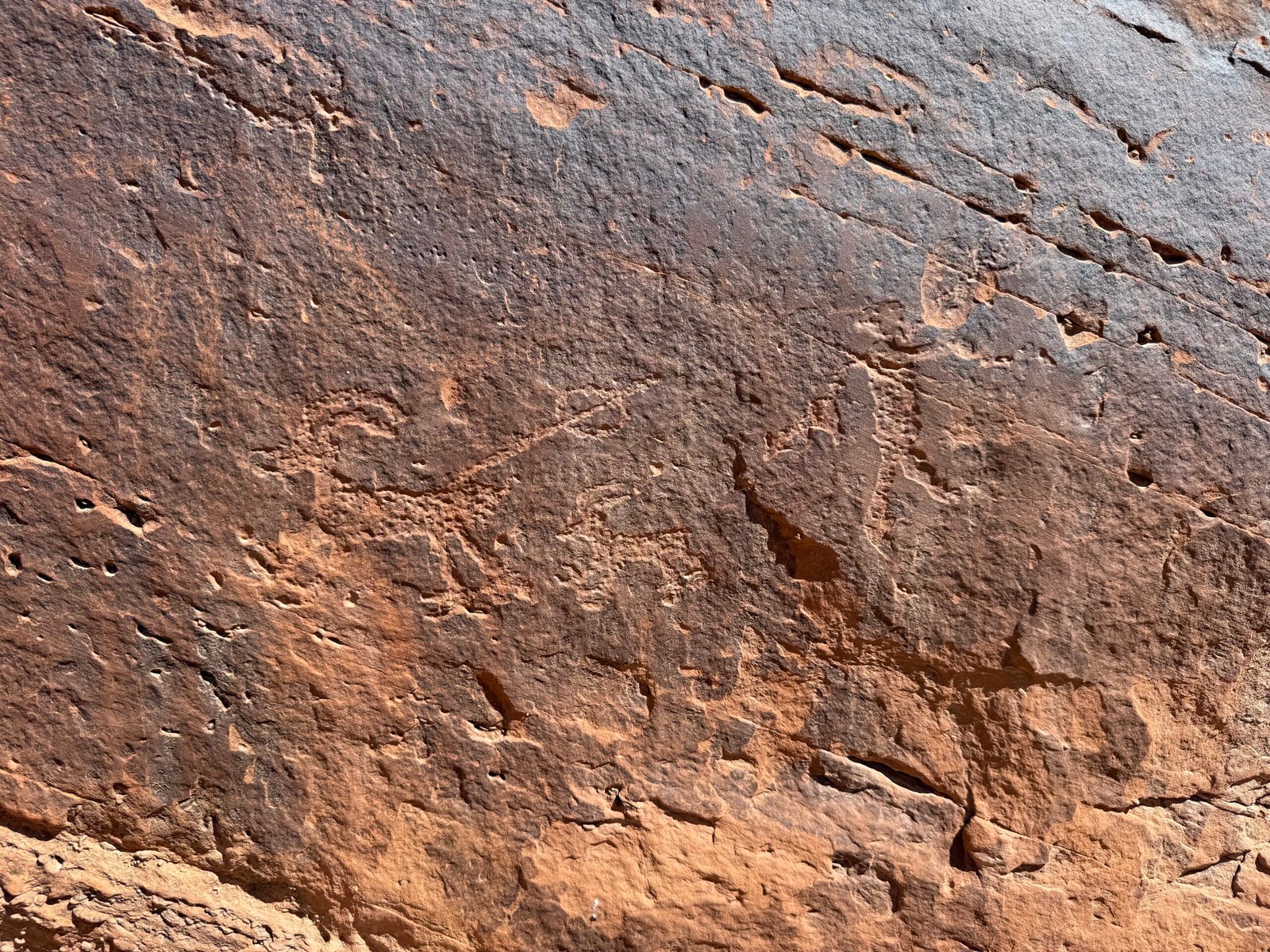
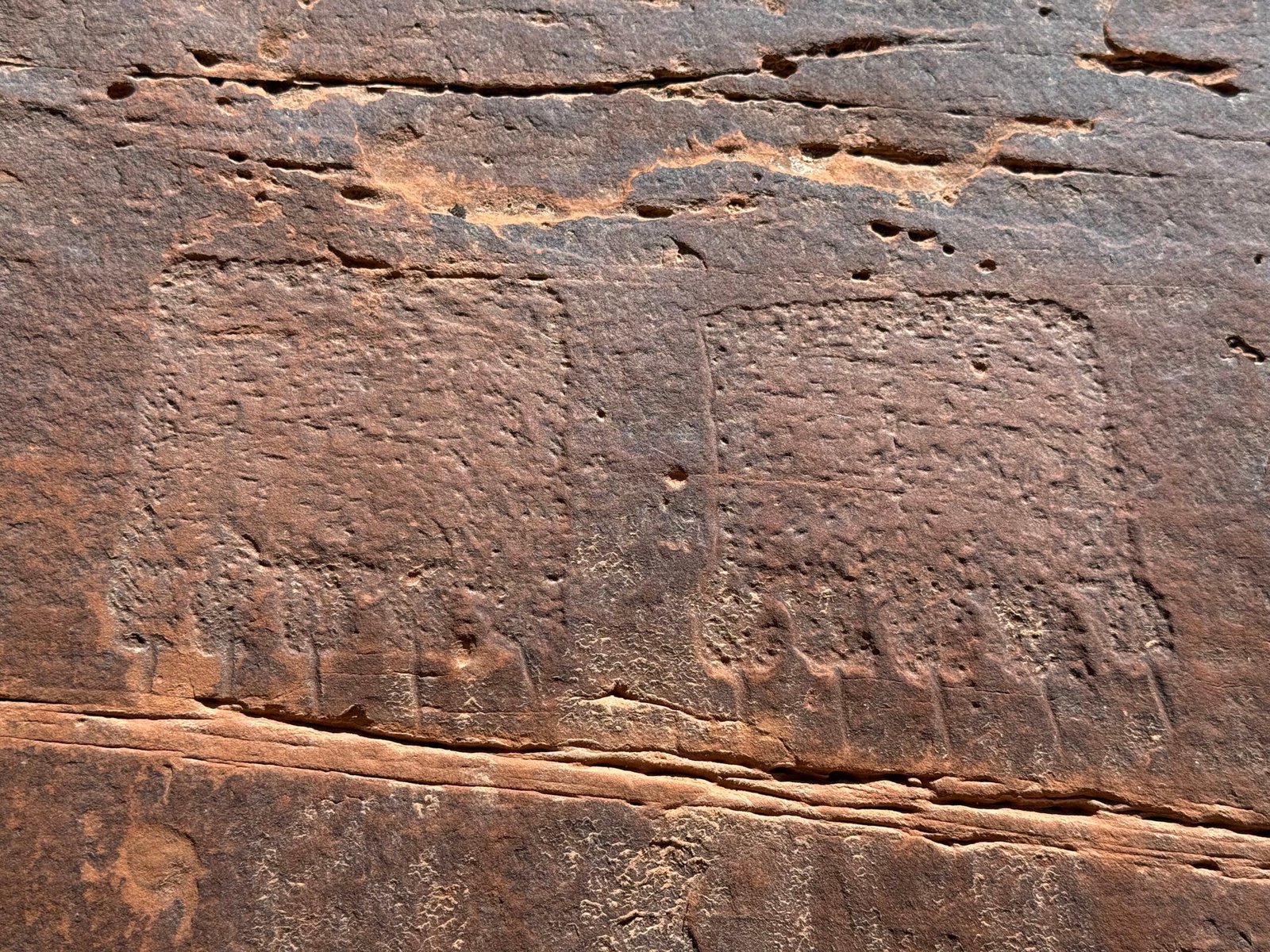
    Brandon relayed that a couple of these figures are “duck headed” and limited to the San Juan river valley. And they can be quite old. What is stunning is that they look like they were pecked into the rock last week!

    And how about that cougar paw on that last panel?

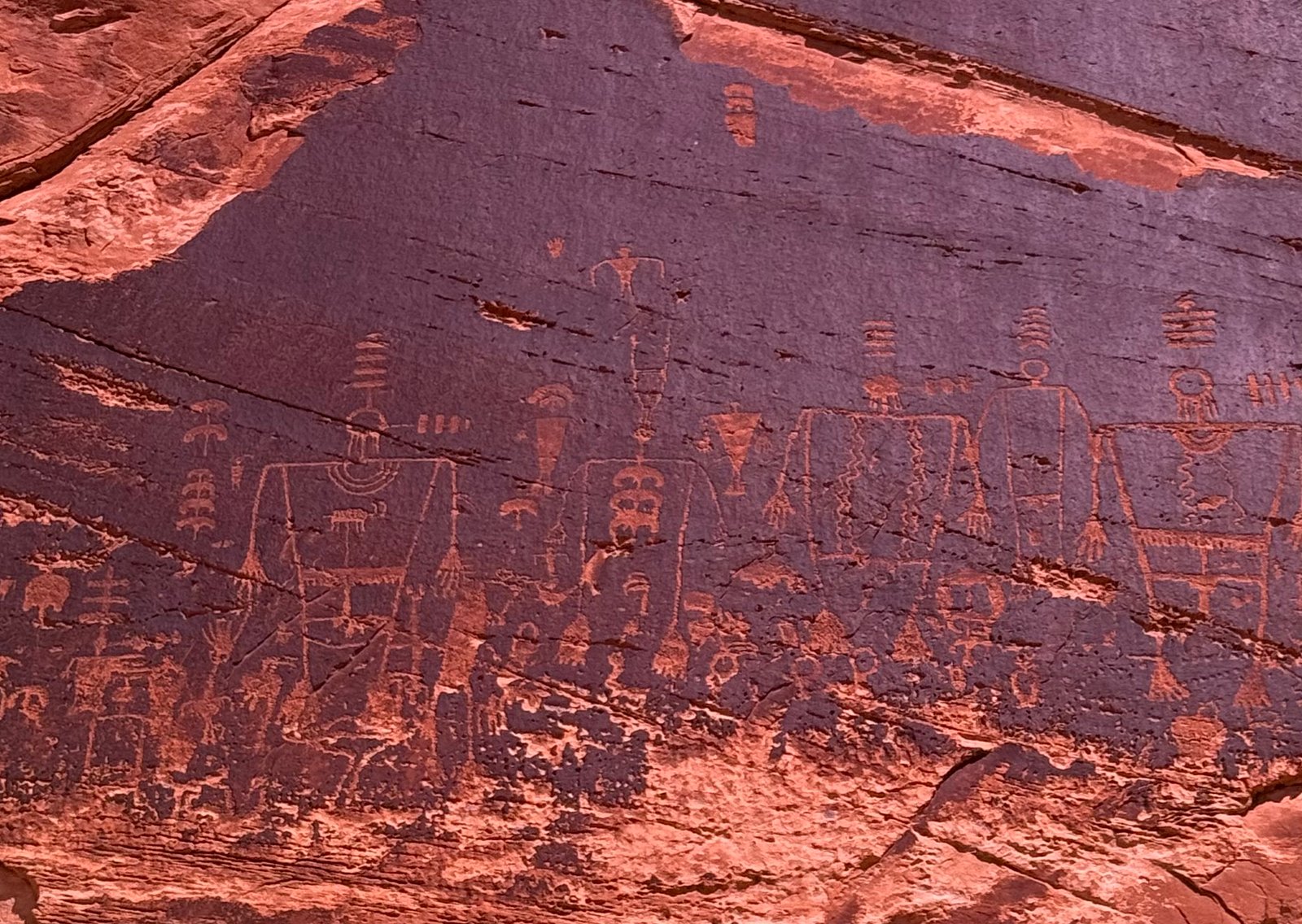
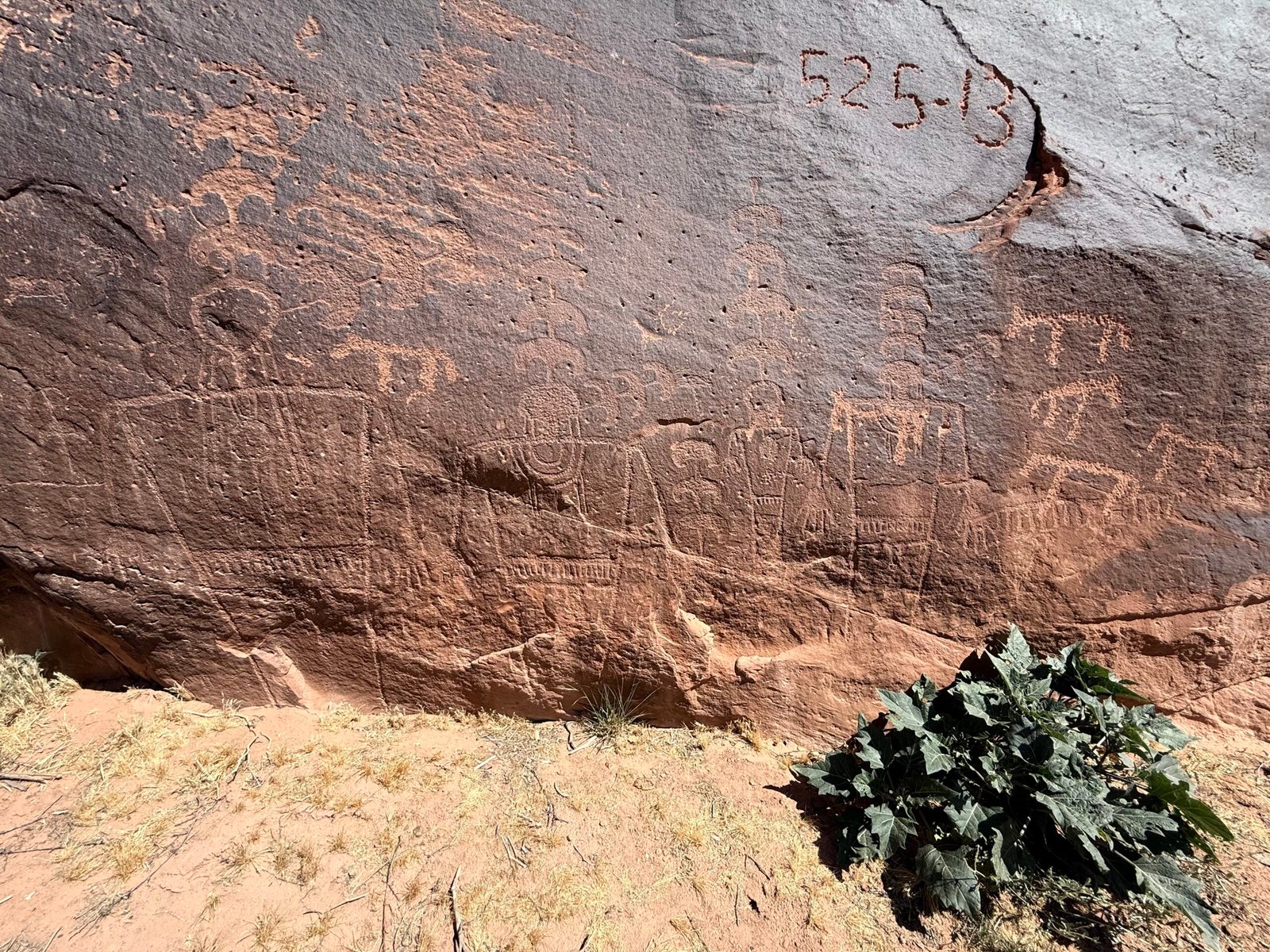
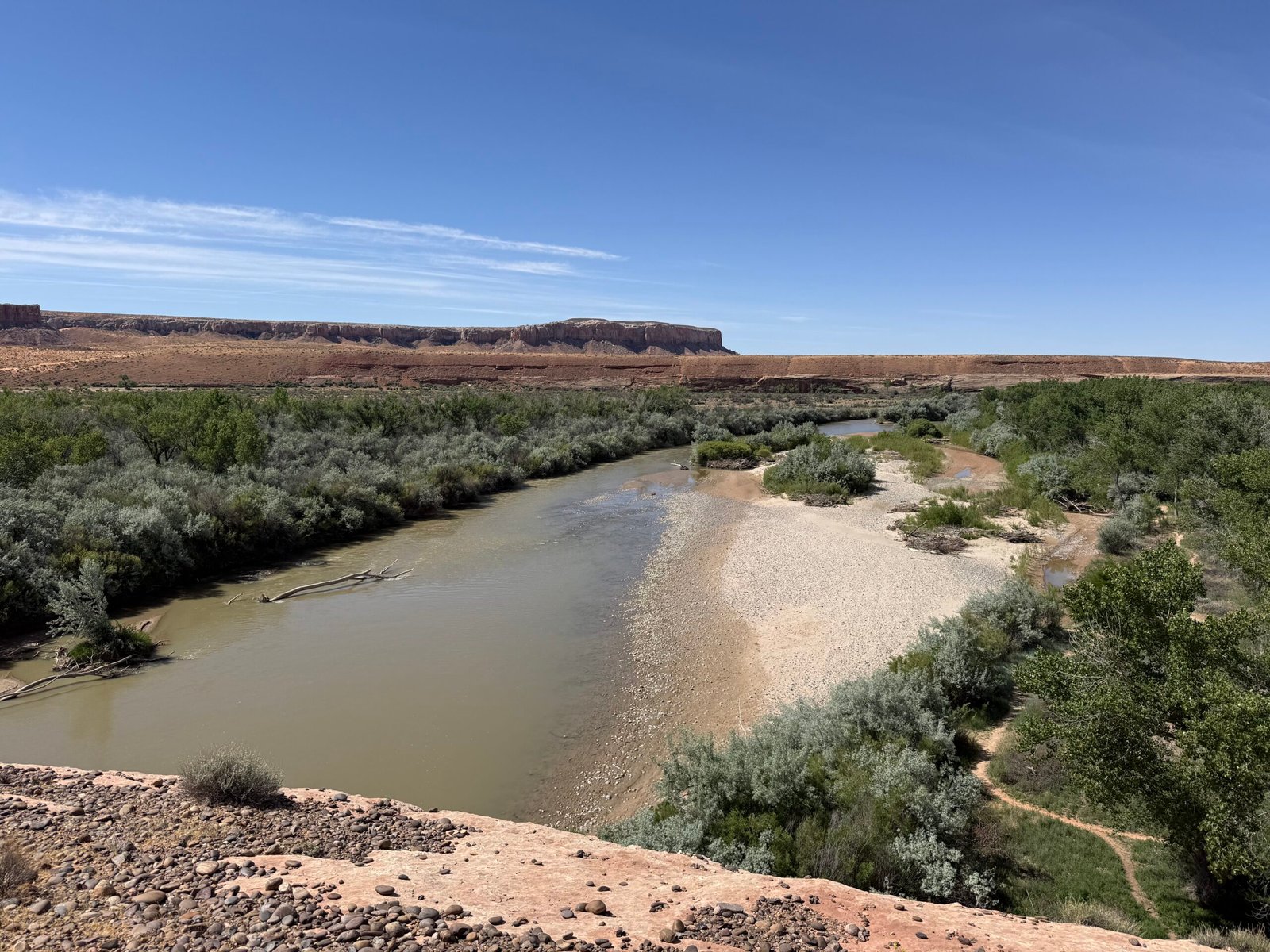
    Last year, Patricia and I attempted to see what is called the Kachina Panel, but we turned back due the potential for rain, especially after seeing darkening clouds. The river runners can access it easily, but to get to it by land, it requires several miles of wash-running down lower Comb Wash. Not a place to be in any kind of wetness, let alone a flash flood. So with this year’s forecast of hot-n-dry, the three of us gave it another go. And as last year, the Ranger just did a fantastic job, Brandon was impressed! We parked the truck before the last climb to San Juan Hill, and enjoyed a pleasant hike toward the river. We were amazed at just how much rockart is on this wall! It’s like trying to photograph the Grand Canyon where you just throw up you hands and say, “Oh well.” Not only do the petroglyphs span many centuries, but many cultures as well. People have been moving through here, from and to faraway places, for thousands of years.

    There is ongoing discussion as to whether the Ancient Puebloans abandoned the area abruptly because of duress or just simply walked away, expecting to return and pick up where they left off, when the climate improved.

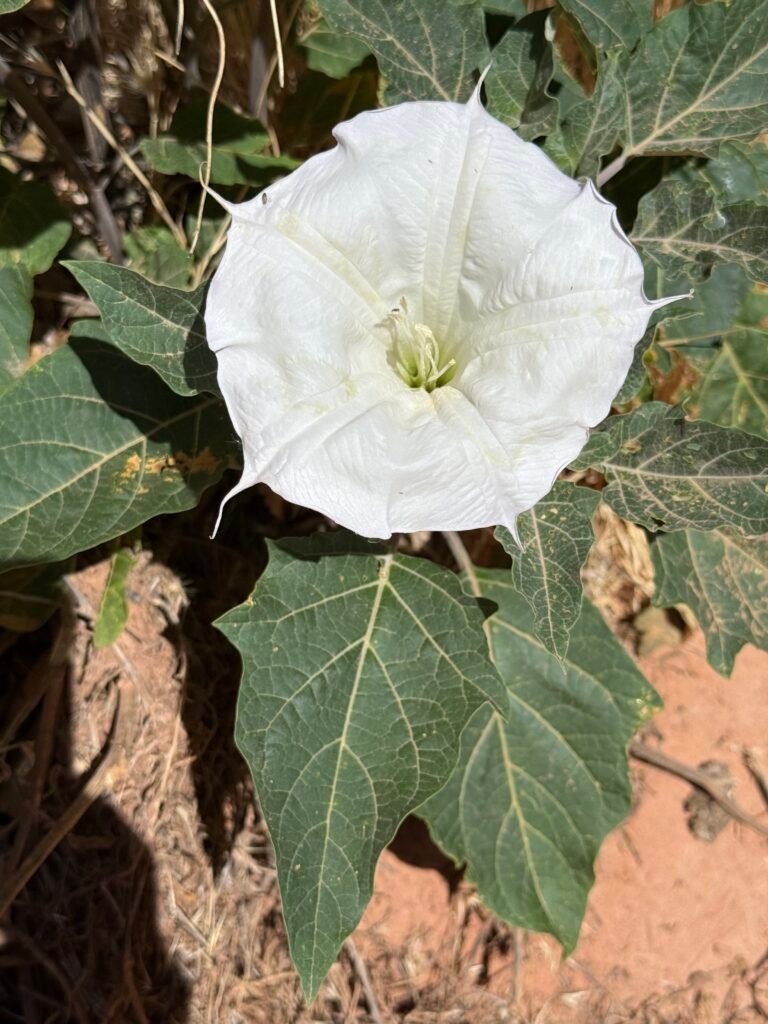
    Kachinas are spiritual beings in puebloan culture. On this rock face they are large, they are elaborate, and they are many! The plant in the foreground is sacred datura, which has psychoactive compounds in its seeds and roots. It has been portrayed in ancient artwork and pottery. What a beautiful and mysterious-looking flower.

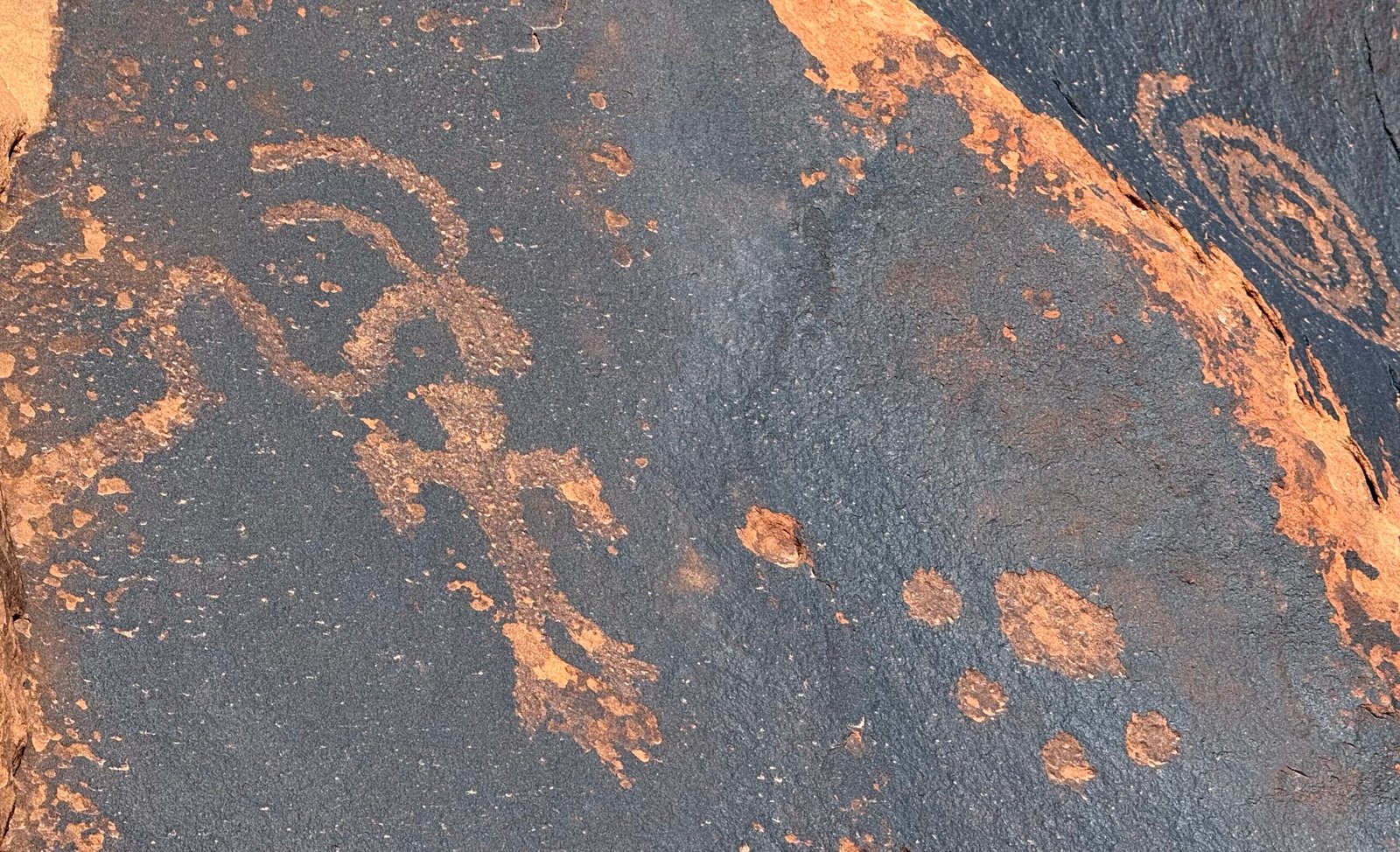
    These two shots show the use of an atlatl, which predates the bow and arrow. It is represented as a straight line with a circle near one end. On the left, you can see the deer has been struck and the hunter has another ready to throw. The wiggly line seems to represent a journey, sometimes it’s combined with a small spiral. In this one, a yucca plant is at one end. Is that a jackrabbit in front of the deer? On the right, another atlatl strike at a deer, the thrower seems to have his arm extended.

    Maybe my favorite find of the day! Bear paws with claws!

    Such a beautiful place! I could live here.

    It’s wild to imagine that in my formal education, I was taught that this was all essentially an empty desert wasteland. In fact, it has been alive with the peoples of many cultures for thousands of years.

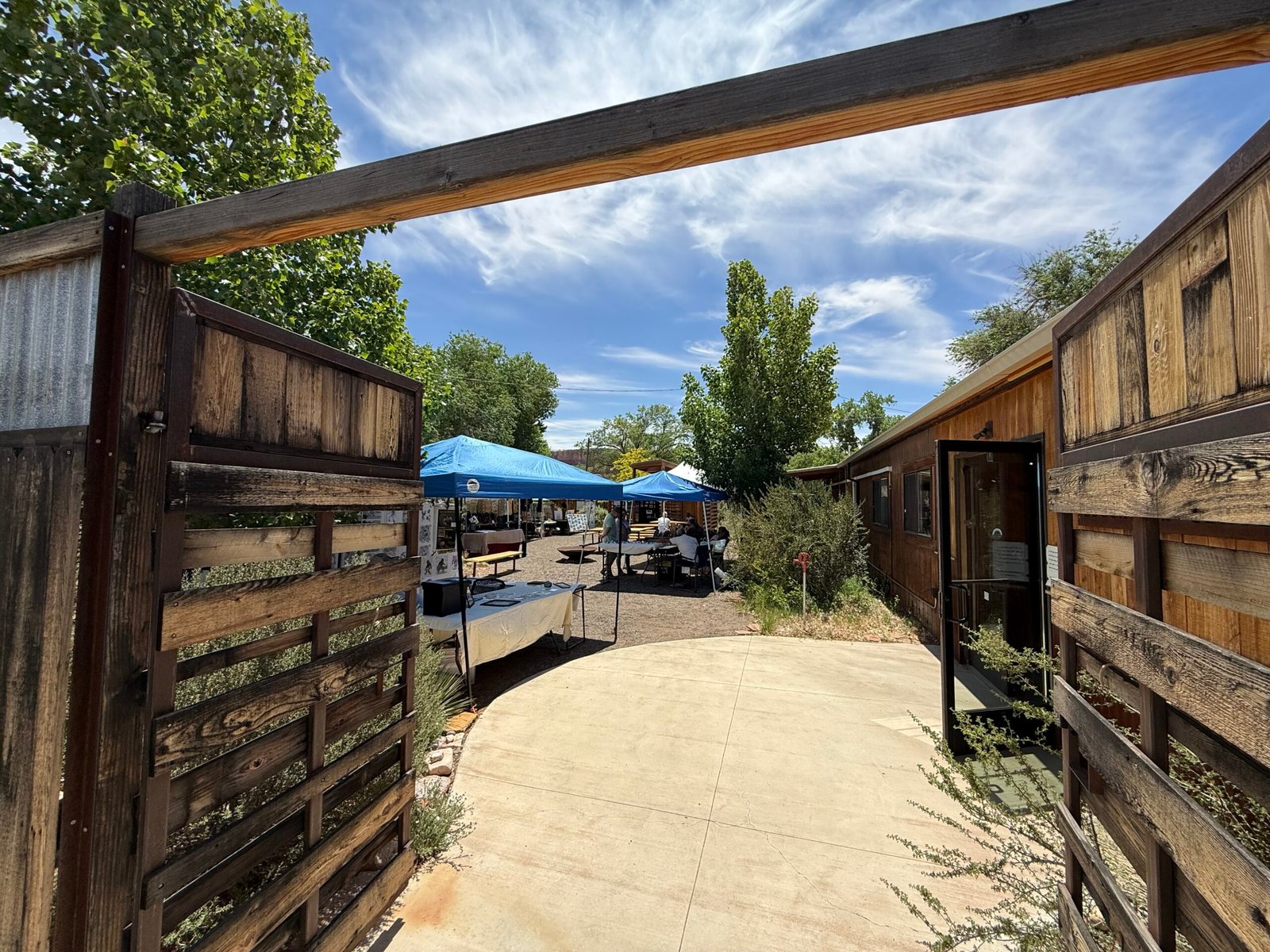
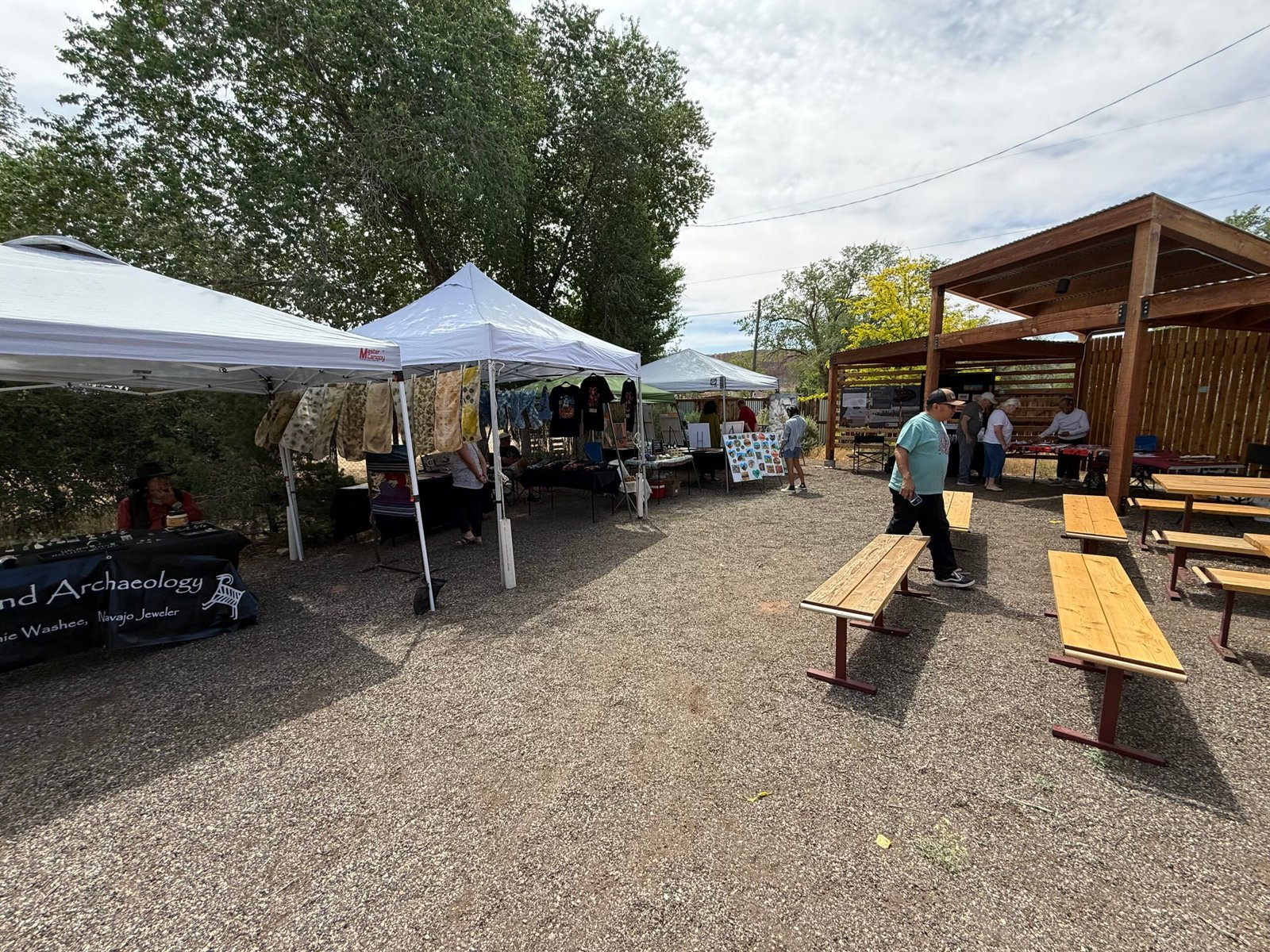
    And they are still here. Today the BEEC freely hosted an indigenous art market, with several tribes represented. I was looking over a Zuni couple’s fetish carvings and the man began to tell me how these were used. He would make them for people to help bring rain, or assist in healing, or other needs. Or maybe to help them with their spirit in difficult times. I said, “So these are to bring hope then.” He lit up and said, “Yes, exactly! Thank you for sharing that.”

    So much beautiful work. And we were able to see Leo Blackhorse and his wife Amelia. We had a nice chat last year and it was good to see him again. The market was a bit slow in the morning, but it picked up in the afternoon. And according to Brandon, there was a lot of cheery dialogue and laughter, while he covered the BEEC today.
    Peoples.

  • Surprise!

    Surprise!

    #4 of  the series.

    Time is passing quickly. We hit the ground running, wanting to re-familarize ourselves with the area. It’s good to have on-the-ground experience with as much of the landscape as possible so you can at least exude confidence when talking to visitors. But this place is big, and visitors’ plans vary widely, so it’s always interesting. It looks like it’s going to be a great month, our new neighbor, Brandon, is awesome (more on that later) and we think that this year, while different, is shaping up to be an incredible experience.

    There’s a synergy between the Visit With Respect (VWR) program and the Bears Ears Education Center (BEEC). While both are under the Bears Ears Partnership, a VWR ambassador is required to visit the landscape and interact with visitors from a rotating list of sites that are chosen for review.

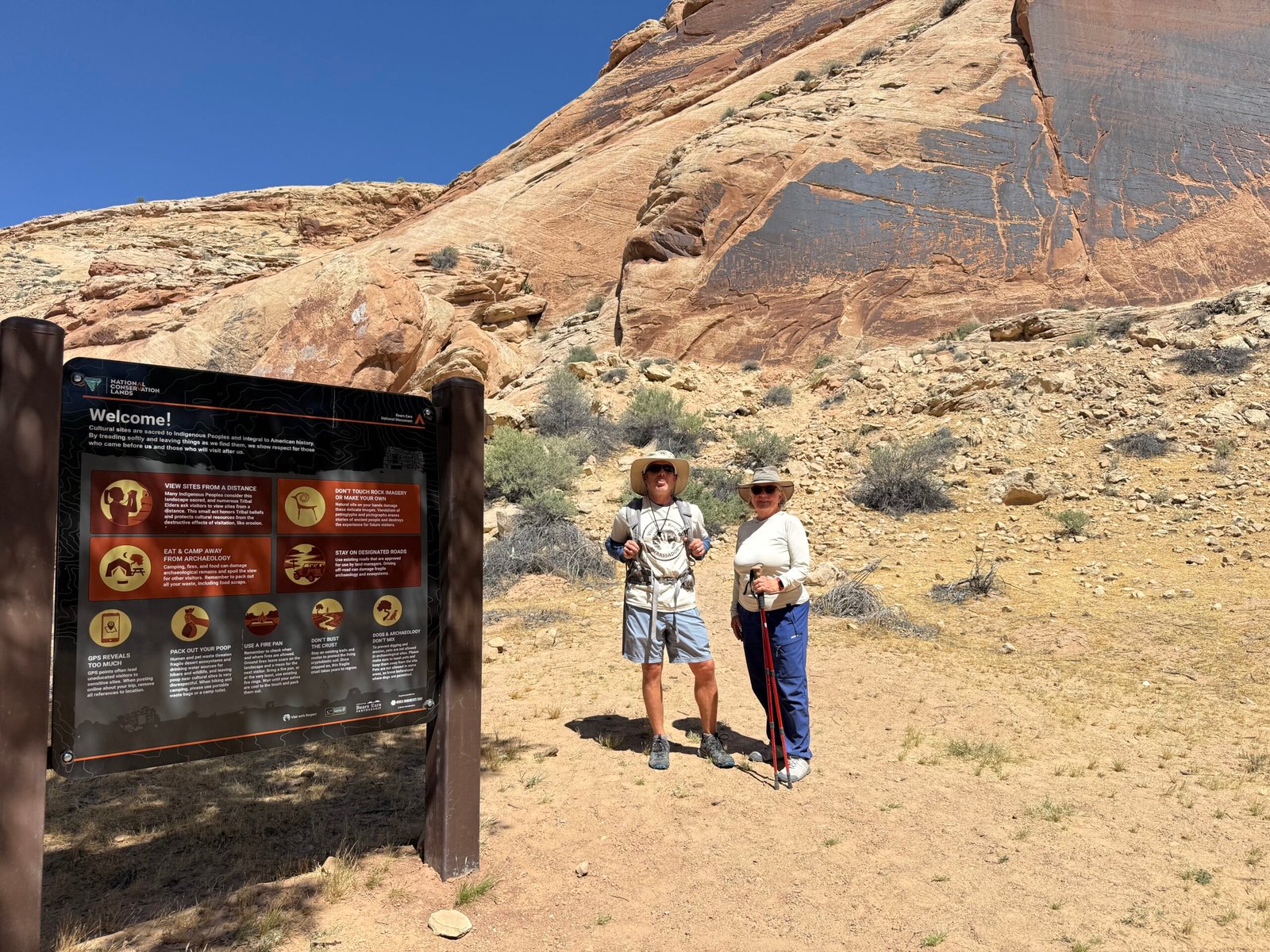
    As ambassadors, our goal is to engage with visitors in a meaningful way and share the cultural history of the area, the delicateness of the structures and art, and the concept that these are lands that over 25 tribes consider ancestral homes. In other words, these are not ruins with artifacts, but living structures and expressive art that are the heritage of a living people. And simple respect, even a reverence, is something to be practiced, and in fact, enjoyed.

    But reviewing the status of a site is also important. Many are remote and it’s not so easy to drop by once a month. Most of this is BLM land and there are cattle grazing leases. And even though many sites are tucked away in alcoves and on bluffs, you’d be amazed on just how far a cow will wander! Sometimes we find dung even within the rooms of a partial structure. And of course, there are the human visitors. The vast majority are respectful, and more importantly, know how to be respectful, but damage does occur with the defacing of the rock, the unintentional leaning on structure walls or stepping inside to get the better shot. And what about those dogs?! Near and dear to our hearts! Easy enough just to leash them nearby for a short time (you did bring a leash, right?).

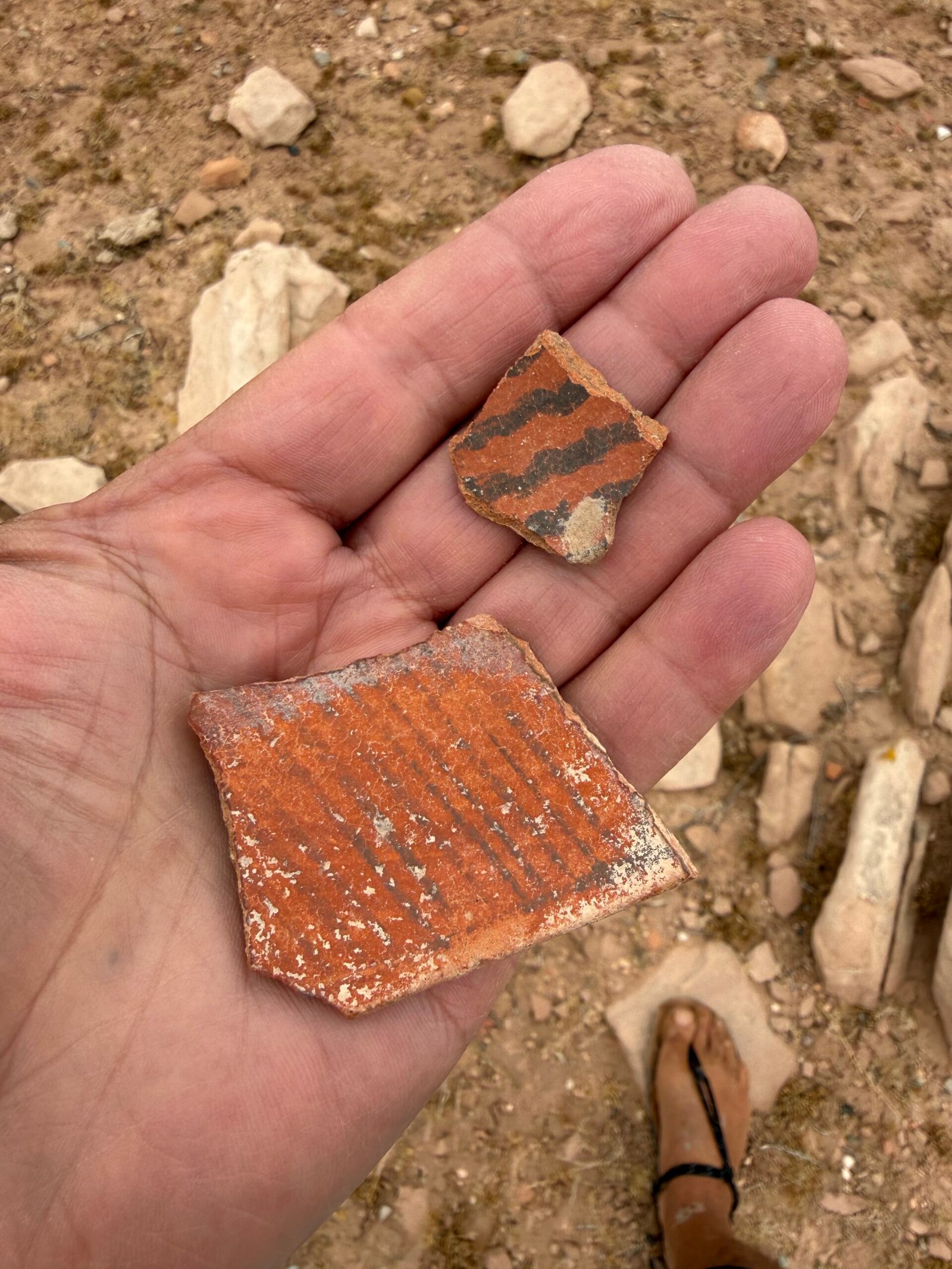
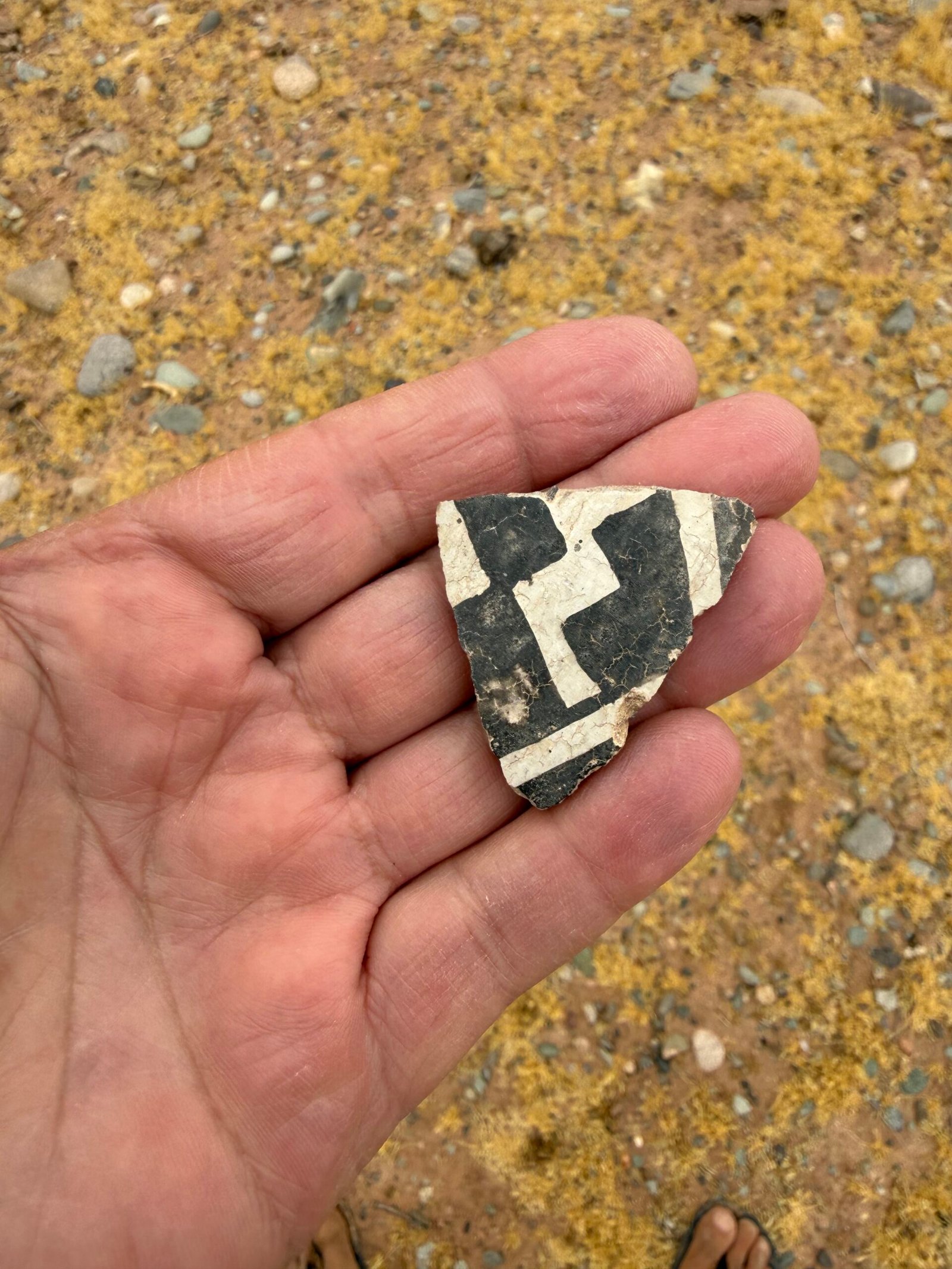
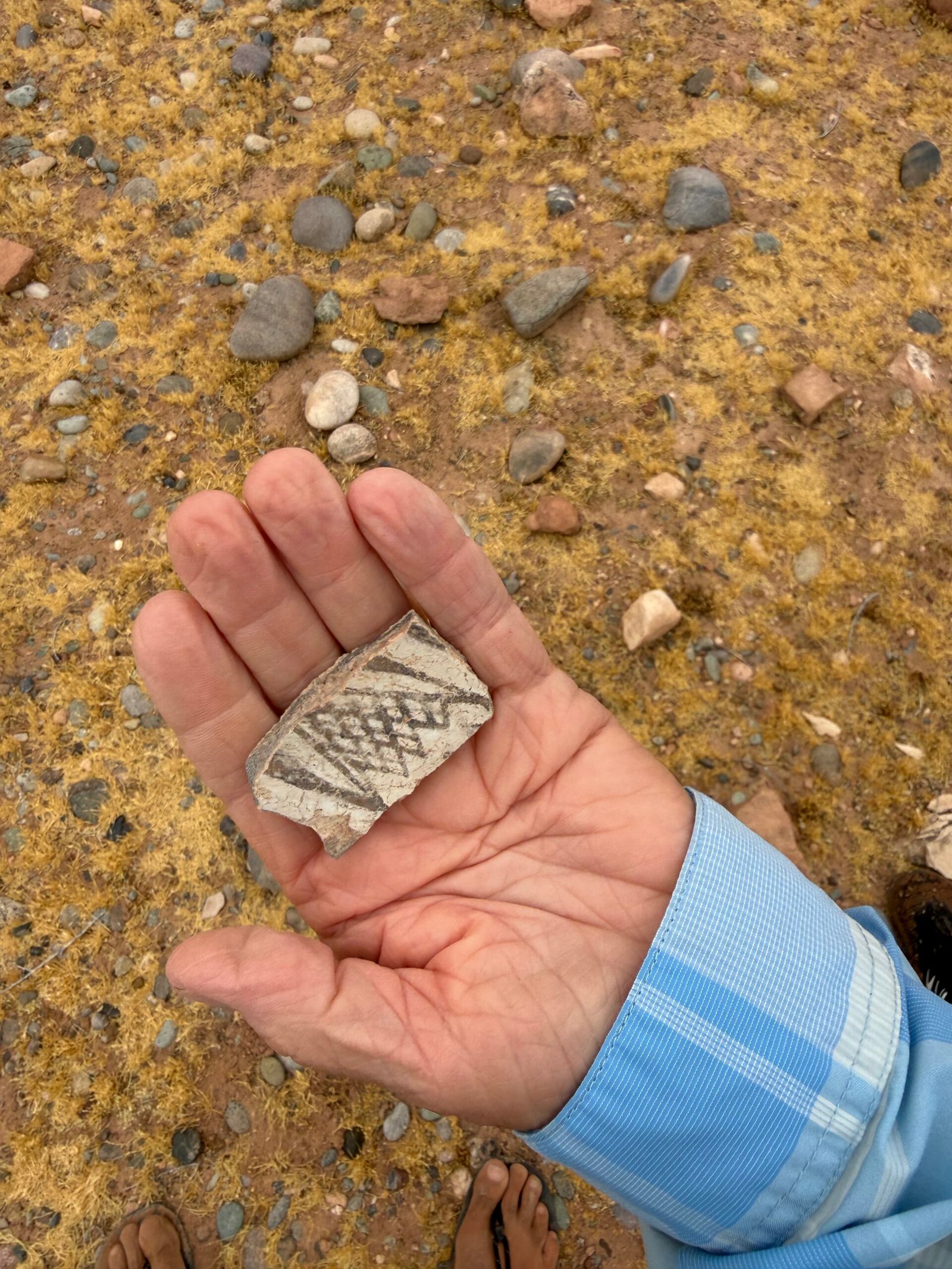
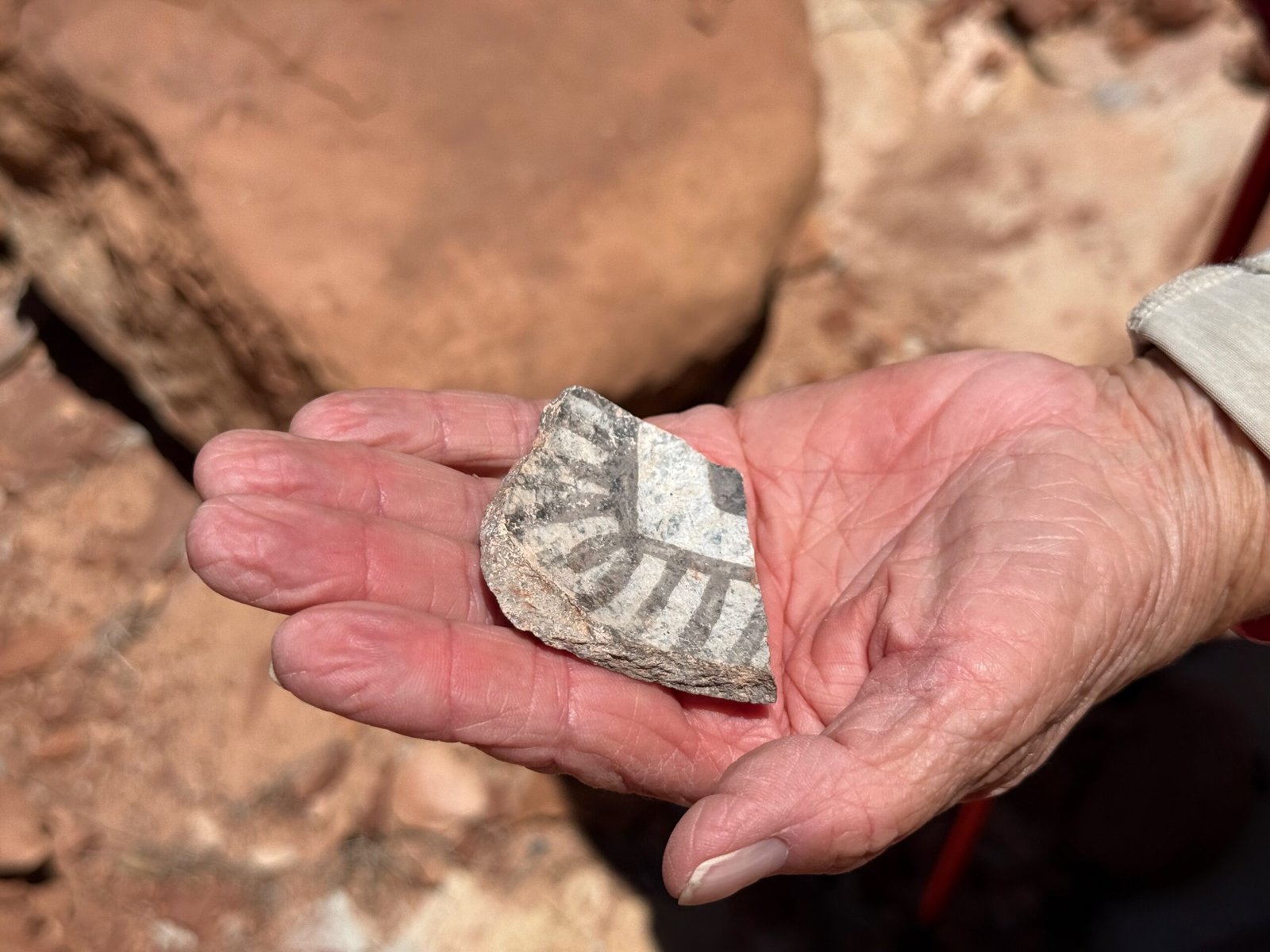
    These things are centuries old, and it is such a treat, a blessing, and a testament to our shared heritage to be able to walk up to one of these amazing places without fences, walls, windows, or rules in order to experience it! But even good intentions, such as the collection of pottery sherds, left at the site and put “on display” on a wall, erases the history of where it was used. Maybe for cooking? Maybe for ritual? Maybe because it was just a really bad build and it was on the trash heap? No way to pull that back once the pieces have been moved.


    And let me say something about our heritage. America is great, and it’s great because of its shared values. It’s great because it has been a beacon of hope to all peoples and all cultures. It’s great because it’s a democracy where everyone has a voice. The Statue of Liberty was donated by France in recognition of that greatness. You see, it’s our shared heritage that really sets us apart. A melting pot where it mostly melts, but savory chunks remain. Who wants creamed corn? Ugh. But it’s always work and always a challenge. Winston Churchill once famously said (paraphrasingly), “A democracy is the worst form of government possible…except for all the other forms of government.”

    A revelation for me occurred on our trip to Bears Ears this year. We typically try to find audio books for the journey that are relevant to our destination, and our choice this time was 1491 by Charles Mann, a discussion of what the Americas were like just before Columbus landed (known as the pre-Columbian period). It’s a fascinating listen. One thing that popped out was the Indian belief in absolute personal freedom. This was pretty much universal across the Americas. Another is how extensively populated and managed the Americas were. There was a tremendous population decline due to the diseases that arrived with, and many times ahead of, the arrival of the europeans.

    The culture challenge also struck me a couple of years ago when Patricia and I listened to the Hopi Survival Kit, a very quirky book by Thomas Mails that turned out to be both tedious and quite amazing. It relayed the story of how the Hopi would not compromise their beliefs and were the last of all the tribes to submit to the U.S. government’s attempt to “educate” the youth by transferring them all the way to Pennsylvania to the Carlisle Indian School. This is the place where they could no longer speak their native tongue, would have their hair cut, would be taught “proper” religion, and generally would be “rehabilitated” into modern “civilized” society. You see, “reservations” were supposed to be temporary. Once the red man was indoctrinated and educated from his “savage” ways, he would be absorbed into the culture and the reservations dissolved (to the highest bidder I am certain). Similar to the story of the diaspora of the Jews.

    Did you know that, because of their resistance, our U.S. government manipulated the Navajo with land acquisitions and favoritism to eventually surround the Hopi on a reservation much smaller than their heritage? The Hopi would still not compromise their beliefs, and in 1895 nineteen Hopi Elders were rounded up and sent to the maximum security prison Alcatraz because they refused to send their kids east to Carlisle. To lose one’s language is to lose one’s culture, and they knew it.

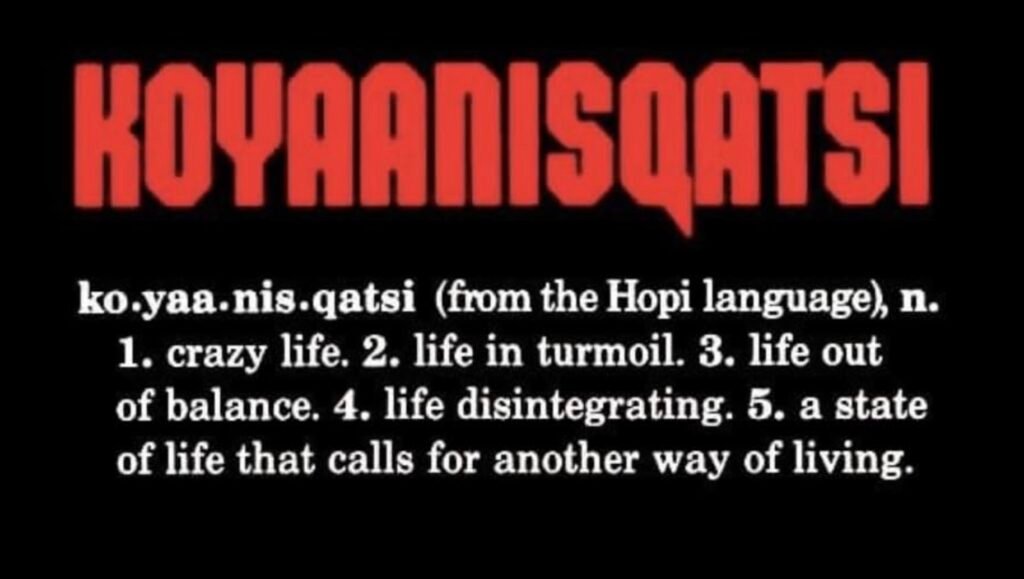
    In the northern U.S., the Potawatomi people were moved out of the Great Lakes region along the 1838 “Trail of Death” to Iowa, Kansas, and Oklahoma. Robin Kimmerer, a Potawatomi, has written several excellent books. In Braiding Sweetgrass, she relays some of the differences in cultures and how language is key. The Potawatomi language is ~75% verbs. Contrast this with the English language where it is ~75% nouns. For the Potawatomi, the English word “lake” or “river” means “to be a lake” or “to be a river.” This is a startling difference in world views. And it makes sense that our English culture is more focused on objects, material possessions, and the acquisitions thereof. It is something to think about. At the very least you can see the shock involved in losing your language. What if we today were to think in actions rather than objects?


    In my humble opinion, our country will be much richer if we learn from our past mistakes and embrace the many cultures that have added to what we believe our great nation to be. To not do so is to follow the path of every failed society in history, it’s just a matter of time. And honestly, as we look to celebrate 250 years, we should also understand that many of these cultures lasted far longer.

    It gets real, real fast.

    And now, a breaking story from the BEEC just today:

    A middle-aged hiker came in today. Before he left, he sheepishly shared his story. I think this is because he is obviously an experienced desert hiker, and while knowing it may be a bit embarrassing, he felt it necessary to share what happened so that others could benefit.

    He started his hike on May 10 at 6:45am with plenty of water. Dropping into a canyon, he was doing pretty well so he decided to reach for Grand Gulch. Around 2pm the heat and boulder climbing on the way out took their toll. These canyons are not necessarily deep but they are rugged, and much like the Grand Canyon, once inside they are like ovens. Slipping in a section of slick rock, he fell and heavily scraped his arm and leg, bumping his head in the process. Even with plenty of water, the heat and effort of the climb induced heat stroke. The man was smart, and while monitoring his heart rate at 140, he worked 20 yards at a time with 10 minute rests (shade to shade). But he began throwing up, and he was losing the water that was vital for his survival. Fortunately, he finally made it out around 8pm and drove back to camp. He stayed in his tent all the next day recovering. While his desert experience and carefulness actually saved him, he knows all too well that he was close to losing his life. A lesson that he will never forget.

    Weirdly, one of the next persons that came into the BEEC had forgotten his map with all his annotations. Unwilling to buy a new one, he asked for help on trails in the very same area. I pulled out a desk copy and he surveyed the loop he wanted, trying to commit the trail to memory and wondering out loud if the Grand Gulch portion was well-marked. He was an older, and obviously experienced gentleman, so I relayed the story I had just heard. “Well, he obviously didn’t know how to drink his water!” I expressed that the hiker was experienced and I tried to make the impression that the intensity of the sun is much more than the temperature alone may relate. Maybe he will take it to heart. You can lead a horse to water…

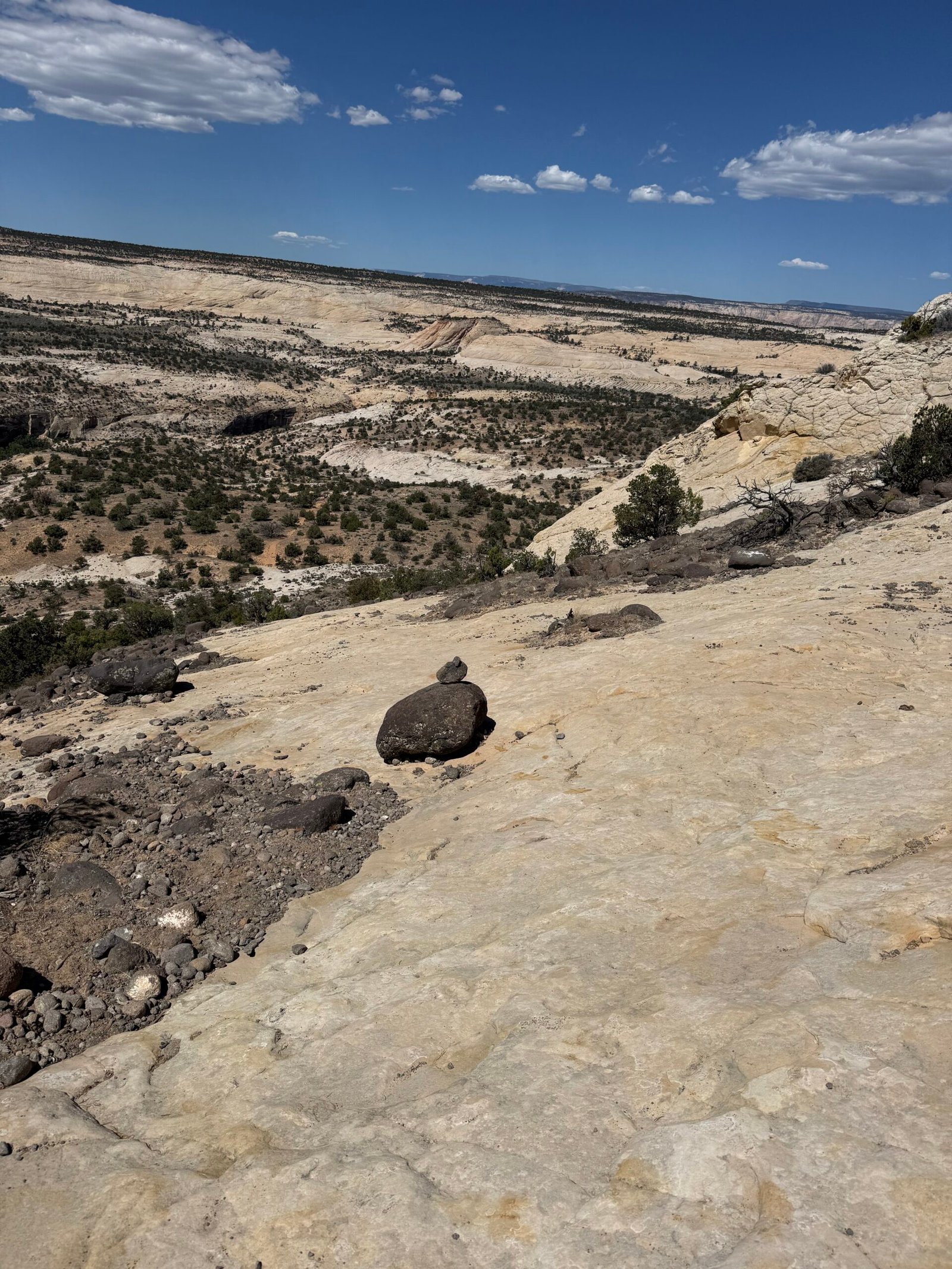
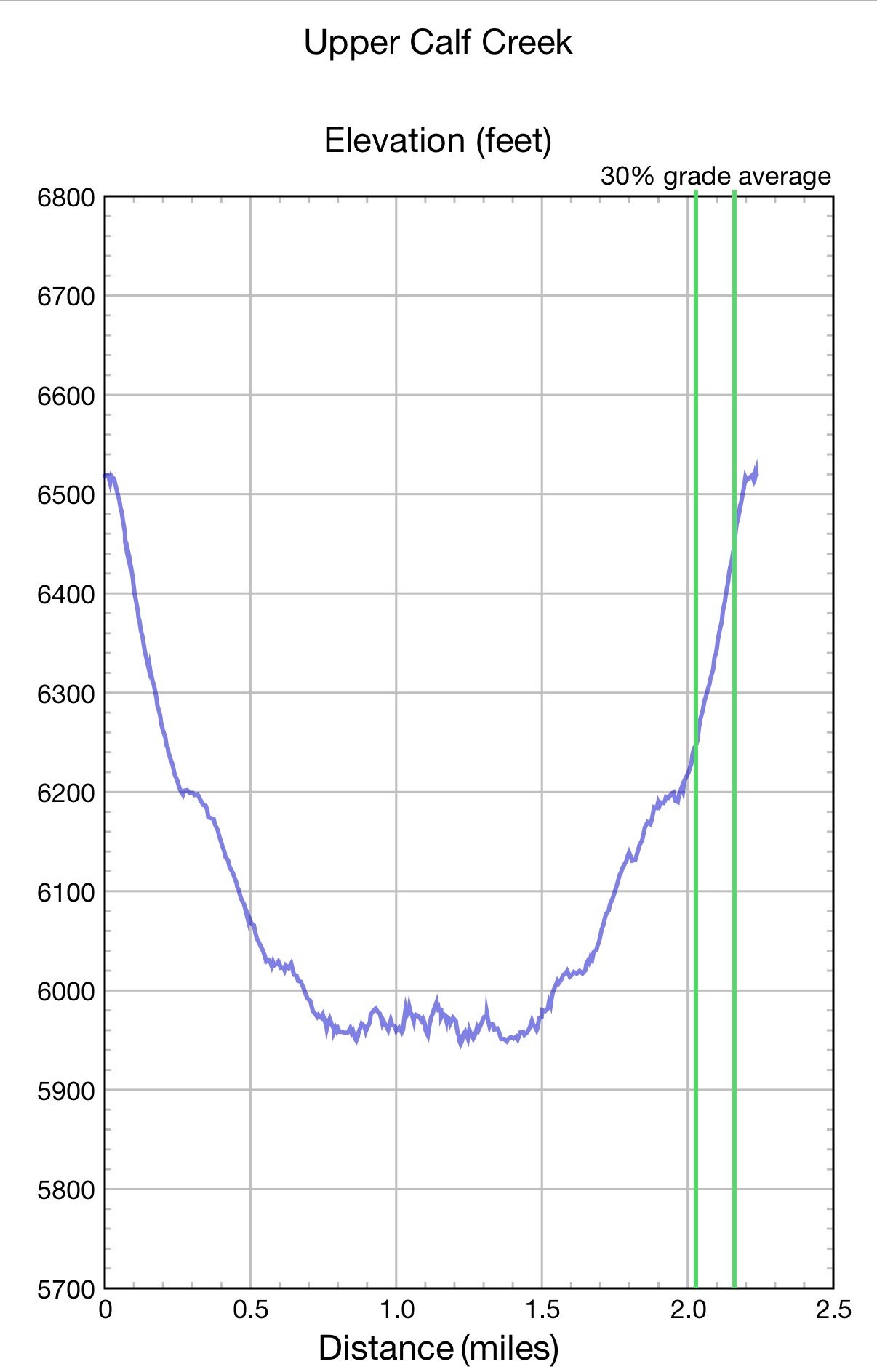
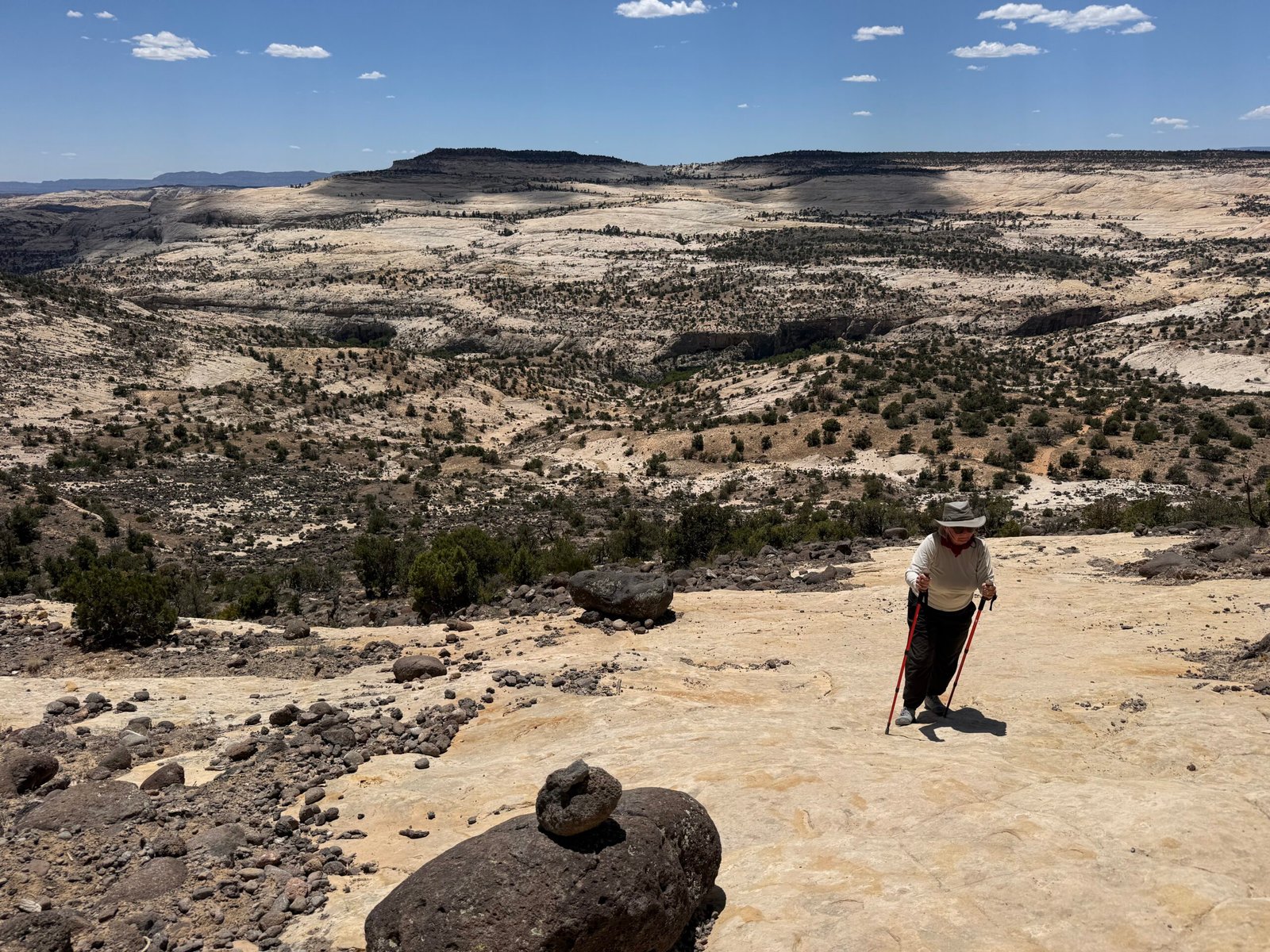
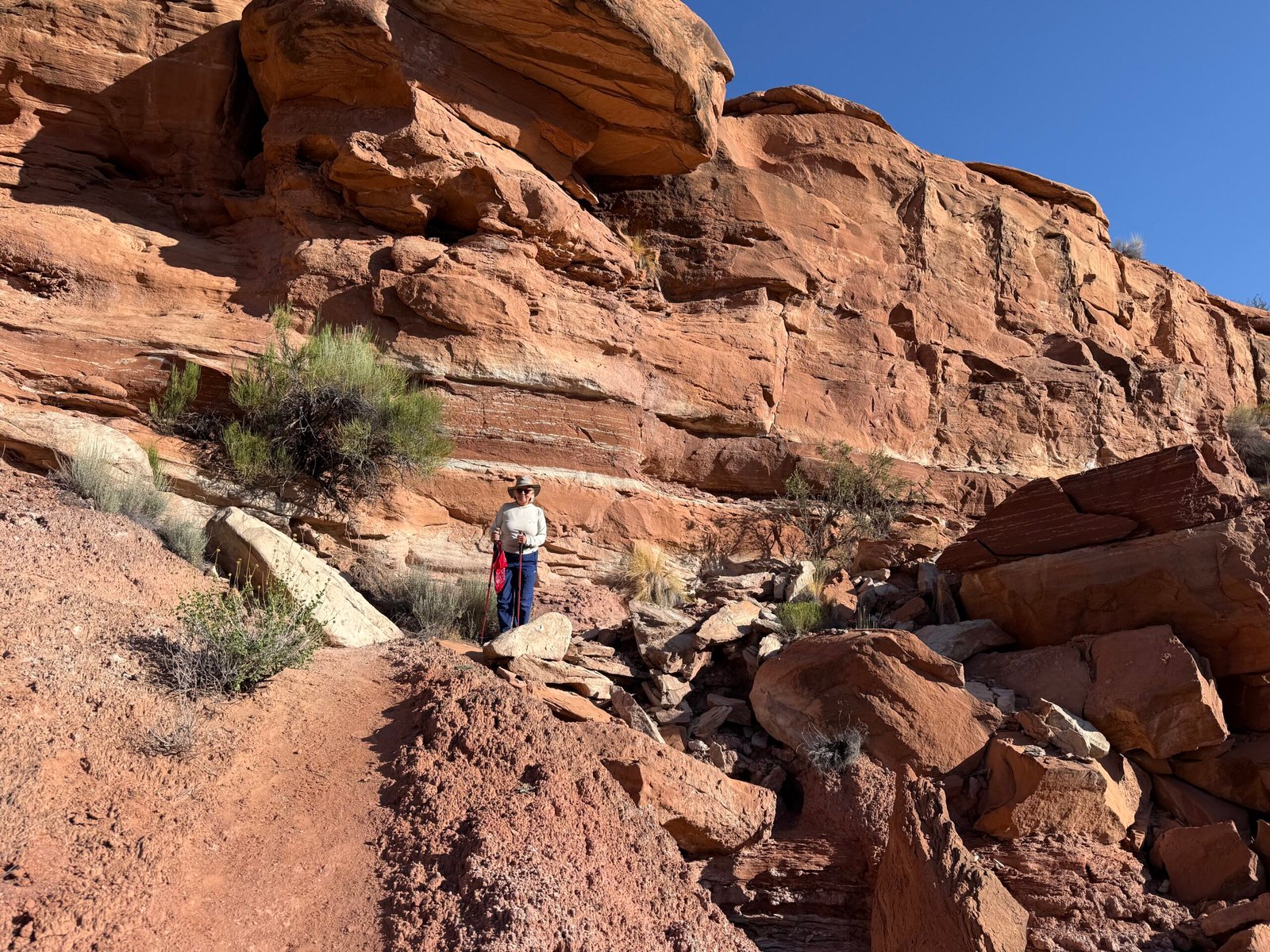
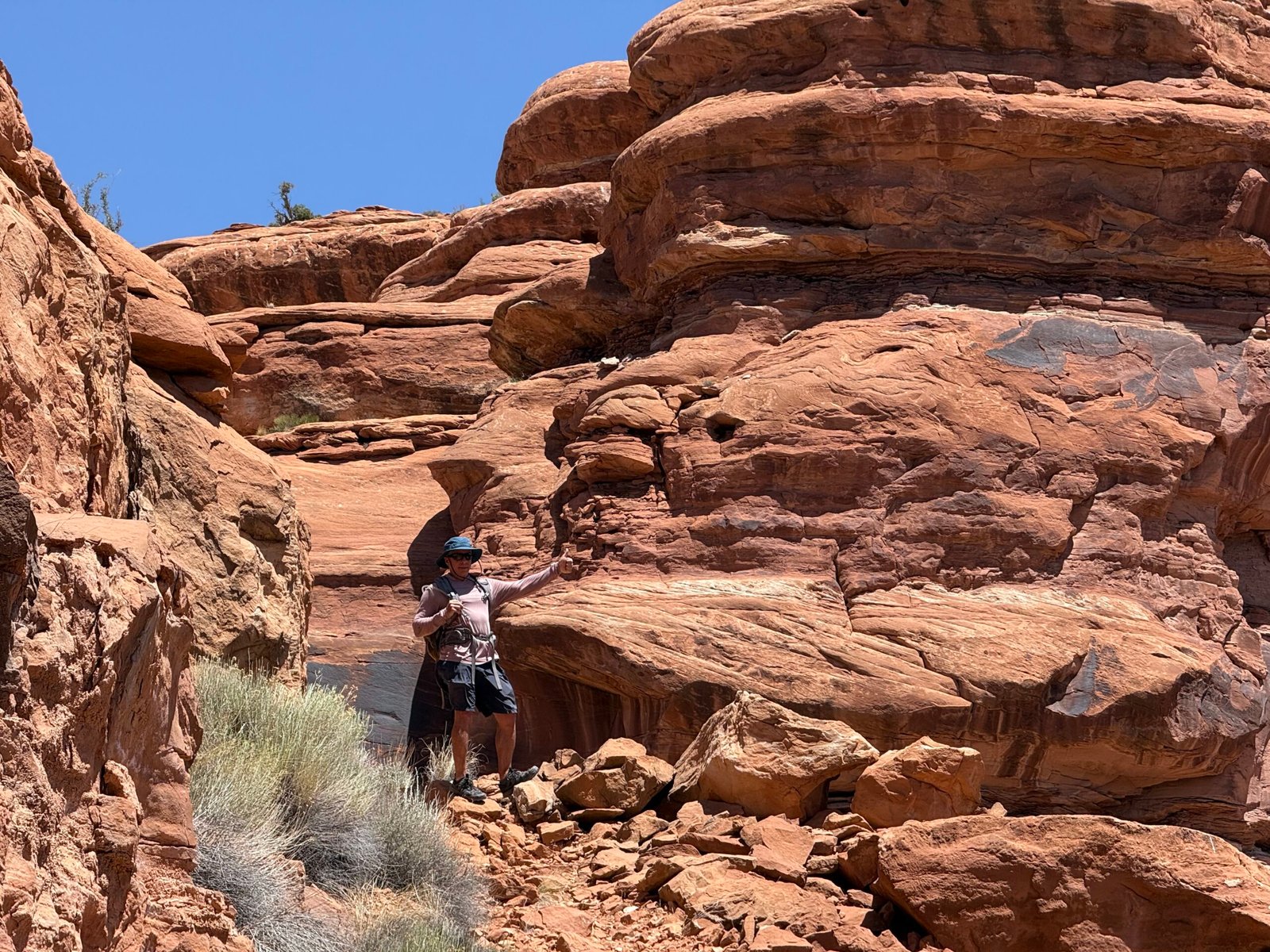
    This give you an idea of the terrain and shade. In this case, Patricia and Brandon are picking their way down in order to ascend the other side, zig-zagging to the top and paying careful attention to the guiding rock cairns.

    So what’s the surprise?

    Well! Our daughter Rachel was looking at possible flights here in order to team up with our grandson Whit and visit for a few days. While Whit had obligations, a little bug in Rachel’s ear kept her looking, and she found cheap tickets to Durango that fit her schedule. Needless to say, this altered our plans! But that’s the nature of it, and it was such a blessing to have her come out and see what the community is like. Did we mention that she is (nearly) five months with her first child?

    On the way to Durango to pick her up, I chose the “middle” route that rolls through some very sparse country near Hovenweap National Monument. At an intersection, I was surprised to see…a mailbox? It was legit, with a hefty padlock on the door! The mail must get through…

    Our Airstream sleeps four, but only if we break the dining table down, and even then it’s gonna be cozy. This obviously meant I was evicted to one of the tents we brought along (I chose the luxurious MSR “Mutha Hubba,” created after the popular “Hubba Hubba,” which was created after the even more popular “Hubba”).

    This tent Taj Mahal was complete with expansive floor space and extensive ant control. And by that I mean that the ants controlled it. They patrolled it in large numbers by day, walking all available surfaces looking for food or keeping ne’er-do-wells away from their nests. During the day they defended it as their own, but at each dusk the multi-hundred lot of them would retire to their dens and nary a cross word was spoke between us (per an unwritten protocol where the screen door was zipped tight, a lesson learned many moons ago in Tennessee).

    Rachel got a good taste of Bears Ears and life in Bluff. She met the BEEC team, she had Cow Canyon coffee, dined at Comb Ridge Eat & Drink, ogled fabulous indigenous artwork that mere mortals are hard-pressed to afford, explored the Comb, walked the wash, trekked to a couple of structures, saw the San Juan River, rambled through the Valley of the Gods, leaned over the Goosenecks, experienced the Moki Dugway, considered Mexican Hat, visited House on Fire, and reveled in some of the beautiful rock art and the mysteries they hold. Oh wait, I forgot about the quick drive through Mesa Verde and the visit to Edge of the Cedars Museum!

    The Goosenecks, there are more to either side!

    On the way back to the airport, Rachel commented on how she understood just how hard it might be to blog on the experience at Bears Ears.

    There are more tales to tell, but maybe this is enough for now.

  • Bluff

    Bluff

    #3 of  the series.

    I’d only met Joe Pachak once, and it was sad to hear that he had passed just a few months ago. But even in that brief encounter he left a lasting impression on me.

    This Saturday, we drove up to Edge of the Cedars State Park where they were hosting an indigenous art fair and a memorial for him. His imprint is all over the visitors center. The stucco walls of the interior are covered with rock art he has painstakingly replicated, pulling you into the liminal spaces where his friends said he lived. A plain stairwell now alive with the mystery of the ancients, a high panel above the lights in the room maybe bearing down on you just a little bit. Outside, playful and thought-provoking sculptures adorn the grounds. The Sun Marker, in particular, celebrates the liminal space the solstices represent, harbingers of lighter days becoming darker days, but also hopeful messengers of brighter times ahead.

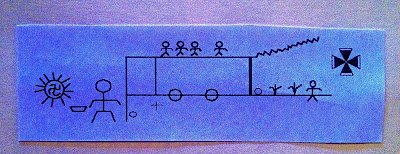
    One of the tributes included this slide, I’m guessing a fine summary of the man.

    I think Joe will live on, maybe in the ravens who, according to those that knew him, always seemed to be nearby. But I digress…

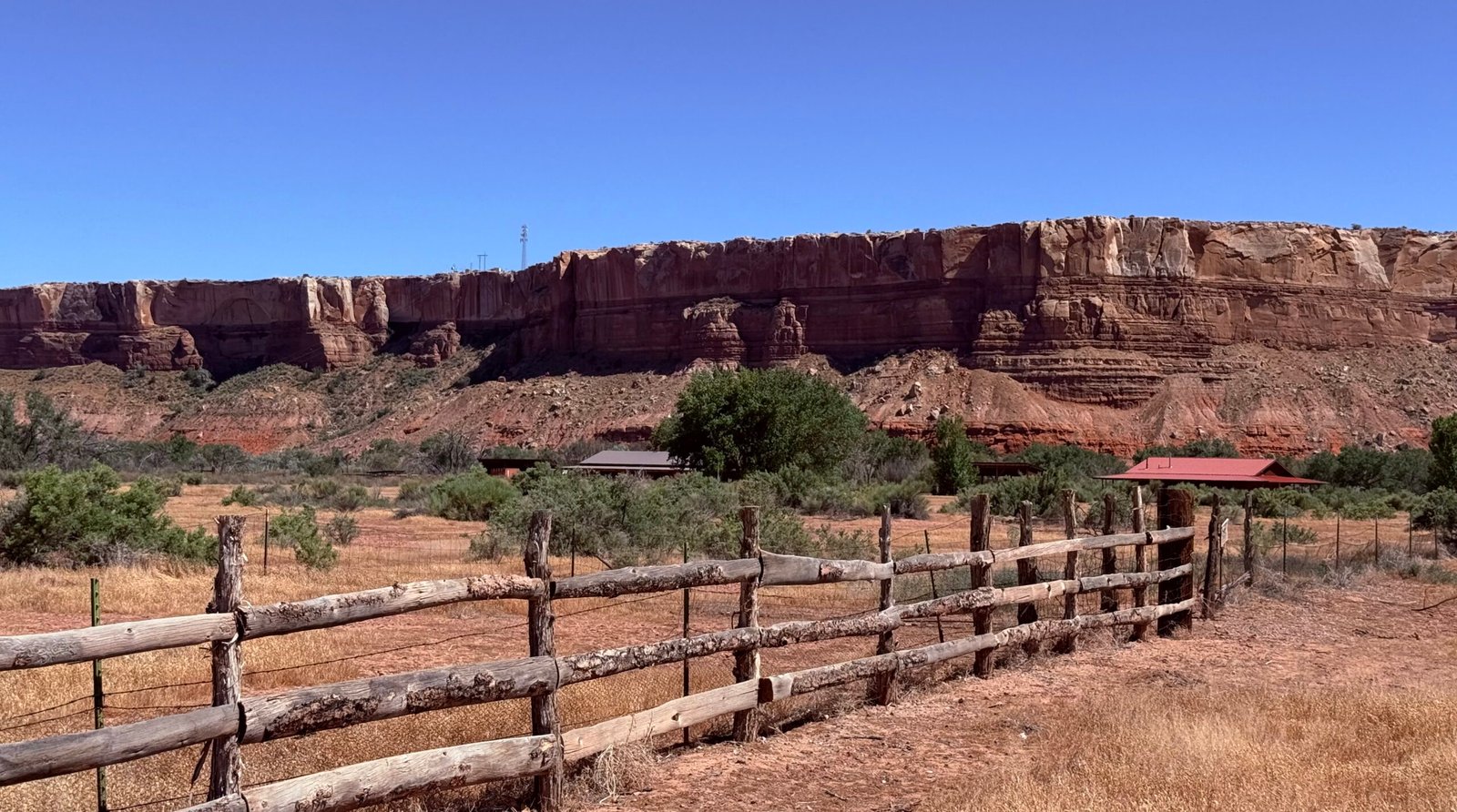
    The entrance “stone” for Bluff states that it was established in 650 A.D. The Mormons arrived in 1880, after an arduous journey from Cedar Flats, the only wagon train to ever travel eastward as I understand it. But the Chaco culture had established a community here dating back to 600 A.D. and constructed a public Great House sometime around 1100 A.D. So five centuries of occupation before even the Great House was constructed. The Mormons had nearly abandoned Bluff by 1930, apparently due to the short growing season and the overgrazing of cattle. Quickly becoming a town of “outlaws and misfits” as one writer puts it, Bluff has today evolved into a unique little community.

    I like it.

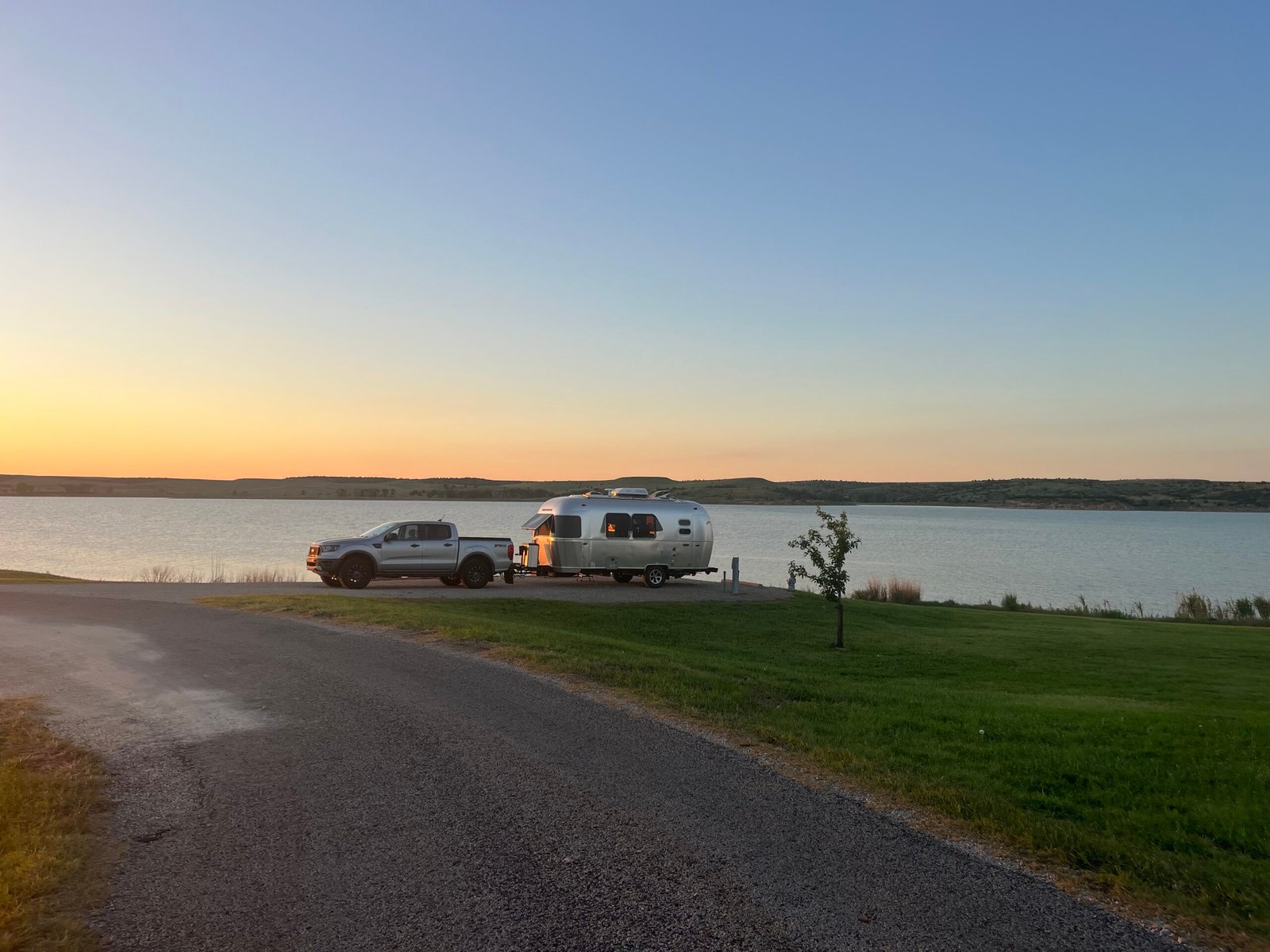
    And we have arrived! A leisurely 2700 miles through Tennessee, Kentucky, Indiana, Illinois, Missouri, Kansas, Nebraska, Colorado, and Utah. Not all who wander are lost, although I think we got close a couple of times.

    Before we started our new stint, we connected up with the BEEC team. Kirsten, Carolyn, Sarah, Semira, and Molly all welcomed us in. And we have a brand-new volunteer joining, camping next door in his truck camper. I say “brand-new,” but this man has wandered these canyons for a couple decades, and we are excited to join him this month. And since Brandon is going to split the schedule with us, we have even more time to explore area and Visit with Respect.
    So I’ll keep this post short as I attempt to transition from describing a traveling journey to perhaps a more spiritual and reflective one. It’s a challenge, partly because the days are full and flow by quickly, but also because I may entertain ideas and thoughts with which you may not agree or that may come across as more whimsical. There’s always a risk of sounding, well, silly.

    But then again, when I started a blog I made a decision that, if nothing else, it’s just for me. A way to capture memories and the feelings that surround them.

    So let’s see where this goes.

  • Rabbit Valley

    Rabbit Valley

    #2 of  the series.

    Maybe it was the Trail through Time trail. Maybe it was what appeared to be just a few widely-spaced primitive campsites on top of the mesa. Or maybe it was $20/night cut to half-price for being old. Whatever it was, we booked a couple of nights to give us a little breather.

    Rabbit Valley campground is split by I-70 and is about two miles from the Utah state line. The southern half is apparently more for OHV and horse camp setups, while the northern part seems to be better suited for smaller rigs and the MTB crowd. We chose the mesa and had just incredible views all around. Nice and clean and quiet. This was the first and only time we unhooked the trailer from the truck in our two weeks west.

    We learned that we were overlooking an active dinosaur quarry (the Mygatt-Moore Quarry) and that the interpretive loop trail worked its way along the Morrison Formation, perhaps the richest dinosaur fossil layer in the world.

    I was a dinosaur fan before I could read. There was just something fascinating about these “terrible lizards” in all their many species and forms. To imagine how these beasts walked and thrived on the earth for so many millions of years was just so cool. But over time it all became more abstract and distant. The arrival of the movie Jurassic Park in 1993 helped rekindle that fascination.
    There were just a handful of fossils on the Trail through Time loop, but they were BIG fossils. The diplodocus vertebrae embedded in the rock just jarred me. A single vertebra the size of a five-gallon bucket. Part of an animal that by reasonable estimates was 70 feet long and easily weighed over 20 tons.
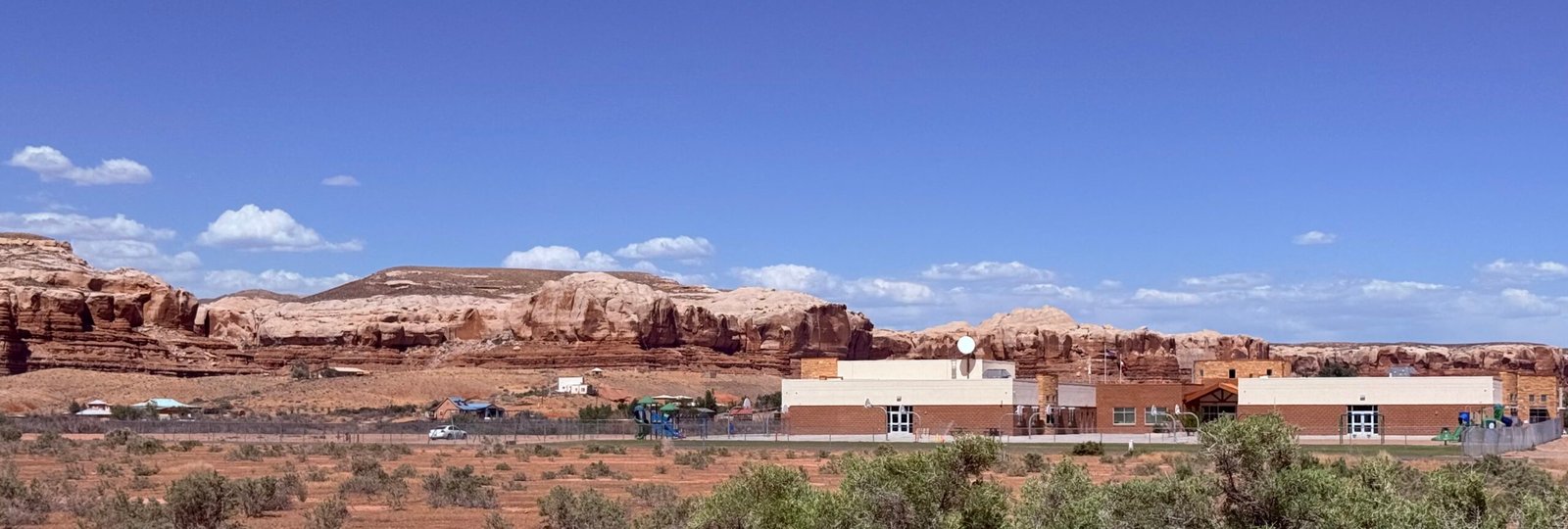
    The Rabbit Valley campground is near No. 8 on the list, near Fruita.

    And then we saw the kiosk titled The Dinosaur Diamond. It described a 500-ish mile loop through NW Colorado and NE Utah, complete with a legend of the waypoints. Hmmmm…what are the possibilities? That night we watched Jurassic Park.

    While investigating a trailhead, we met a local couple who thought that Rabbit Ears would be better for us, since this was our first time in the area. A loop hike atop a mesa with views of the Colorado river. They were right! Just what we were looking for on a lovely day.

    Wind and rain were the rule for Sunday, so we took some downtime and did a little planning. We decided to reserve a few more days, upping our two-night stay to six. The solar power system was working great, but we were beginning to push the limits of our tanks.

    A strong storm front manifested itself near dusk, with 40 mph gust really rockin’ the camper. As it passed through, Patricia’s eye caught the beginning of one of the best rainbows we’ve ever seen. And in a moment, it was gone!

    That evening we laid out a plan to hit a few spots along the eastern part of the Dinosaur Diamond loop. Swing up to Rangely, west to Dinosaur National Monument and then turn back, hitting as many locations as we could. It was going to be a long day and several hundred miles, but who knew when we’d be back this way?

    With an early start on a chilly, blustery morning, we hit Colorado highway 139 heading north to Rangely. This is when I learned that in Colorado one should also look up the “Indian name” of the road. Especially if it includes “pass” like “Douglas Pass Road.” After rolling an hour through flat country, we began to climb and it began to snow. The temperature dropped to freezing and the road was disappearing fast. We had no cell coverage and no mapping available. There was a sign that said “Avalanche Area.”

    With 4WD, we should be able to make it, right? But what if it keeps snowing? We’ll be a long way from the camper and the only other route will be over 300 miles back. Yeah, Shakespeare said it best, “The better part of valor is discretion.” We turned back (we found out later that the pass had been closed until the snow plow could clear it).

    Switching our days, we checked out a few sites around Fruita. Riggs Hill, Dinosaur Hill, the Fruita Paleo Loop trail, and the Dinosaur Discovery Museum made for an amazing day! And that night we watched the second Jurassic Park movie. And it was so.

    The picture shows a life-size reconstruction of a T-rex leg. The wall behind is about 8 feet high. Paleontologists debate whether T-rex could run or not.


    With that stride, would it really matter?


    And you just never know what else you will find. Did you know that Fruita, Colorado is know for Mike the Headless Chicken? It’s almost too bizarre to consider! Feel free to read about it on Wikipedia if you dare!

    I am not sure how I feel about the whole thing! Which is more weird? A man that decided to dropper-feed a headless chicken for 18 months? Or that people were so amazed that Mike became a national sensation, with the brainless wonder pulling in over $60,000 a month (in today’s dollars)!? Fruita continues to hold a yearly festival the weekend after Memorial Day for Mike!


    Whew, enough of that.

    Okay, we did our research and found that the State of Colorado has a pretty nifty road conditions system complete with webcams. The system also tracks the snow plows! Just some of those tax dollars doing good things for us.

    A quick look the next morning showed our plow team already heading north up Douglas Pass Road (otherwise known as state route 139). And the weather was both warming and clearing up.

    We checked out a few pictographs in Cañon Pintado, and then made a beeline for Dinosaur National Monument, the crown jewel of the Diamond Loop.

    While the monument is big, our time was limited and it was the quarry site that had my main interest. At the visitors center we were warned to watch out for the construction at the quarry. Rolling in, we saw the digging in the newly-paved parking lot. Walking to the quarry, we realized that the construction was actually a dinosaur dig site! Three paleontologists were extracting and prepping a large bone for removal.

    I asked one, “Did you just run out of places to dig?” She smiled and replied, “Well, it’s close to the restrooms.” She then explained that when the parking lot was being remade and enlarged, that more bones had been found and extracted. This was the last little piece and would be paved over soon.

    The quarry is unique in the world. Here, an ancient river flowed fast enough to sweep the small bones away but the largest were deposited in a “logjam” of giants. Excavations started around 1902, but around 1940 a new idea was considered. What if the face of the rock layer could be cleaned to show the many bones, leaving them in place for all to see? A building was placed over the site and over the next 40 years(!) the rock was slowly and painstakingly chiseled around the bones. Today you can see over 1500 bones from dozens of species. It’s a truly incredible sight to see (and if you are smart, like me, you will take your binoculars 🙂 ).

    Before we left, the clouds rolled in, the temperature dropped, and it began to rain.
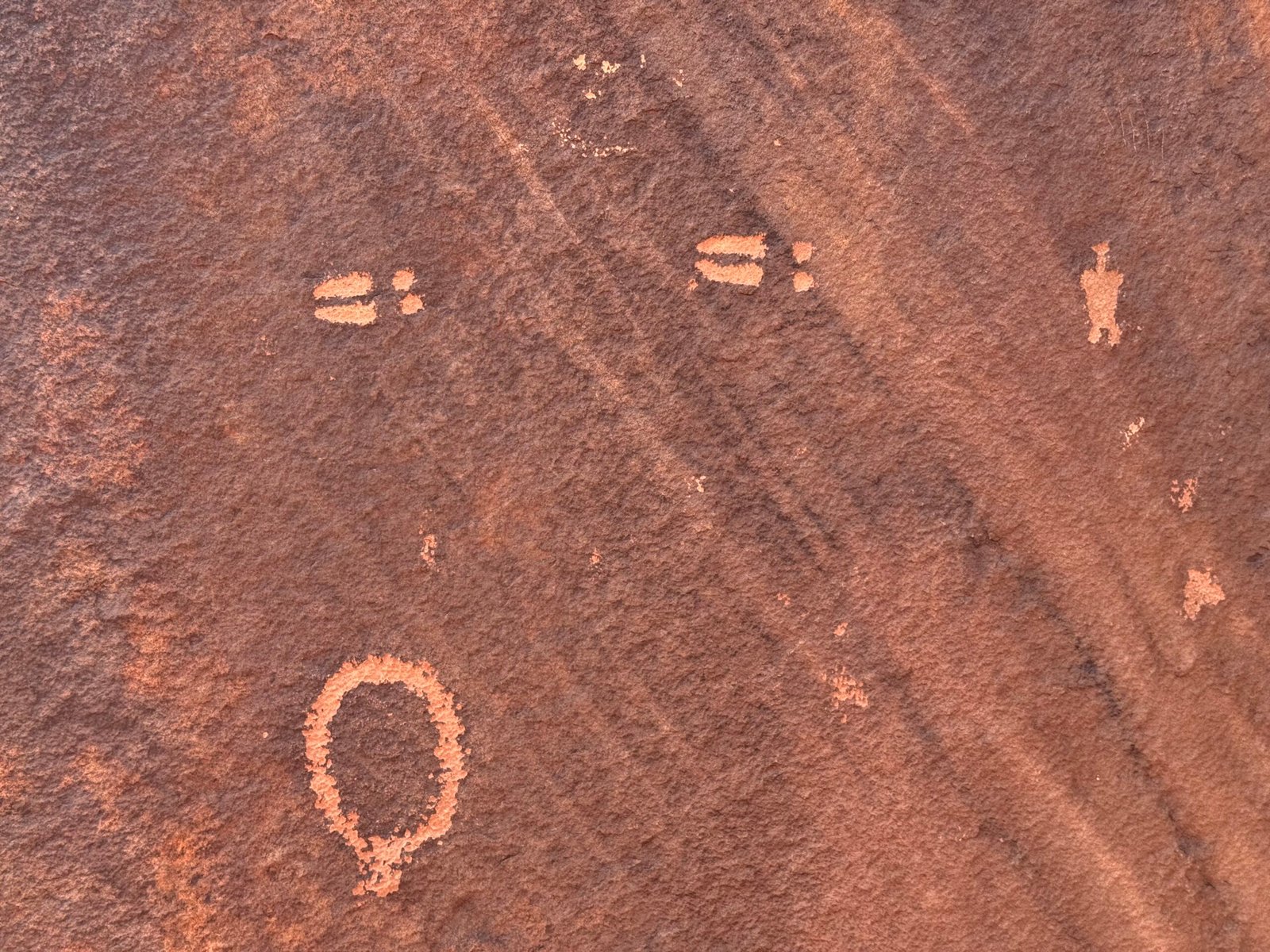
    Outside, the paleo team had pulled a tarp over the dig…and were happily working away underneath.

    Vernal, UT is the home of the Utah Field House of Natural History State Museum. Another wonderful stop with a variety of fossils including a saber-tooth herbivore?!

    After lunch we burned our way back down Douglas Pass road, made camp and started packing for Bears Ears. By morning the wind had calmed, the skies had cleared, and it was time to move on.
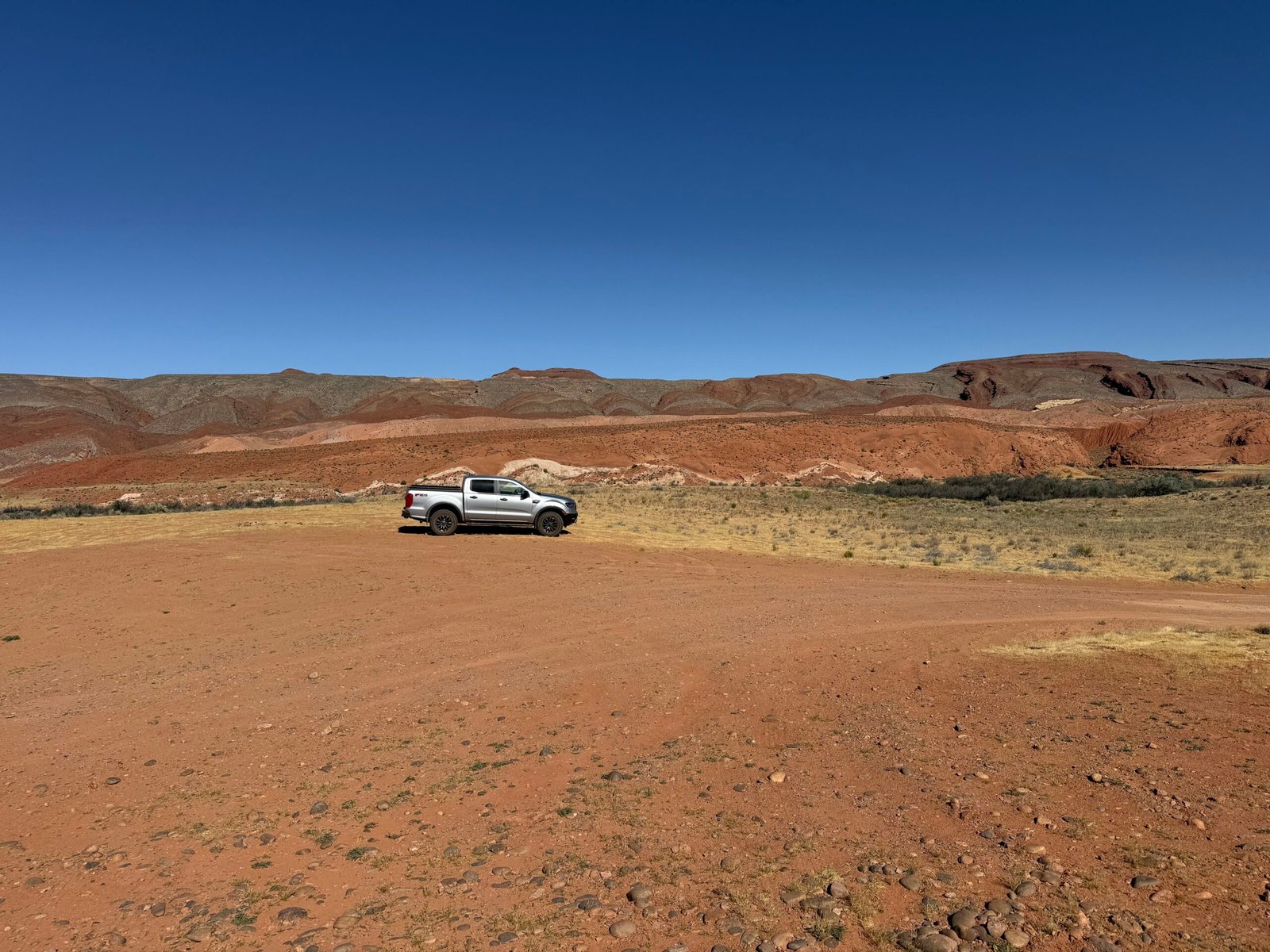
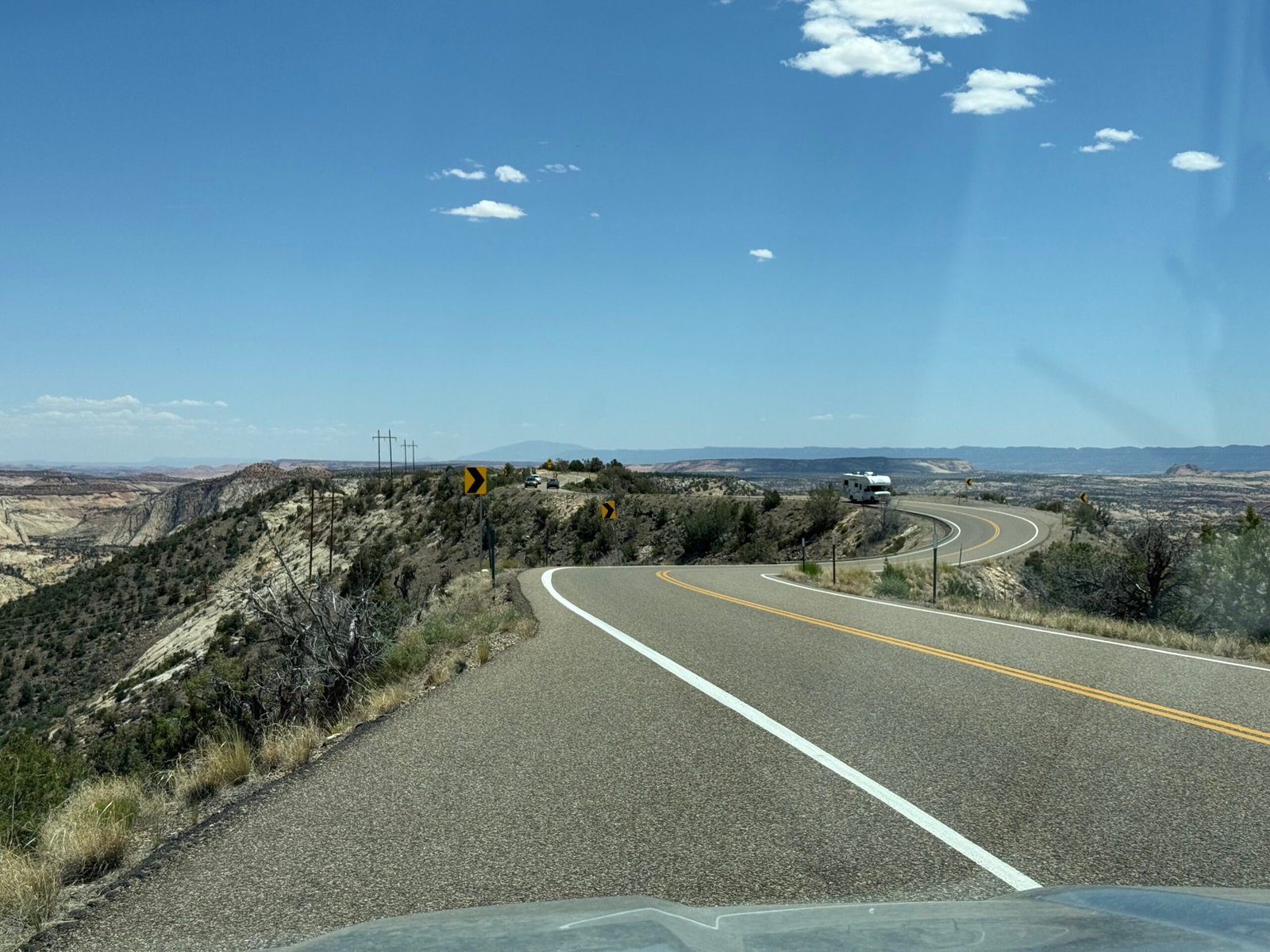
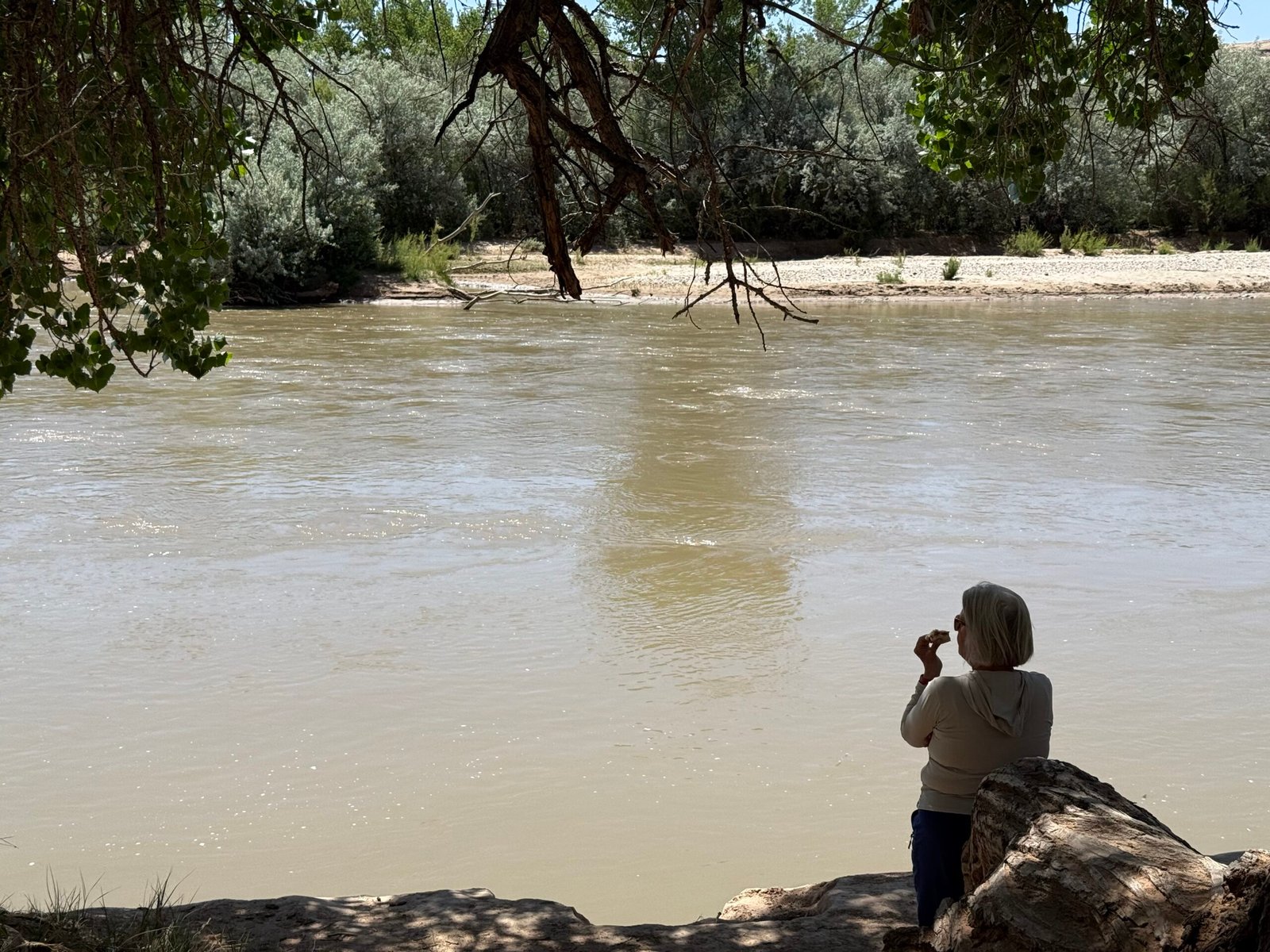
    Going to Bluff today! We turned off of I-70 and onto Utah highway 128 along the Colorado River. They say it’s a scenic byway, you decide.
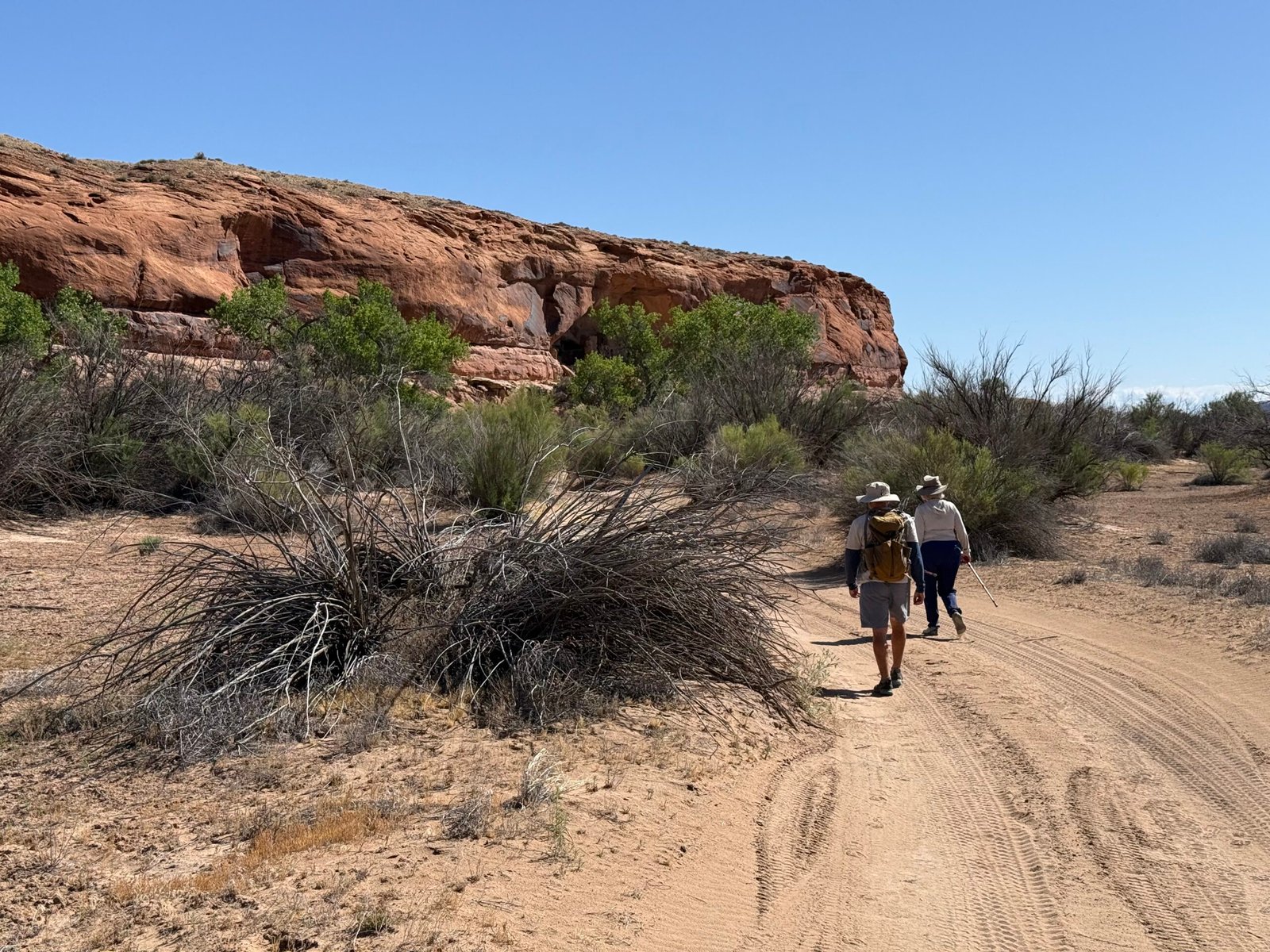
    The road carried us into Moab, where we briefly considered stopping. Nah. Nothing to see here…