#5 of the series.
A BEEC Visitors Center volunteer’s worst nightmare: a long line of people all buying myriad stickers of different sizes. It could happen. It did happen. The Bears Ears Partnership operates the Canyon Country Youth Corps, giving young people opportunities for service projects in the area.
Remember in my last post where I discussed the open-range cattle? Well, apparently the VWR ambassadors reporting about this area guided a work project to fence off a set of structures, and this work team was gearing up to tackle it. And of course having the youth around the Center’s merchandise resulted in a “feeding frenzy” just before the work van was to leave for the morning! But Patricia sailed through it (no cash transactions with these kids) and no laborers were left behind.
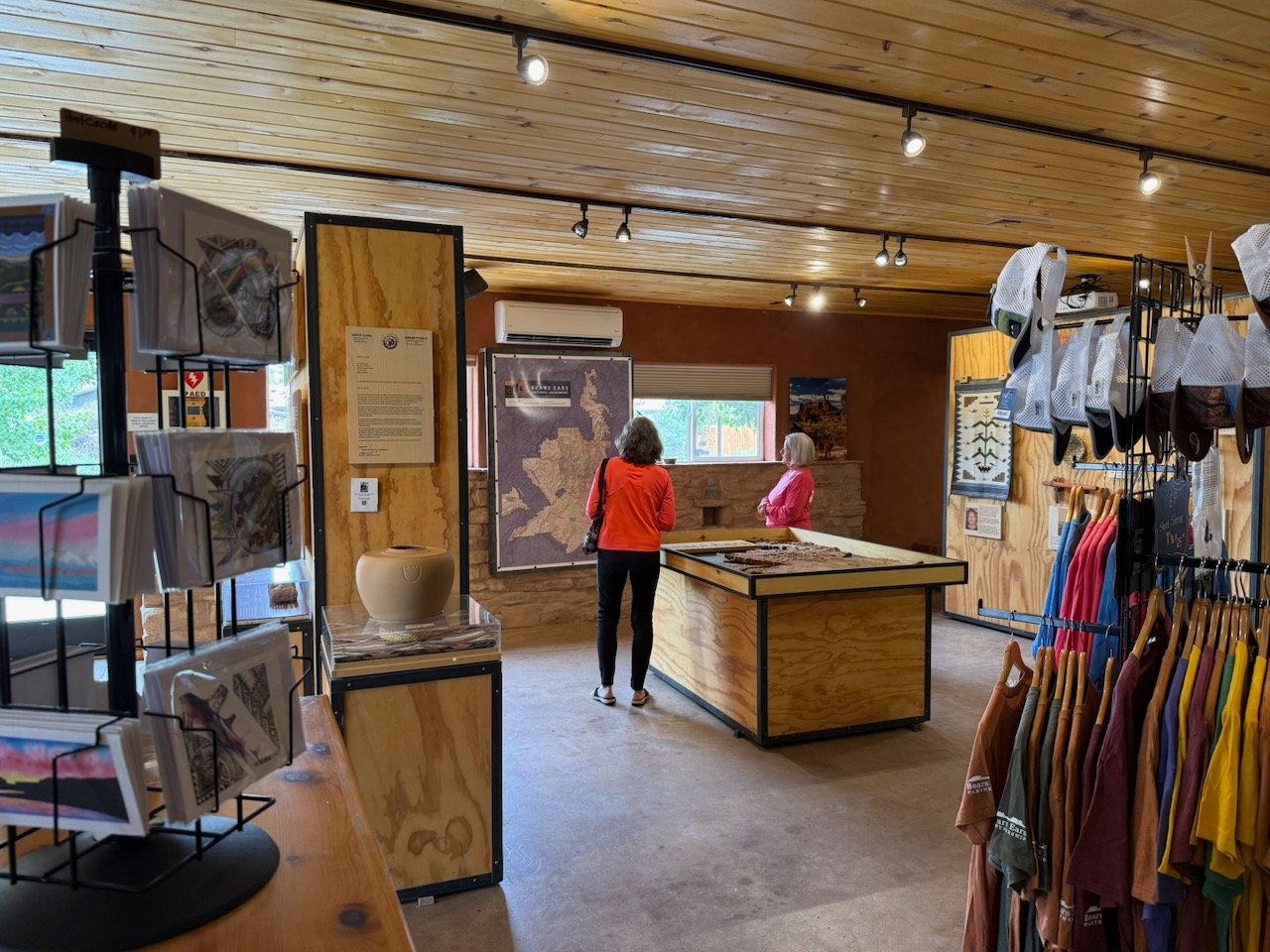
We always meet interesting people here at the BEEC. Bluff is a nice waypoint between Moab and Monument Valley. As for international travelers, the French seem to be in the lead this year. And of course folks from all over the United States. We’ve even met folks we saw last year, one couple even came by the camper when we were off duty just to say hi.
“What’s your tribe?” was a question this week. “Oh, a bit of Cherokee,” I replied. “My husband is Assiniboine, we’re from Montana,” she said. And we just had a lovely conversation.
I have to confess that I kinda maybe broke a rule. I have mentioned that the BEEC is more about how to visit as opposed to where to visit. And we have a short list of places that the Partnership is comfortable sharing, for various reasons. These sites are located on the map that we typically hand out. But the truth is that a simple internet search will bring up a wealth of websites showing lots of other places. And so it is a challenge. Many of the websites are influencer-typical and hype about hidden secrets and such and are more interested in profits than protecting the landscape or respecting the people. But some are much better, revealing more than is liked, but also talking seriously about Visit With Respect and the details of the trail. And trail details are important, it allows people to gauge the difficulty, but it also helps to keep people from getting lost and creating dead-end side trails that encourage others to wander that way and destroys the fragile cryptobiotic soil crust. So in general, if a visitor comes in with a destination in mind, it is considered acceptable to help them get there safely or possibly redirecting to something else, depending on an educated guess of their aptitude and goals. We always want to make sure they understand how to visit. But it is, after all, public land.
Three elderly ladies came in, attired in the gear you might expect from folks comfortable with desert hiking. Broad-rimmed sun hats, lightweight long sleeves and pants, well-worn shoes. And they were excited. They’d been in the area for a couple of days with a couple more to go and wanted to make the most of it.
“We’d like to find hiking nearby!” a bright-eyed little lady smiled.
“My advice is free, and worth every penny.” The smile turned into a big grin, apparently she was the organizer of the three.
They had been to House on Fire, and even though the walk is pretty easy, one had struggled with the slick rock at the site due to knee pain. So they were looking to do hikes with a little less technical difficulty, even though they really enjoyed the backcountry hiking and seeing the structures and artwork.
I really wanted them to enjoy the area without having to drive a long way for some of the other sites on the list. And I wanted them to find something they were comfortable with and they could safely do. But we don’t really have good trail information for the area between Bluff and highway 95 to the north. Our guidance is a bit sparse in that region.
I said, “I did not tell you that you can search for things in this area online. And I did not tell you that there are some nice trail descriptions to help you determine what you can do.” After all, we’d just had a good talk about Visit With Respect. One lady jotted down a couple of notes. “Okay, we really appreciate you not helping us,” again with a grin.
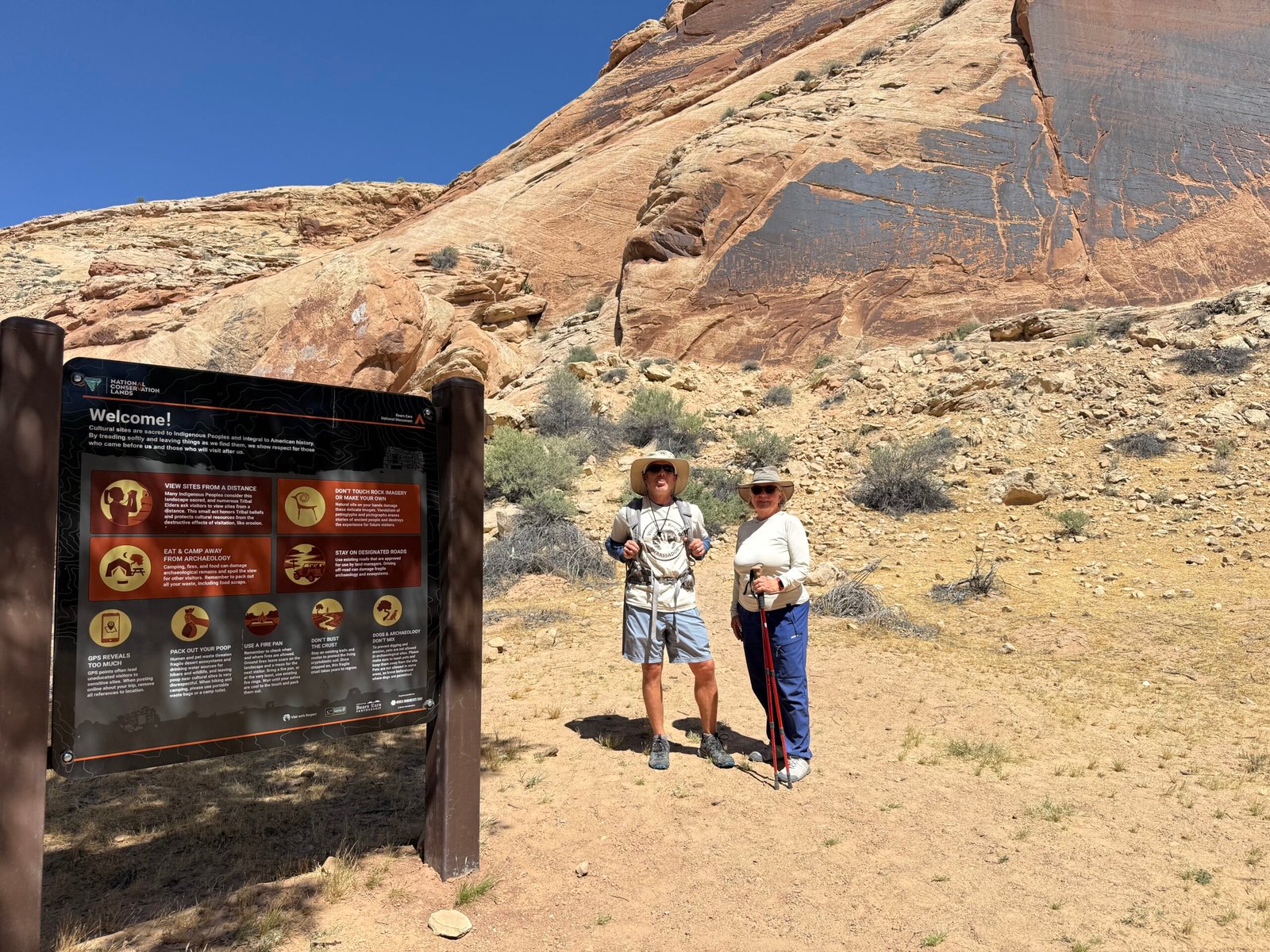
For Rachel’s visit, we wanted to show her a good smattering of this vast place, but we needed destinations that were close, had some shade, and we could complete before the heat of the day (remember, she is with child). And the best way to do that was to look online for good trail descriptions. We found one up the wash road and set off early in the morning.
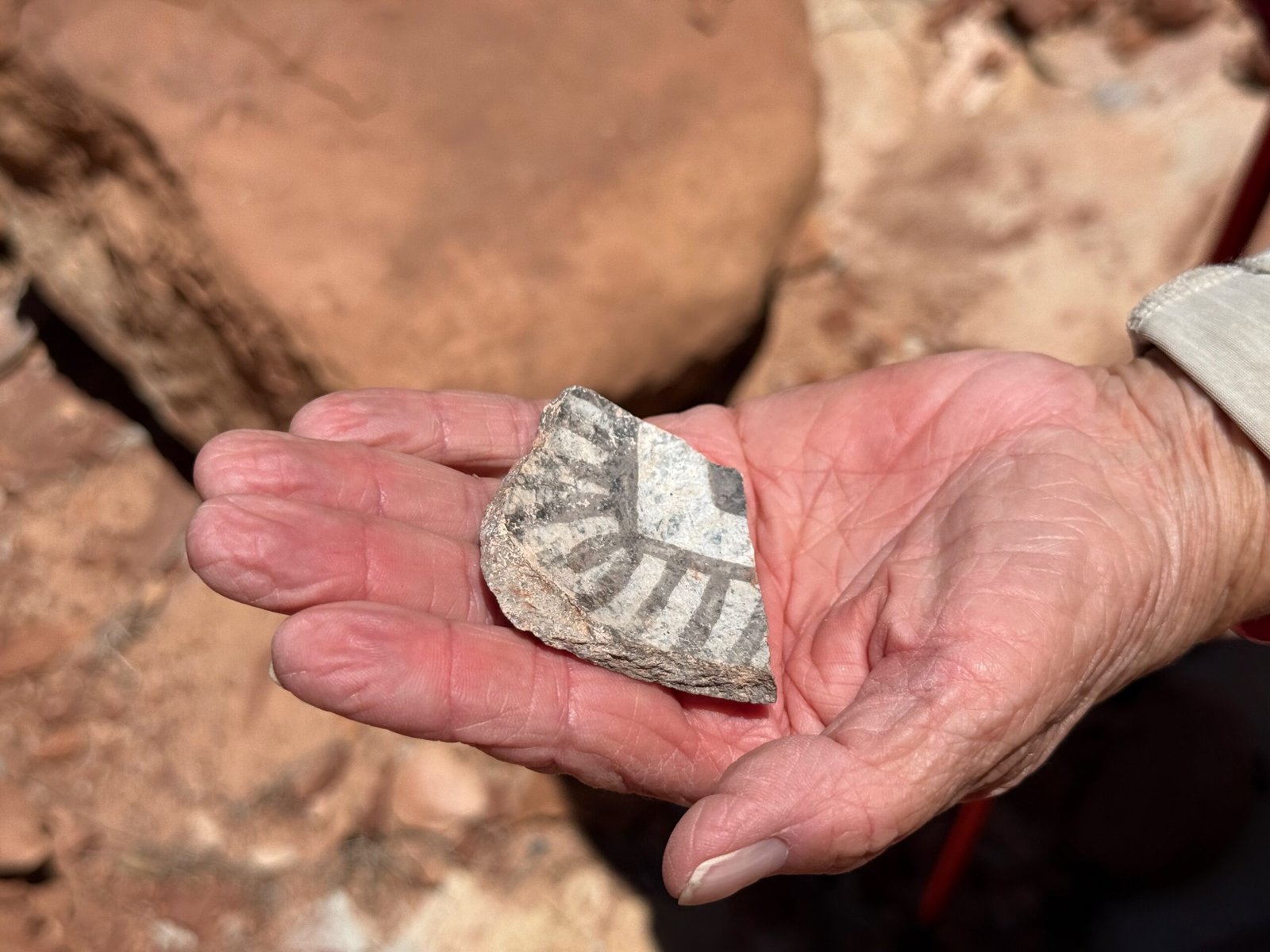
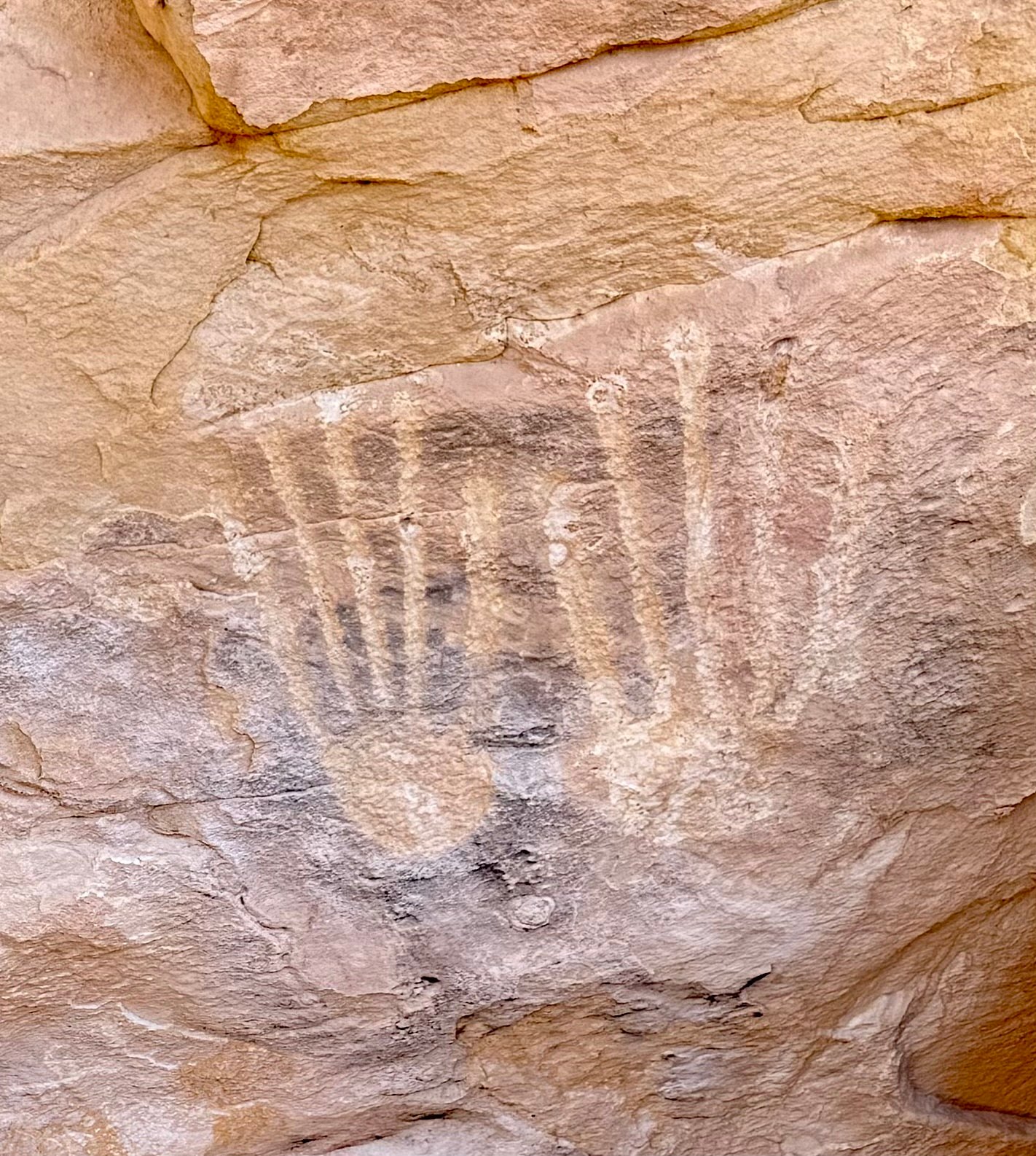
It was pretty sweet, although none of them are necessarily cakewalks. The landscape changes, so there’s usually some navigating and second-guessing involved, brush and bugs can be problems. But we saw a couple of nice places. One was a bit out-of-the-way but had so many carvings into the rock. Turkey feet, corn, and my favorite, sharply-detailed stars. Around the structures we saw areas where implements were sharpened, metates where corn was ground, and extensive and expansive petroglyphs (carvings) and pictographs (paintings), and of course, combinations of the two.
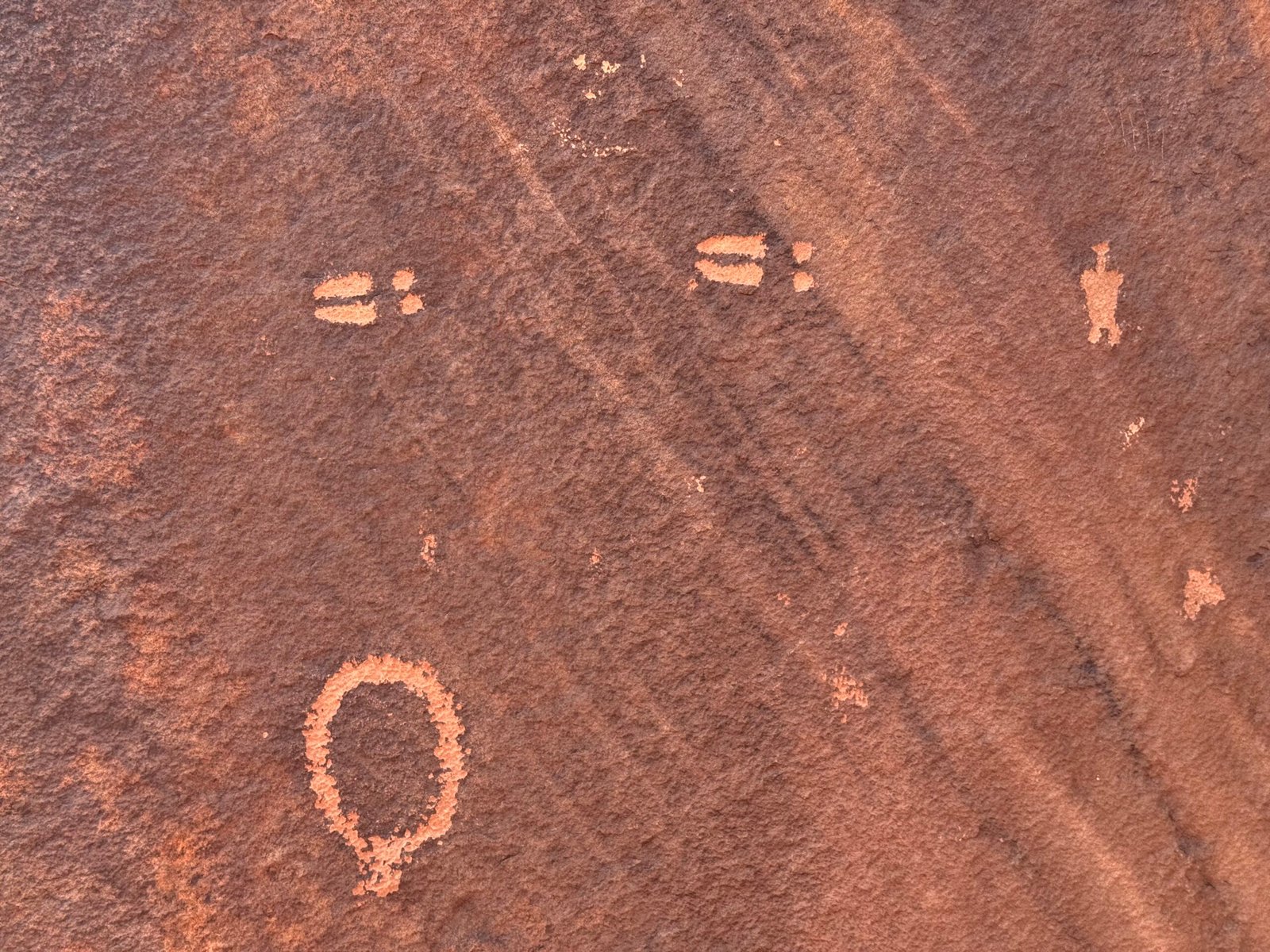
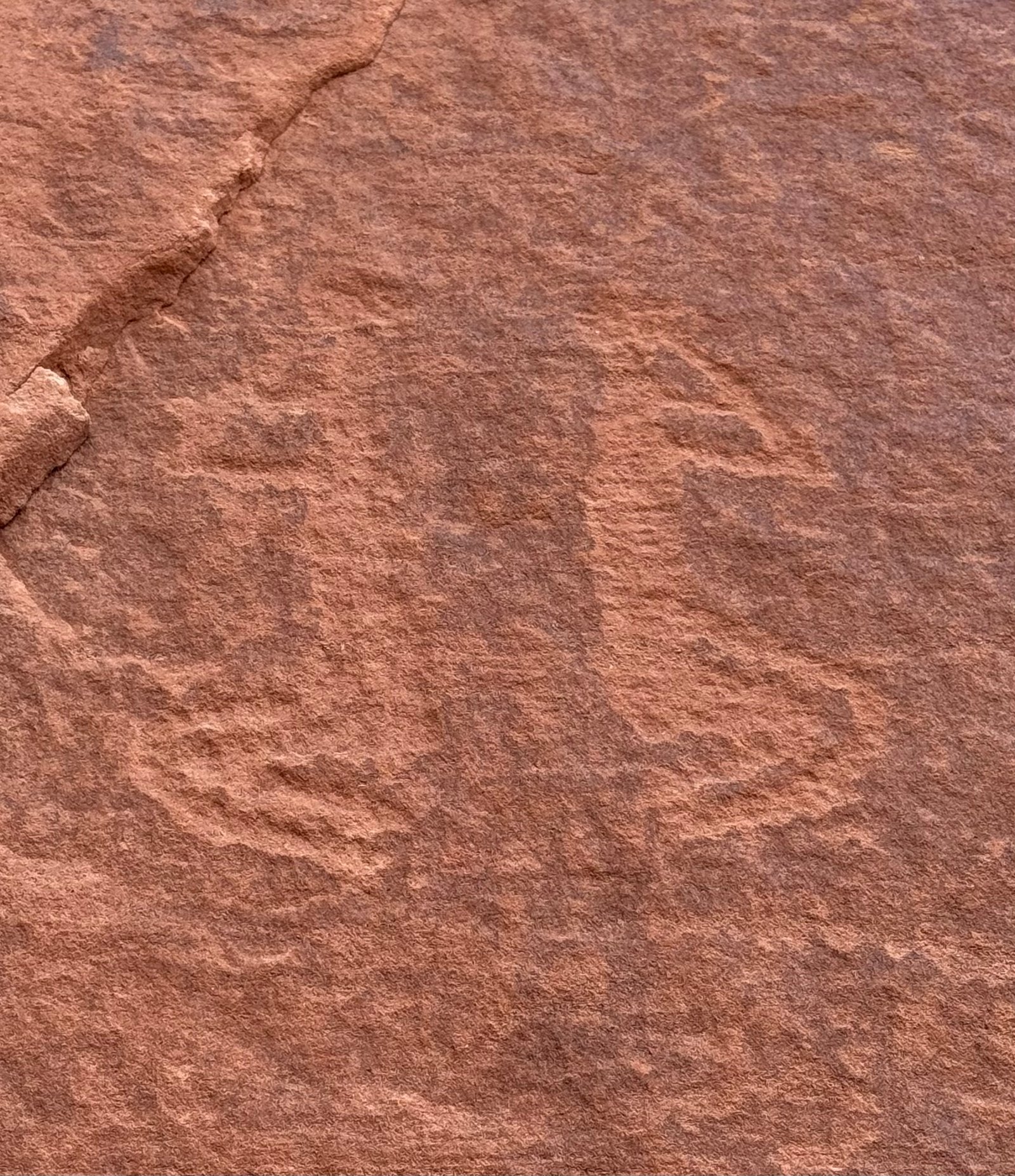
It was a good walk, and as we approached the sunny last leg of our journey back to the truck, we saw folk coming our way. Gearing up for a nice VWR discussion, I recognized that it was the three ladies we had met a couple days before! Again, they were all smiles.
They had done their research and picked a trail they were comfortable with. And since I had only given them general information, I found it amazing that in all of Bears Ears we had run into them on the same trail, a long way up a remote dirt road! “You are the most unhelpful volunteer we have ever met,” one said cheerily. I will take that as a compliment.
As I mentioned in an earlier post, Brandon is volunteering this month too. And he has spent significant time in this entire area, including Bears Ears, Escalante, and Capitol Reef. Now a river rat living in Kentucky, his favorite river runs lie in the Obed and Big South Fork. But he comes to these canyons every year bringing his packraft (something I’d never even heard of), which allows him to do multi-day backpacks where he can more easily maneuver between canyons as he searches for the wonders of the ancients.
As our new neighbor, we invited him over for a campfire and began to chat about our experiences. Even though he is younger, we found we have a lot in common. Enjoying the remote places, traveling light, and even maybe being guilty of Ffej-ing his wife and friends (maybe that’s Nodnarb-ing?) when exploring new places. And it was remarkable to me how many of the same backcountry places we have explored in the Appalachian mountains. In fact, he was very familiar with the Joyce Kilmer/Slickrock wilderness, a refuge of mine.
During the conversation, he mentioned how his wife had stuck with him through some “challenges” in the backcountry. So I began to relay our story of the ill-fated backpacking trip to the Hangover in the Slickrock wilderness.
While dating, I found that Patricia had been on very few adventures, other than the occasional family camping trip. And since she was eager to try new things, I thought I’d impress her with a beautiful mountain wilderness that I seemed to always come back to when I needed a recharge.
Now, while this sounds idyllic, it was decidely not. And since I have recounted this story before, I can use amazing technology to direct you to the tale here, in our Peruvian Odyssey. It’s a short read, and it will enlighten you on just how silly a young man can be when his alter-ego, Ffej, has taken over the task of trying to woo his future soul mate.
But back to the campfire. As I was relaying the story to Brandon, no sooner than I had mentioned the Naked Ground trail when he blurted out BALL BUSTER! We all just cracked up about it with a good hearty, “been there, done that, got my butt kicked” laugh. You see, while the sign says “Naked Ground 3.1 miles,” someone had carved the more descriptive term in capital letters underneath. And I have never met anyone that could confirm this tale. Until now. Brandon also has the distinction of being bitten by our mutual pal, the copperhead!
Here in Bears Ears, the three of us began to use some of our shared time off to explore new places. Brandon has shown us some amazing places and, in turn, we’ve had good luck in taking him to places that we had explored last year.
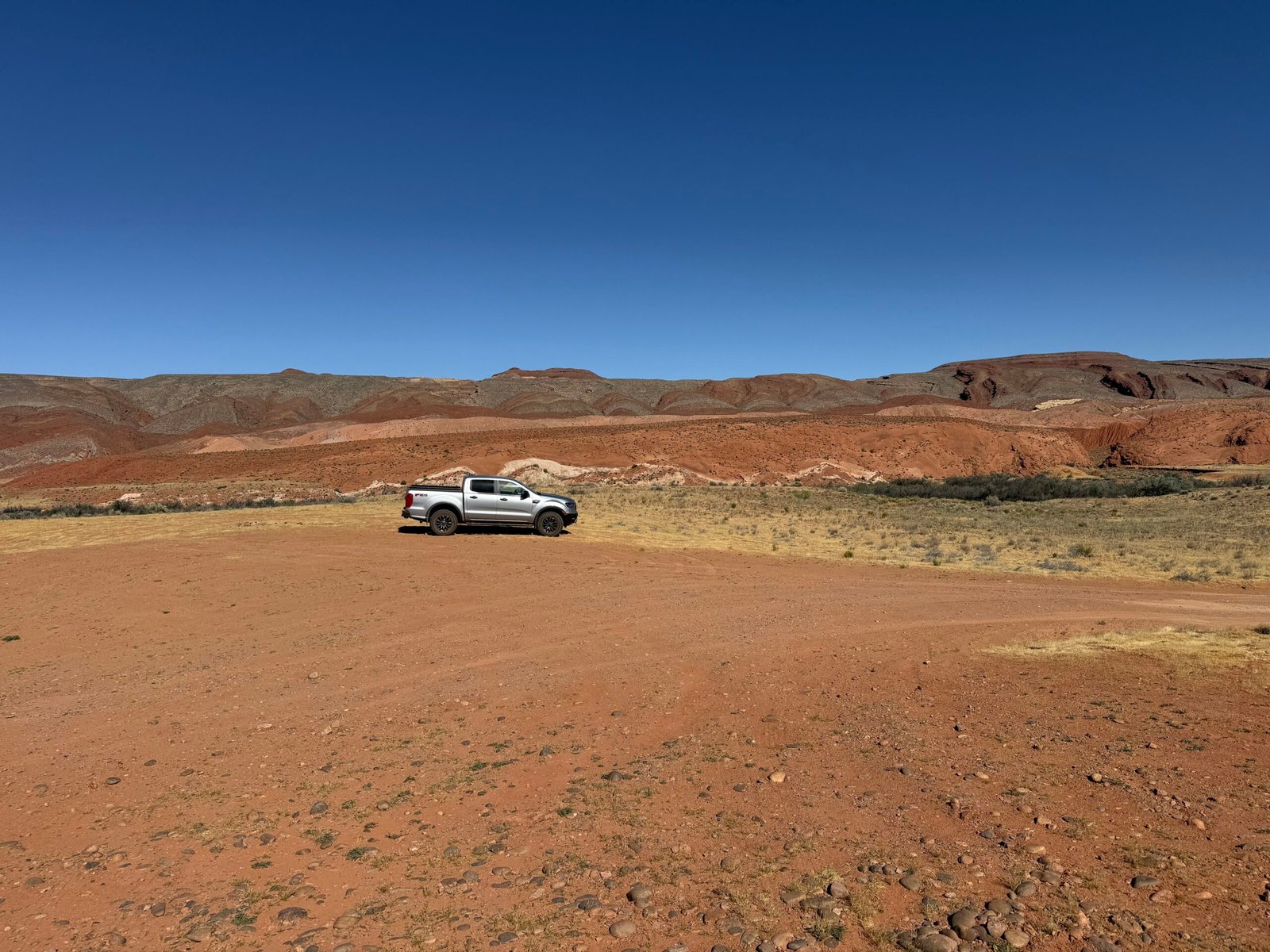
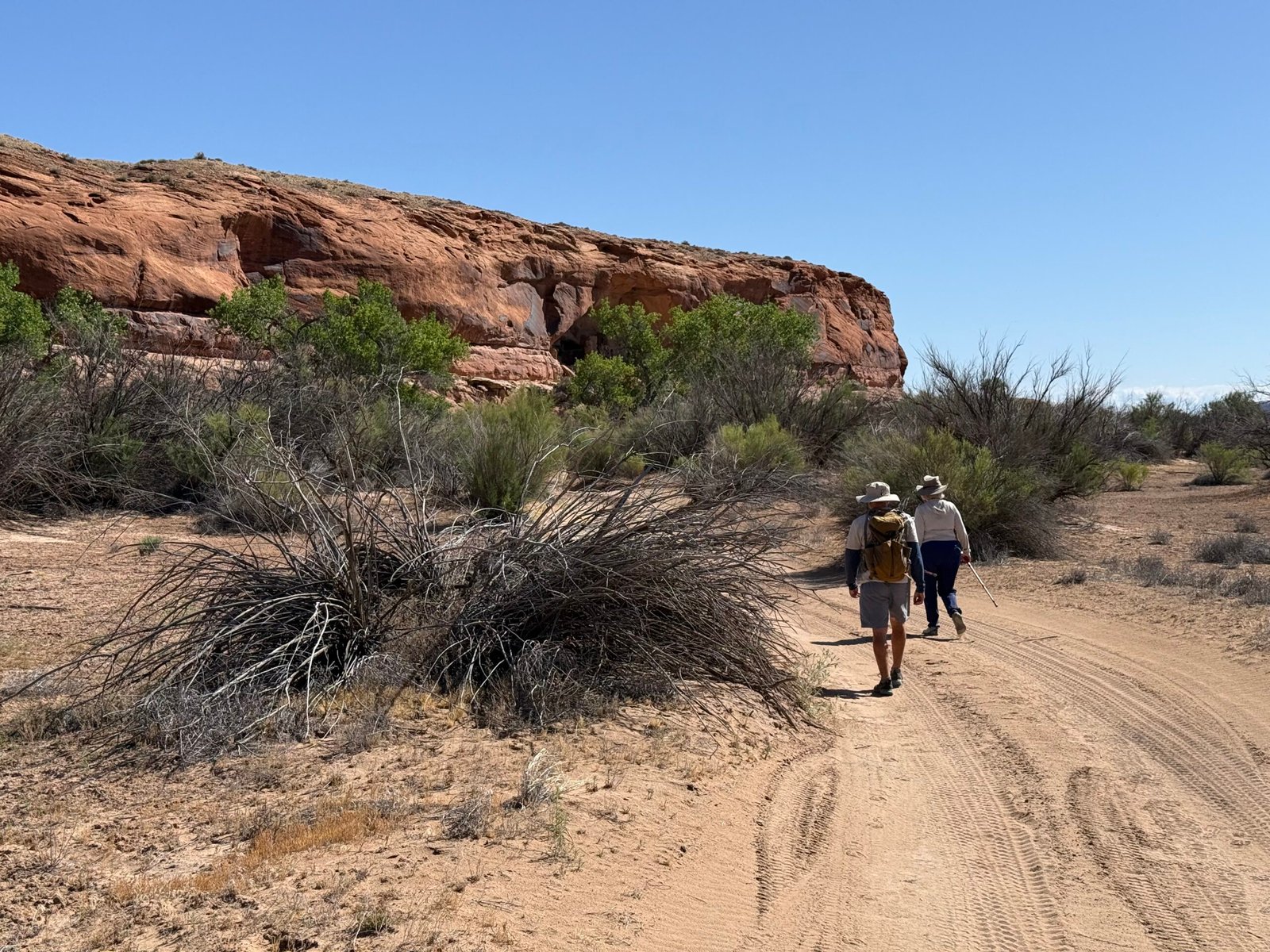
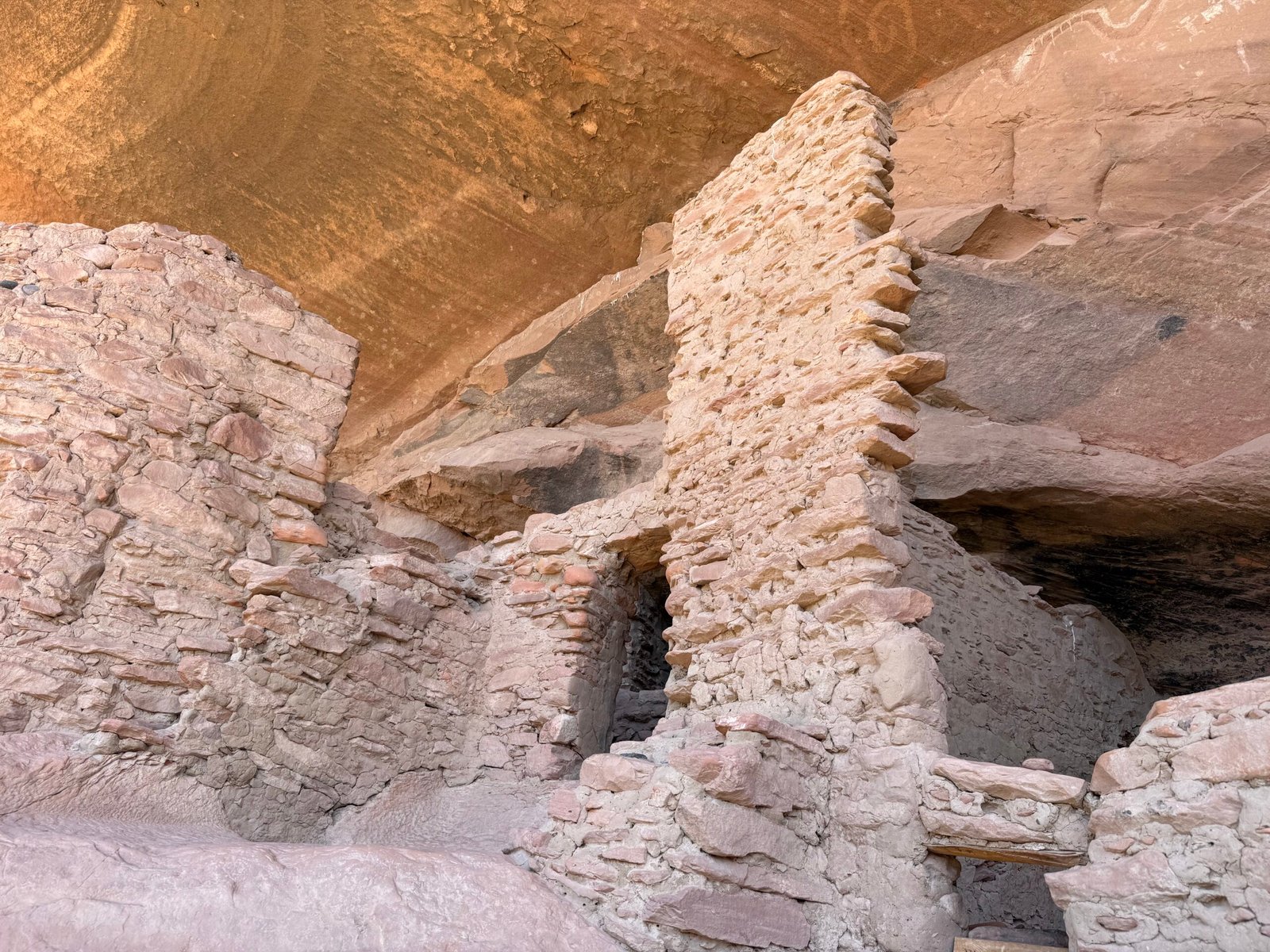
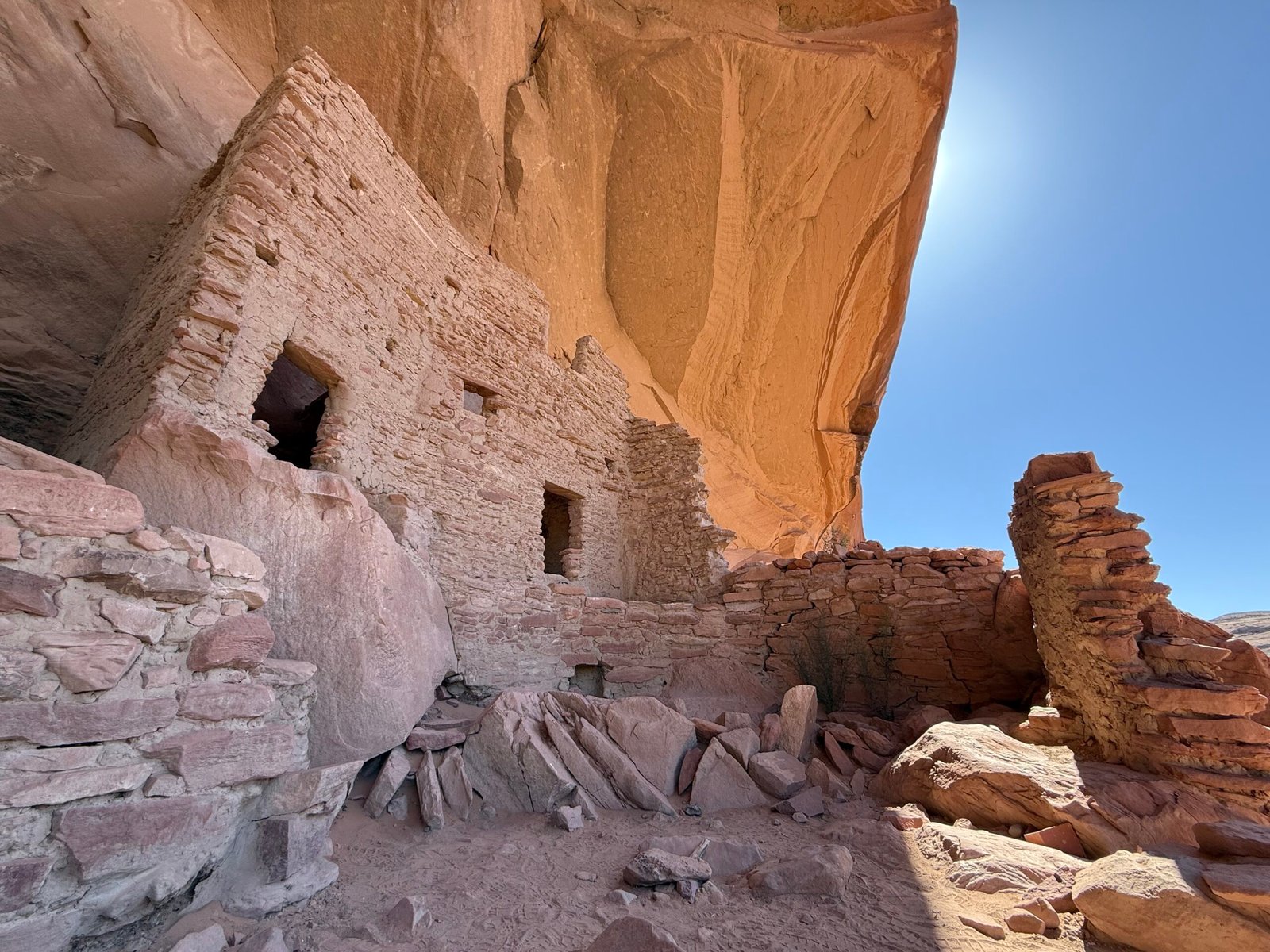
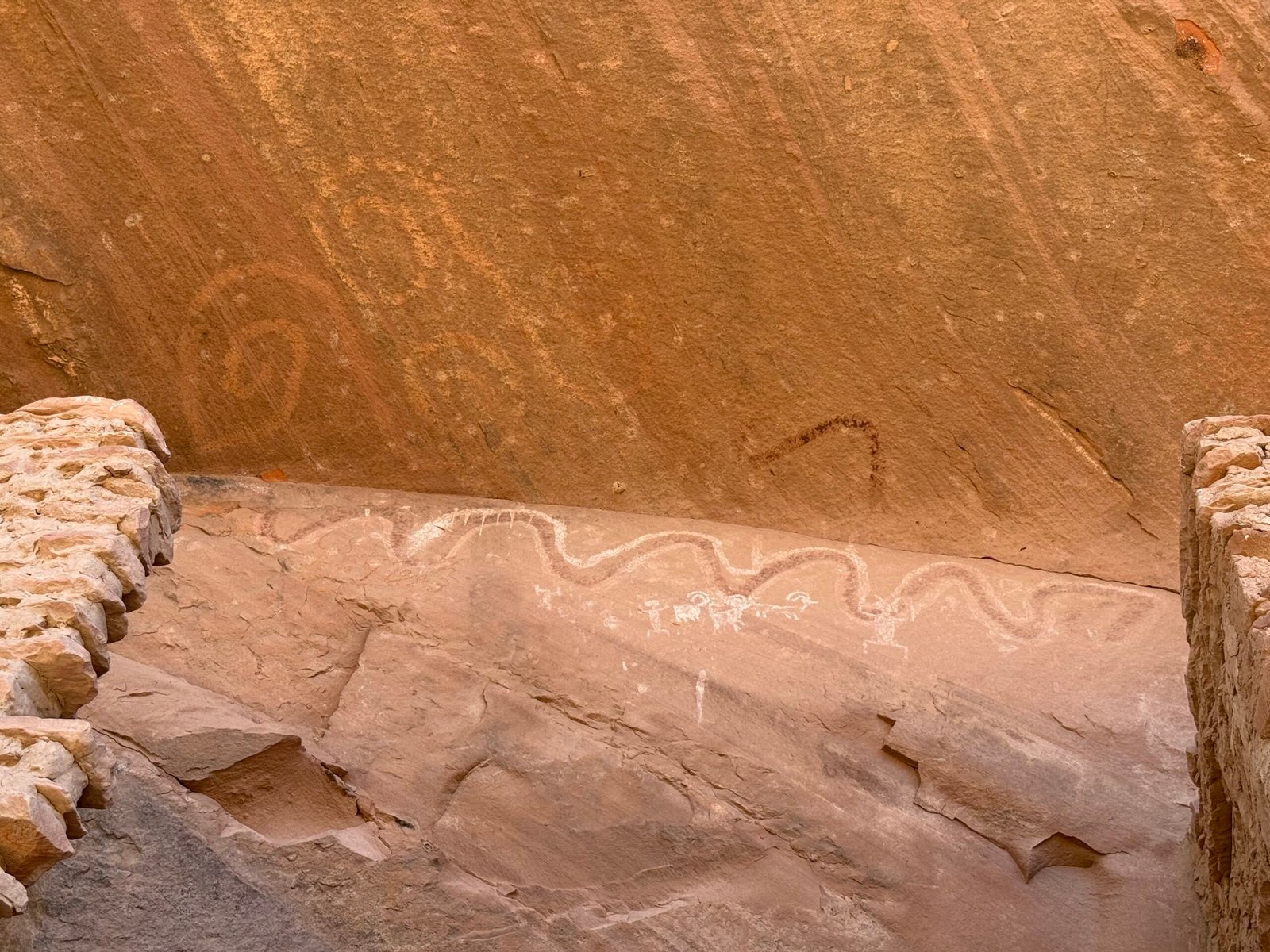
Kirsten, our manager, has been awesome in letting us rearrange our time off to better match what we’d like to do. With the hot weather, we’ve shifted schedules so we could each get in early morning hikes, or trade out days for extended adventures. It’s all been another great experience. And even though we’ve been revisiting sites, we just there are just more and more things that we didn’t see the last time.
A remote hike became a visit to a special kiva. The ancient puebloans treated them as sacred spaces, and used them for spiritual ceremonies, meetings, and as a way to pass down traditions. This one is spectacular, with the roof still intact after many, many centuries. In the center of the floor is a small hole called a sipapu. It symbolizes the portal through which their ancient ancestors first emerged to enter the present world.
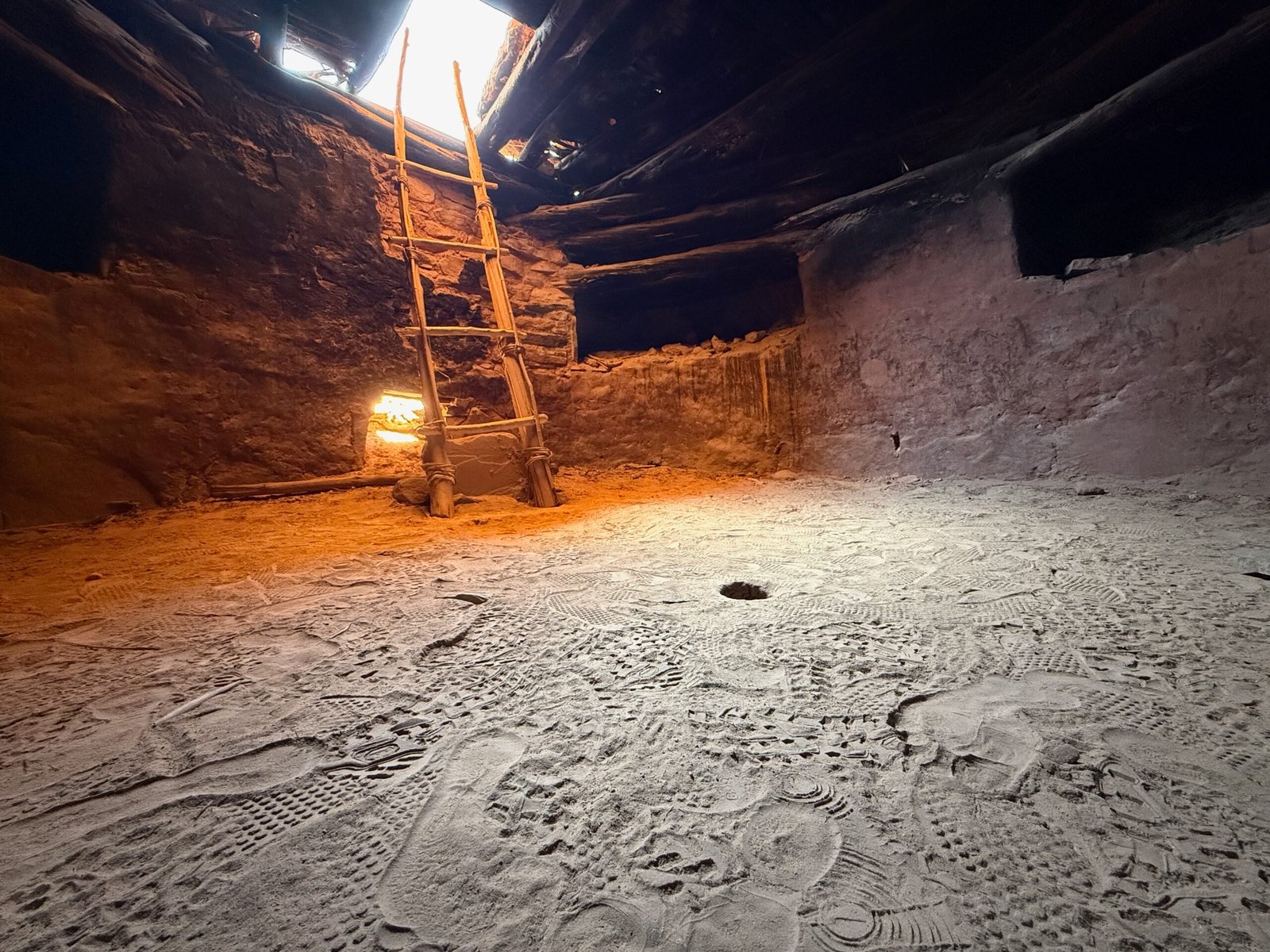
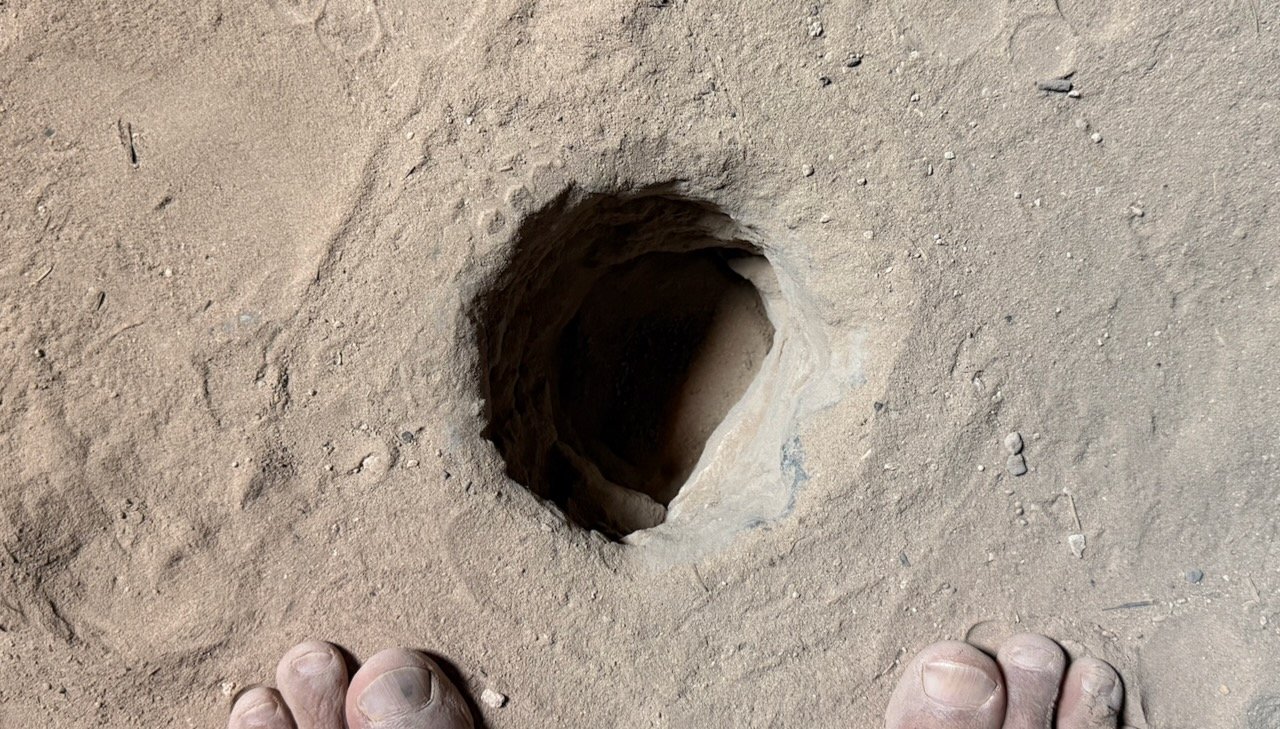
Having this at the center of this special meeting space is an incredible way to stay grounded with the past and the traditions. It would be as if every decision made or action taken here would be under the watchful eye of the ancients. Decisions would be made carefully. Traditions would be honored and passed down. Just this one small hole literally transforms this space. What a privilege to experience it.
In the wonderful book Mayflower: A Story of Courage, Community, and War, Nathanial Philbrick considers the first 60 years of the Pilgrims’ journey to the New World. I feel he does an excellent job of describing the relationships between the Pilgrims and the surrounding tribes like the Wampanoag. The book is rich with the details that are not conveyed in textbooks, which are many times startling.
One thing I remember from the book is that the tribes moved around as the seasons and food sources changed. And along some of the paths there were simple holes. But these holes were special, and they prompted the indigenous travelers to pause and remember their traditions and ancestors along the way. They continually reinforced their story, as story has been the only way human culture has maintained community for thousands of years. Even the bits of scrolls from 40 authors and 66 “books” were eventually manifested over 1500 years into the written form we call the Bible. It was all story, carefully handed down generation to generation through the ages.
In The Story of B, the middle book of the Ishmael trilogy by Daniel Quinn, he establishes that it isn’t the “opposable thumb” that sets humans apart, but our ability to tell a story. Well observed, sir.
Exploring a completely different area, we searched out petroglyphs created on large boulders that had tumbled from a high bluff. These stones had a dark patina on one face, created by bacterial interaction with minerals in the rock while still on the bluff wall. Upon breaking free, one boulder in particular came to rest with this face pointed like a modern day billboard in a direction that many could see, and it was alive with some incredible work. As I walked up to it, I noticed that the dark face produced a bright glare from the sun. But when I tilted my sunglasses to one side, the glare was greatly reduced! This surface was reflecting polarized light, something I did not expect. So now I’m walking around with my iPhone lens looking through my tilted sunglasses while I take pictures.
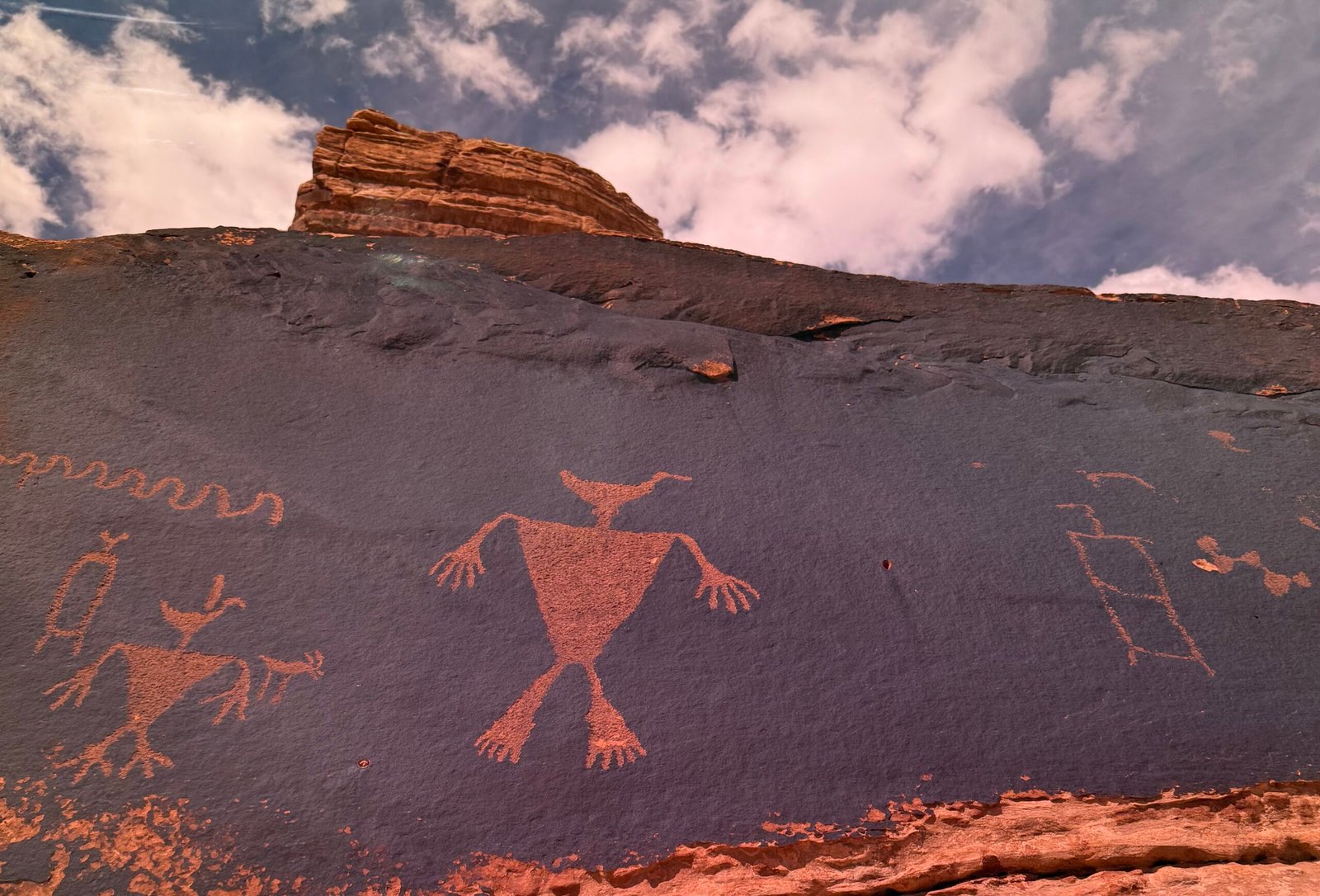
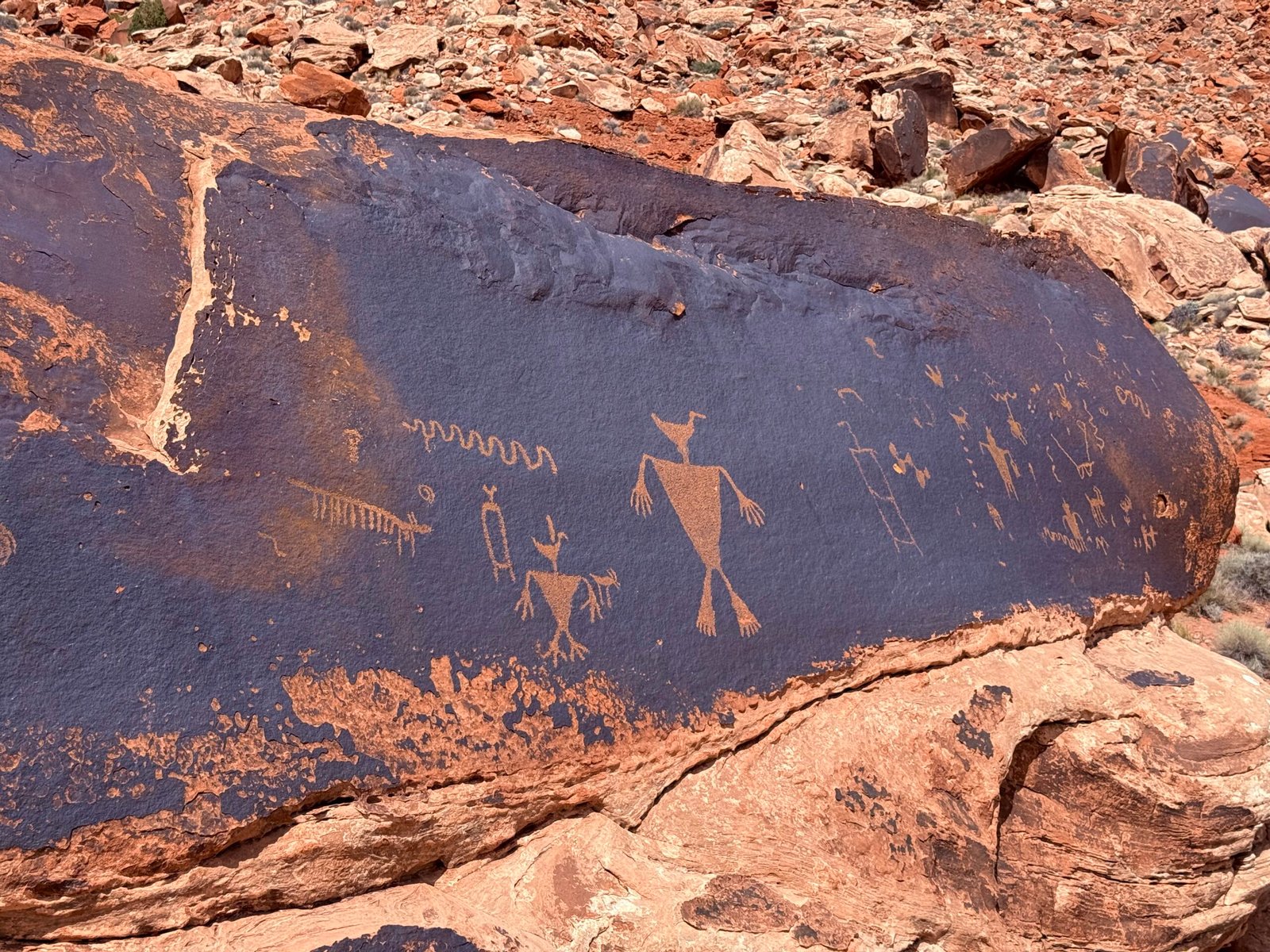
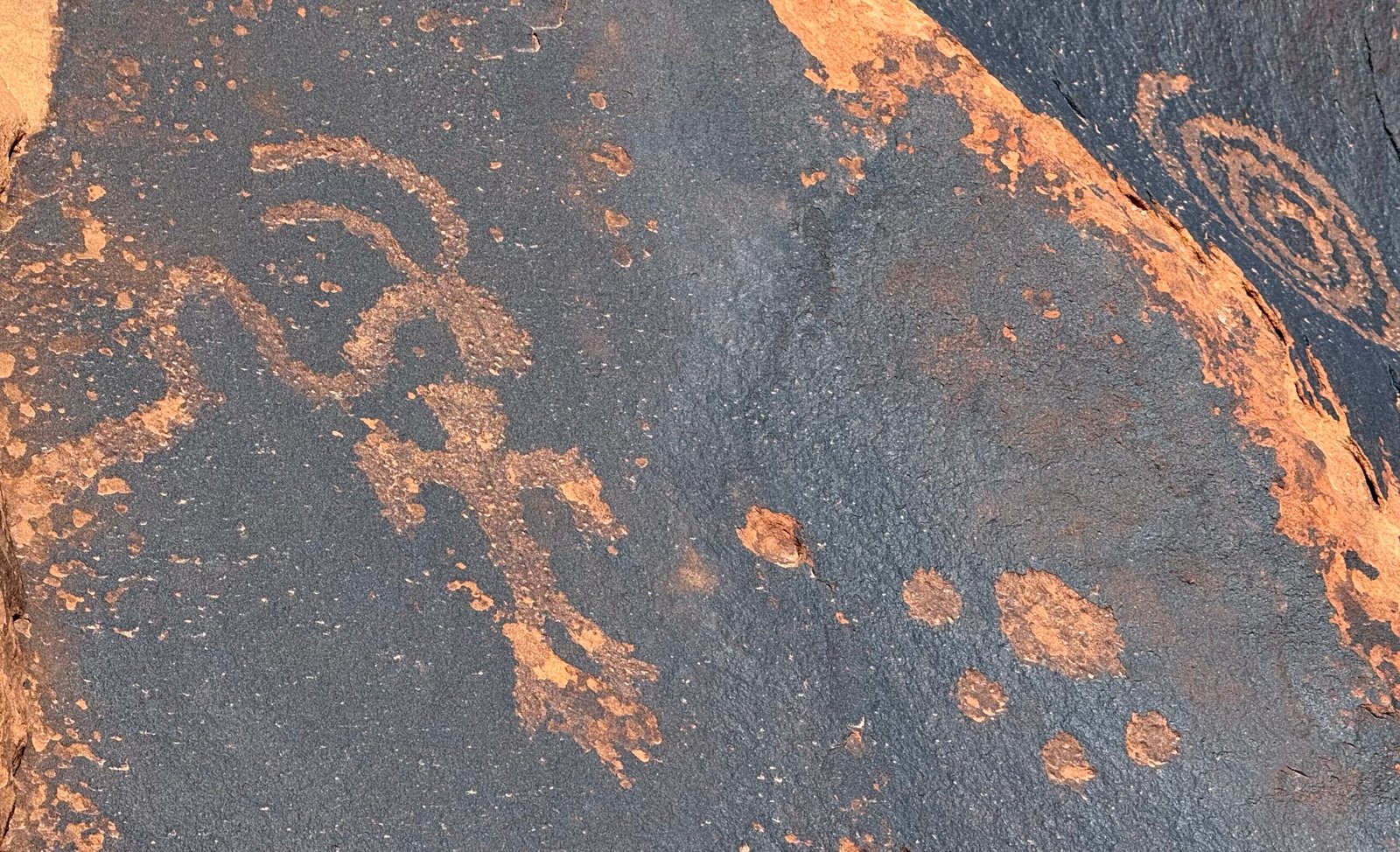
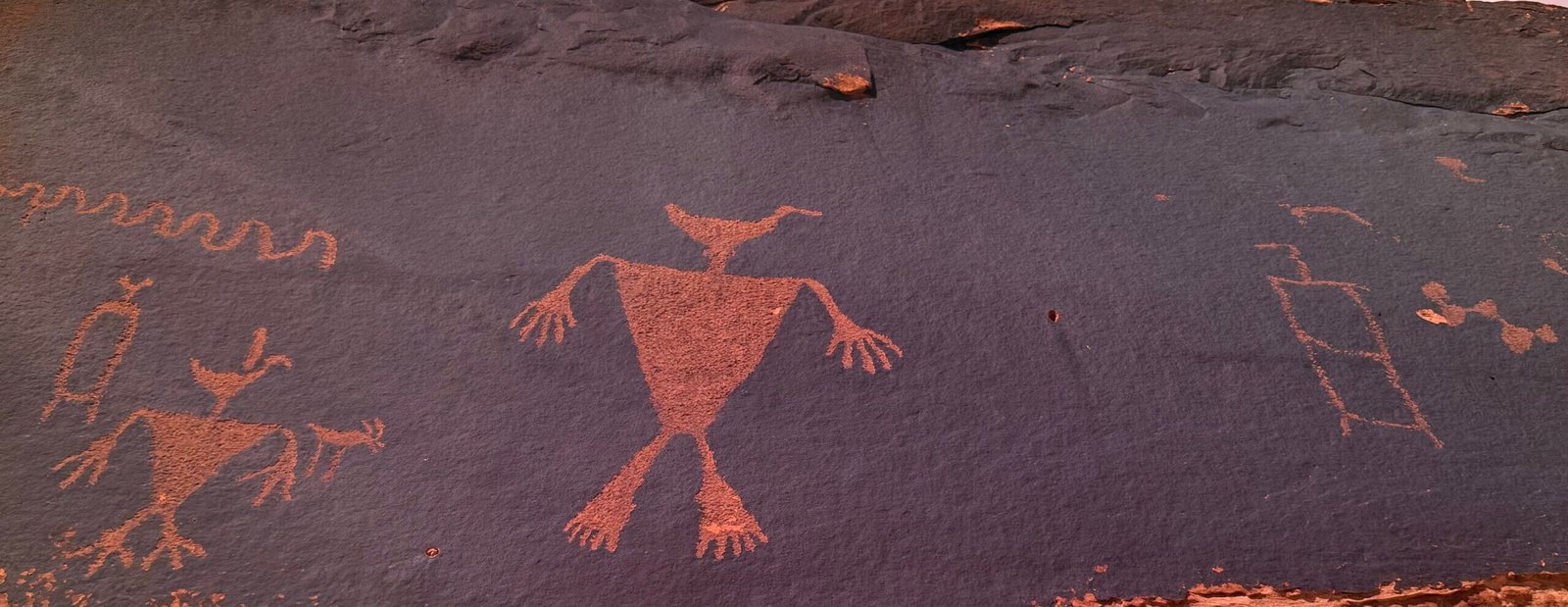
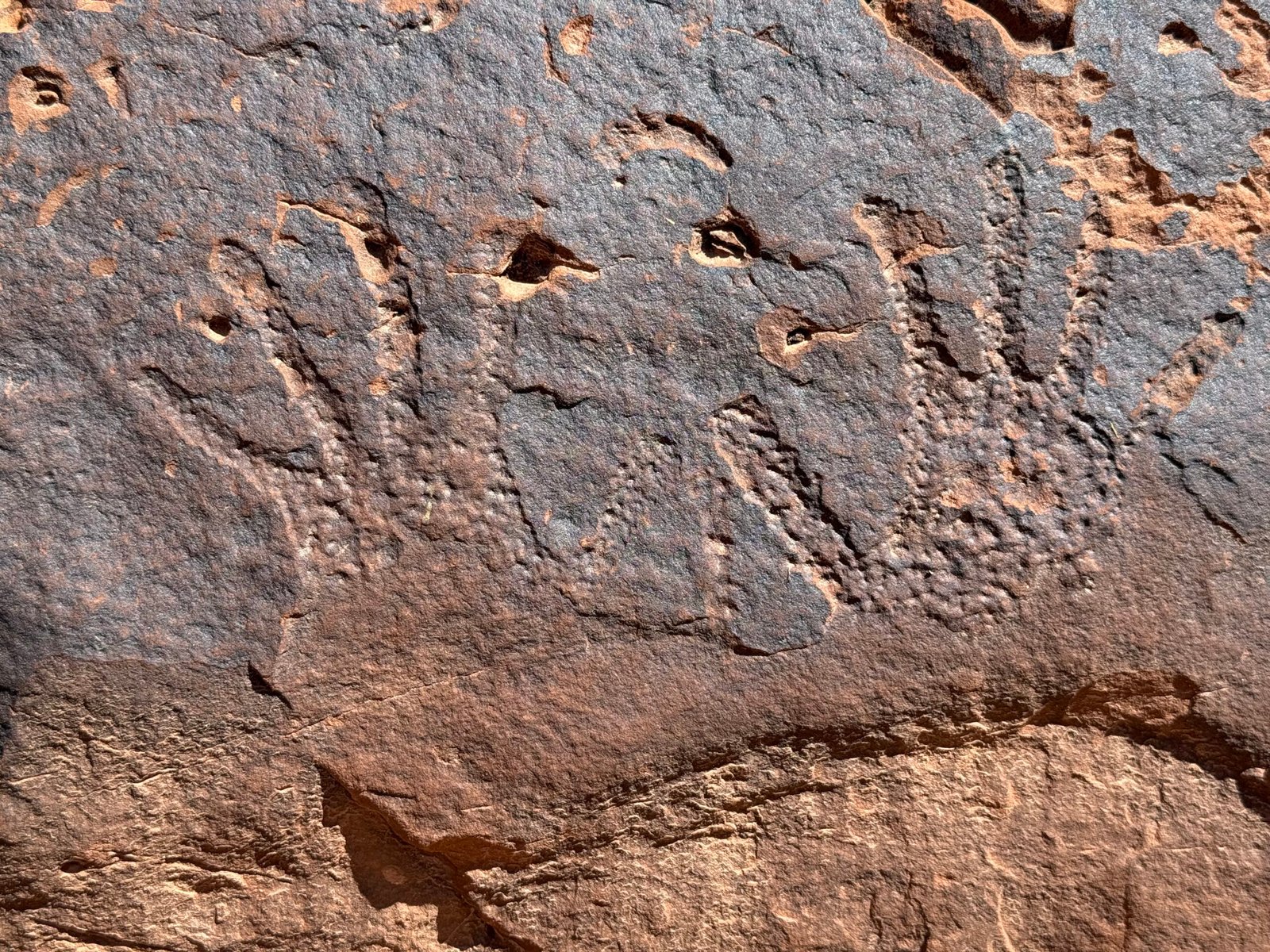
Brandon relayed that a couple of these figures are “duck headed” and limited to the San Juan river valley. And they can be quite old. What is stunning is that they look like they were pecked into the rock last week!
And how about that cougar paw on that last panel?
Last year, Patricia and I attempted to see what is called the Kachina Panel, but we turned back due the potential for rain, especially after seeing darkening clouds. The river runners can access it easily, but to get to it by land, it requires several miles of wash-running down lower Comb Wash. Not a place to be in any kind of wetness, let alone a flash flood. So with this year’s forecast of hot-n-dry, the three of us gave it another go. And as last year, the Ranger just did a fantastic job, Brandon was impressed! We parked the truck before the last climb to San Juan Hill, and enjoyed a pleasant hike toward the river. We were amazed at just how much rockart is on this wall! It’s like trying to photograph the Grand Canyon where you just throw up you hands and say, “Oh well.” Not only do the petroglyphs span many centuries, but many cultures as well. People have been moving through here, from and to faraway places, for thousands of years.
There is ongoing discussion as to whether the Ancient Puebloans abandoned the area abruptly because of duress or just simply walked away, expecting to return and pick up where they left off, when the climate improved.
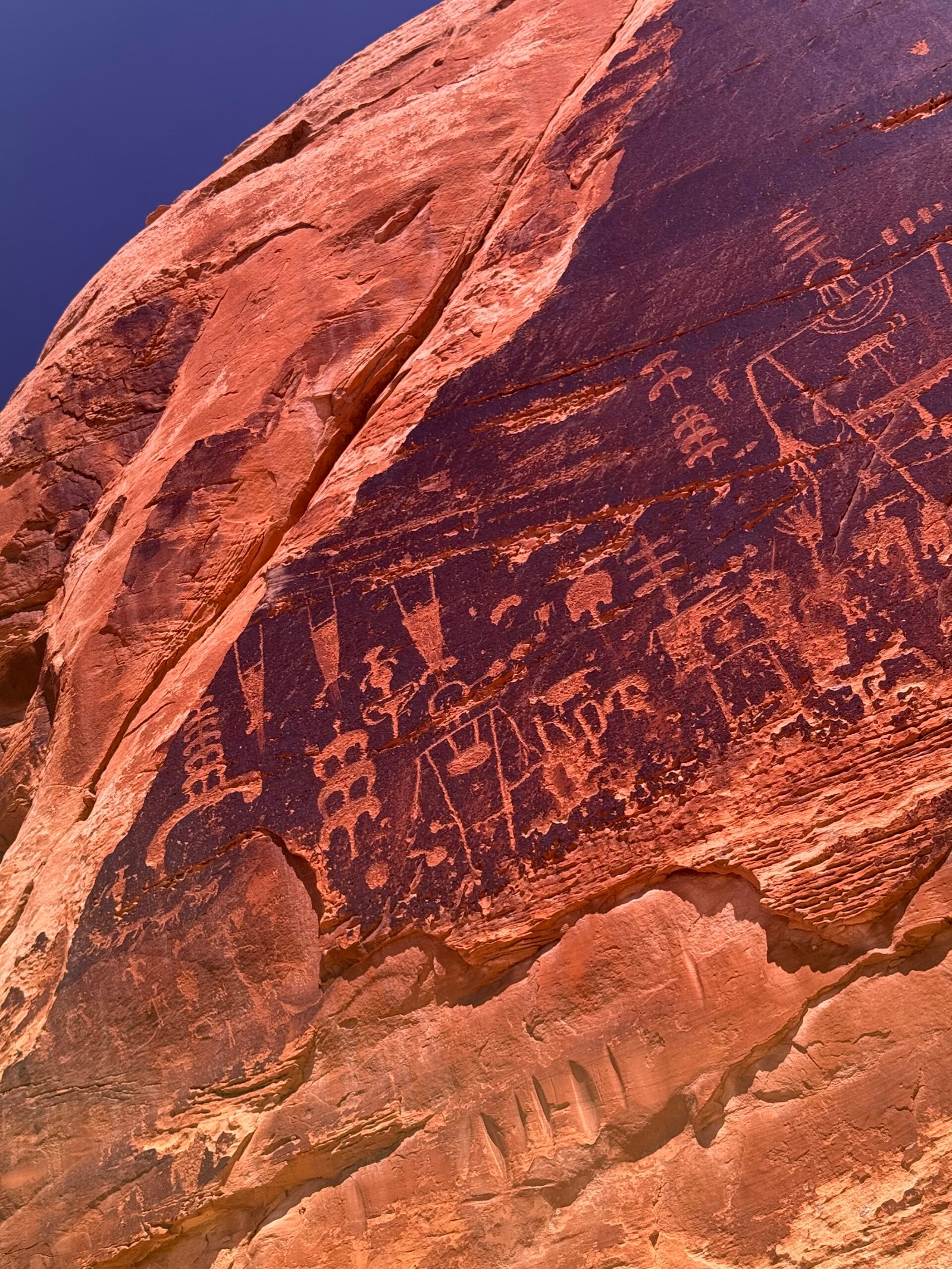
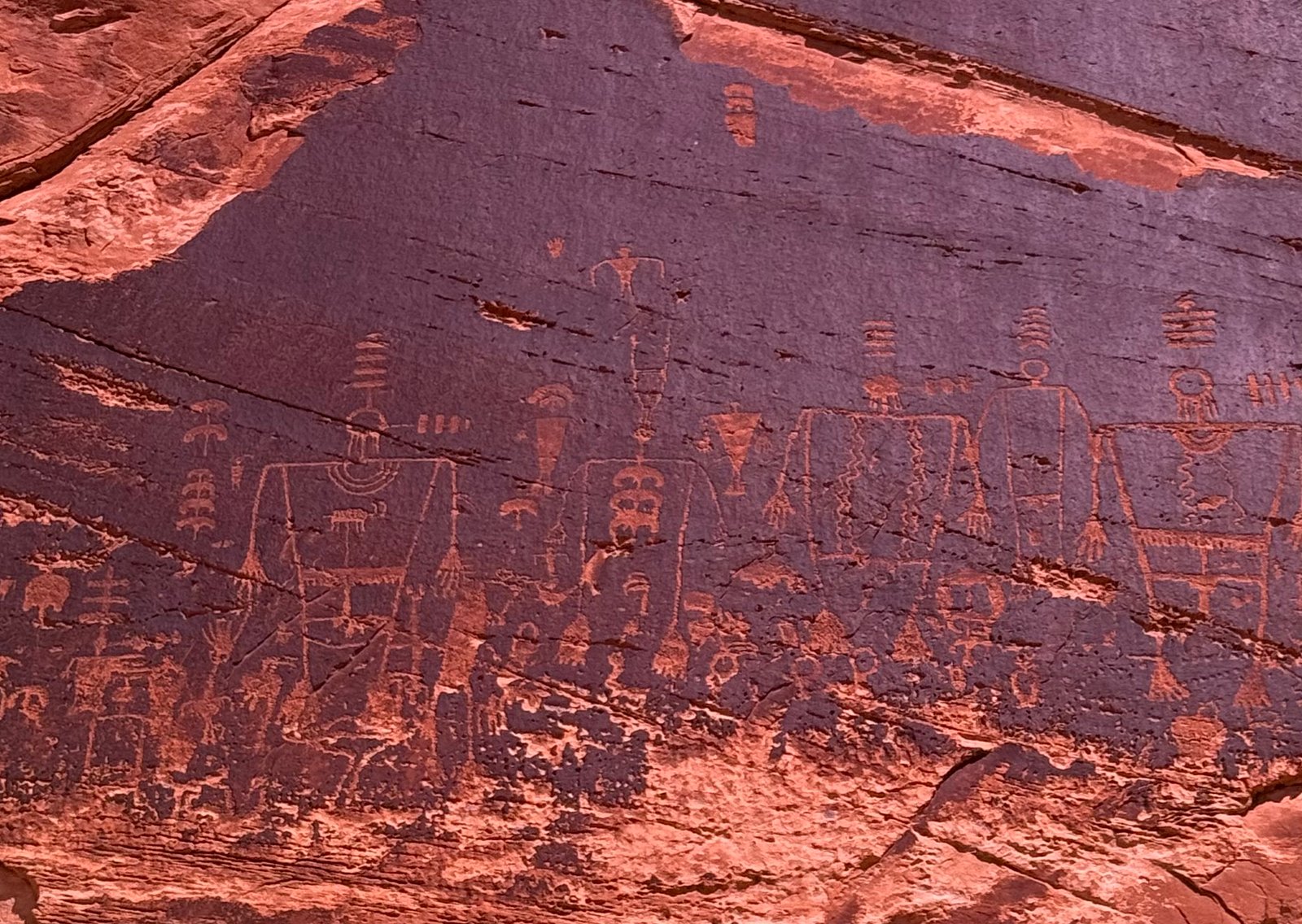
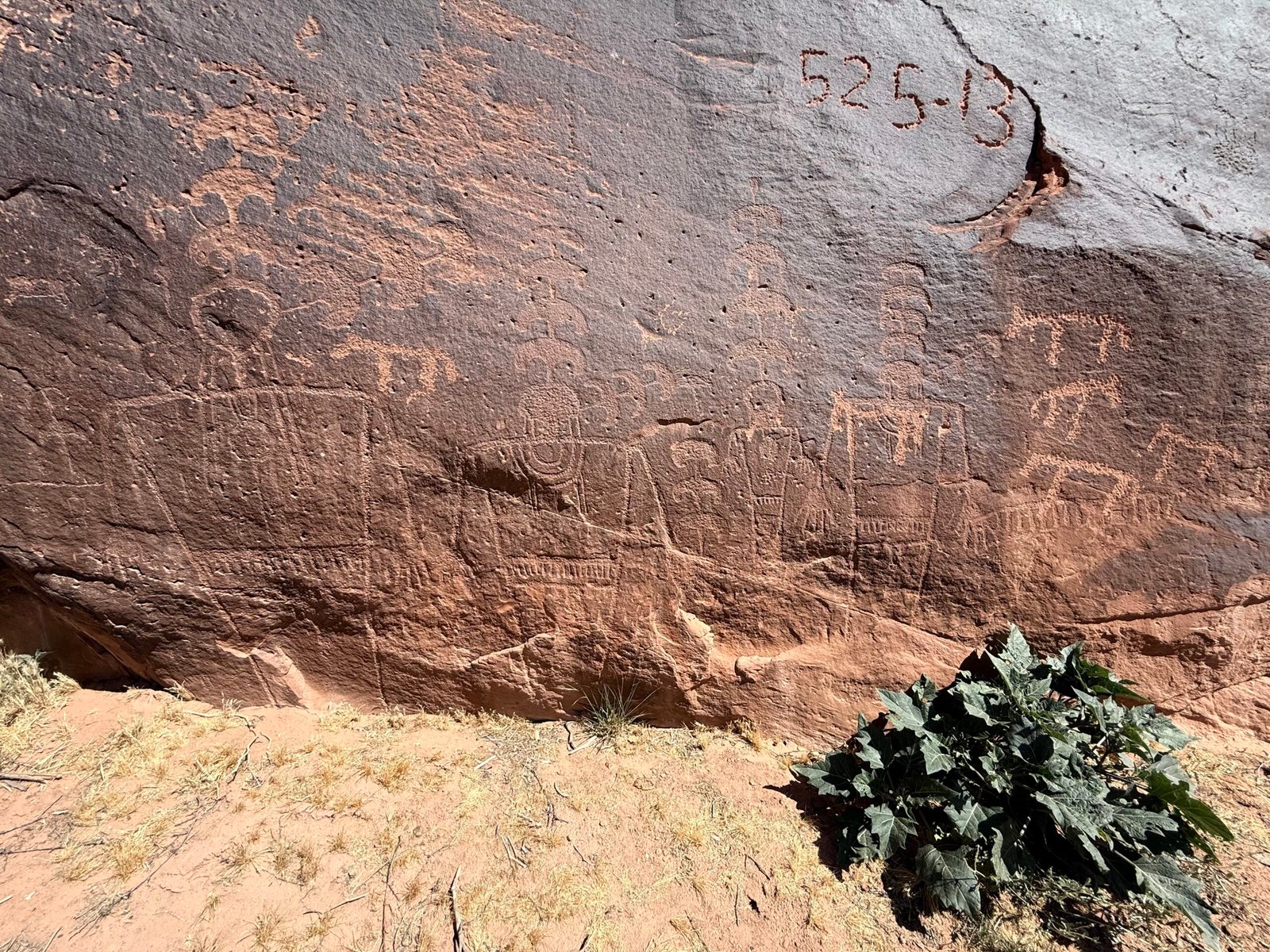
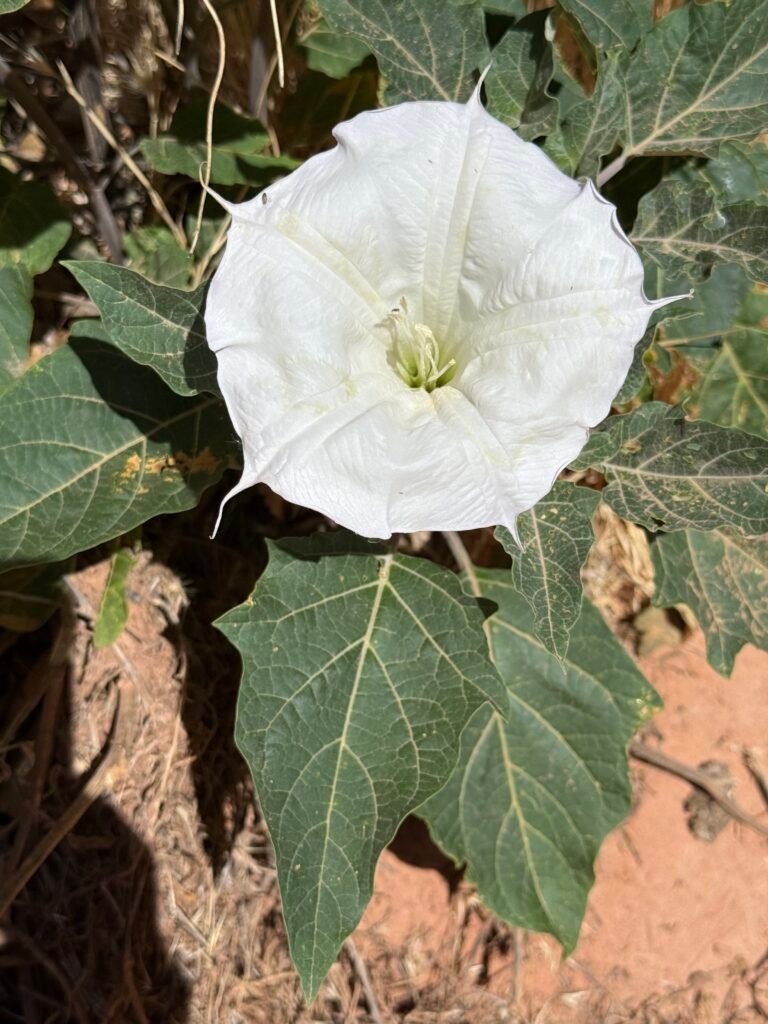
Kachinas are spiritual beings in puebloan culture. On this rock face they are large, they are elaborate, and they are many! The plant in the foreground is sacred datura, which has psychoactive compounds in its seeds and roots. It has been portrayed in ancient artwork and pottery. What a beautiful and mysterious-looking flower.
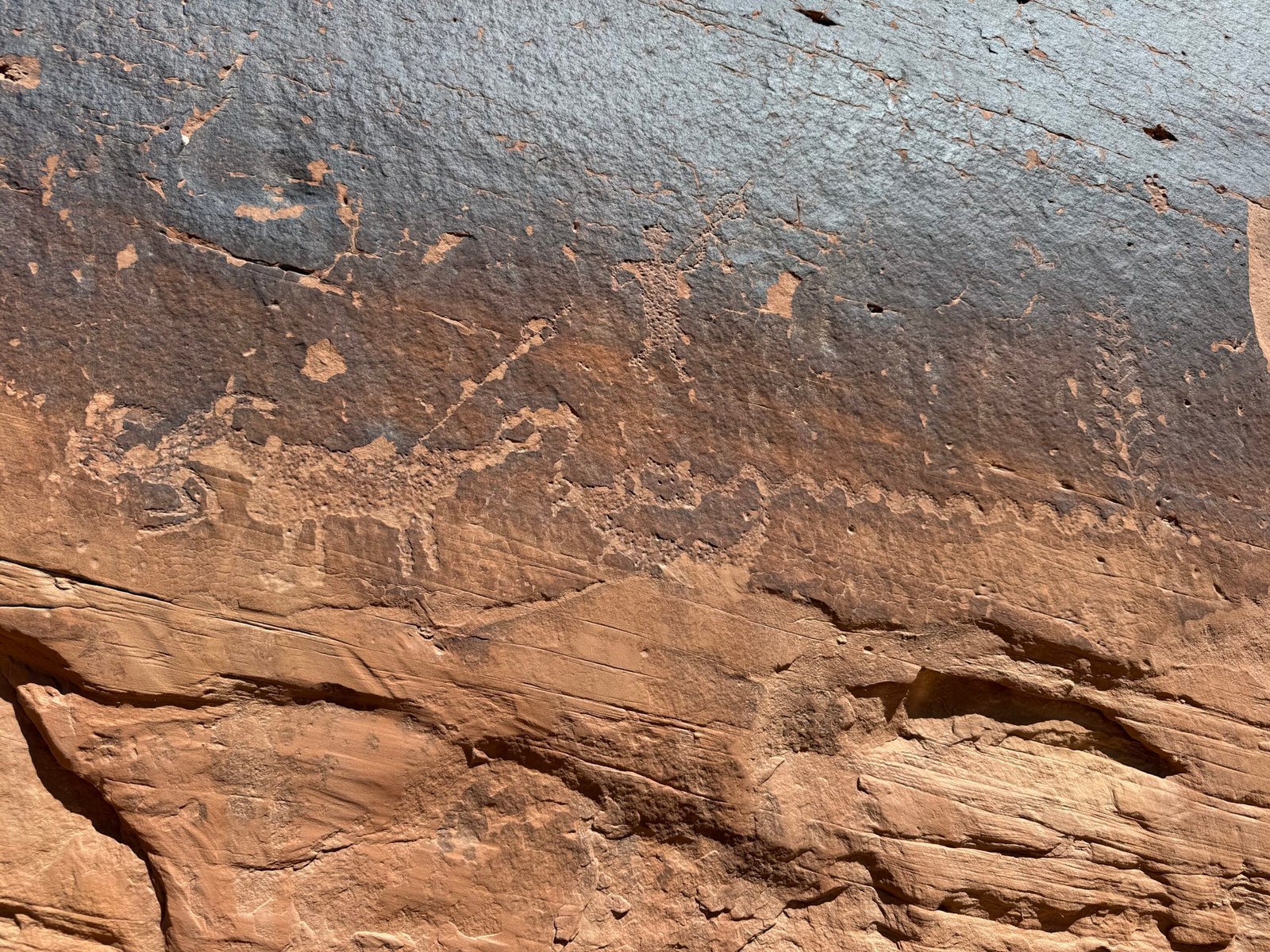
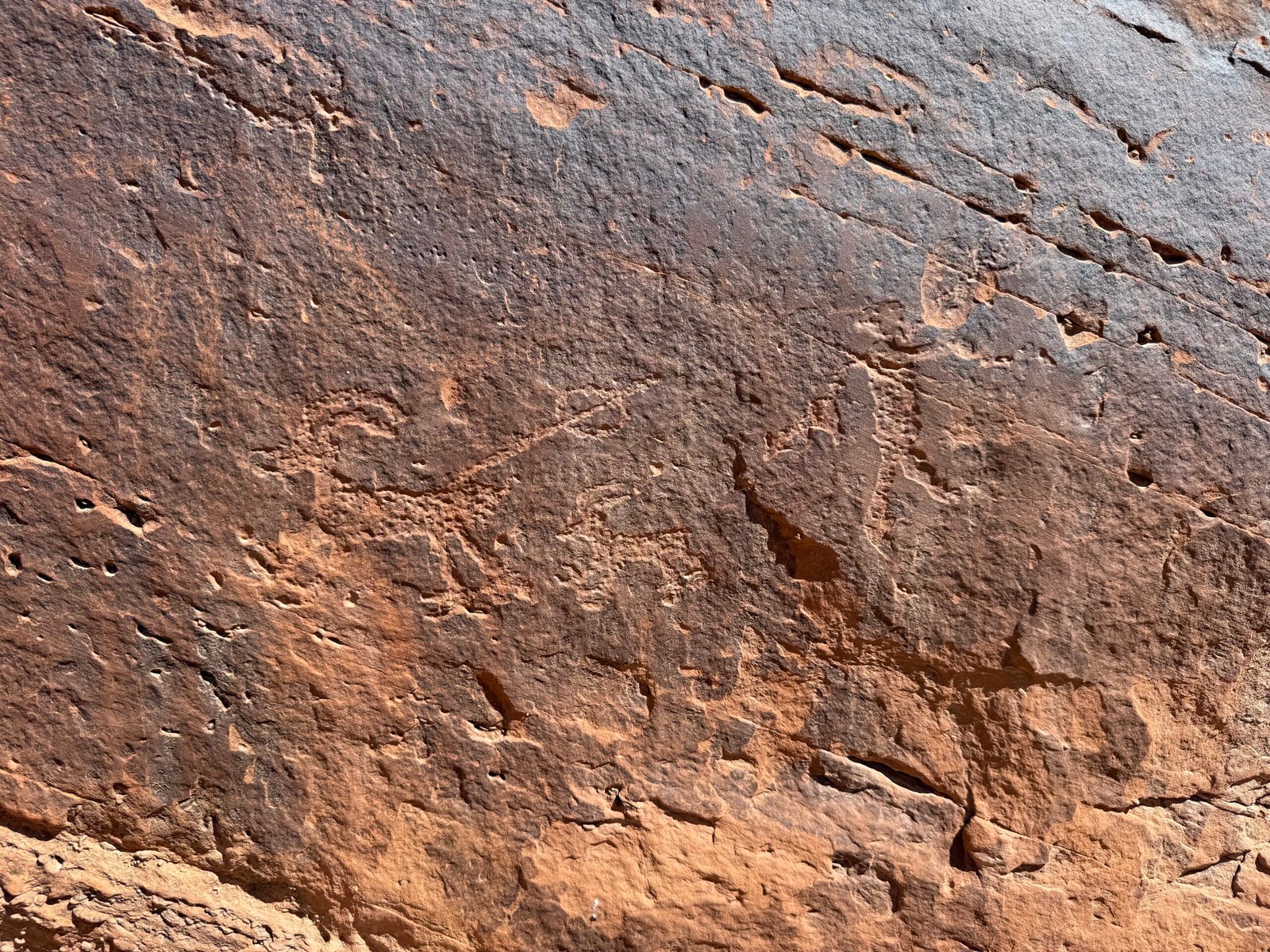
These two shots show the use of an atlatl, which predates the bow and arrow. It is represented as a straight line with a circle near one end. On the left, you can see the deer has been struck and the hunter has another ready to throw. The wiggly line seems to represent a journey, sometimes it’s combined with a small spiral. In this one, a yucca plant is at one end. Is that a jackrabbit in front of the deer? On the right, another atlatl strike at a deer, the thrower seems to have his arm extended.
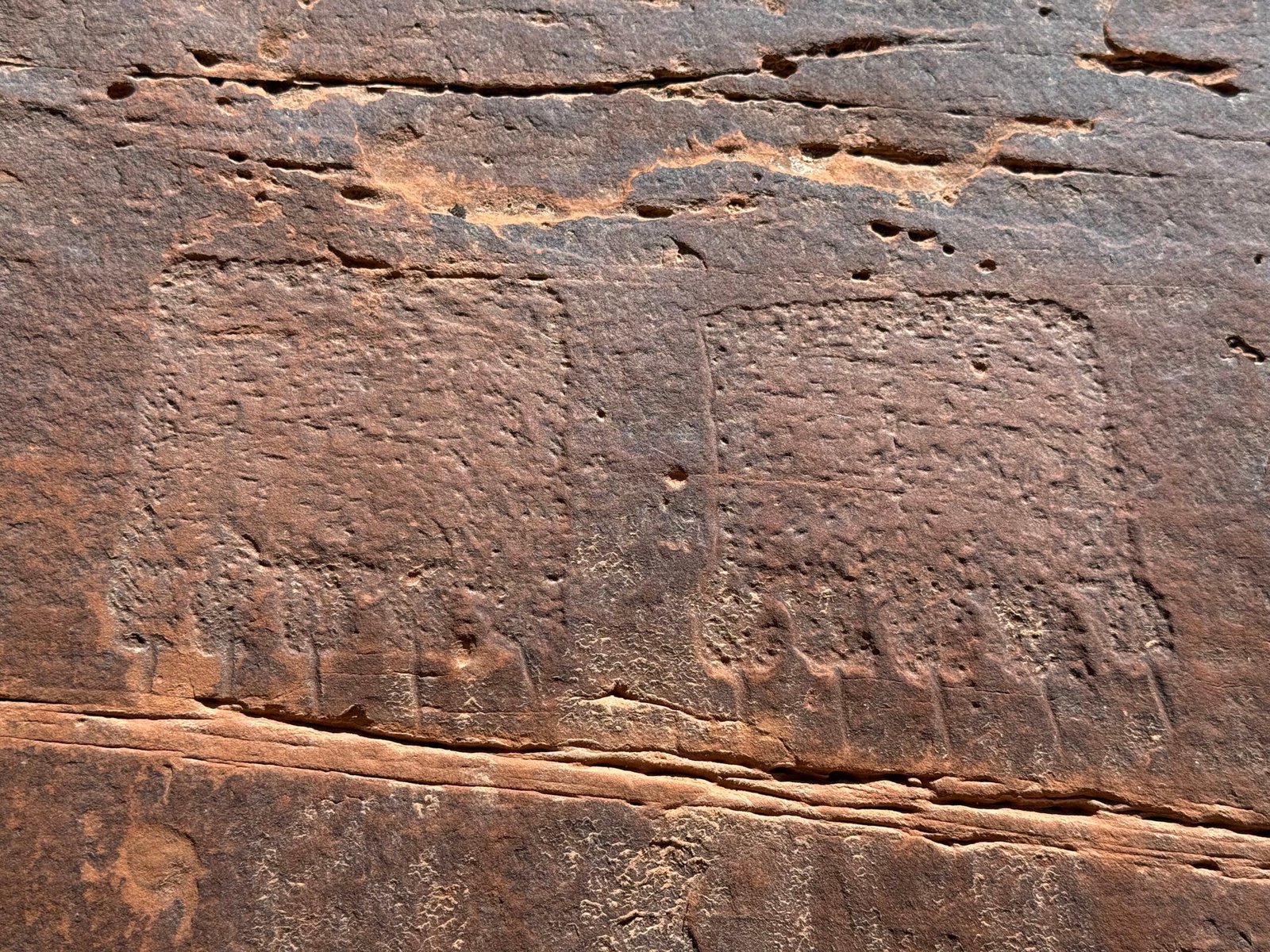
Maybe my favorite find of the day! Bear paws with claws!
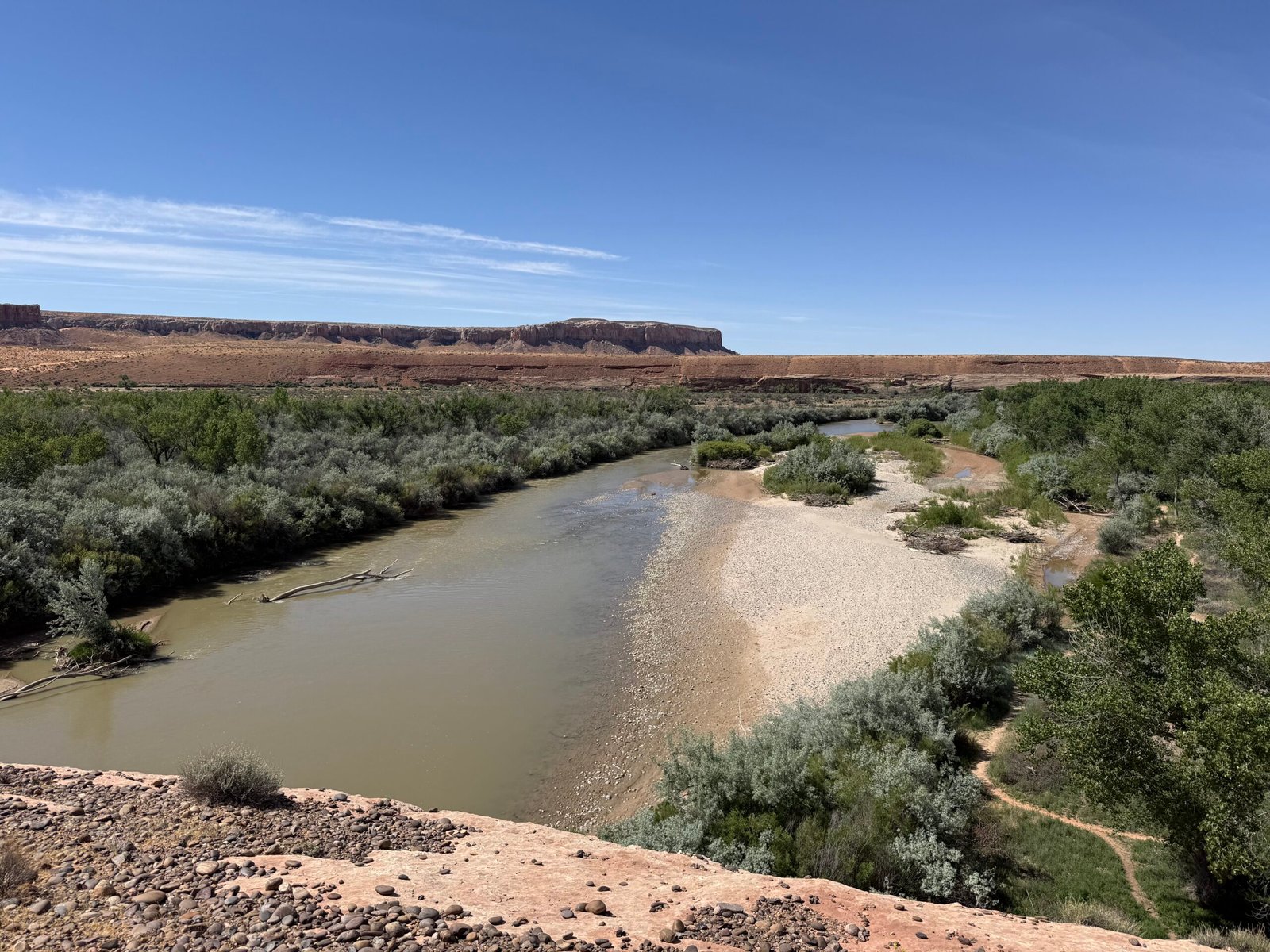
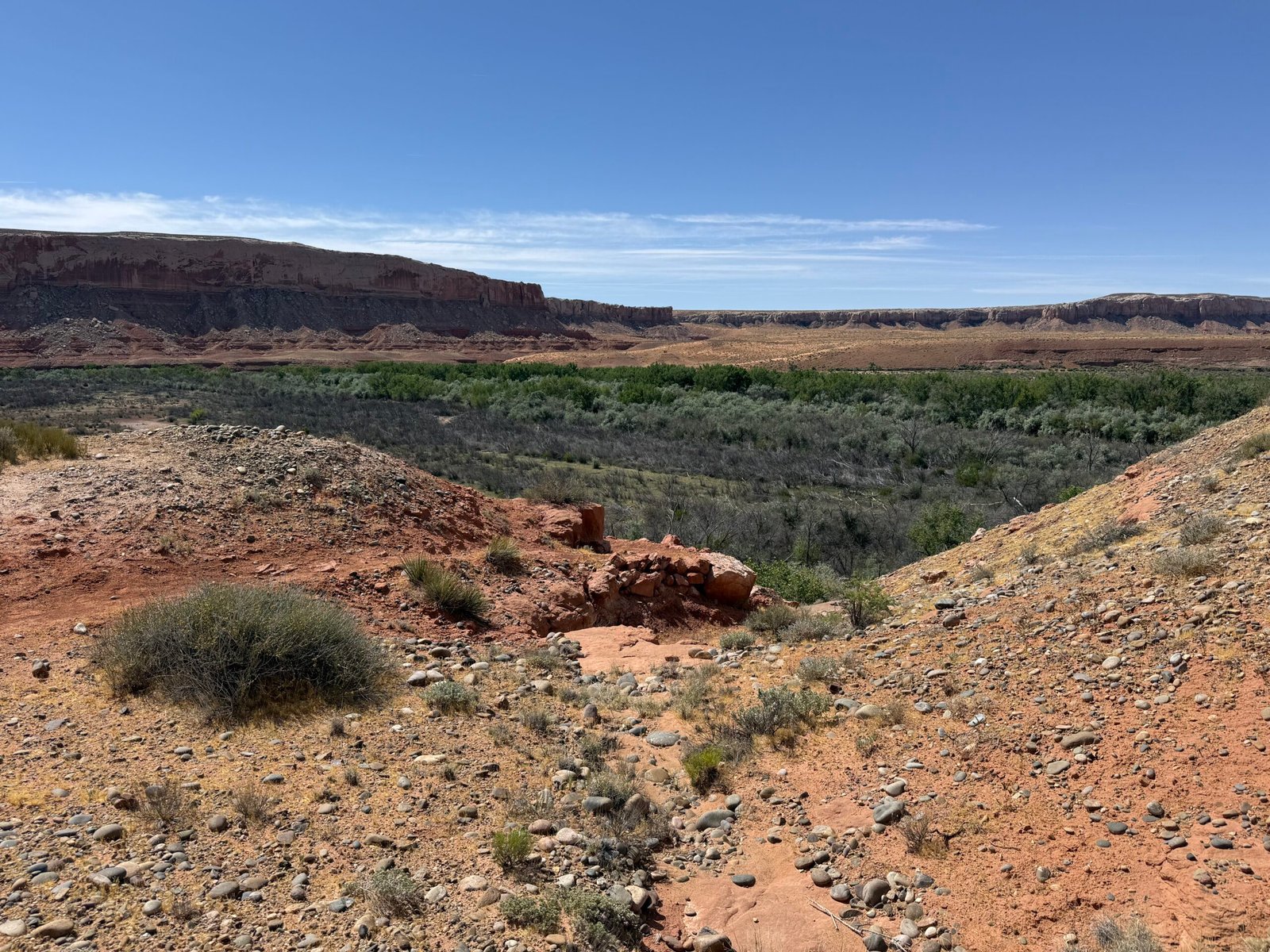
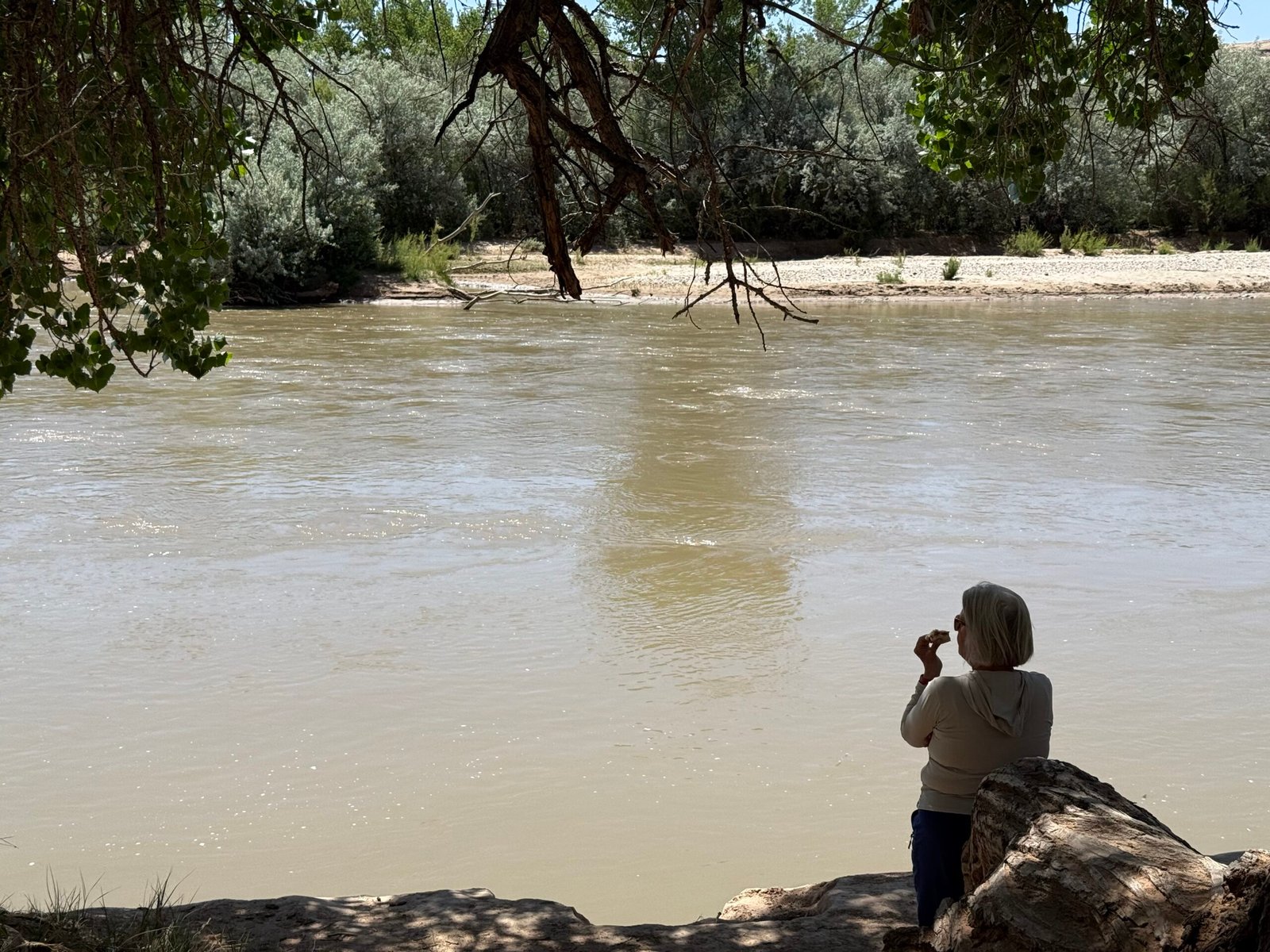
Such a beautiful place! I could live here.
It’s wild to imagine that in my formal education, I was taught that this was all essentially an empty desert wasteland. In fact, it has been alive with the peoples of many cultures for thousands of years.
And they are still here. Today the BEEC freely hosted an indigenous art market, with several tribes represented. I was looking over a Zuni couple’s fetish carvings and the man began to tell me how these were used. He would make them for people to help bring rain, or assist in healing, or other needs. Or maybe to help them with their spirit in difficult times. I said, “So these are to bring hope then.” He lit up and said, “Yes, exactly! Thank you for sharing that.”
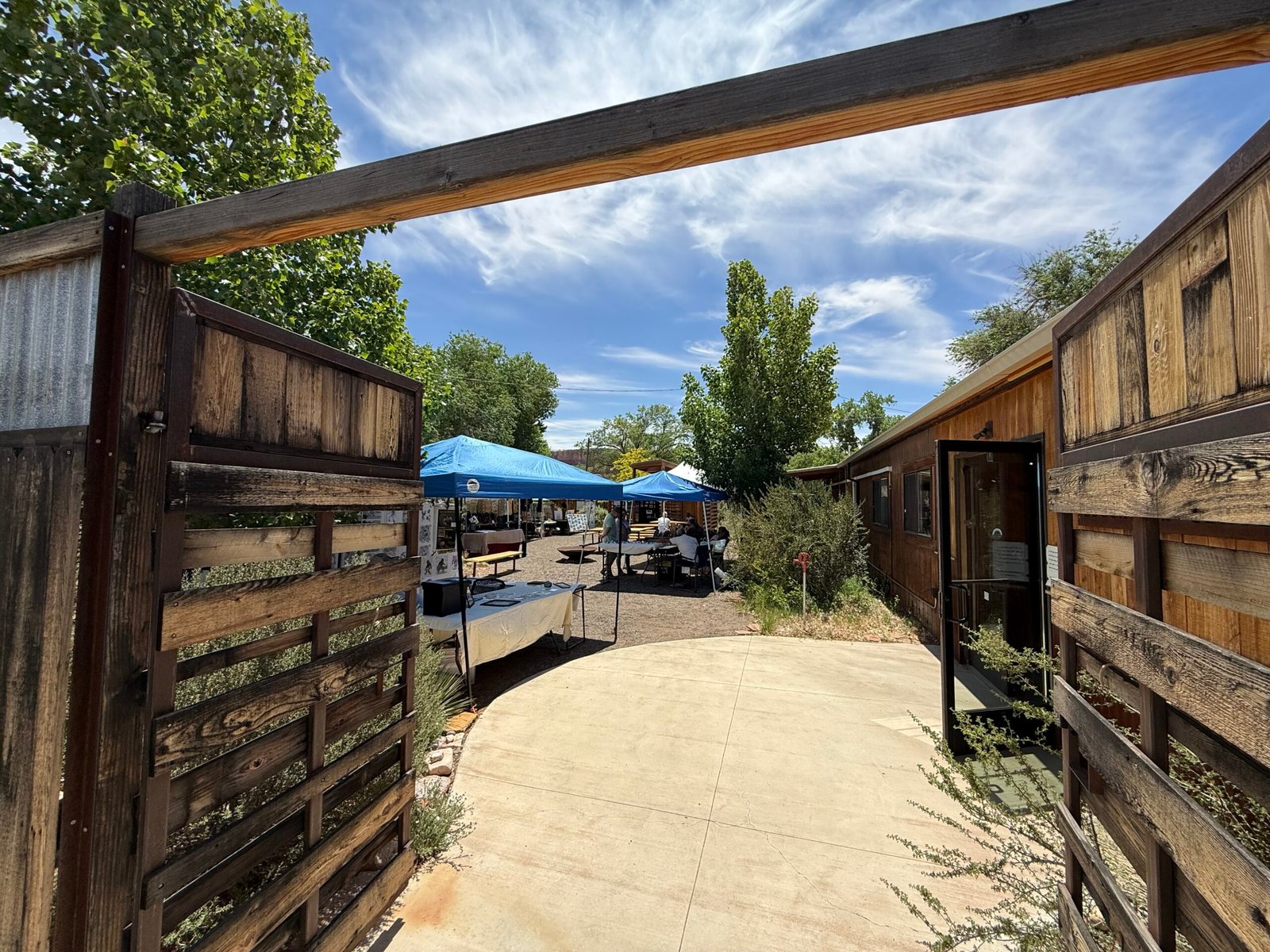
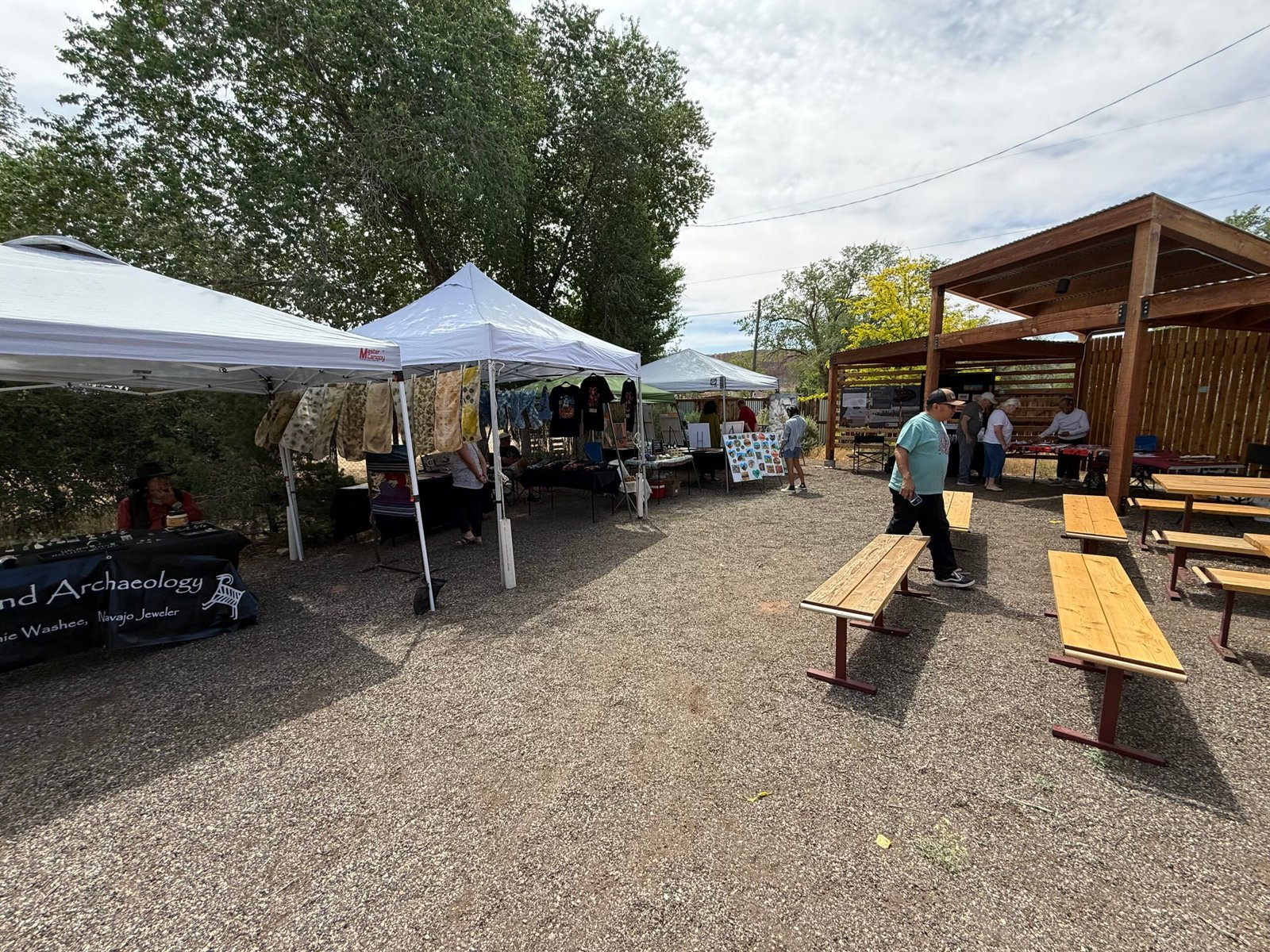
So much beautiful work. And we were able to see Leo Blackhorse and his wife Amelia. We had a nice chat last year and it was good to see him again. The market was a bit slow in the morning, but it picked up in the afternoon. And according to Brandon, there was a lot of cheery dialogue and laughter, while he covered the BEEC today.
Peoples.
Leave a Reply