#4 of the series.
Time is passing quickly. We hit the ground running, wanting to re-familarize ourselves with the area. It’s good to have on-the-ground experience with as much of the landscape as possible so you can at least exude confidence when talking to visitors. But this place is big, and visitors’ plans vary widely, so it’s always interesting. It looks like it’s going to be a great month, our new neighbor, Brandon, is awesome (more on that later) and we think that this year, while different, is shaping up to be an incredible experience.
There’s a synergy between the Visit With Respect (VWR) program and the Bears Ears Education Center (BEEC). While both are under the Bears Ears Partnership, a VWR ambassador is required to visit the landscape and interact with visitors from a rotating list of sites that are chosen for review.
As ambassadors, our goal is to engage with visitors in a meaningful way and share the cultural history of the area, the delicateness of the structures and art, and the concept that these are lands that over 25 tribes consider ancestral homes. In other words, these are not ruins with artifacts, but living structures and expressive art that are the heritage of a living people. And simple respect, even a reverence, is something to be practiced, and in fact, enjoyed.
But reviewing the status of a site is also important. Many are remote and it’s not so easy to drop by once a month. Most of this is BLM land and there are cattle grazing leases. And even though many sites are tucked away in alcoves and on bluffs, you’d be amazed on just how far a cow will wander! Sometimes we find dung even within the rooms of a partial structure. And of course, there are the human visitors. The vast majority are respectful, and more importantly, know how to be respectful, but damage does occur with the defacing of the rock, the unintentional leaning on structure walls or stepping inside to get the better shot. And what about those dogs?! Near and dear to our hearts! Easy enough just to leash them nearby for a short time (you did bring a leash, right?).
These things are centuries old, and it is such a treat, a blessing, and a testament to our shared heritage to be able to walk up to one of these amazing places without fences, walls, windows, or rules in order to experience it! But even good intentions, such as the collection of pottery sherds, left at the site and put “on display” on a wall, erases the history of where it was used. Maybe for cooking? Maybe for ritual? Maybe because it was just a really bad build and it was on the trash heap? No way to pull that back once the pieces have been moved.
And let me say something about our heritage. America is great, and it’s great because of its shared values. It’s great because it has been a beacon of hope to all peoples and all cultures. It’s great because it’s a democracy where everyone has a voice. The Statue of Liberty was donated by France in recognition of that greatness. You see, it’s our shared heritage that really sets us apart. A melting pot where it mostly melts, but savory chunks remain. Who wants creamed corn? Ugh. But it’s always work and always a challenge. Winston Churchill once famously said (paraphrasingly), “A democracy is the worst form of government possible…except for all the other forms of government.”
A revelation for me occurred on our trip to Bears Ears this year. We typically try to find audio books for the journey that are relevant to our destination, and our choice this time was 1491 by Charles Mann, a discussion of what the Americas were like just before Columbus landed (known as the pre-Columbian period). It’s a fascinating listen. One thing that popped out was the Indian belief in absolute personal freedom. This was pretty much universal across the Americas. Another is how extensively populated and managed the Americas were. There was a tremendous population decline due to the diseases that arrived with, and many times ahead of, the arrival of the europeans.
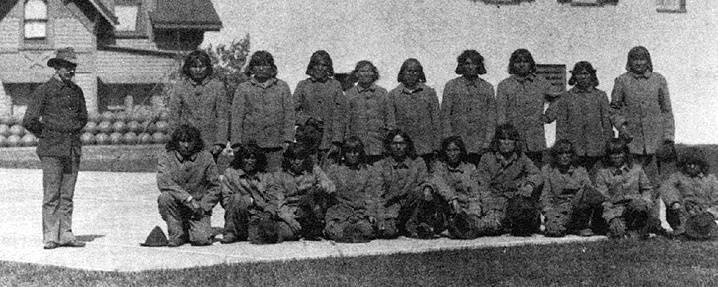
The culture challenge also struck me a couple of years ago when Patricia and I listened to the Hopi Survival Kit, a very quirky book by Thomas Mails that turned out to be both tedious and quite amazing. It relayed the story of how the Hopi would not compromise their beliefs and were the last of all the tribes to submit to the U.S. government’s attempt to “educate” the youth by transferring them all the way to Pennsylvania to the Carlisle Indian School. This is the place where they could no longer speak their native tongue, would have their hair cut, would be taught “proper” religion, and generally would be “rehabilitated” into modern “civilized” society. You see, “reservations” were supposed to be temporary. Once the red man was indoctrinated and educated from his “savage” ways, he would be absorbed into the culture and the reservations dissolved (to the highest bidder I am certain). Similar to the story of the diaspora of the Jews.
Did you know that, because of their resistance, our U.S. government manipulated the Navajo with land acquisitions and favoritism to eventually surround the Hopi on a reservation much smaller than their heritage? The Hopi would still not compromise their beliefs, and in 1895 nineteen Hopi Elders were rounded up and sent to the maximum security prison Alcatraz because they refused to send their kids east to Carlisle. To lose one’s language is to lose one’s culture, and they knew it.
In the northern U.S., the Potawatomi people were moved out of the Great Lakes region along the 1838 “Trail of Death” to Iowa, Kansas, and Oklahoma. Robin Kimmerer, a Potawatomi, has written several excellent books. In Braiding Sweetgrass, she relays some of the differences in cultures and how language is key. The Potawatomi language is ~75% verbs. Contrast this with the English language where it is ~75% nouns. For the Potawatomi, the English word “lake” or “river” means “to be a lake” or “to be a river.” This is a startling difference in world views. And it makes sense that our English culture is more focused on objects, material possessions, and the acquisitions thereof. It is something to think about. At the very least you can see the shock involved in losing your language. What if we today were to think in actions rather than objects?
In my humble opinion, our country will be much richer if we learn from our past mistakes and embrace the many cultures that have added to what we believe our great nation to be. To not do so is to follow the path of every failed society in history, it’s just a matter of time. And honestly, as we look to celebrate 250 years, we should also understand that many of these cultures lasted far longer.
It gets real, real fast.
And now, a breaking story from the BEEC just today:
A middle-aged hiker came in today. Before he left, he sheepishly shared his story. I think this is because he is obviously an experienced desert hiker, and while knowing it may be a bit embarrassing, he felt it necessary to share what happened so that others could benefit.
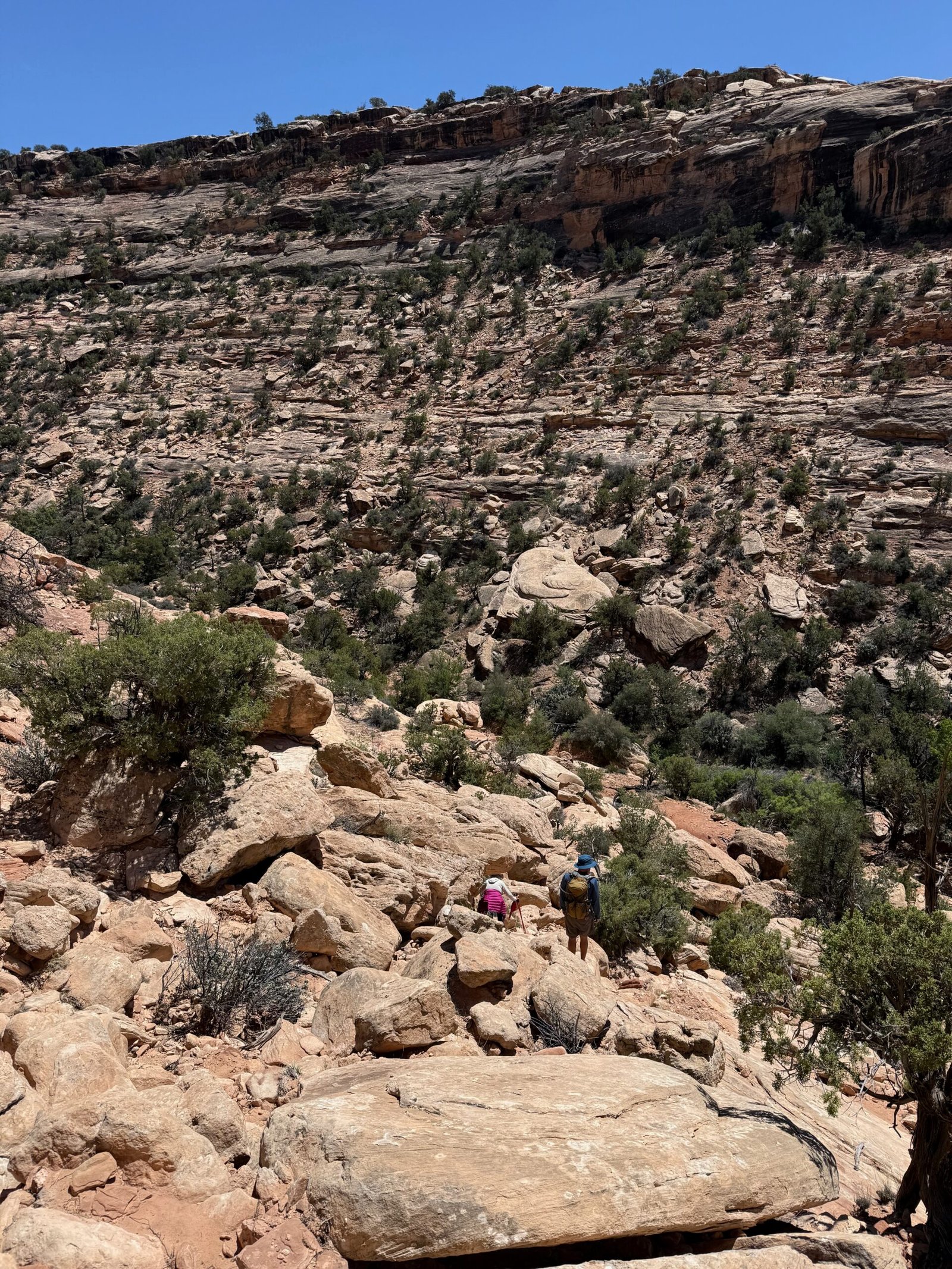
He started his hike on May 10 at 6:45am with plenty of water. Dropping into a canyon, he was doing pretty well so he decided to reach for Grand Gulch. Around 2pm the heat and boulder climbing on the way out took their toll. These canyons are not necessarily deep but they are rugged, and much like the Grand Canyon, once inside they are like ovens. Slipping in a section of slick rock, he fell and heavily scraped his arm and leg, bumping his head in the process. Even with plenty of water, the heat and effort of the climb induced heat stroke. The man was smart, and while monitoring his heart rate at 140, he worked 20 yards at a time with 10 minute rests (shade to shade). But he began throwing up, and he was losing the water that was vital for his survival. Fortunately, he finally made it out around 8pm and drove back to camp. He stayed in his tent all the next day recovering. While his desert experience and carefulness actually saved him, he knows all too well that he was close to losing his life. A lesson that he will never forget.
Weirdly, one of the next persons that came into the BEEC had forgotten his map with all his annotations. Unwilling to buy a new one, he asked for help on trails in the very same area. I pulled out a desk copy and he surveyed the loop he wanted, trying to commit the trail to memory and wondering out loud if the Grand Gulch portion was well-marked. He was an older, and obviously experienced gentleman, so I relayed the story I had just heard. “Well, he obviously didn’t know how to drink his water!” I expressed that the hiker was experienced and I tried to make the impression that the intensity of the sun is much more than the temperature alone may relate. Maybe he will take it to heart. You can lead a horse to water…
So what’s the surprise?
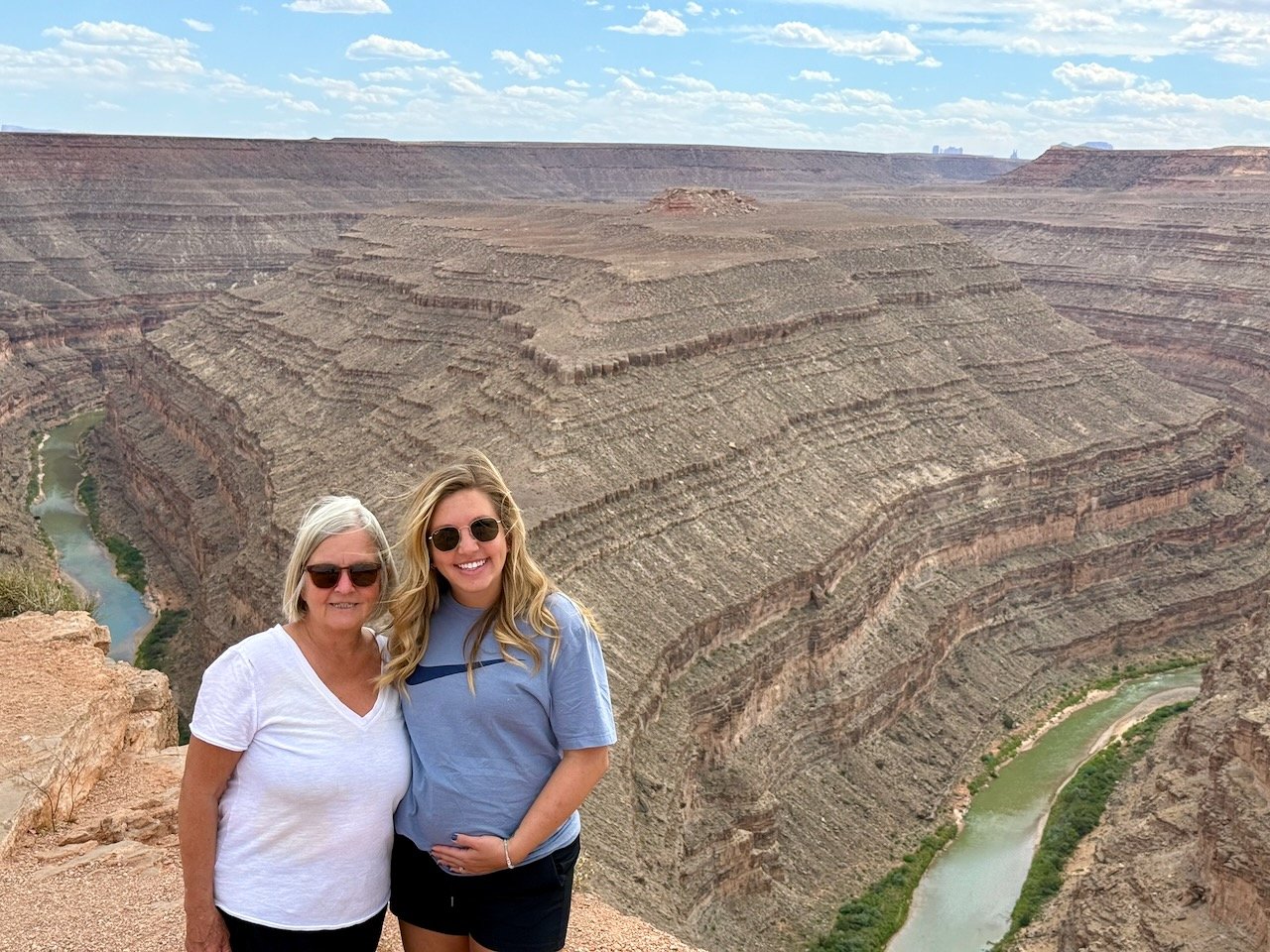
Well! Our daughter Rachel was looking at possible flights here in order to team up with our grandson Whit and visit for a few days. While Whit had obligations, a little bug in Rachel’s ear kept her looking, and she found cheap tickets to Durango that fit her schedule. Needless to say, this altered our plans! But that’s the nature of it, and it was such a blessing to have her come out and see what the community is like. Did we mention that she is (nearly) five months with her first child?
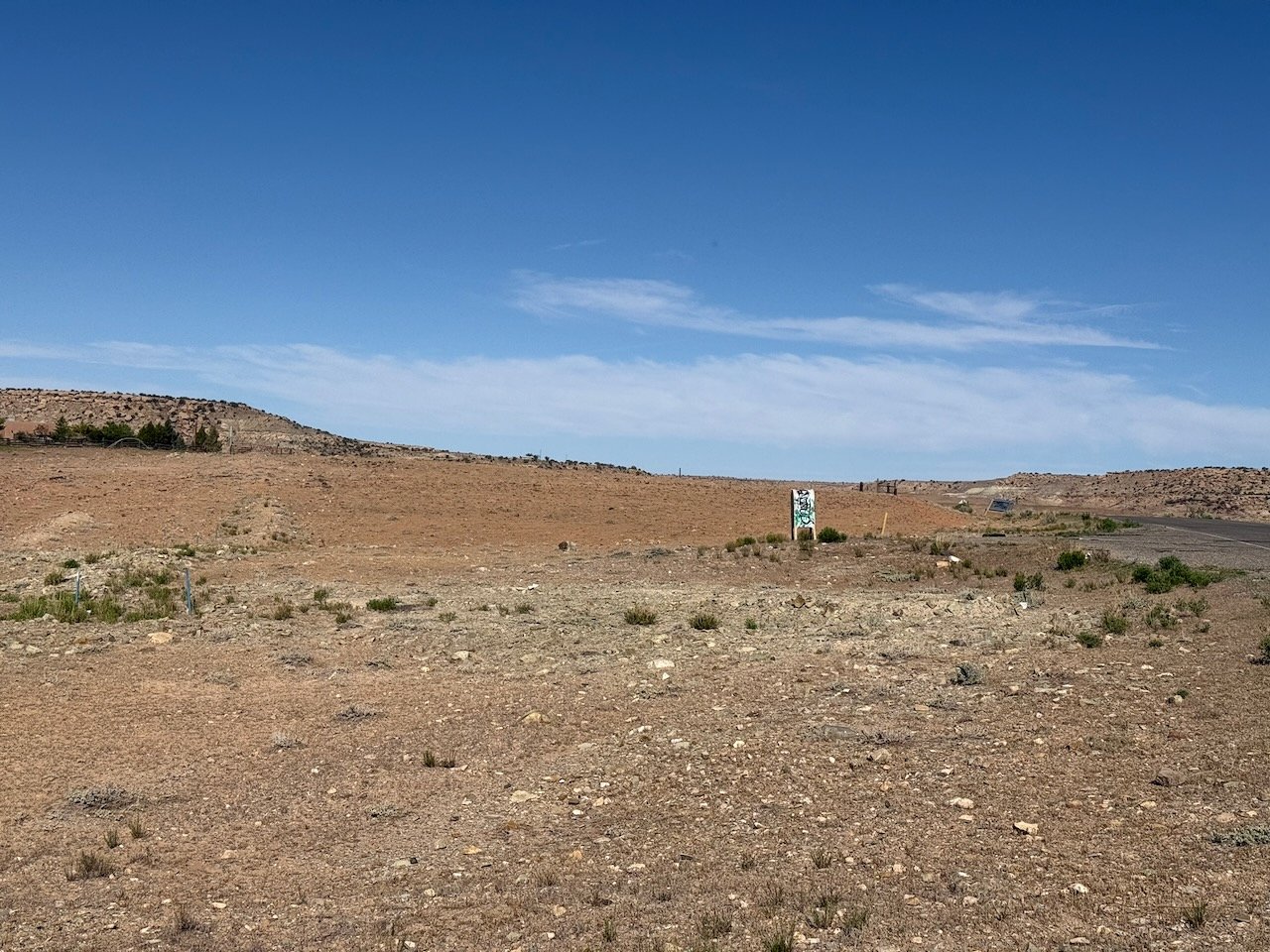
On the way to Durango to pick her up, I chose the “middle” route that rolls through some very sparse country near Hovenweap National Monument. At an intersection, I was surprised to see…a mailbox? It was legit, with a hefty padlock on the door! The mail must get through…
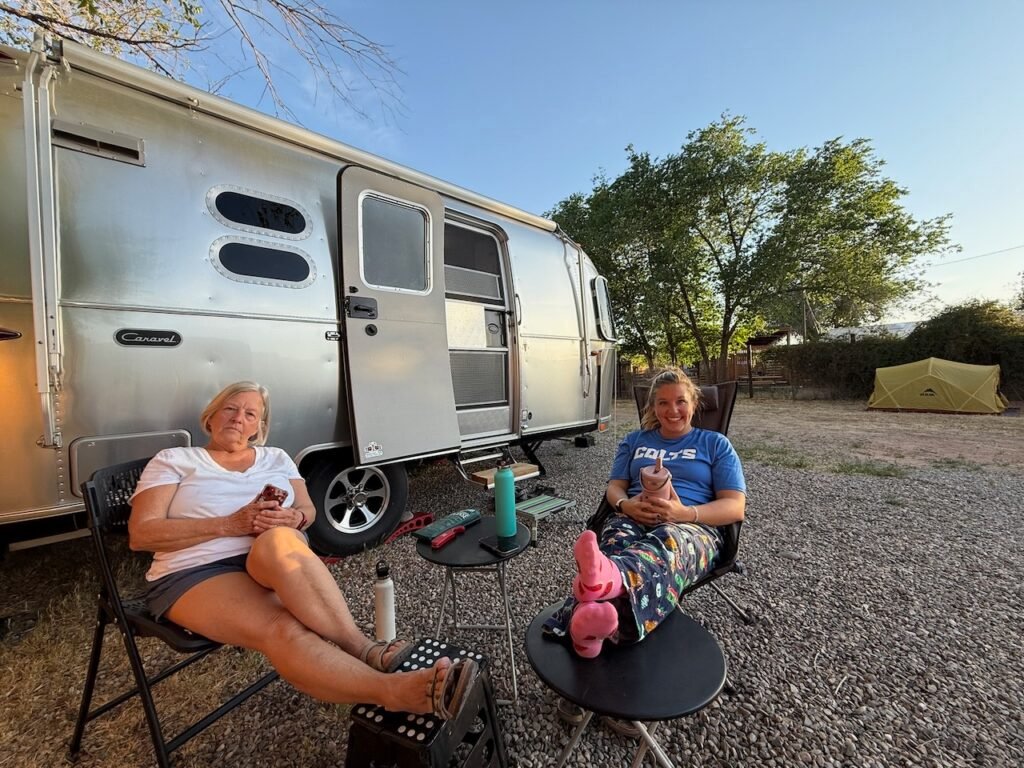
Our Airstream sleeps four, but only if we break the dining table down, and even then it’s gonna be cozy. This obviously meant I was evicted to one of the tents we brought along (I chose the luxurious MSR “Mutha Hubba,” created after the popular “Hubba Hubba,” which was created after the even more popular “Hubba”).
This tent Taj Mahal was complete with expansive floor space and extensive ant control. And by that I mean that the ants controlled it. They patrolled it in large numbers by day, walking all available surfaces looking for food or keeping ne’er-do-wells away from their nests. During the day they defended it as their own, but at each dusk the multi-hundred lot of them would retire to their dens and nary a cross word was spoke between us (per an unwritten protocol where the screen door was zipped tight, a lesson learned many moons ago in Tennessee).
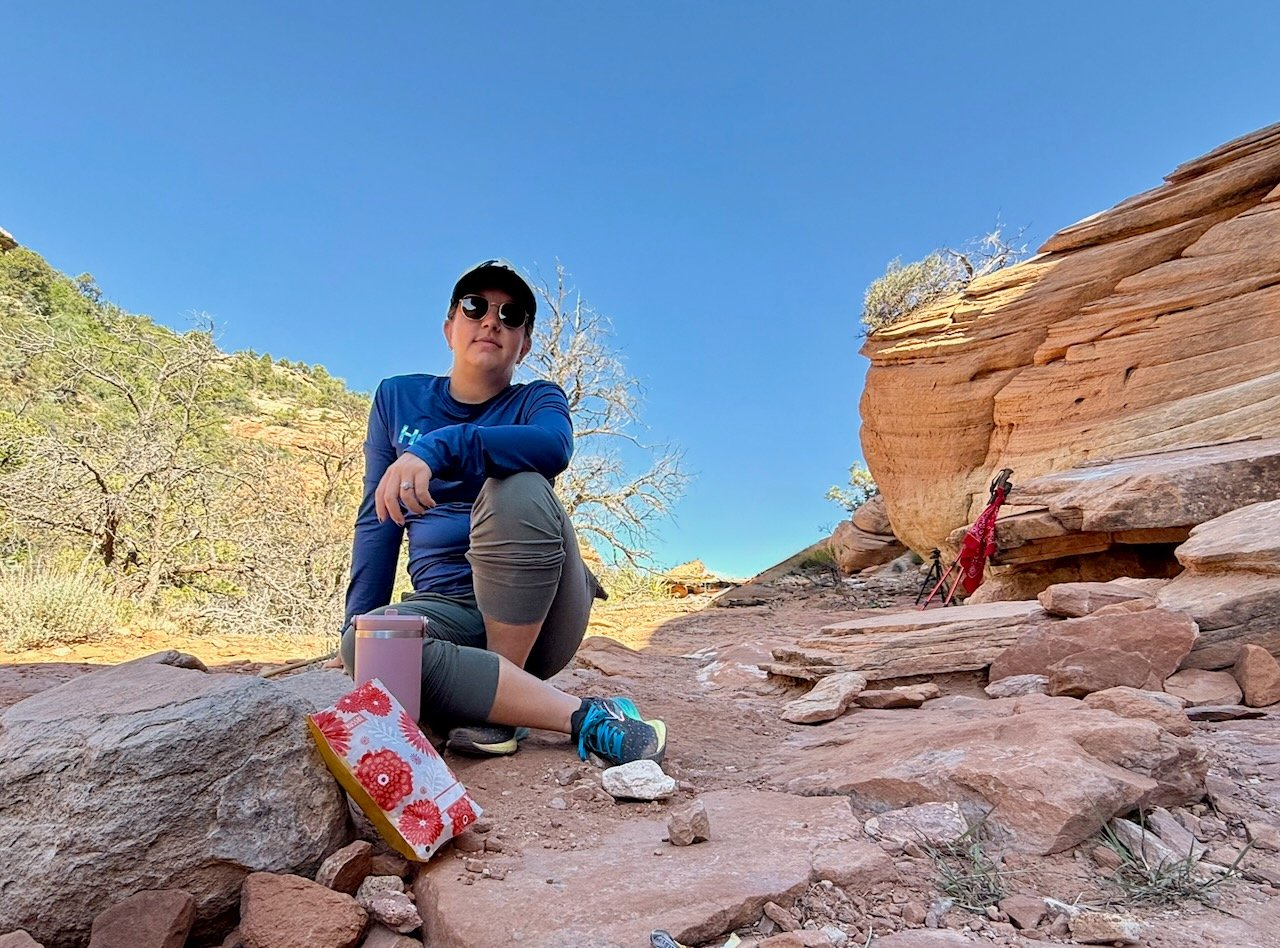
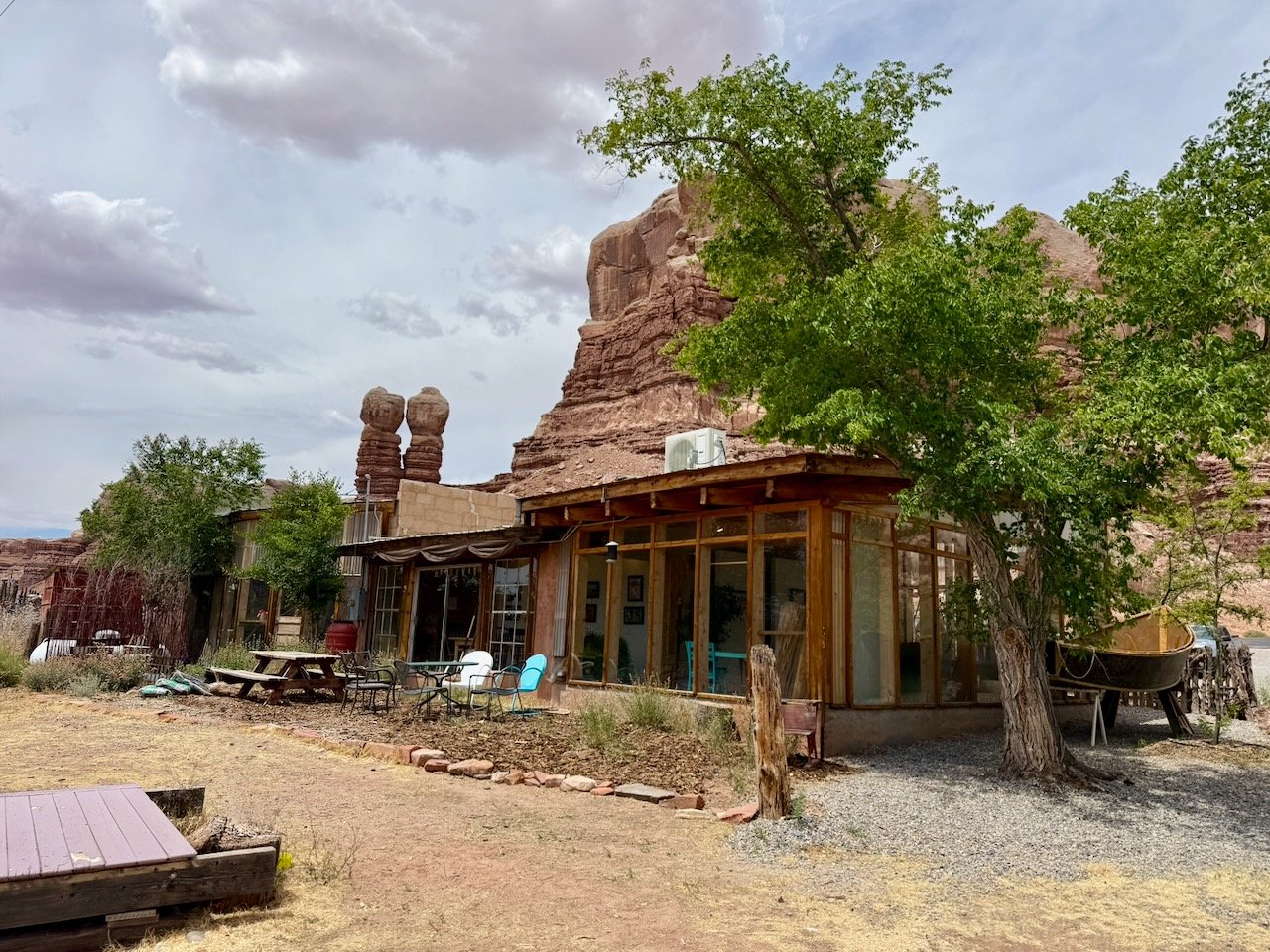
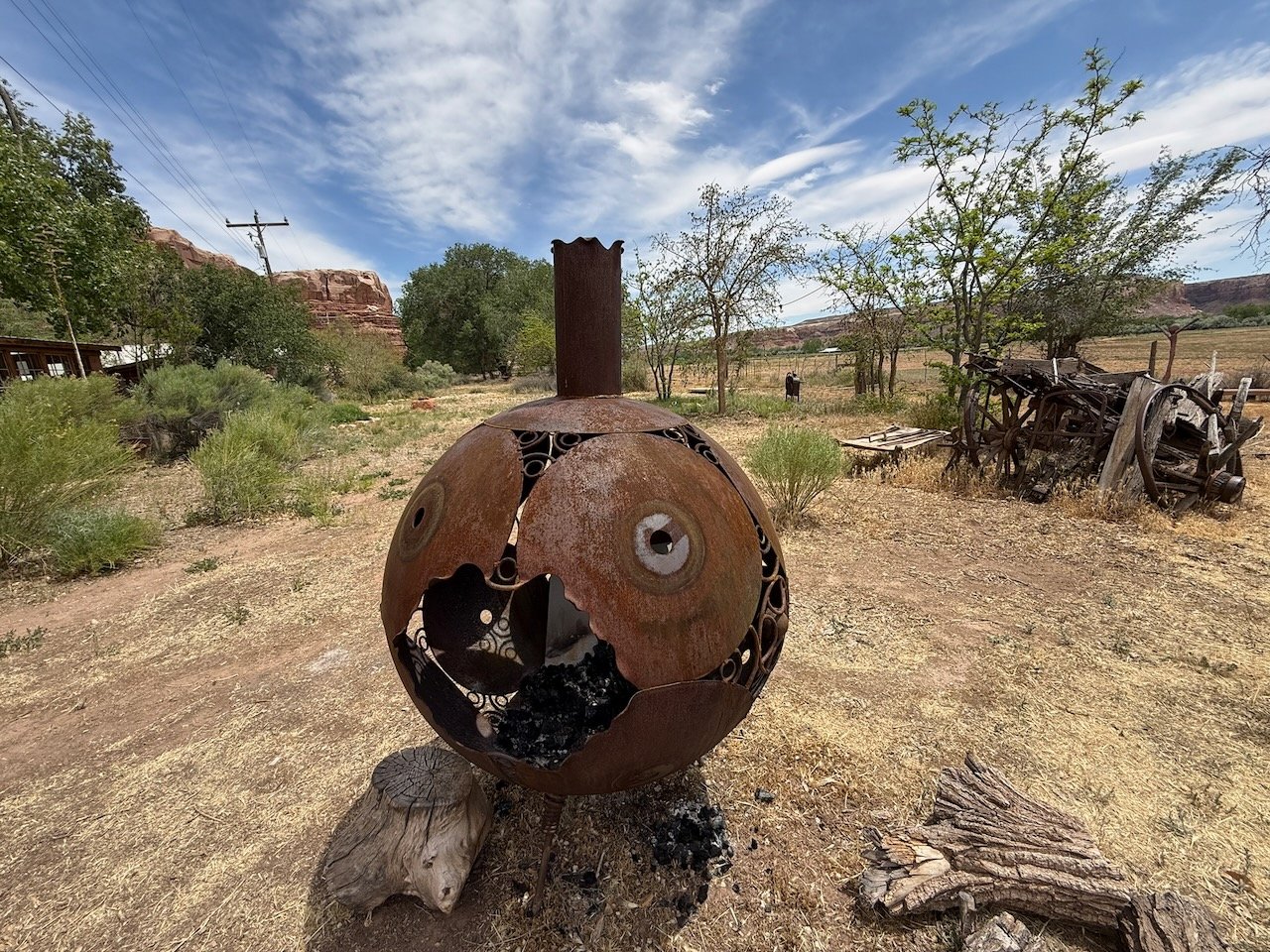
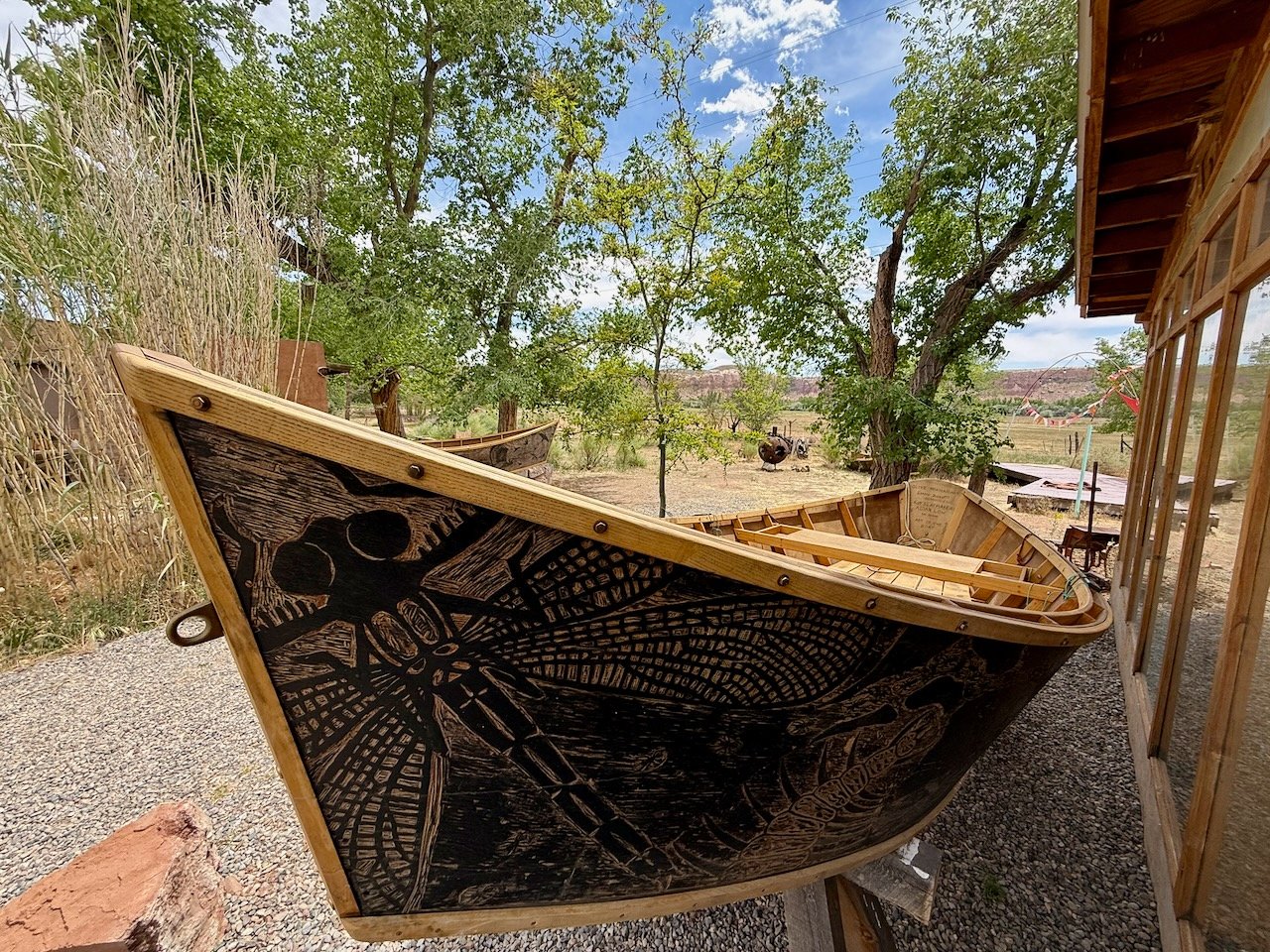
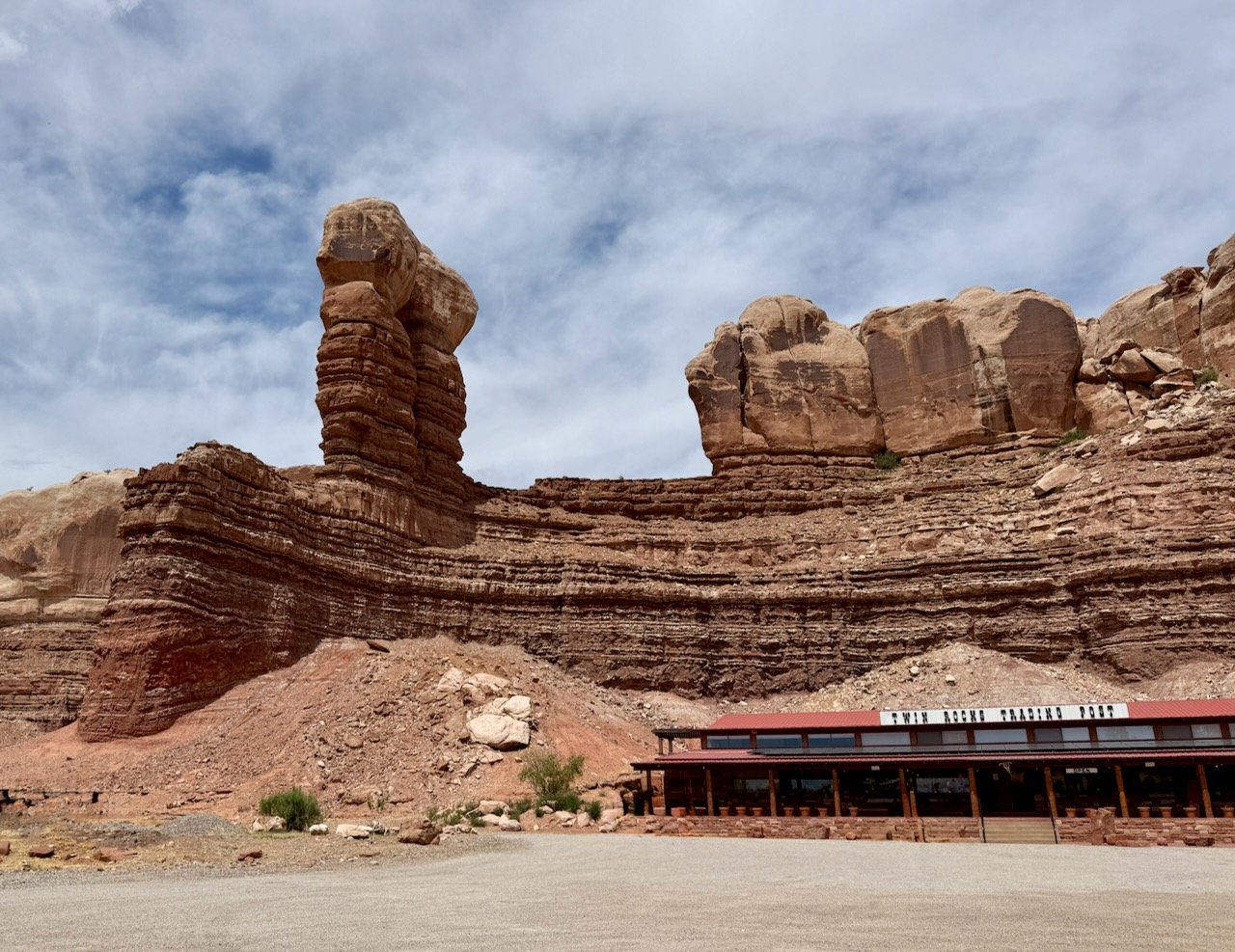
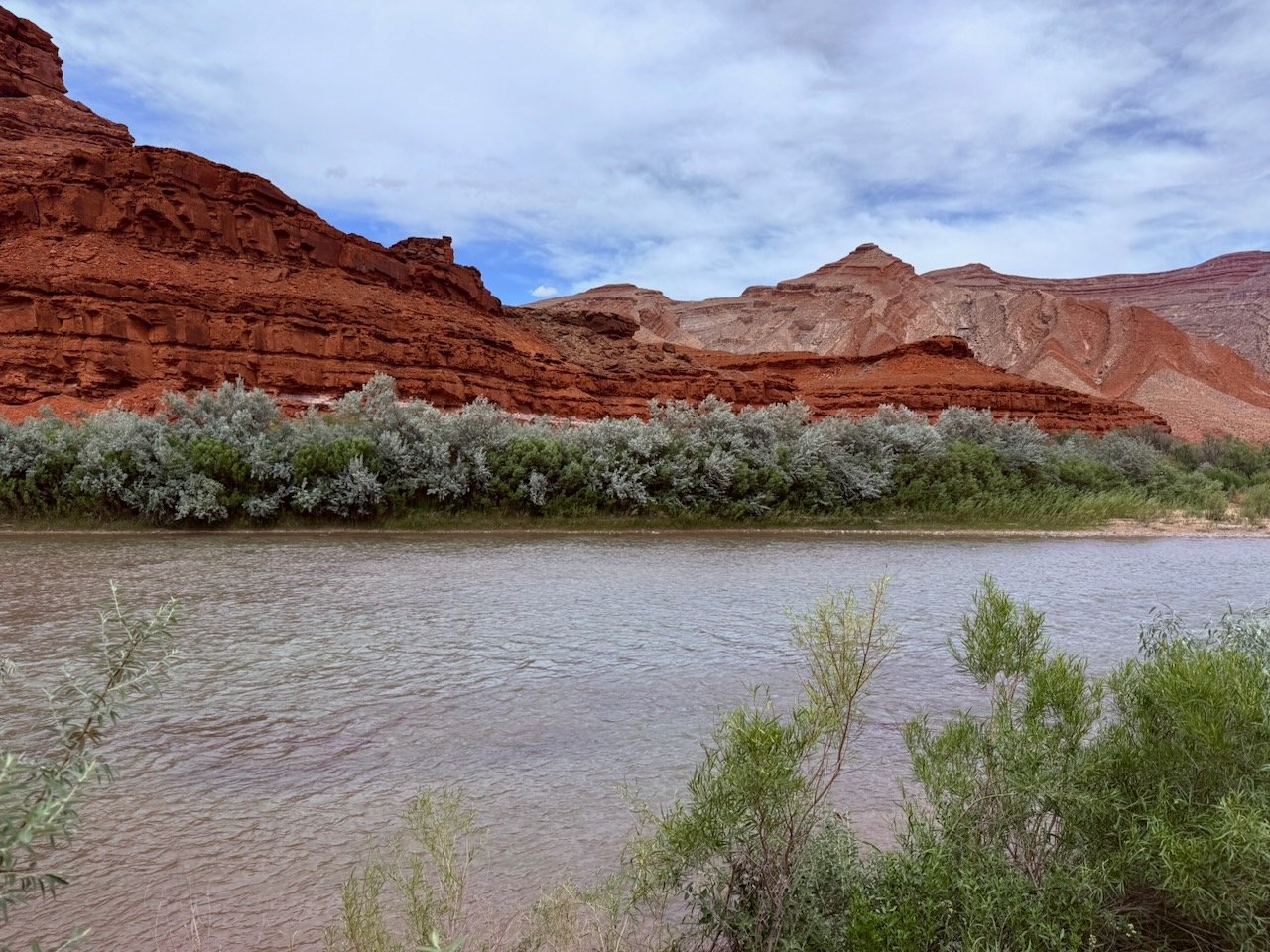
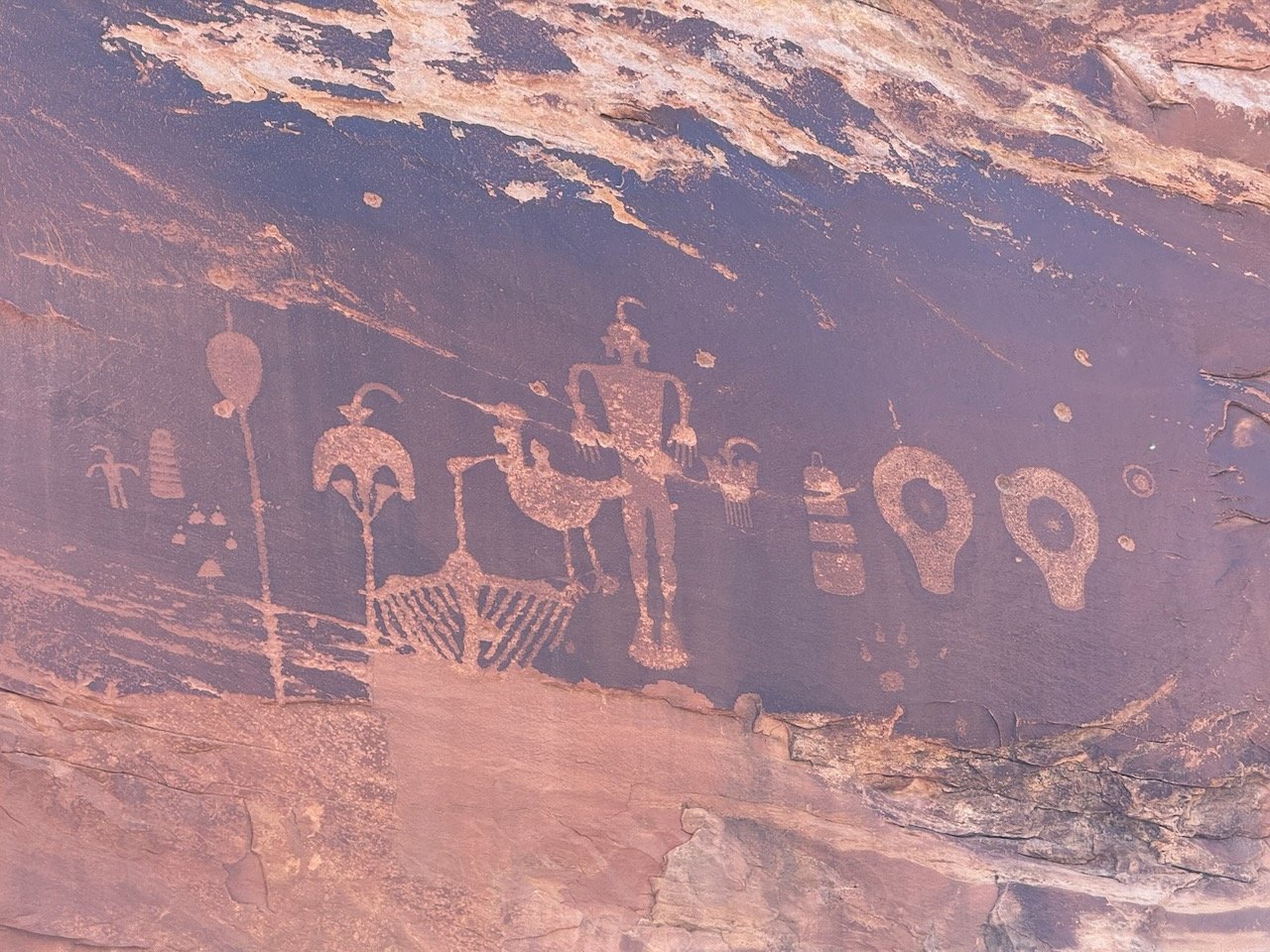
Rachel got a good taste of Bears Ears and life in Bluff. She met the BEEC team, she had Cow Canyon coffee, dined at Comb Ridge Eat & Drink, ogled fabulous indigenous artwork that mere mortals are hard-pressed to afford, explored the Comb, walked the wash, trekked to a couple of structures, saw the San Juan River, rambled through the Valley of the Gods, leaned over the Goosenecks, experienced the Moki Dugway, considered Mexican Hat, visited House on Fire, and reveled in some of the beautiful rock art and the mysteries they hold. Oh wait, I forgot about the quick drive through Mesa Verde and the visit to Edge of the Cedars Museum!
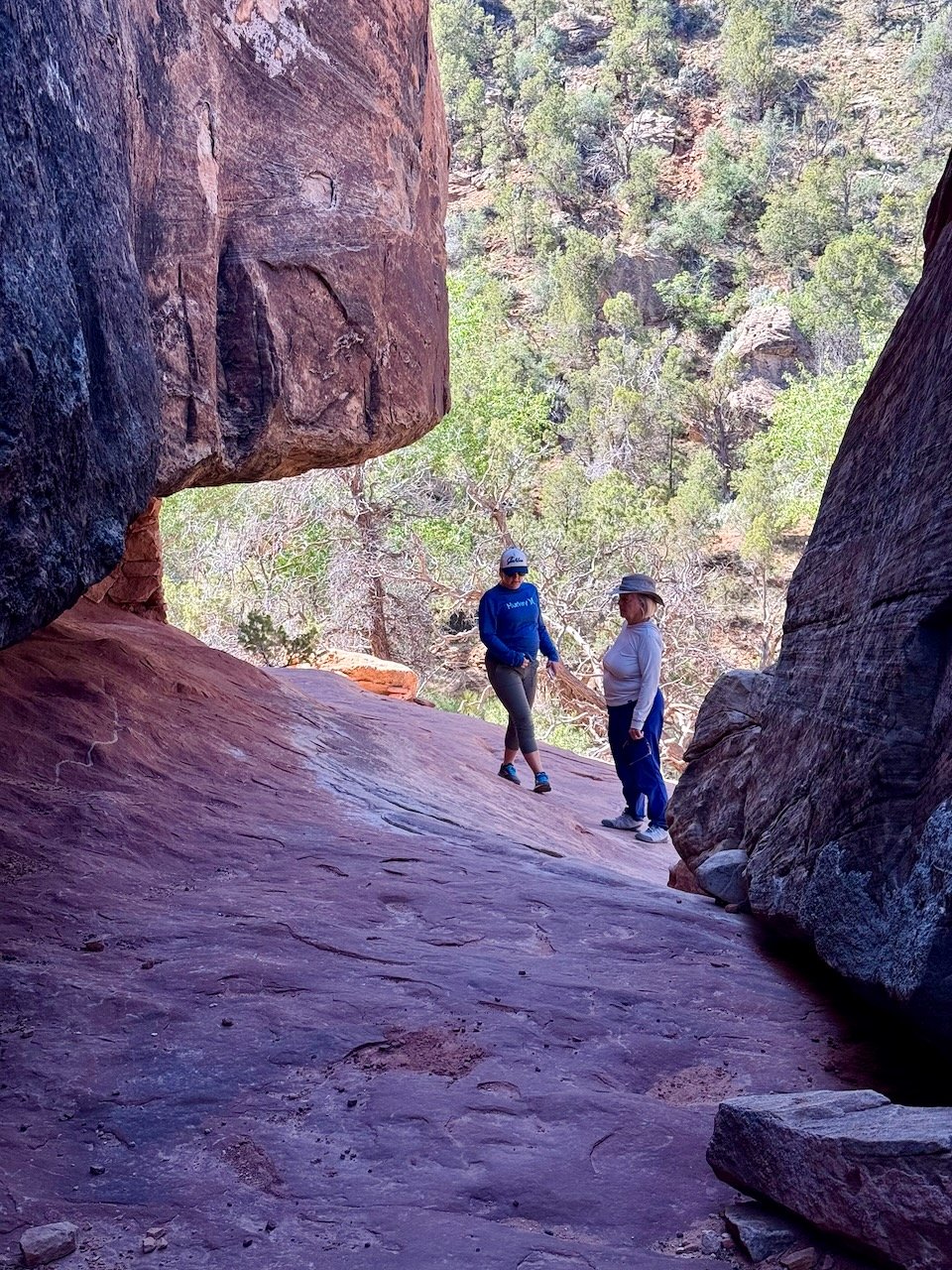
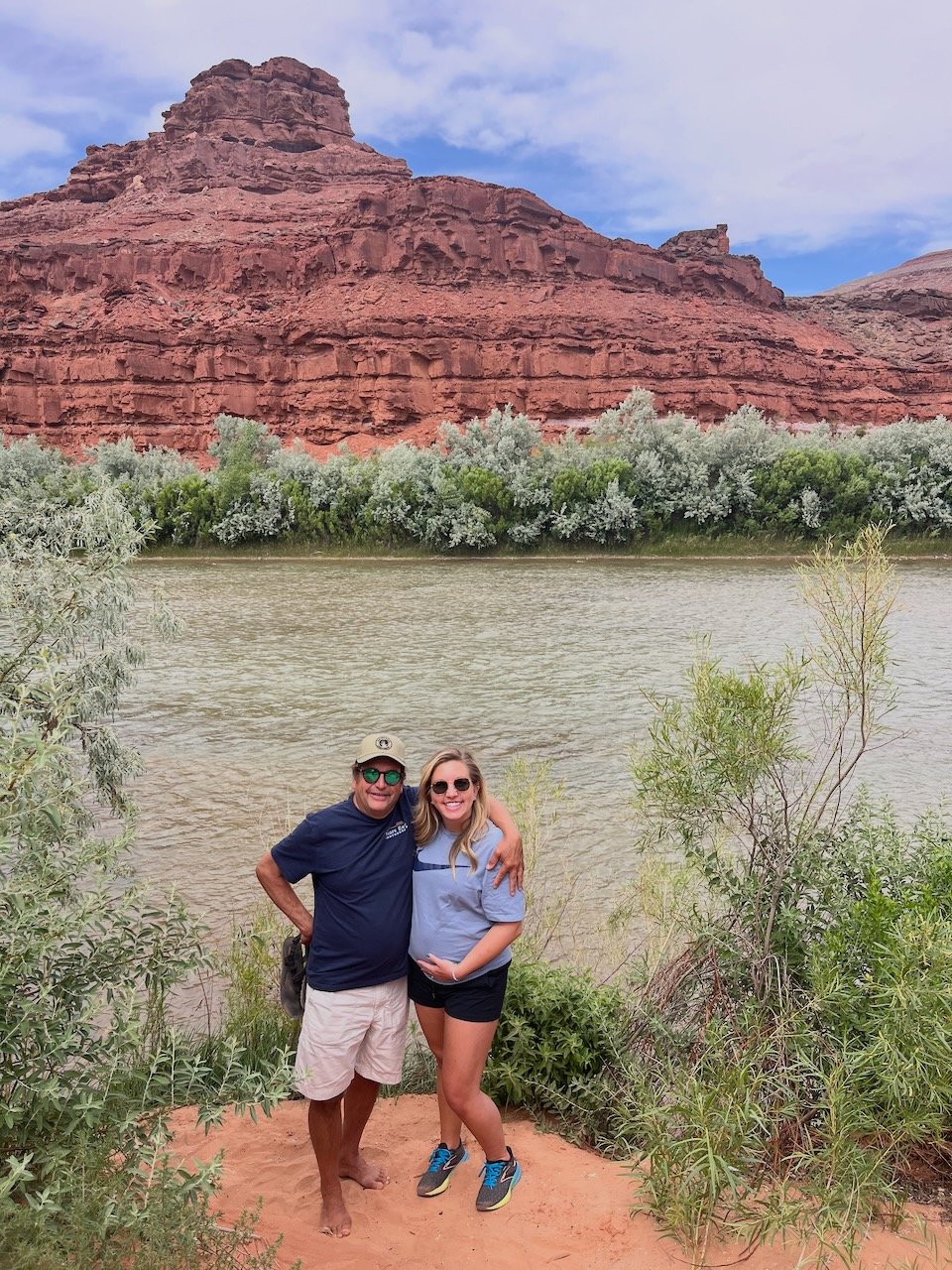
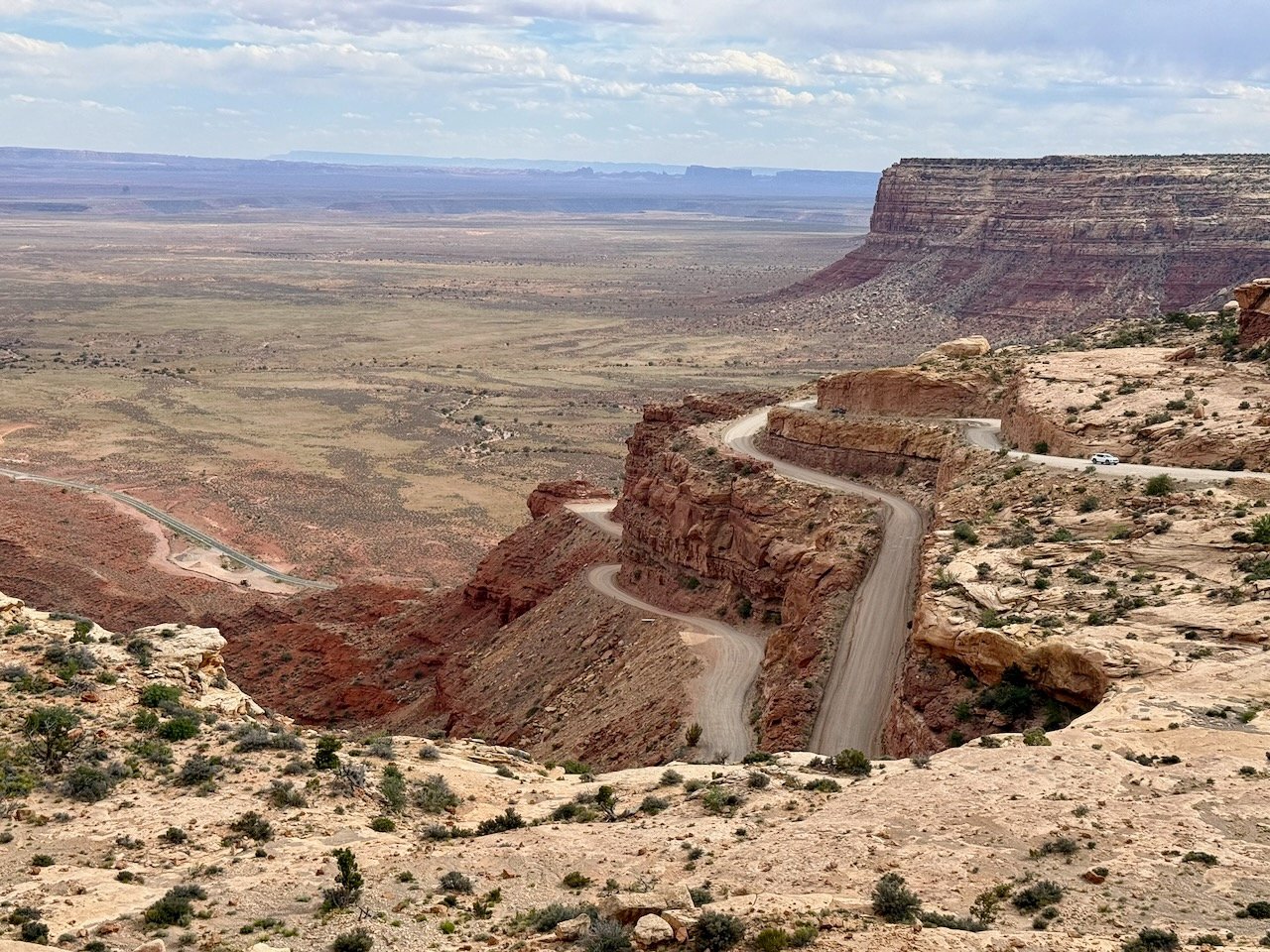
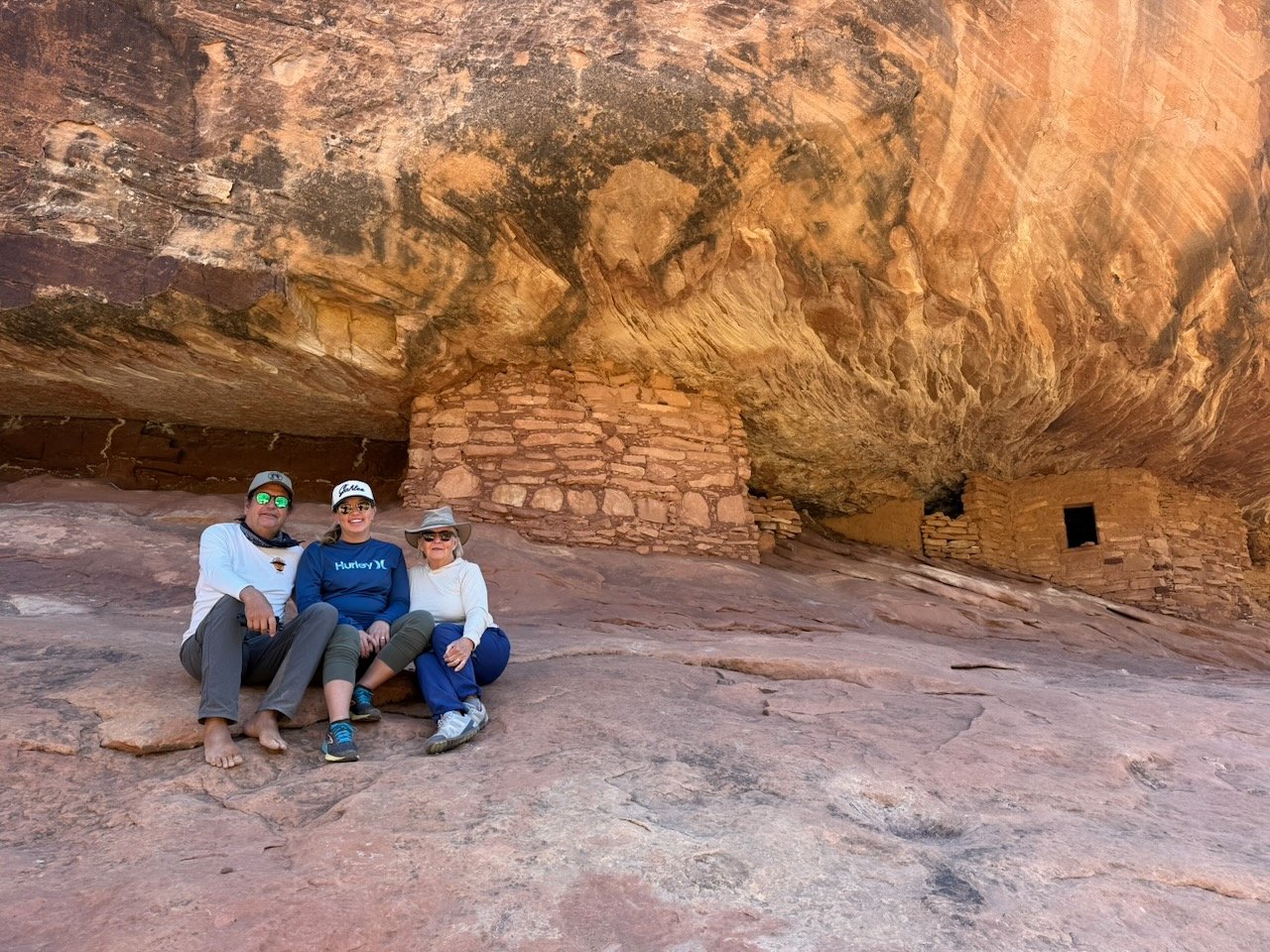
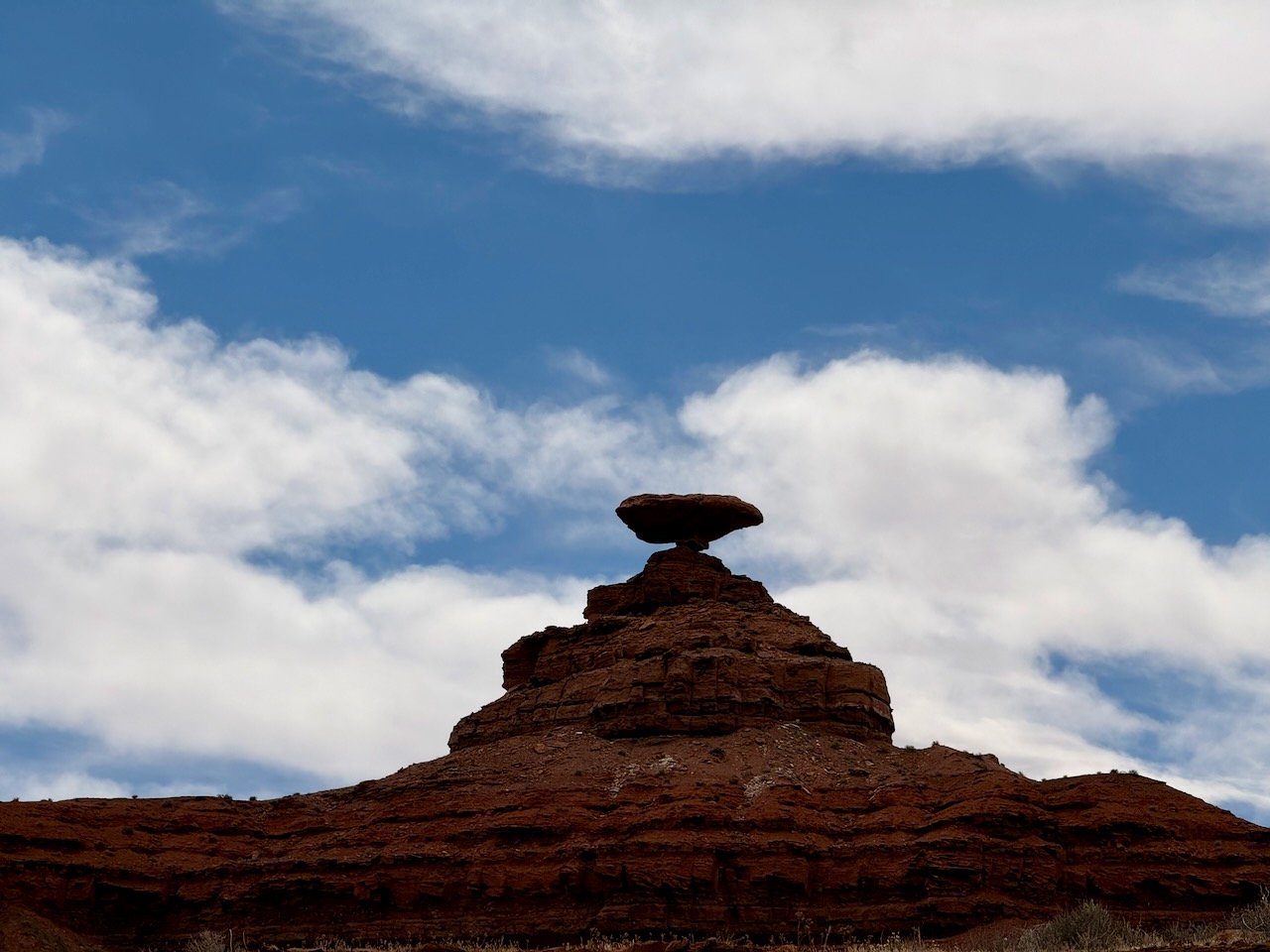
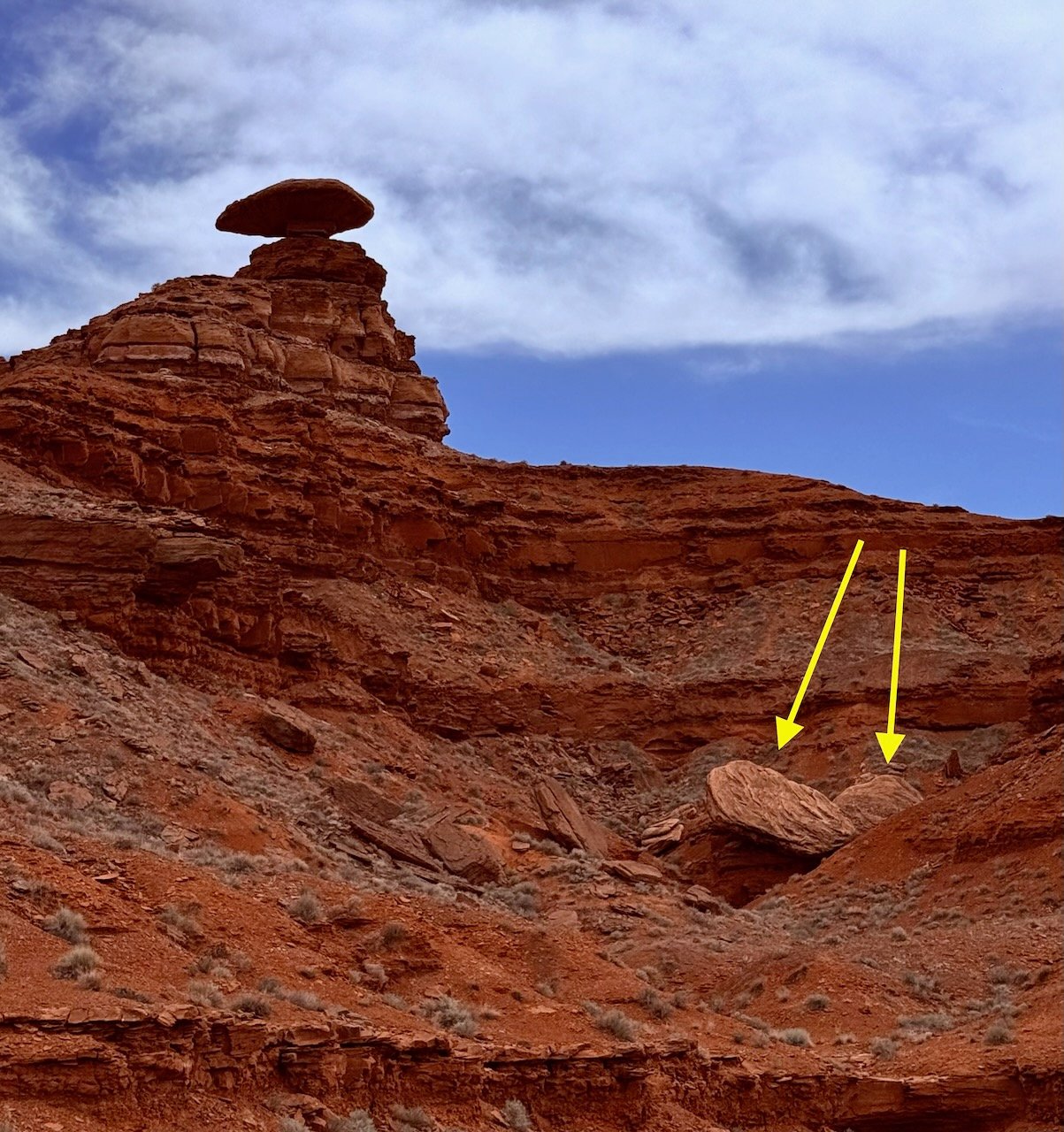
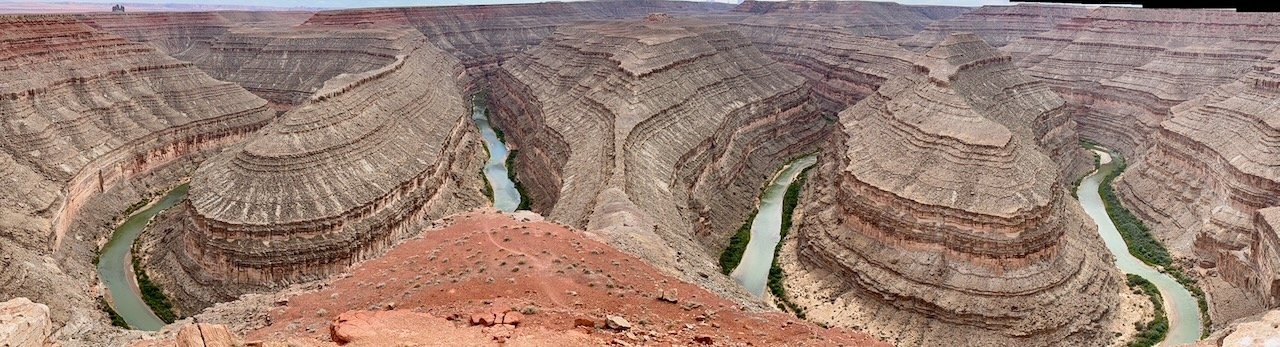
On the way back to the airport, Rachel commented on how she understood just how hard it might be to blog on the experience at Bears Ears.
There are more tales to tell, but maybe this is enough for now.


Leave a Reply