#2 of the series.
Maybe it was the Trail through Time trail. Maybe it was what appeared to be just a few widely-spaced primitive campsites on top of the mesa. Or maybe it was $20/night cut to half-price for being old. Whatever it was, we booked a couple of nights to give us a little breather.
Rabbit Valley campground is split by I-70 and is about two miles from the Utah state line. The southern half is apparently more for OHV and horse camp setups, while the northern part seems to be better suited for smaller rigs and the MTB crowd. We chose the mesa and had just incredible views all around. Nice and clean and quiet. This was the first and only time we unhooked the trailer from the truck in our two weeks west.
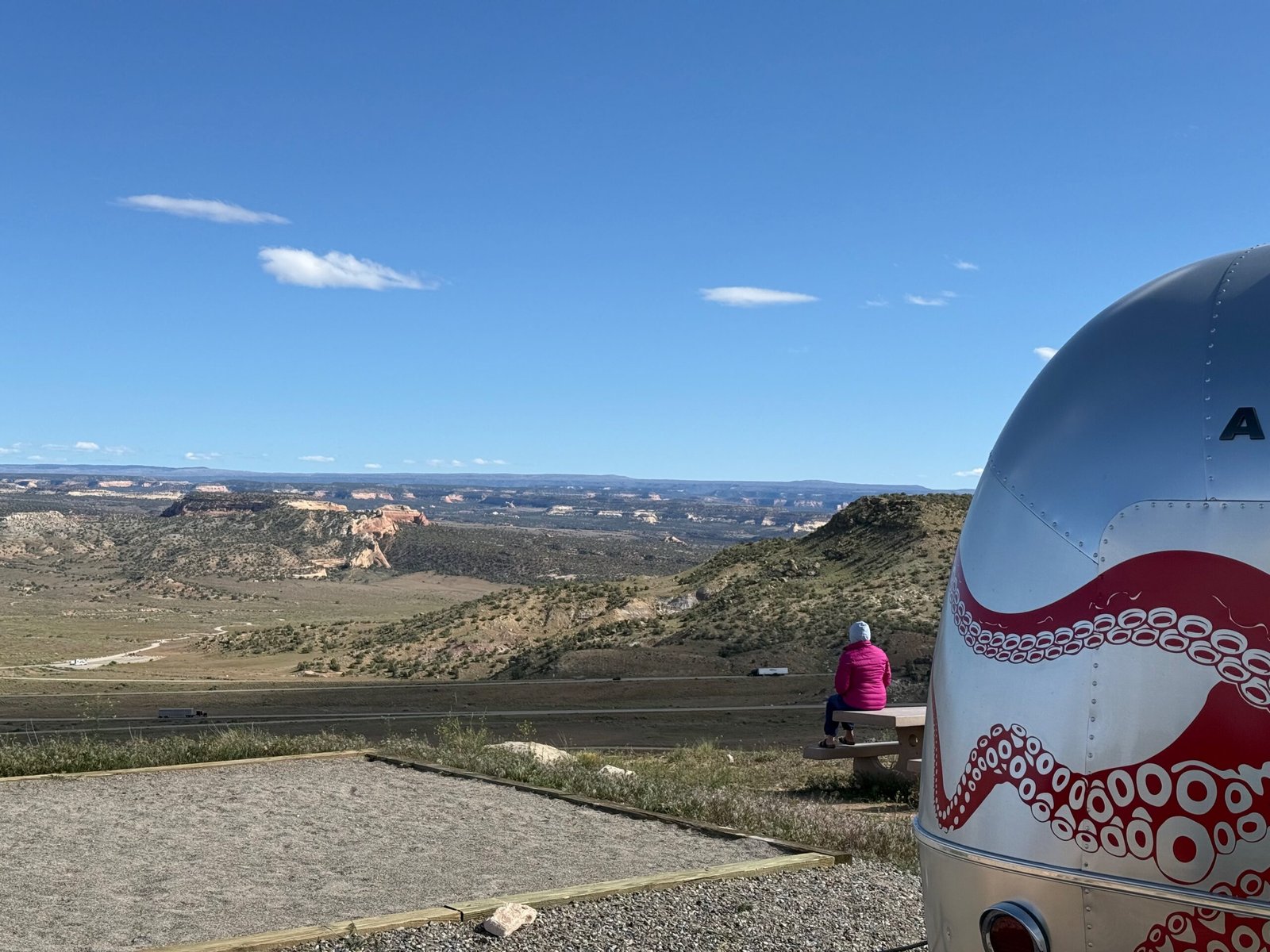
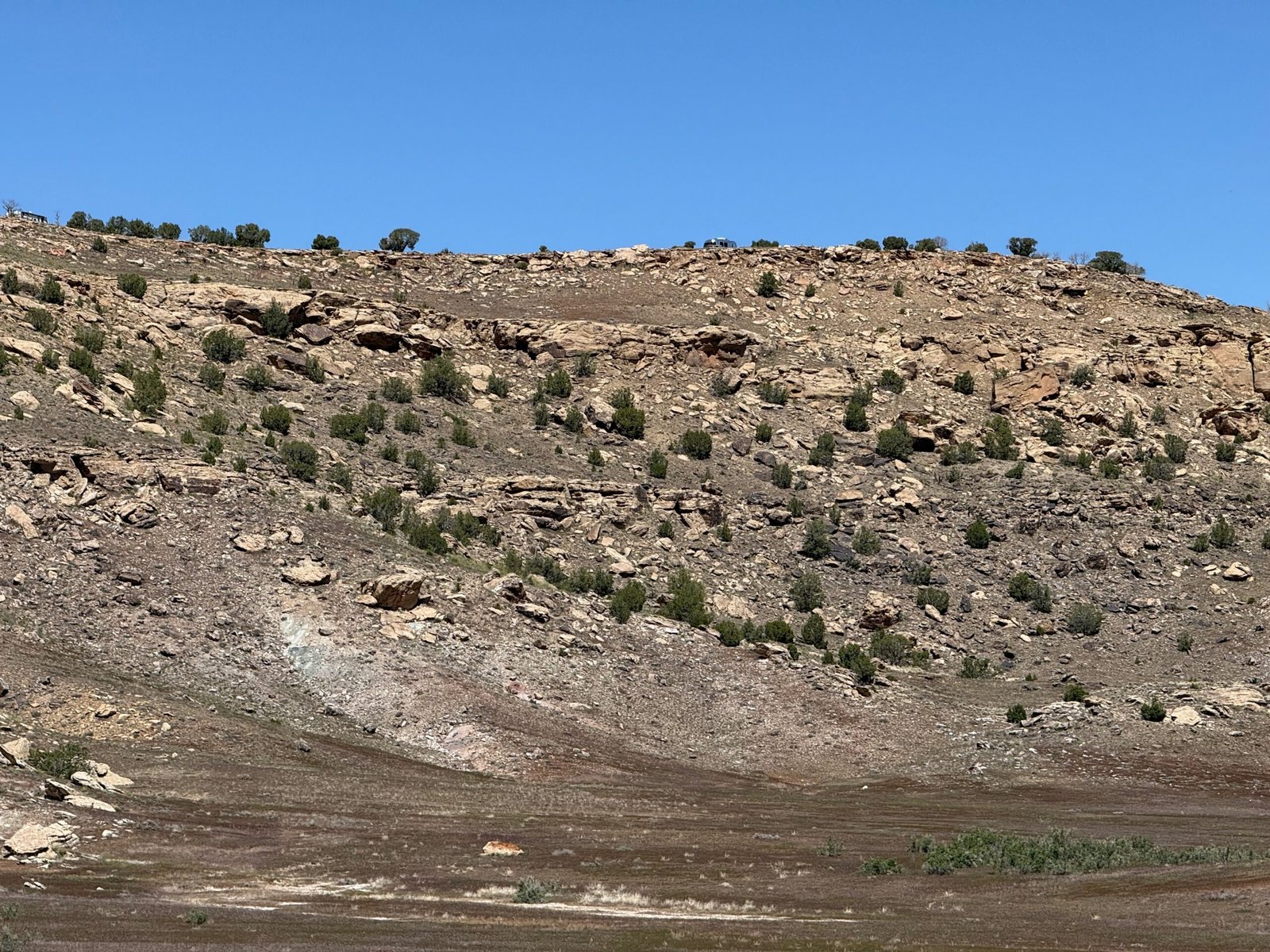
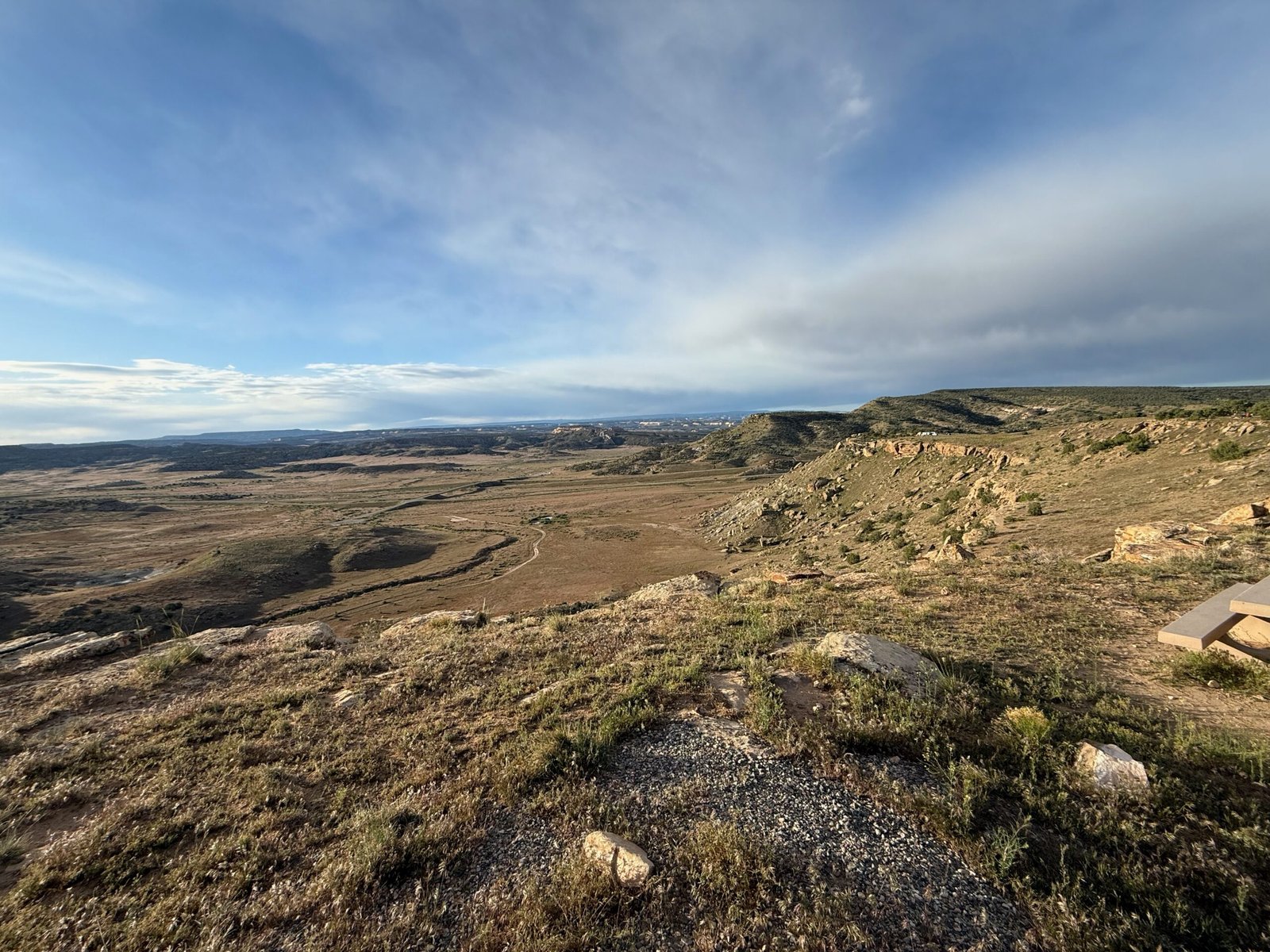
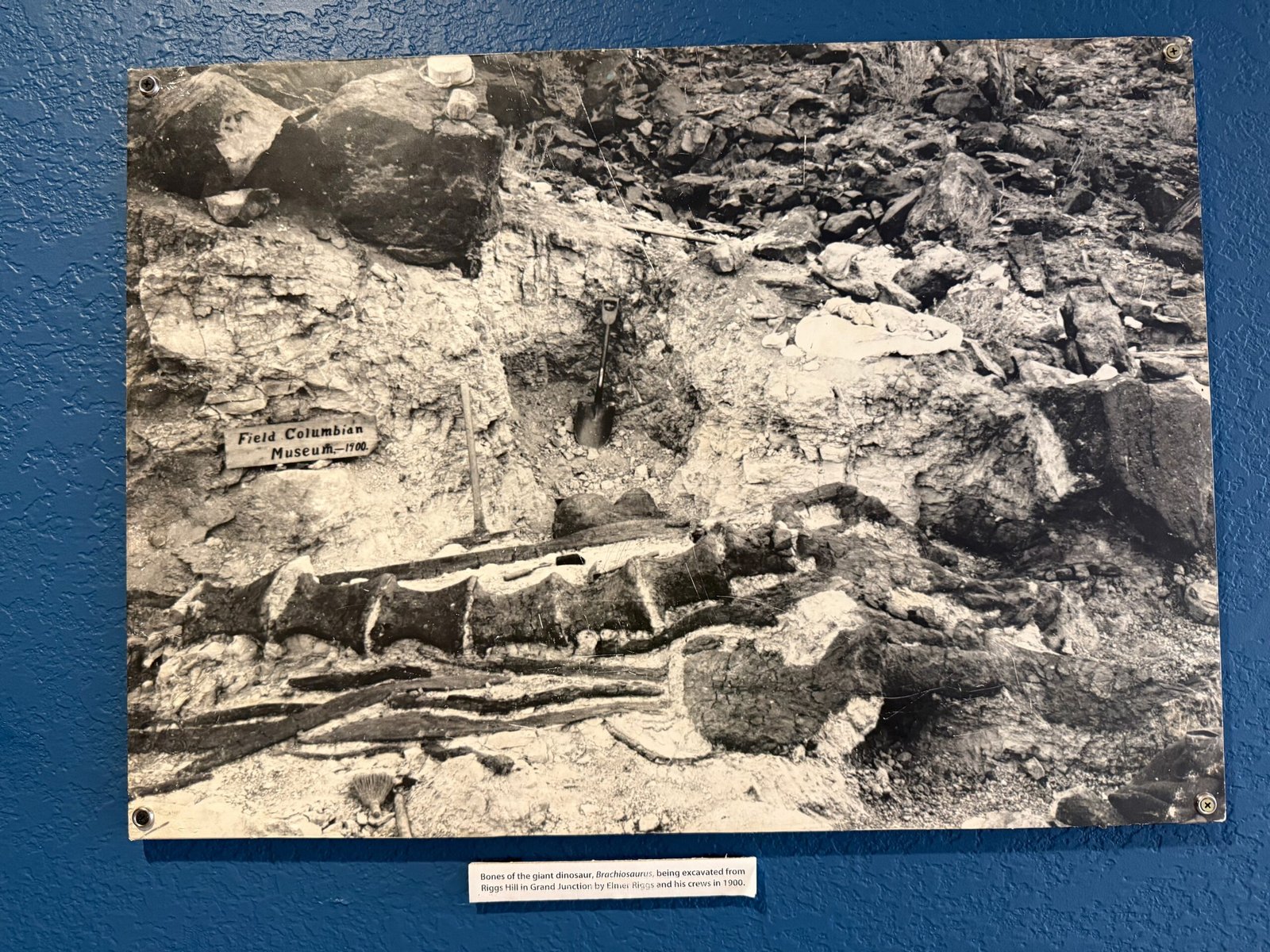
We learned that we were overlooking an active dinosaur quarry (the Mygatt-Moore Quarry) and that the interpretive loop trail worked its way along the Morrison Formation, perhaps the richest dinosaur fossil layer in the world.
I was a dinosaur fan before I could read. There was just something fascinating about these “terrible lizards” in all their many species and forms. To imagine how these beasts walked and thrived on the earth for so many millions of years was just so cool. But over time it all became more abstract and distant. The arrival of the movie Jurassic Park in 1993 helped rekindle that fascination.
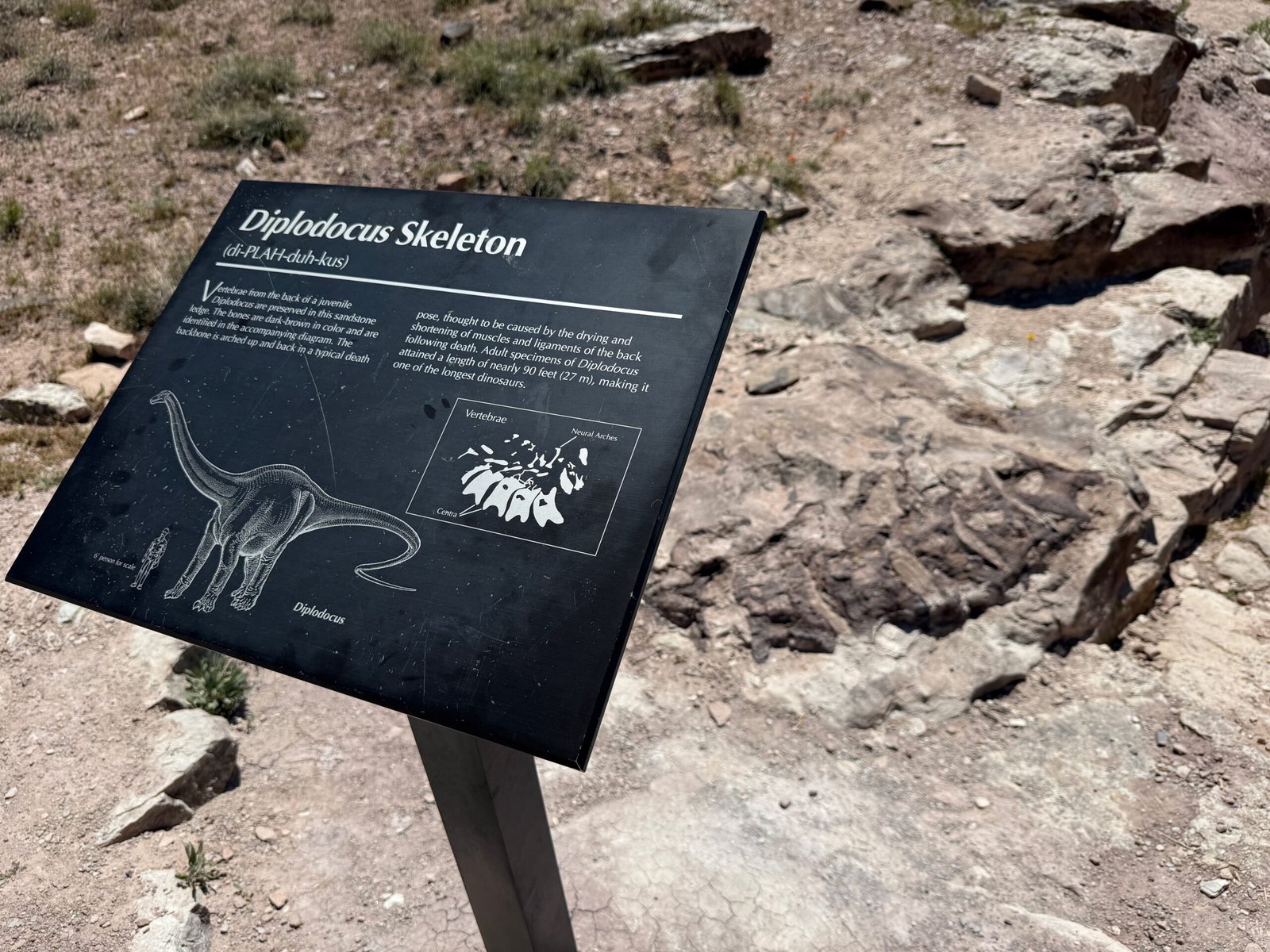
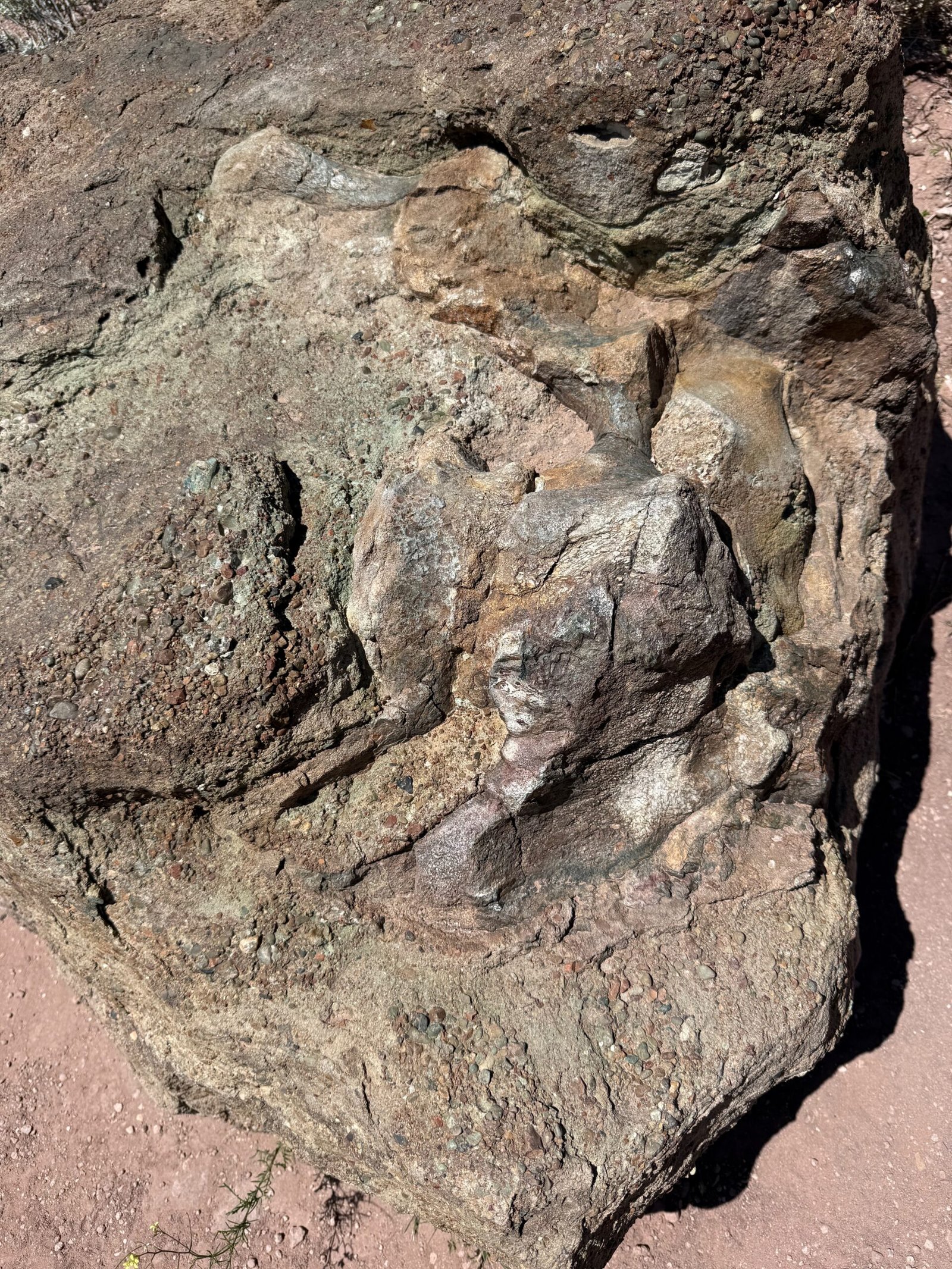
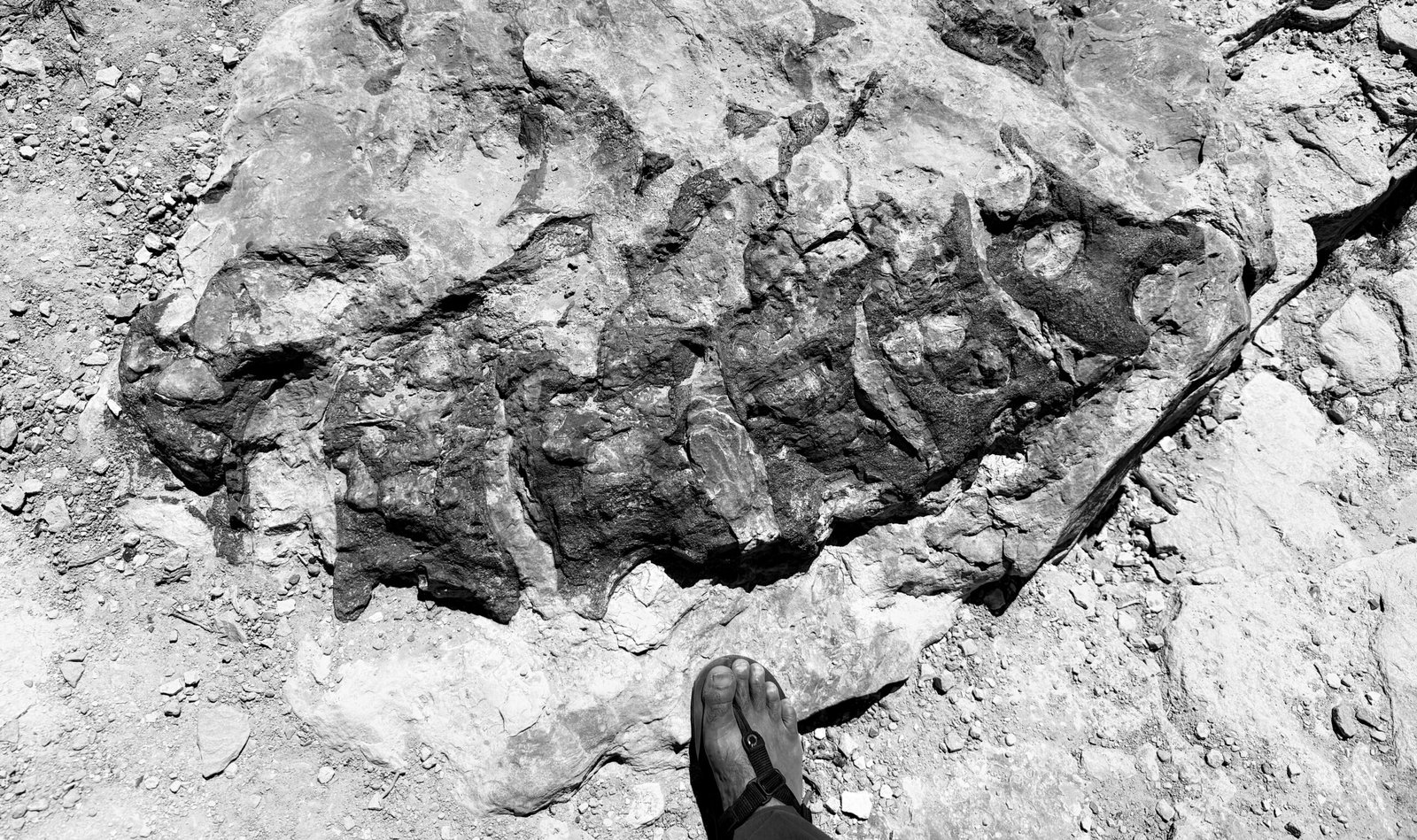
There were just a handful of fossils on the Trail through Time loop, but they were BIG fossils. The diplodocus vertebrae embedded in the rock just jarred me. A single vertebra the size of a five-gallon bucket. Part of an animal that by reasonable estimates was 70 feet long and easily weighed over 20 tons.
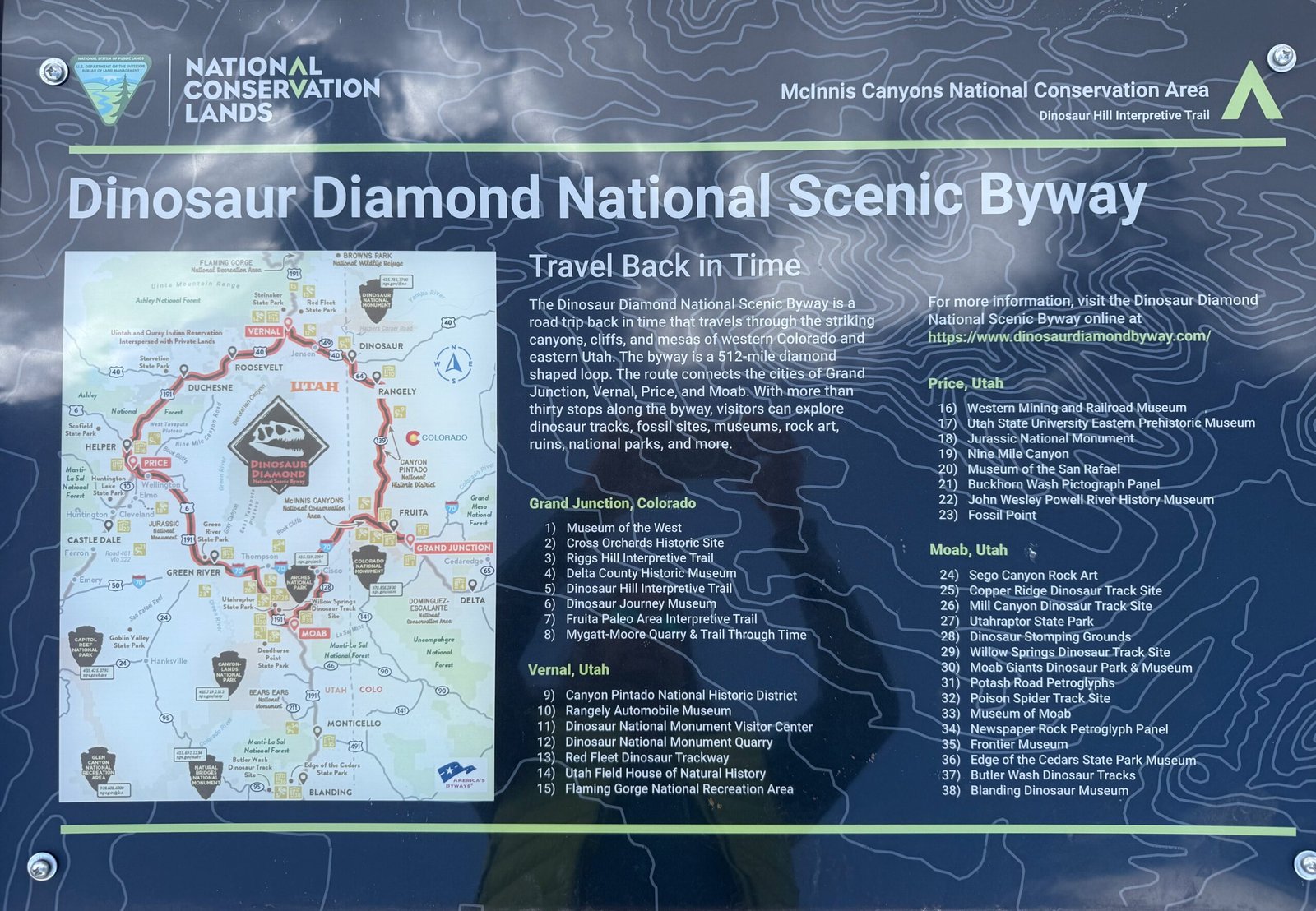
And then we saw the kiosk titled The Dinosaur Diamond. It described a 500-ish mile loop through NW Colorado and NE Utah, complete with a legend of the waypoints. Hmmmm…what are the possibilities? That night we watched Jurassic Park.
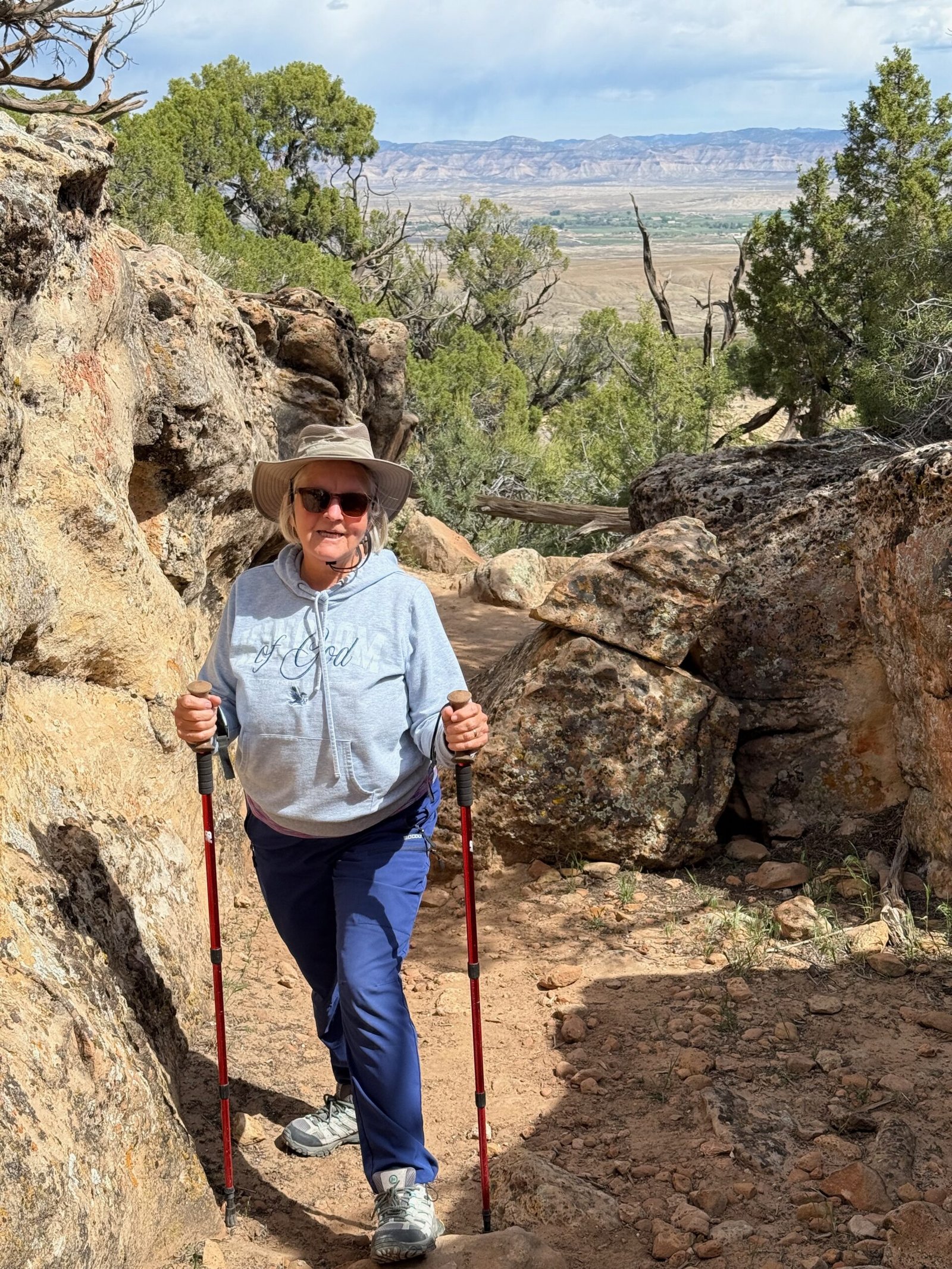
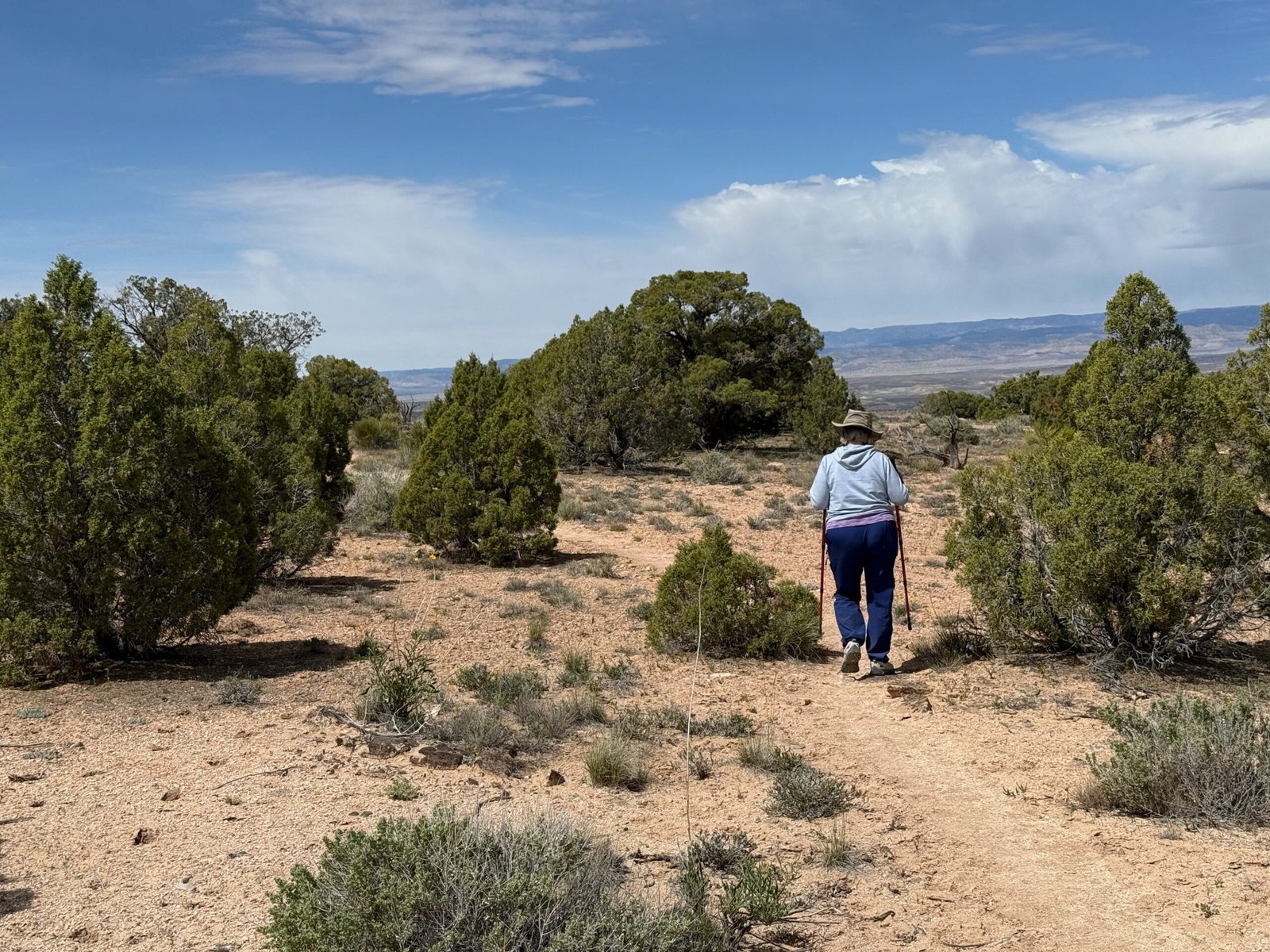
While investigating a trailhead, we met a local couple who thought that Rabbit Ears would be better for us, since this was our first time in the area. A loop hike atop a mesa with views of the Colorado river. They were right! Just what we were looking for on a lovely day.
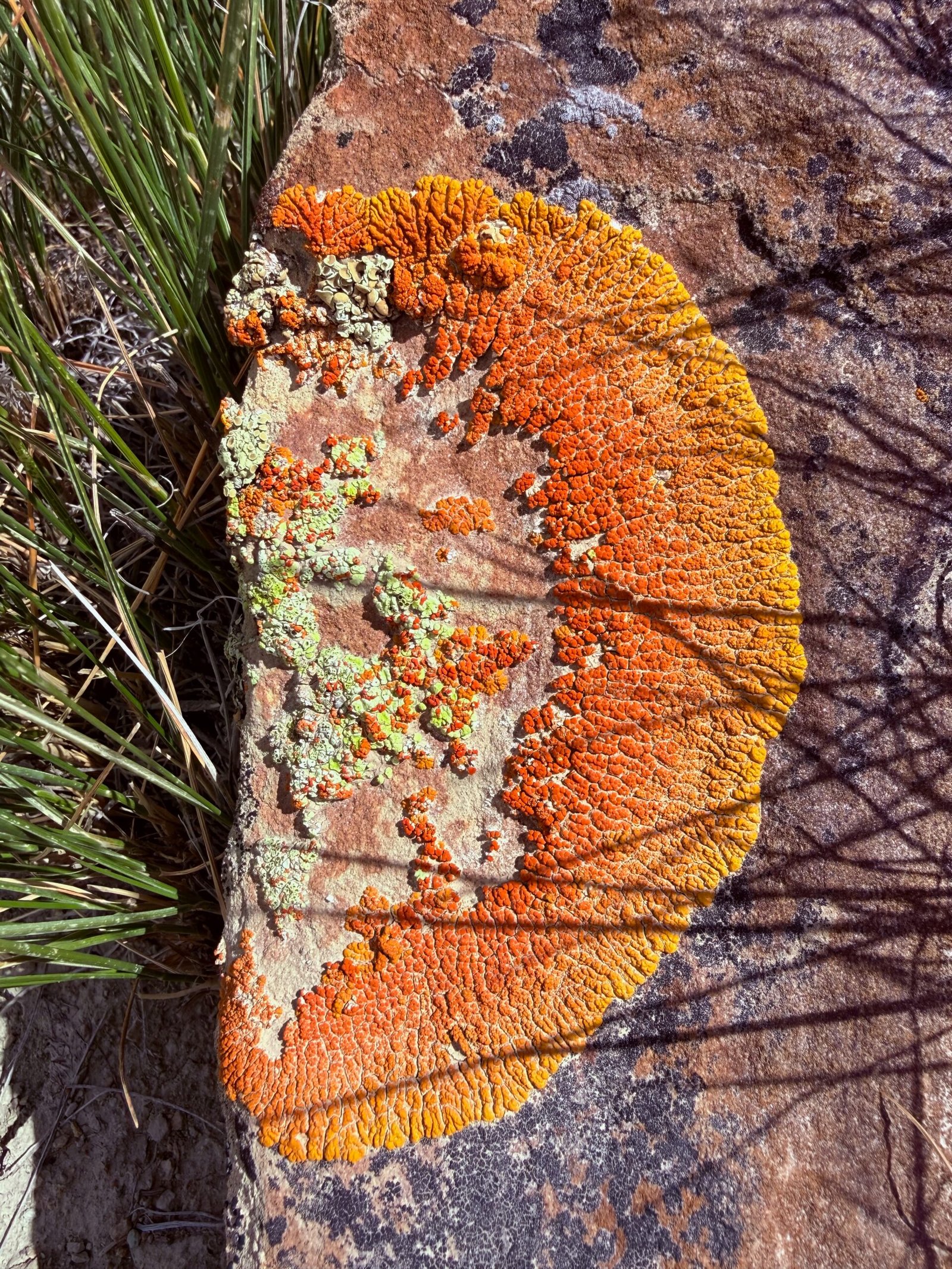
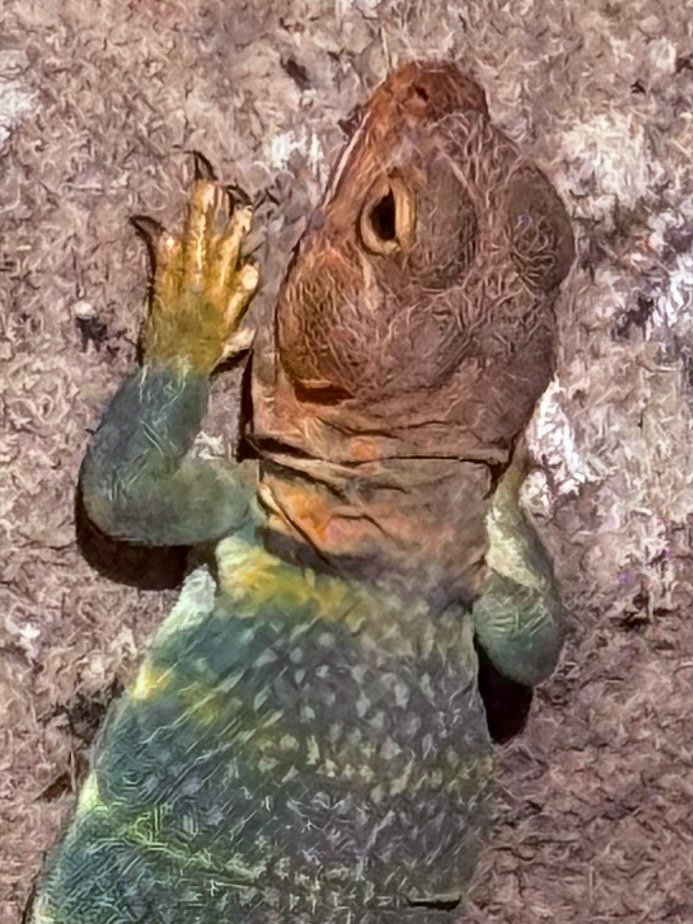
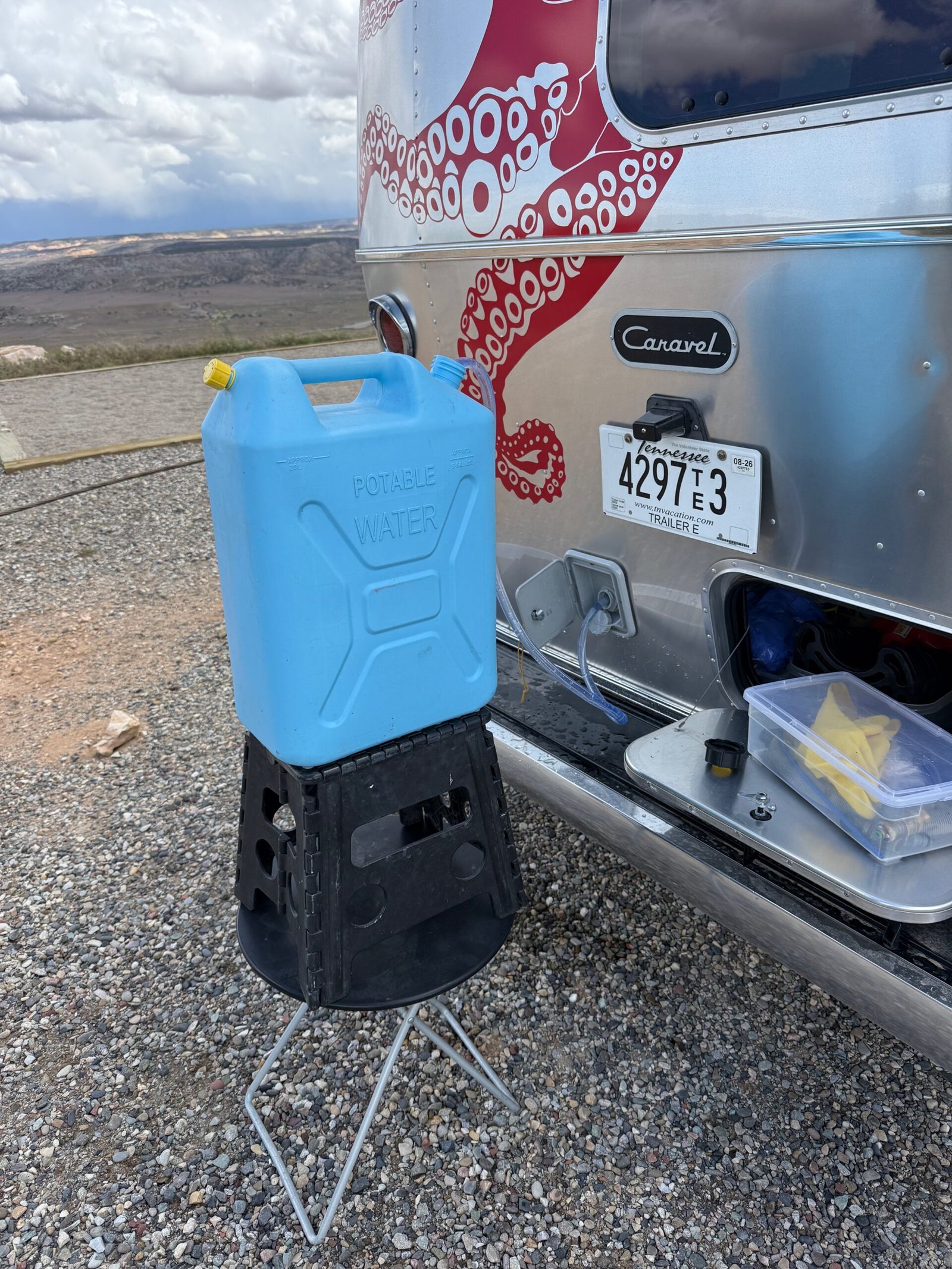
Wind and rain were the rule for Sunday, so we took some downtime and did a little planning. We decided to reserve a few more days, upping our two-night stay to six. The solar power system was working great, but we were beginning to push the limits of our tanks.
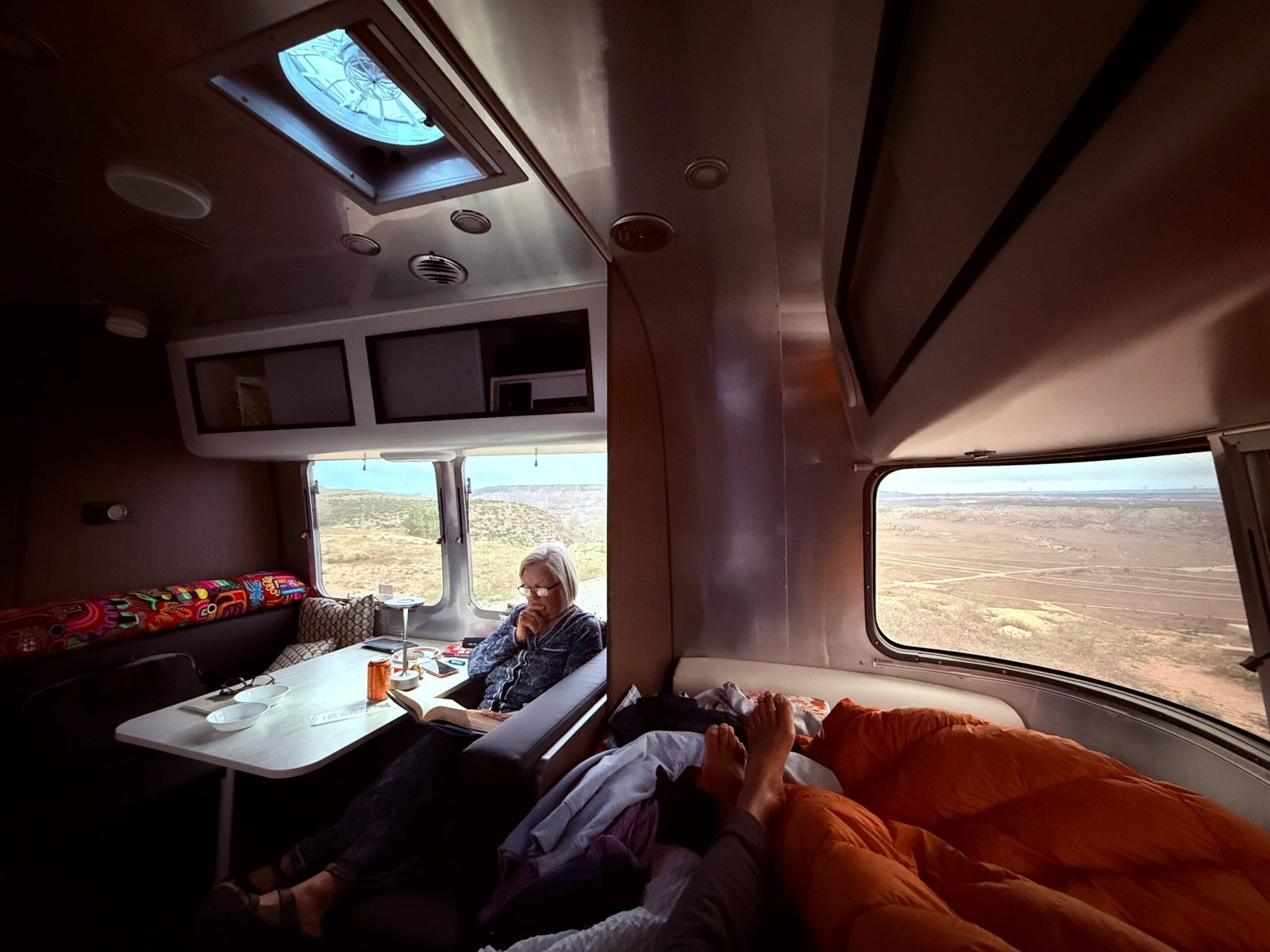
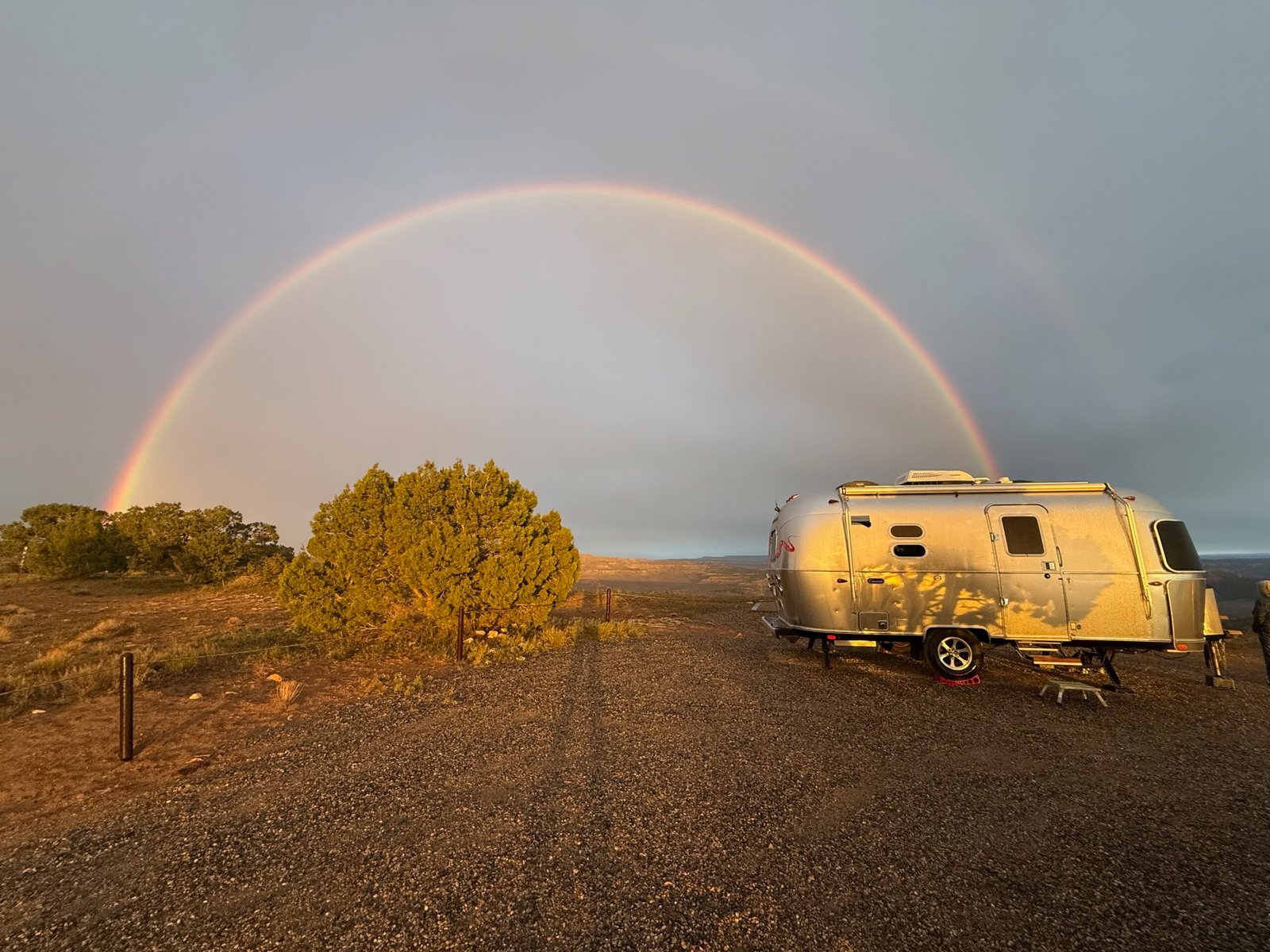
A strong storm front manifested itself near dusk, with 40 mph gust really rockin’ the camper. As it passed through, Patricia’s eye caught the beginning of one of the best rainbows we’ve ever seen. And in a moment, it was gone!
That evening we laid out a plan to hit a few spots along the eastern part of the Dinosaur Diamond loop. Swing up to Rangely, west to Dinosaur National Monument and then turn back, hitting as many locations as we could. It was going to be a long day and several hundred miles, but who knew when we’d be back this way?
With an early start on a chilly, blustery morning, we hit Colorado highway 139 heading north to Rangely. This is when I learned that in Colorado one should also look up the “Indian name” of the road. Especially if it includes “pass” like “Douglas Pass Road.” After rolling an hour through flat country, we began to climb and it began to snow. The temperature dropped to freezing and the road was disappearing fast. We had no cell coverage and no mapping available. There was a sign that said “Avalanche Area.”
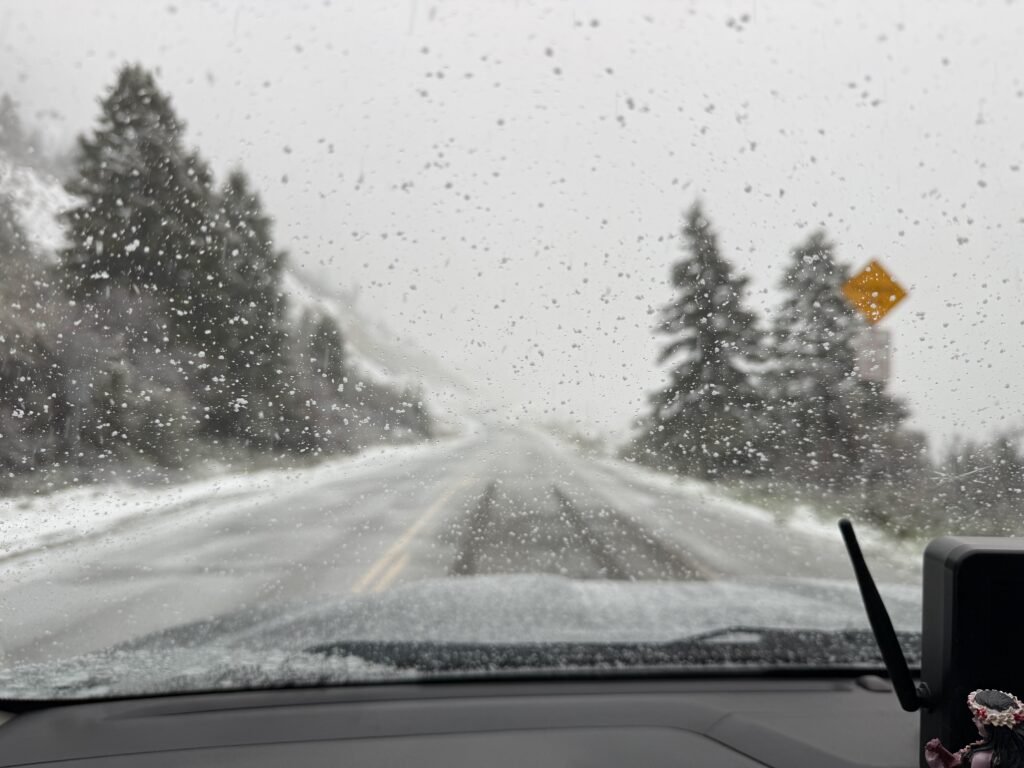
With 4WD, we should be able to make it, right? But what if it keeps snowing? We’ll be a long way from the camper and the only other route will be over 300 miles back. Yeah, Shakespeare said it best, “The better part of valor is discretion.” We turned back (we found out later that the pass had been closed until the snow plow could clear it).
Switching our days, we checked out a few sites around Fruita. Riggs Hill, Dinosaur Hill, the Fruita Paleo Loop trail, and the Dinosaur Discovery Museum made for an amazing day! And that night we watched the second Jurassic Park movie. And it was so.
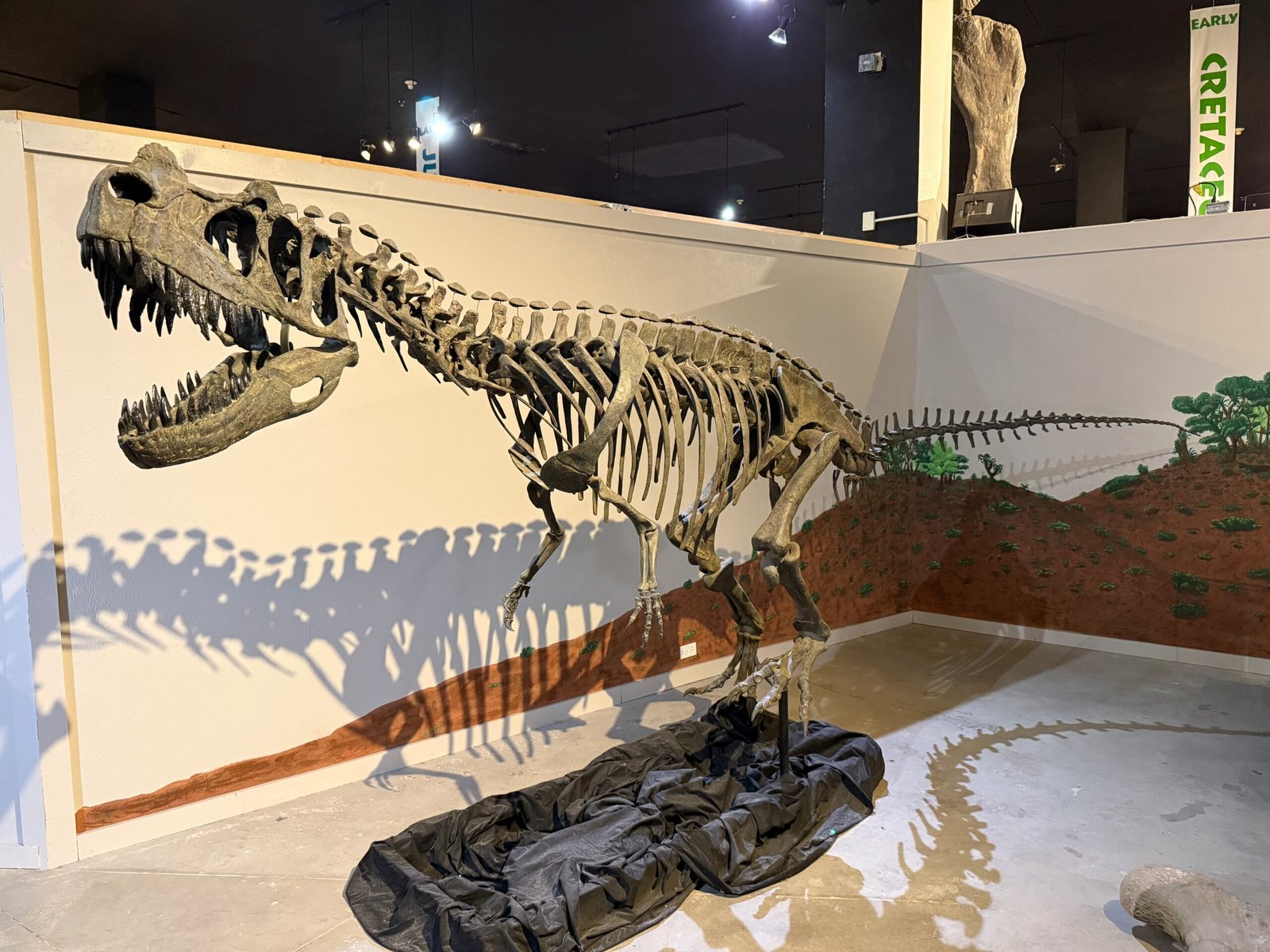
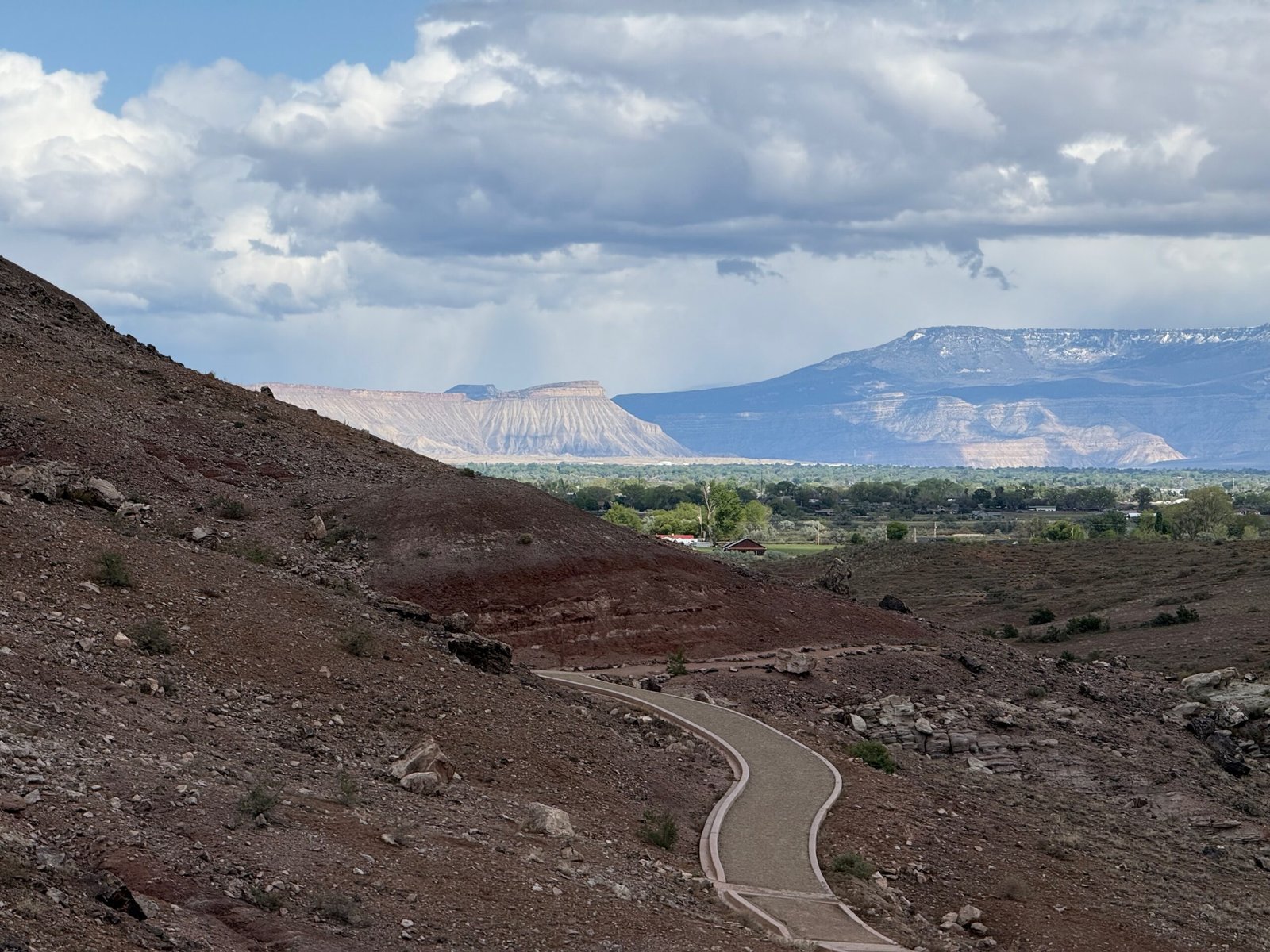
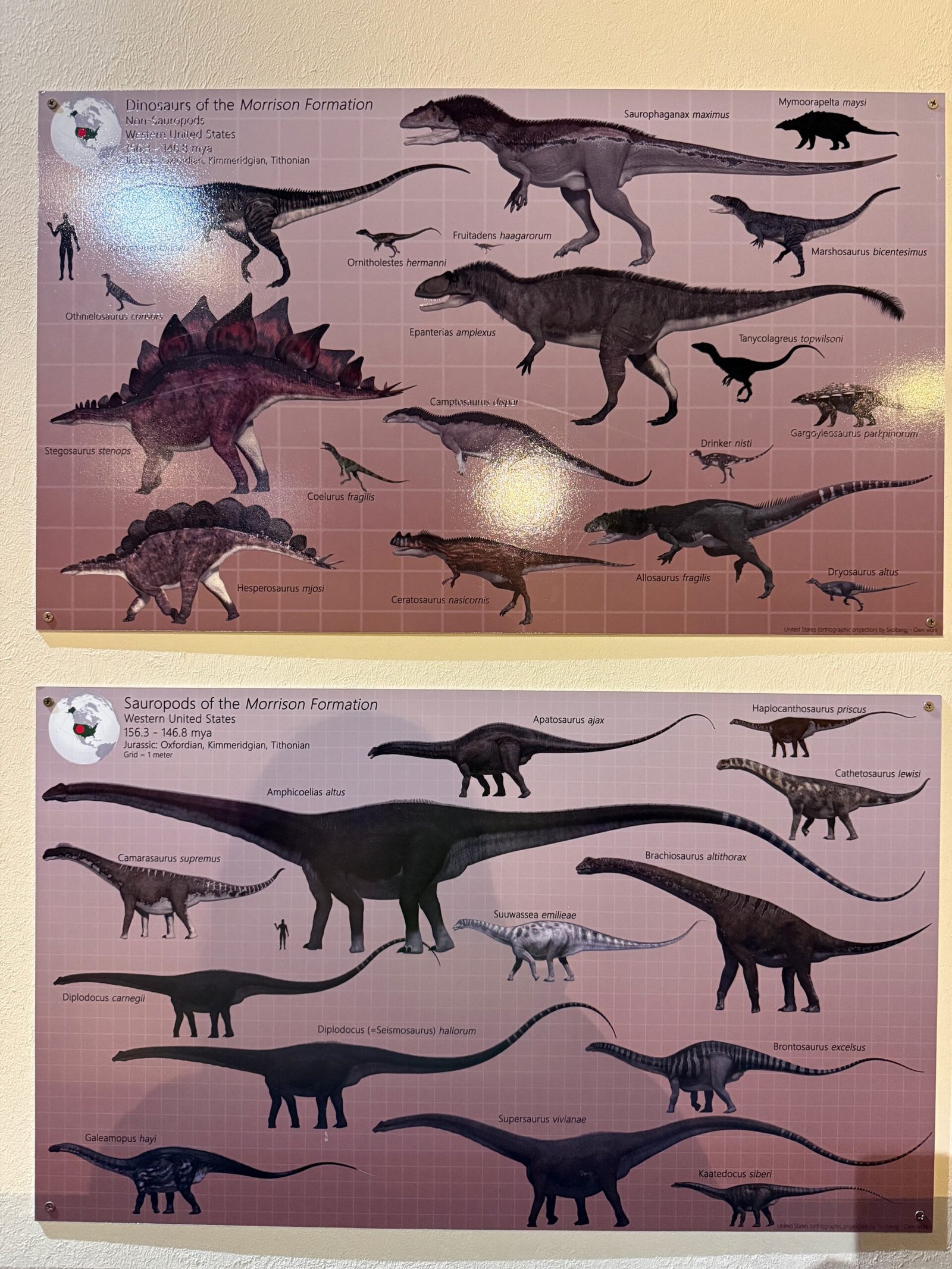
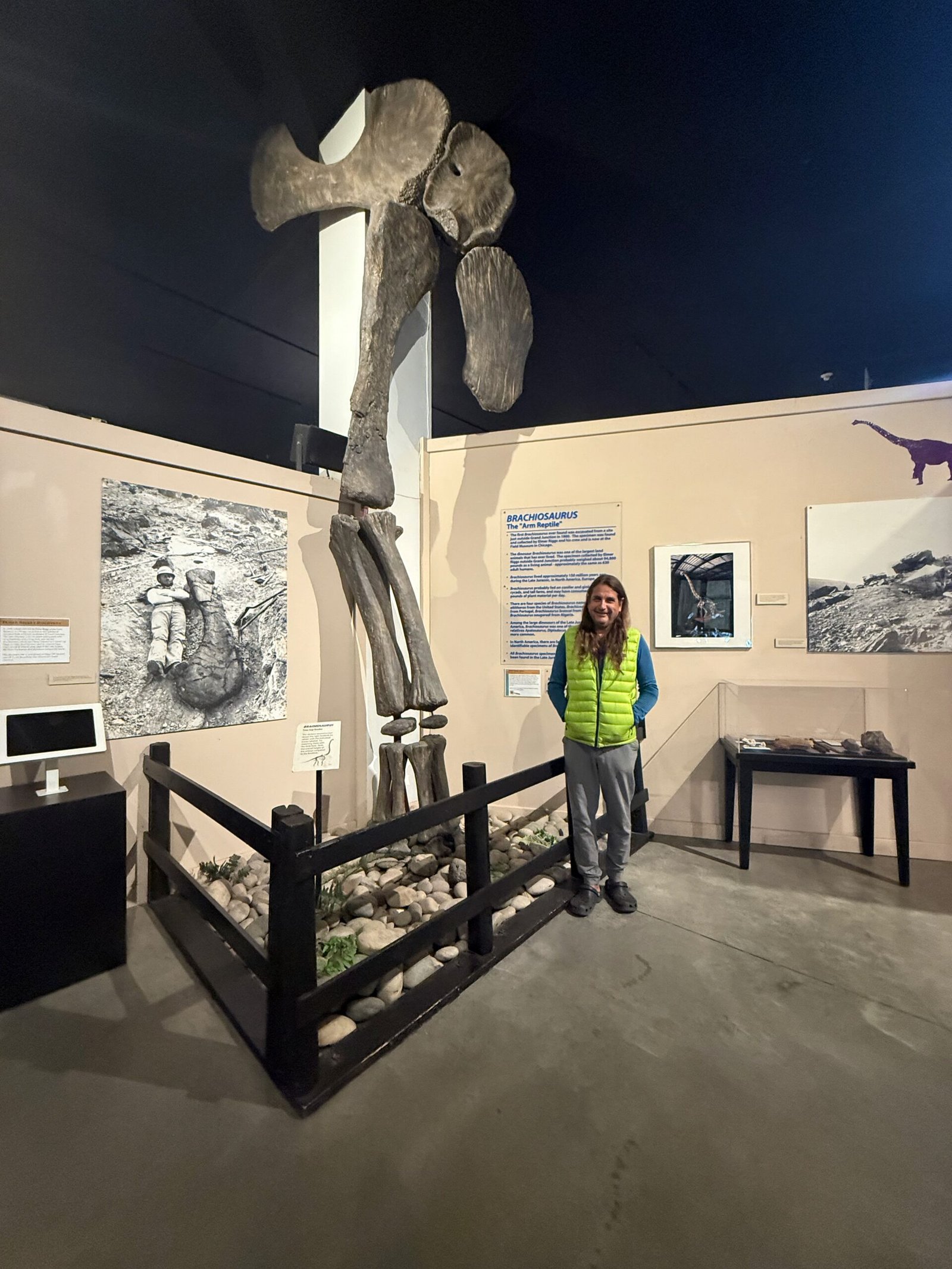
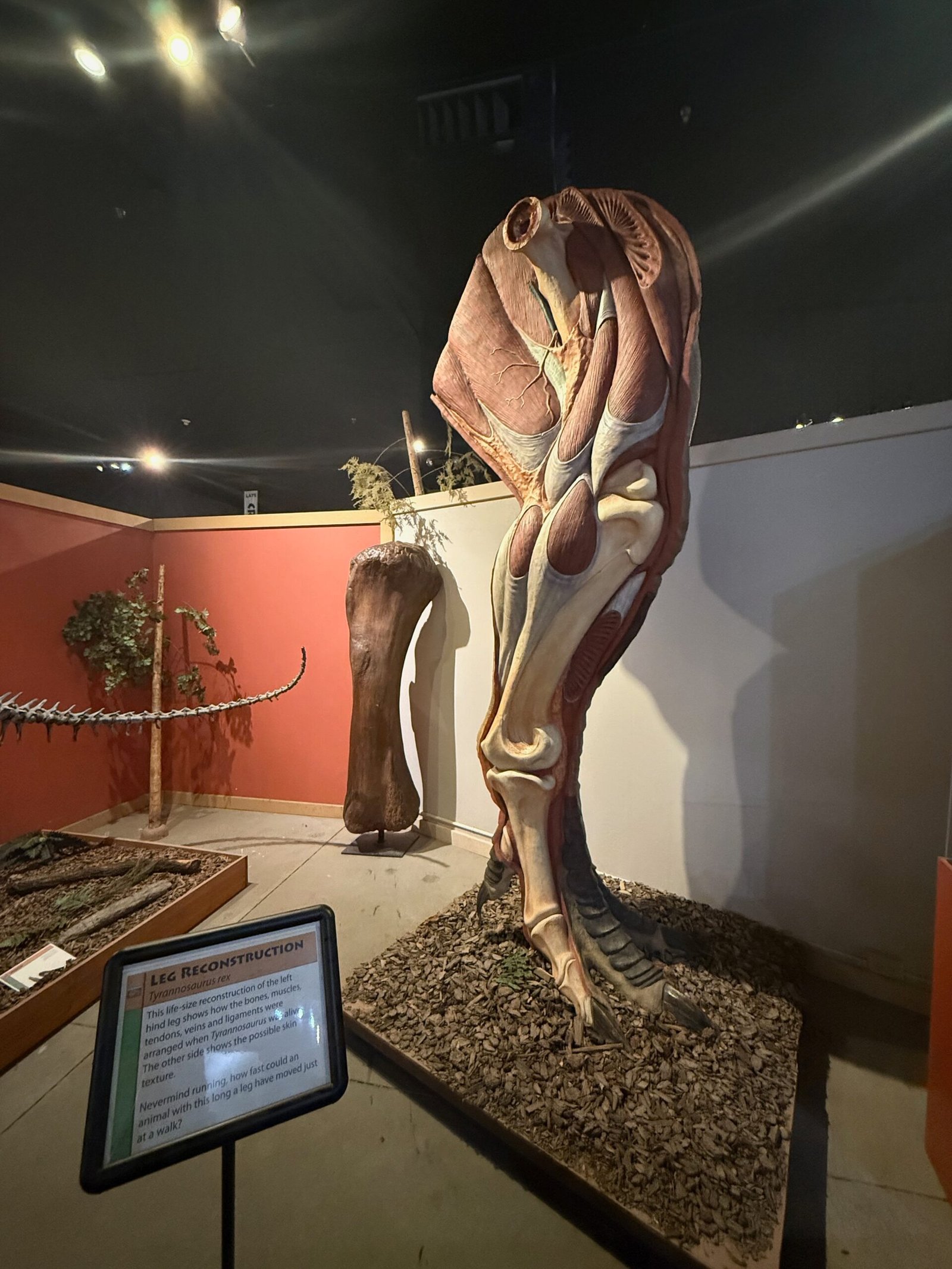
The picture shows a life-size reconstruction of a T-rex leg. The wall behind is about 8 feet high. Paleontologists debate whether T-rex could run or not.
With that stride, would it really matter?
And you just never know what else you will find. Did you know that Fruita, Colorado is know for Mike the Headless Chicken? It’s almost too bizarre to consider! Feel free to read about it on Wikipedia if you dare!
I am not sure how I feel about the whole thing! Which is more weird? A man that decided to dropper-feed a headless chicken for 18 months? Or that people were so amazed that Mike became a national sensation, with the brainless wonder pulling in over $60,000 a month (in today’s dollars)!? Fruita continues to hold a yearly festival the weekend after Memorial Day for Mike!
Whew, enough of that.
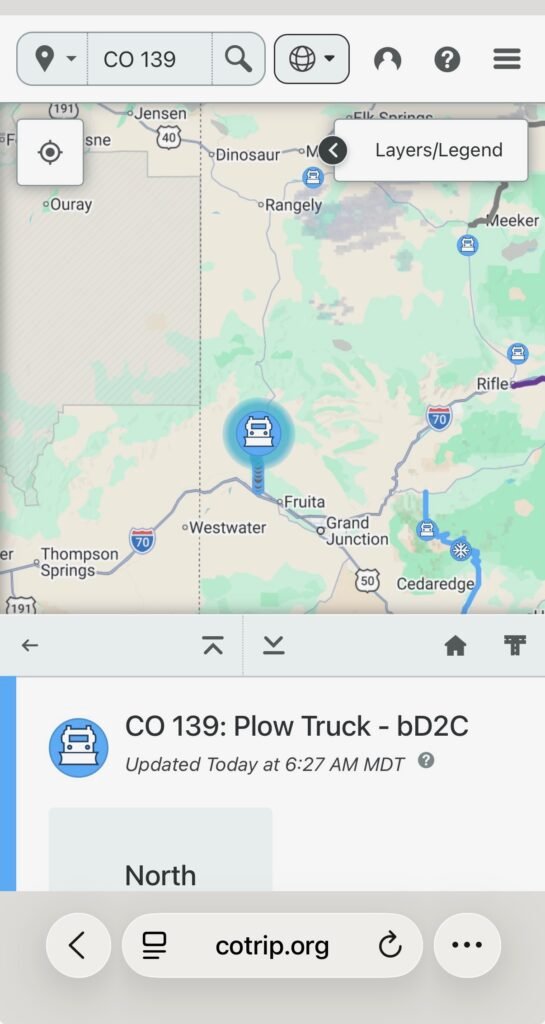
Okay, we did our research and found that the State of Colorado has a pretty nifty road conditions system complete with webcams. The system also tracks the snow plows! Just some of those tax dollars doing good things for us.
A quick look the next morning showed our plow team already heading north up Douglas Pass Road (otherwise known as state route 139). And the weather was both warming and clearing up.
We checked out a few pictographs in Cañon Pintado, and then made a beeline for Dinosaur National Monument, the crown jewel of the Diamond Loop.
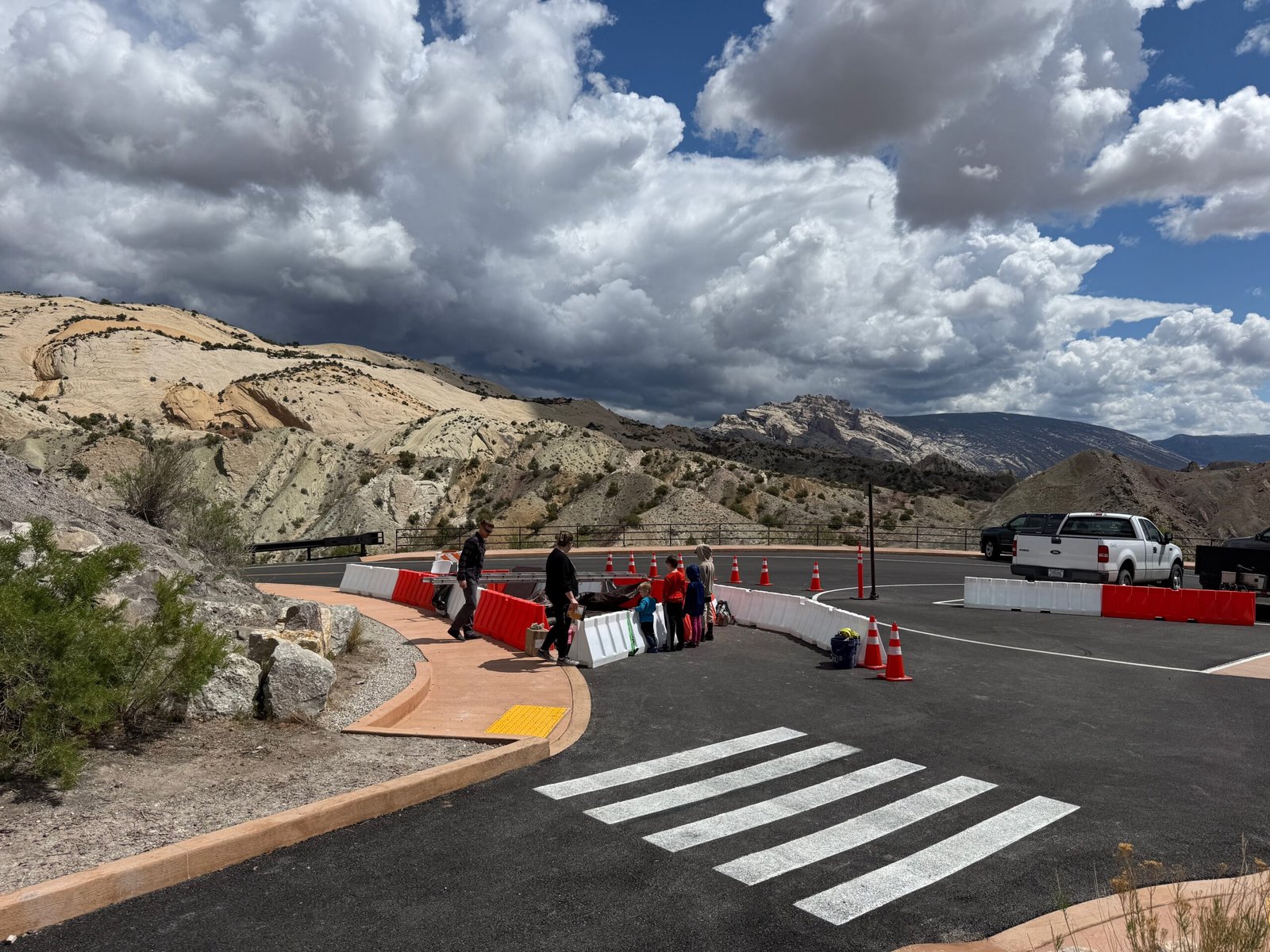
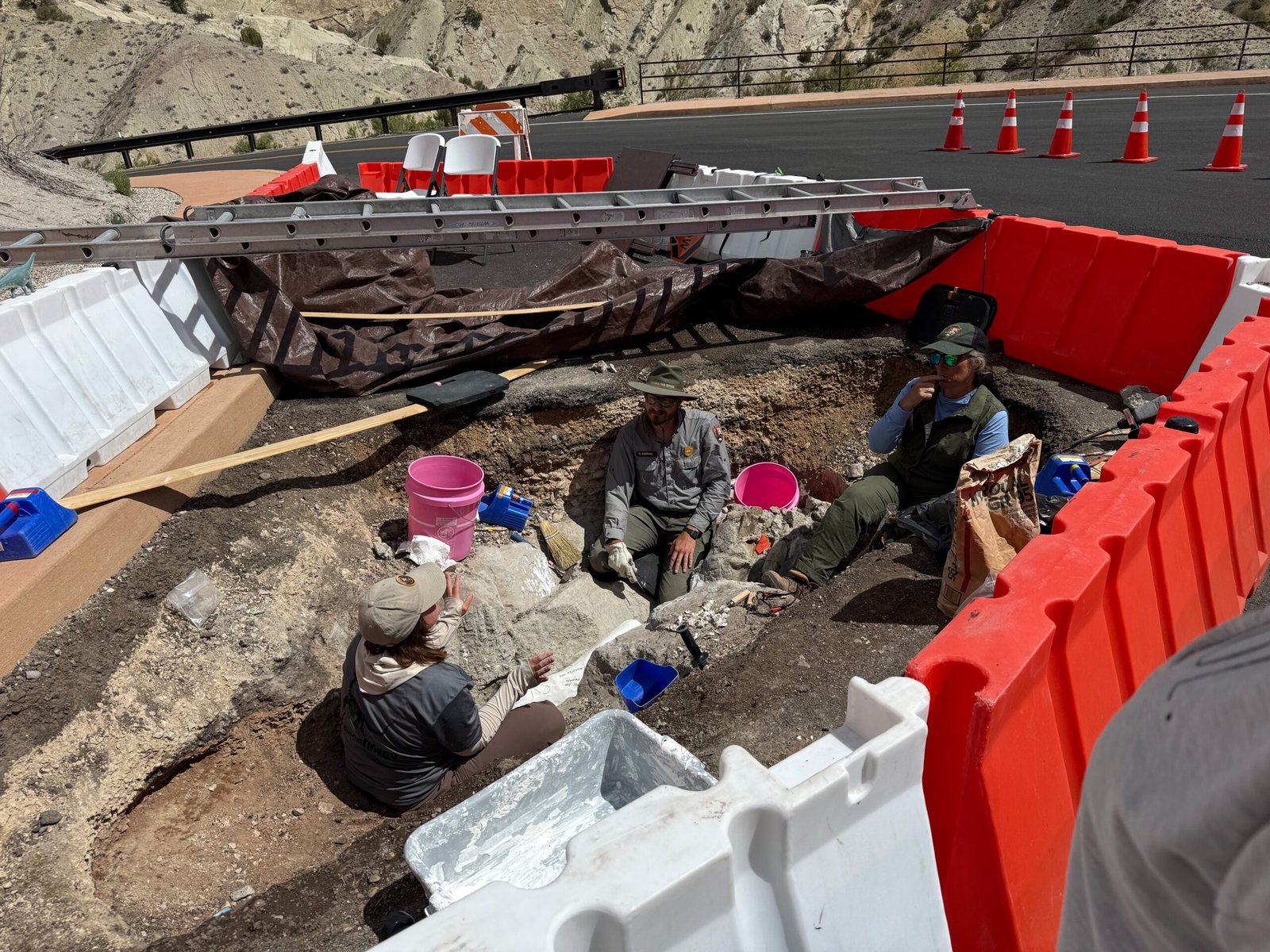
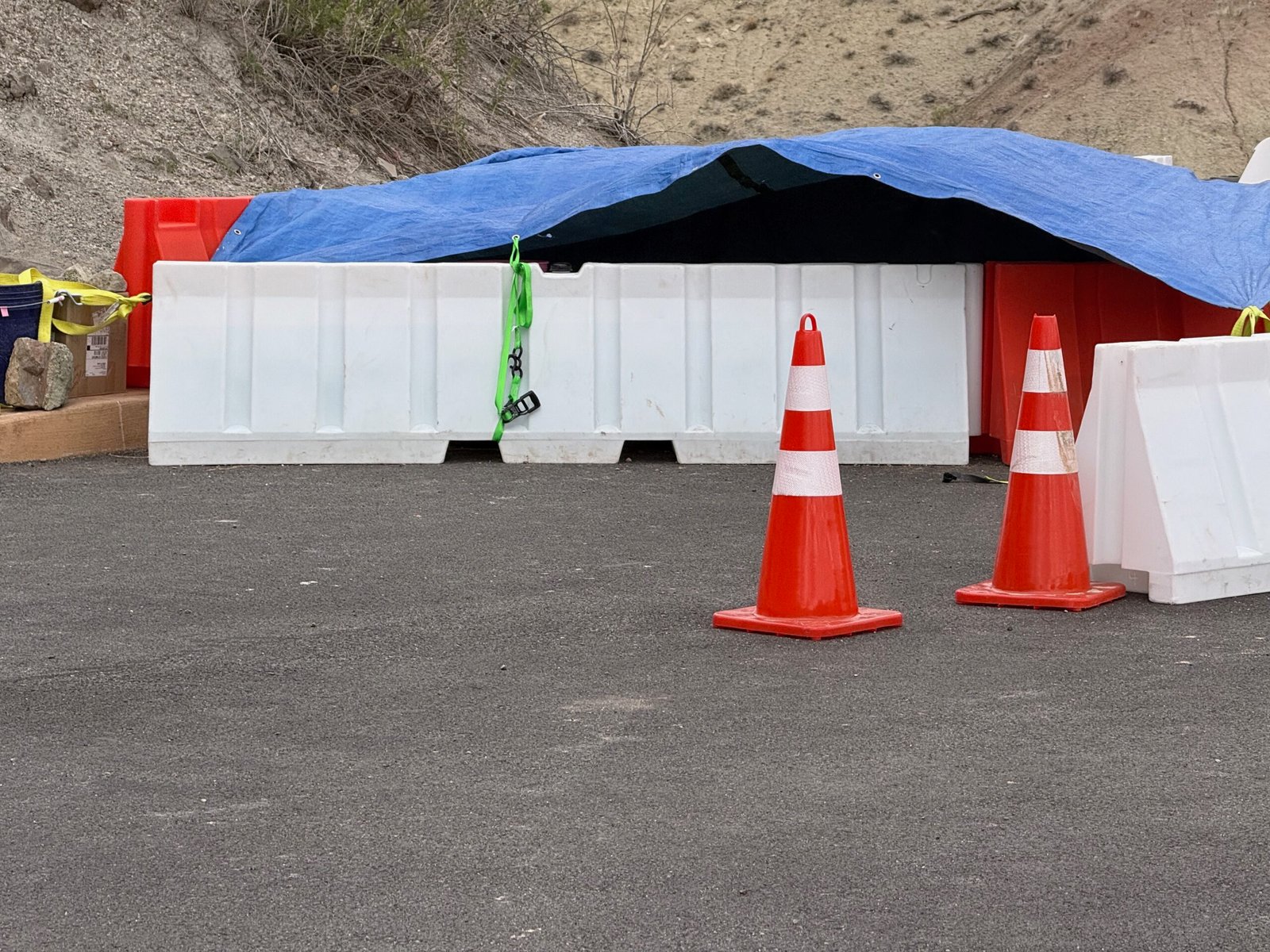
While the monument is big, our time was limited and it was the quarry site that had my main interest. At the visitors center we were warned to watch out for the construction at the quarry. Rolling in, we saw the digging in the newly-paved parking lot. Walking to the quarry, we realized that the construction was actually a dinosaur dig site! Three paleontologists were extracting and prepping a large bone for removal.
I asked one, “Did you just run out of places to dig?” She smiled and replied, “Well, it’s close to the restrooms.” She then explained that when the parking lot was being remade and enlarged, that more bones had been found and extracted. This was the last little piece and would be paved over soon.
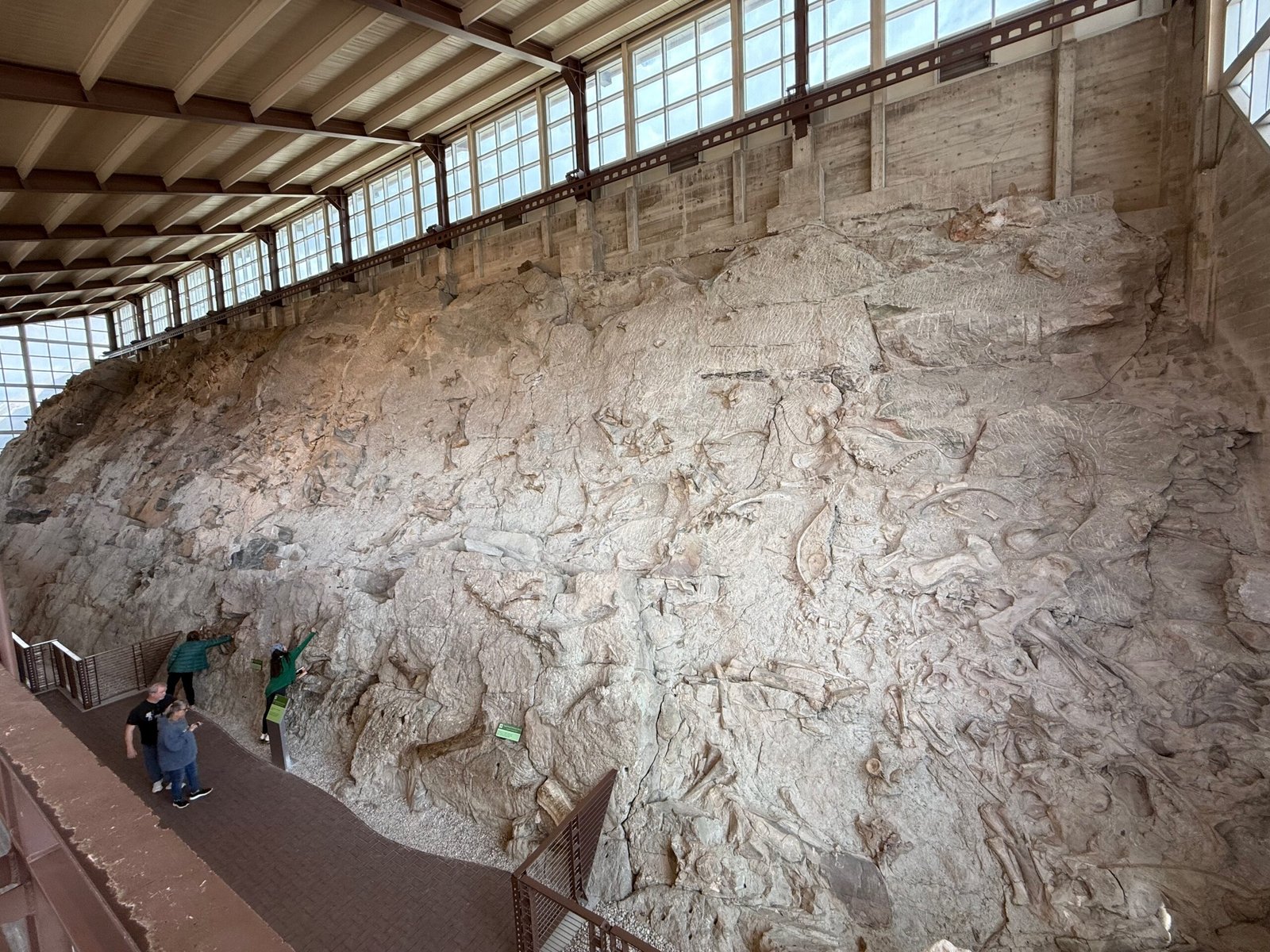
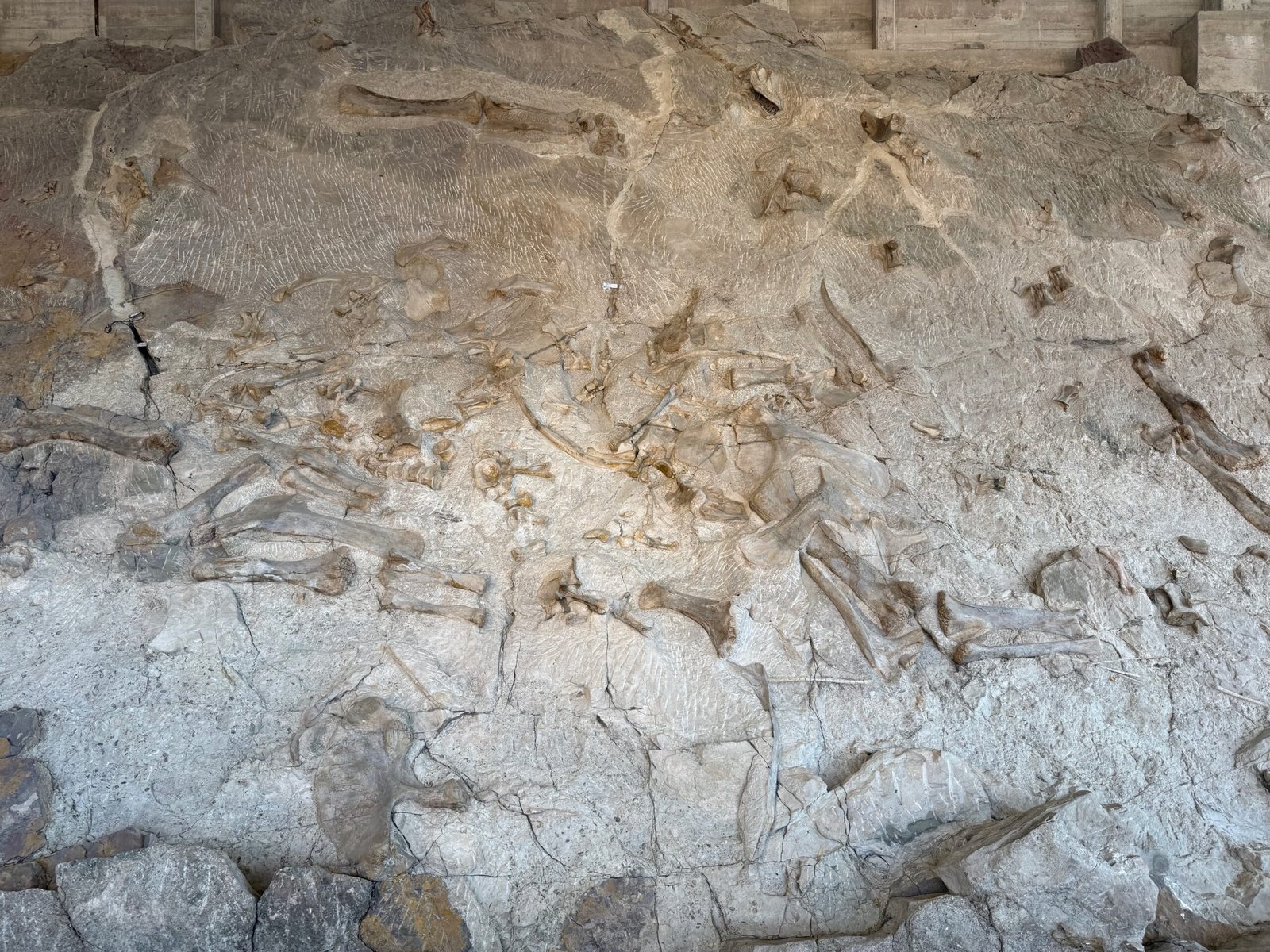
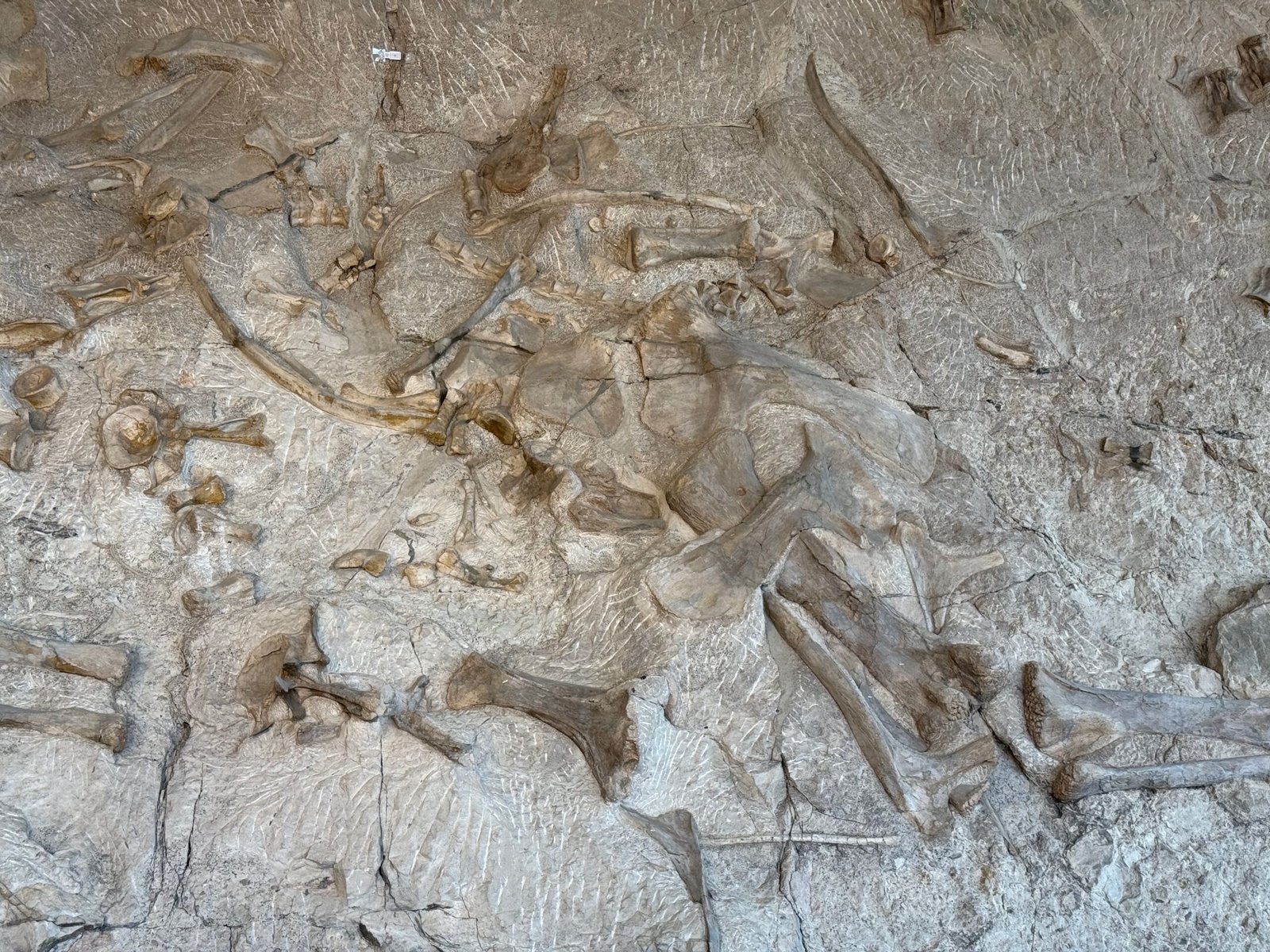
The quarry is unique in the world. Here, an ancient river flowed fast enough to sweep the small bones away but the largest were deposited in a “logjam” of giants. Excavations started around 1902, but around 1940 a new idea was considered. What if the face of the rock layer could be cleaned to show the many bones, leaving them in place for all to see? A building was placed over the site and over the next 40 years(!) the rock was slowly and painstakingly chiseled around the bones. Today you can see over 1500 bones from dozens of species. It’s a truly incredible sight to see (and if you are smart, like me, you will take your binoculars 🙂 ).
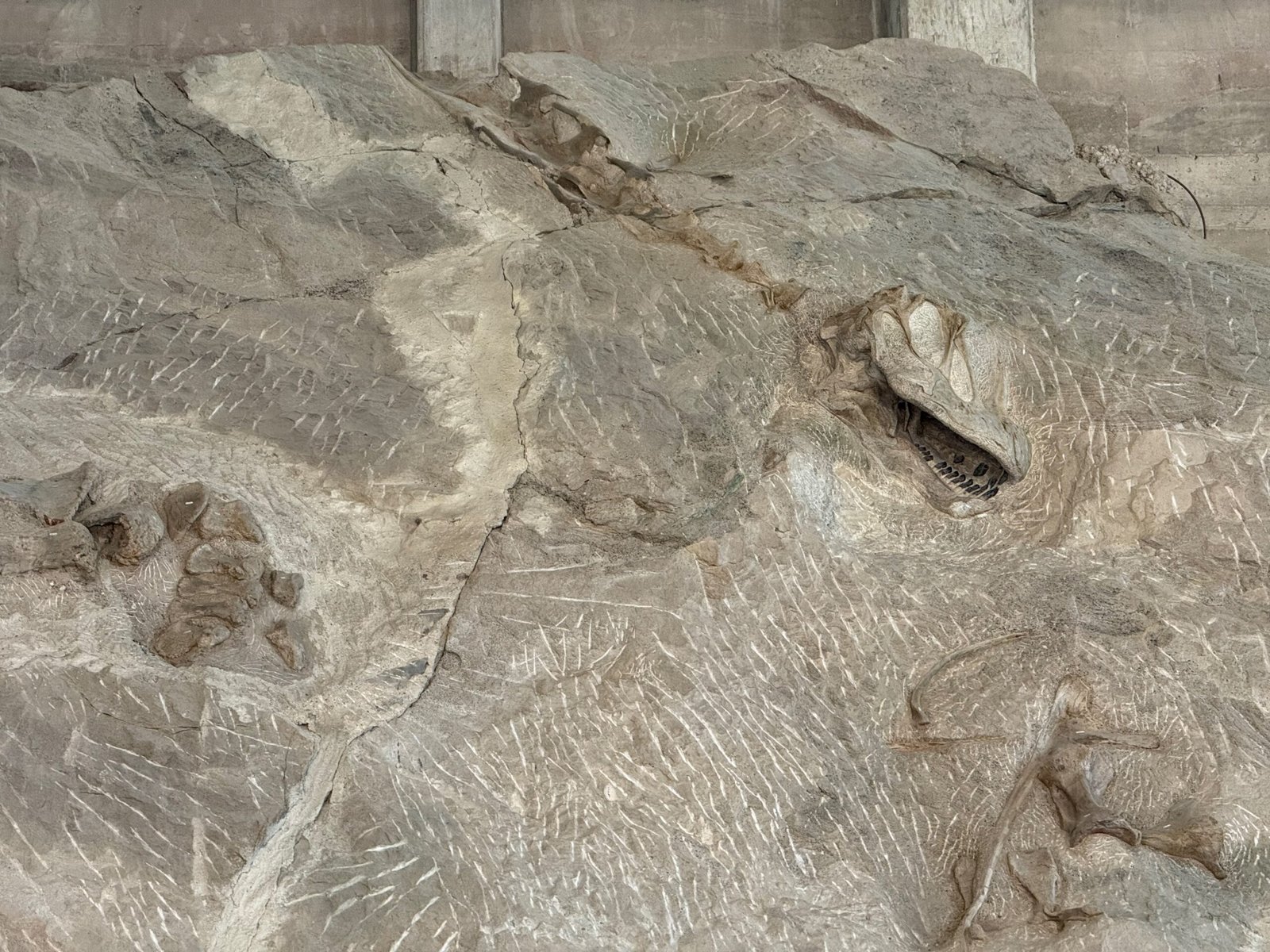
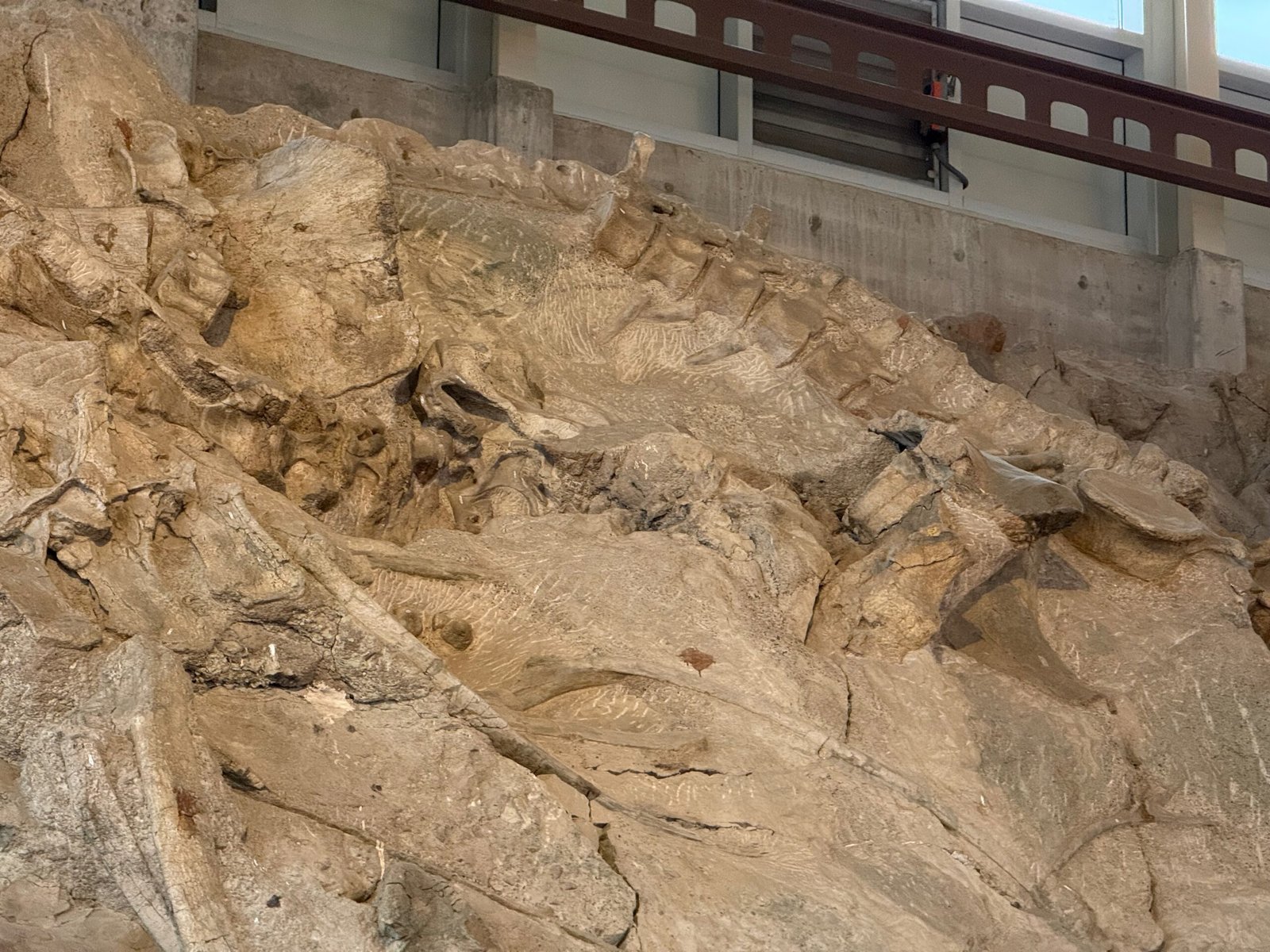
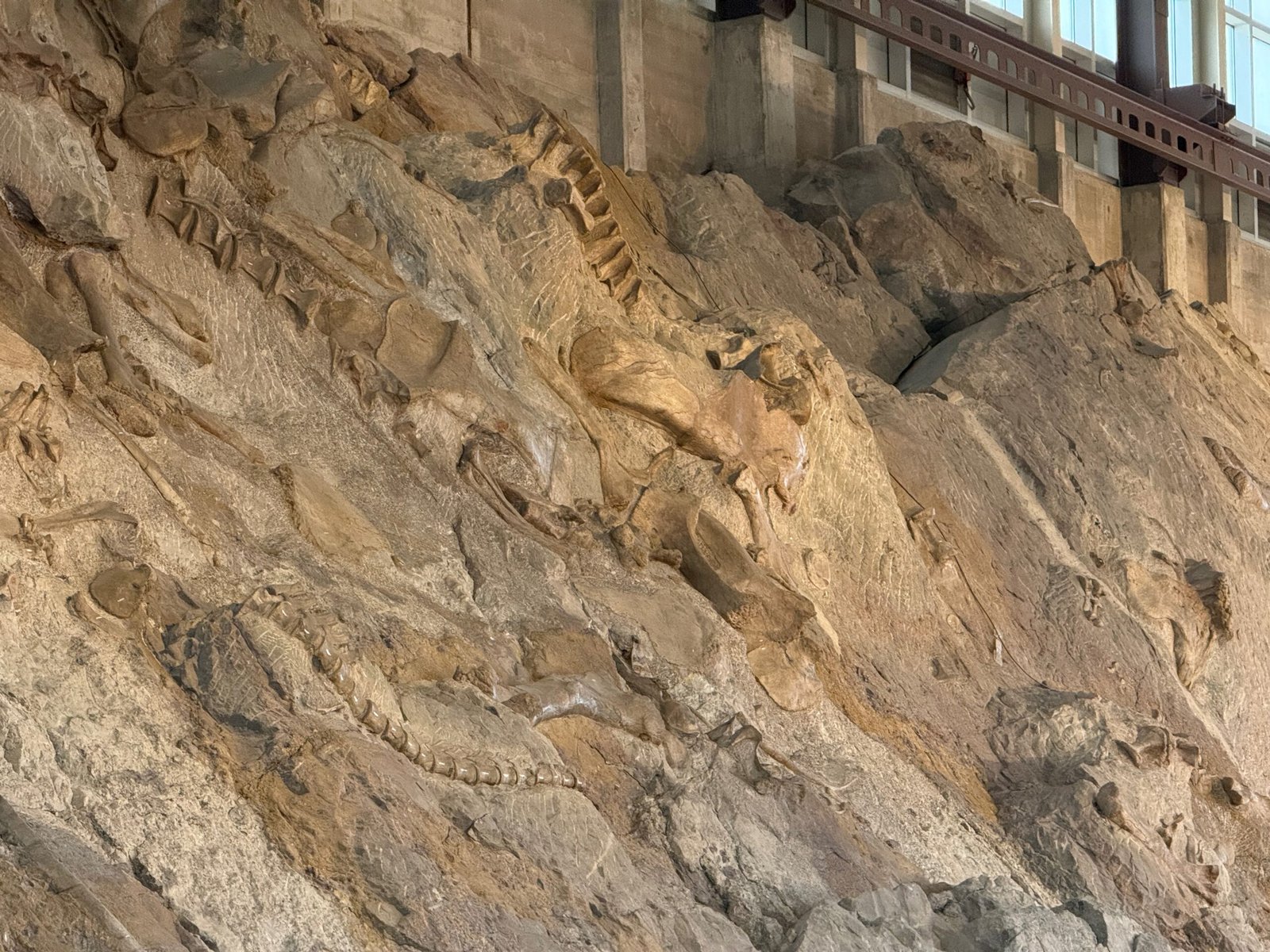
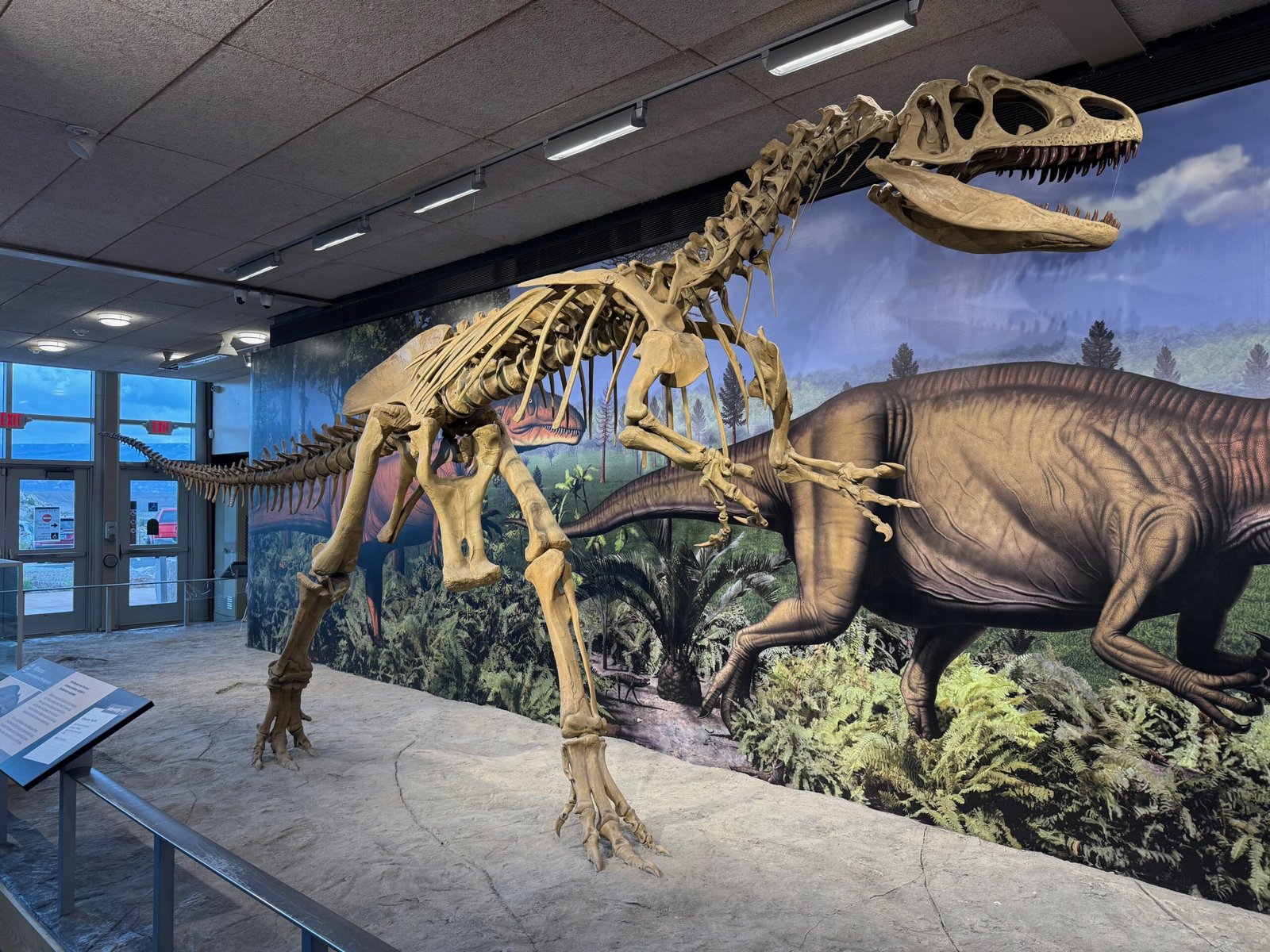
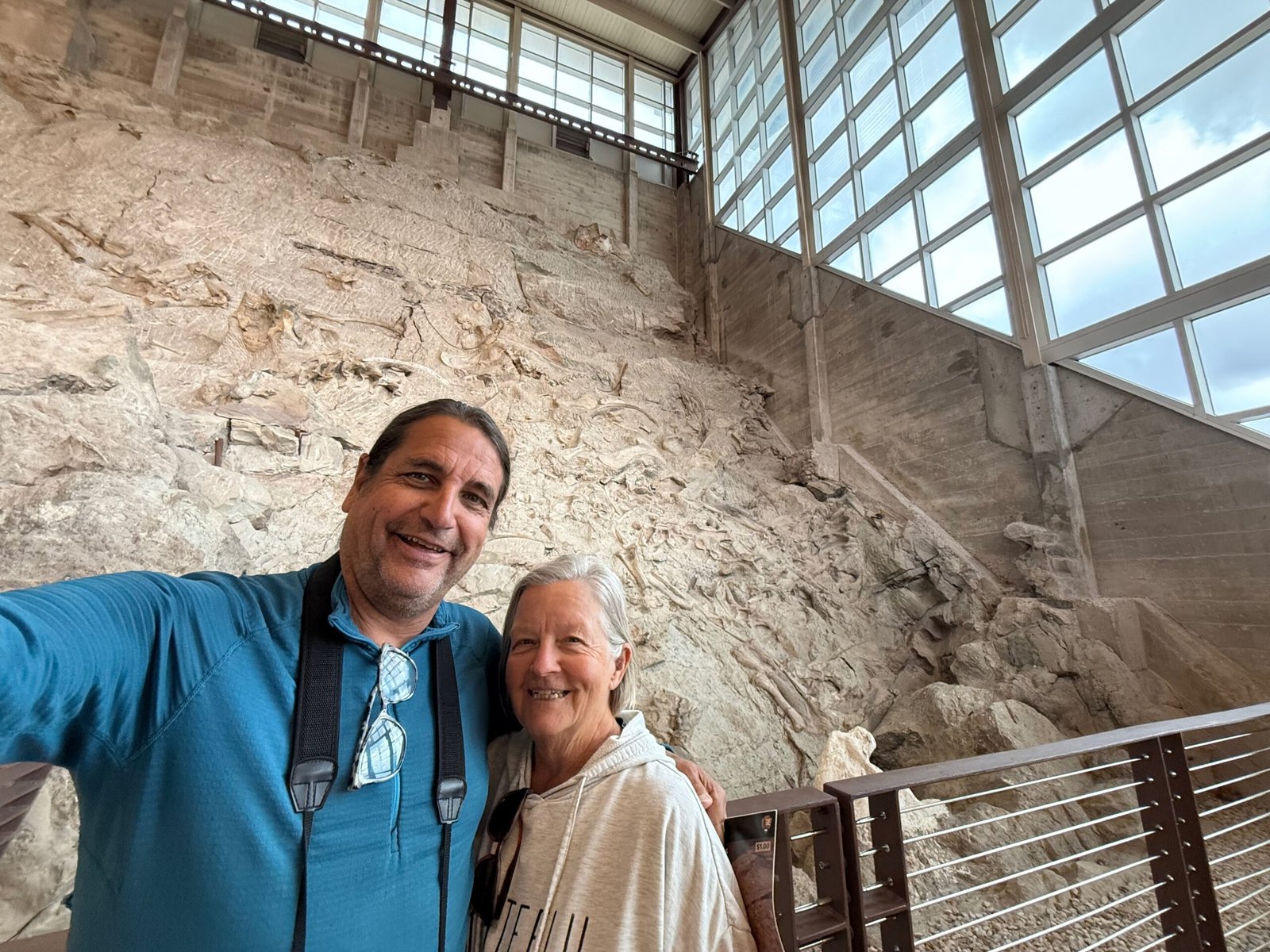
Before we left, the clouds rolled in, the temperature dropped, and it began to rain.
Outside, the paleo team had pulled a tarp over the dig…and were happily working away underneath.
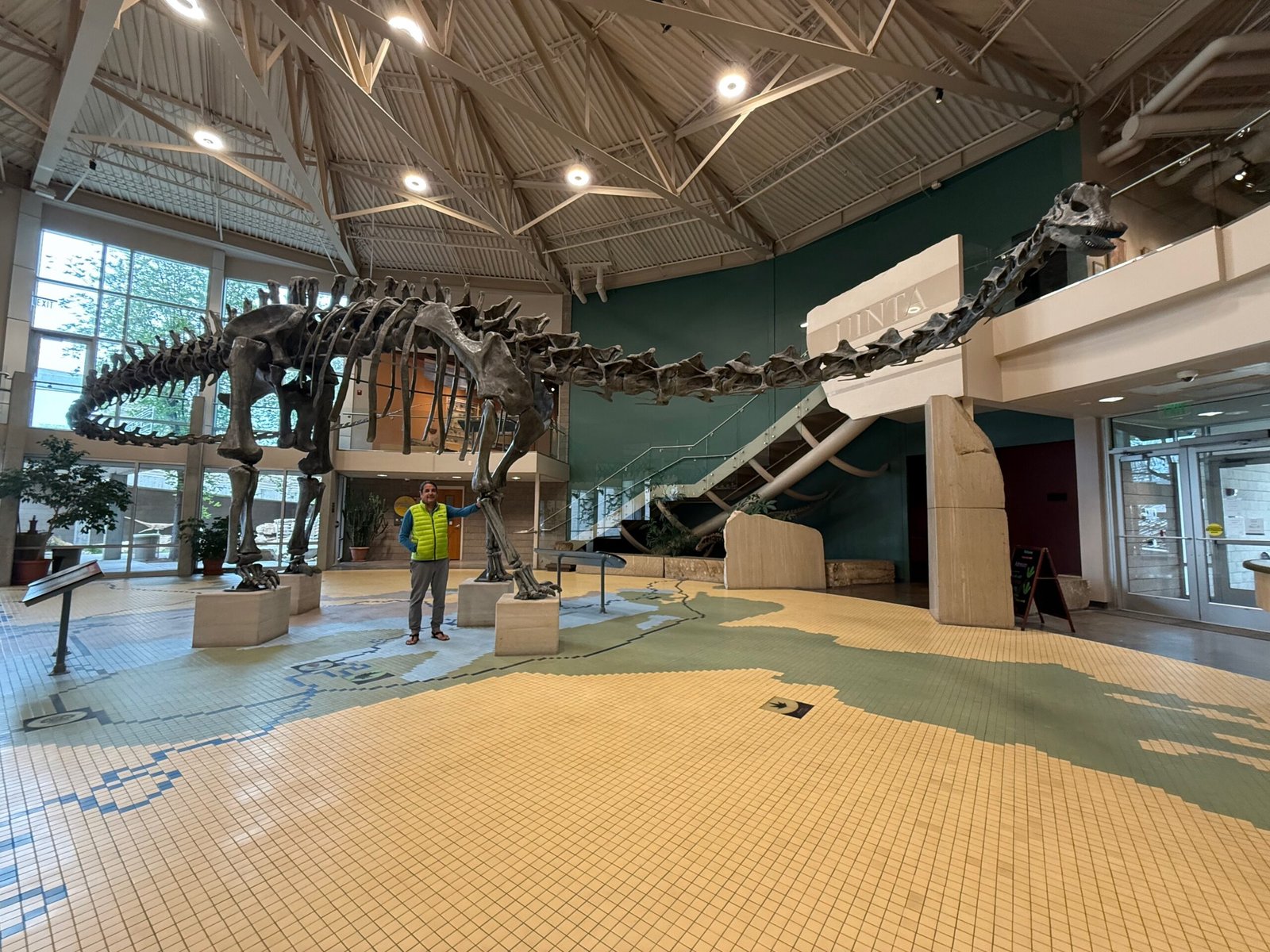
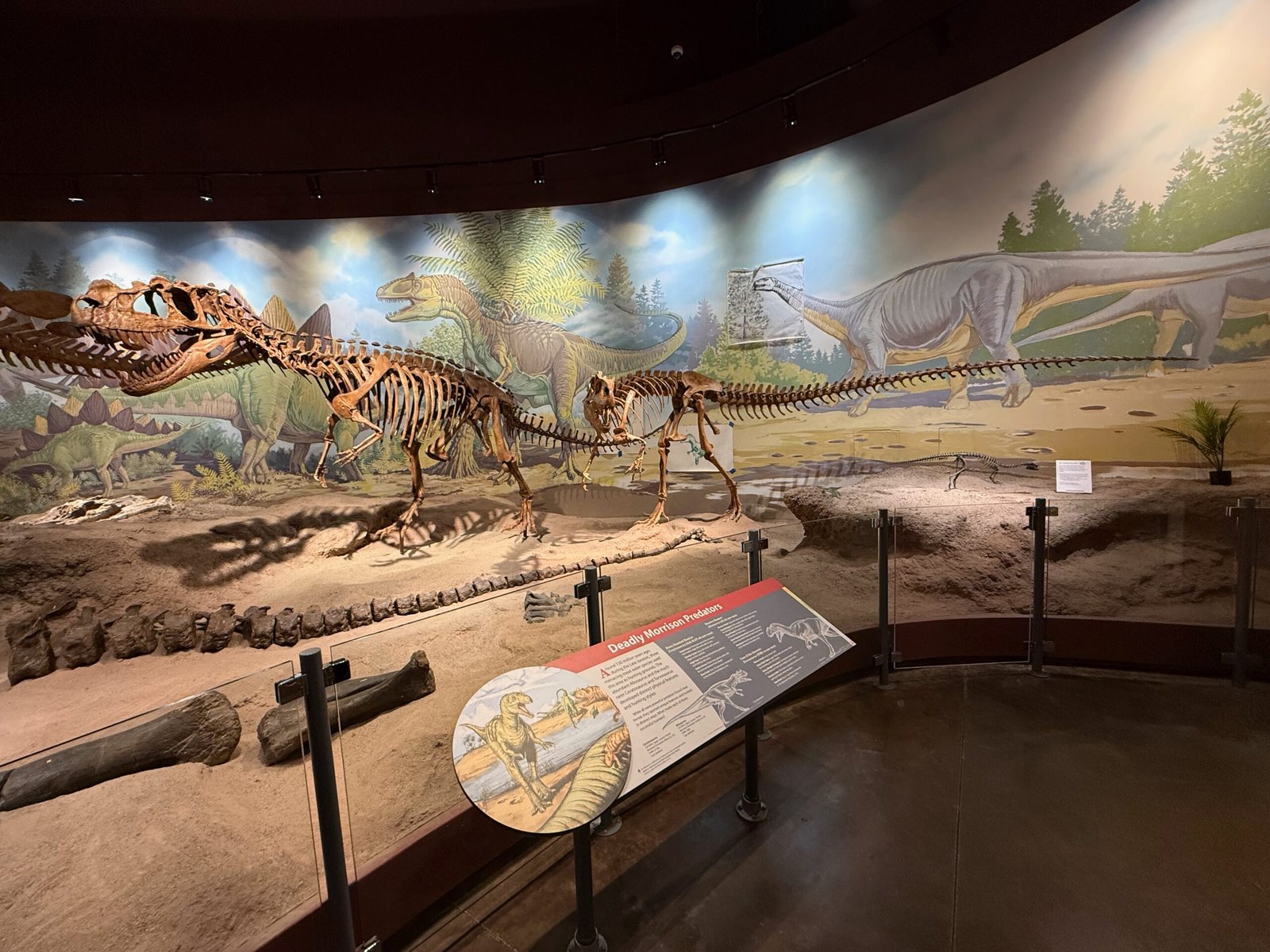
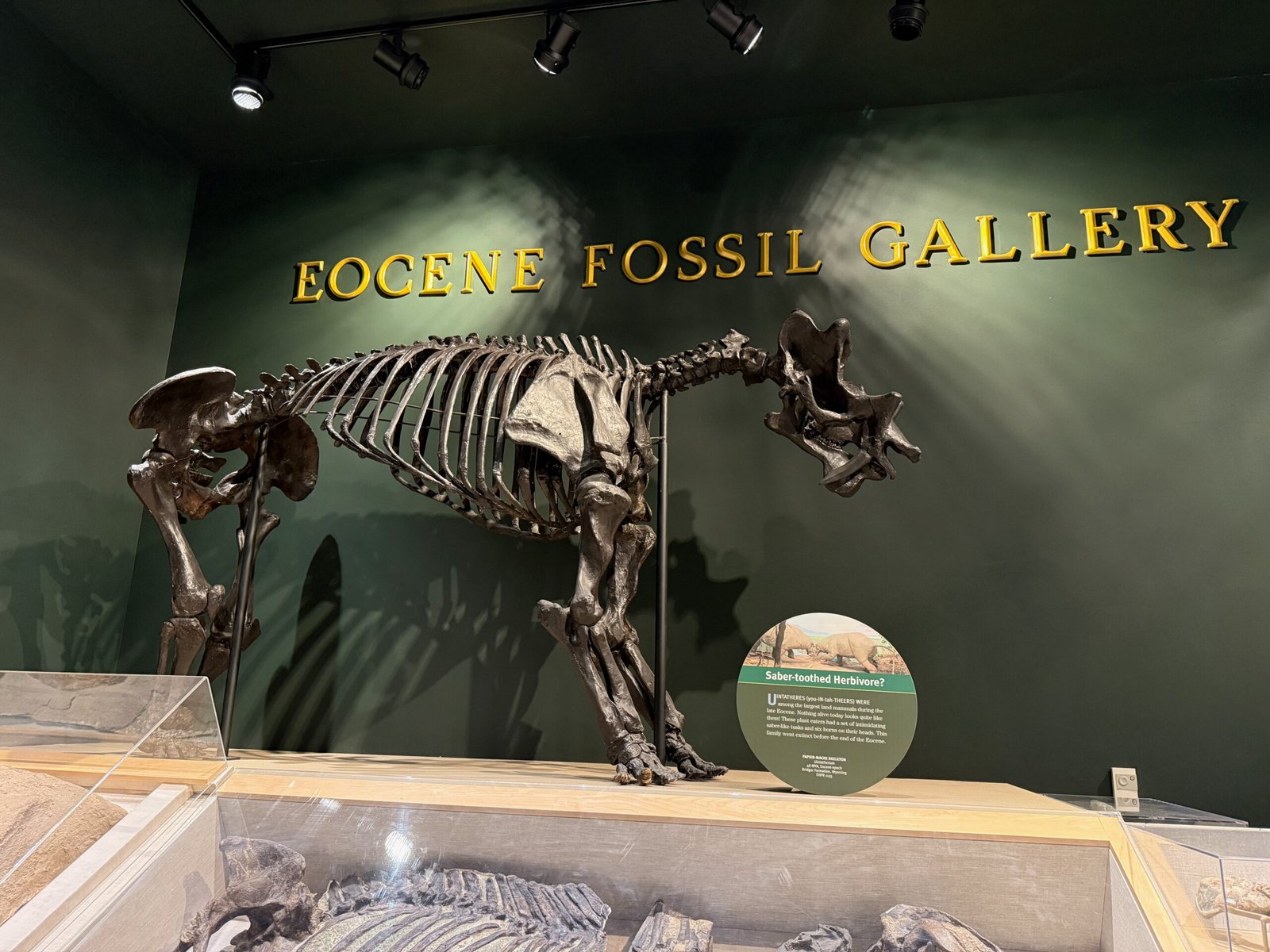
Vernal, UT is the home of the Utah Field House of Natural History State Museum. Another wonderful stop with a variety of fossils including a saber-tooth herbivore?!
After lunch we burned our way back down Douglas Pass road, made camp and started packing for Bears Ears. By morning the wind had calmed, the skies had cleared, and it was time to move on.
Going to Bluff today! We turned off of I-70 and onto Utah highway 128 along the Colorado River. They say it’s a scenic byway, you decide.
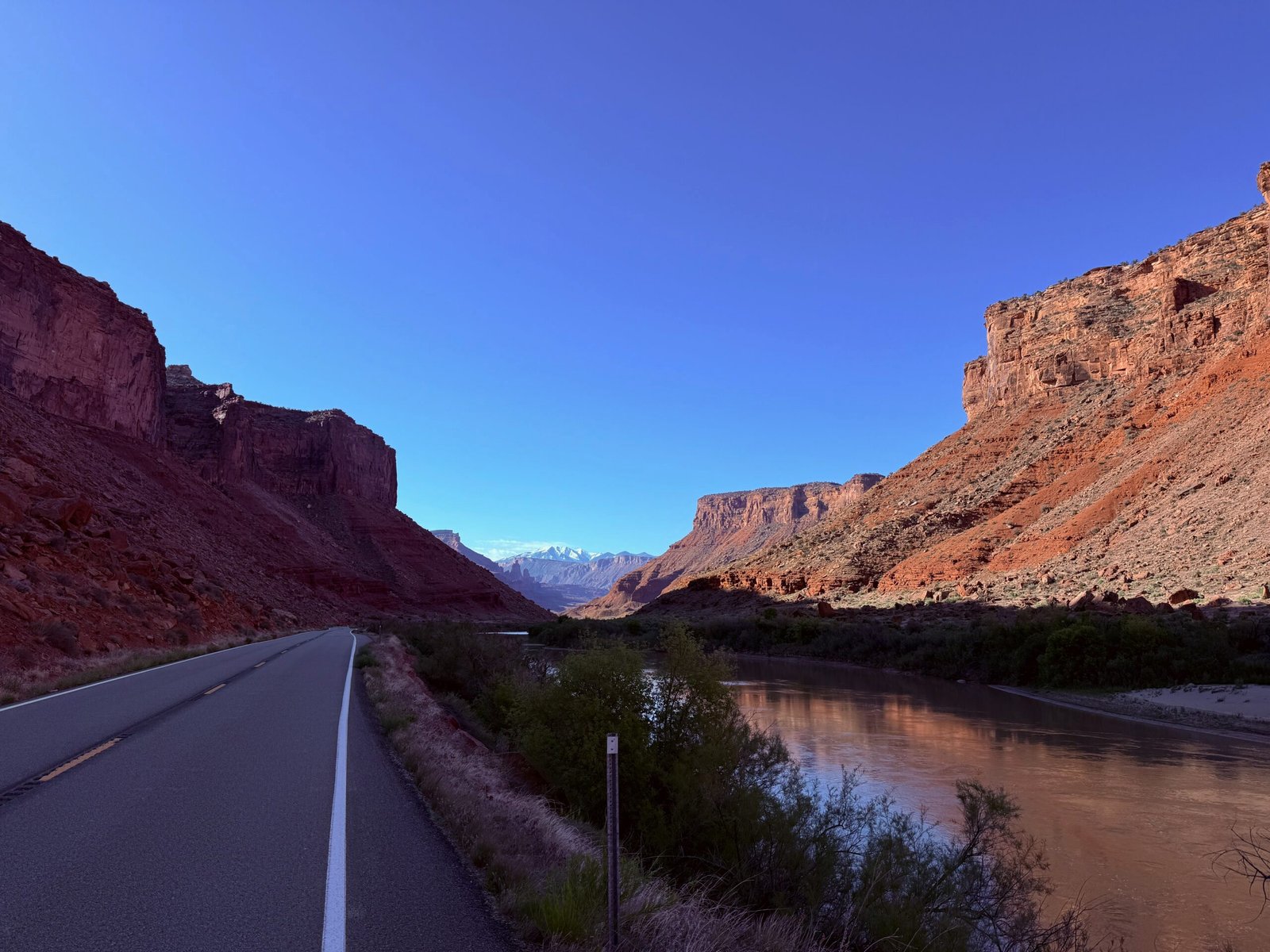
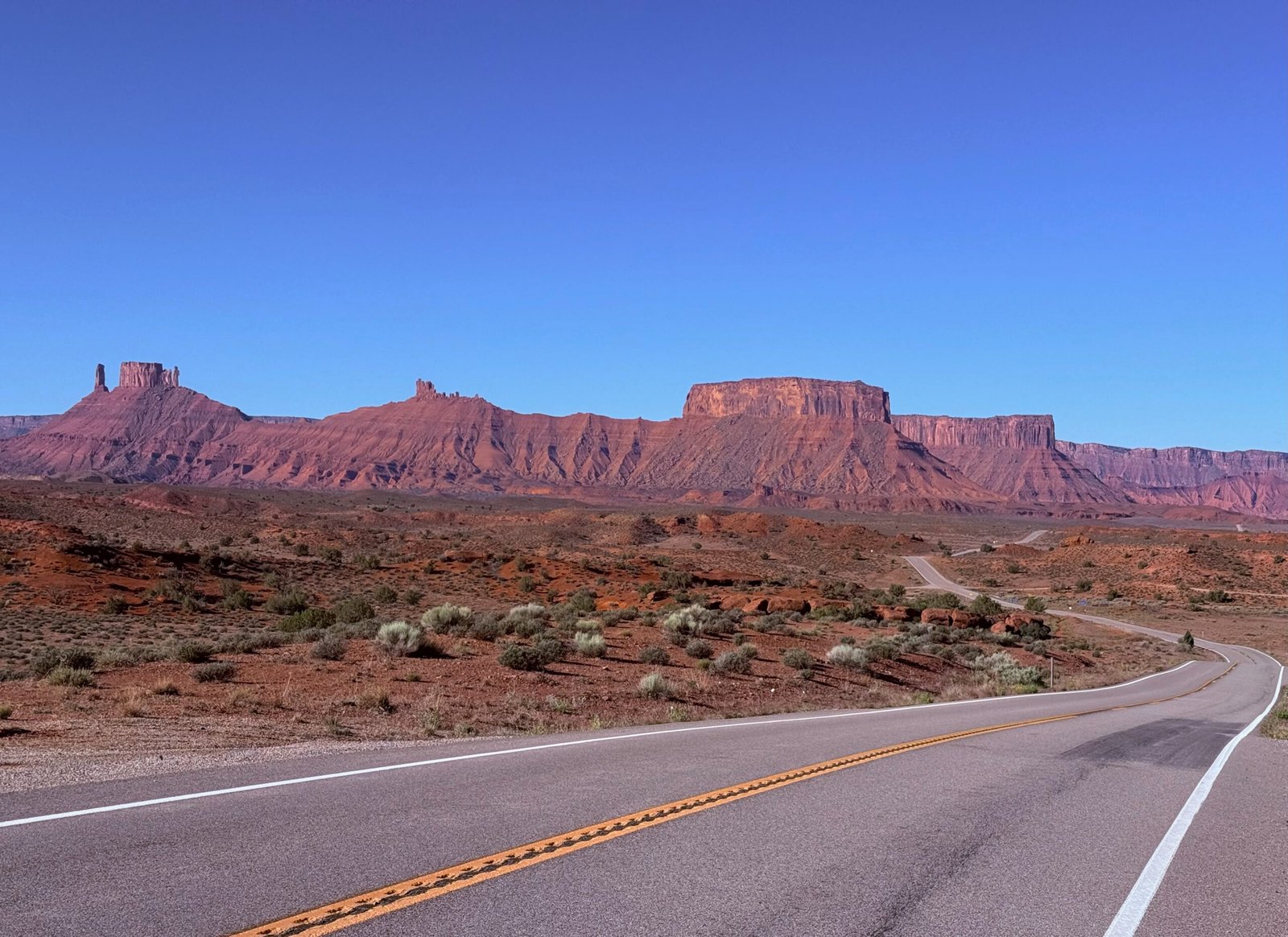
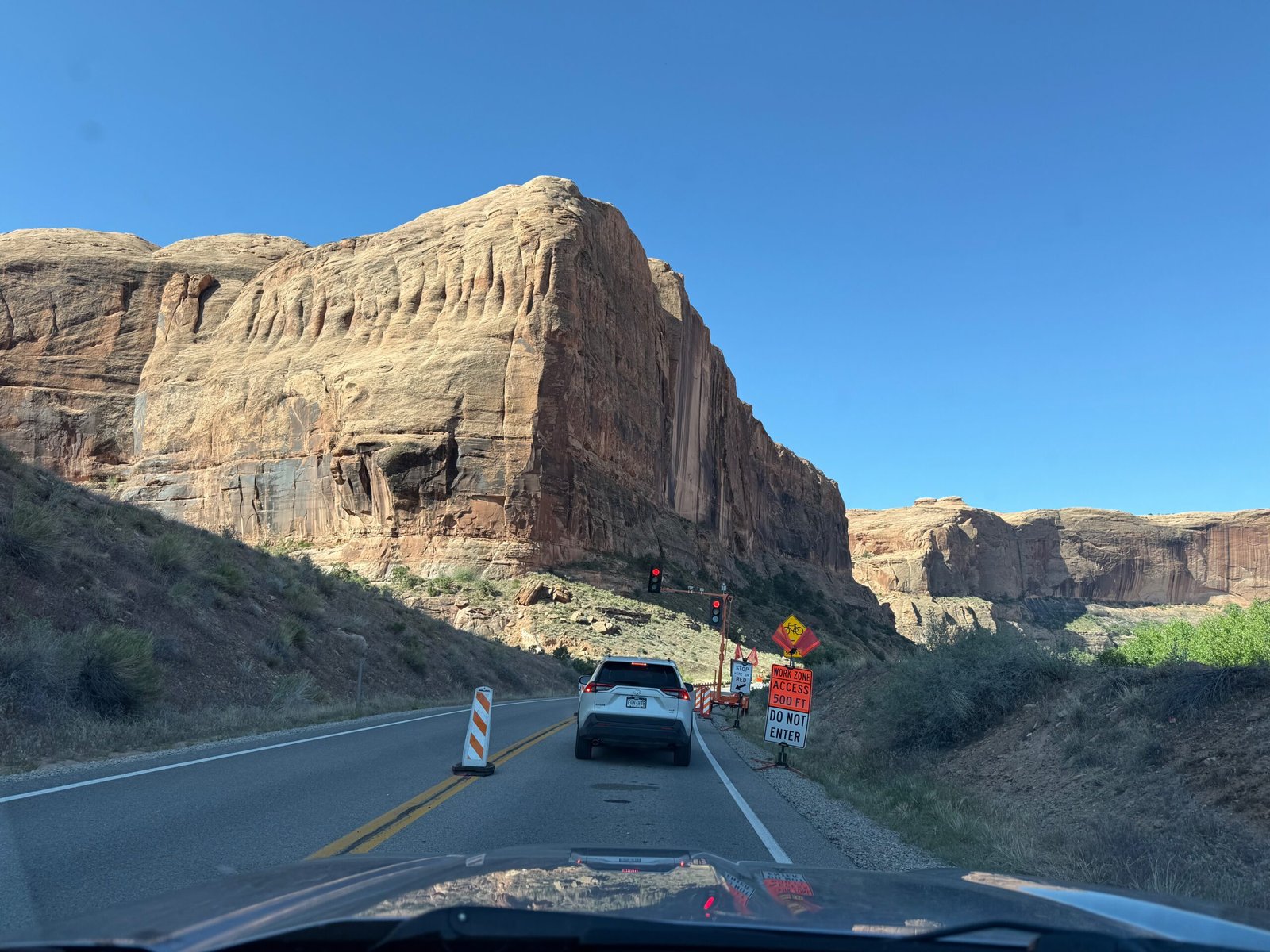
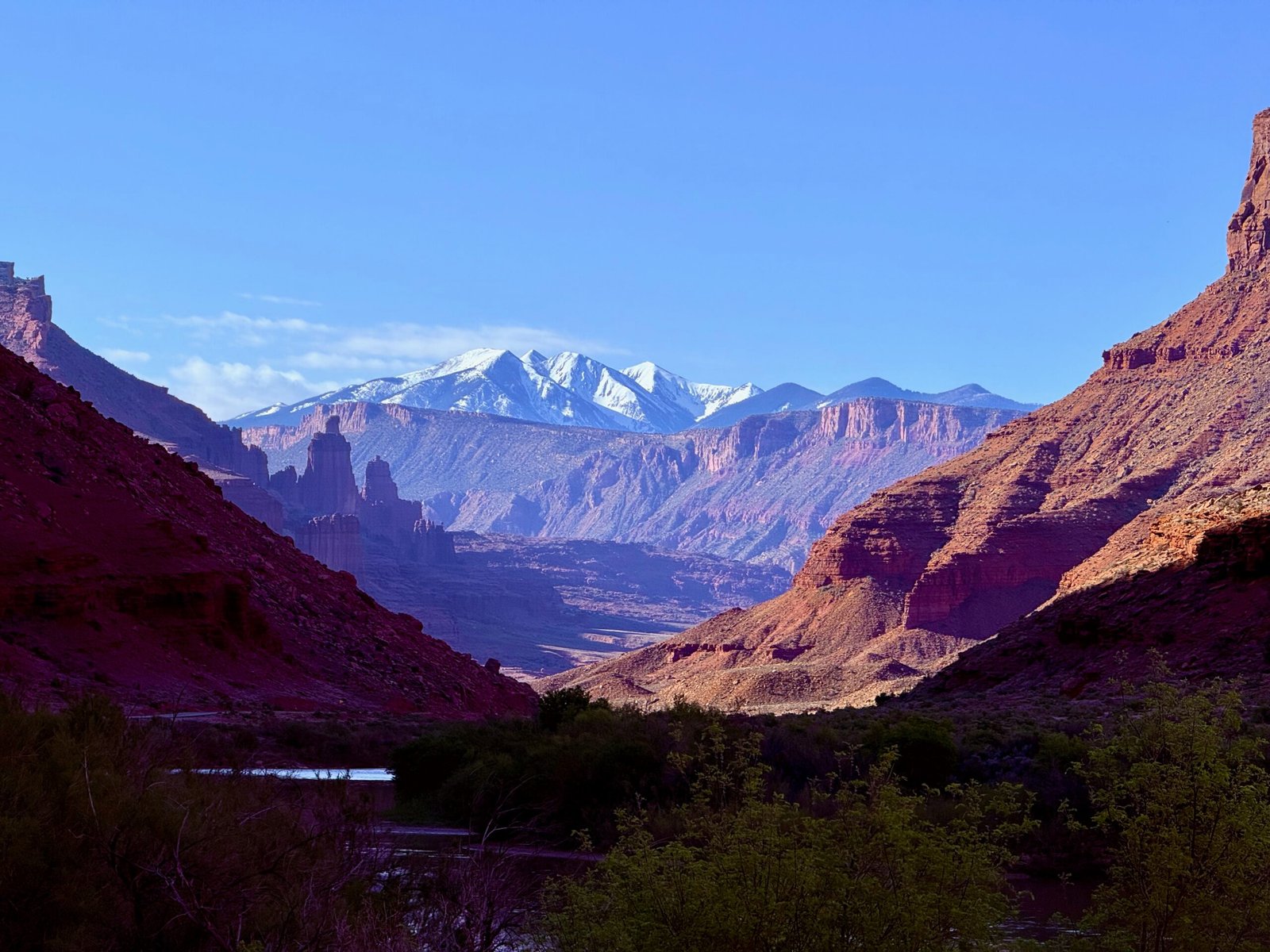
The road carried us into Moab, where we briefly considered stopping. Nah. Nothing to see here…
Leave a Reply