#6 of the series.
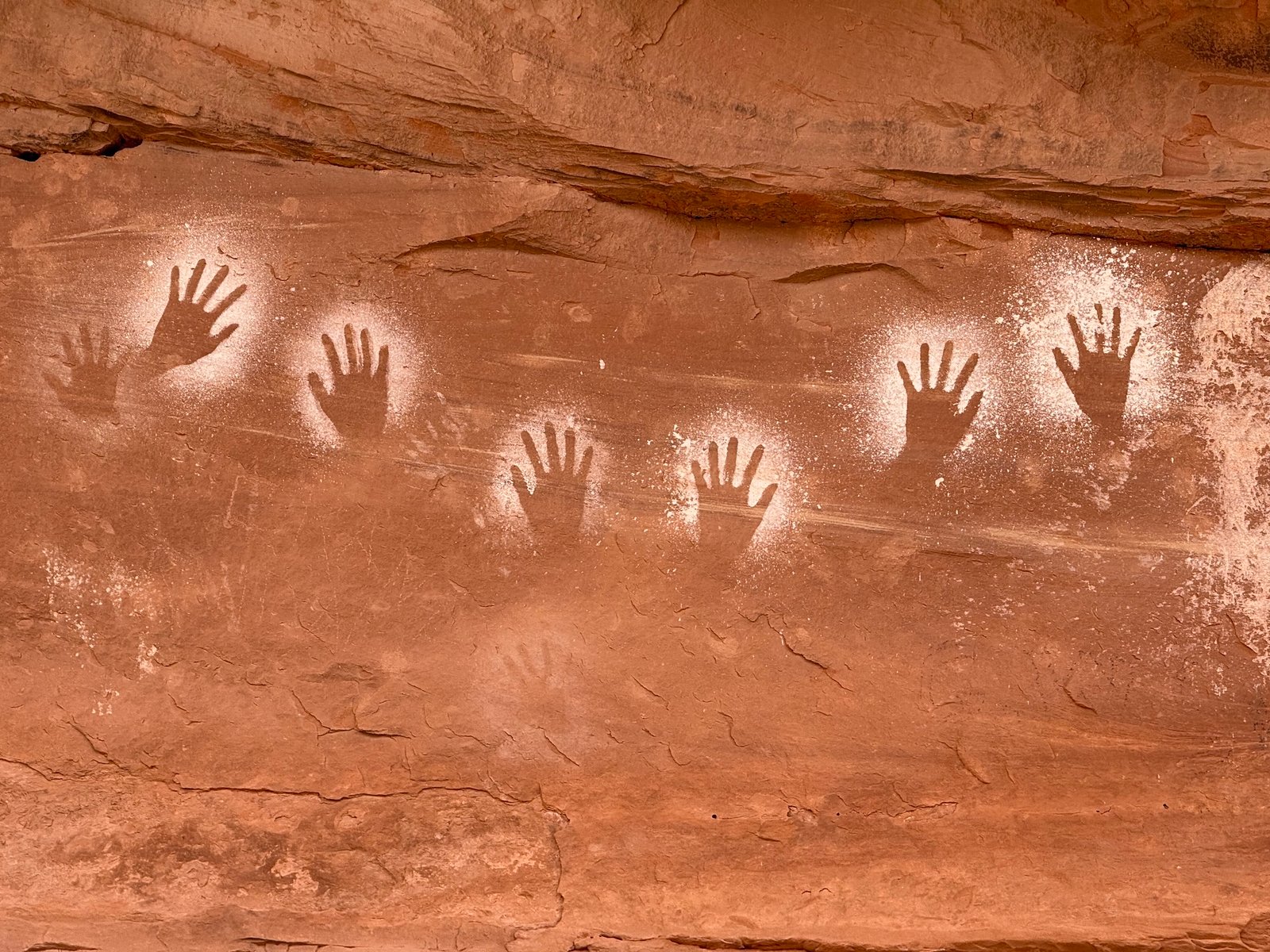
Three pair of beautiful handprints in featured image. Notice the misfit in the middle? 1,000 years ago that person chose differently. Even 1,000 years ago, there’s always one, right? And, more than we might like to admit, that radical might be saying something we need to hear. But more on that a little later…
Patricia had me worried. I had installed a fancy roof vent in the camper and when I set it to “automatic” just before bedtime, a super bright green LED indicator illuminated the entire camper!
“Are you okay with this light? I’m happy to turn it off,” I said.
“I sleep with my eyes closed so it won’t bother me,” she said facetiously. And then I heard a giggle. Then a chuckle. “Uh oh,” I’m thinking to myself.
Then a brief cascade of hysterical laughter. Terrified, I refused eye contact and I dared not engage in conversation. I’ve seen how these things go.
The laughing convulsions ebbed and flowed, subsiding before midnight. And we worked our way through it. For my part, I was as quiet as a church mouse.
Back around 2016 or so, we took the grandkids to a movie at a fancy venue in Huntsville. While eating at the restaurant, Lainee, the youngest, posed a knock knock joke to Patricia:
“Knock knock.”
“Who’s there?”
“Interrupting cow.”
“Interup…..”
“MOOOOOOOO!!!“
Grandmommy lost it. Out of control. It was so bad that the other waitresses came over to witness it in wonder.
Yes folks, joke hysteria is a thang.
And maybe genetic. I’ve seen the daughters and a granddaughter fall into this miasma, it has been a family team effort to pull them out! I would say there should be a treatment, but then again, it is a treatment. To experience one is to have a light heart for days, grinning to yourself every time you think about it.
Retrospective – Part One of Two:
John Prine was one of the great singer/songwriters of our time. By the time I had reached my teenage years, he’d penned and sung a couple of his greatest works in his 1971 debut album. He could transform a volume of prose into a single lyric like no other. Just thinking about Mr. Prine has placed Sam Stone in my mind, and the lyrics have rolled around in my head for at least three weeks now.
And the gold roared through his veins
Like a thousand railroad trainsAnd eased his mind in the hours that he chose
While the kids ran around wearin’ other peoples’ clothes
Hmm, hmm, hmm, hmm.
And then there is the song Paradise.
John Prine was from Maywood, Illinois but spent many a summer on the Green River in Paradise Kentucky with his family. He had described it as “a real Disney-looking town.” While serving in the Army in West Germany (remember that Germany and its capital city Berlin, were split after WWII until the wall came down in 1989), his dad had written to tell him that the Peabody coal company had ruined the town.
Peabody Energy got their start in 1883 in the coal business, and in the 1960’s won a contract with the Tennessee Valley Authority (TVA) to strip mine thousands of acres in Muhlenberg County, Kentucky in order to feed a new coal-fired power plant being built in Paradise. It was a small town of about 900 folk, but nearly three times the size that Bluff is today.
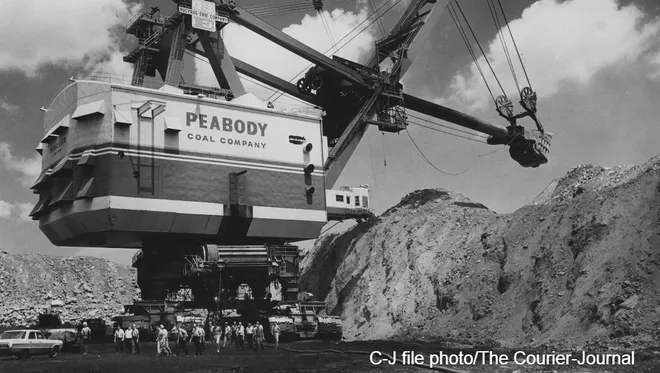
To strip the land, Peabody had the world’s largest coal shovel, “Big Hog,” built to feed the new TVA Paradise Steam-Power Fossil Plant. Patricia remembers seeing it as a child.
But in just a few years time, the town was abandoned due to the toxic flue gases and fly ash causing sickness. People were relocating, often losing their businesses and value in their homes. TVA finally bought the entire town in 1967 and it is now a ghost town, with only the cemetery remaining. As the master sings:
Well they dug for their coal till the land was forsaken
Then they wrote it all down as the progress of man.
TVA was created in 1933 as a “public corporation.” I’m pretty sure the public paid for the purchase of the town of Paradise, and not the corporation. The coal furnaces were eventually shut down, with two being eventually converted to natural gas. Peabody Energy was unaffected.
During this same period, around 1964, Peabody’s subsidiary, Peabody Western Coal, signed leases with the Navajo and then two years later, the Hopi, acquiring mineral rights to Black Mesa, located near Four Corners. Both tribes consider the mesa ancestral and sacred lands and there was a tremendous amount of opposition to the leases.
The real kickers are that not only were mineral rights secured, but water rights as well. And the attorney working on the behalf of the Hopi to negotiate the leases also worked for a firm that represented Peabody in other matters. Hmm.
I mentioned in my last post how the U.S. government manipulated the Navajo, surrounding and shrinking the Hopi lands because of their resistance. Our government also knew there was coal in Black Mesa and they worked the rules hard to get at it.
As for their remaining paradise, the Hopi and Navajo were promised all good things. Good paying jobs and of course cheap energy. But also a promise that there would be no impact from the mining.
But why did Peabody Western Coal want water rights to the aquifer?
This aquifer, known as the N-aquifer, is the primary water source for over 5,400 square miles in the area. It’s ancient, pristine water tens of thousands of years old. Its recharge from rain in the desert is incredibly slow, making it subject to depletion from over use.
Absurdly, Peabody wanted the water only to transport their coal. They built a 272-mile slurry pipeline to the Mohave Power Plant in Nevada! When operating, it drew over 3 million gallons of water everyday from the aquifer. How could they do this? Because it was the cheapest way to transport their coal and it was perfectly legal. Free resources are always cheap and desirable to corporations.
Did it actually harm the aquifer? According to Cultural Survival,
“The Navajo Aquifer is showing signs of serious decline after decades of pumping by the Peabody Western Coal, according to an October 2000 Natural Resources Defense Council report. Water levels have decreased more than 100 feet each year in some wells on Black Mesa since PWCC started pumping the water for slurry.”
Then they wrote it all down as the progress of man.
Stay tuned for Part Two.
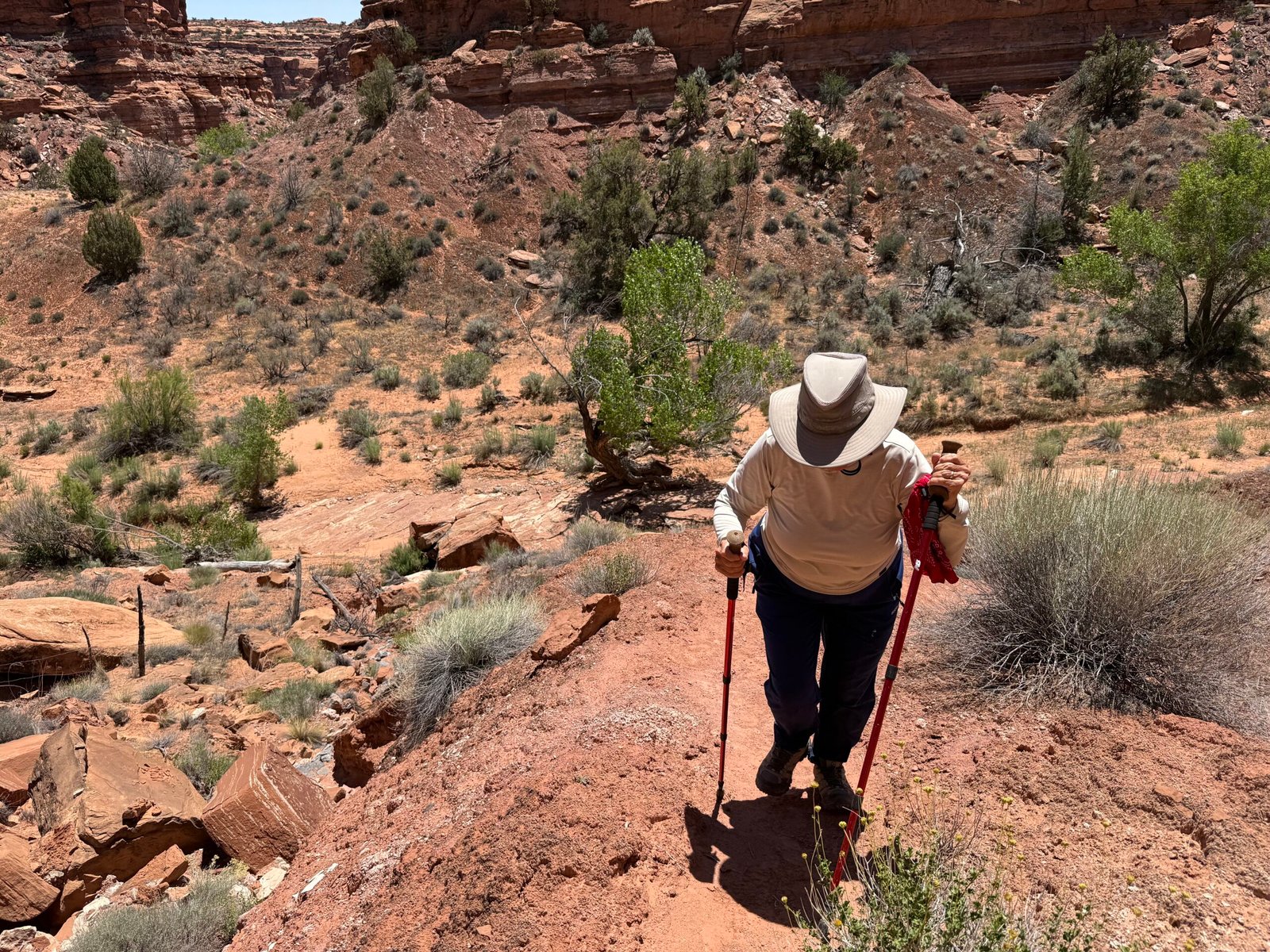
It’s been a whirlwind, both literally and figuratively! Cool in the mornings but hot and dry during the day, with the humidity hovering at an unheard of 8%! Red flag warnings for wind-whipped fires have been common. It’s best to get out early and be back by 1 or 2 pm before the wind picks up and the sun gets too intense, a real convection oven.
During our hikes, we usually start by tanking up at the truck and carry around 3 liters each for the hike. It’s rare that there is a need for a “pee break.” Sweat evaporates almost instantly and you really have to work at staying hydrated. While doing a bit of reading on heat stroke, I learned that the stomach can typically process only a liter of water an hour. And under heavy exertion, you can expend one and half times that. In other words, with strenuous activity, you will be in a water deficit no matter how much you drink.
We have called off or turned around on more than one hike. In fact, as much as we love loop hikes, we have found that out-and-backs give us options and allow us to see things we may have missed in the area.
There were a set of structures in one canyon that were intriguing. A series of four windows in the living space with what appears to be granaries on both sides. Patricia noticed that the granaries have a different style, maybe they were added later?
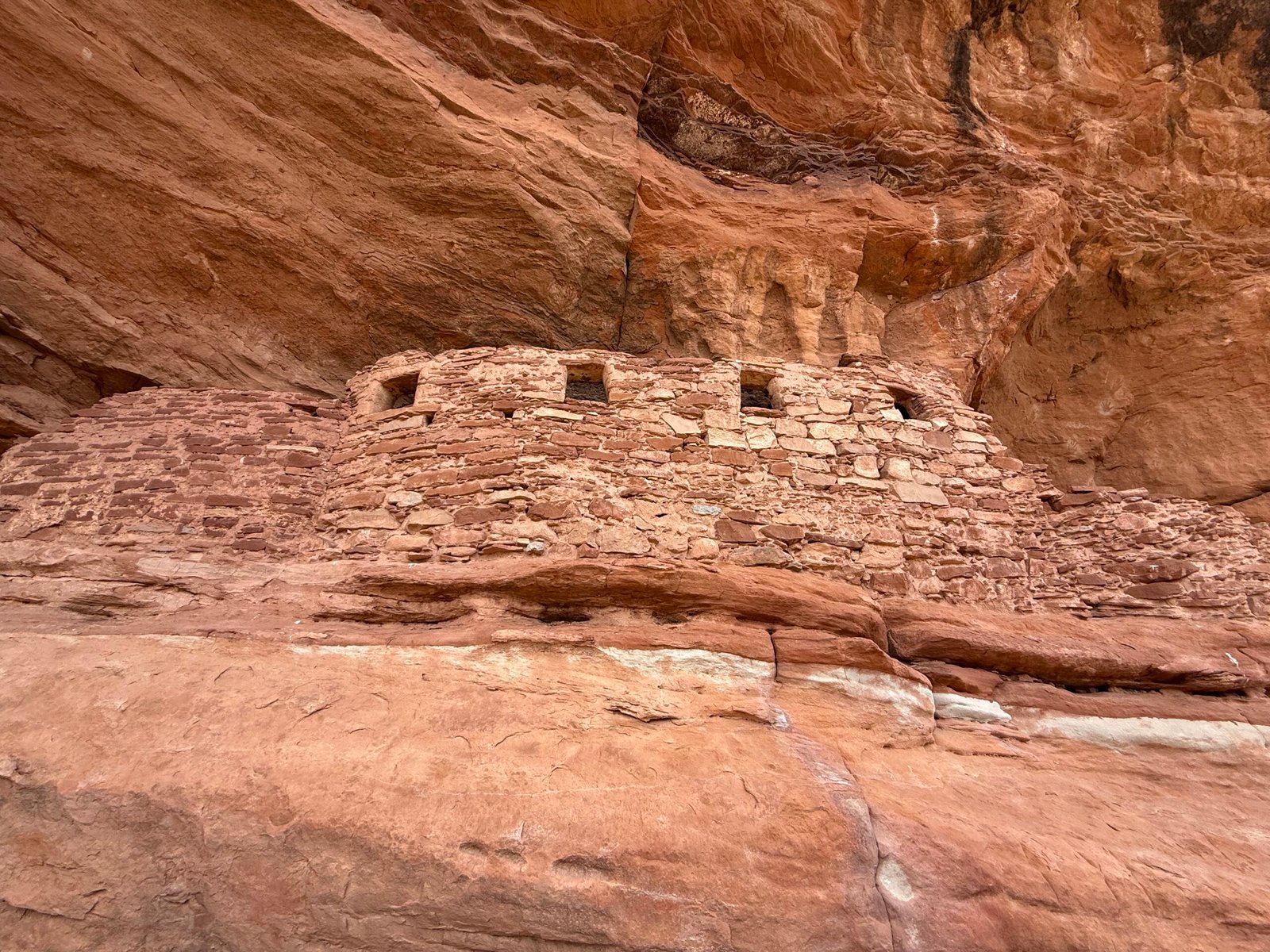
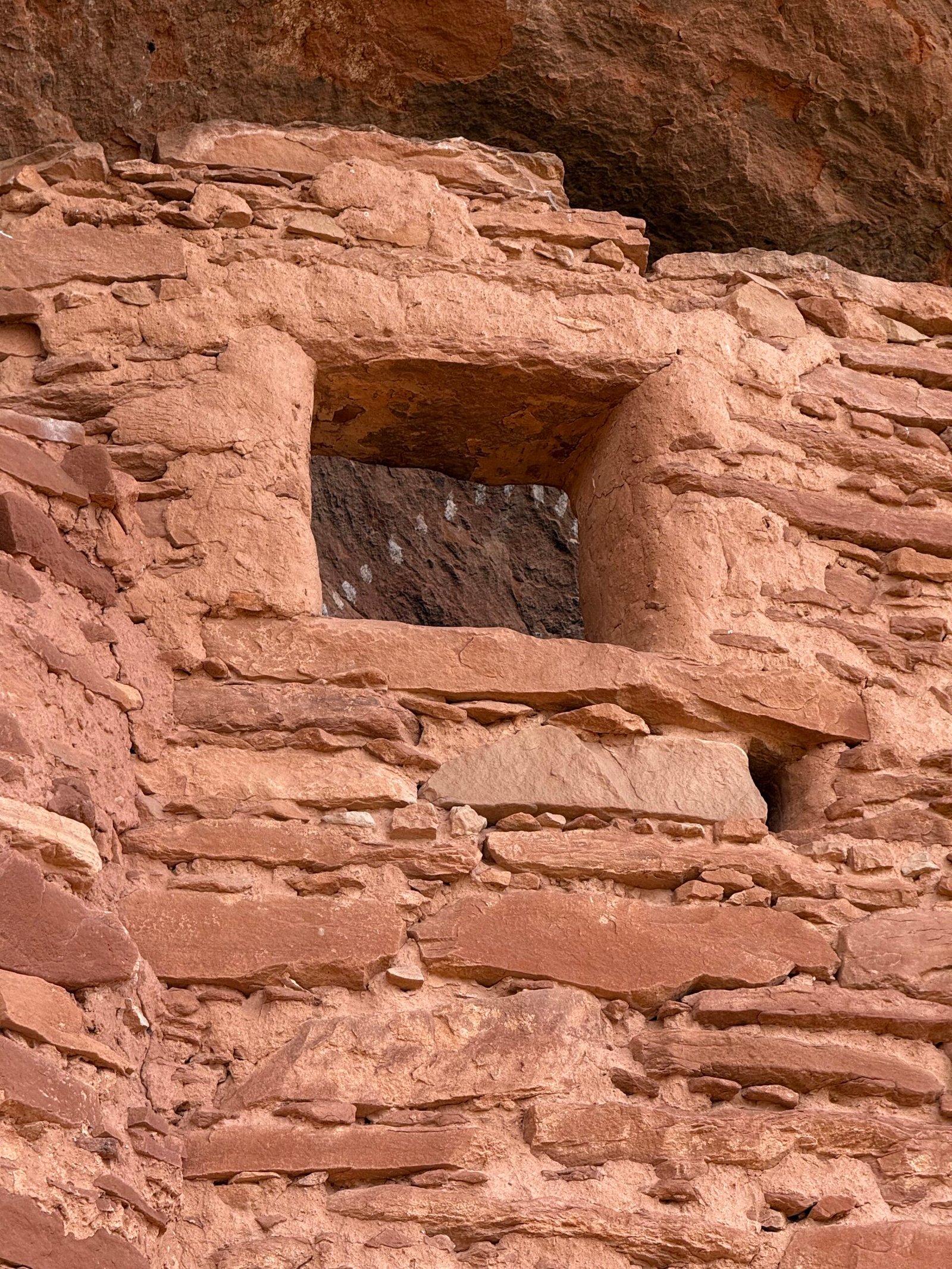
The structure sits on a ledge of stone under an overhang. Through the window on the left, I spied a series of white dots. Not wanting to touch the structure, I decided to stay off of the ledge. So I backed up and used the telephoto. There is something celestial going on here. An arc of dots, I counted 13, or was it 14?
With 13 full moons in a year (sometimes), is this what they were counting? There are about 14 meteor showers each year, could that be it?
And what about that arc? Being on the ceiling inside the room, what and how is it tracking?
While in Sacred Valley, Peru, we visited Puca Pucara, one of the many ancient Incan observatories. The observatories have shallow pools that, when filled with water, would reflect the sky.
The astronomers could observe while comfortably seated. A possibility here?
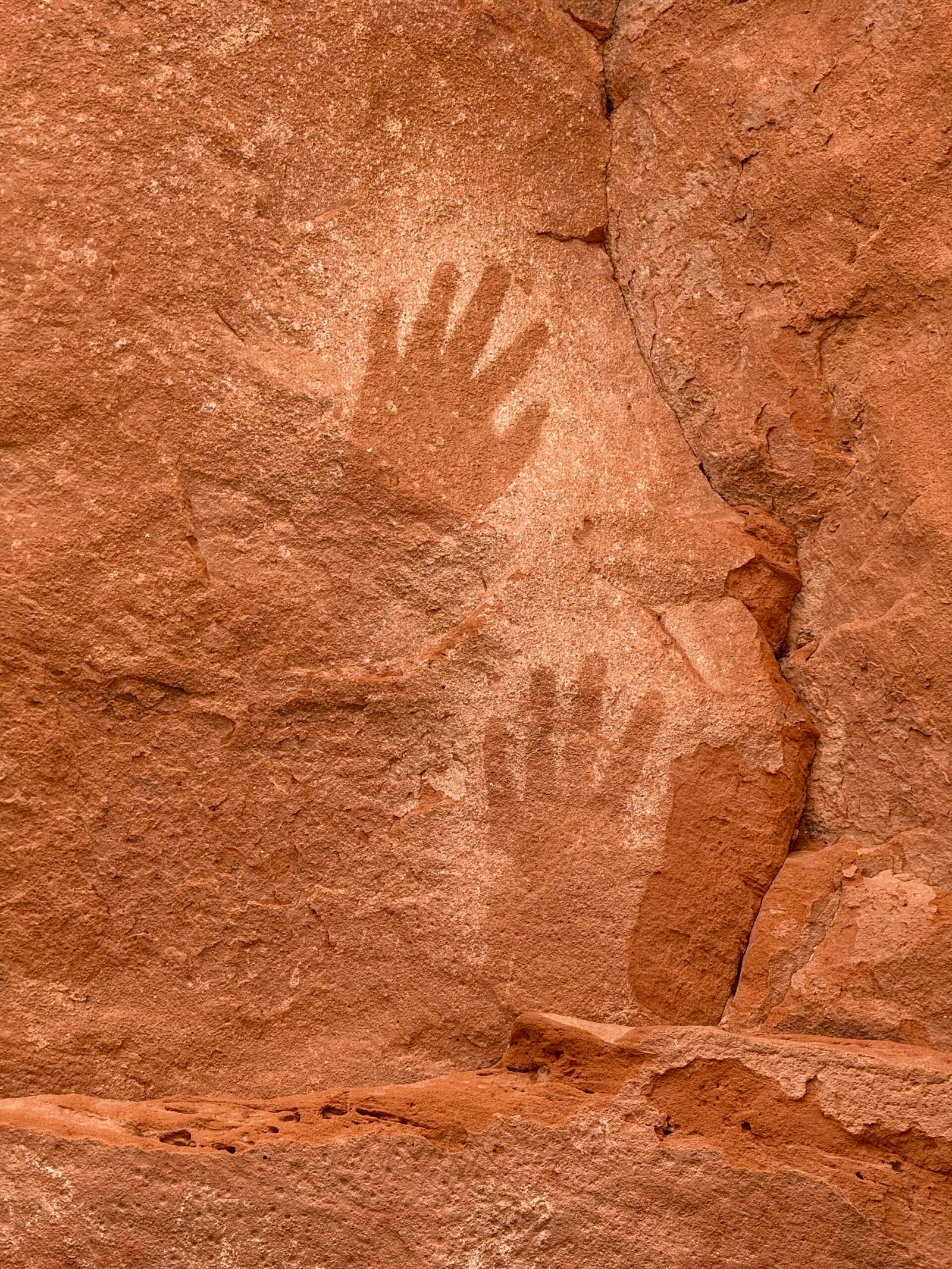
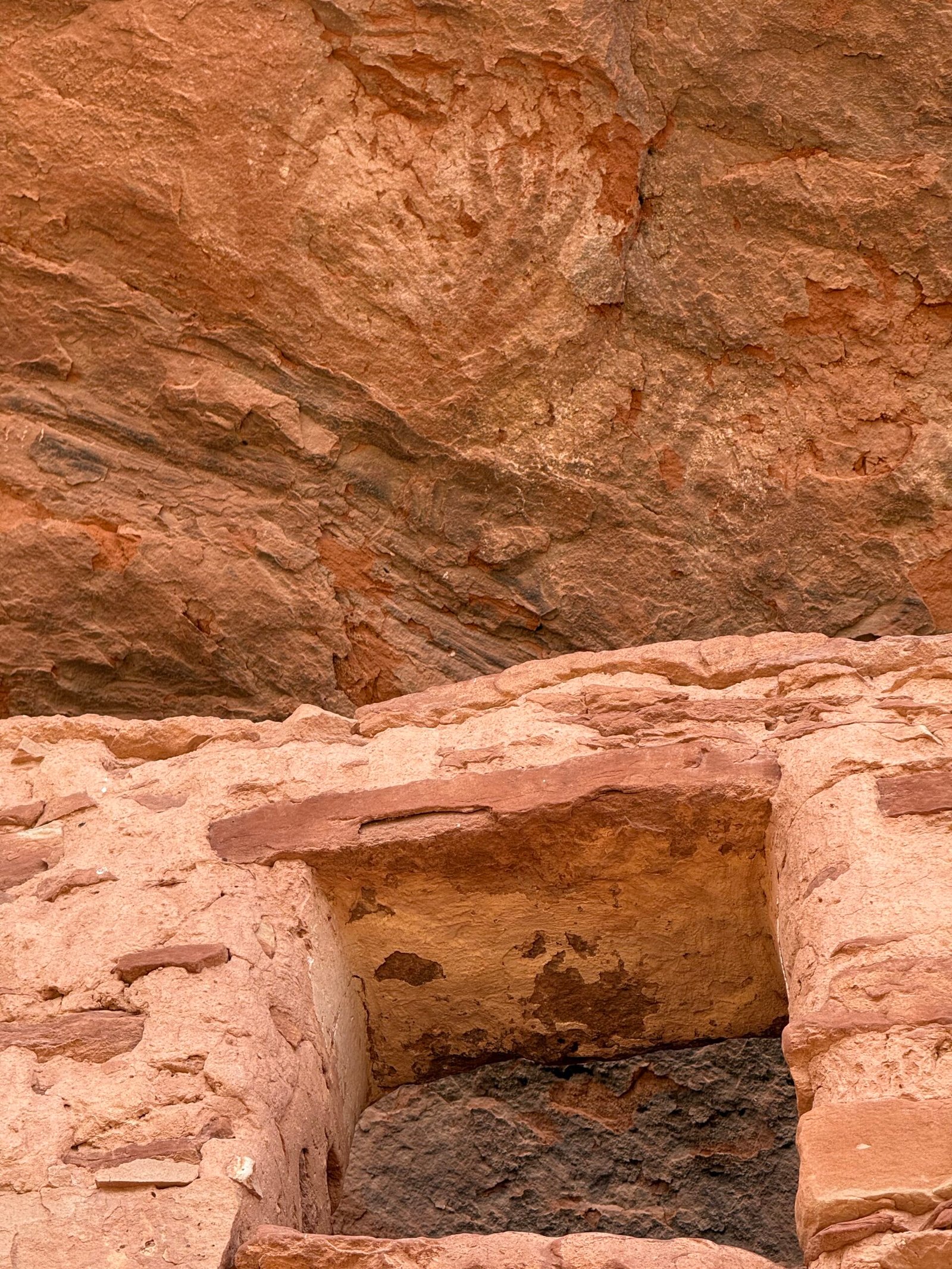
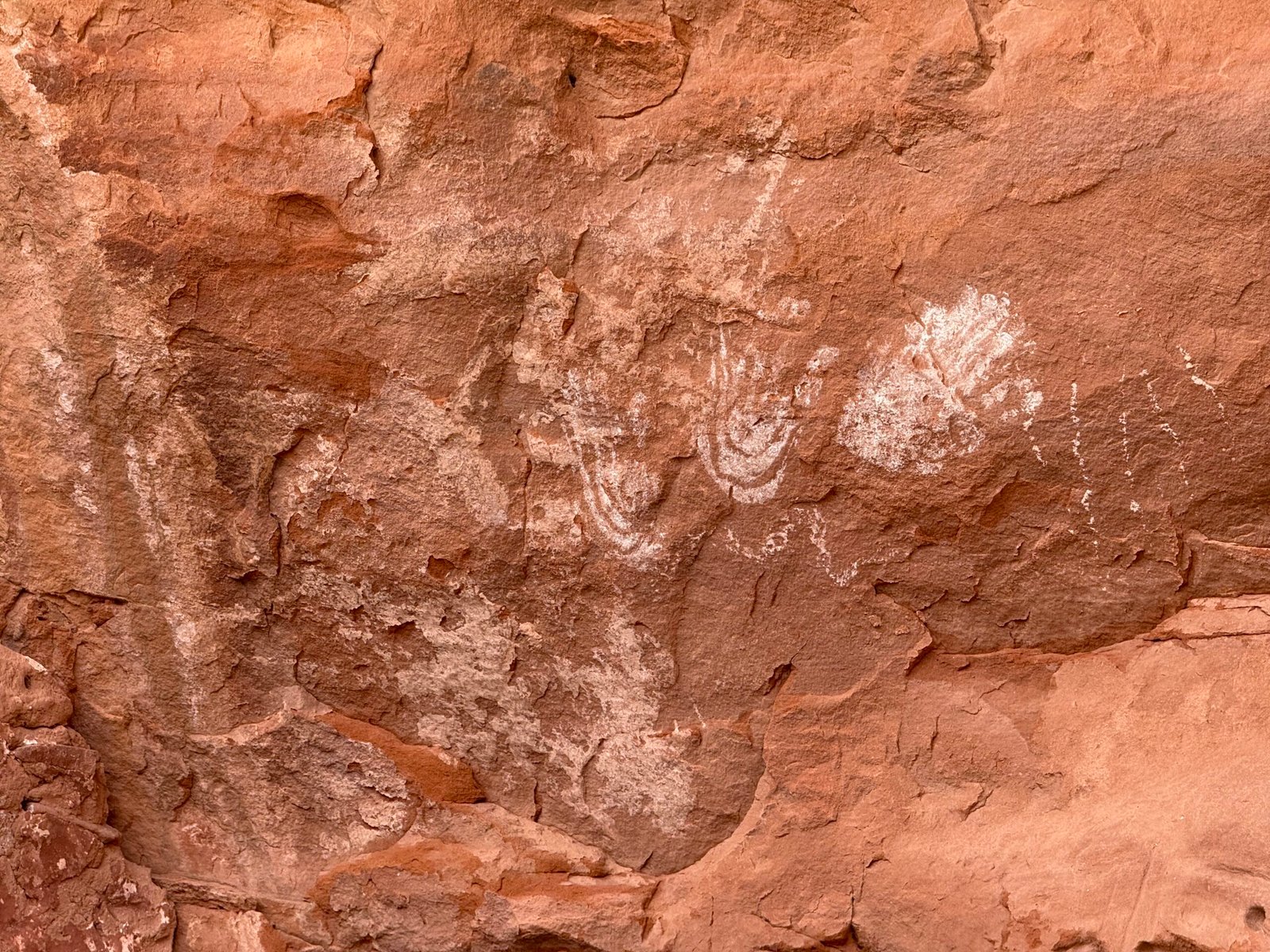
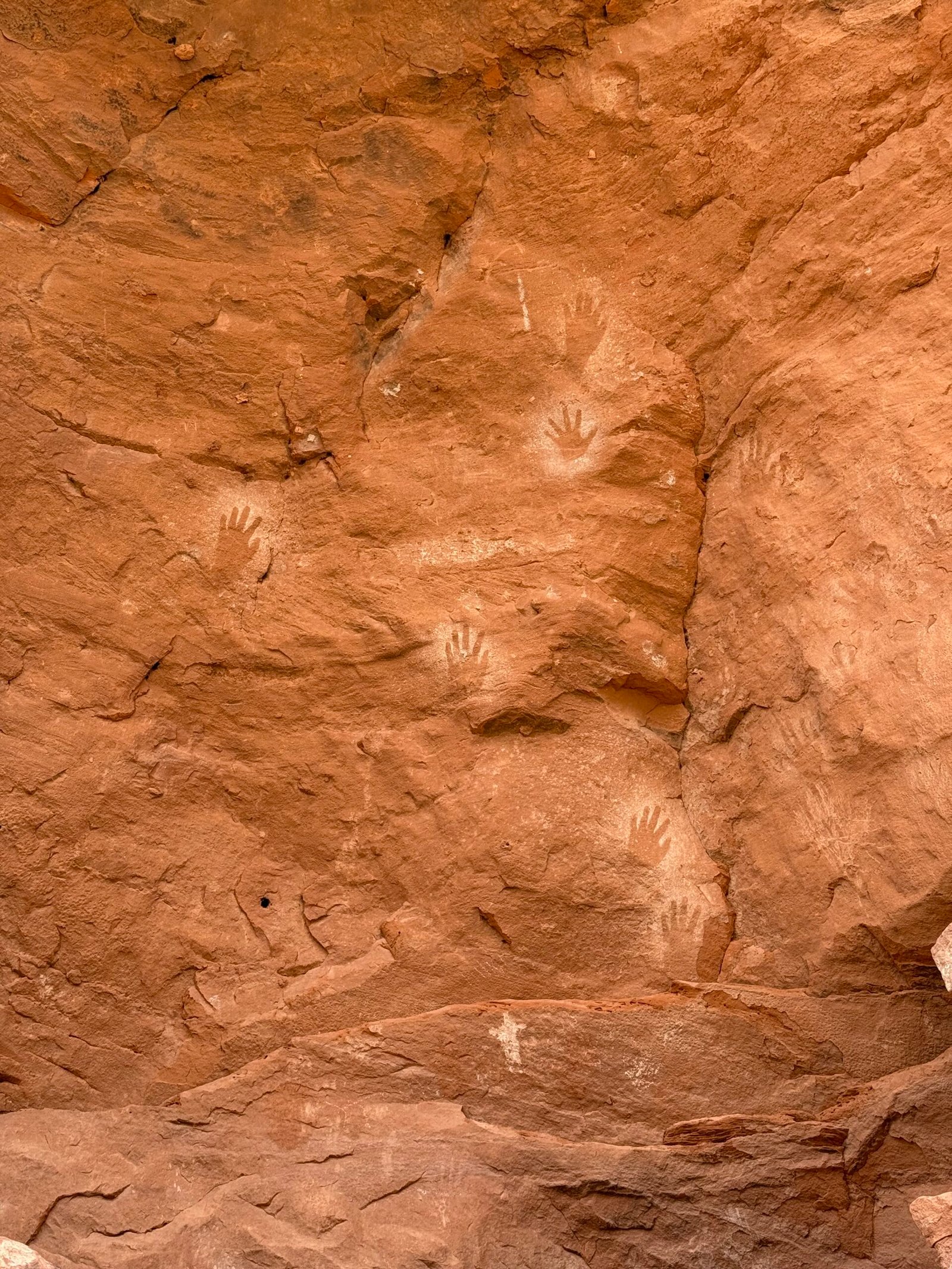
Three styles of handprints. One is just a painted hand placed on the stone, another is a “negative” of that with maybe the pigment blown from the mouth. The third is stylized with spiraling on the palms.
A little ways down the canyon, a different structure is seen. Beautiful prints, including our radical friend’s.
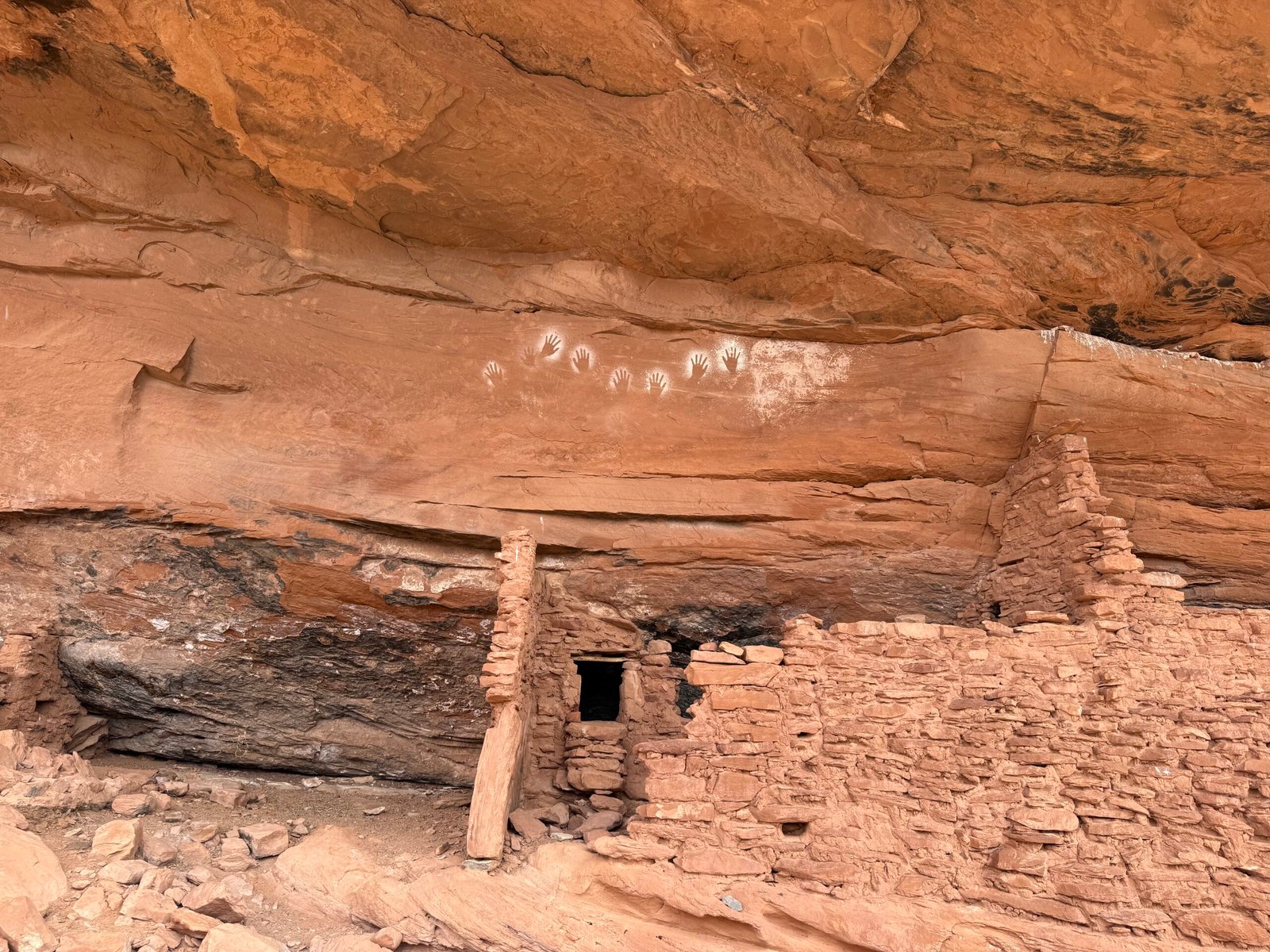
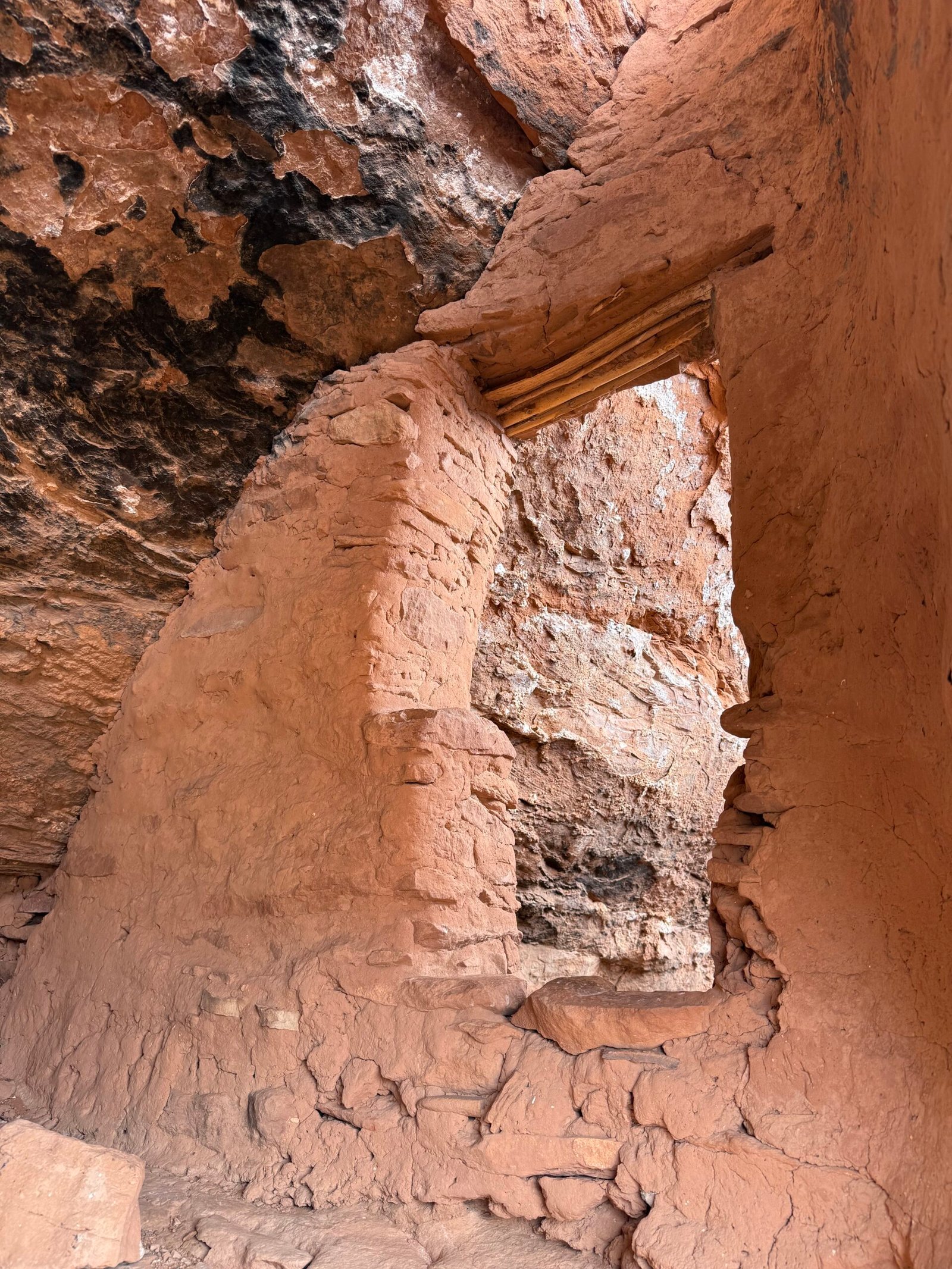
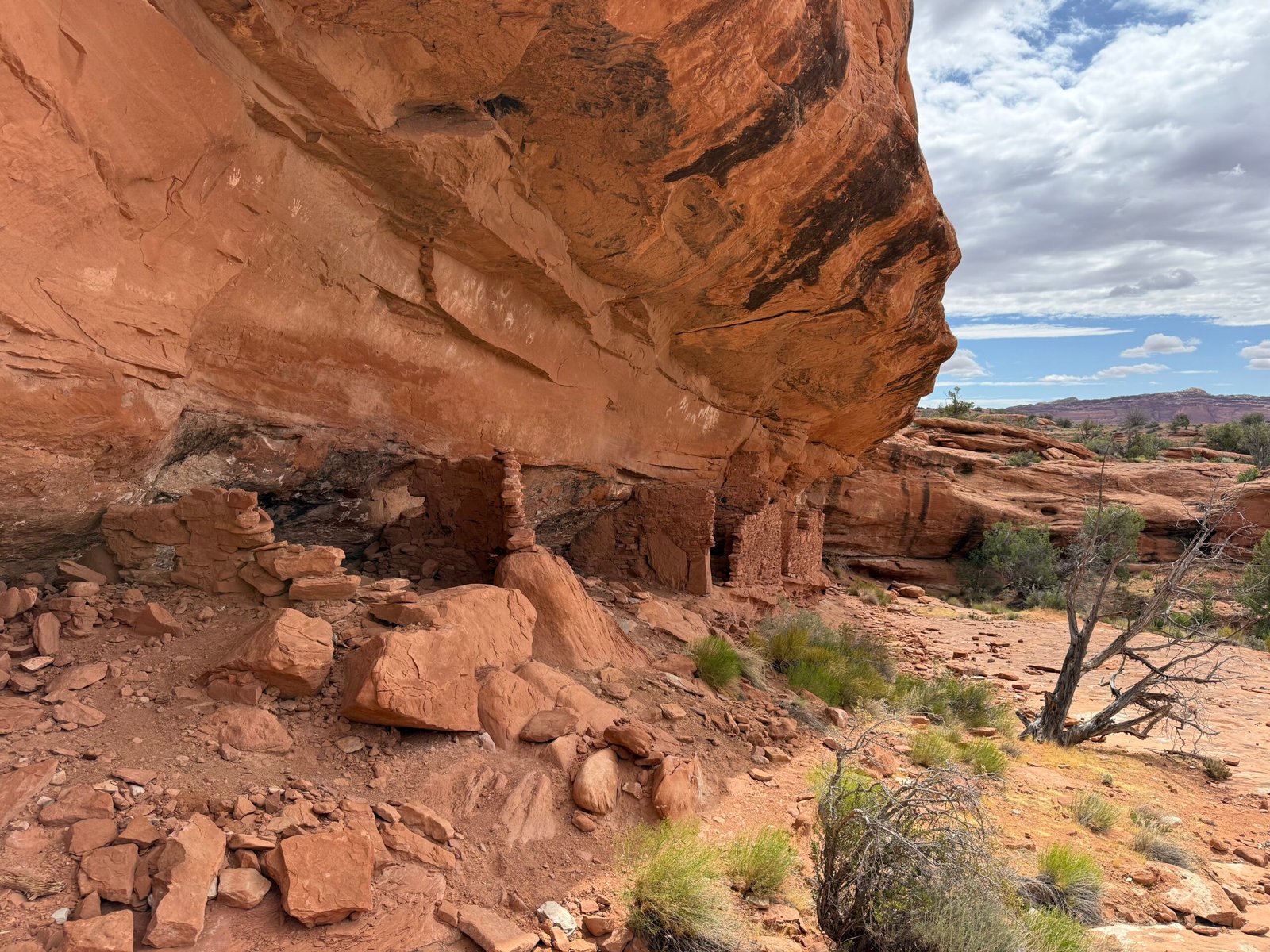
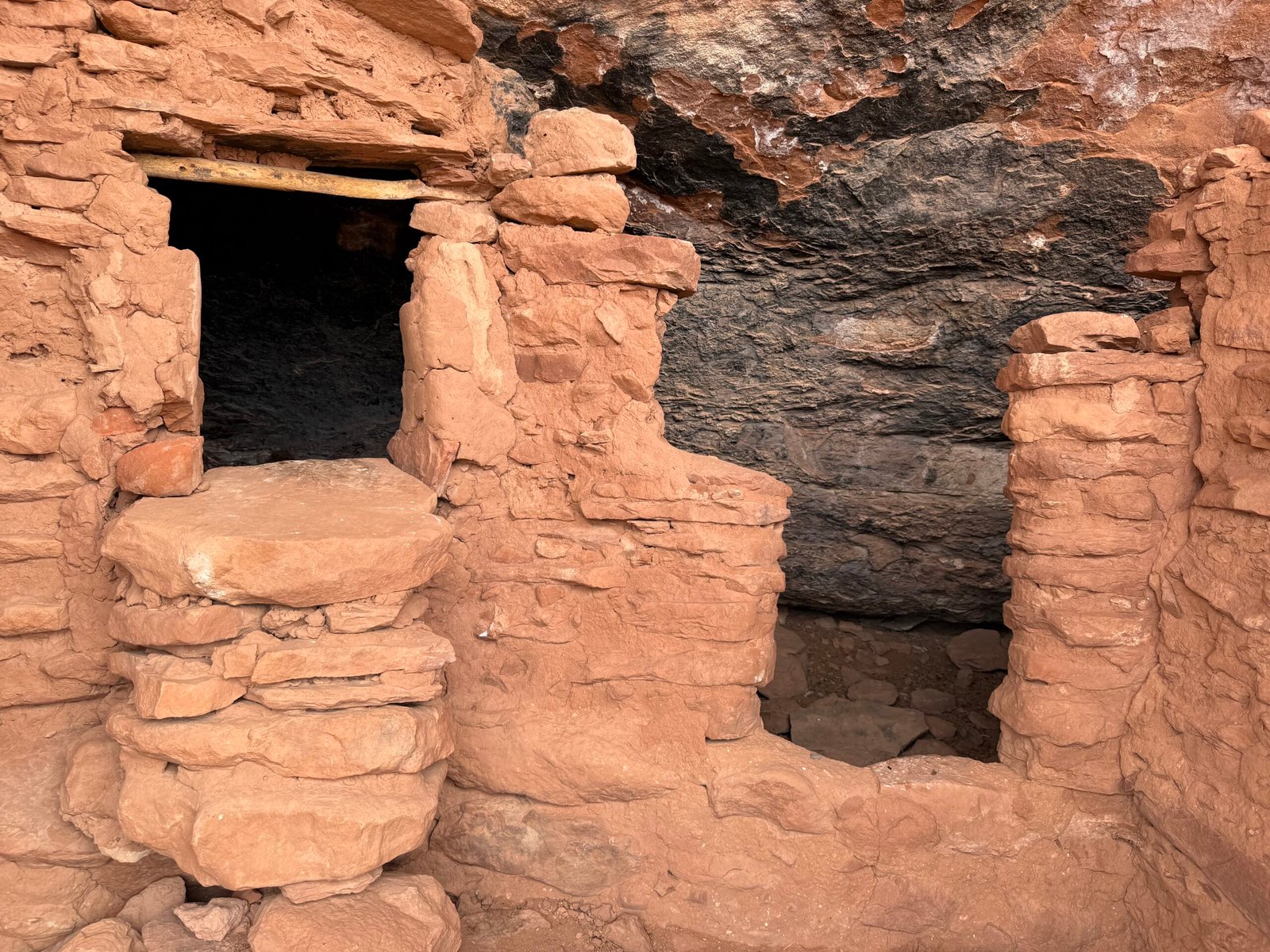
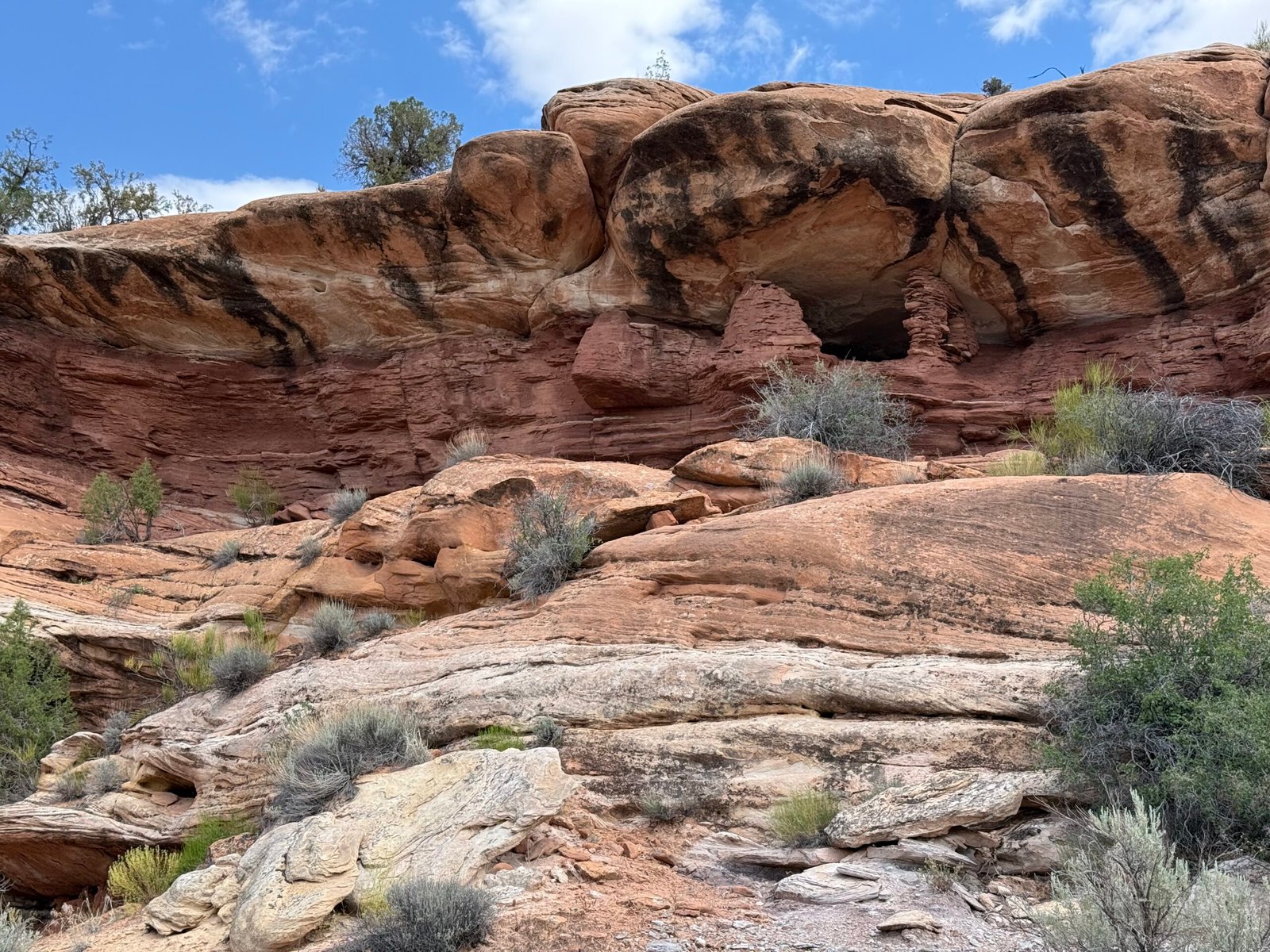
Once you know what to look for, many of the granaries used for food storage become easier to spot. But the one in the following picture was probably nearly invisible to see! The shape followed the Kayenta mudstone contours closely.
Heading out, we’re walking the “primrose path,” it was blooming everywhere. Should we be worried? Maybe the pale evening primrose is not the harbinger of destruction inferred in Shakespeare’s Hamlet.
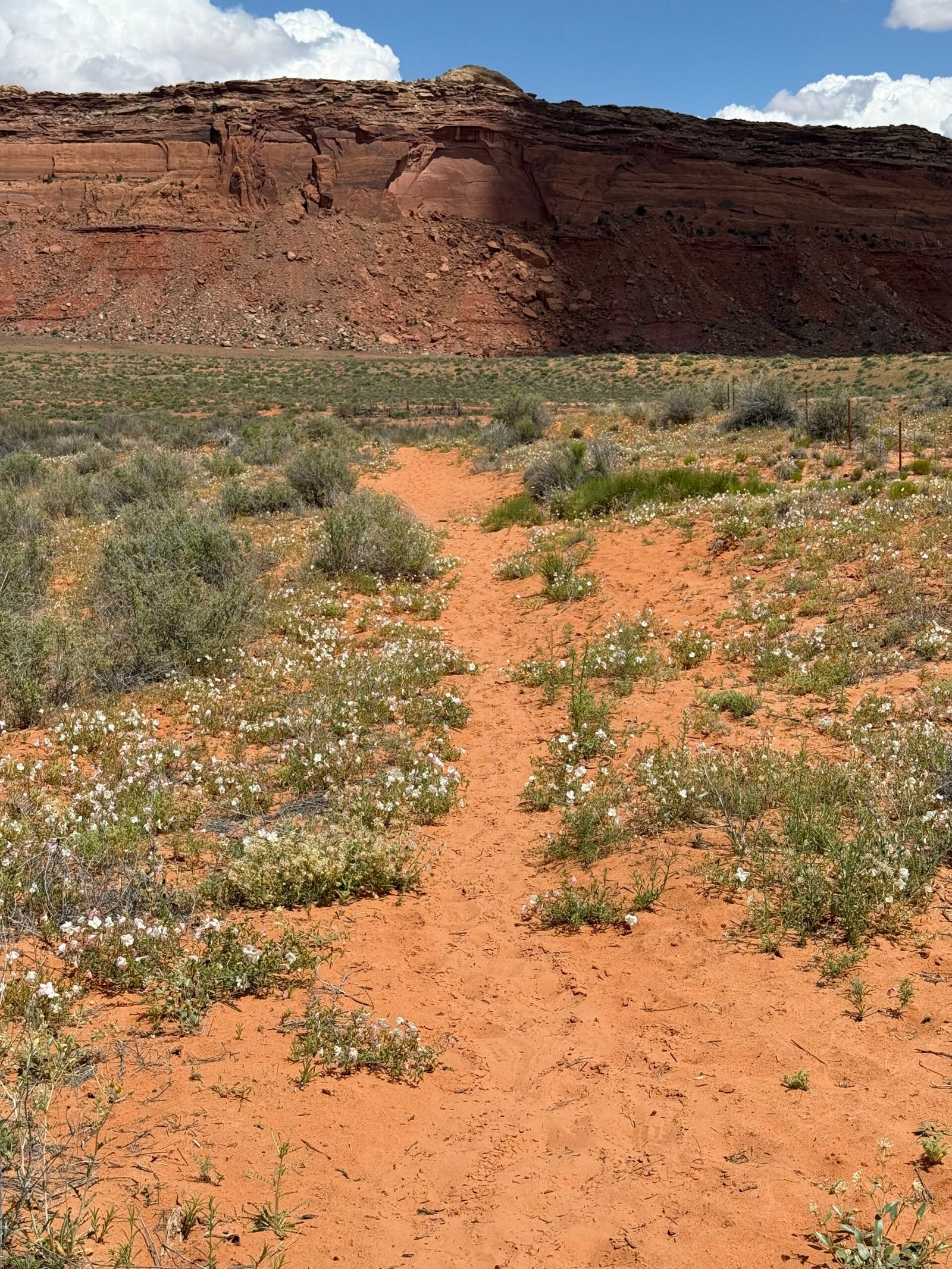
Yeah, the desert is just a dry wasteland.
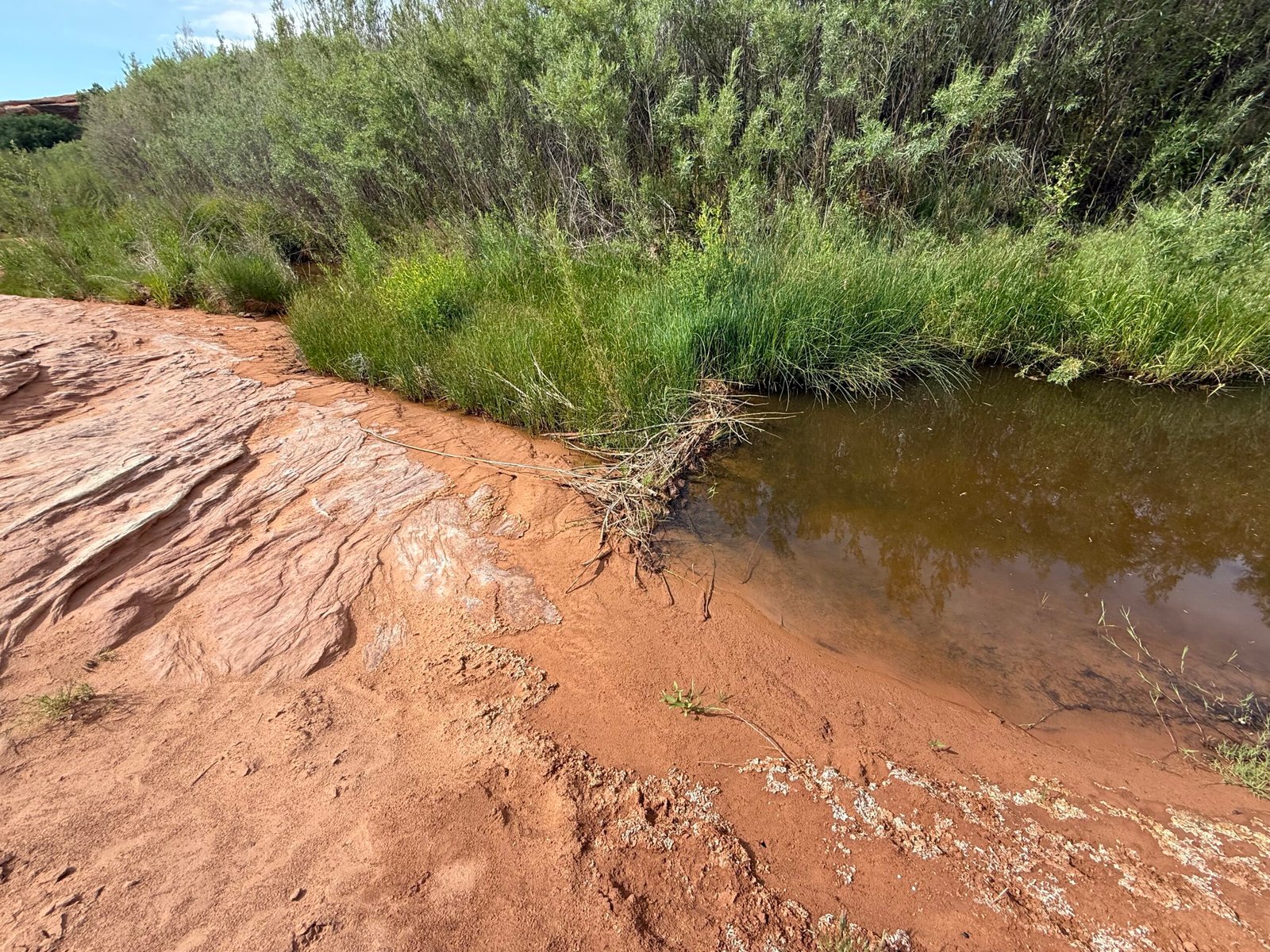
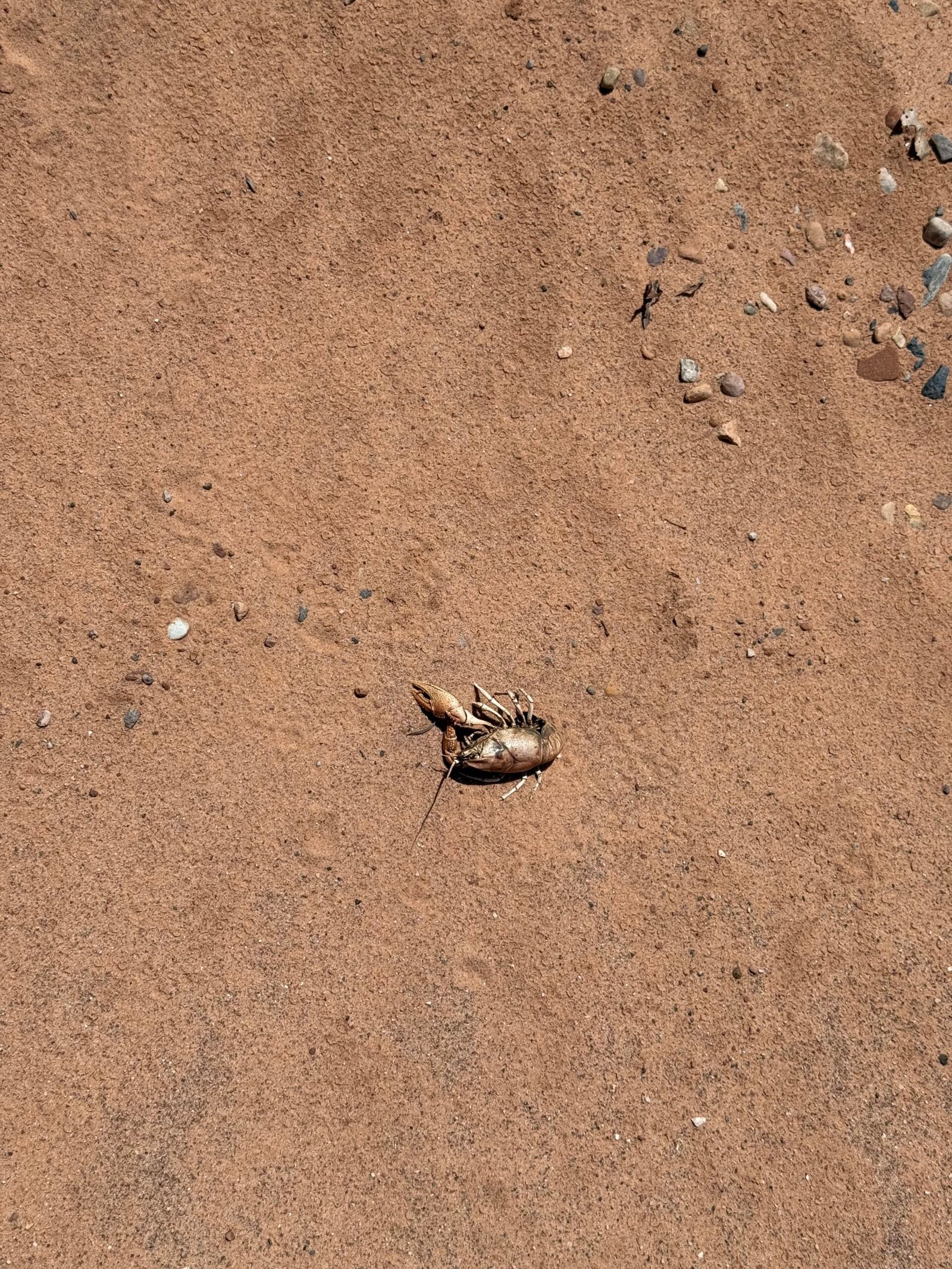
Wait, is that a beaver dam? And a crayfish?
There is water in the desert, if you know where to look.
Craig Childs, in his book The Secret Knowledge of Water, discussed that where mature cottonwood trees are found, water will be within 10 feet of the surface. If you can find cottonwood saplings, expect 3 feet.
If you are to dig for water, do it around midnight. During the day, the intense transpiration of the plant life will lower the water table. Once the sun is down and it cools off, the water will rise. Sometimes it will even rise above the sand, forming a magical, ephemeral stream in the night. Wild.
Driving out of this area, a quick thunderstorm caused some concern, the sandy/silty roads become impassable pretty quickly.
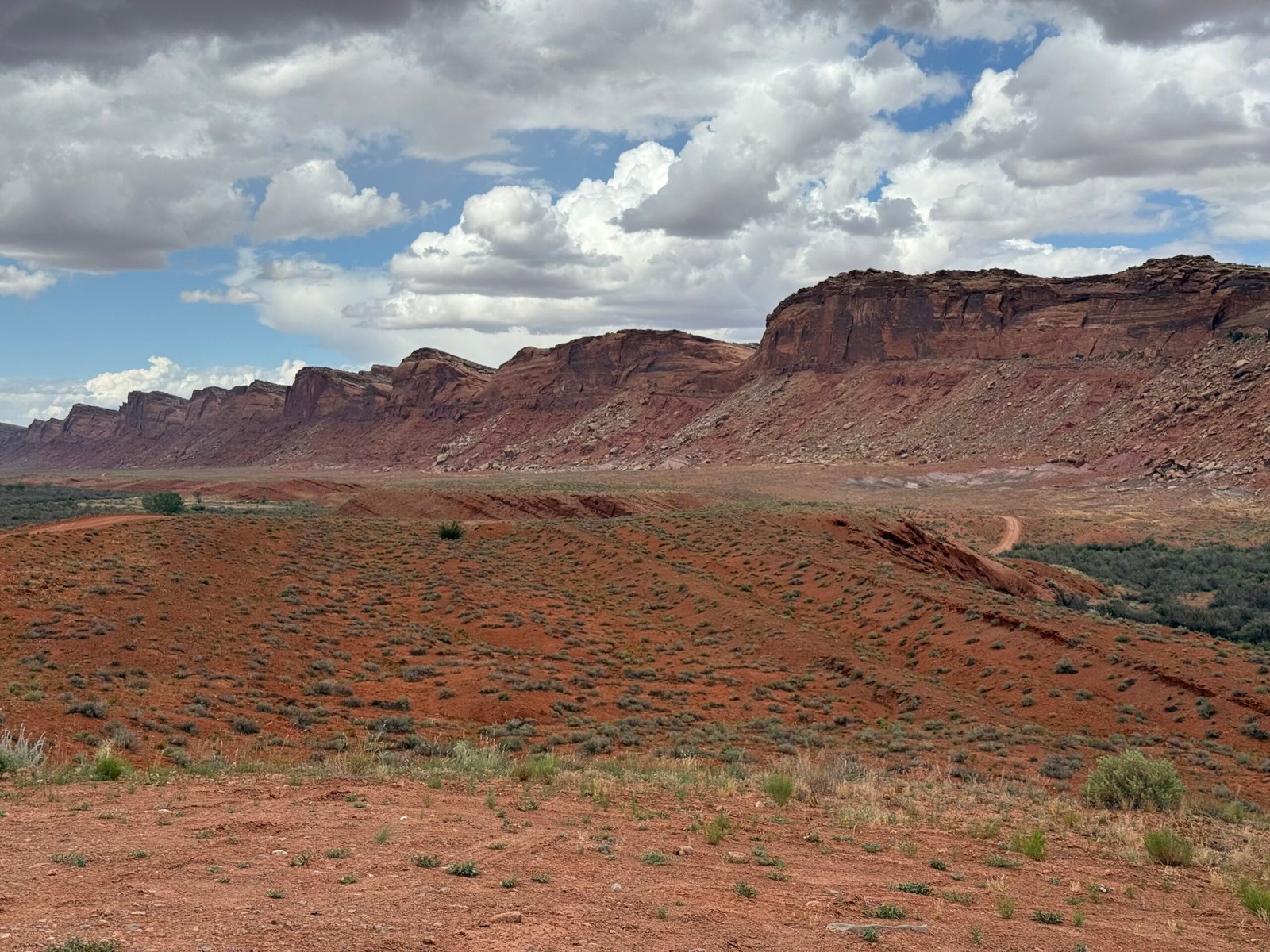
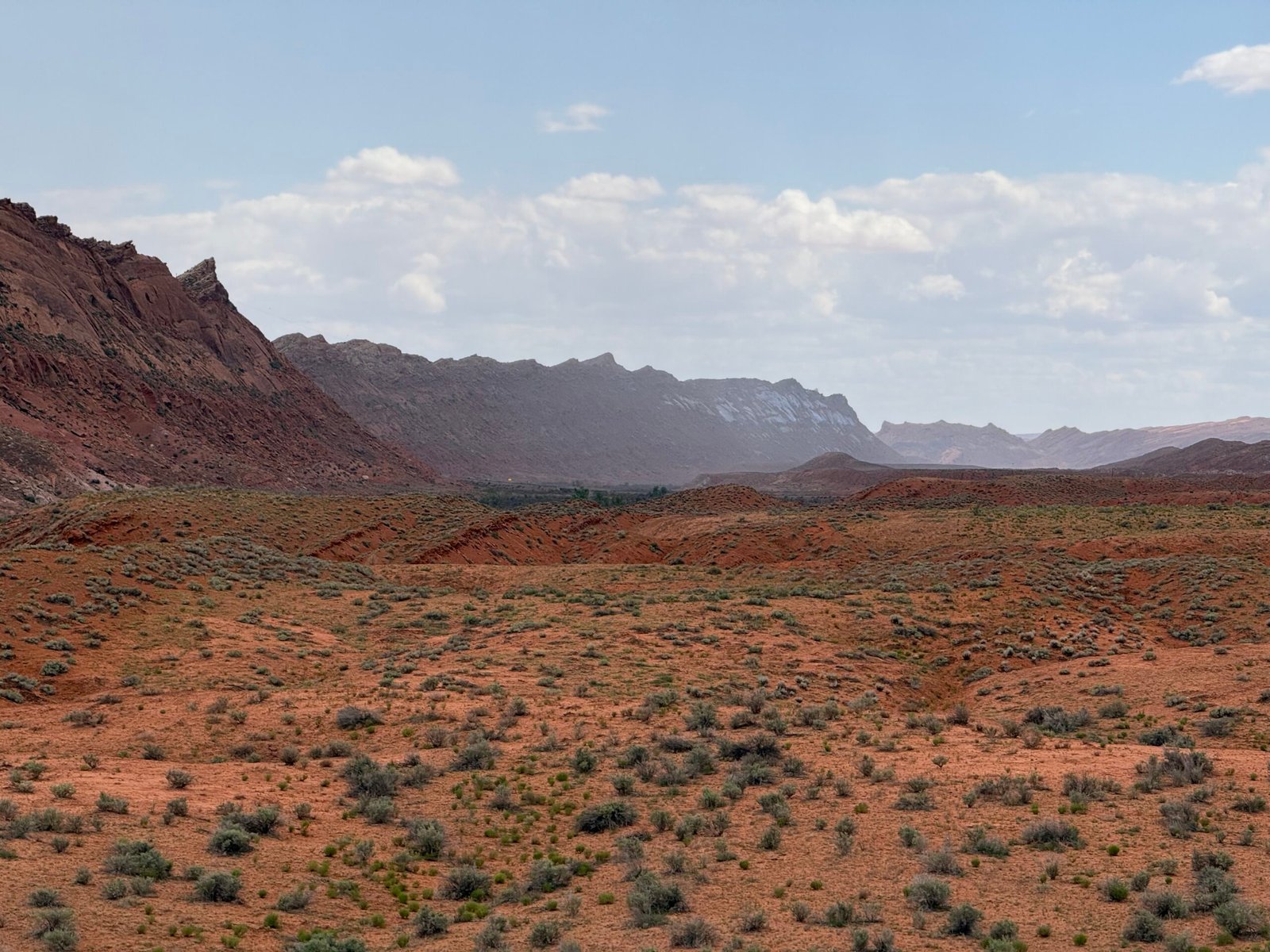
To the north, the rampart of Comb Ridge always impresses. Looking south, the thunderstorm has wet the face and it is glistening. A reminder that water sheds quickly here and flash floods are far more unpredictable than the desert heat.
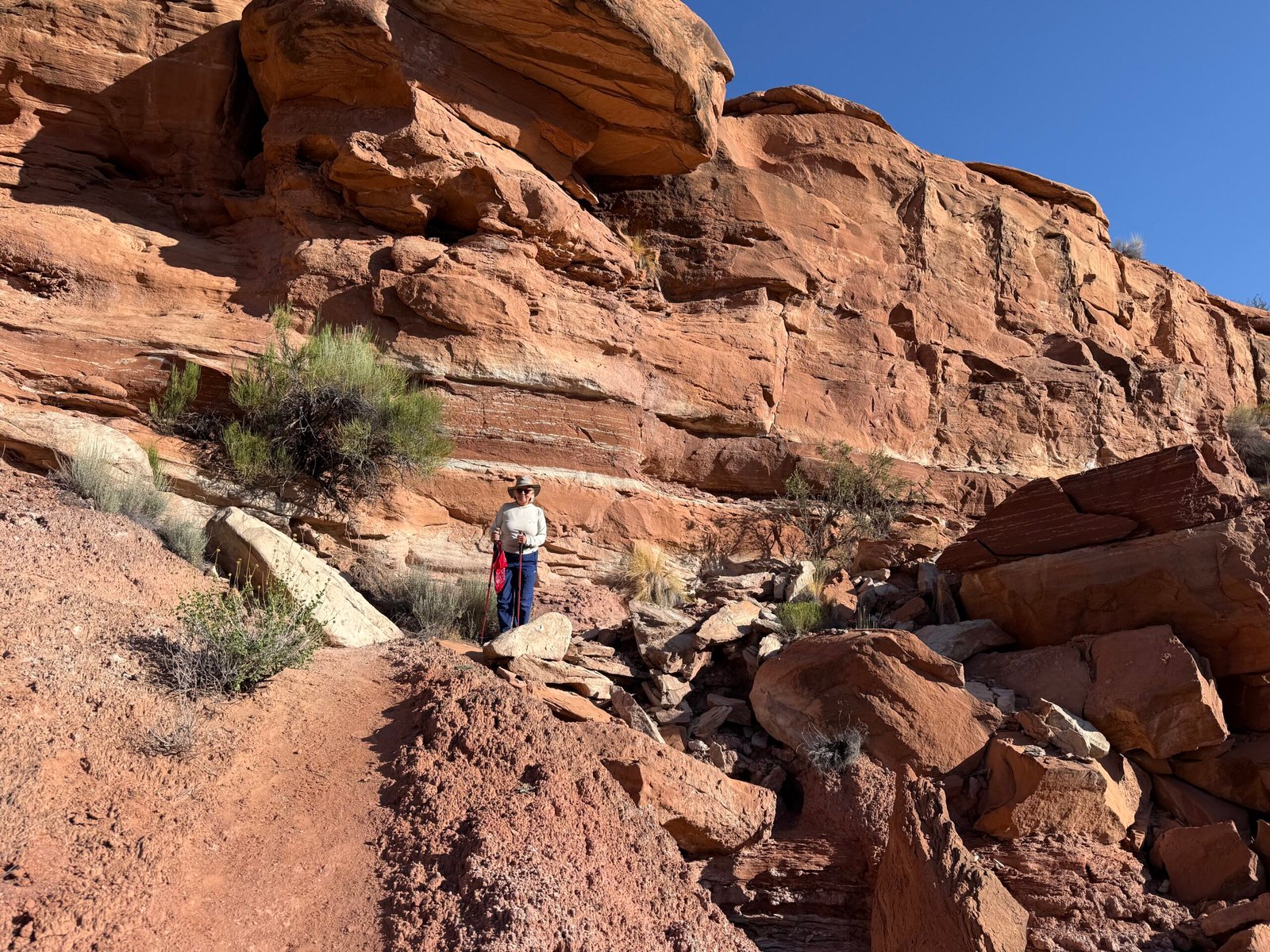
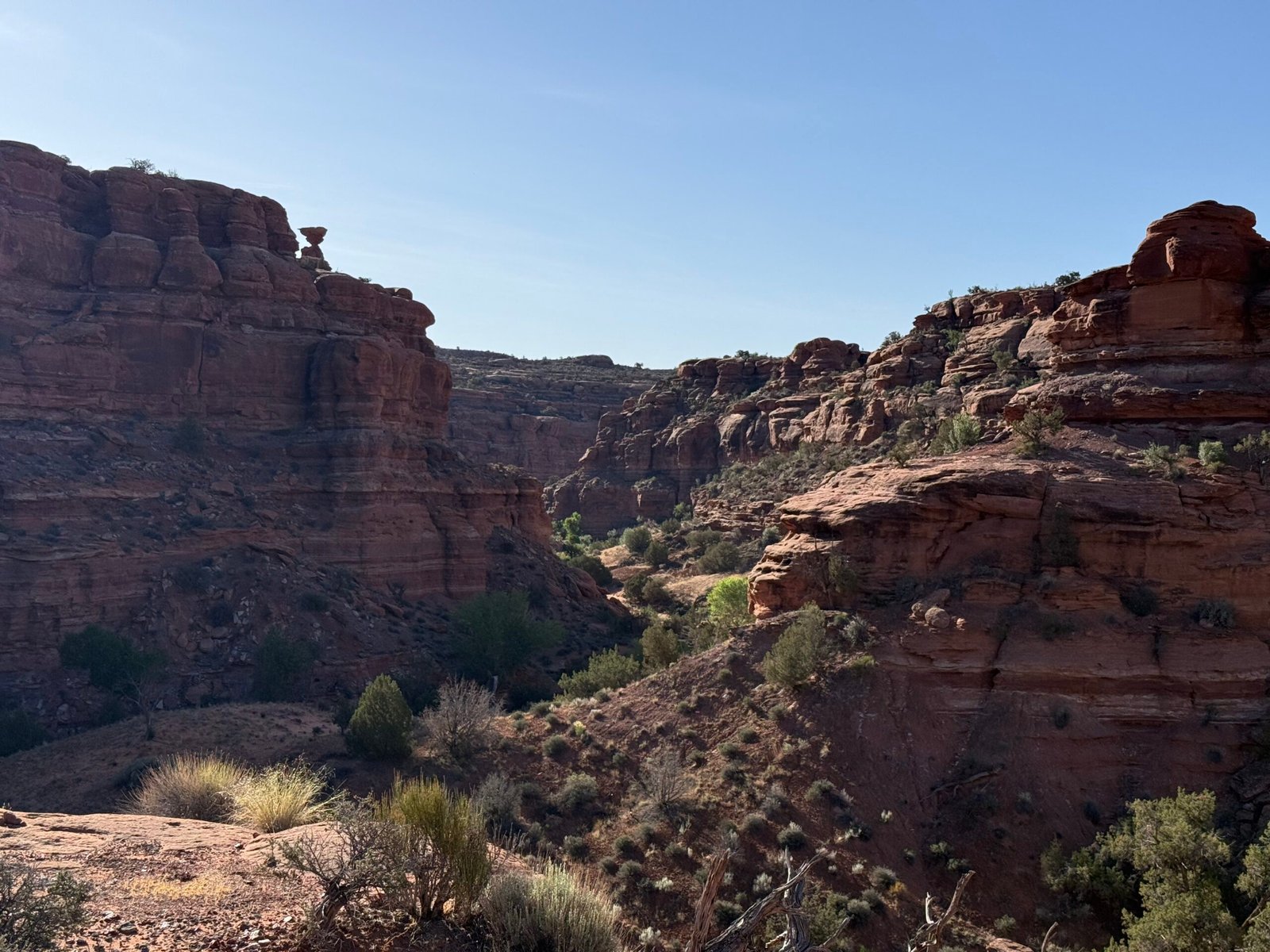
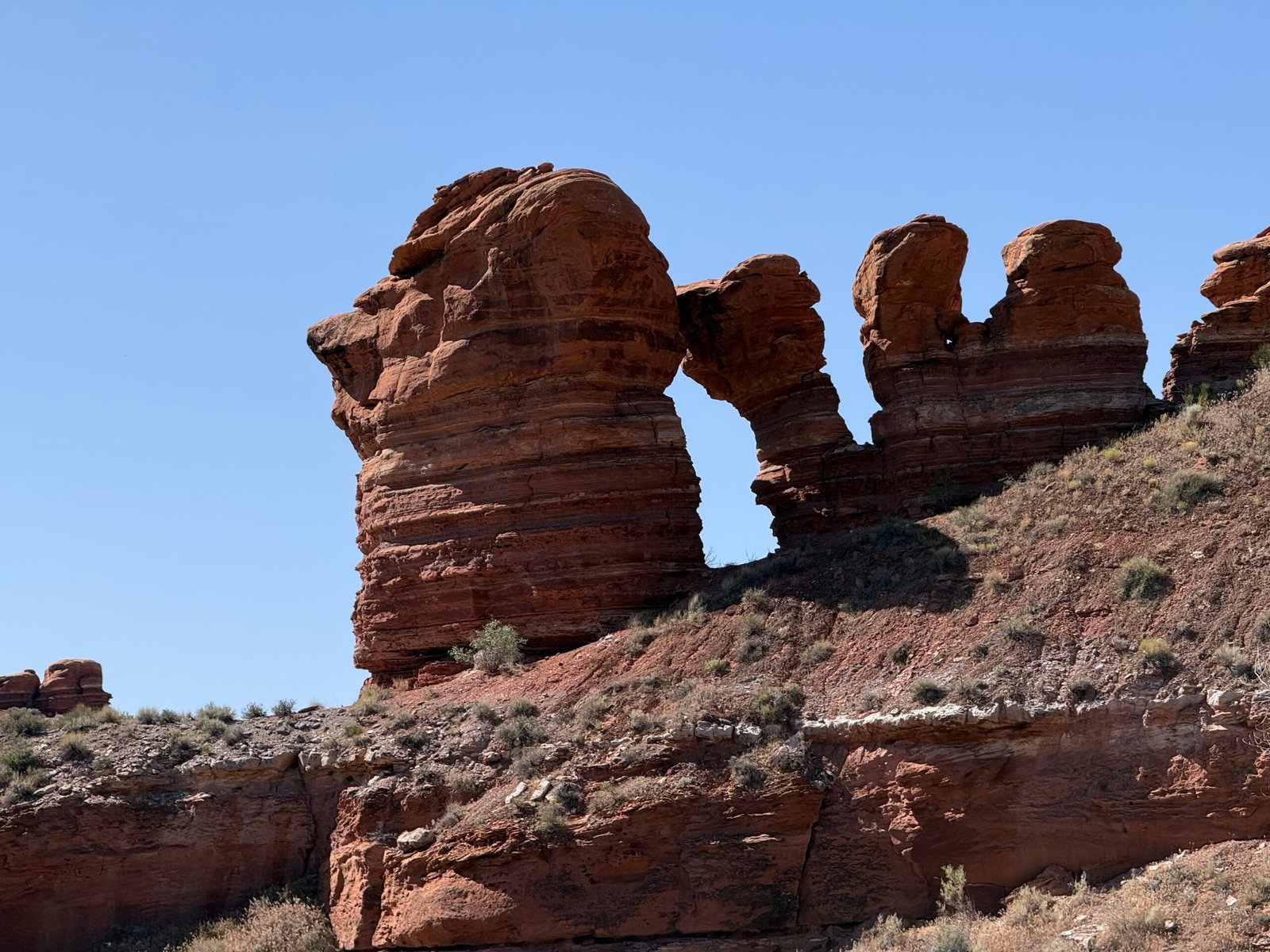
We got in another great hike with Brandon! On the trail by 7:30am when it was cool, we worked the slick rock into a canyon. Maybe this balanced rock was used as a guide to the top of the dugway leading us in.
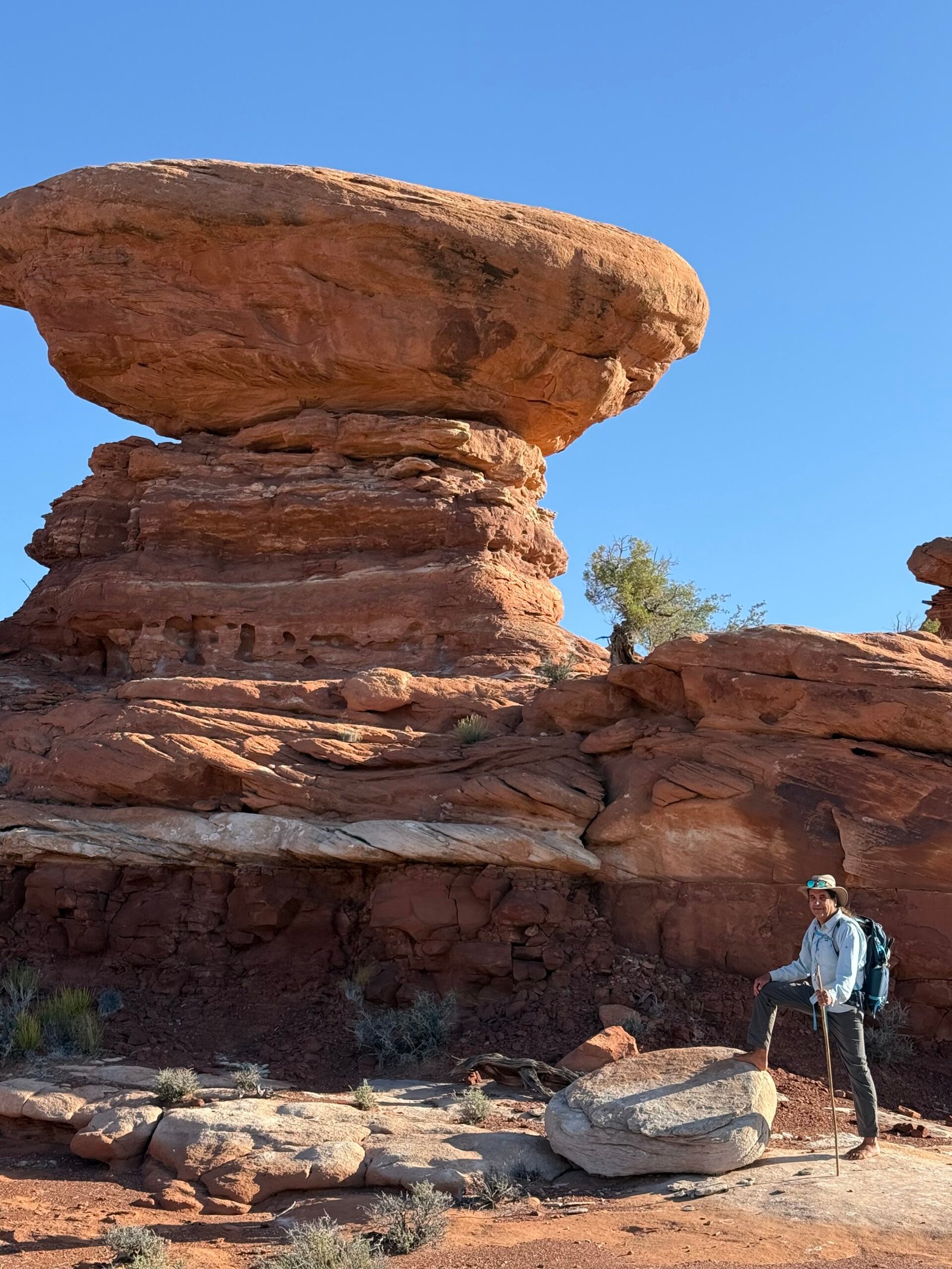
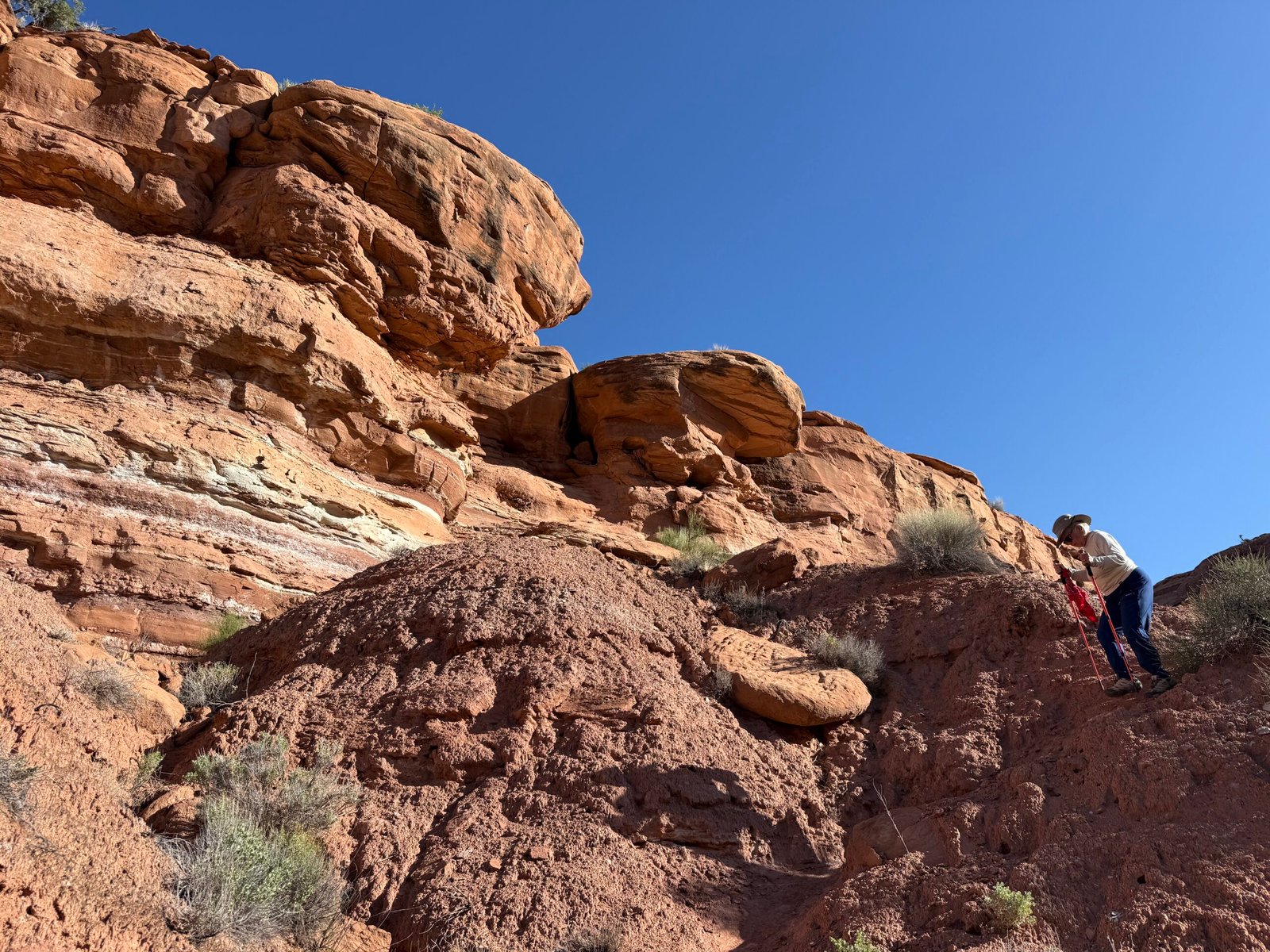
Dugways were cobbled into the bluff in later years to allow the movement of cattle in and out of the canyons. I am still amazed that they can navigate these.
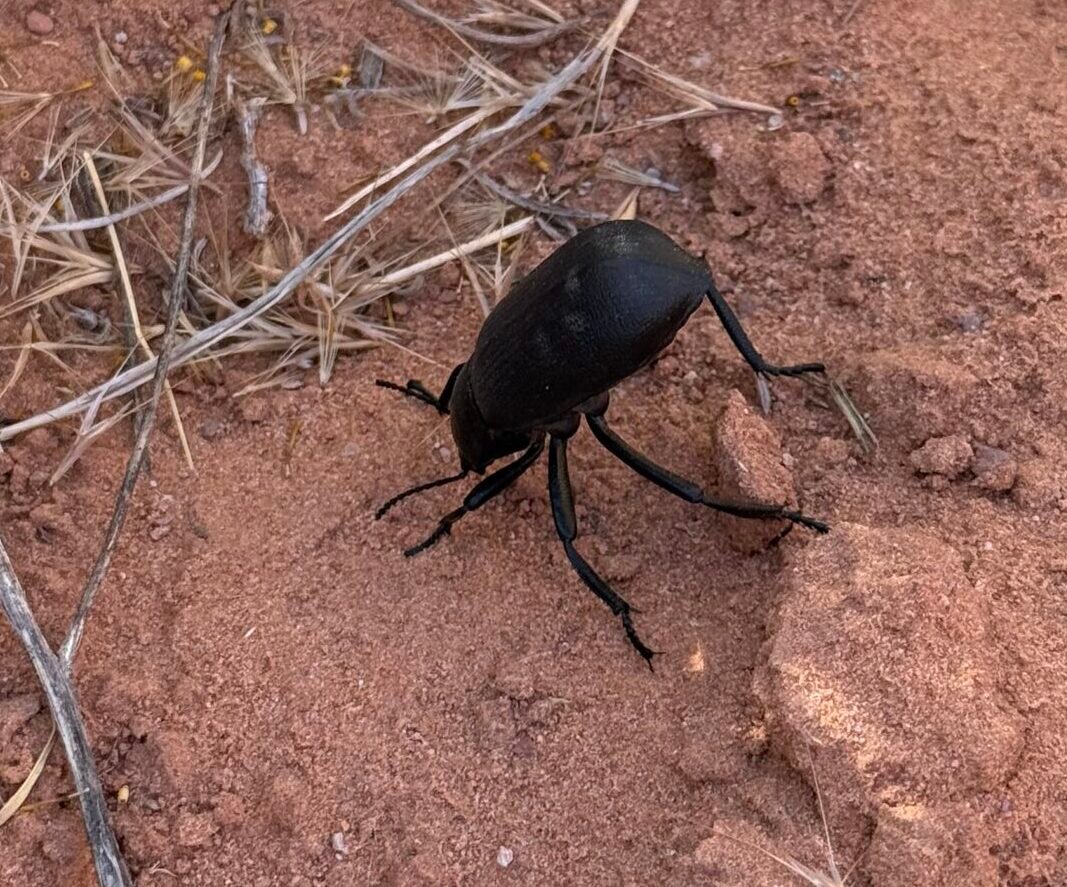
The black beetle in the following picture (no, not Brandon!) is a bombardier beetle. When threatened, these guys can mix two chemicals (hydrogen peroxide and hydroquinone) together in a special chamber. The exothermic reaction heats the mix to the boiling point and they can fire it quite accurately for quite a distance. So when you see one stand on its head, beware, you are on notice!
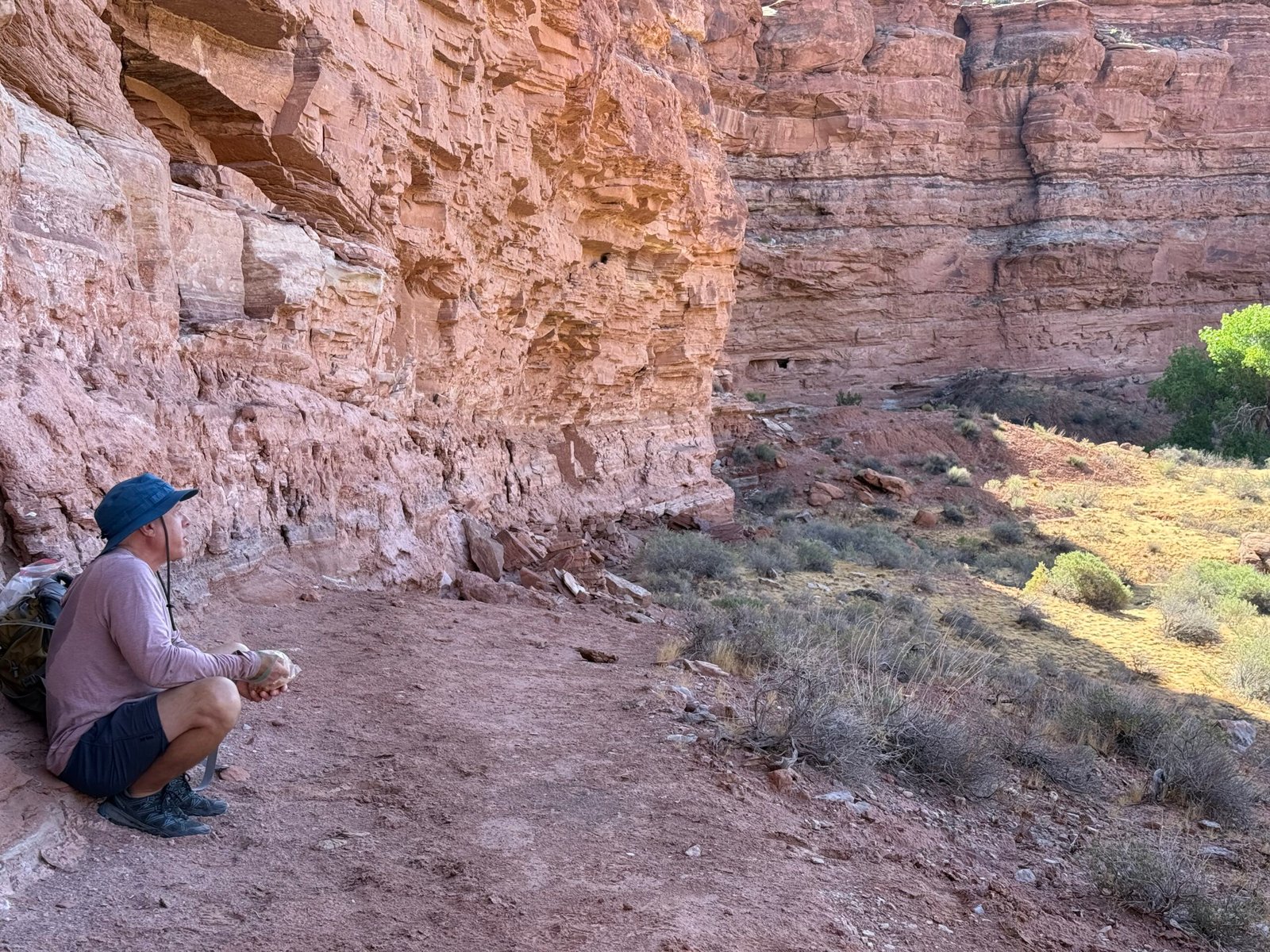
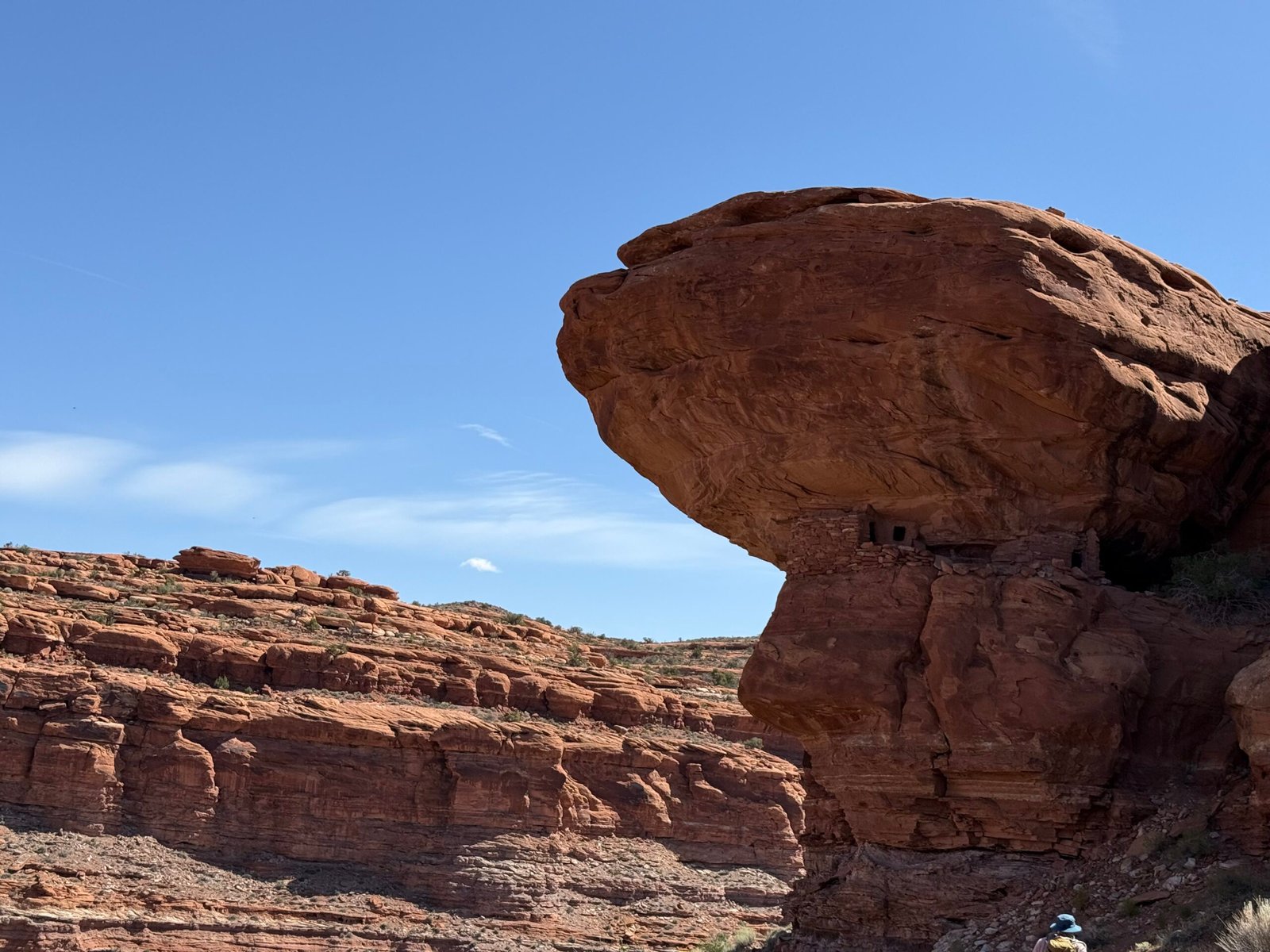
And one last magnificent sight to see. Look tucked underneath the rock…
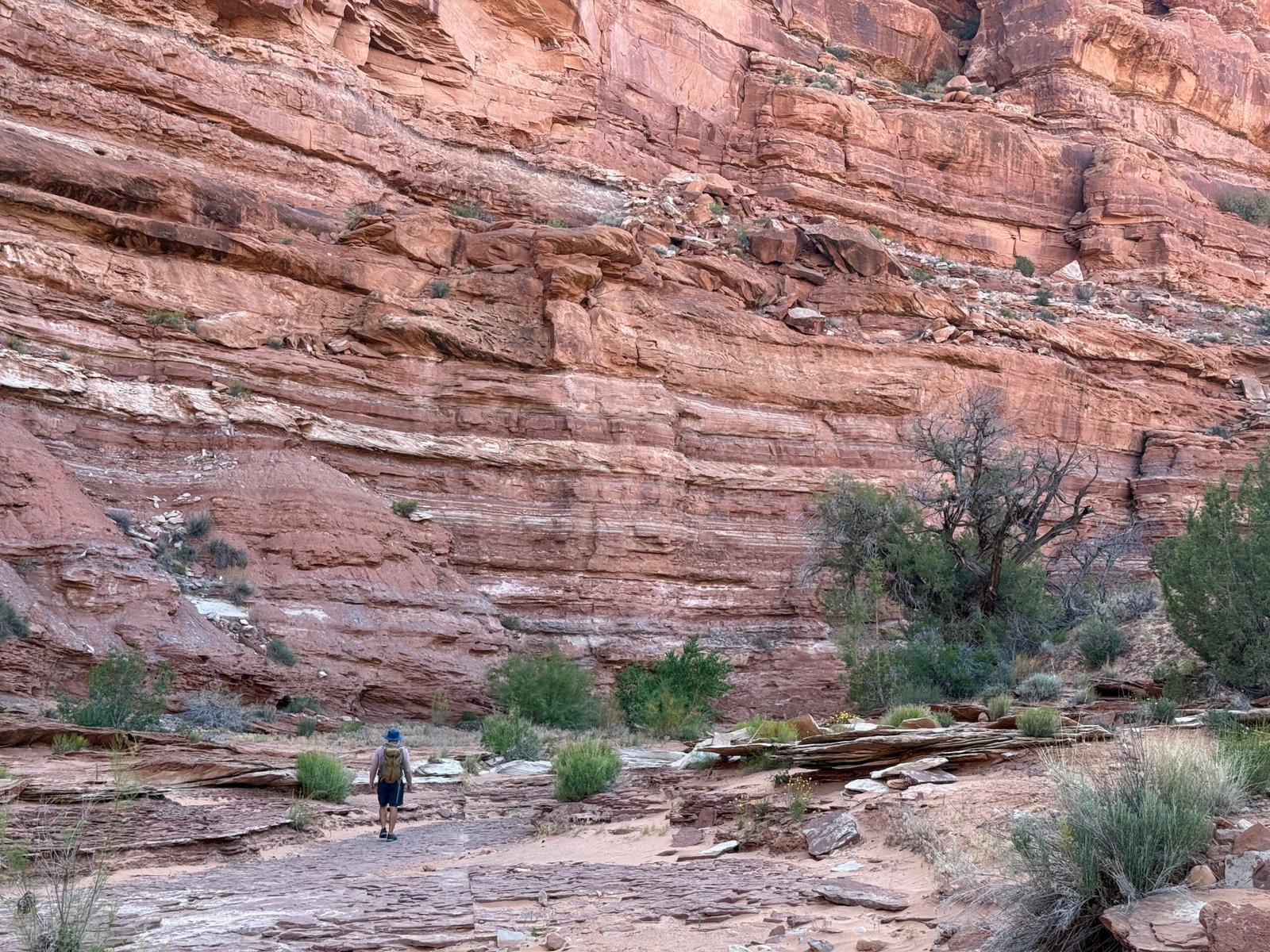
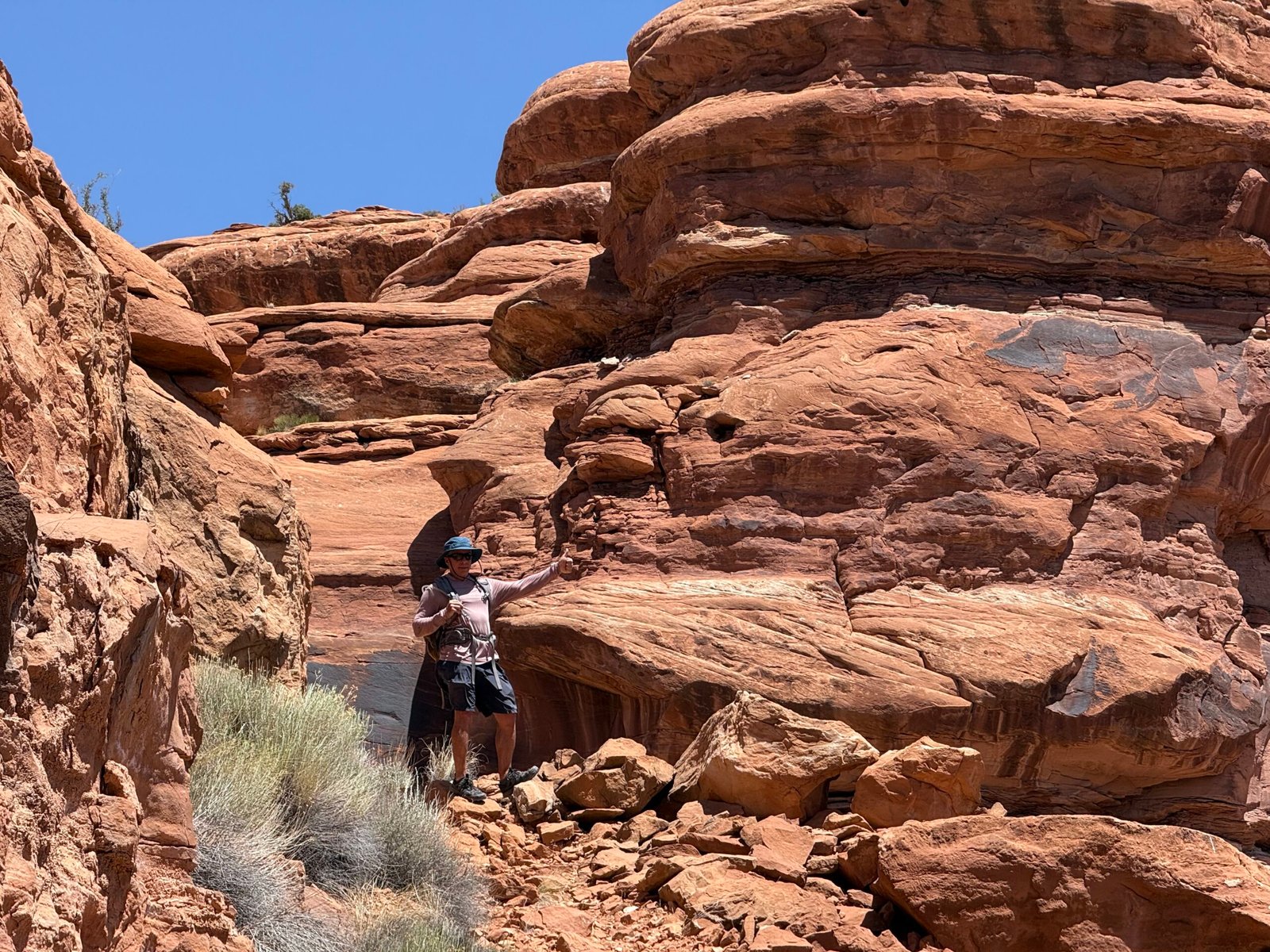
Just beating the heat, a satisfying climb out of the canyon.
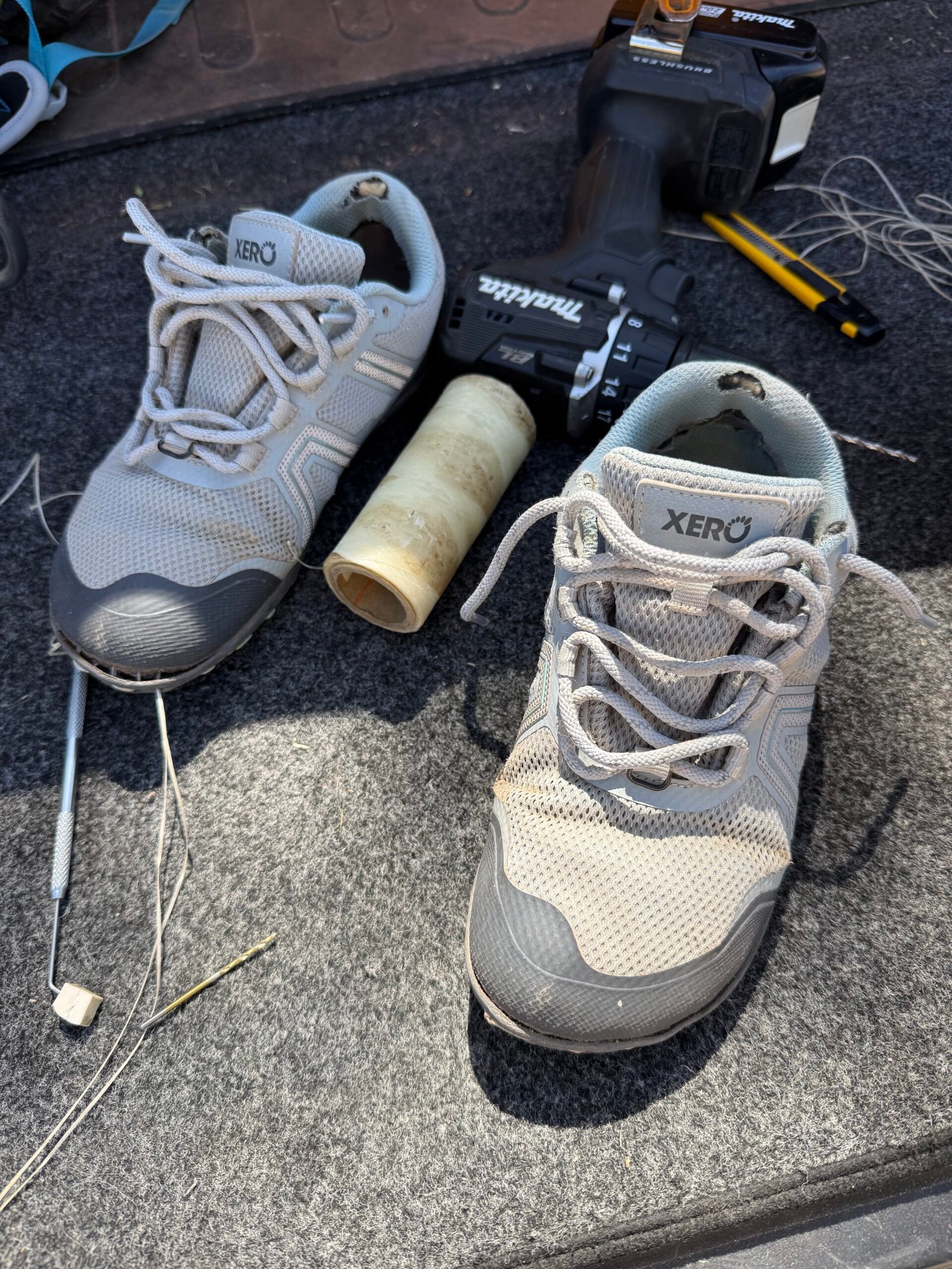
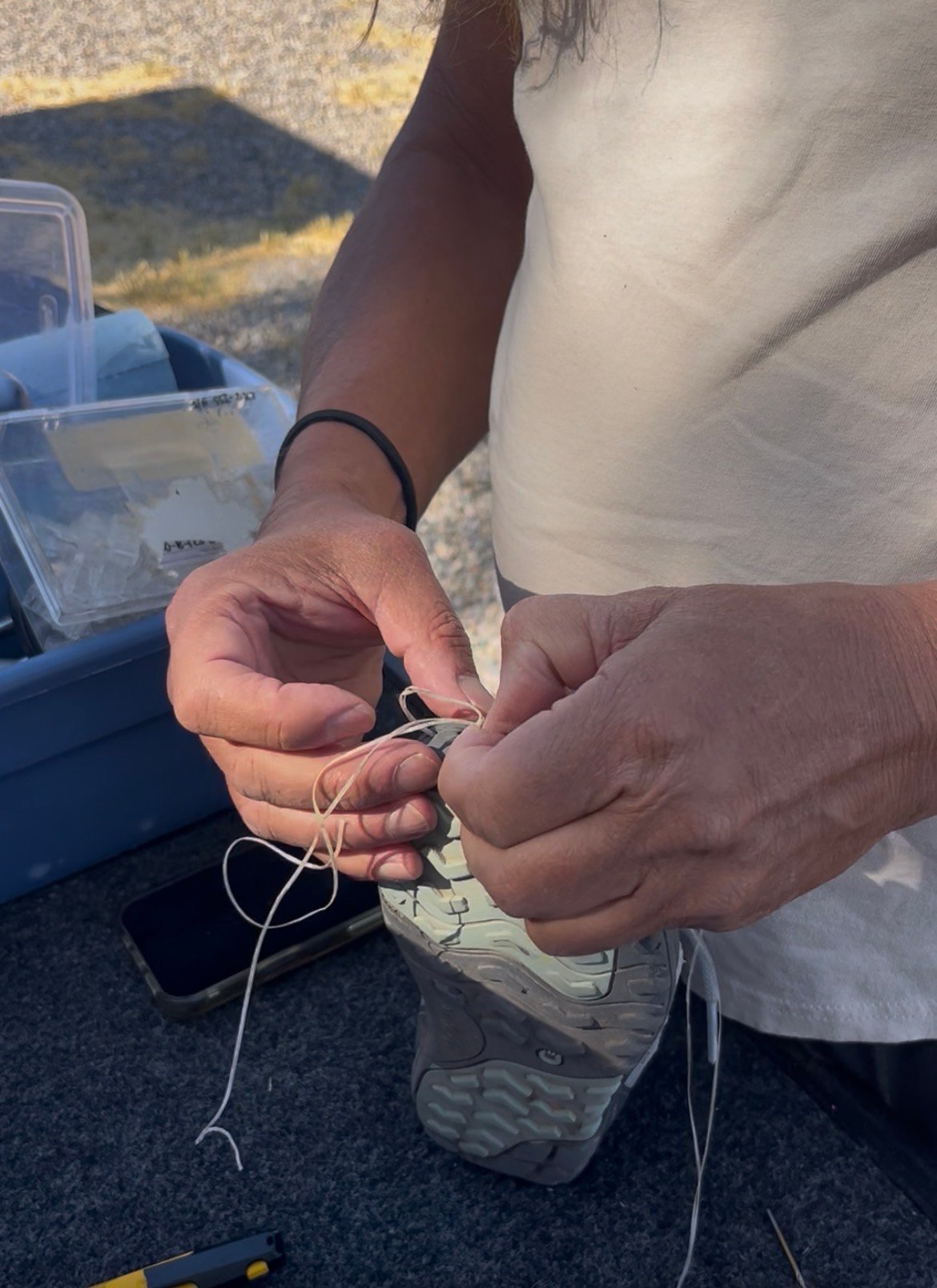
A little downtime the next morning for some shoe repair. I didn’t have a large enough needle, but running the drill at high-speed in reverse melted nice holes through the synthetic materials. Hopefully the waxed nylon lacing will hold up!
Time to chill. Next will be a nice float on the San Juan, and Retrospective – Part Two.
Leave a Reply