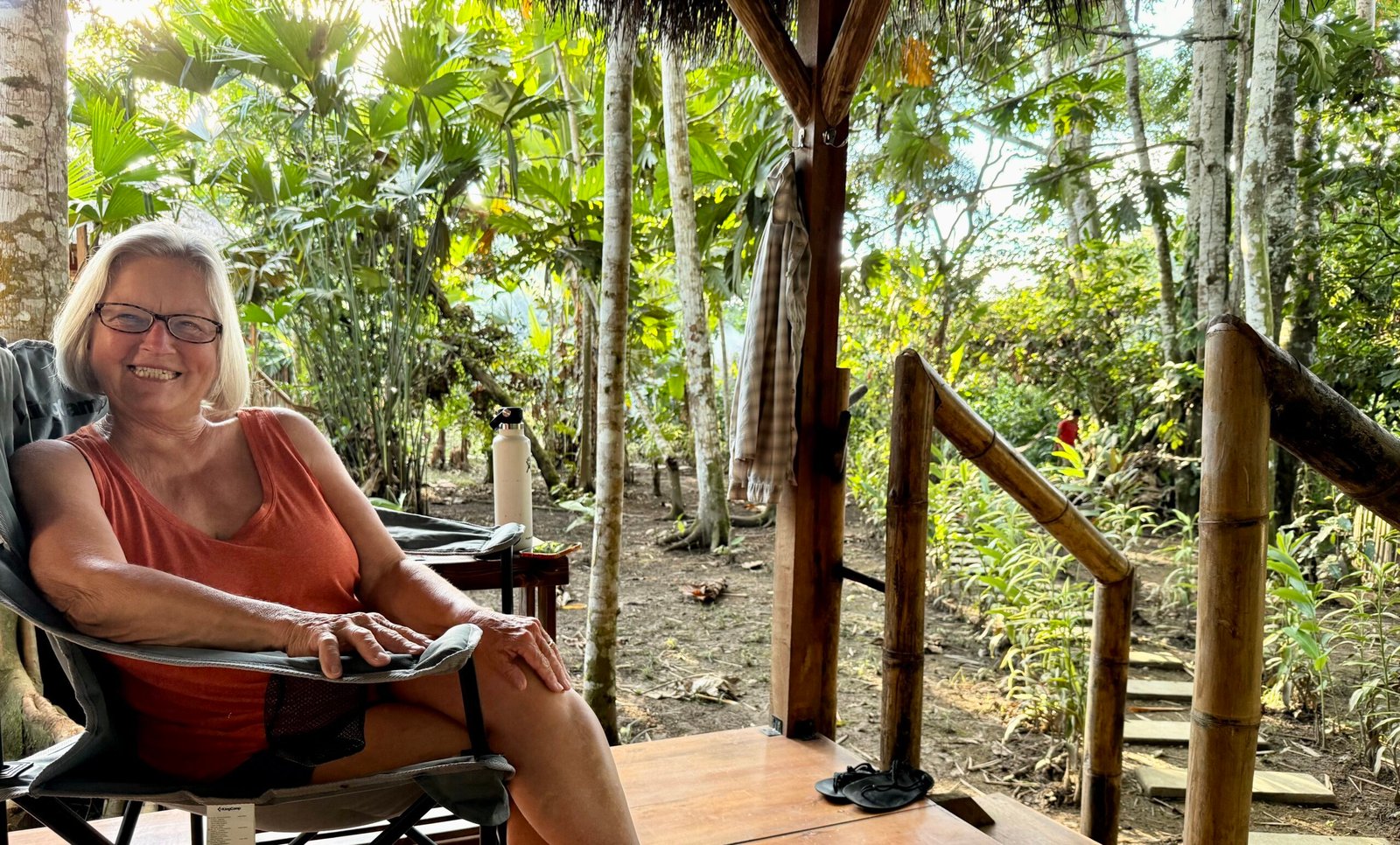
The beginning of the series.
Well, maybe I’m getting a little head of myself. Why are we even here, in the jungle, with the rain and humidity, the anacondas and piranhas and all the other scary things?
Our year was to be a little different. We had plans this fall to do an Alaskan “uncruise” with friends in September, followed by a trek in Bhutan. But alas, the daughter had become with child! And the new addition is due to arrive between these adventures. So of course we did a little rearranging, and Ecuador seemed to be the right fit.
Getting There
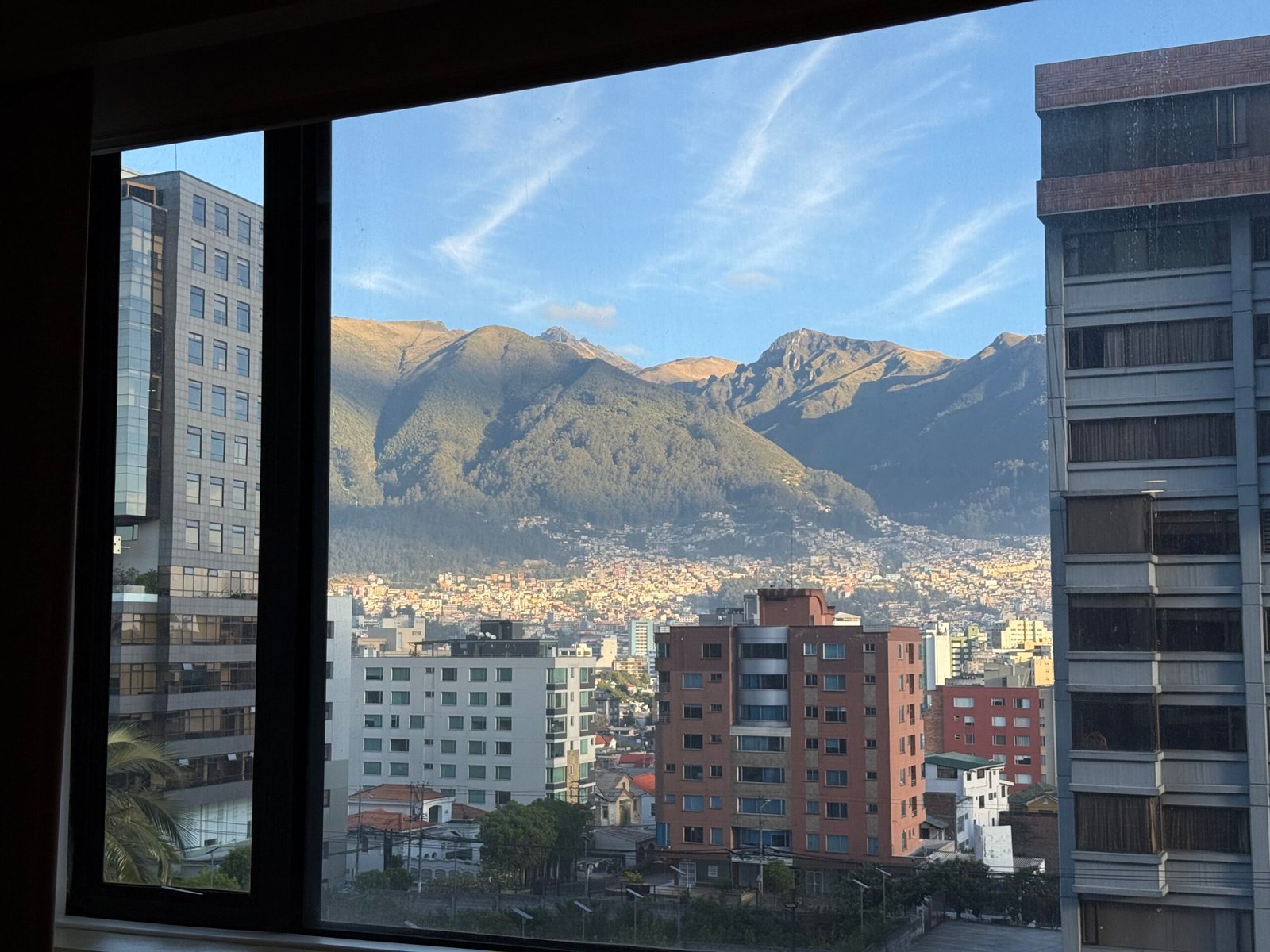
I don’t want to spend much time on the logistics. In fact, the reason we have used Hobnail Trekking for both this trip and our amazing Peruvian Odyssey, is that they take care of practically all of the multitude of stressful things involved with international adventuring. At least once we arrive. We still had to get us and our stuff to Ecuador. We had a nice Zoom meeting with the Hobnail team that included our guides Christian and Alirio, and we met our one other companion in the group, Walter, coming from Massachusetts. With the only reasonable airline flights in and out of Quito being around midnight, the three of us booked an extra night both before and after the trip at Swissôtel Quito to make the journey easier. Swissôtel became our basecamp of sorts as we explored the country, and wow, what a five-star basecamp! But more on that later.
For reasons that only American Airlines knows, our fight from Nashville went to Philly, and then to Miami, even though we were staring at a direct AA flight to Miami in the Nashville airport. It cost us a few hours, but probably saved us a couple of hundred bucks. The flight to Philly was good, and it was fun seeing all the Rocky, Rambo and Mr. T (“I pity the fool…”) memorabilia in the airport.
But it was the flight from Philly to Miami that intrigued me. Our first time on a Boeing 787 Dreamliner! A wide-body nine seats across, it is made mostly of carbon-fiber composite. Using the composite (as opposed to aluminum) allowed for a non-traditional cabin. It is non-circular, giving passengers more shoulder room. And the windows are significantly larger, using electrochromic glass to make them dimmable, pretty cool.
I was so glad I sprung for window seats!
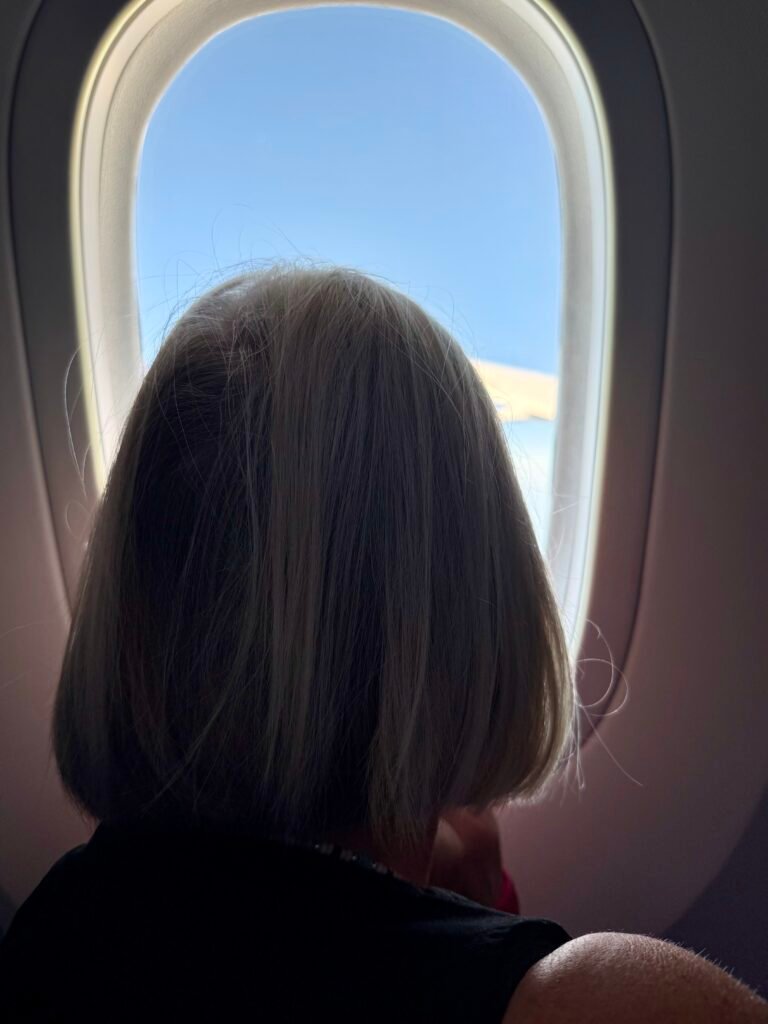
Awww….
Well, anyway, it was still a pretty nice ride. Great legroom and noticeably quieter than other airliners.
The Miami airport was a zoo. It’s pretty much a linear strip mall and I wouldn’t be surprised if all arrivals and departures are algorithmically organized to have the most people possible transit from one end to the other for extended shopping opportunities! We were challenged twice by beeping autonomous wheelchairs, I’m not sure if they were asking if we wanted rides or we were just in their way. The future?
Starving at this point, we stopped in at Shula’s Bar & Grill for a quick bite, and it was strange. We were required the scan the QR code on the table to order. The food came quickly and we again were required to use the QR code to pay online. We barely even saw the waitress, so a tip seemed inappropriate. And while the food was good, the two sandwich meals with no drinks cost us $65.87. Ouch. Again, the future?
Did I mention that Argentina was playing little ol’ Cape Verde for the World Cup in Miami (and nearly lost)? The airport was a riot! Fun to be a part of it.
Even with a late arrival in Quito, our driver Alex was at the ready and we arrived at the hotel somewhere around 2:45am Saturday morning.
There was a party going on. A BIG party.
Swissôtel has a mezzanine floor exclusively for parties. And we can attest that they keep it booked! Graduation parties, weddings, you name it. Our second floor room was beneath the mezzanine area, but our room was quiet. The extended end of a long day.
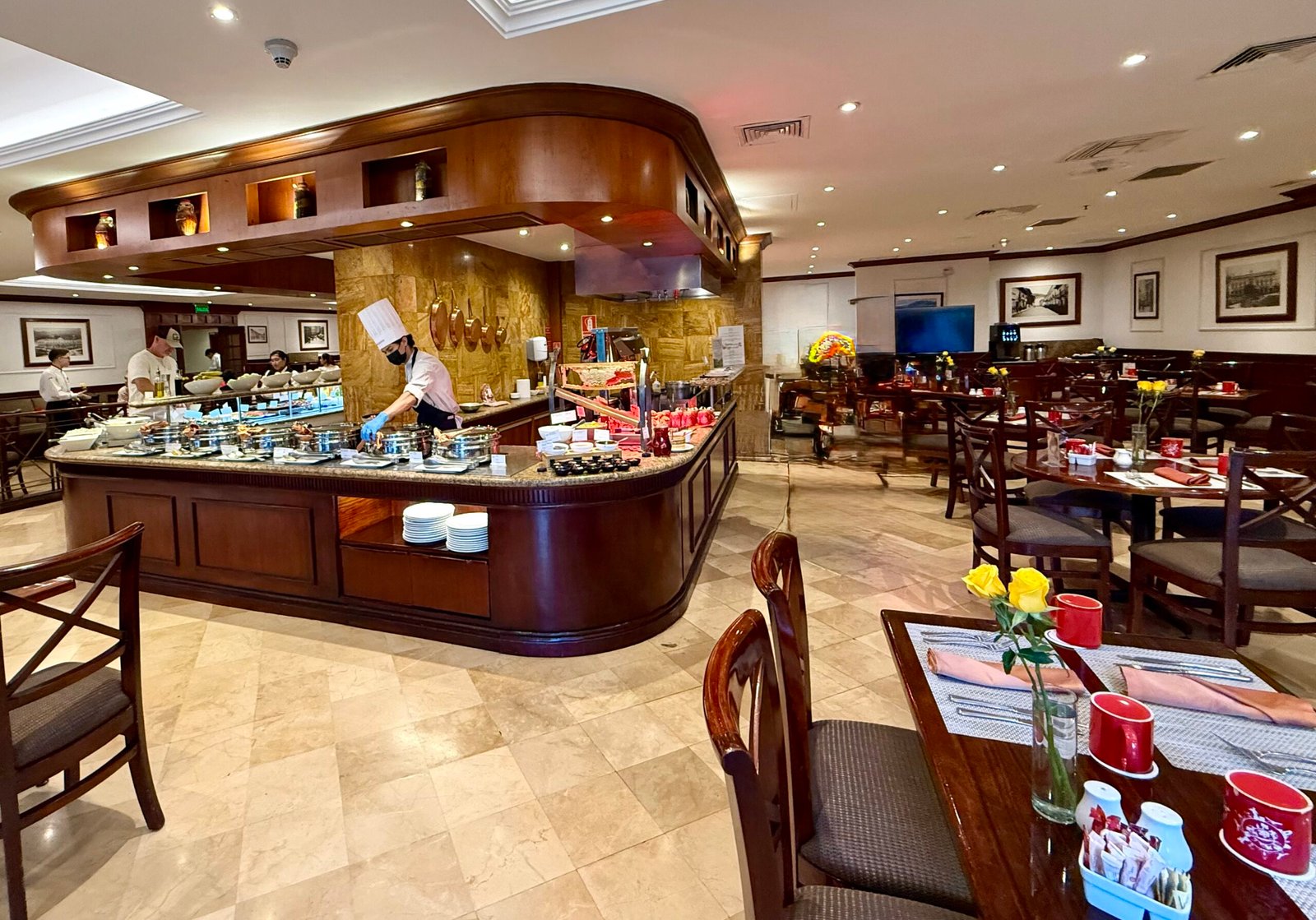
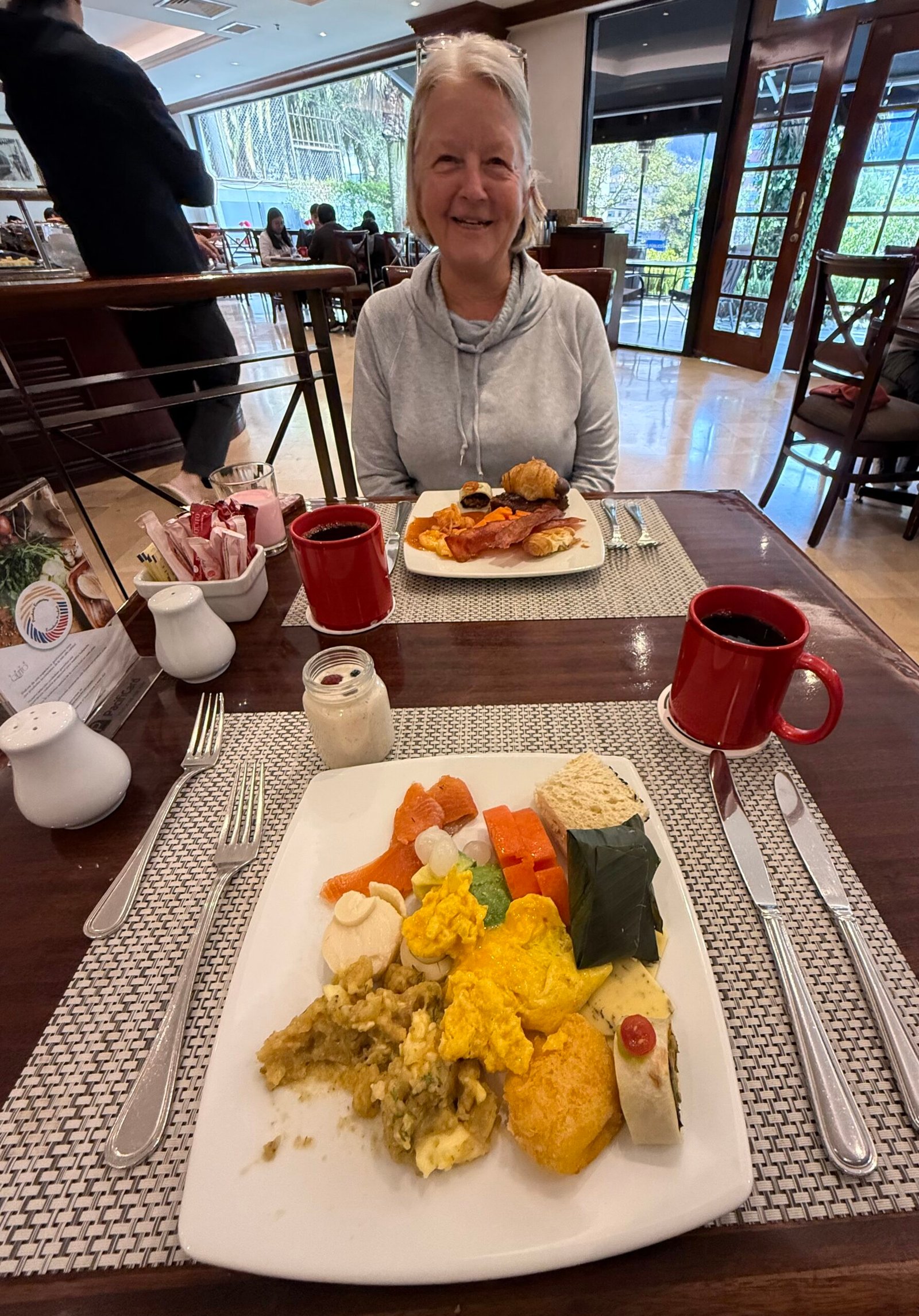
Sleeping in, we were then treated to a breakfast buffet that recurred each time we stayed at Swissôtel. It was massive, fresh, and widely-varied. I cannot think of a better one. A great way to start the day!
With the day free to explore, I was feeling a little wonky (can you be jet-lagged in the same time zone?), so we decided not to venture too far before our evening meeting with our guide, Alirio. Walter had already booked his own tour for Old Town Quito, so we instead took an afternoon walk down to the botanical garden near the city center.
Saturdays are family party days, with Sundays being reserved for church, and of course, soccer. Baños are hard to come by in the big city, and by the time we arrived at the park, we both needed an expedient solution! Fortunately the park had facilities. But I had forgotten that, as in Peru, Belize, and Costa Rica, one must pay a small penance to use them. Easily understood. 15¢ U.S. for men, 25¢ for women, paper provided.
Unfortunately, all I had was a $10 bill! The attendant hesitated briefly, quickly surveyed his money bag and then dutifully counted out my change. Quite a selection of Sacajawea dollars, some J.F.K.’s, and a few Jefferson’s, with several Ecuadorian leaders rounding out my $9.60 in change.
And then the beauty of Hobnail’s greeting gift became apparent. Coin purses! We used them for the entire trip and it took a while to winnow down my treasure from this one exchange.
Hard coin is the currency of choice here. Especially the Sacajawea dollars because they outlast folding money. We used them everywhere for small purchases.
One thing we noticed right away is the influence of catholicism, with an emphasis on the Virgin Mary and Christ on the cross. On our way into town from the airport, Alex took us up an incredibly winding road into the city. Apparently when the Spanish conquistadors arrived, they liked what they saw and spent an entire year building the road that would eventually allow them to bring their weapons and conquer Quito.
Can you imagine what it was like watching this advance on your city, knowing what was coming?
To the Arajuno River
After a fine dinner and discussion on the upcoming glamping experience, we followed up with a fabulous breakfast and departure from the hotel around 8:00am.
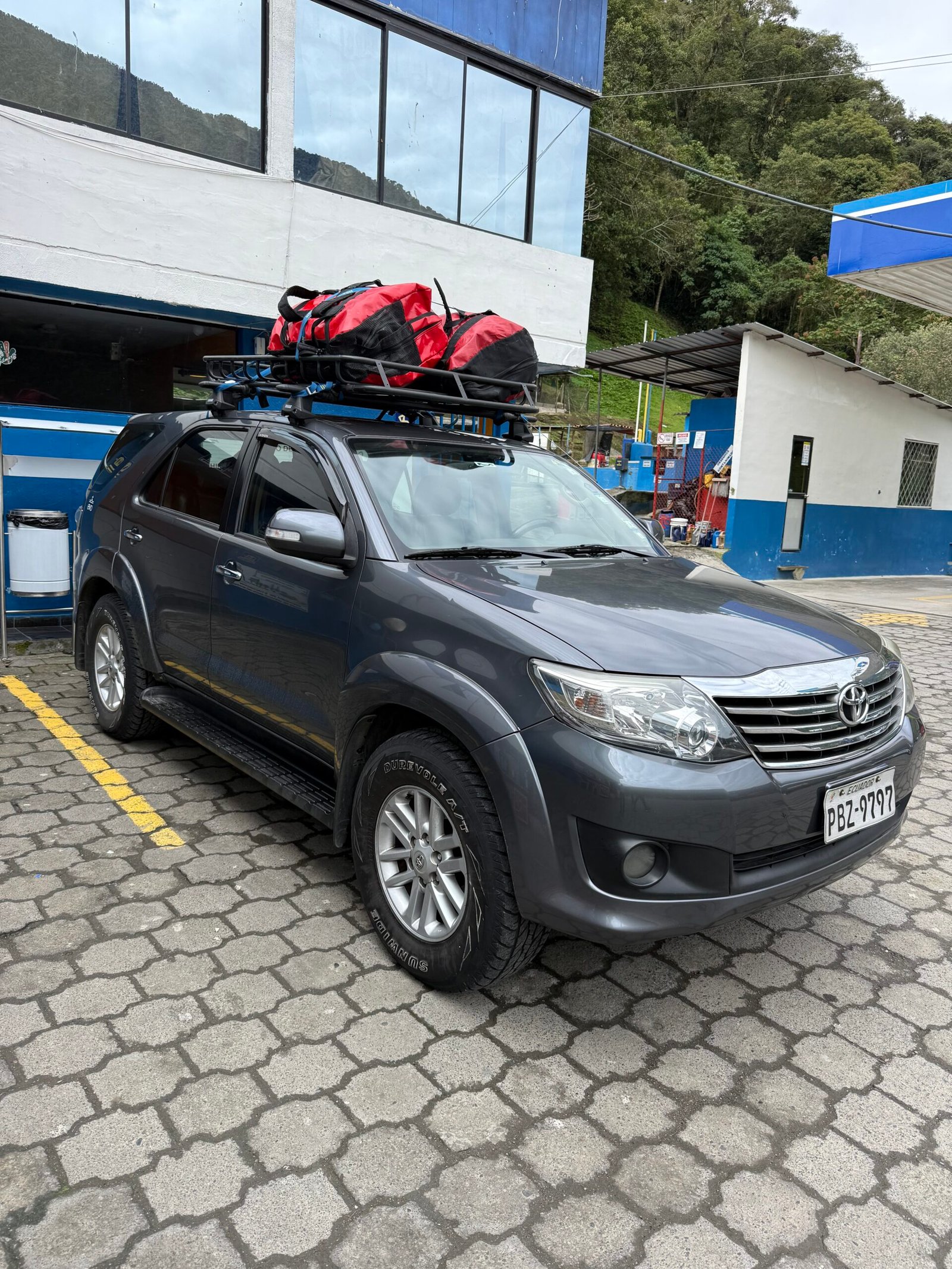
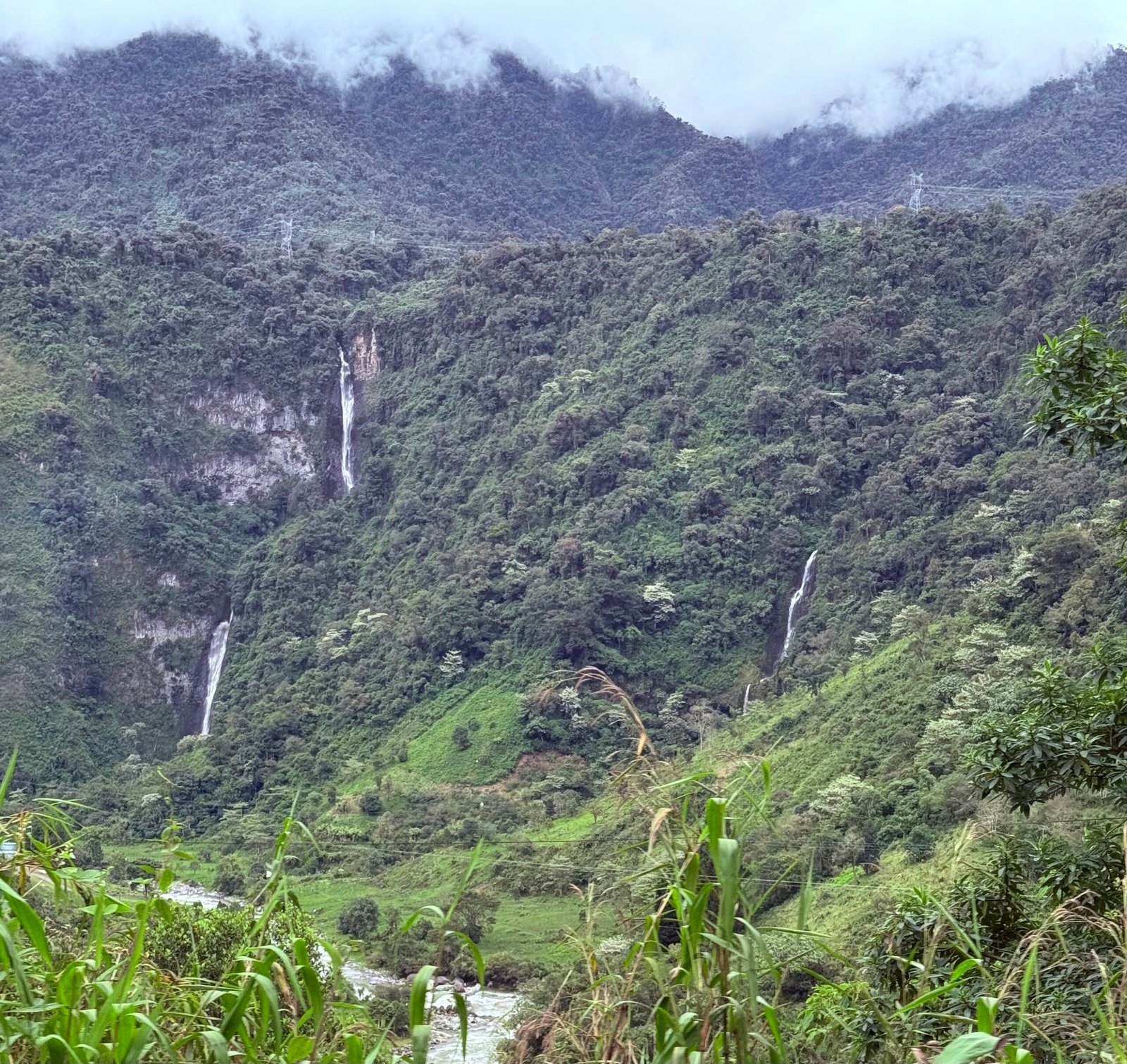
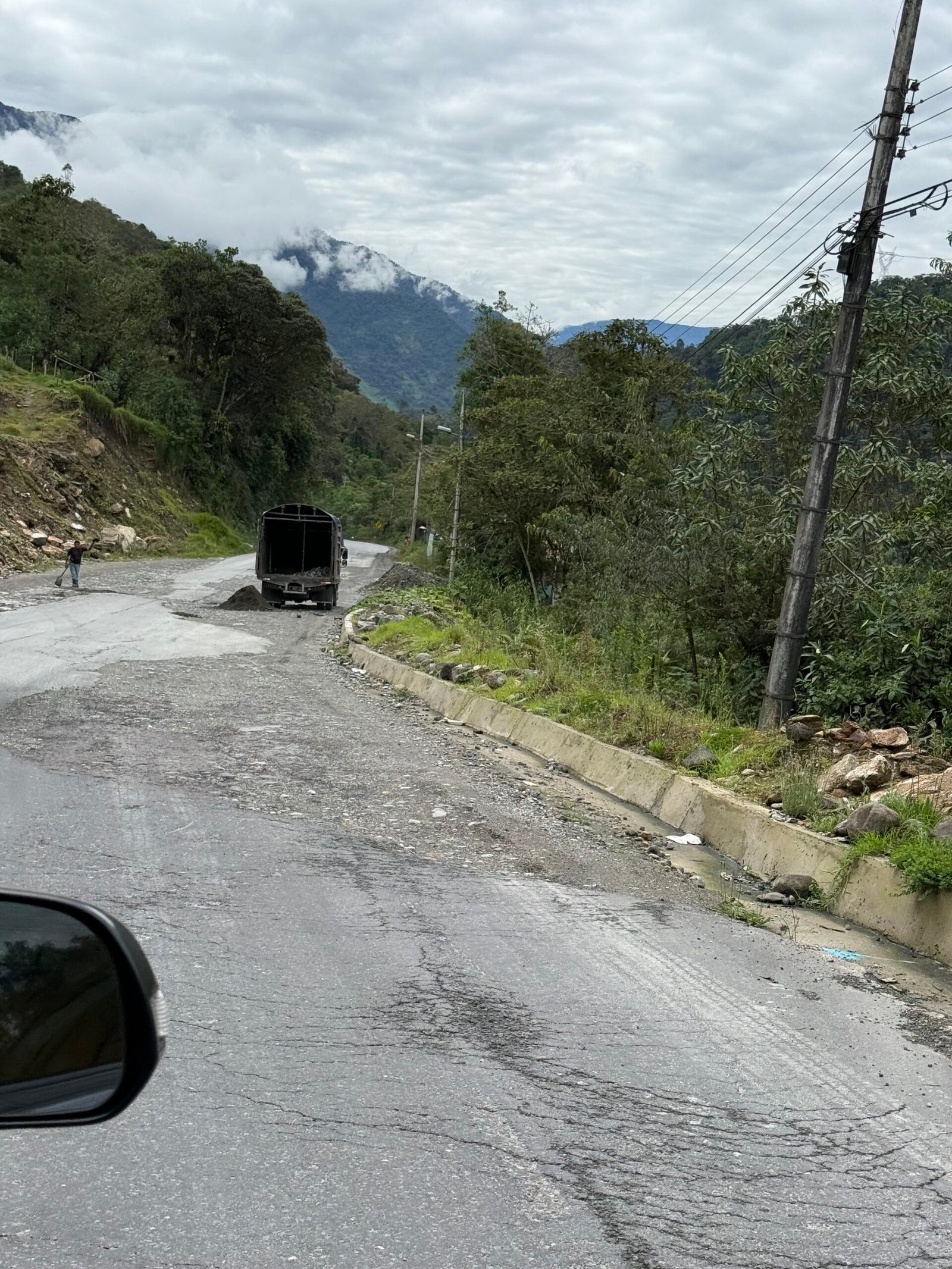
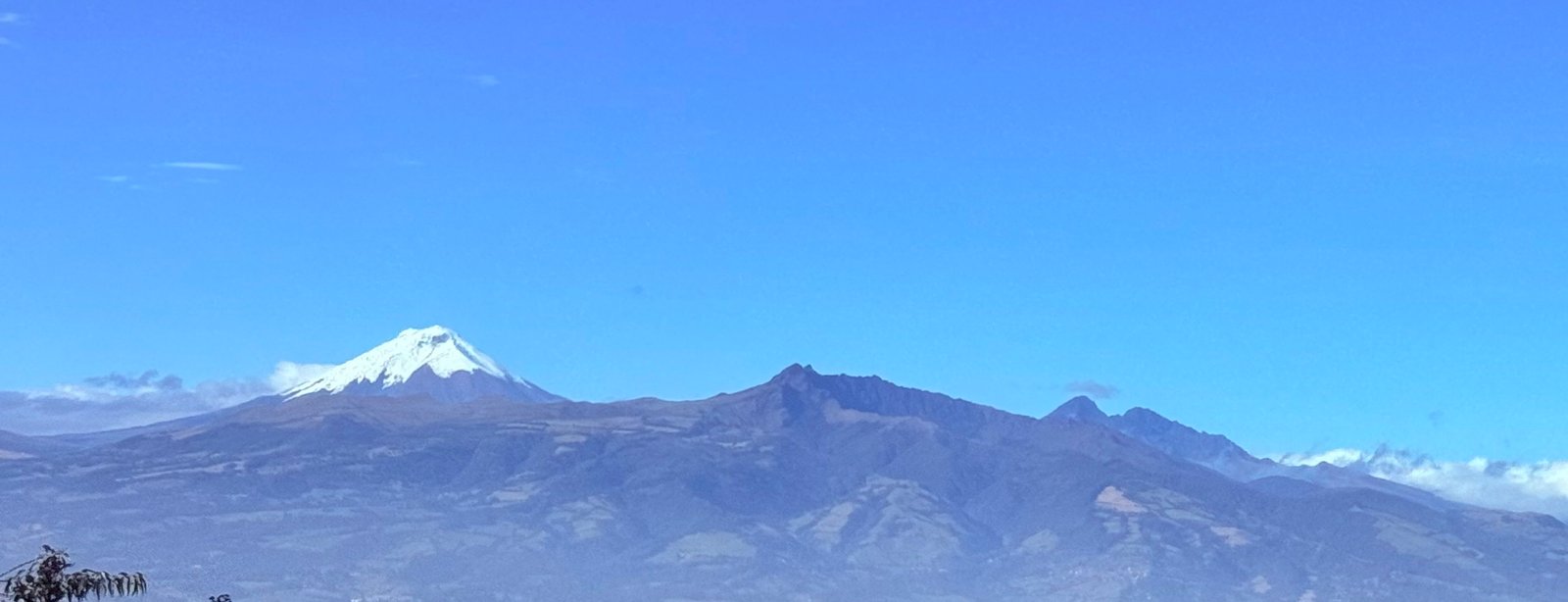
Since there were only four of us, Alirio was using his Toyota Fortuner (a sister to the 4Runner) for the trip. With three inflatable boats on top, and all the gear in the back, we headed out for a four-hour drive into the Amazon. Climbing to 14,000 feet, we were able to spot the volcano Cotopaxi in the distance. Once across the divide, we descended quickly, seeing dozens of waterfalls and navigating around nearly as many slides and washouts on the road going down. Along the way, the locals were using pack horses to bring milk down the steep terrain from their farms in order to set the big milk barrels down by the road for pickup.
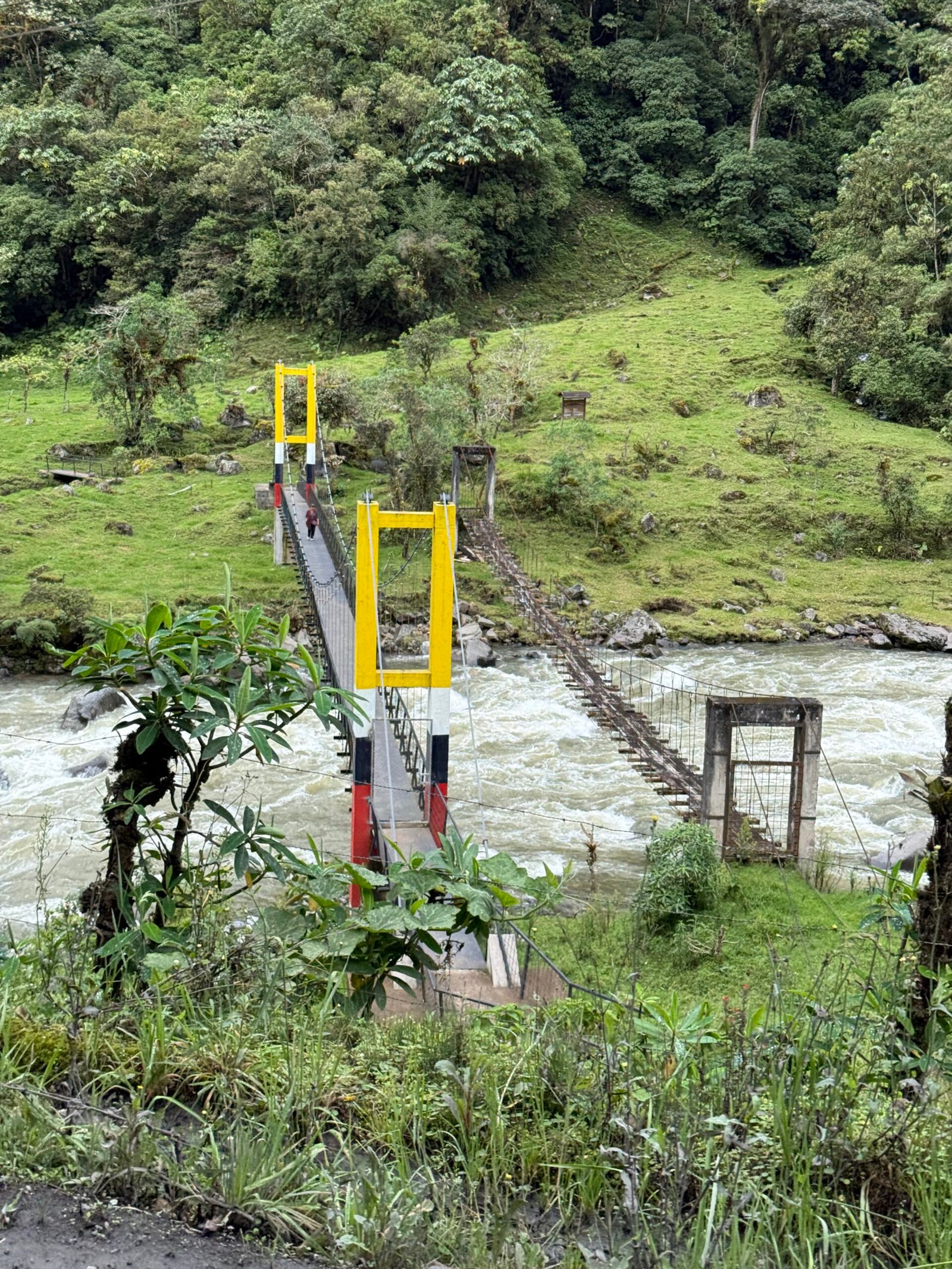
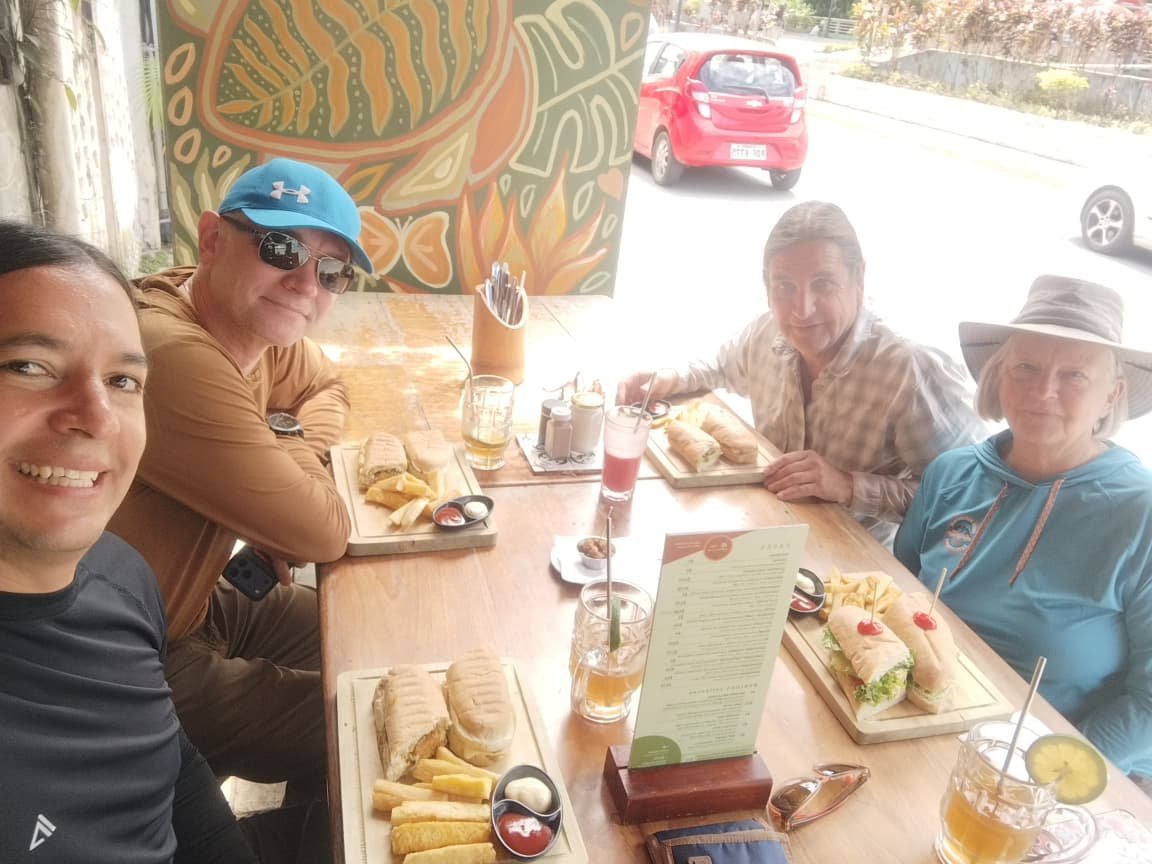
After lunch at a street cafe in Tena, we found our launch point on the Sindy river and we began our Amazon adventure.
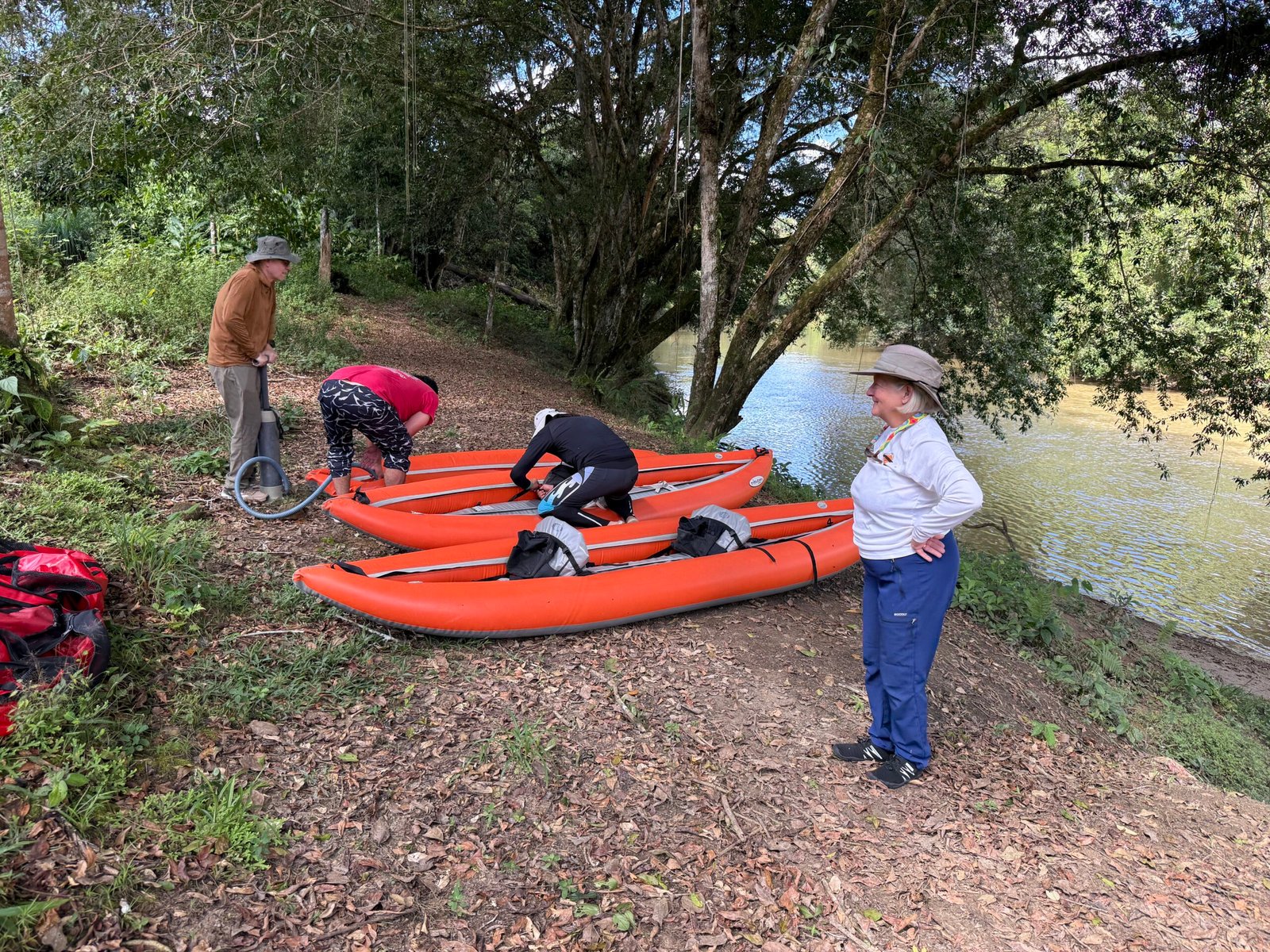
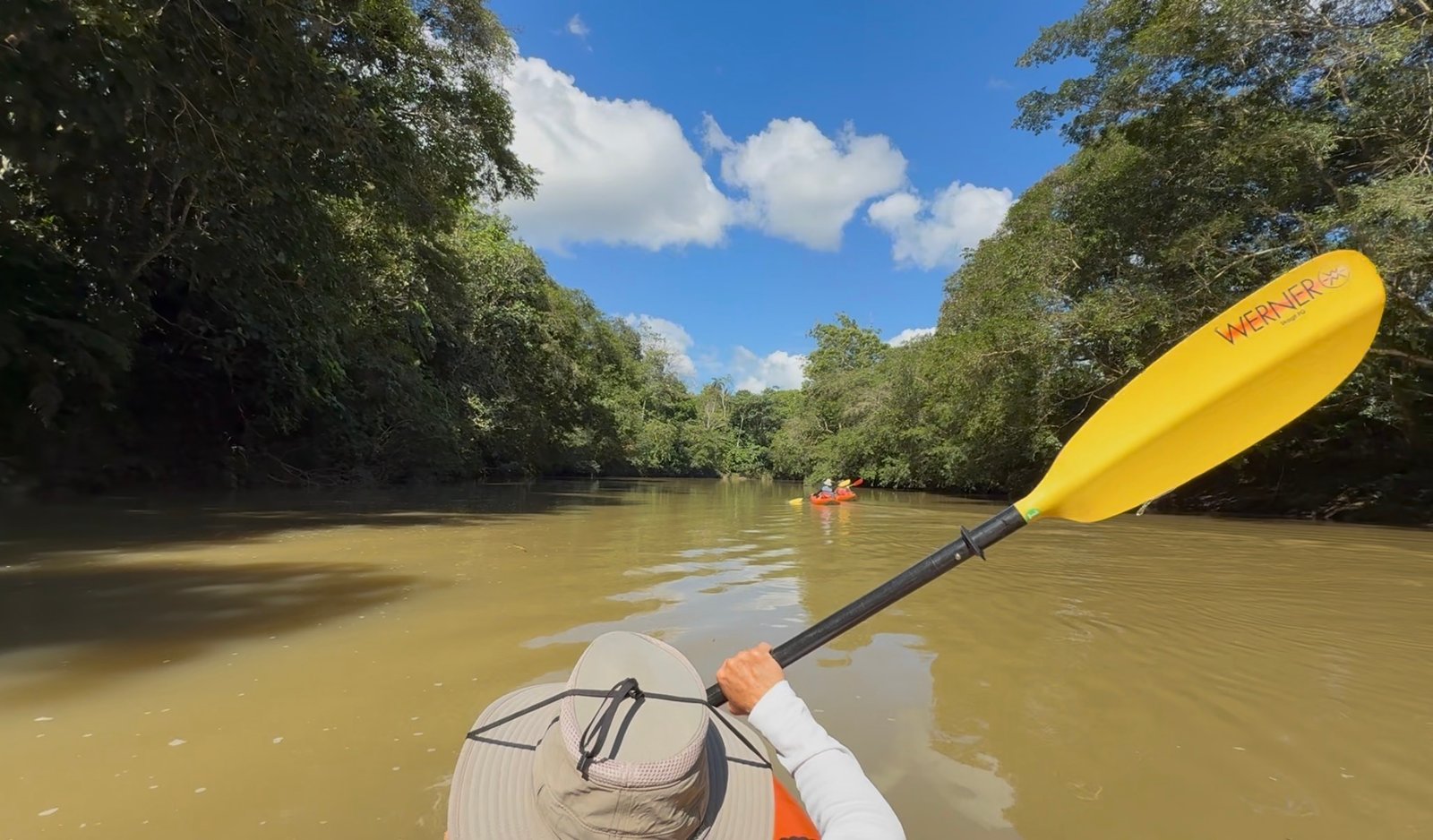
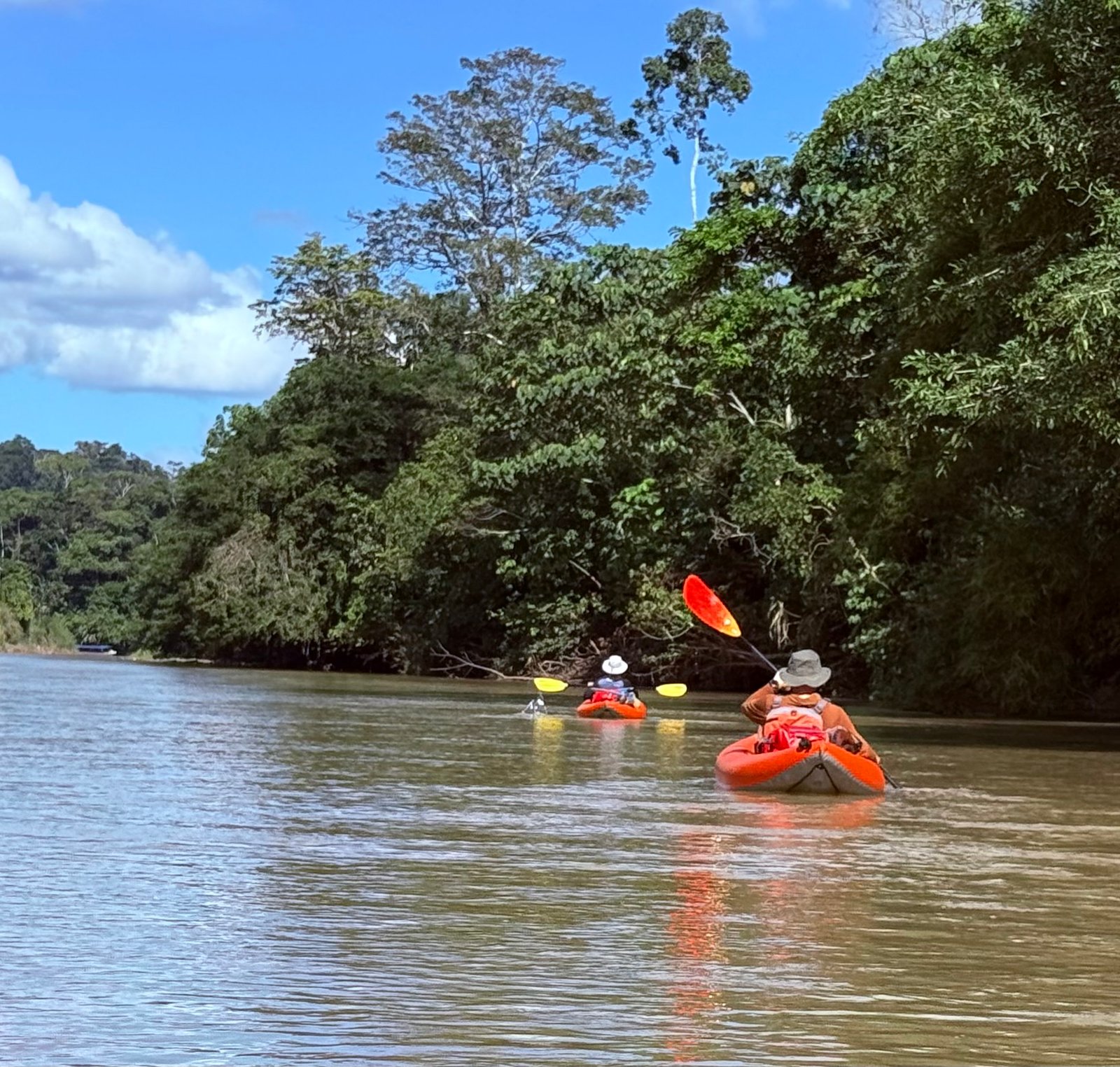
A long day! After dropping from 14,000 feet to 2,000 we are in the Amazon. Already the experience is changing.
River People
During our Peruvian Odyssey, we quickly learned that many of the people spoke Quechua, an ancient Andean language that predates the Inca. Here in Ecuador, we noticed identical words being used, such as pachamama (earth mother) and pachapapa (earth father). In Peru, tambo, meaning an inn or a place of rest, was typically attached to the end of a village name. Here, it preceded the village name. When I asked Alirio about it, he mentioned that many of the indigenous peoples are Kichwa, and it seems pretty obvious that they are a related people that now have different dialects and mannerisms. Alirio said there are two different groups of Kichwa, one is a highland group that is a little reticent around strangers. The other group consists of these river people, who are a bit more open.
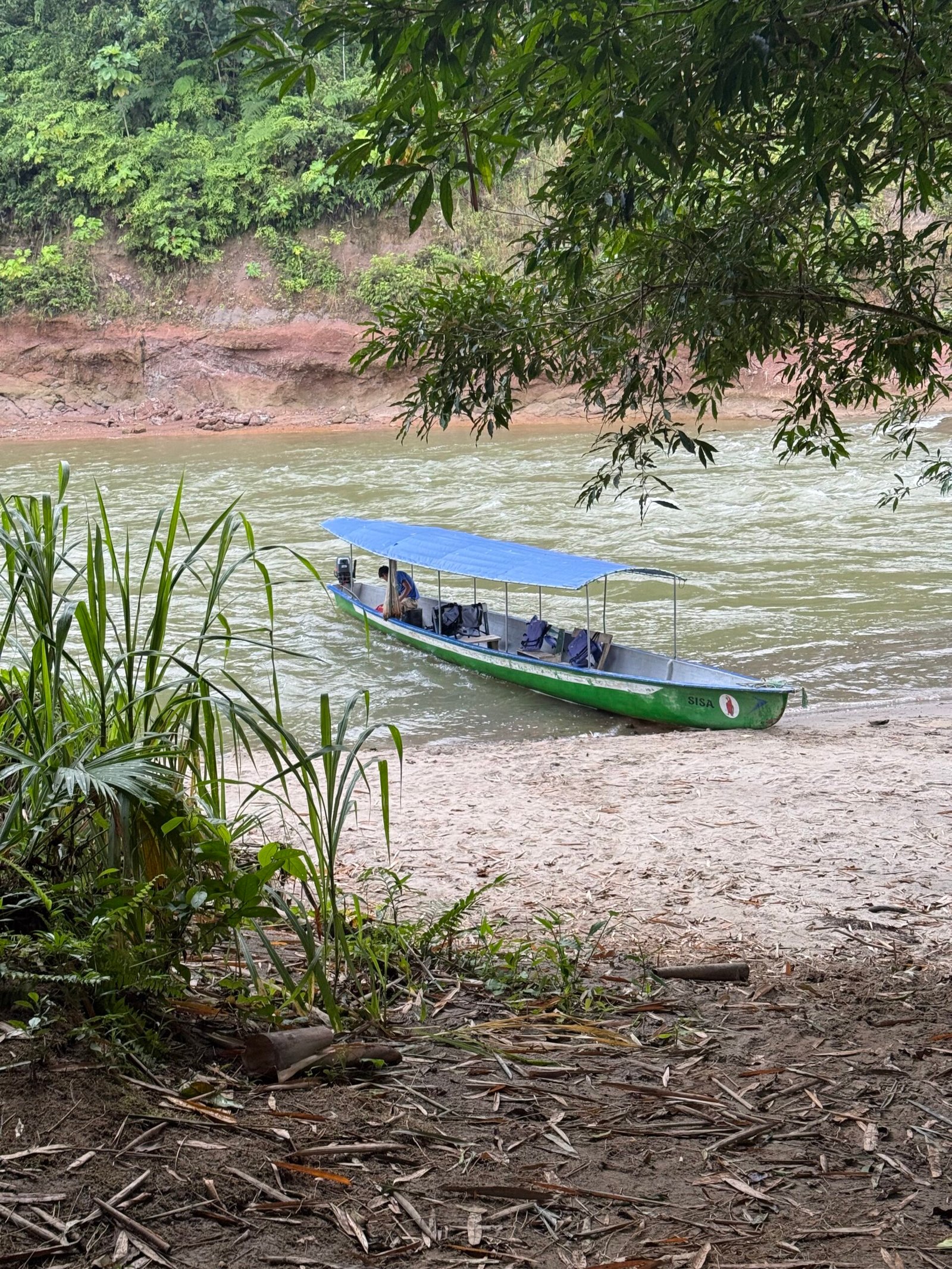
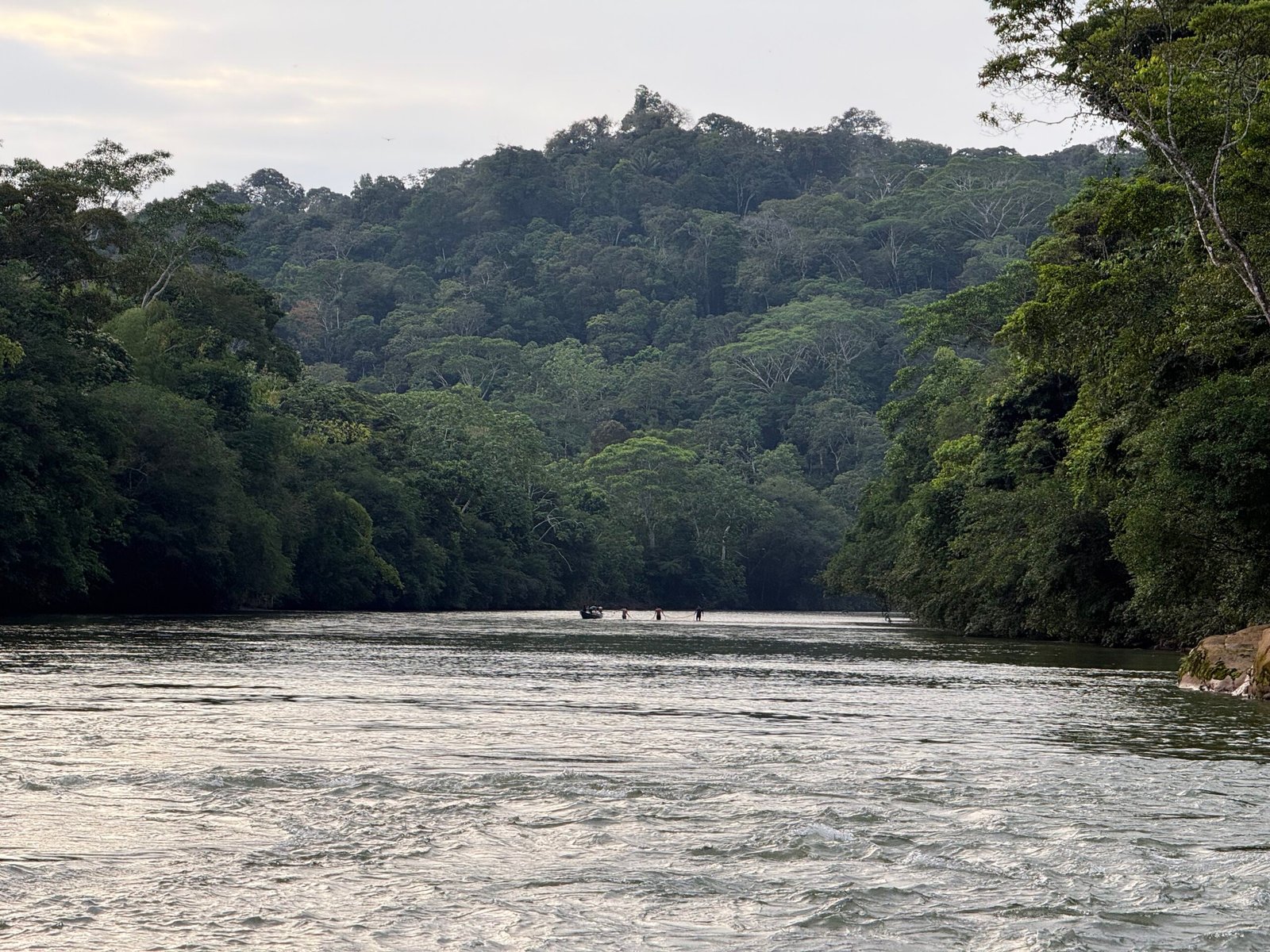
After our 10-mile paddle we arrived at Glamping Arajuno. While there are several luxury resorts up and down the river, we were delighted to find that our camp had only been established a year or so ago, accommodates only 8 guests, and was owned and operated by members of the Santa Barbara community. A family endeavor, each evening after we had been taken care of, the family would troop down to the river to motor across to their home.
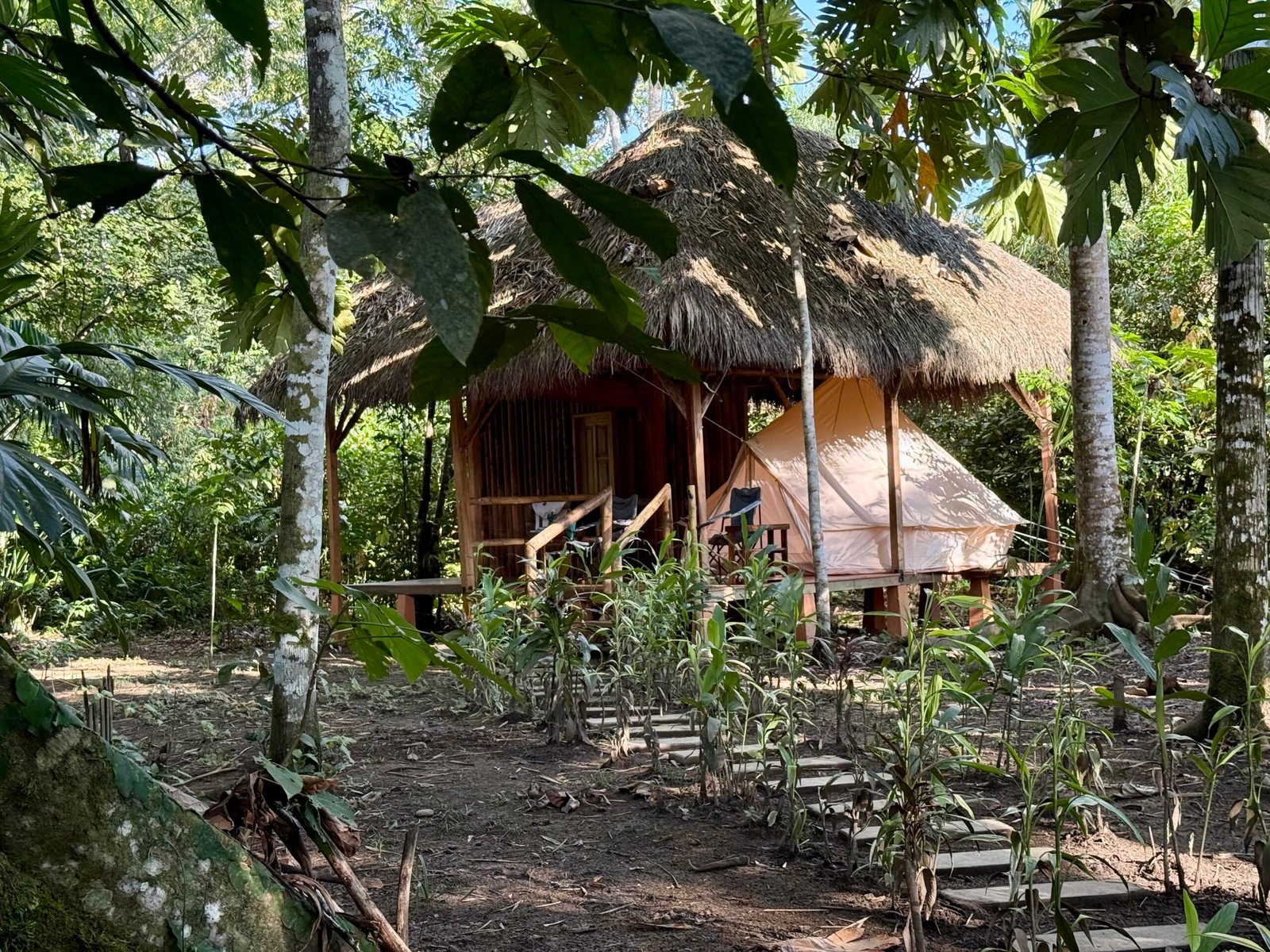
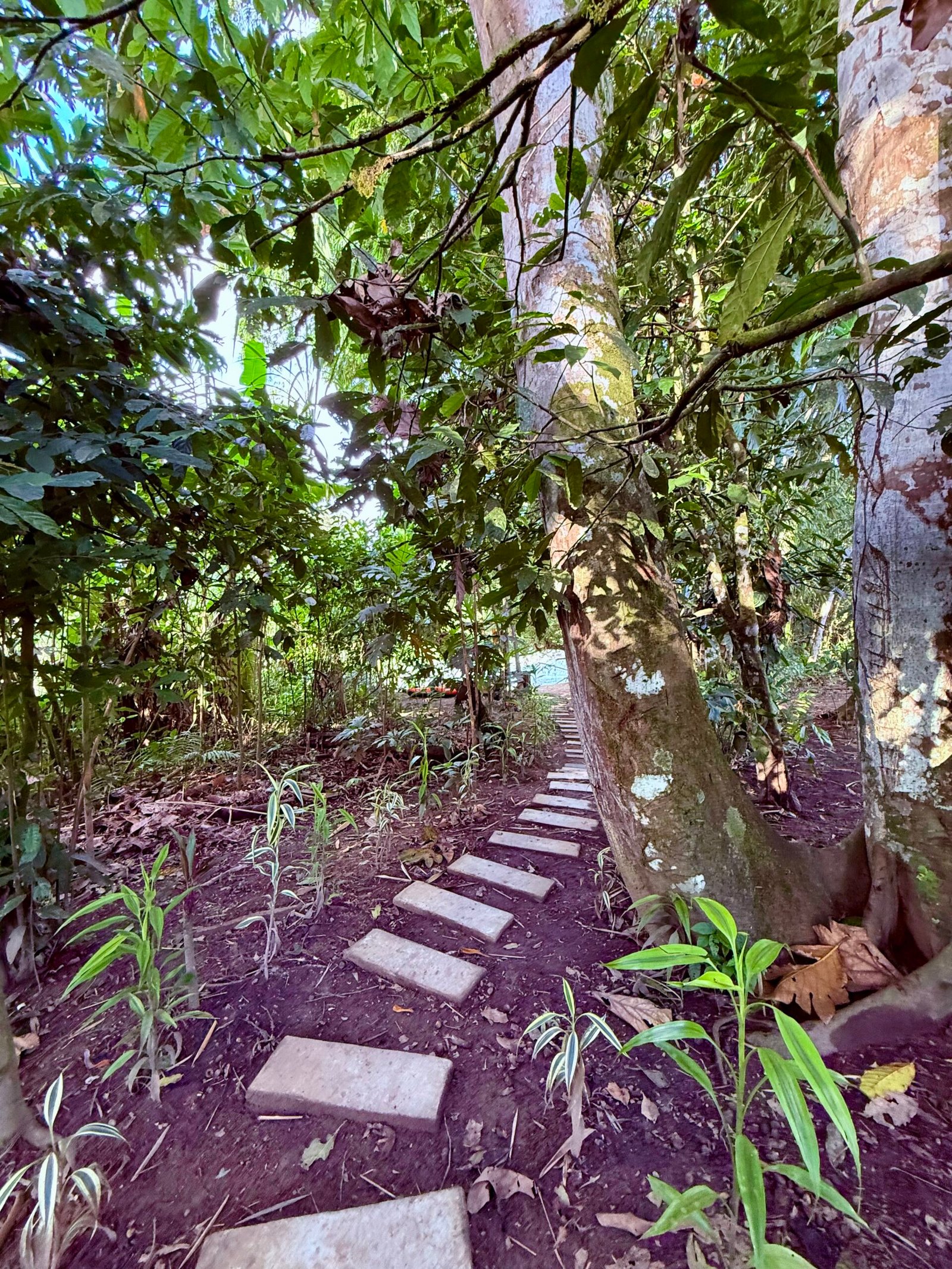
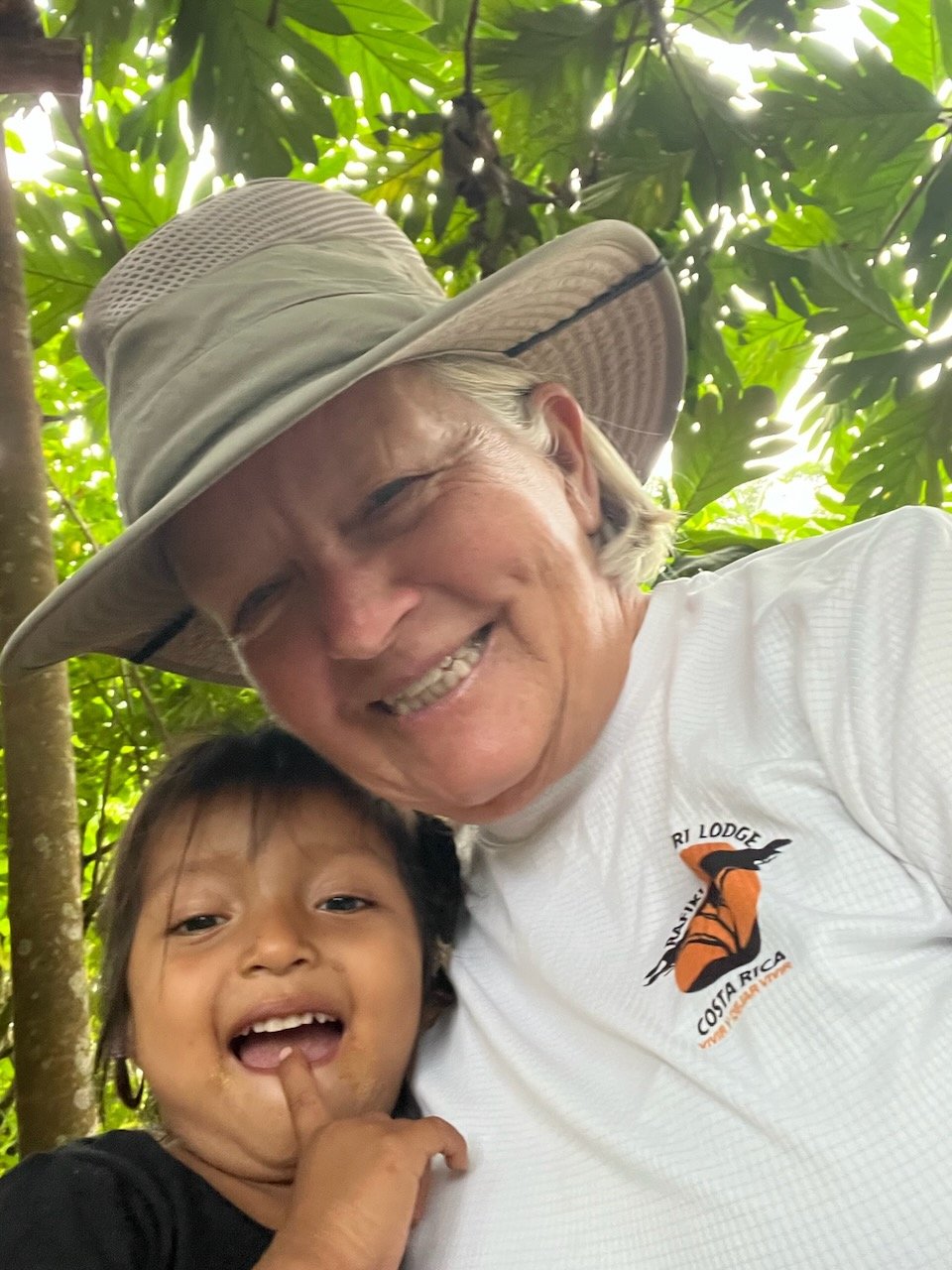
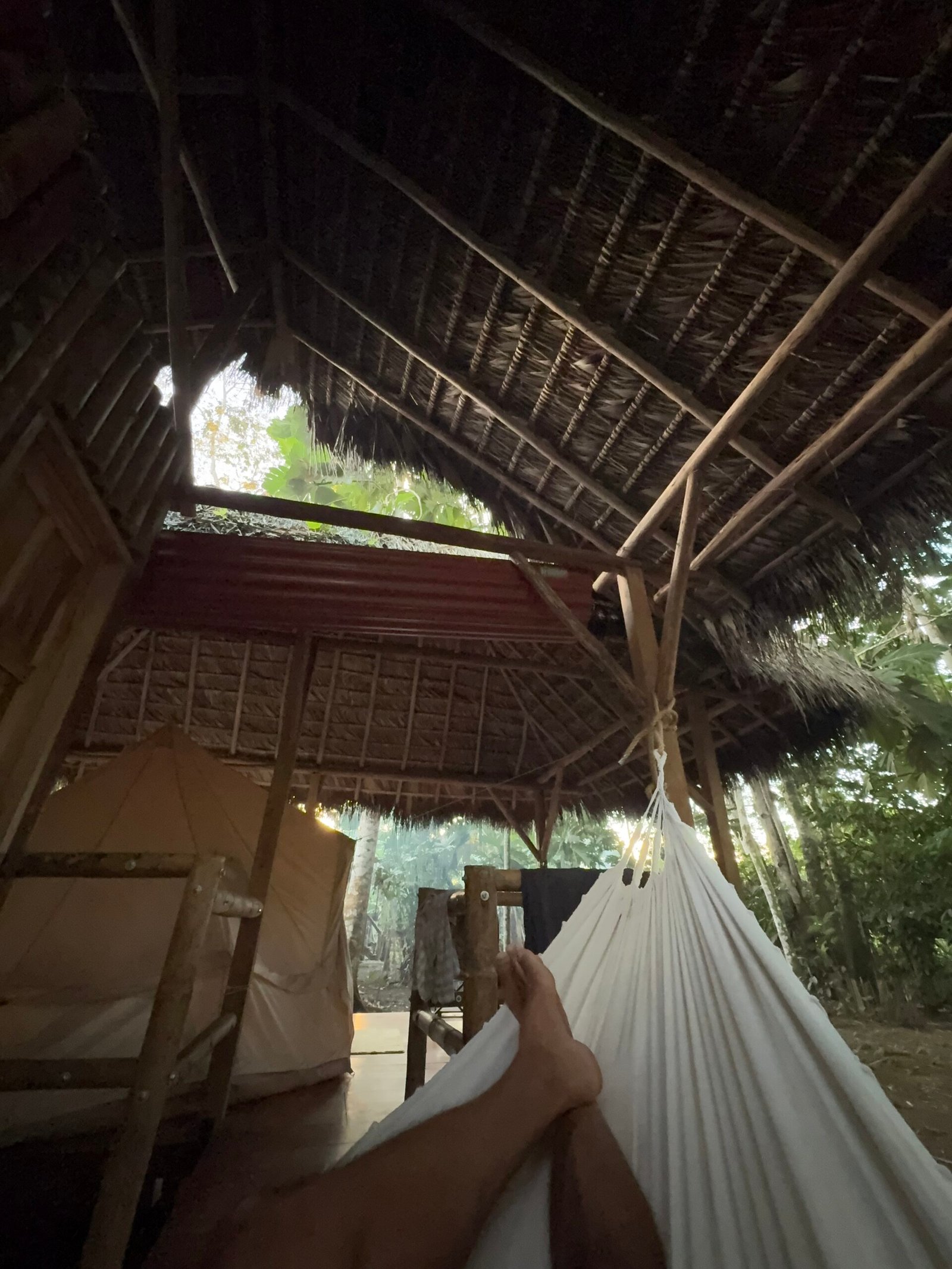
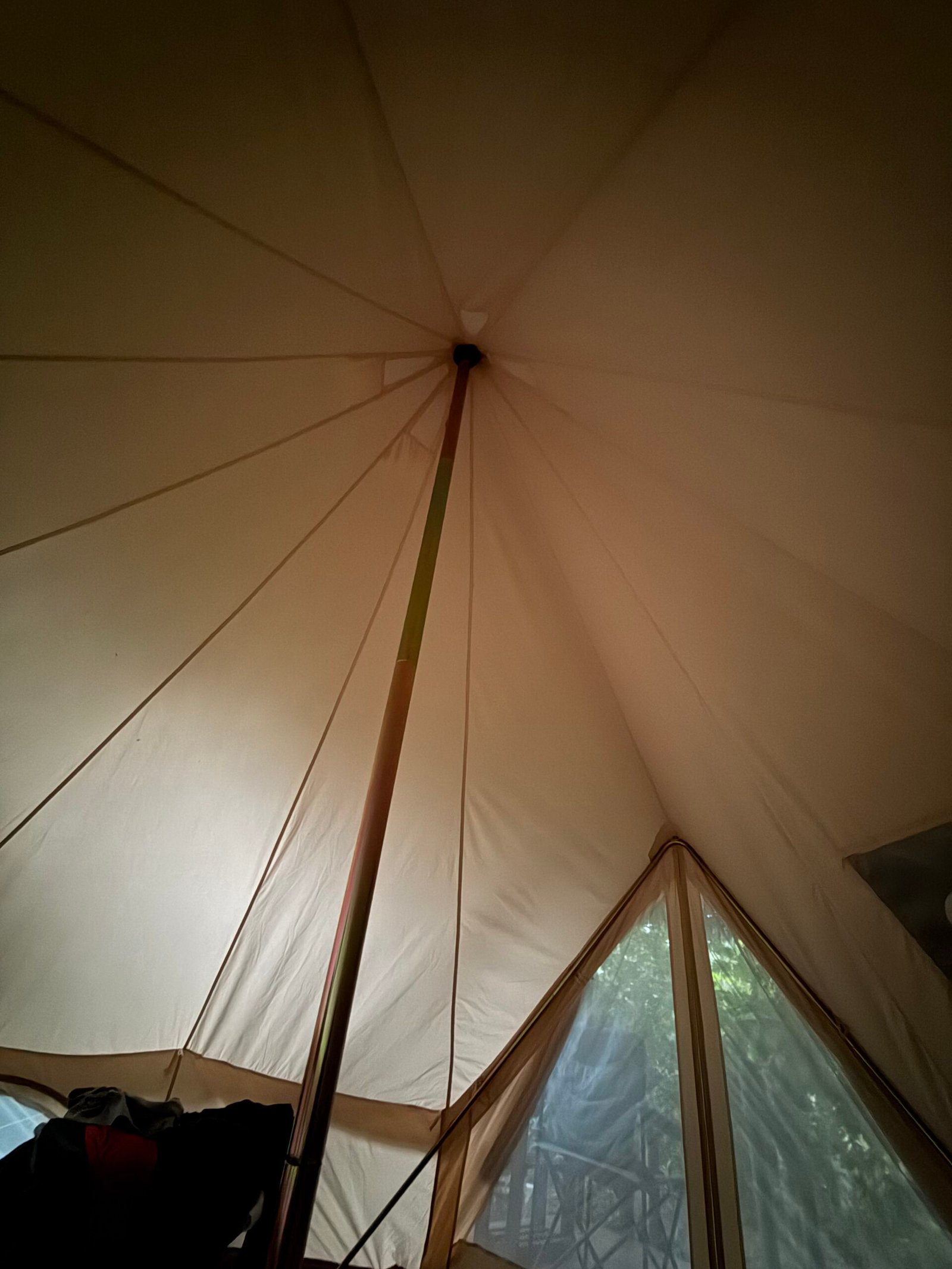
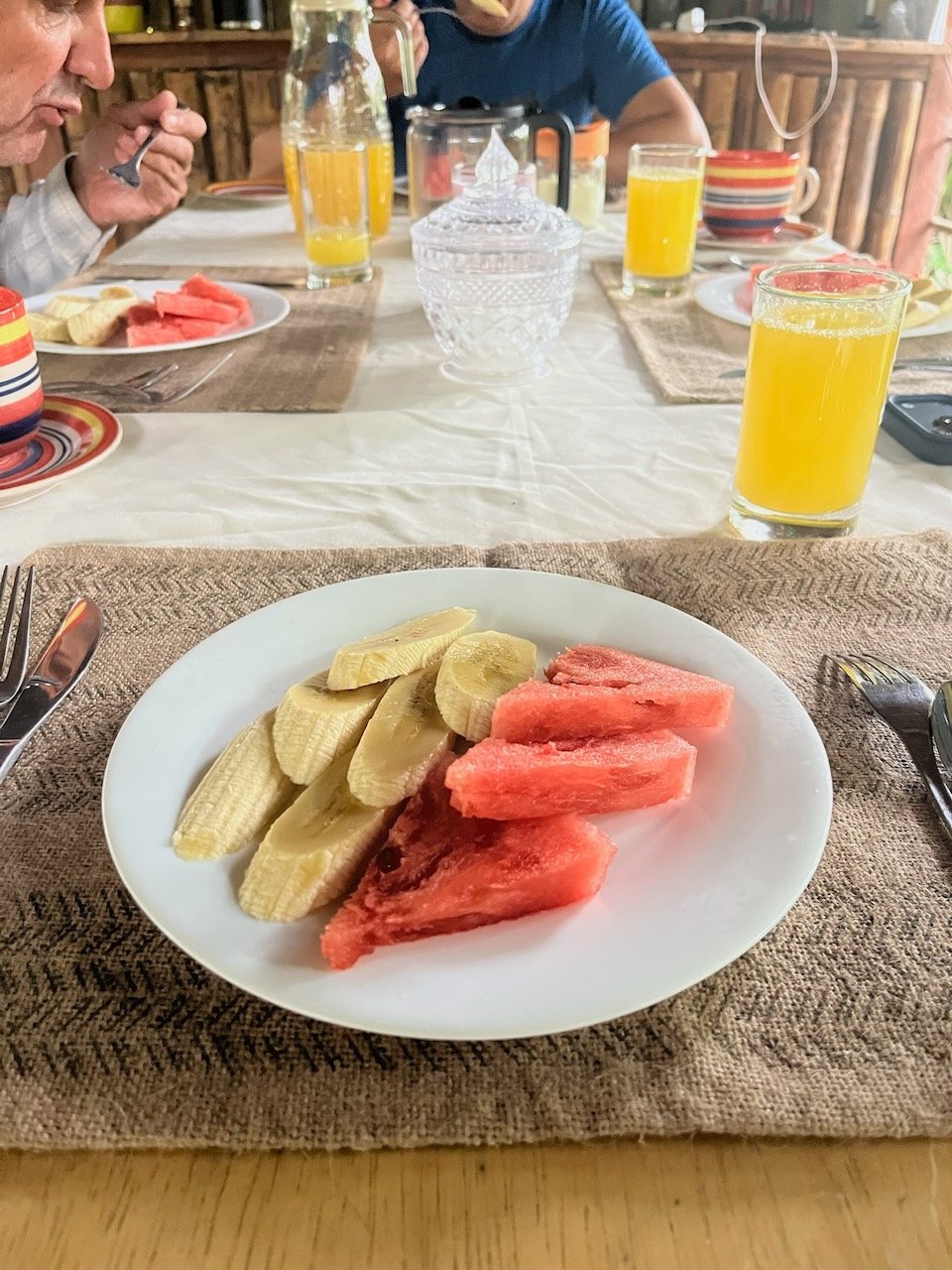
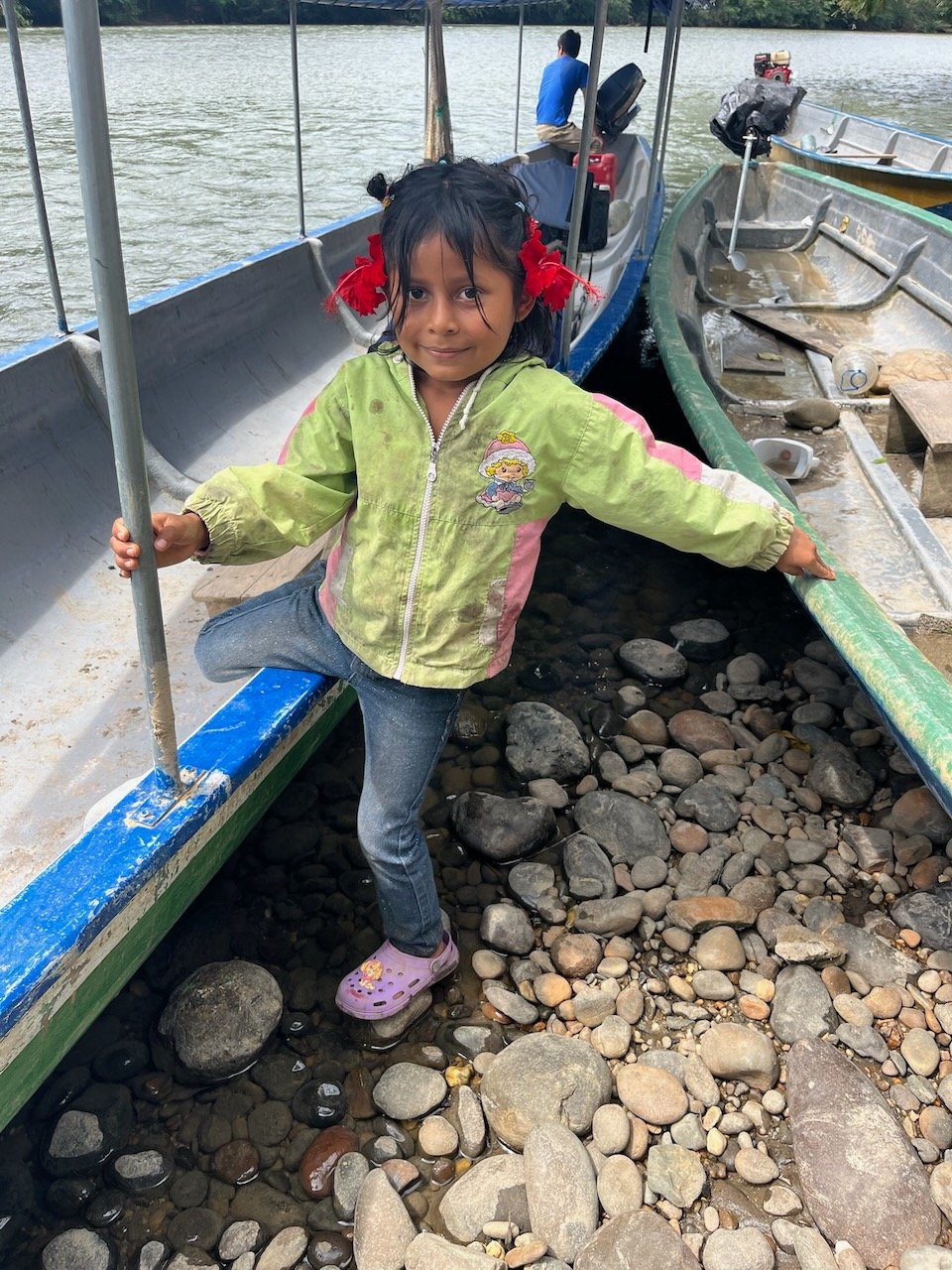
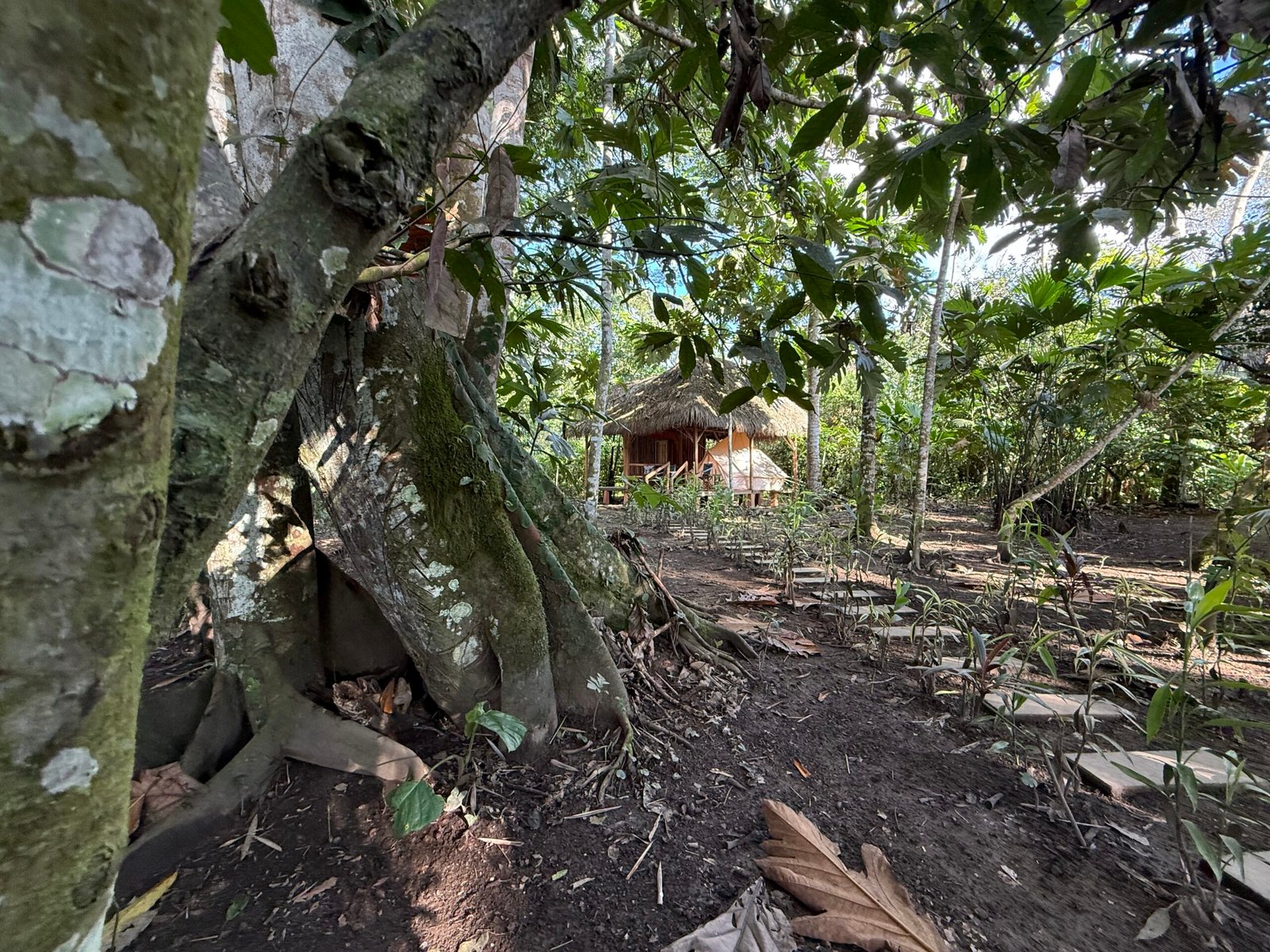
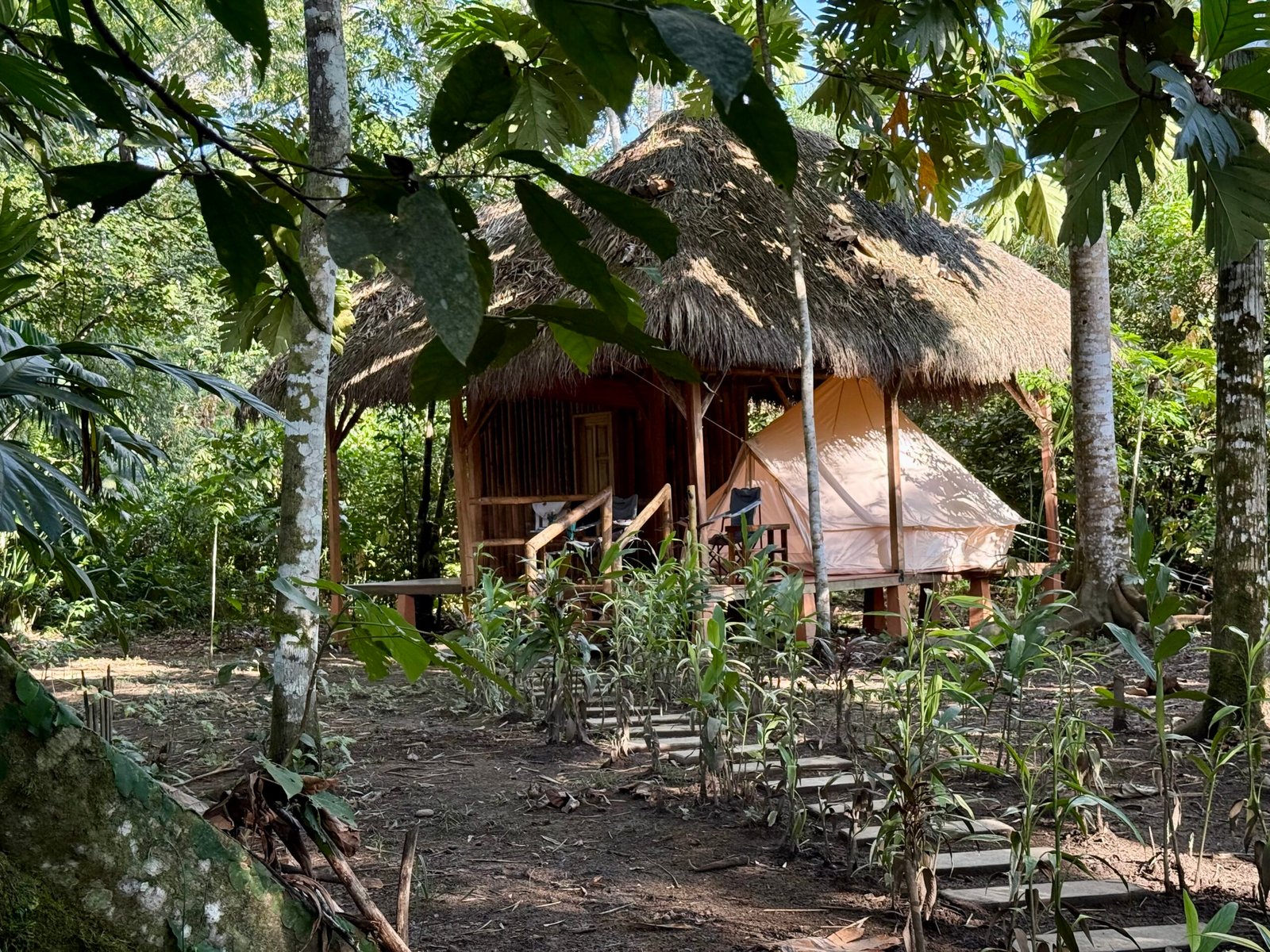
Tonight, we were to meet a village shaman, but with a recent passing of a village elder, we weren’t sure how it would go. The entire community would spend three days in reflection before the burial, and of course the elders may be needed.
The head of our host family, Jimmy, wandered up the river bank to try and talk with me. Since I know very little Spanish and he very little English, it was awkward. I had a tad of success with my phone translator, but I was embarrassed with the idea of attempting to understand a culture without understanding the language.
We have since enrolled in a conversational Spanish course. I want to be able to talk with people like Jimmy.
A nice dinner was prepared for us by Jimmy’s wife and daughter, while the little ones were always out and about. We were served in an open-air dining room, complete with a small bar, Starlink internet, and a power strip for charging our devices…up until the point they went home and shut everything down to conserve power.
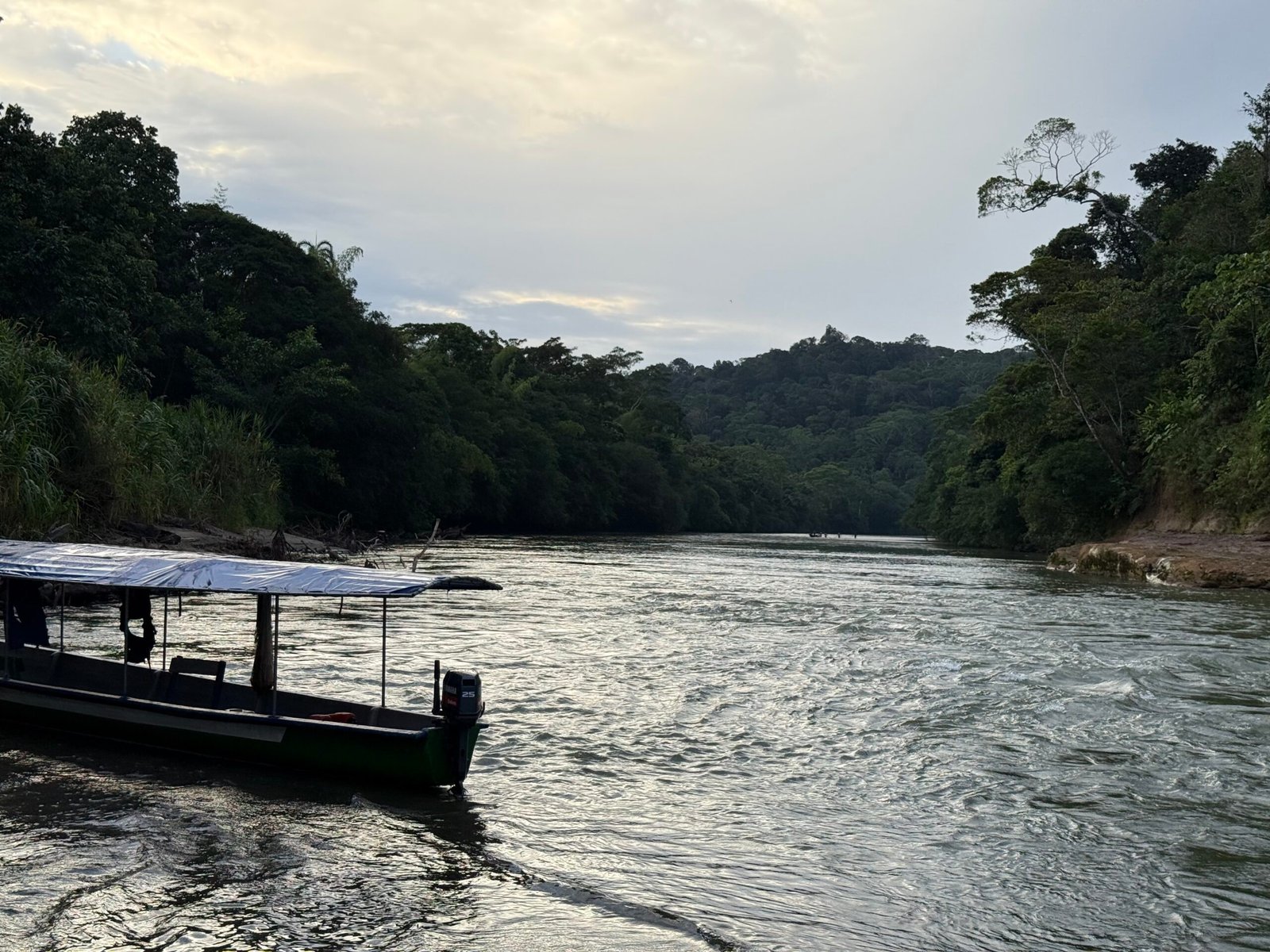
After dinner, we learned that the shaman would be coming to visit so the four of us and Jimmy gathered around the fire.
Caesar is a third-generation shaman and a leader in the village. He came up from the river in shorts and a T-shirt, but at the fire he changed into traditional Kichwa dress of a grass skirt and woven headband. At fifty years old, his body looked more like thirty, lean and muscular and not an ounce of fat. Speaking through Alirio, he wanted to know if any of us would like a “cleansing,” something he routinely provided for the community. The process typically taking about four or five minutes. If so, he would take ayahuasca to prepare.
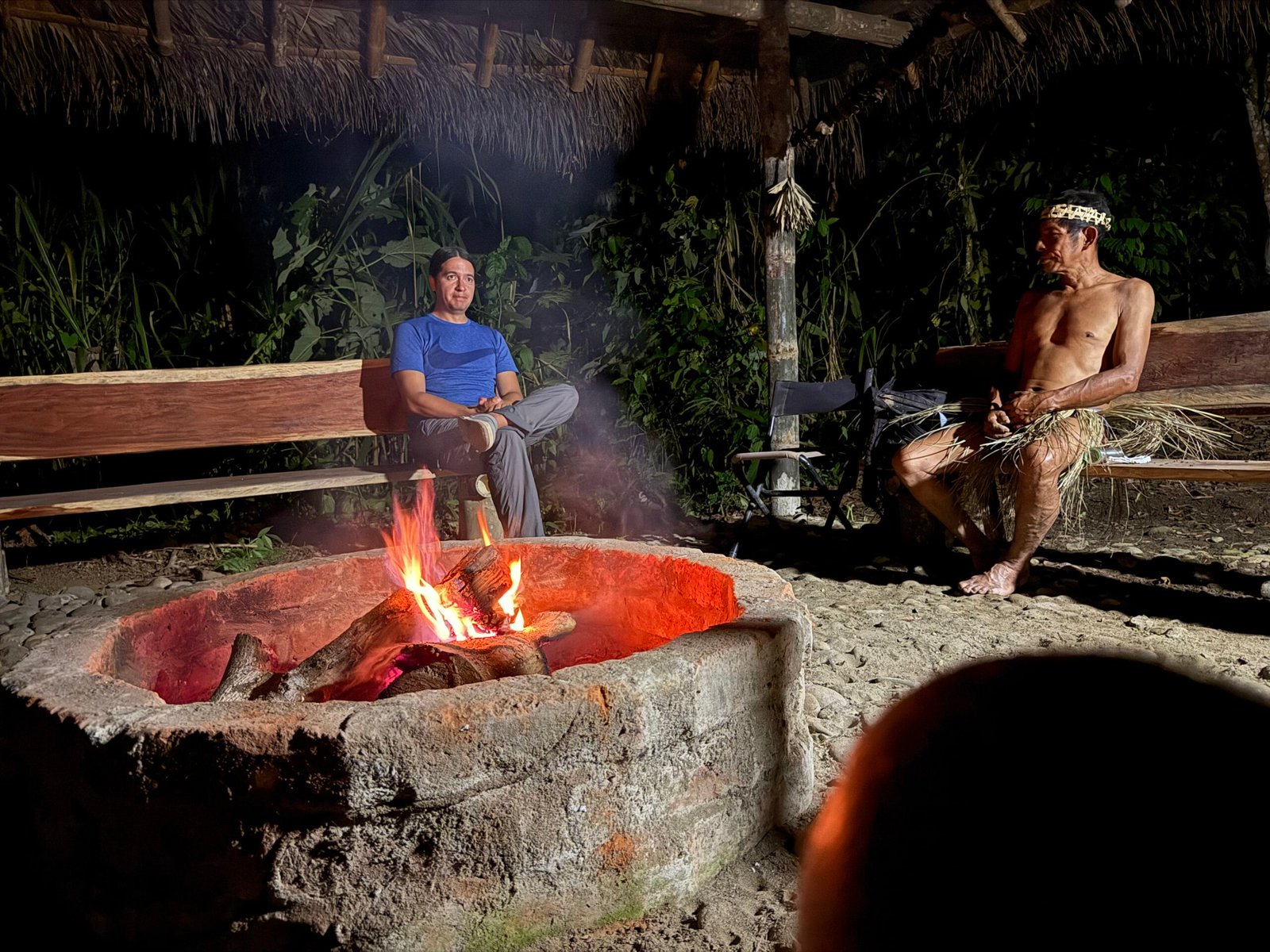
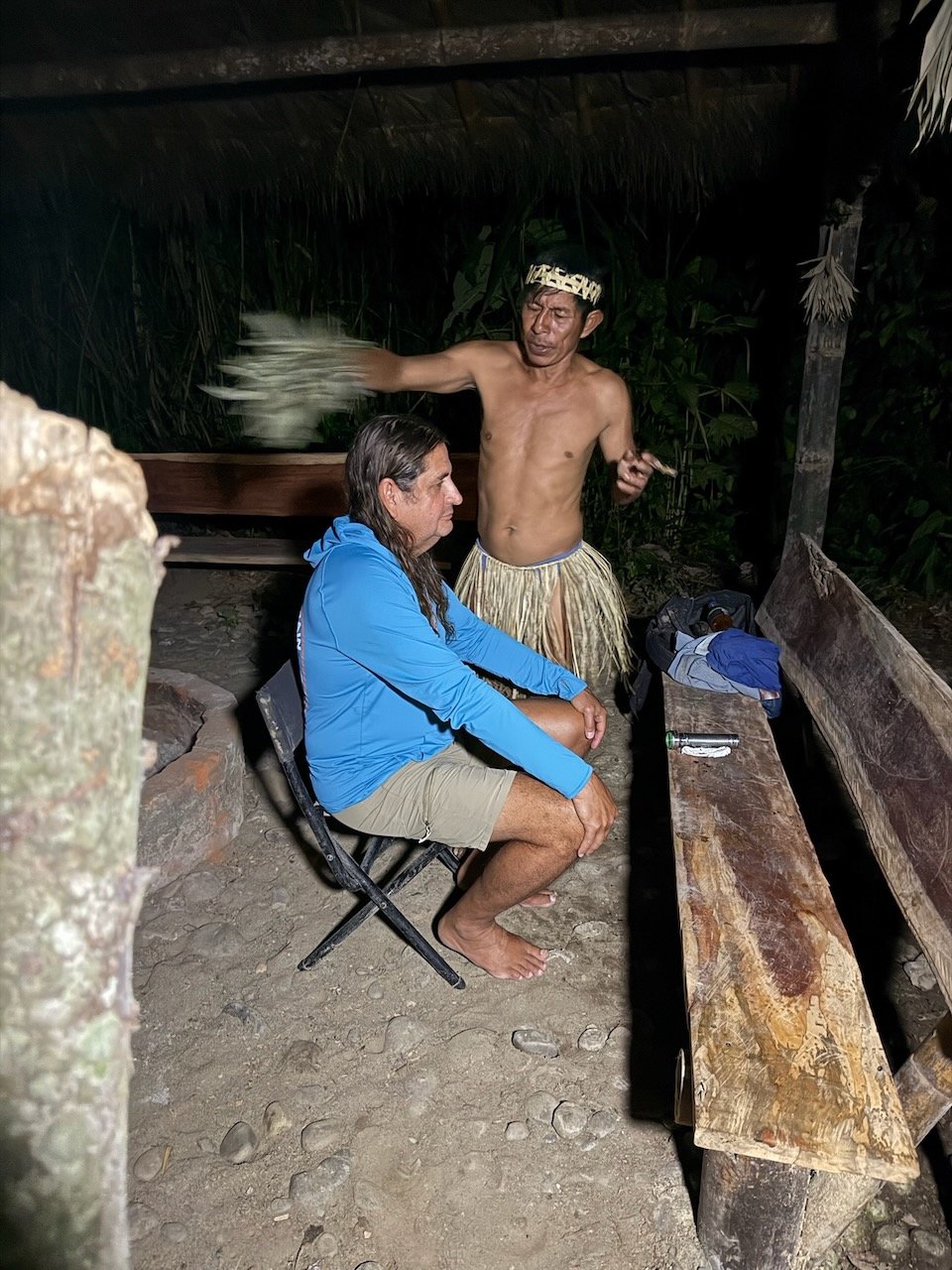
Of us three, I was the only volunteer. But I didn’t want him to take his medicine for me alone. Not a worry, Caesar would take the ayahuasca, something he has apparently been doing since he was four years old. He makes his own, and grows his own tobacco for these spiritual activities. He had me taste the ayahuasca, seemingly as a way to validate his credentials. I found it both bitter and a bit fermented. It is made by combining and boiling two different plants. One contains DMT, the active component, the other acts as a stabilizer to significantly extend the length of the experience.
Walter looked at me and said, “You are very brave!” I replied, “I’m not sure ‘brave’ is the correct word for it.”
I took a seat and Caesar began to sing, whistle, blow tobacco smoke and wave a particular plant about my head. Occasionally it felt like he would attempt to “extract” whatever might need to be cleansed from the top of my head, using his lips. For my part, I remained silent and worked to keep my mind still.
After about five minutes, and apparently a little bewildered, he stopped and started chatting with Alirio. He wanted to know if I had shaman training! I responded with a “no,” and he said he was having trouble getting “through.”
Patricia immediately knew what the trouble was (I can envision her nodding her head). My thick skull was preventing any attempt at penetration. Determined, Caesar gave it another round. After he concluded he told me that he had given me an extra measure of his power, and it would last through the following day. And that I should not get my head cold during this time or I would lose the benefit.
Shouldn’t be a problem in the Amazon, right? Oh yeah, we only have cold showers!
I thanked Caesar for the cleansing and our experience was concluded. A family member took him back across the river to his home.
What a treat! And an honor for the community to share that with us. The next day I asked Alirio if there may be other translation of the word “training.” He thought for a moment and said it could be more like that I had a strong spirit. Maybe so, or it could be my calcified, ossified skull…
Fascinating.
I would like to make the point that these spiritual leaders are not dogmatic about it. They provide emotional and spiritual guidance, and of course traditional medicine. But they certainly will send someone to a medical doctor if necessary. Their role is to take care of their flock, and they take it seriously.
Although I really needed to wash my hair, I persevered the following day. You wouldn’t go to the doctor and then not take the prescription, would you?
Our first day in the Amazon. What will tomorrow bring?
A Walk in the Woods
Today, our plans were to check out a parrot clay lick, take a walk in the rainforest, and then visit the Santa Barbara community for lunch.
We’re beginning to realize that Hollywood has, surprise, surprise, somewhat misrepresented the Amazon in film. To date, the only terrors have been the no-see-ums. We used DEET wipes on our first day as a precaution, but haven’t really needed to worry. Now, it could be that we are on the western edge of the Amazon Basin, it certainly is vast, or it could be the season, but it has all been quite pleasant and our sleeping area was well-screened.
We moved out early on the river in Jimmy’s riverboat (canoe) to get to the parrot clay lick. The parrots come in early, apparently to ingest the clay before foraging for the day. There is ongoing debate as to why they do this, but in general it is believed to either provide a protective coating on their stomachs or perhaps provide detoxifying properties for some of the things they eat. While it’s not a guarantee they’ll show, they did for us this morning, with a couple of dozen eventually revealing themselves. A boa constrictor, the only snake we saw on our trip, was spotted way up in a tree, maybe hopeful of an absent-minded parrot.
This event was pretty popular, with several of the resort boats showing up after us. And this is where I noticed another difference in our experience. The other river boats were fitted for tourists, with fixed bucket seats. Our family’s boat, however, had plank seats that could easily be moved around to make room for whatever was needed. In other words, their pickup truck. I like it.
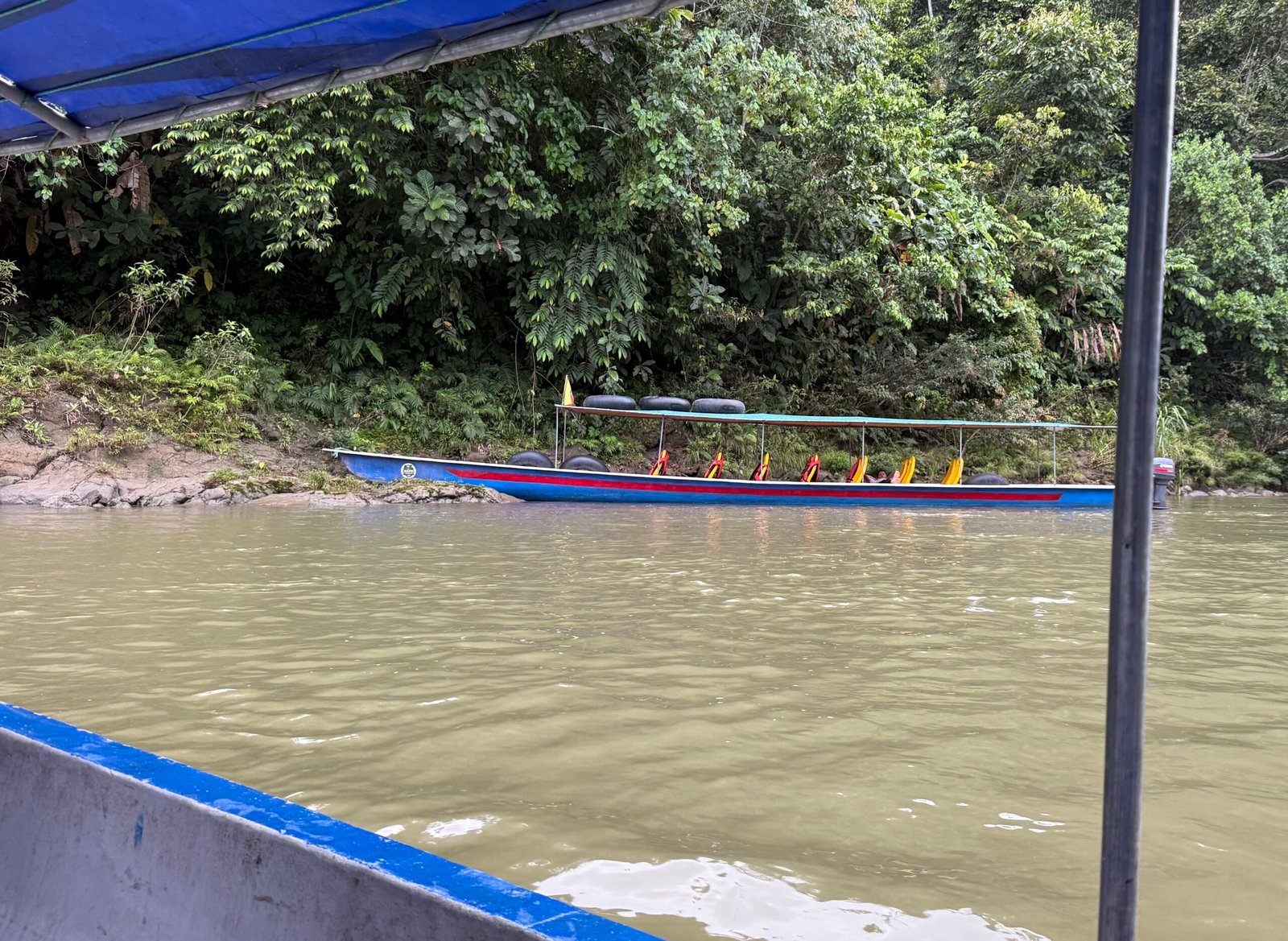
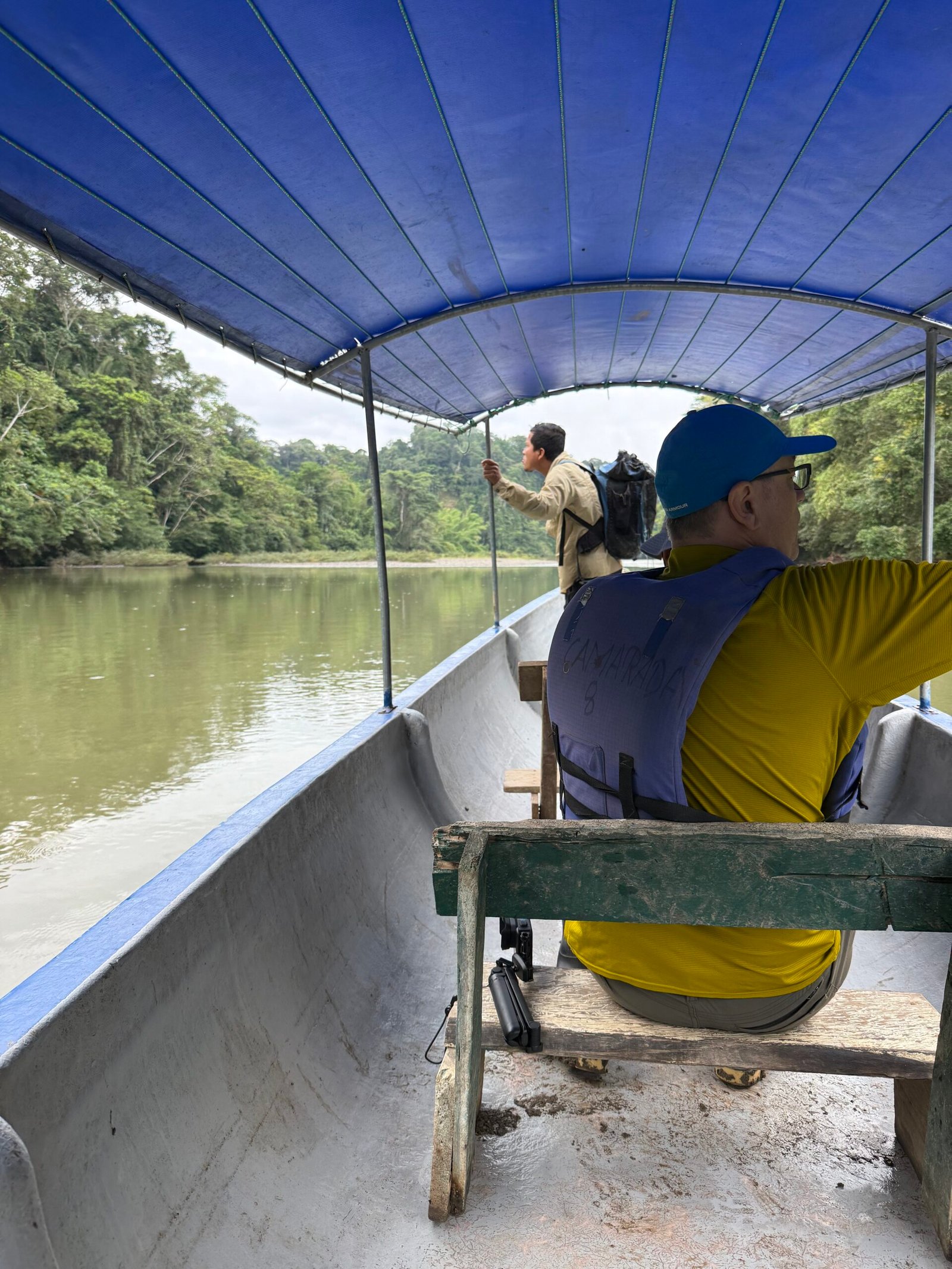
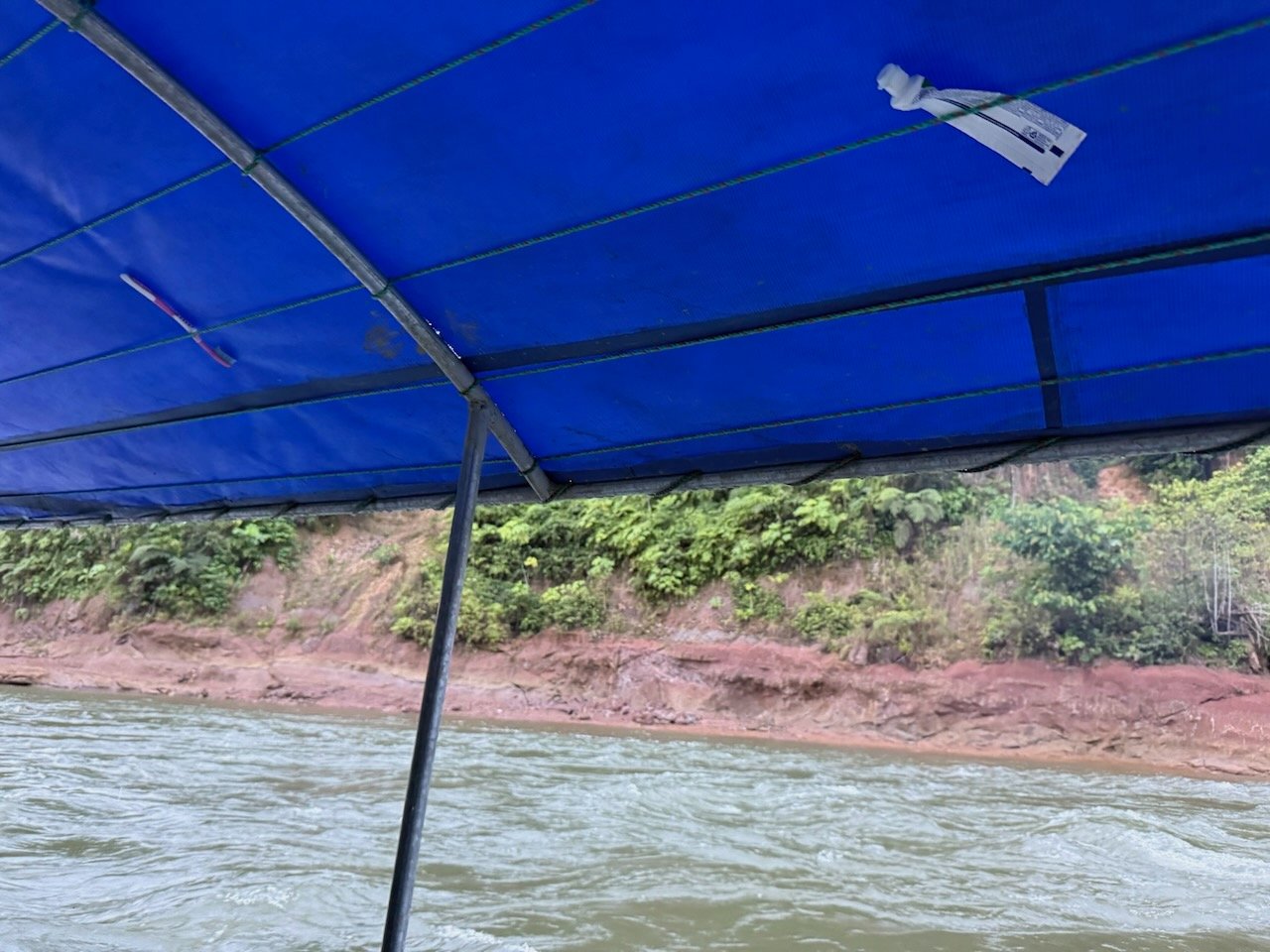
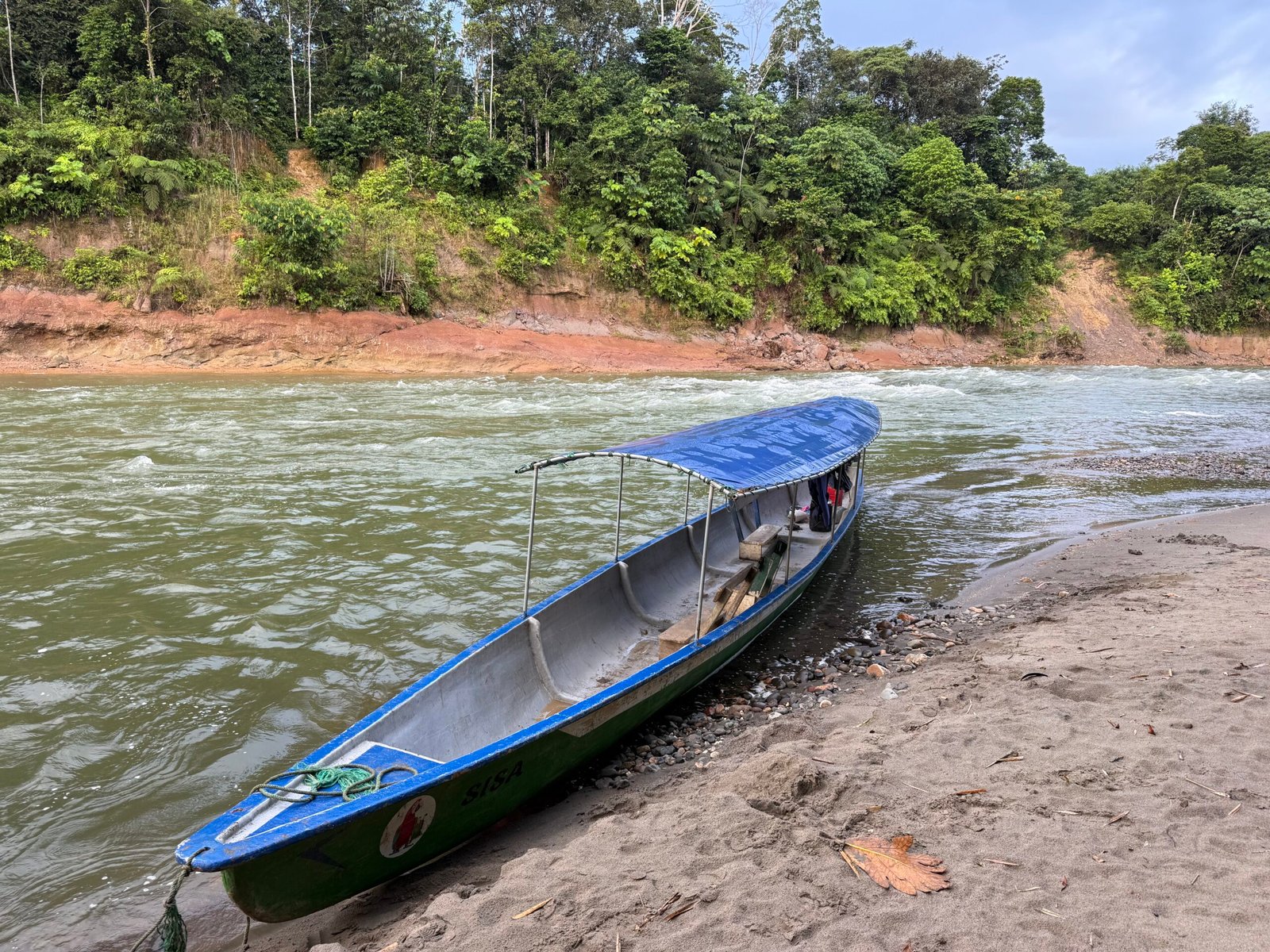
The jungle walk was pretty fascinating. Rubber boots are the de facto footwear in the deep jungle. Mainly for ants, apparently. But pretty much everywhere else in the community most folks are barefoot. And they all have beautiful feet.
On our loop hike, Jimmy showed us the highly-desirable yellow cacao, used for the best chocolates. Weirdly, the pods grow right on the trunk of the tree! Jimmy also demonstrated how the thatched roofs are made and that, if properly done, will easily last 10 years or more.
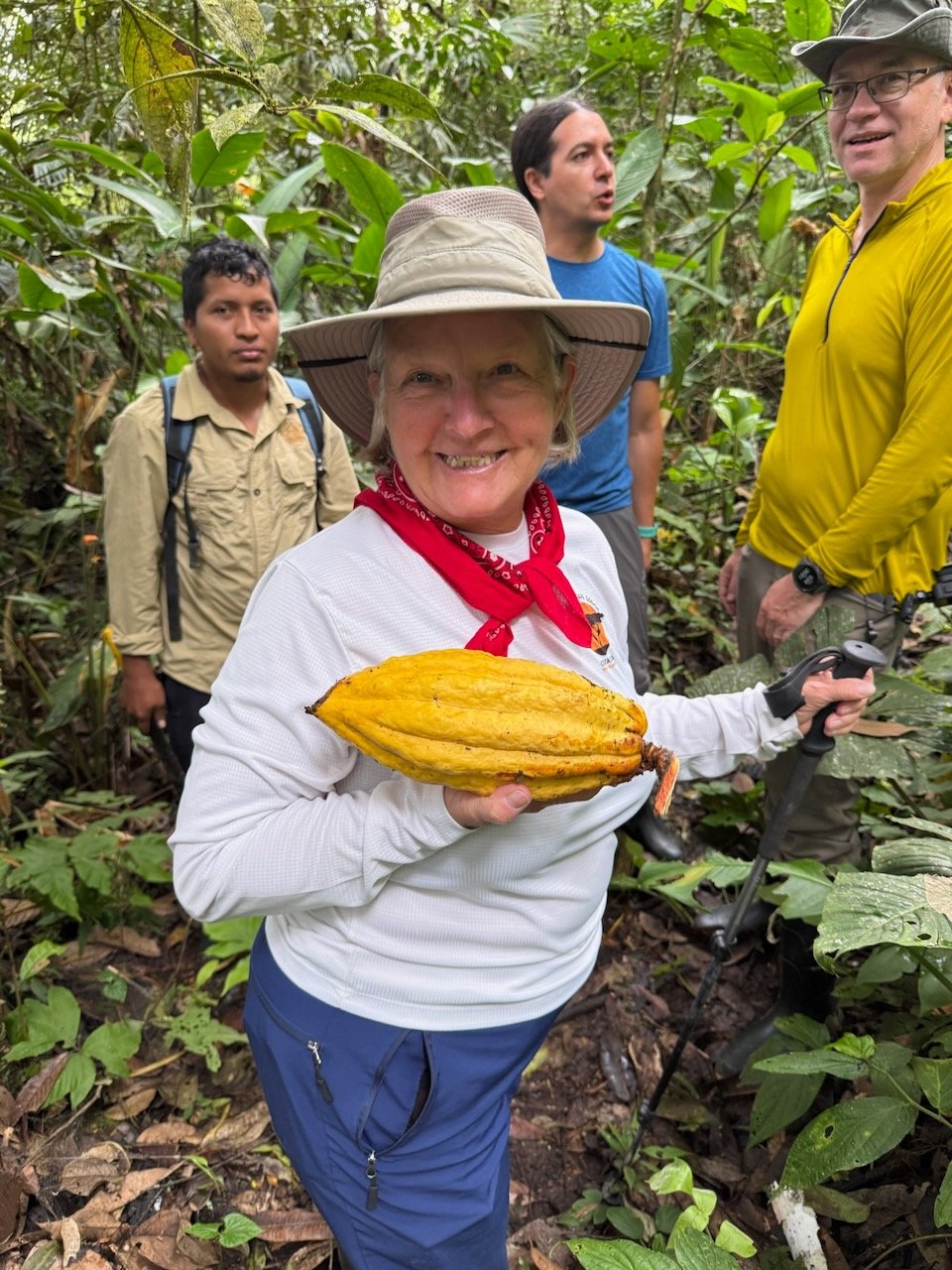
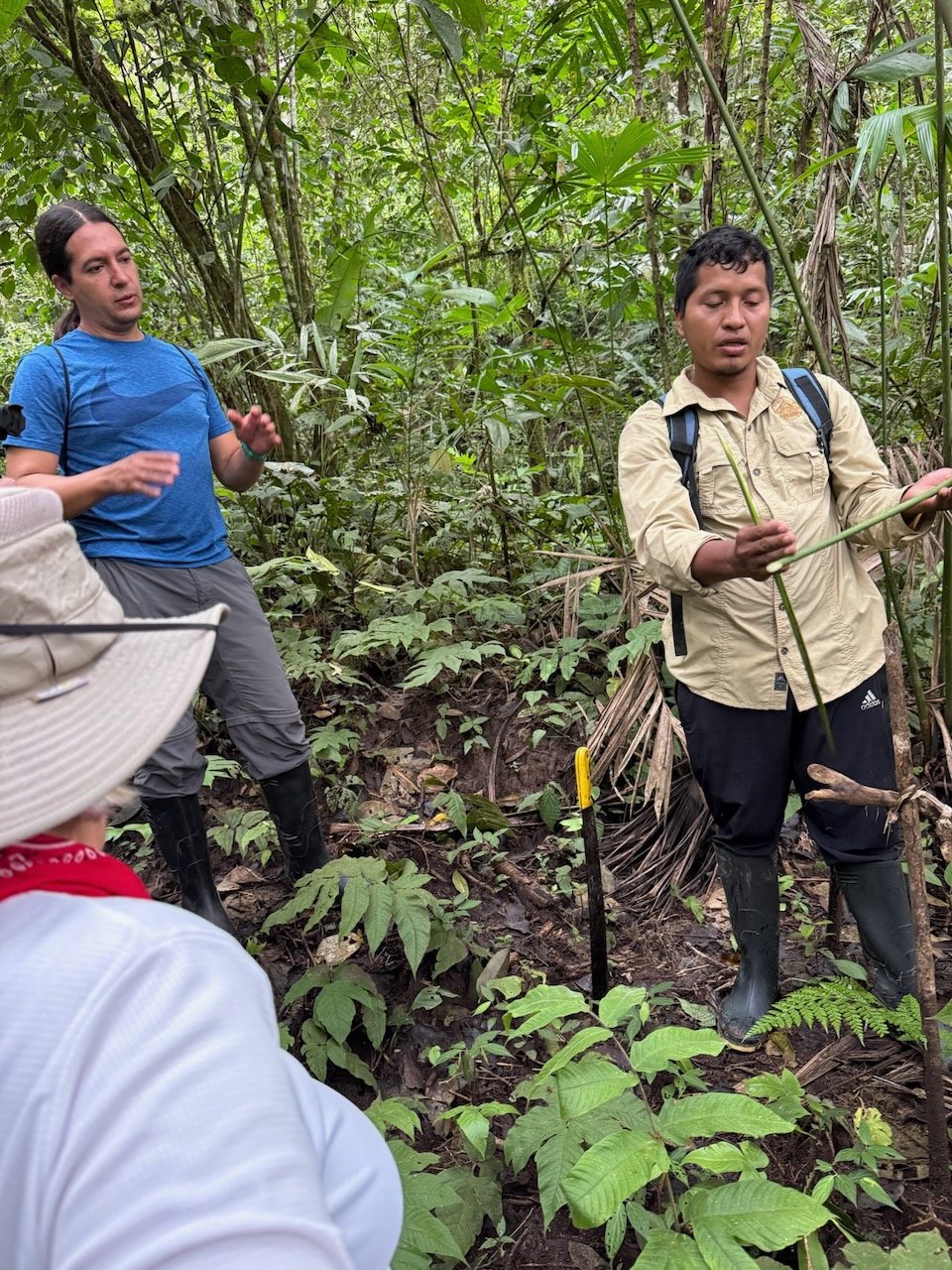
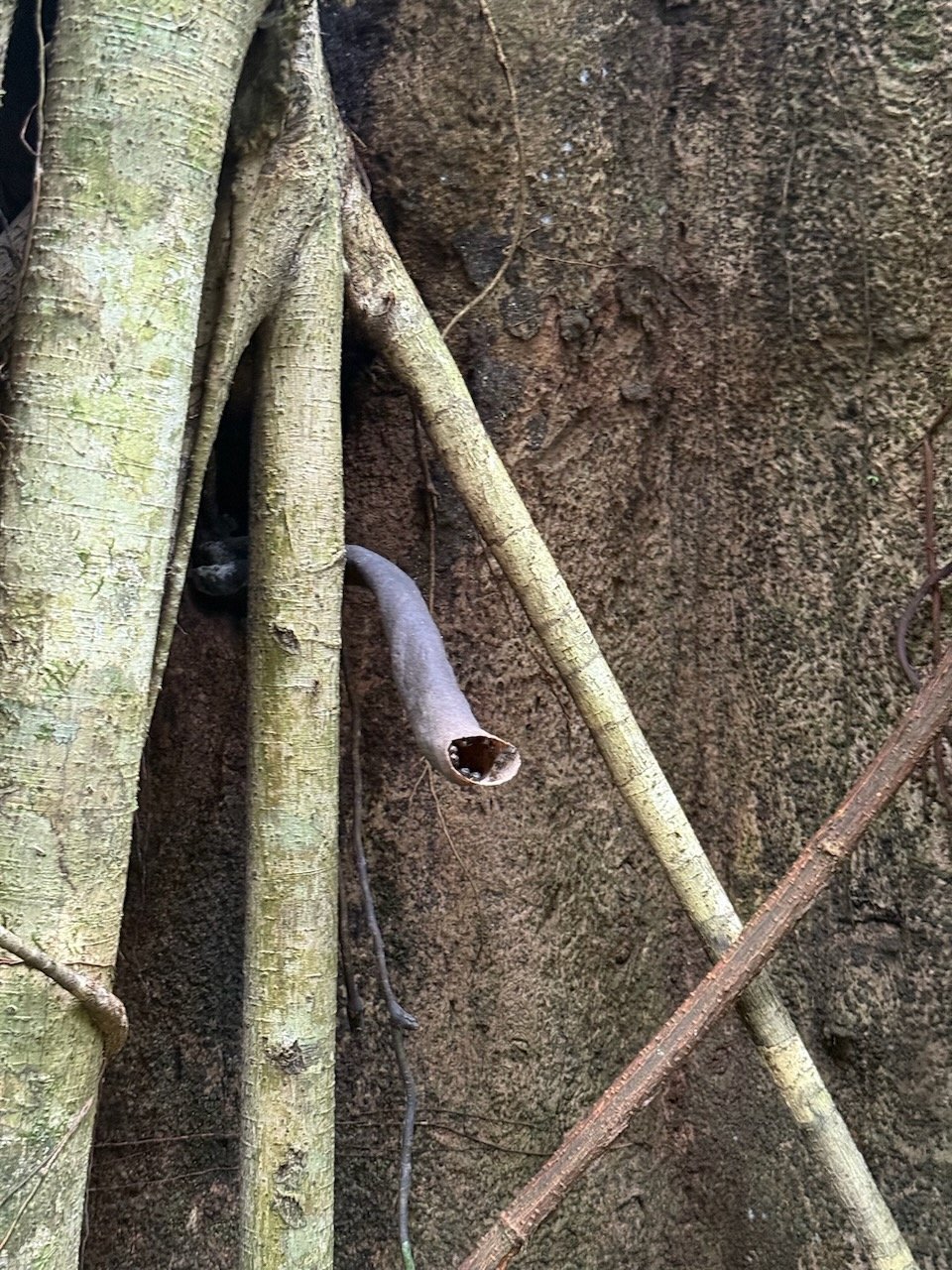
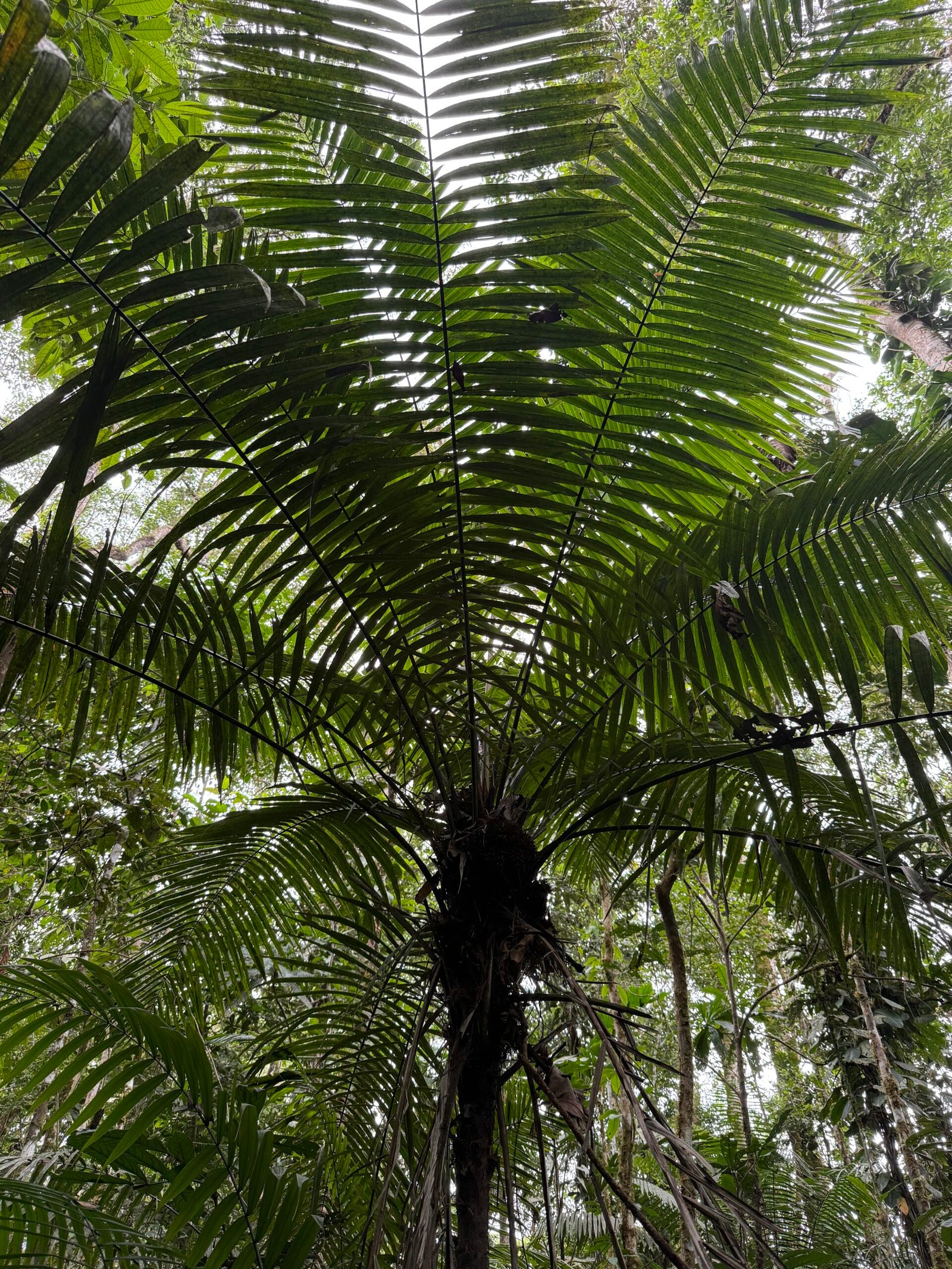
We saw chunga palm, like the one depicted in Darién Gap episode of the Apple TV show Pluribus. With its 8 inch spikes, it certainly is intimidating, but is also quite useful to the Kichwa.
Jimmy noticed a palm, the chonta, infested with a grub, known in Kichwa as the chontacuro, or “palm grub.” An infestation of the grubs will eventually kill the tree, so the locals will fell it and allow the grubs to continue to feed, periodically harvesting them for a special treat.
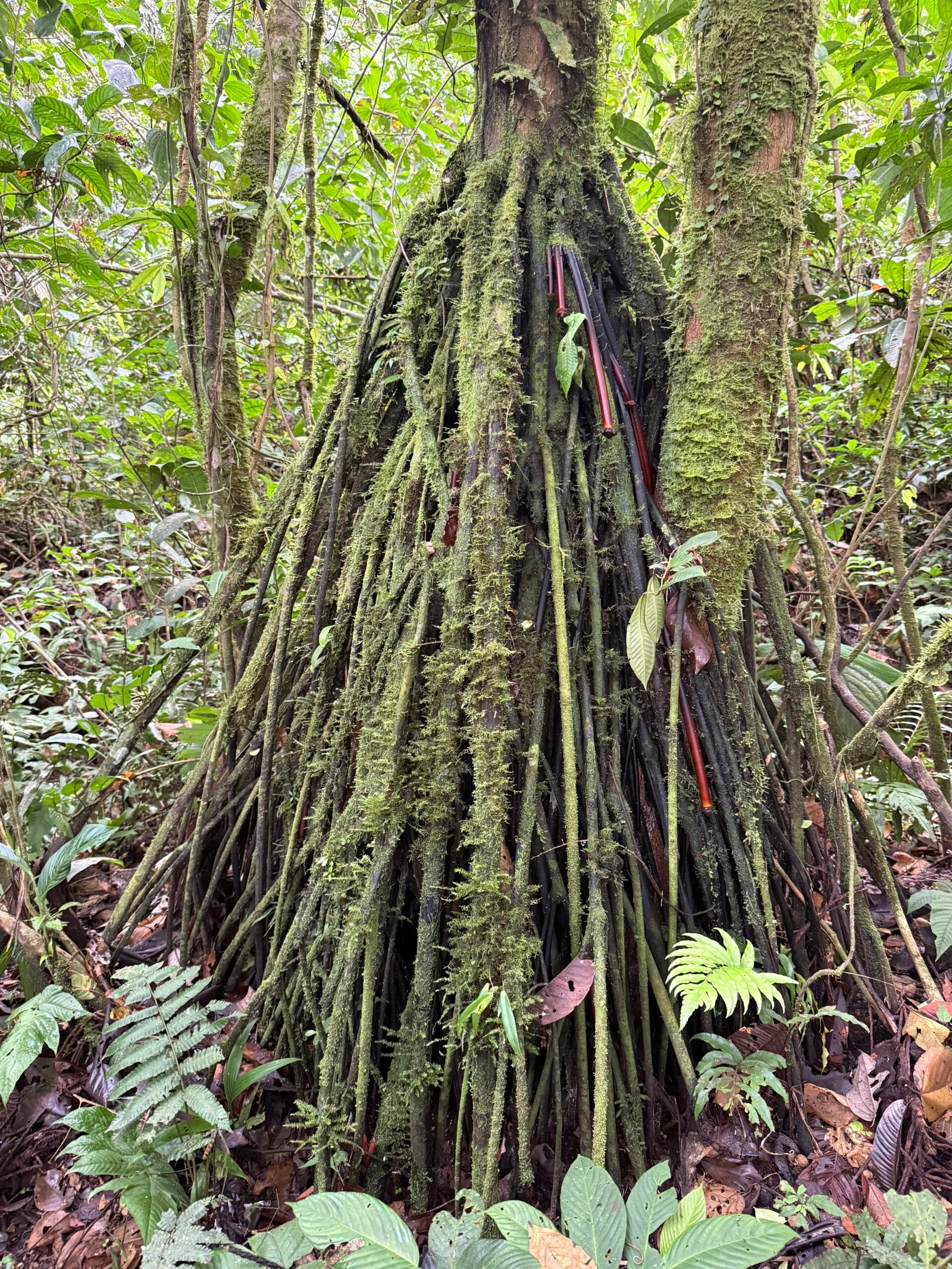
The “walking palm” was quite interesting. Supposedly, the tree can extend roots one side and literally change its position over time like the ents of Middle Earth, slowly moving around. This is probably more legend than fact, but nevertheless, the tree is incredibly useful. The trunks are long, straight, and strong, and the roots have cheese-grater like knobs that are useful for cooking.
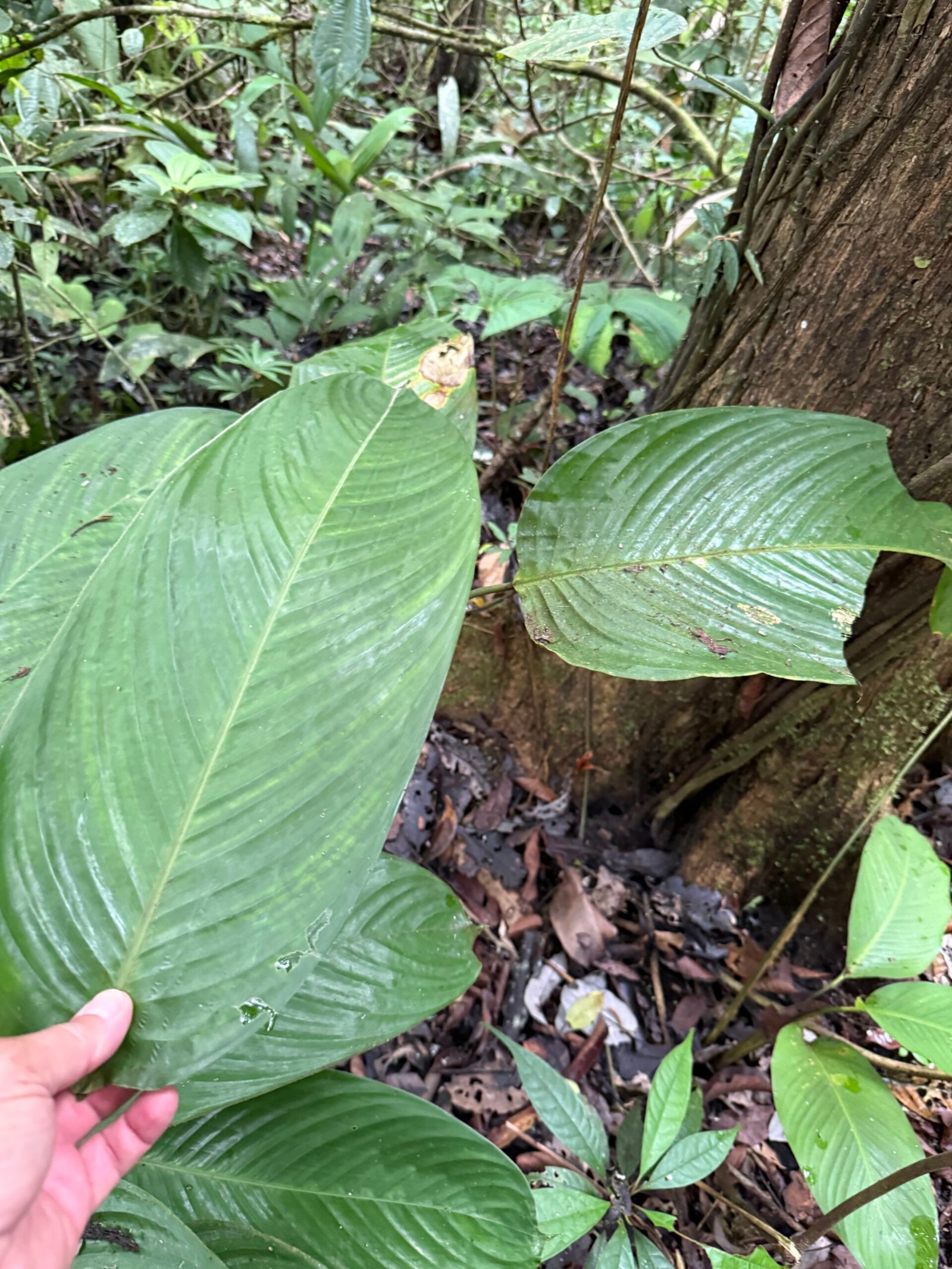
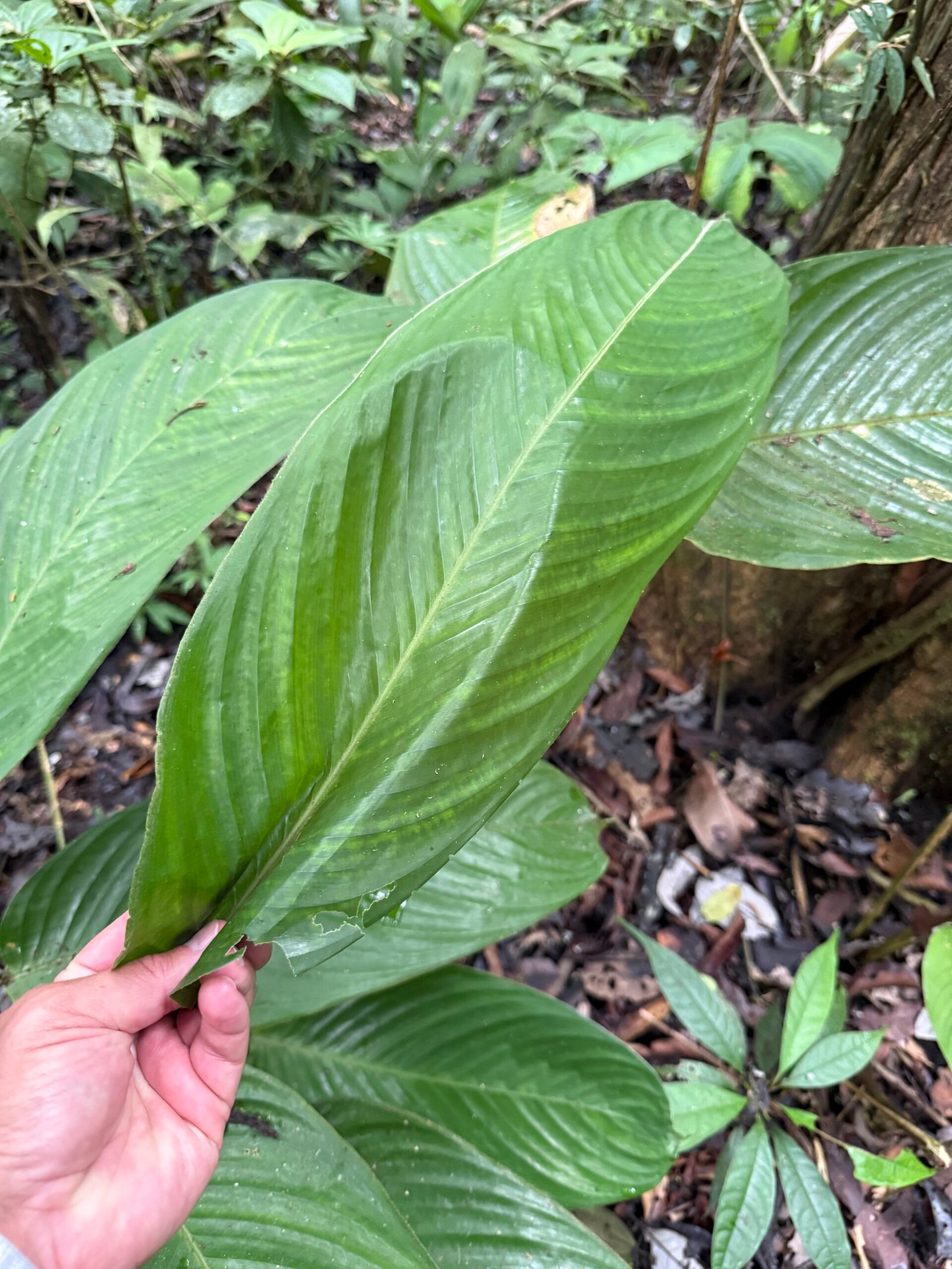
The stone plant was used for wrapping food and imparting a nice flavor during roasting. The leaf was pretty amazing and I watched Jimmy fold it up to demonstrate how it was used to hold food, even liquids. When he unfolded it, I couldn’t even see the creases! Hence its other name, “Amazon aluminum foil.” Pretty cool.
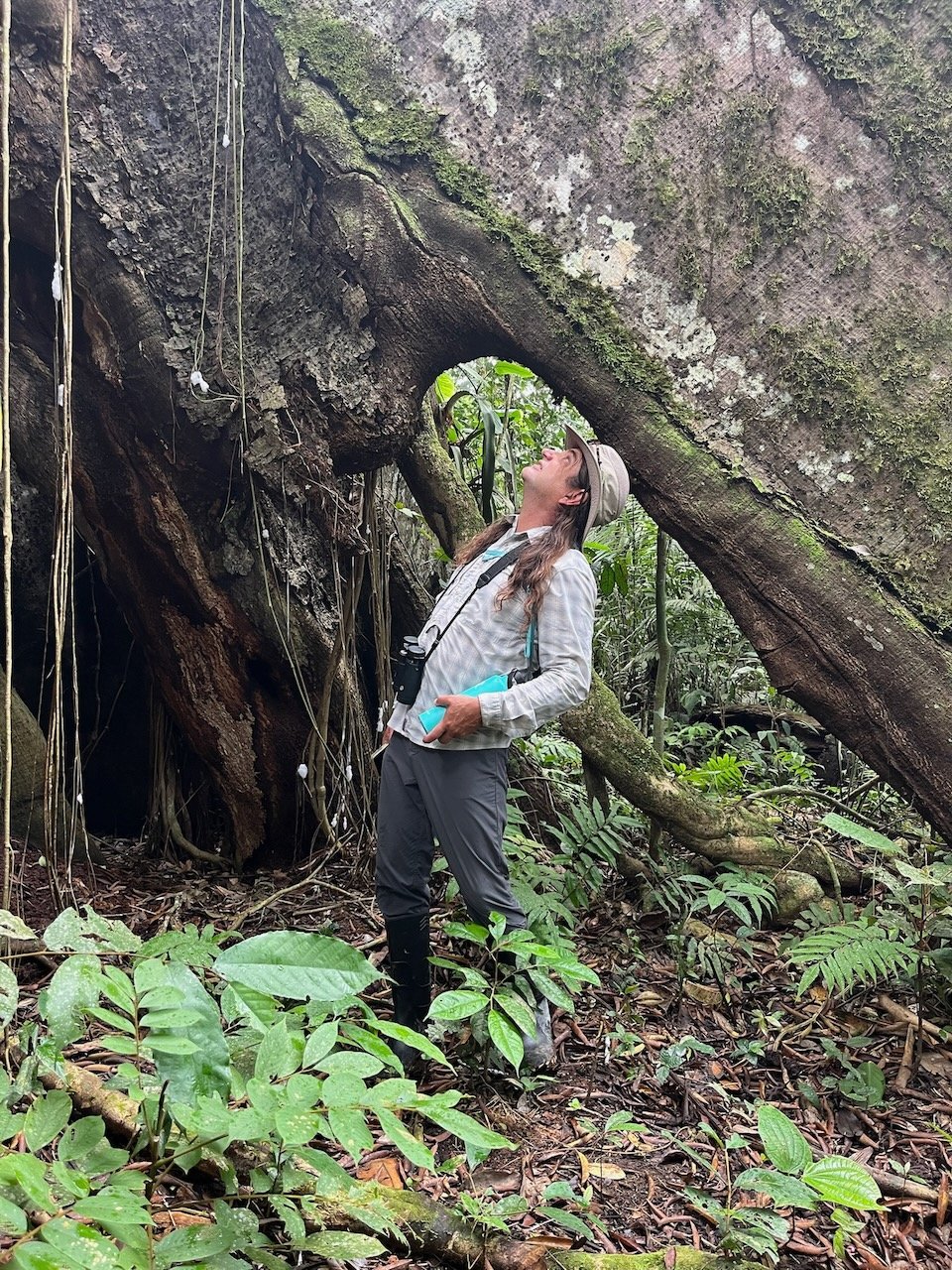
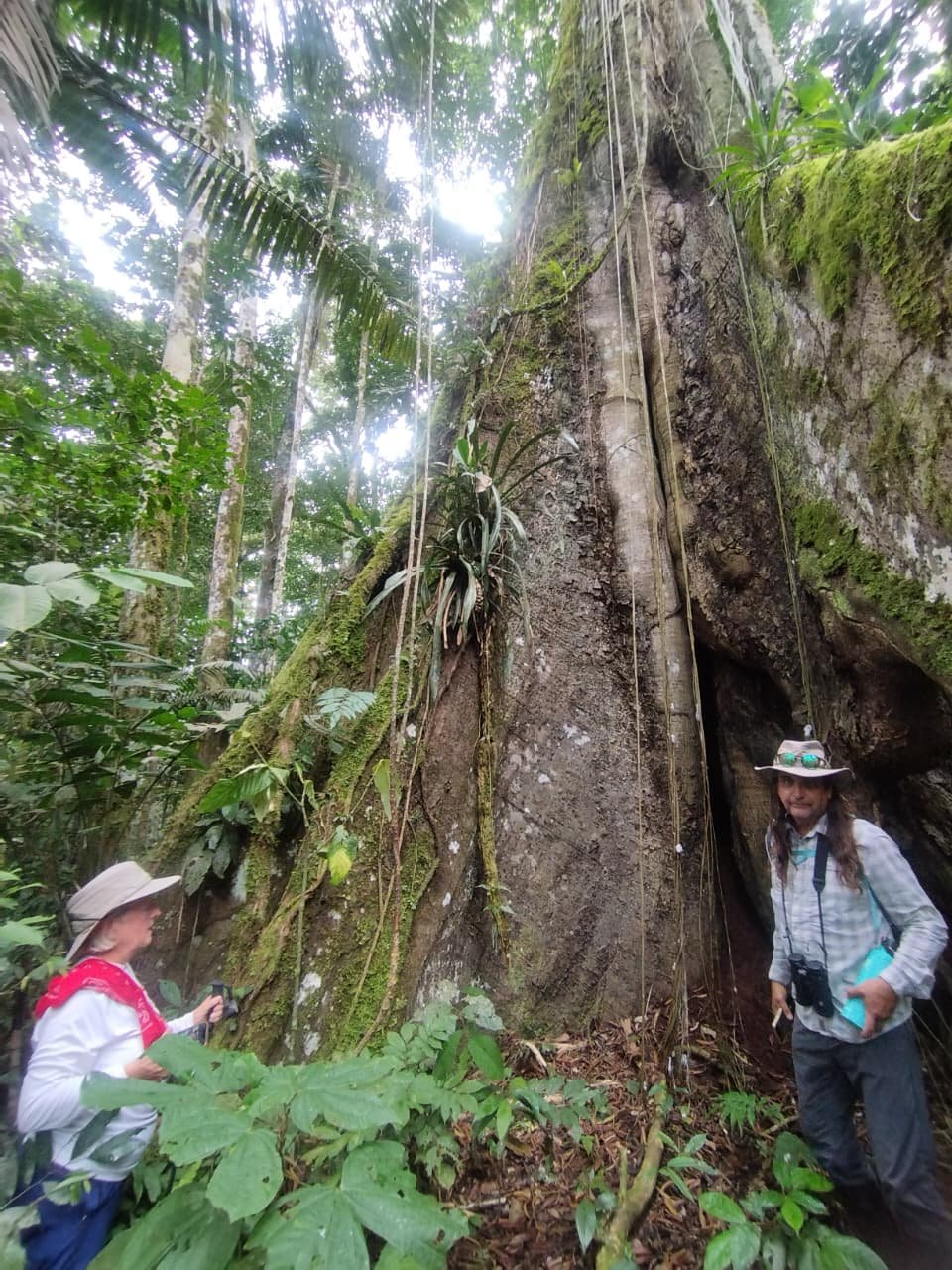
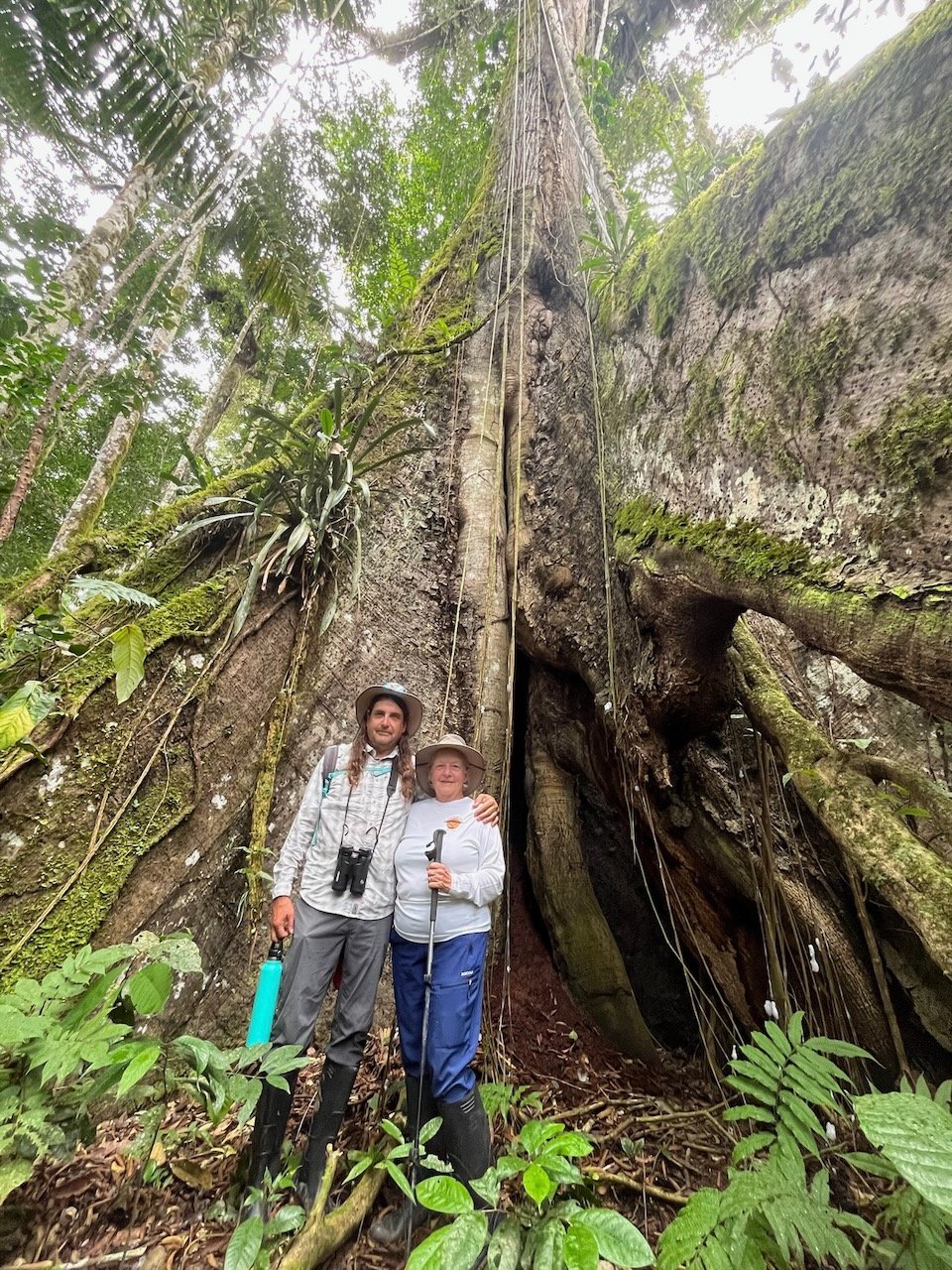
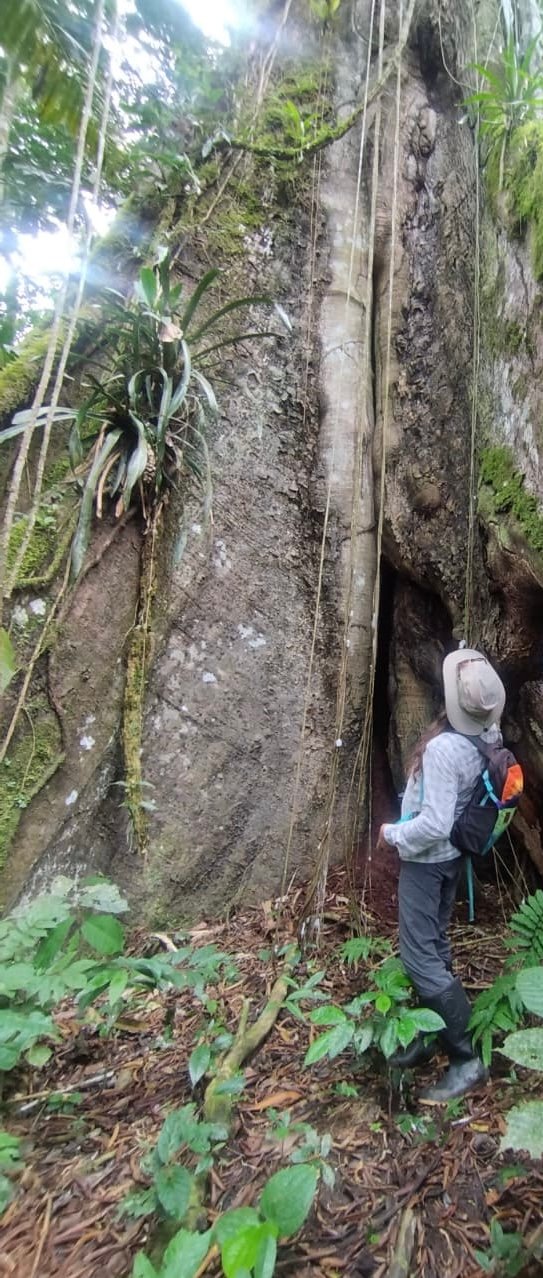
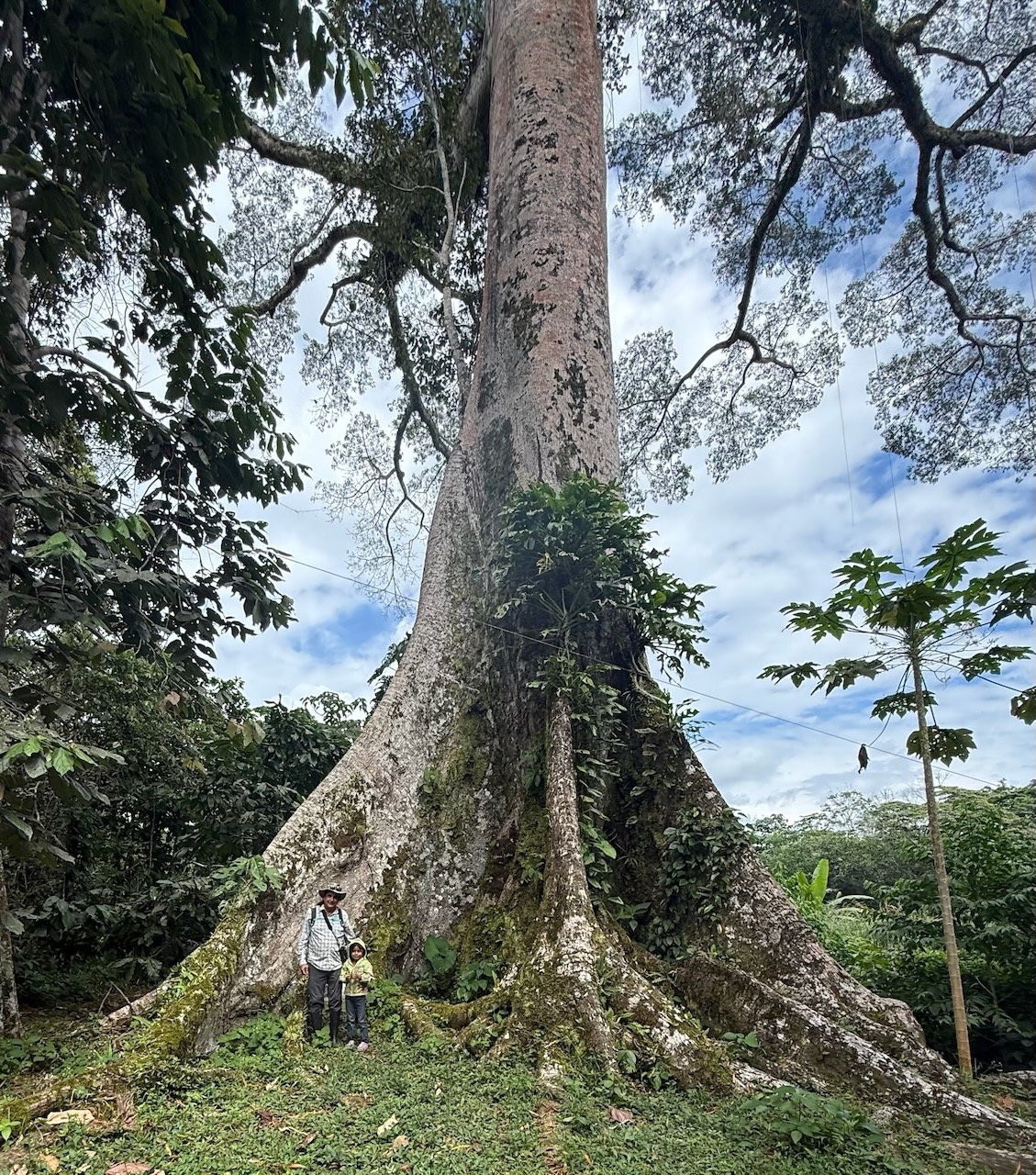
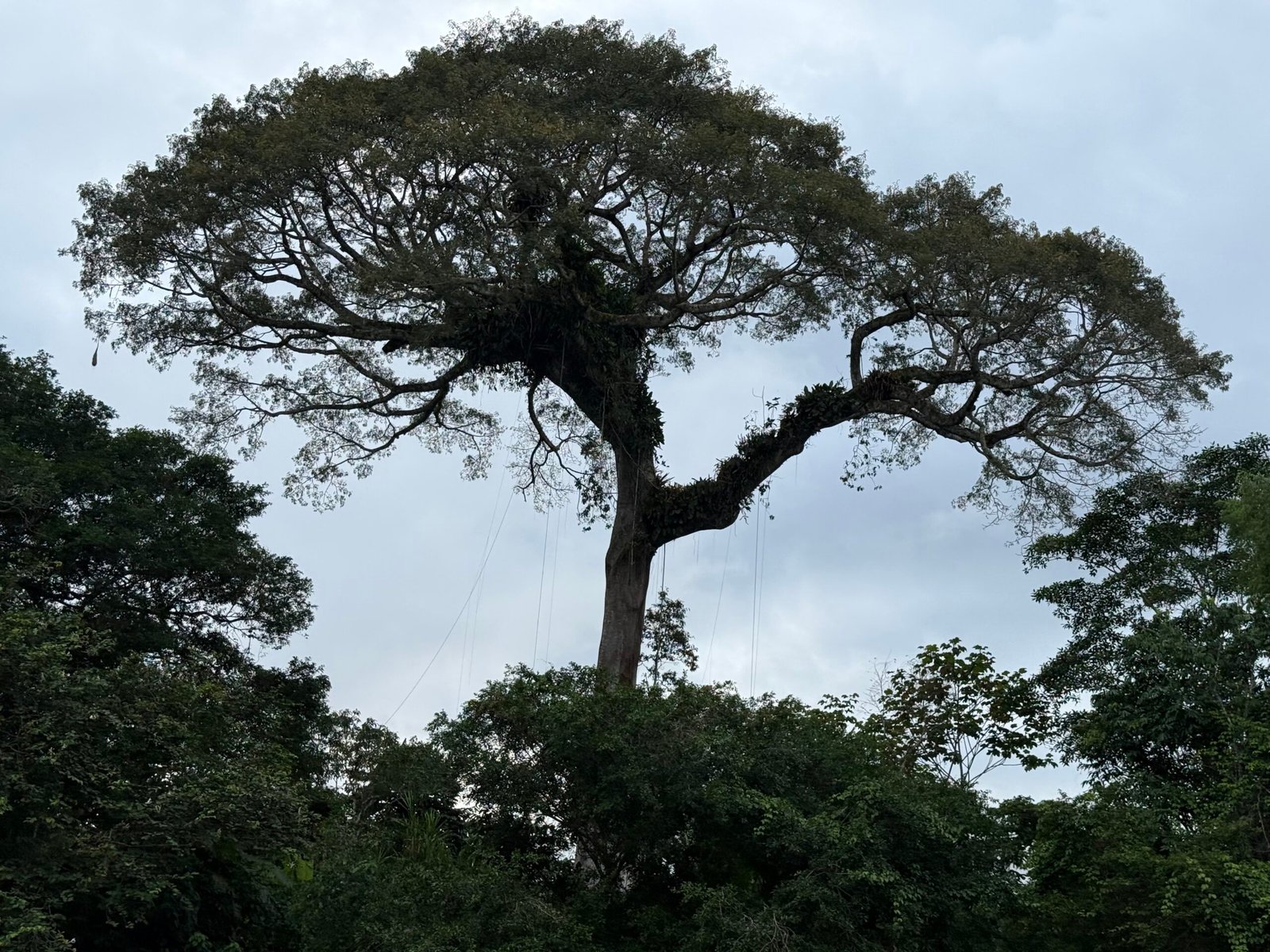
At the top of the hill, we came to the mighty, mighty kapok tree. Alirio mentions that most of the forest trees last around 200 years, typically falling over at some point. But the kapok lives for many centuries. It is an iconic tree, with massive flying buttresses on the ground and entire ecosystems in its branches. A final treat on the walk.
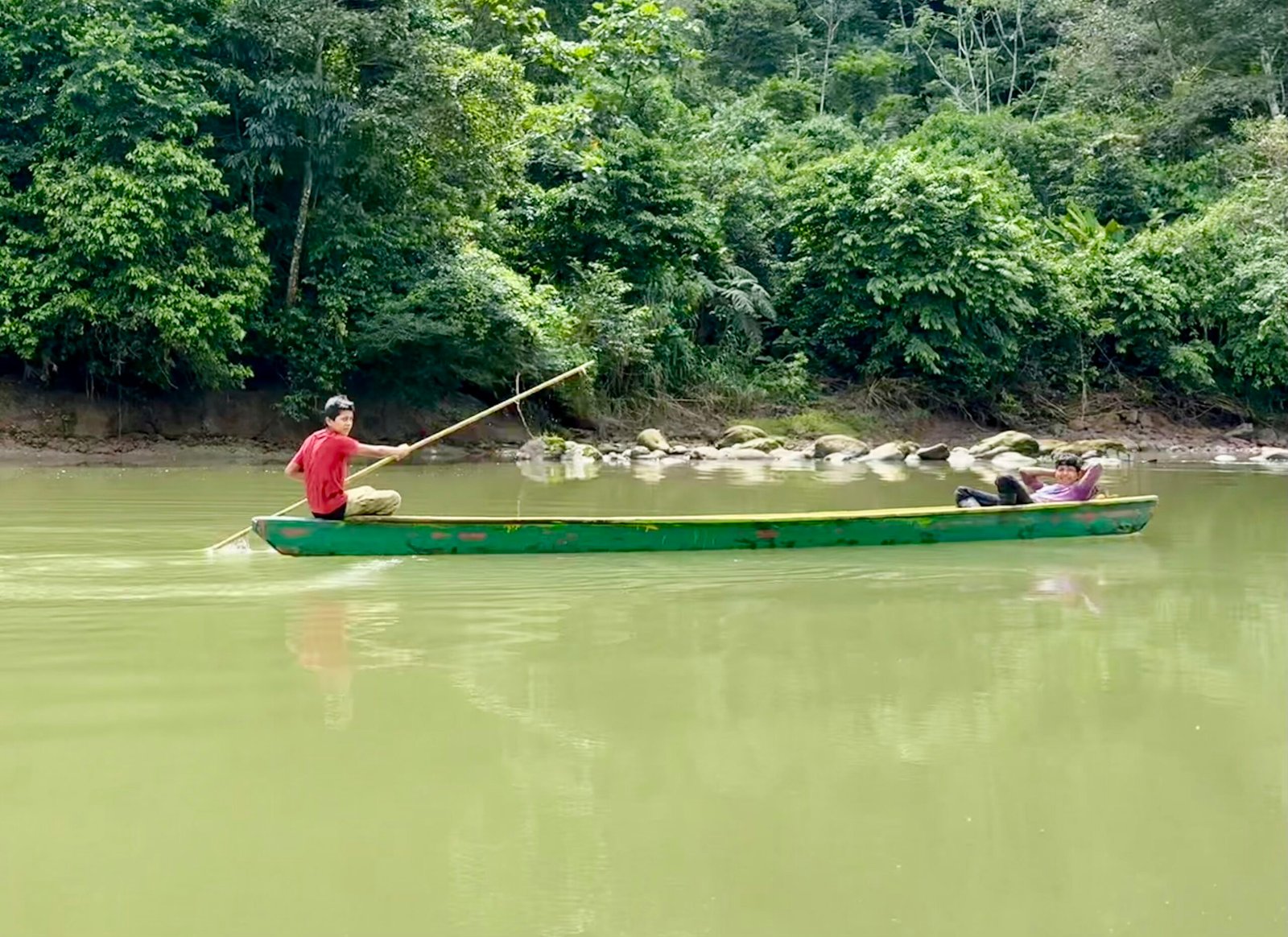
Back at the river, two teenage boys in a dugout were waving at us. Jimmy calls them over and they show him their prize, chontacuros! And they are wriggling! Jimmy shows us how to eat a raw one, but he has no takers.
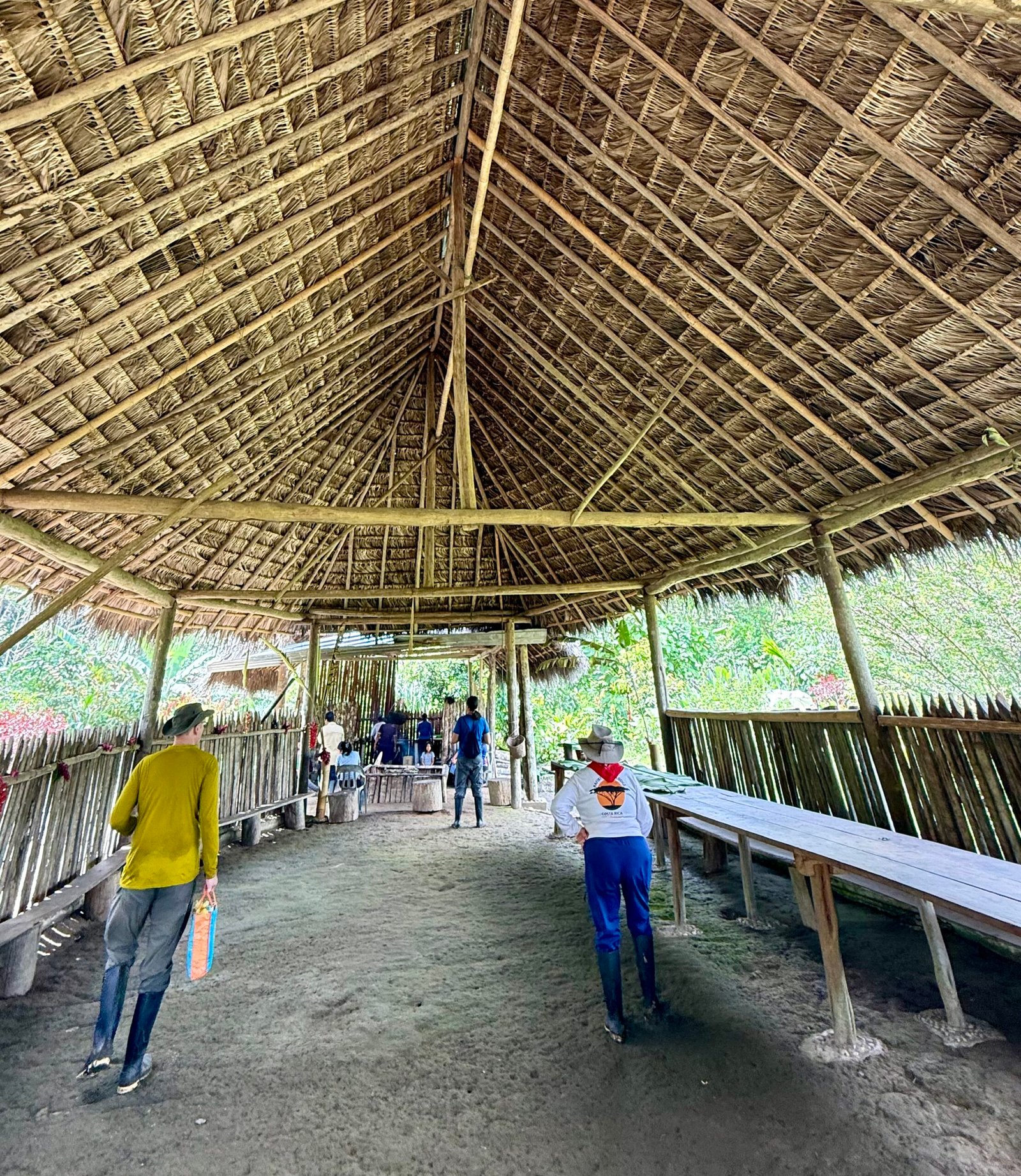
Our last stop for the day is the Santa Barbara community center. They’ve been preparing lunch for us and have some arts and crafts to sell. The thatched building has a dirt floor and a high roof, an open fire for roasting, a food preparation area at one end, and a long row of tables covered with palm leaves for our feast.
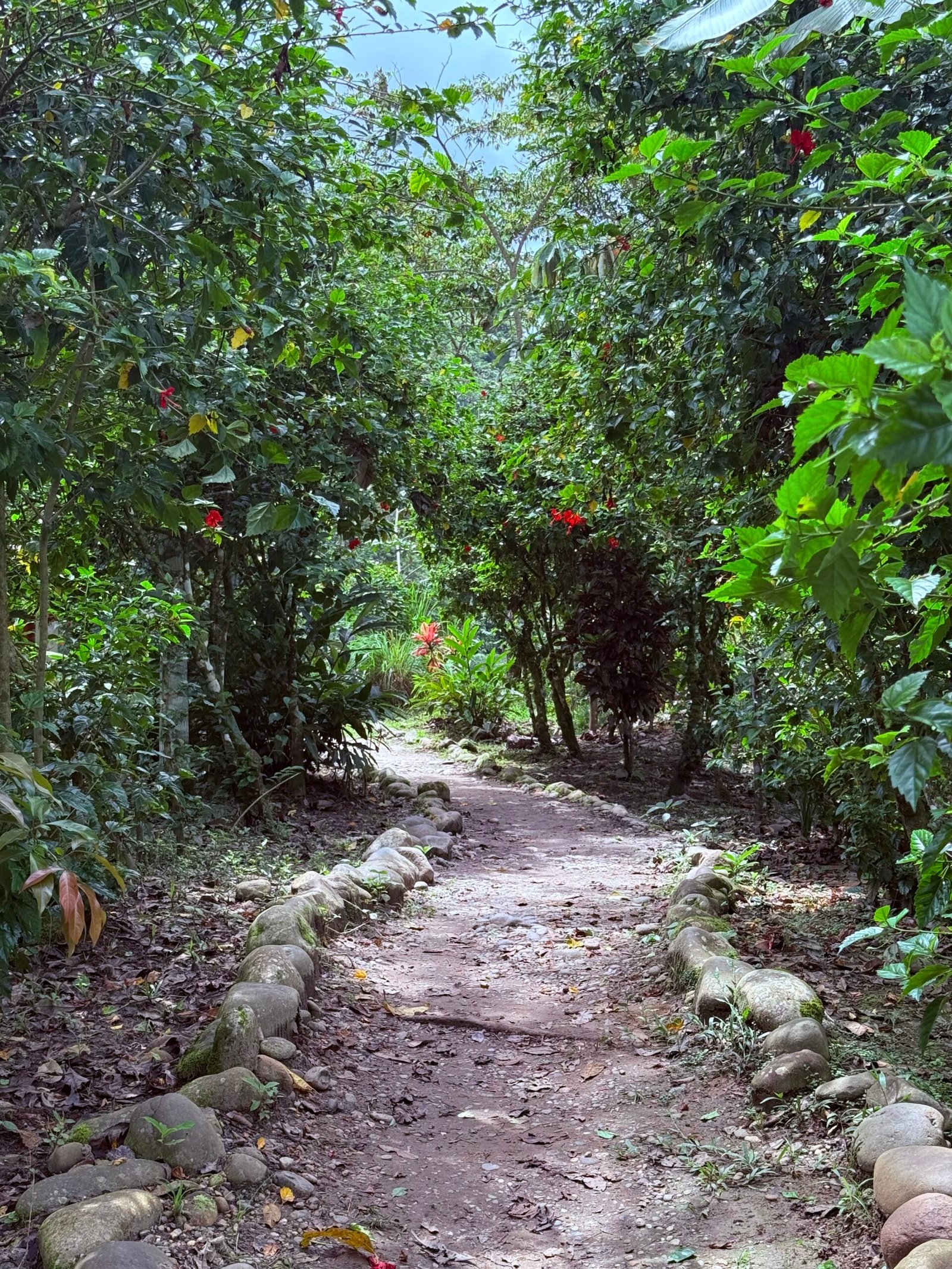
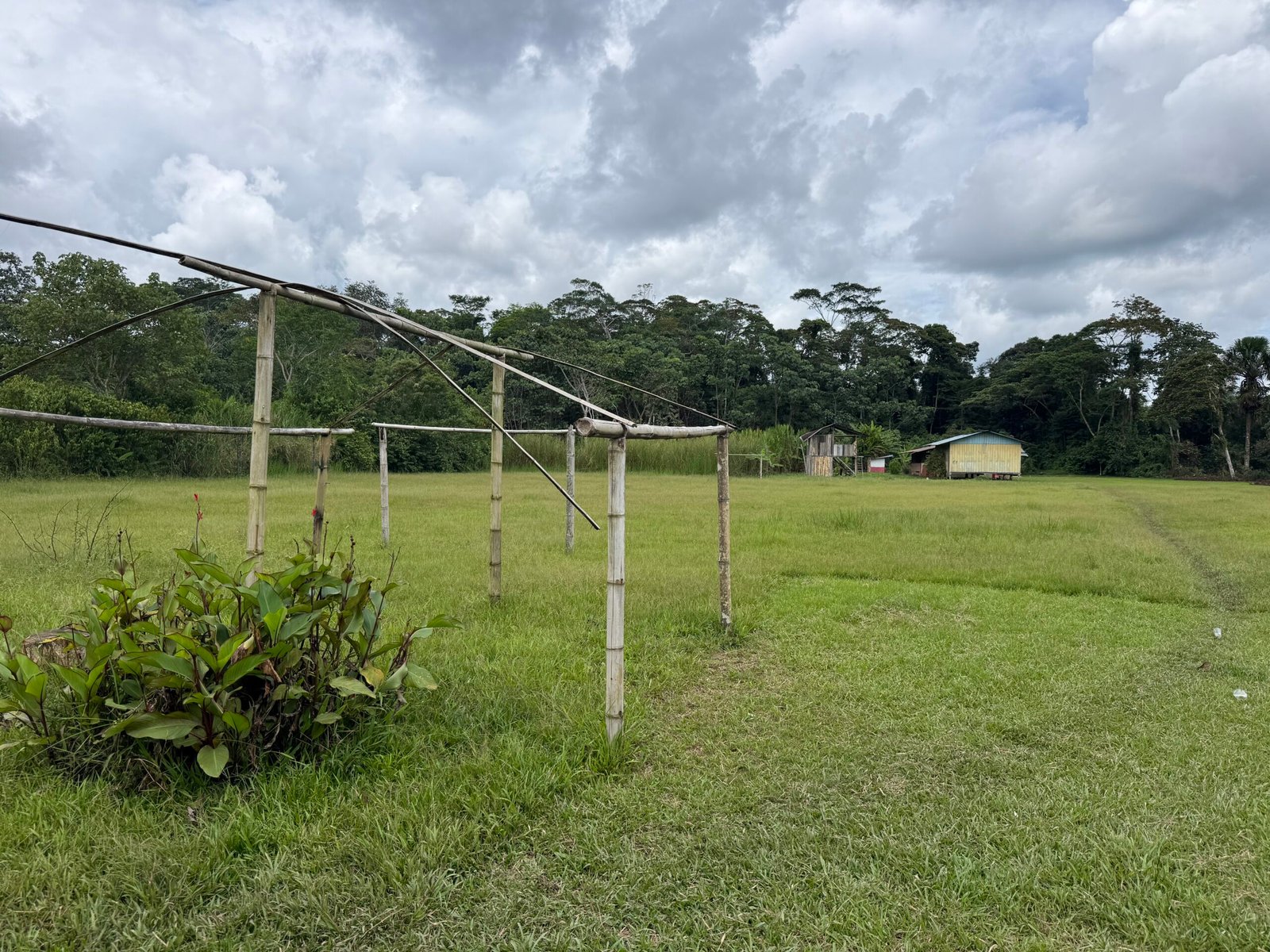
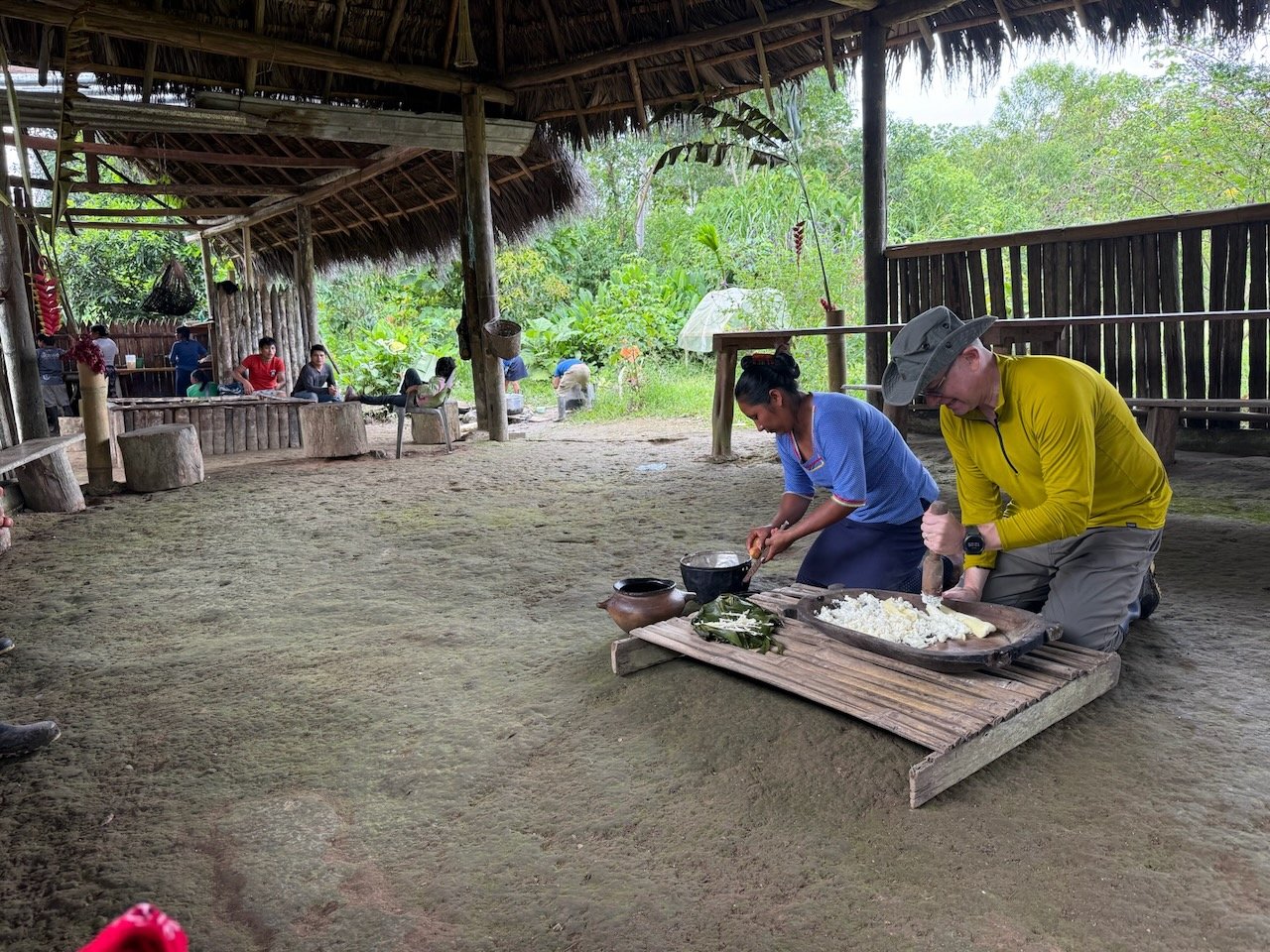
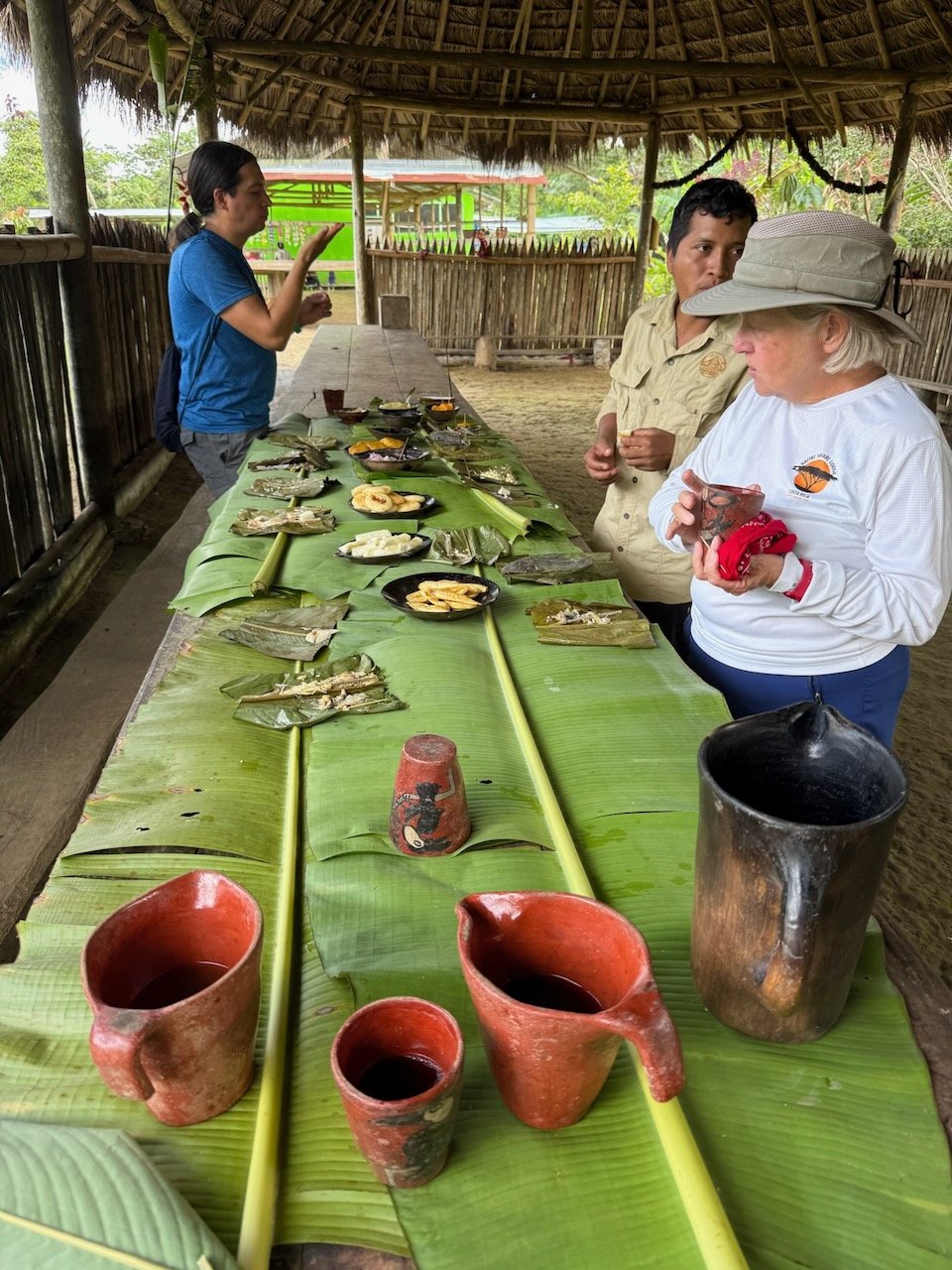
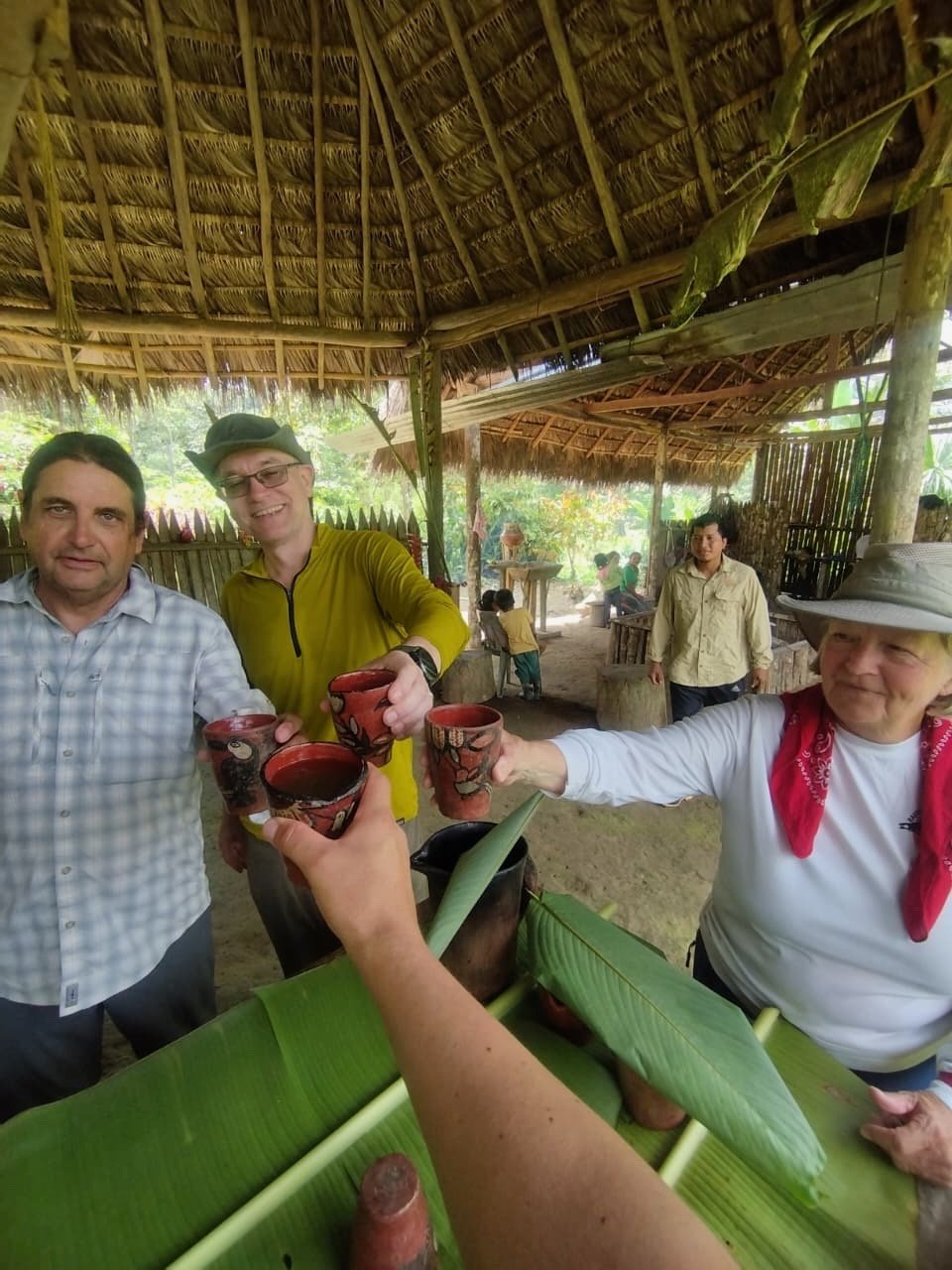
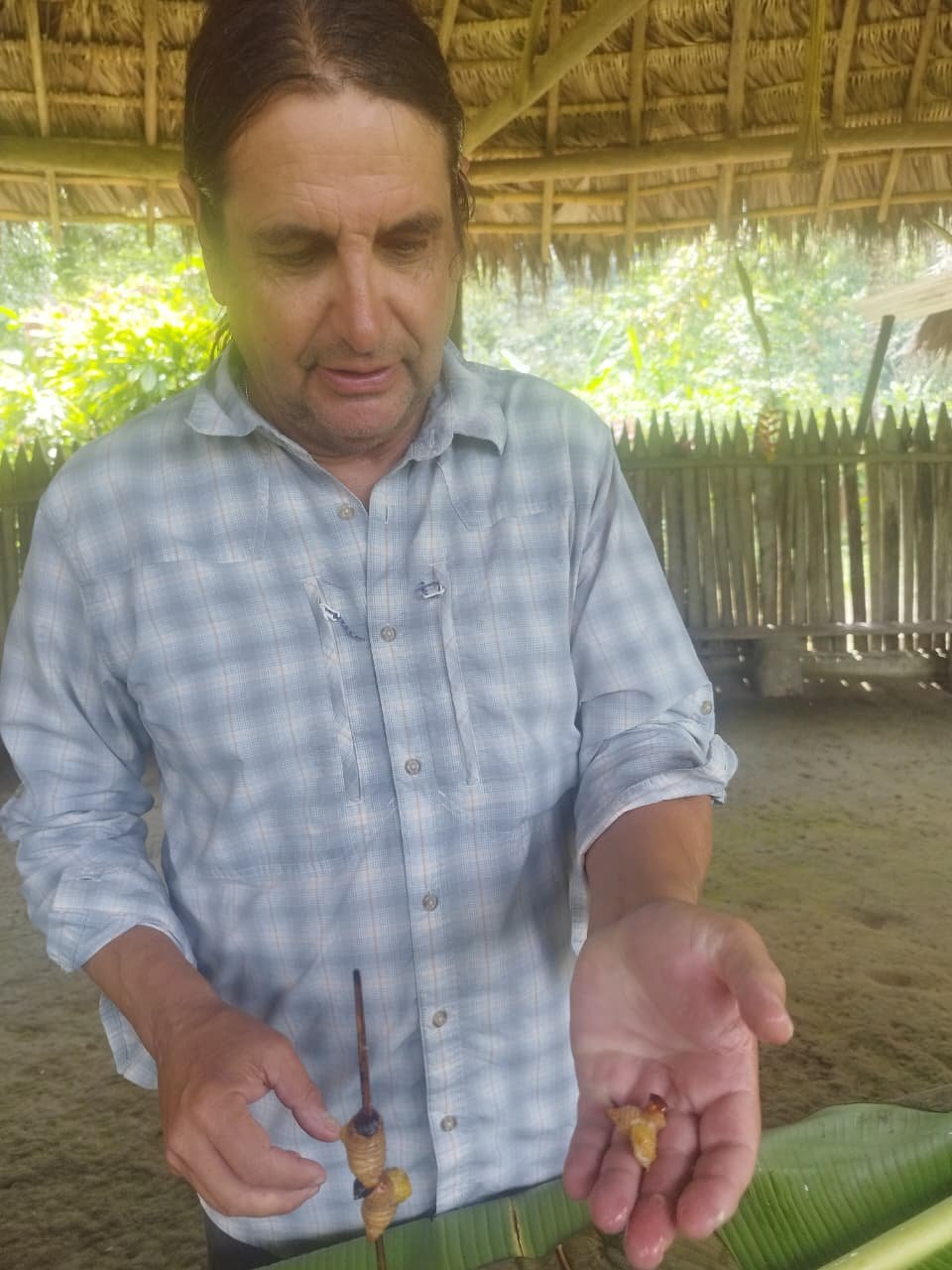
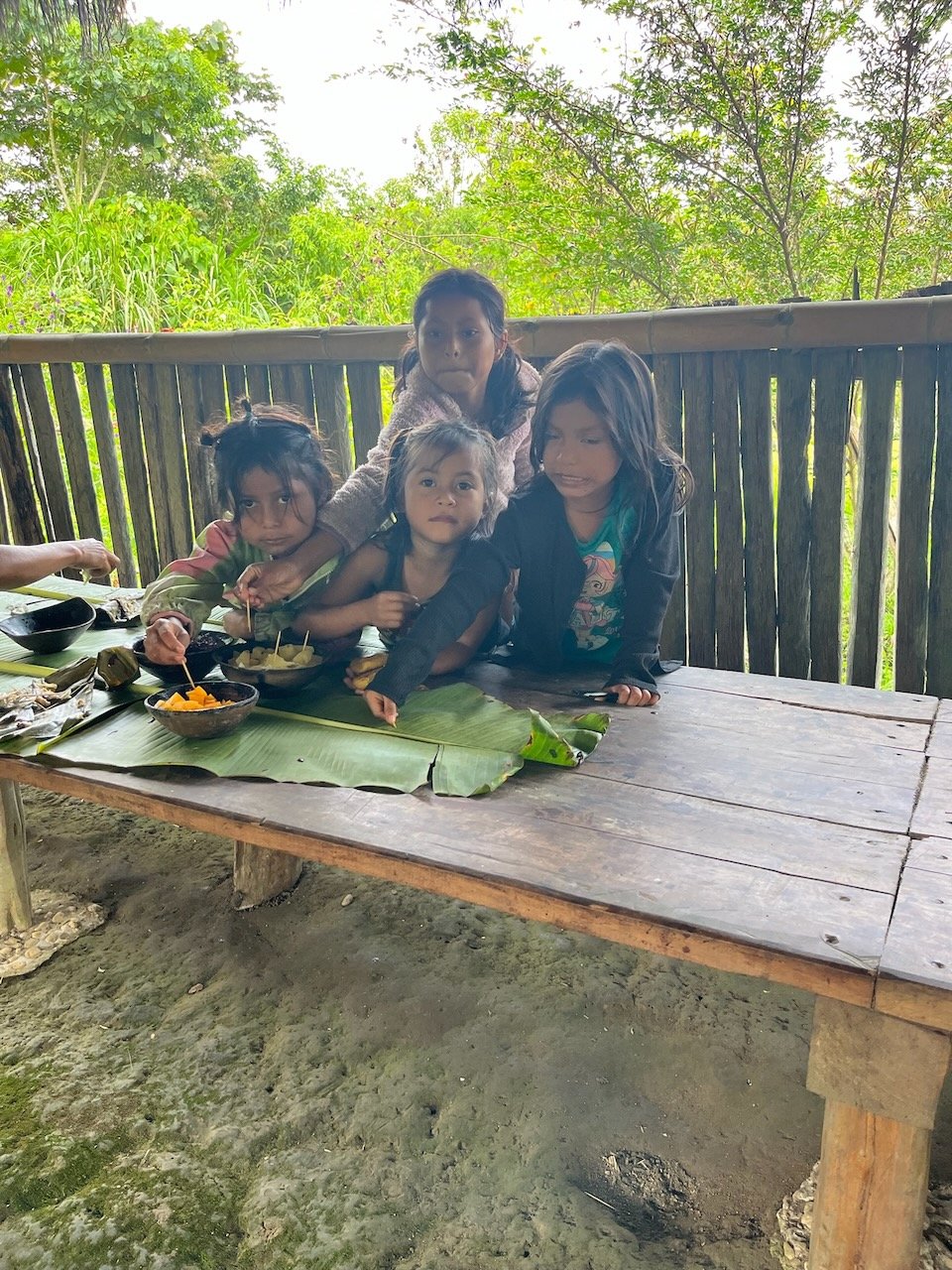
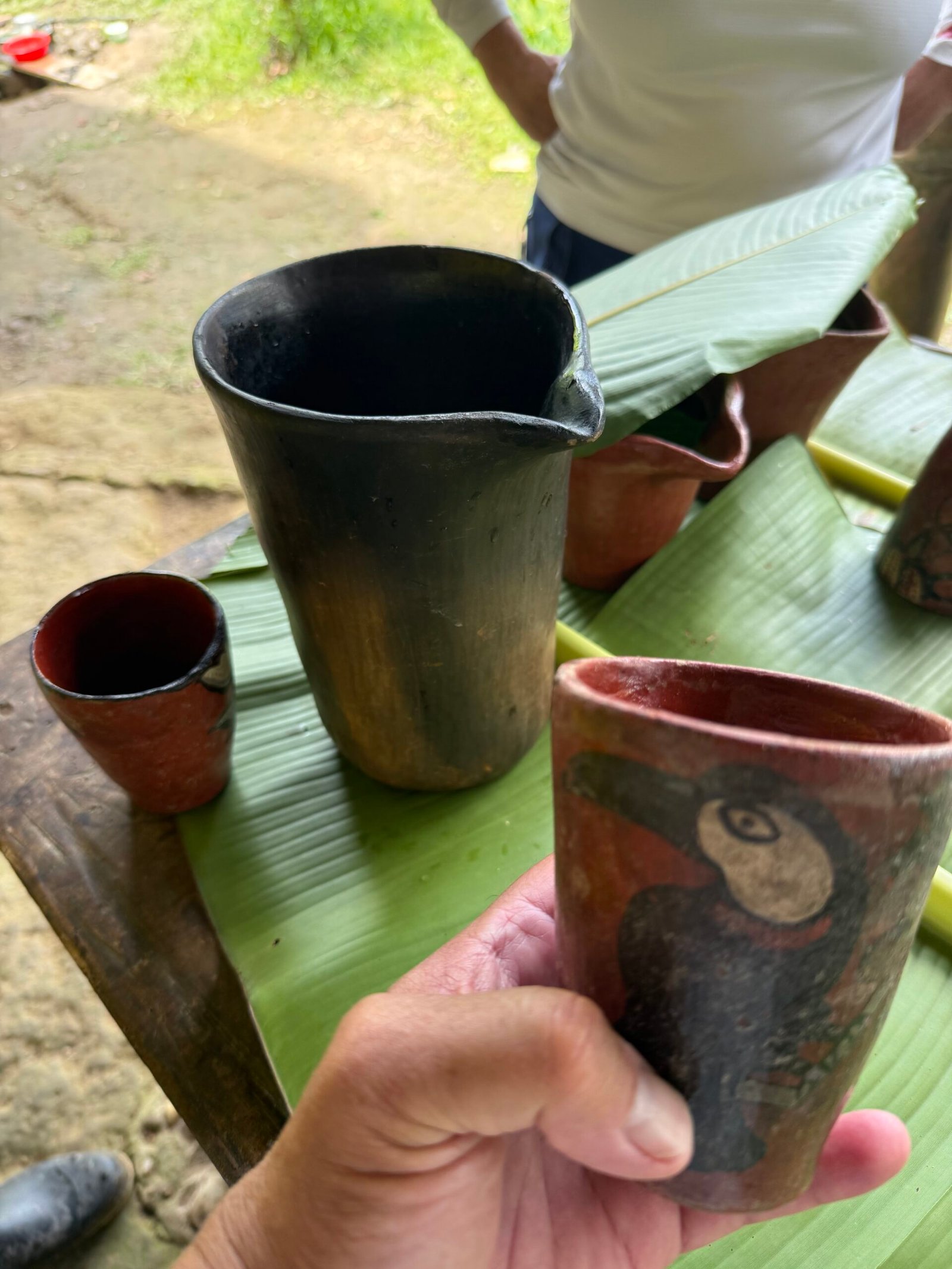
Upon arrival, we present the community with coloring books and crayons for the kids. Alirio says they are useful in learning English. And after a demonstration of how to prepare chicha tea, we prepare for lunch. We’re directed to the wash station, where we wash our hands before we eat, because there are no utensils, because there is no need. The food consists of fruits and vegetables, a couple of different baked fishes, and chocolate sauce. The food is laid out openly on the table, and we just browse around, pulling the delicious fish apart as we talk. Jimmy comes out with a skewer of special treats, roasted chontacuros just for us! It would be impolite to refuse, right? I give it a whirl and to my surprise…I find the little guy quite buttery and savory! I encourage Patricia, and she’s all in! Ah, Walter just couldn’t pull it together, Alirio got the treat instead.
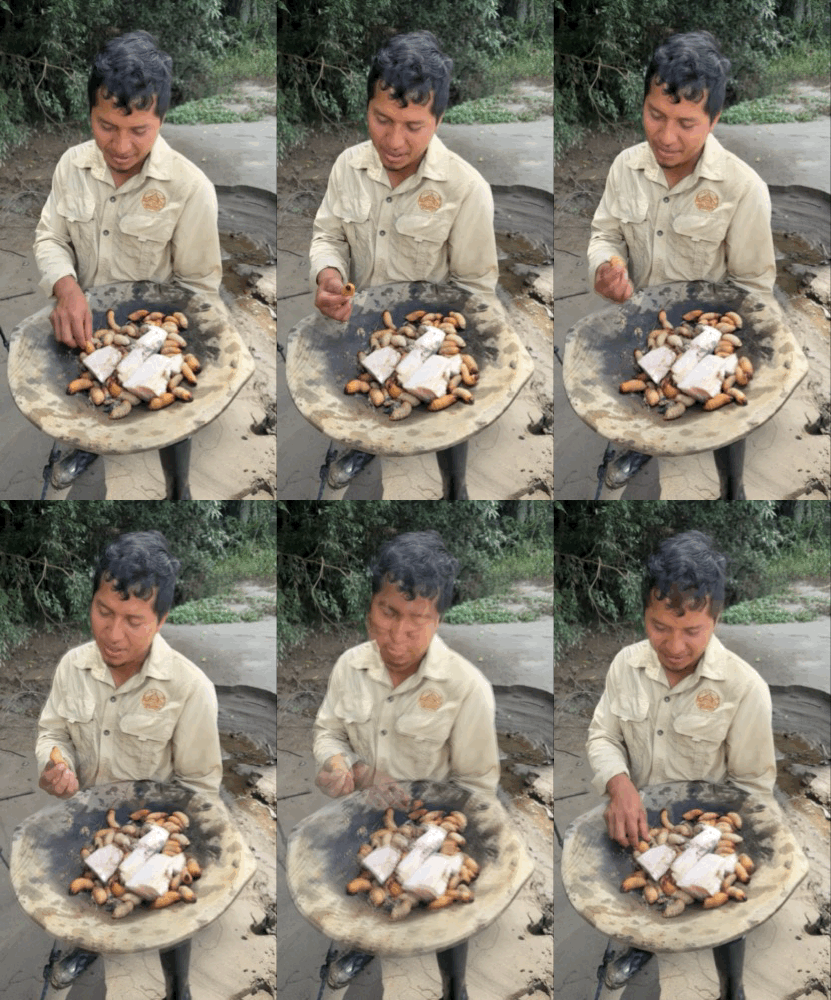
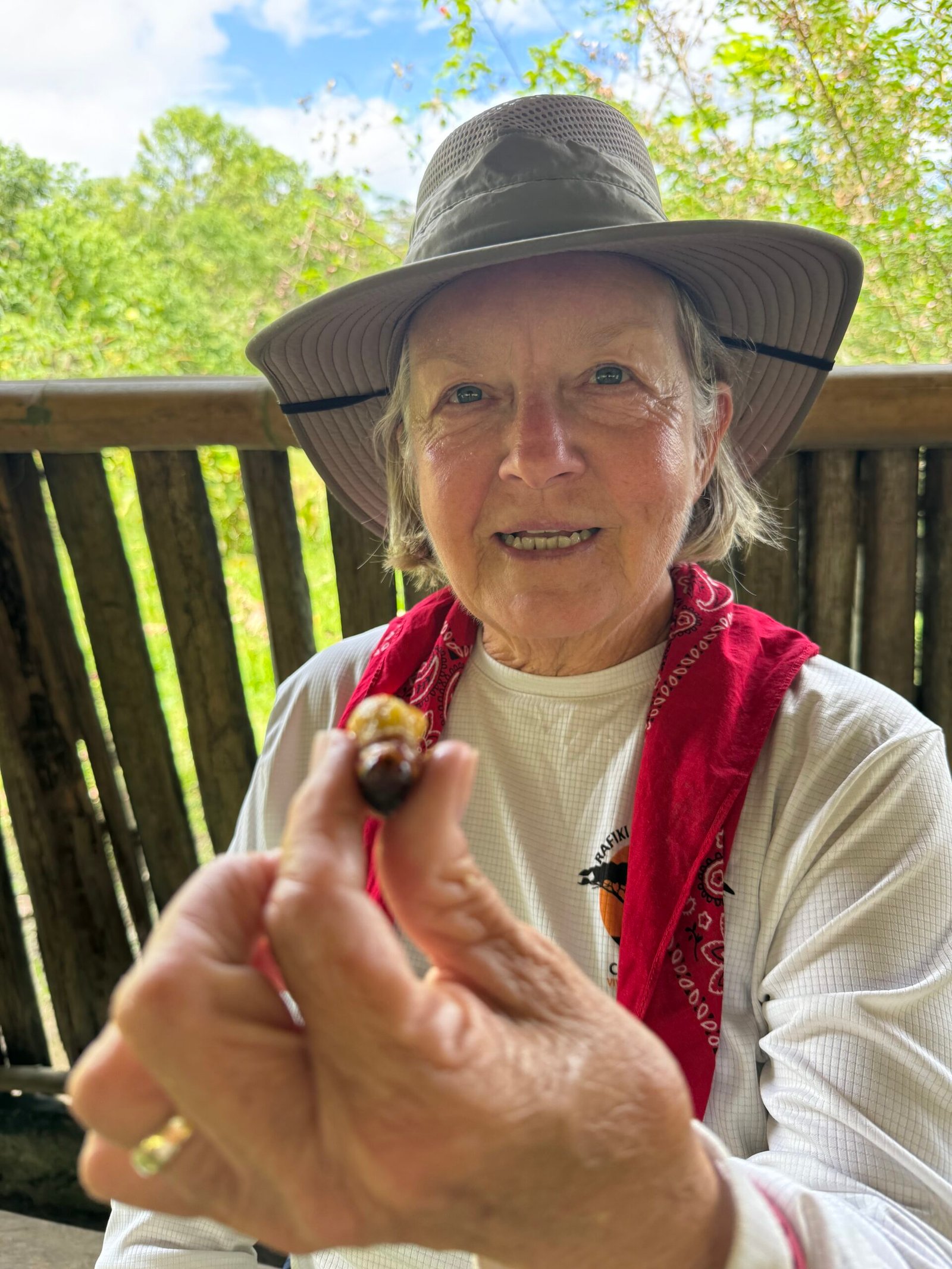
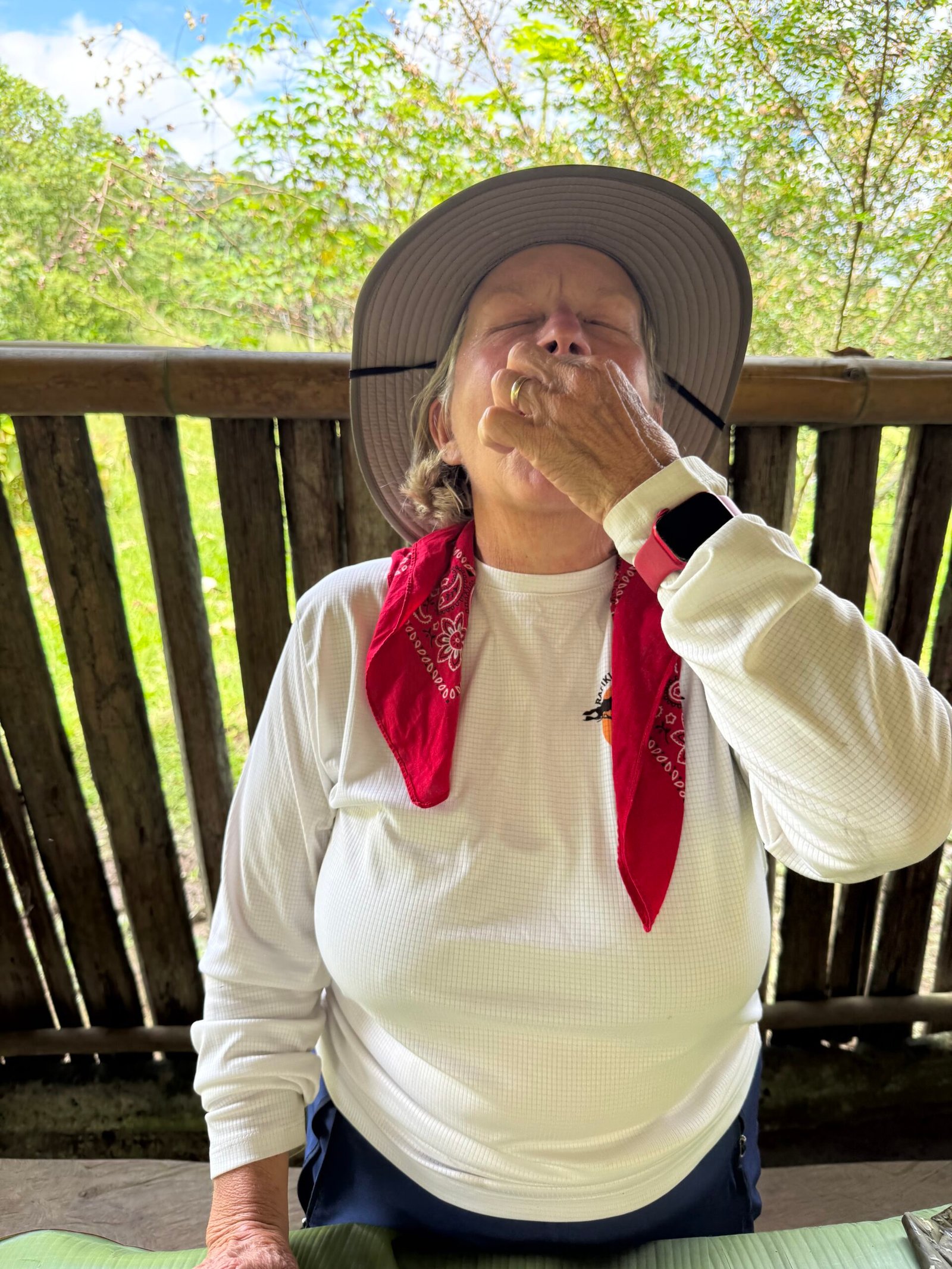
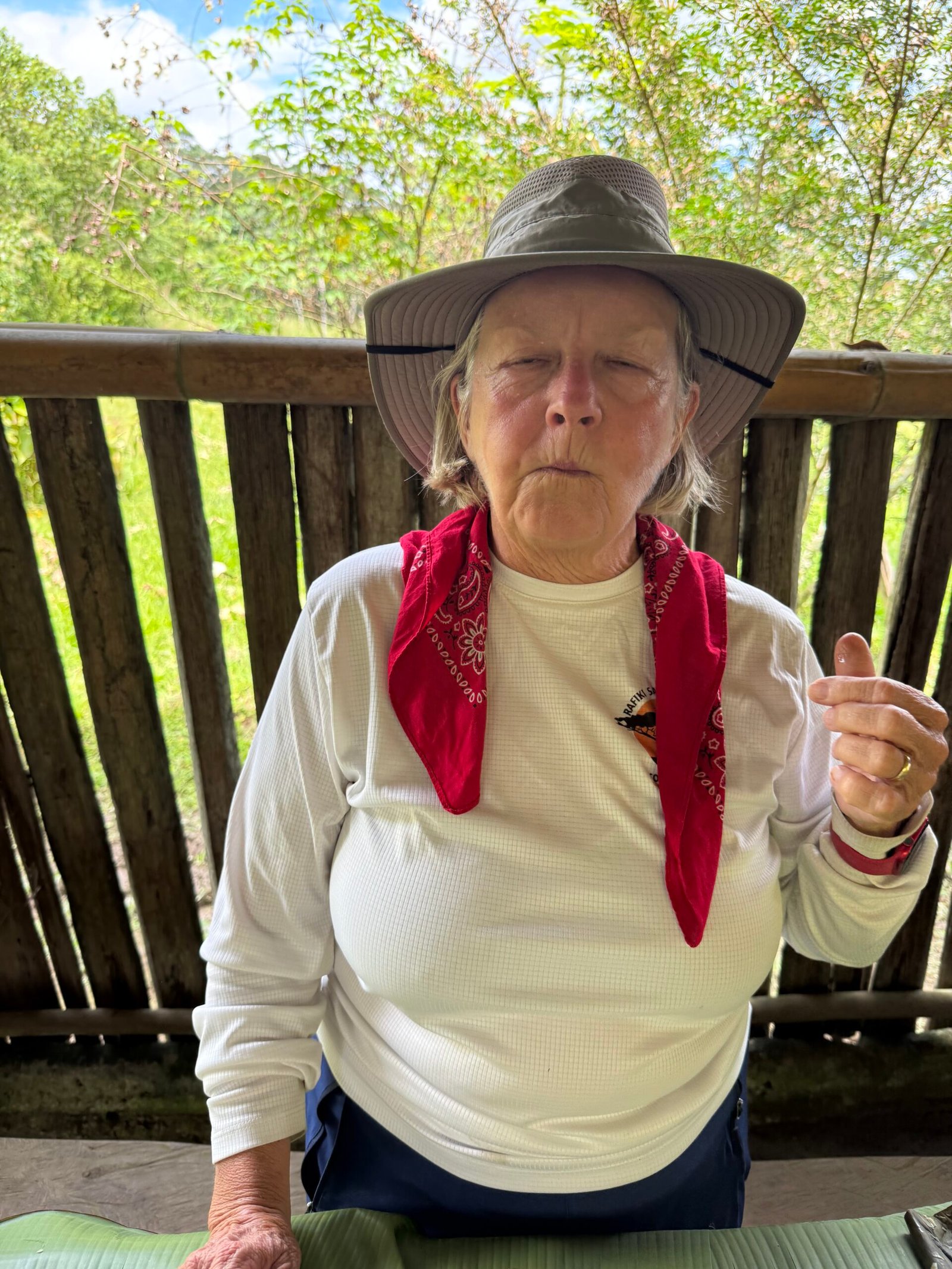
It was a tad awkward for us gringos to wander around the food spread and pick off bites here and there. Once we had finished, the families came up and pretty much devoured anything that was left. We actually felt a little embarrassed about it.
And unlike gatherings in the States, there is nearly zero waste. No plastic, no plates, hardly any scraps. The forest provides the food, the tools, the fire and the water. All it takes is the knowledge and skill passed down through the generations and reinforced through their traditions.
The more you know, the less you need. — Yvon Chouinard, founder of Patagonia
And voilà! Within minutes, the community house is cleaned up spic and span.
The Santa Barbara community has about 130 family members equally split by the Arajuno river. This didn’t seem to bother them. In fact, the river is their highway, and they easily moved back and forth using their long boats.
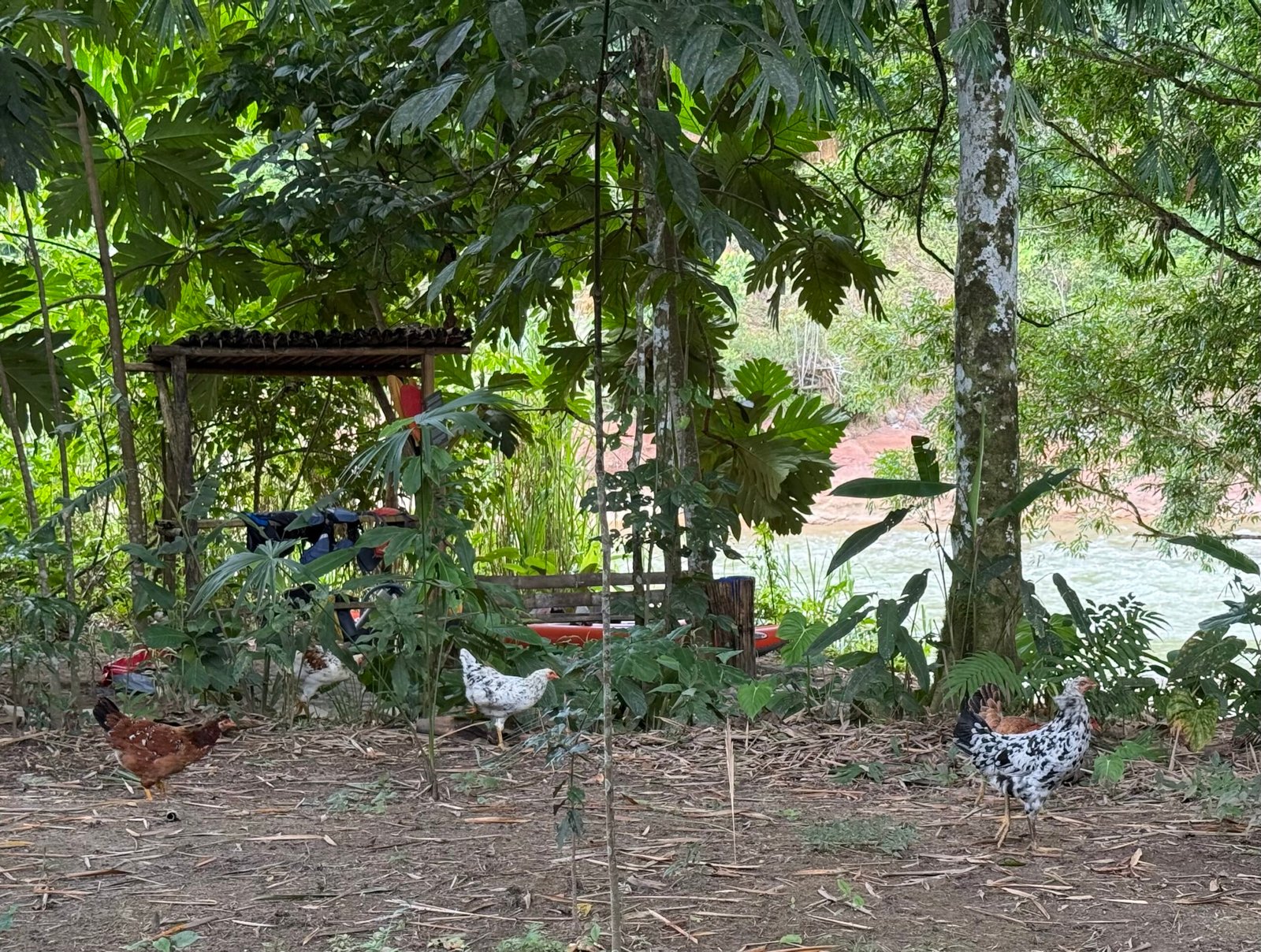
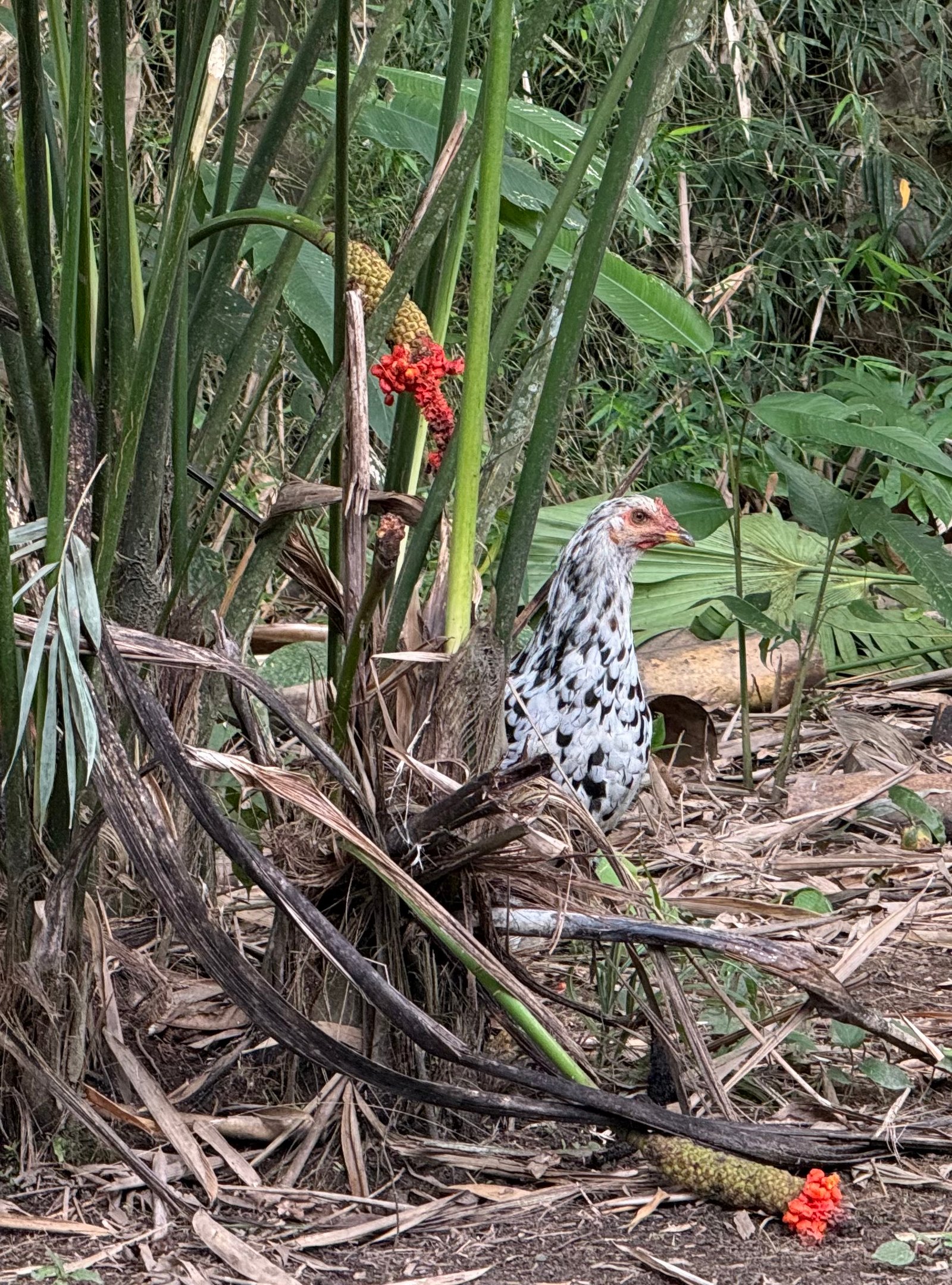
Spending a lazy afternoon at Glamping Arajuno, I got a real kick out of the Amazon chickens. About a dozen of these little velociraptors would sweep through the camp every few hours, foraging for anything that might be a meal. Incredibly long-legged and fully-feathered, these guys were healthy and meant business.
Jimmy gave us the opportunity to try out a traditional blowgun. Given to his people by another tribe that still hunts monkeys the traditional way, it was an honor to own one. The blowgun was made out of two pieces of walking palm wrapped together. Nearly eight feet long, the thing was so heavy that my little T-rex arms couldn’t begin to keep it steady and Patricia couldn’t even lift it. Walter was getting the hang of it though!
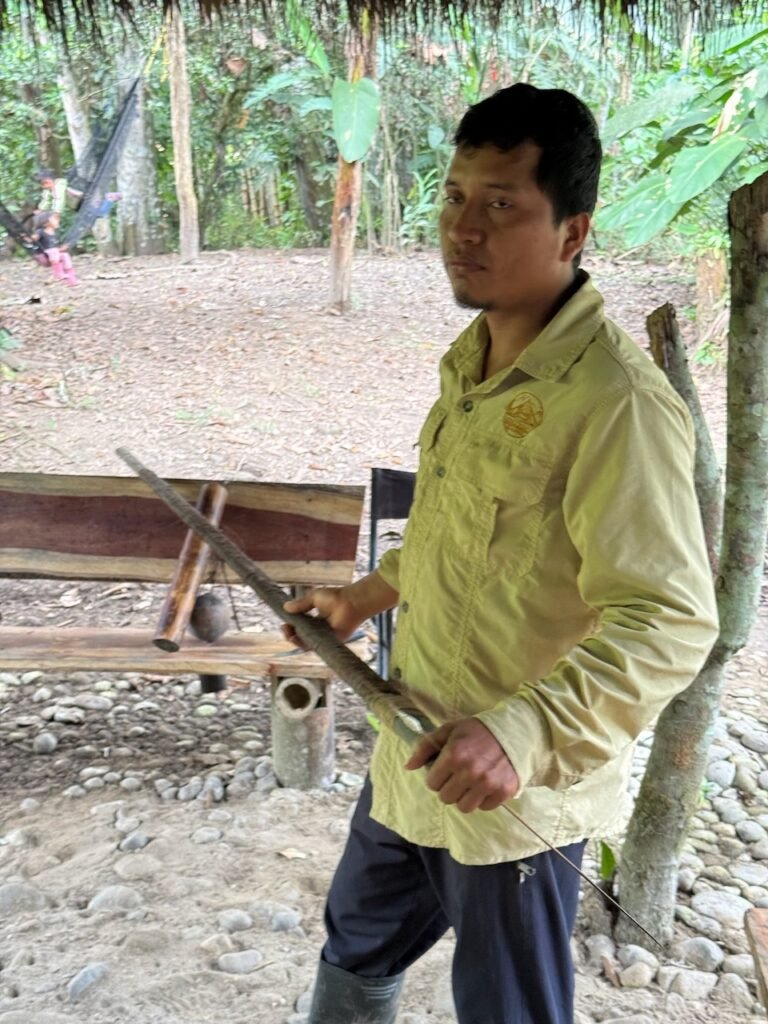
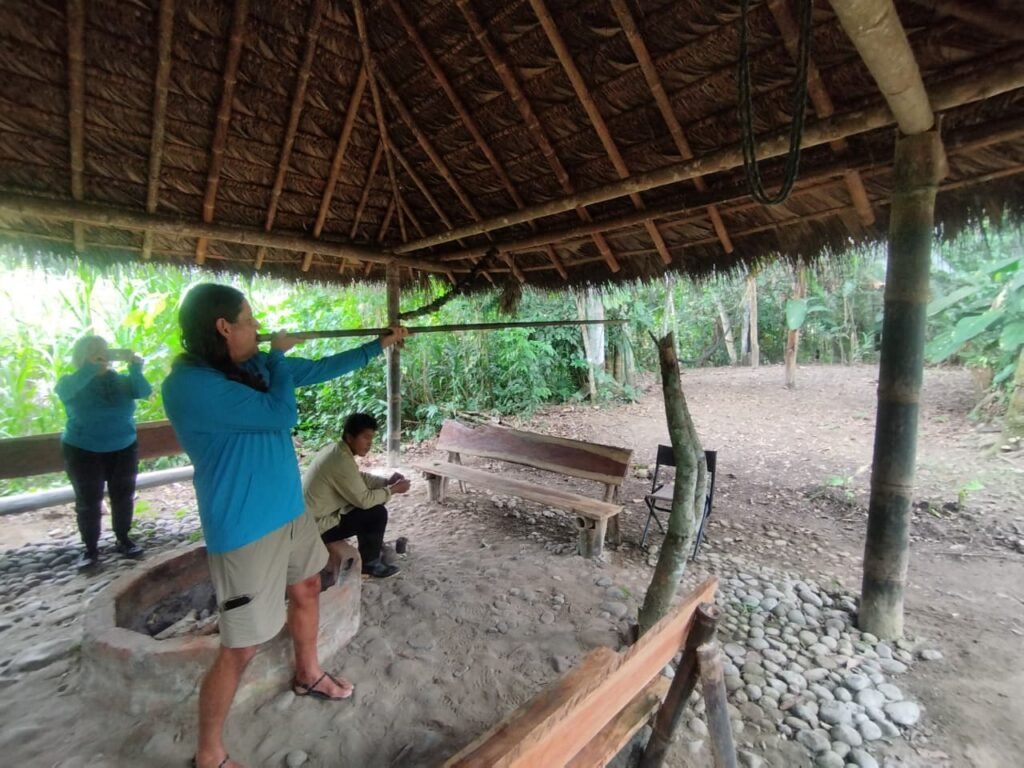
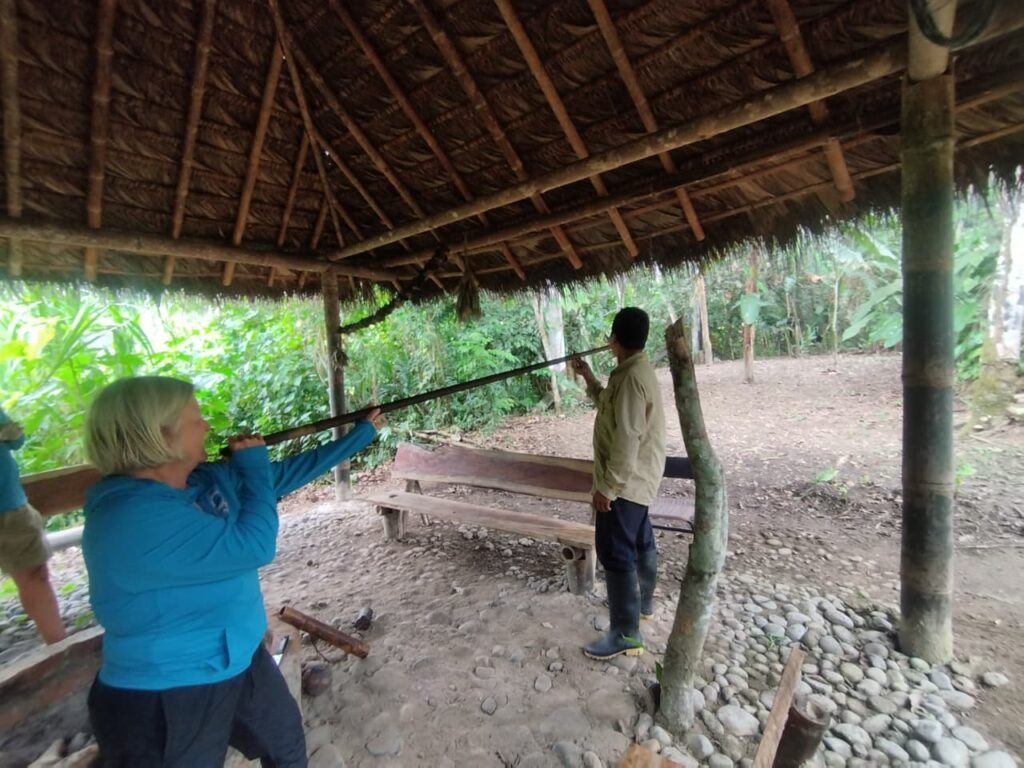
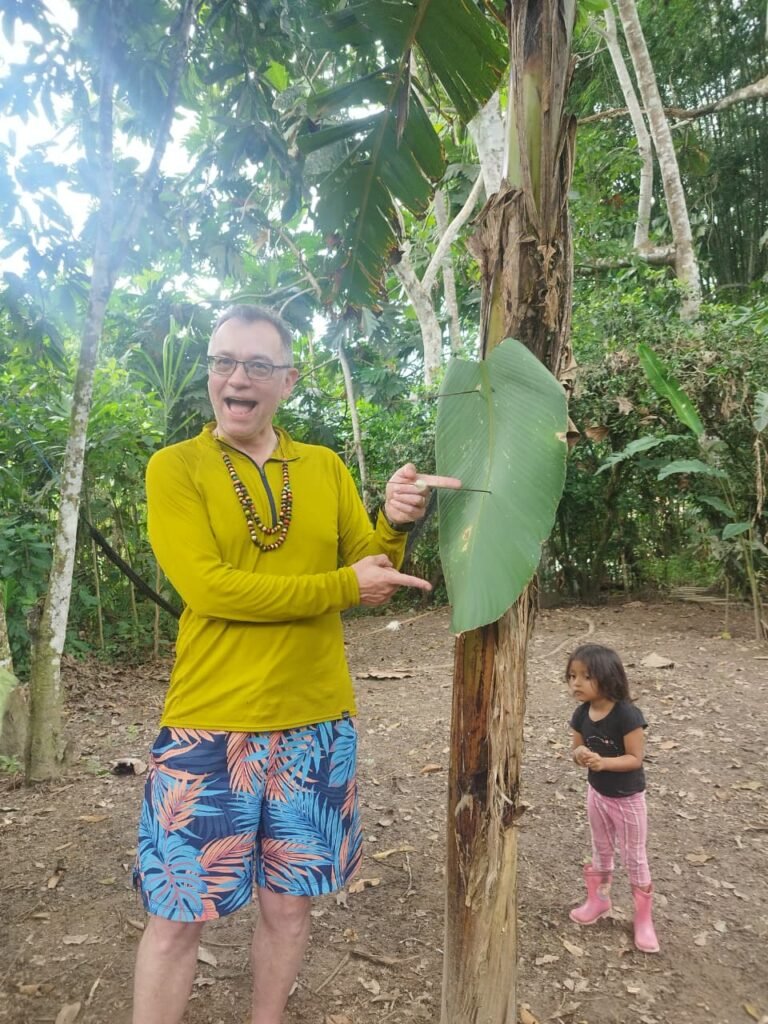
The darts were long and slender and used a tuft of kapok seed down to make the cottony flight and form the seal in the tube. For hunting, the tribe dipped the dart tips in curare, a paralyzing plant extract. Jimmy explained that some tribes used more lethal (and dangerous) frog toxins, but this tribe preferred curare, requiring that they track the prey until it falls asleep. Apparently the marksmen can hit monkeys at 50 to 60 meters with a gun like this.
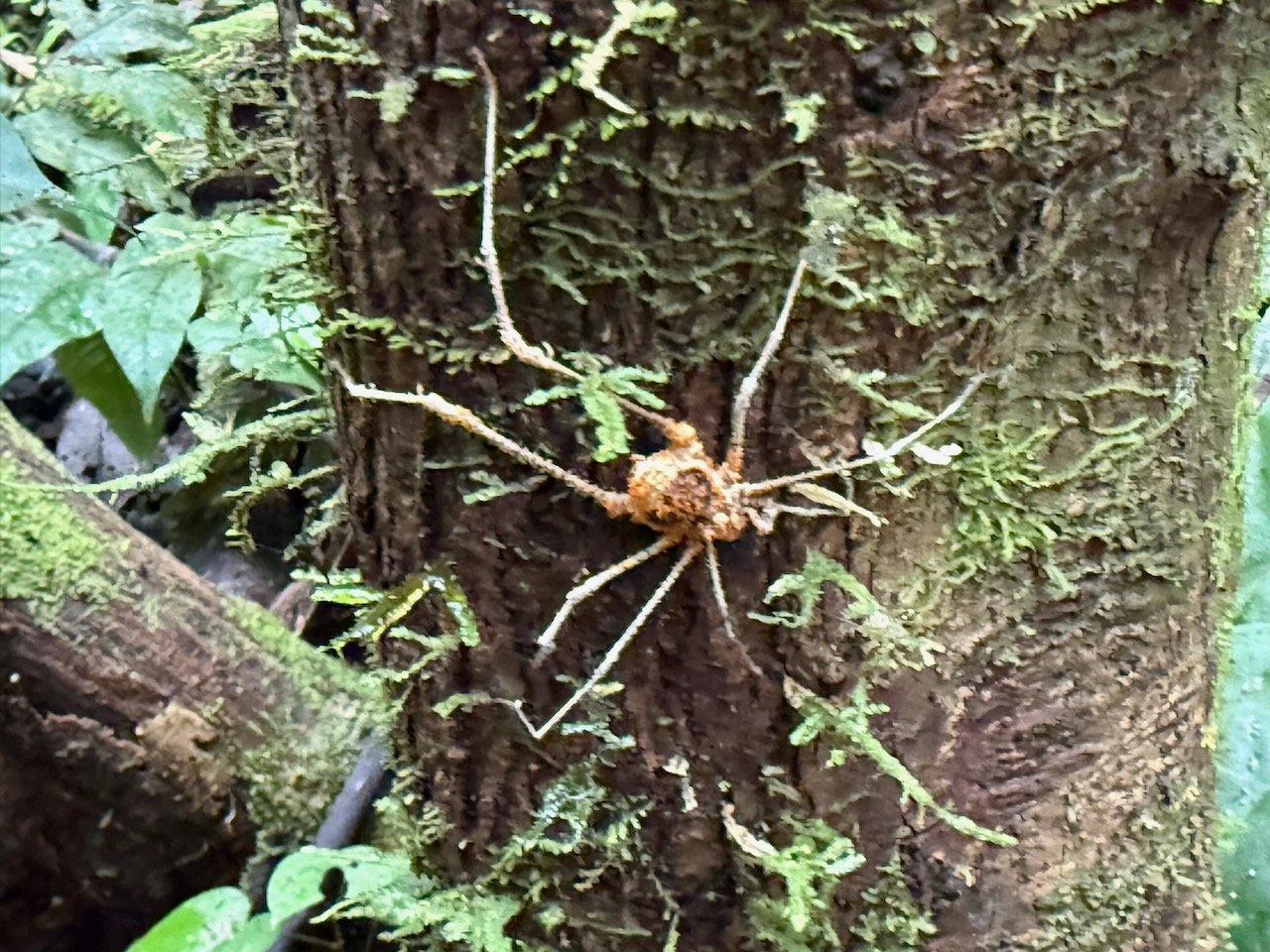
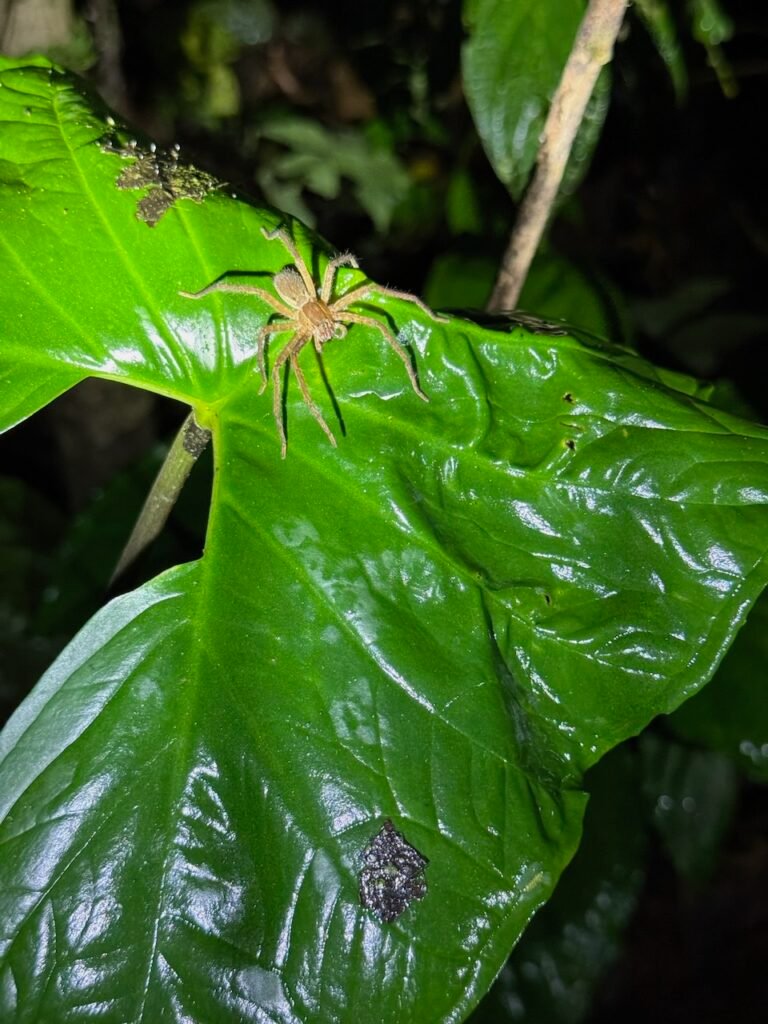
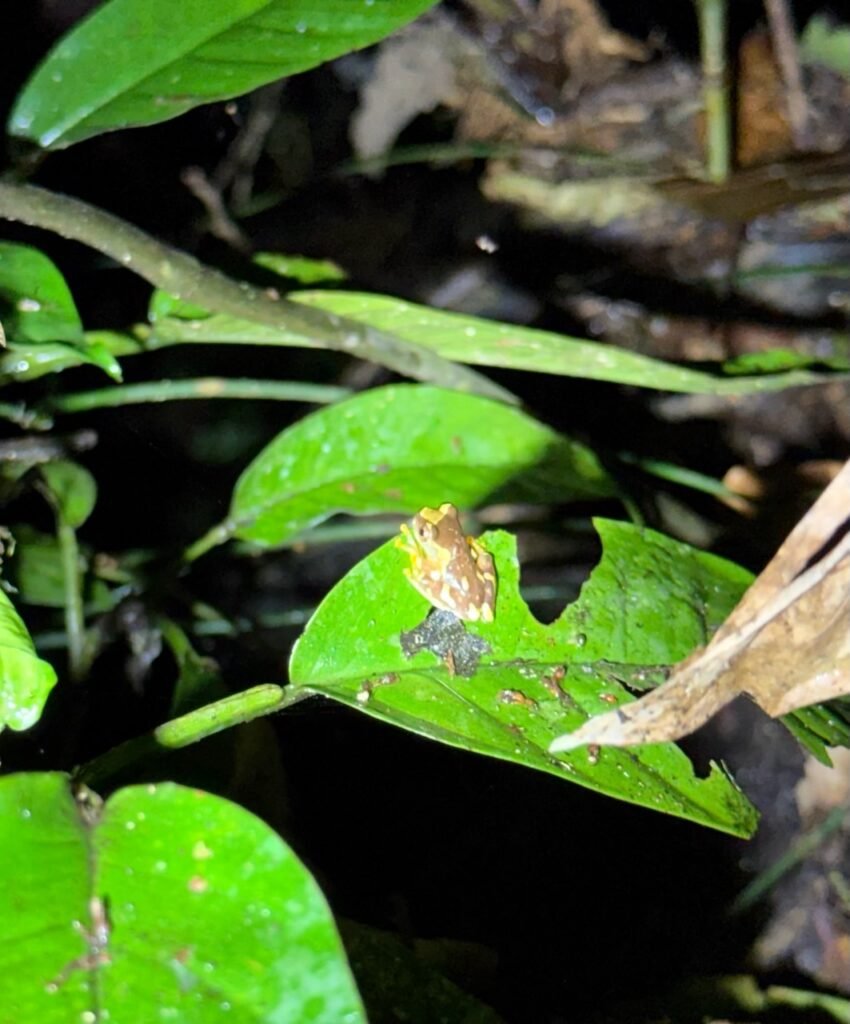
We opted in for the night hike and it was fun spotting a few insects and spiders. We were actually surprised at how few critters we found, we thought the night would be teeming with life. Well, there was the one pterodactyl that buzzed my face and was gone in a flash…
At the end of the evening, I wandered back over to the dining area to buy a bottle of wine. Chilean wines are something we don’t see much in the States, but they have a solid reputation in South America. Jimmy’s daughter was a budding sommelier but was having trouble with the corkscrew. I indicated I wanted to help, so she handed it to me. I set the screw and then showed her how to set the first bootlever on the edge of the bottle. Her eyes lit up as I began to extract the cork. She reached for it, but I held up a finger and proceeded to set the next lever to fully extract the cork. A big grin. She’ll be ready for her next guests.
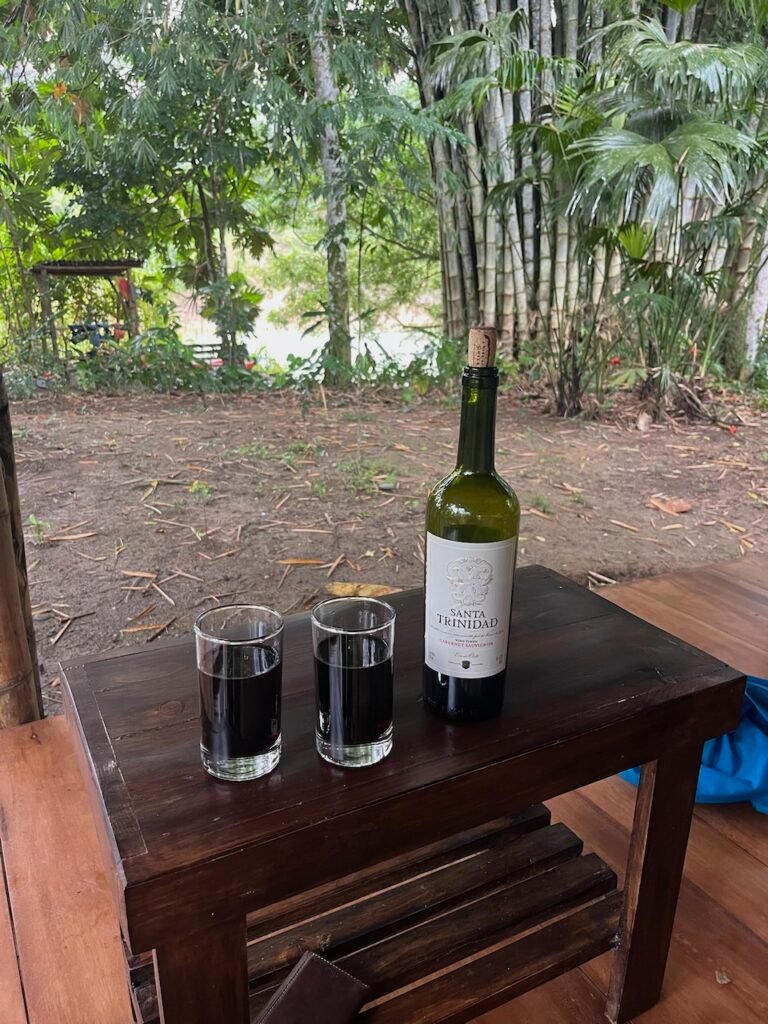
Finally, I was able to wash my hair tonight! Has Caesar’s gift helped? Only time will tell I guess. But I’m feeling pretty grand.
We head out of the jungle tomorrow morning, it’s been a good day.
Leave a Reply